The History of Hiking in New York State

Have you ever gone hiking and wondered where the trail came from, who built it, and when? Many of the oldest trails in New York began as Native American hunting paths, eventually becoming established trade and migratory routes. Until the Industrial Revolution, trails mostly served a functional purpose, but trail building boomed as a new ‘leisure class’ emerged and became interested in outdoor recreation. Today, 16,000 miles of trail run through New York, accommodating hiking, mountain biking, cross-country skiing, horseback riding, snowmobiling, and more.

In 1891, the New York State Legislature assigned funding to build a trail network across the state, which turned into the greenway system we know today. To promote and advocate for these trails, groups like the Appalachian Mountain Club, New York-New Jersey Trail Conference (NY-NJTC), and the Adirondack Mountain Club were founded. They provided the volunteers and training necessary to build enough trails to satisfy the demand. Many of these groups exist today and continue to train volunteers in trail construction and maintenance.

The first long distance hiking trail, the Appalachian Trail, was built by The NY-NJTC in Bear Mountain and Harriman State Parks in 1923. Conceived in 1921 by Benton MacKaye, the original idea combined recreation, conservation and economic socialism, with wilderness camping. It was seen as an opportunity for people to get away from the city and renew themselves. While MacKaye’s vision of interconnected mountain resorts was never fully realized, the trail was completed in 1937. Today, the Appalachian Trail stretches 2,175 miles from Maine to Georgia.

Promotional poster for the CCC. Source: http://www.rootsweb.ancestry.com/~wvcccfhr/history/3ccc.htm.
Adirondack Mountain Club hikers atop Mt. VanHoevenberg. Source: WikiCommons.

The Great Depression was a time of enormous parks and trails growth. As part of the New Deal, President Franklin Delano Roosevelt founded the Civilian Conservation Corps (CCC), based on a similar program he started while serving as governor of New York. This program, in operation between 1933 and 1942, provided unskilled laborers with jobs in the conservation and natural resources fields. During the nine years it ran, three million men participated (220,000 of which were in New York). They planted over three billion trees, and they built more than 800 parks nationwide.

As bicycles increased in popularity, cyclists began advocating for paved surfaces. Paved roads allowed cars to go more places and drive faster than they had been able to previously, thereby making road biking more dangerous for cyclists. In the 1960s, the government began converting unused rail corridors into rail trails to provide a safe space for biking. In the 1970s, rail trails also allowed inline skaters to venture outside of roller rinks and provided ideal corridors for the first recreational snowmobilers.

Following a funding slump in the 1970s, the 1980s and 1990s saw renewed interest in trail building. In 1987, New York City began planning a greenway system; the project was amended in 1993 with a proposal to develop 350 miles of bike and pedestrian trails throughout the city. As of 2010, 140 miles of trail were open to the public.

Black Diamond Trail Volunteer Work Day
Black Diamond Trail volunteer work day. The Black Diamond Trail connects Taughannock State Park, Allan H. Treman Marine Park, Buttermilk Falls State Park and Robert Treman State Park. Photo by OPRHP.

These days, most trails are built by volunteers through programs like the NY-NJTC, the Student Conservation Association, Park Friends groups and other organizations. Anyone can get involved to help build or maintain a pathway and contribute to the legacy of trails in New York.

Enjoy this short video about safety and preparedness tips for hiking in New York!

Post by Maddy Gold, SCA Intern.


The 3 Season Paddler: Safety Tips for Extending Your Boating Season

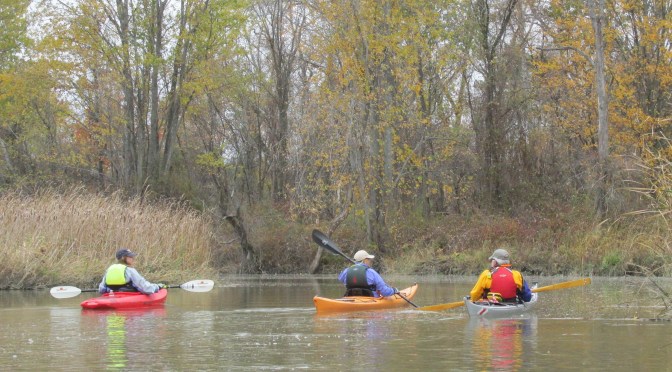
The tang of a slightly warm breeze rattled the yellow leaves of the cottonwoods under a dome of grey clouds welcoming an intrepid group of fall paddlers chasing the last vestiges of summer at Schodack Island State Park on the Hudson River near Albany.

“We weren’t planning to go out on to the Hudson River for this trip, but were headed to the kayak launch at Schodack Creek on the eastern side of the island,” Ro Woodard recalled. “It has tidal waters like the Hudson and snakes through the phragmites reeds and cattails swamp under the mighty bridges of the CSX Railroad and NYS Thruway.  It was exciting to think, as I drove over the Thruway bridge and looked down to the creek, that I would be soon seeing the secrets of the marsh from a water’s eye view rather than a bird’s eye view.”

Warm fall and winter days might tease paddlers into heading for their favorite open water, but the warm air temperatures can deceptively mask the dangers of the cold water surrounding our boats as we paddle. NYS OPRHP would like to remind paddlers and sportsmen who venture out on the water between November 1 and May 1 that everyone in boats less than 21 feet in length  (this includes motor boats, too) MUST WEAR a US Coast Guard approved life jacket while underway.  OPRHP also recommends that everyone wear a life jacket if the water temperature is less than 70o F.

All boaters (and, yes, paddlers are boaters) should be aware of the possibility of a sudden unexpected swamping, capsize, or a fall overboard into the cold water. At the onset of a sudden cold water immersion there is an initial uncontrollable gasp reflex leading to hyperventilation and increased heart rate and blood pressure which can result in immediate drowning. Go to Cold Water Boot Camp to see what this reaction looks like.  A life jacket may save your life by keeping your head above water and your body floating you while you get your breathing in control.  Next you should attempt self-rescue by getting back in or on your boat.  You have about 10 -20 minutes depending on the temperature of the water before your muscles and nerves cool down and stop functioning;   even good swimmers can’t control their movements and ultimately experience swimming failure.   Again, the life jacket can make all the difference because it will float you.   This is a sobering message for those going out for what they hope to be a fine day on the water.  Remember to wear your life jacket, because it can make all the difference.

Late season paddlers should dress for the water temperature, not the air temperature with either a wet suit or dry suit under your life jacket.  Bring along safety equipment to help with rescue in case of a capsize: pump, rescue bag, sling, paddle float, whistle, visual distress signals, and a VHF radio or cell phone is a waterproof bag.  Also take a course to learn how to use the equipment and how to rescue a paddler who is in the water, empty the water from their boat and get them back inside before you head out for your cold season paddling trip. It is important to have essential skills and equipment, which we hope we never have to use, with you when you kayak and canoe.  The American Canoe Association has a variety of courses for all level of paddlers.

Always paddle with a group if possible and be sure to let someone know where you are going and when you are expected to return.  Take a boating safety course and refrain from the use of alcohol when paddling.  Boating safety courses can be found at http://nysparks.com/recreation/boating/boating-safety-class.aspx  and a free online paddle sport safety course at www.paddlecourse.com.

Click on an image above to enlarge it and read the caption.

The properly dressed and equipped group enjoyed a pleasant afternoon sweeping upstream on the incoming tide, sharing summer paddling stories and watching the sky hoping for a glimpse of one of the many eagles which inhabit the shores of the Park.  They passed under the bridges to the sound of a honking horn.  The honking must have come from a sharp-eye paddler who was crossing the bridge in his or her car and spotted us paddling. After encountering a tree across the narrowing creek, they turned around to head south just as the tide was turning and the current carried them back to the launch ramp. No eagles on this trip, but a flock of crows soared over head as we finished our day.

The fabulous fall padding season has wound down. The air temperatures are dropping and so is the water temperature.  Though lots of us summer paddlers put away our kayaks and canoes until spring, many hearty paddlers continue to enjoy the late fall paddling until ice forces them off the water. If that paddler is you, remember to wear your life jacket, let someone know when and where you are paddling, dress to stay warm, bring your safety equipment, don’t drink alcohol while out on the water, and paddle with a group if possible.   The rest of you, we’ll see you in the spring!

Post and photos by Ro Woodard, Marine Services Bureau, OPRHP.

Beyond the Gobble: Little Known Facts about Turkeys

In 1782 Benjamin Franklin wrote “the wild turkey is a bird of courage that would not hesitate to attack a grenadier of the British guards, who should presume to invade his farmyard with a red coat on,” in an effort to promote the turkey over the bald eagle as the national emblem of the United States. Although the turkey was not selected to hold the prestigious position of national emblem, the bird is certainly an icon for the month of November and the celebration of the Thanksgiving holiday.

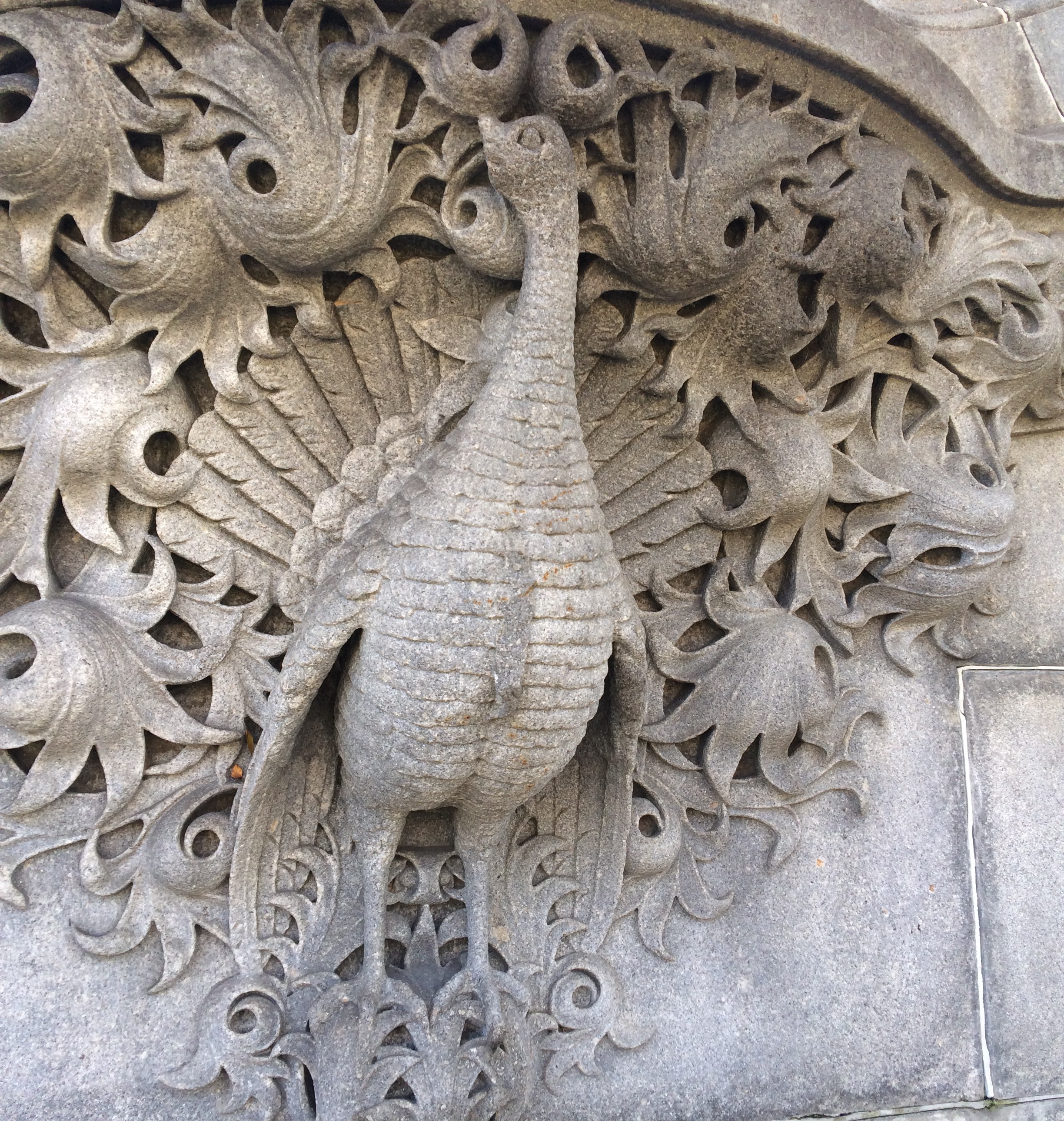
A turkey featured on the New York State Capital building. Photo by Lilly Schelling, OPRHP.
A turkey is featured on the New York State Capital building. Photo by Lilly Schelling, OPRHP.

There is much more to know about turkeys than what side dishes the bird pairs nicely with on the Thanksgiving table. To be the hostess with the mostess (turkey knowledge, that is) try sharing some of the following fun facts with your dinner guests this Thursday!

  • Turkeys can run at speeds of up to 25 miles per hour and can fly up to an impressive speed of 55 miles per hour.
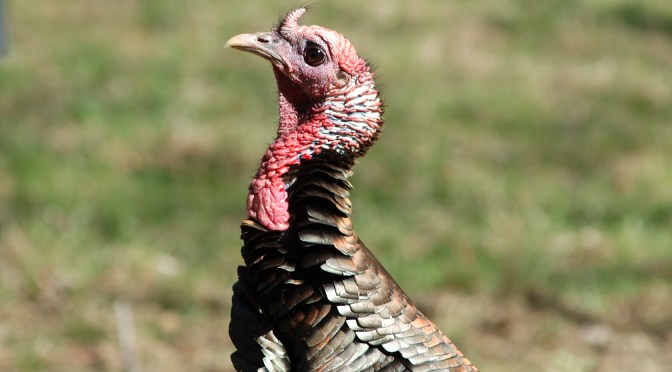
  • The area of bare skin on a turkey’s throat and head changes color depending on its level of stress or excitement. A male turkey’s head will turn blue when excited, or turn red when it is preparing to fight.
  • Male turkeys have beards and spurs. The older the turkey, the longer the beard. Females are called hens, chicks are known as poults, and young males are jakes. See the photo below for more information about turkey anatomy!
  • Because turkeys have a number of natural predators, including foxes, coyotes, and raccoons, they often sleep perched atop tree branches with their flock. In the morning, they call out a series of yelps before descending from the tree to ensure that the rest of their roosting group has made it safely through the night.
  • Turkeys have excellent daytime eyesight that is 3x better than a human’s! A turkey’s vision range covers 270 degrees, and they can also see in color. Turkeys have poor vision at night.
  • Wild turkeys were almost hunted to extinction by the early 1900’s, but recovery efforts have brought their numbers up to seven million across North America today. Allegany State Park in western New York was the source site for turkeys that were later reintroduced across the rest of the state in the 1950’s. It was presumed that these turkeys wandered across the state border from Pennsylvania.
Snood - wattle - caruncle - beard - spur diagram off of a parks turkey picture
Above: A male turkey (called a tom) at Minnewaska State Park Preserve. Photo by OPRHP, edited by Lilly Schelling.

Post by Megan Phillips, OPRHP. Photos by Lilly Schelling, OPRHP.

Sources:

http://birdnote.org/show/national-symbol-turkey-vs-eagle

http://www.smithsonianmag.com/science-nature/14-fun-facts-about-turkeys-665520/?no-ist

http://www.onekind.org/be_inspired/animals_a_z/turkey/

http://www.livescience.com/17057-turkey-facts-thanksgiving.html

http://birding.about.com/od/birdprofiles/a/turkeyfacts.htm

http://www.nytimes.com/1985/05/03/nyregion/wild-turkey-making-a-comeback.html

Sampling Wildlife Populations in State Parks: White-tailed Deer

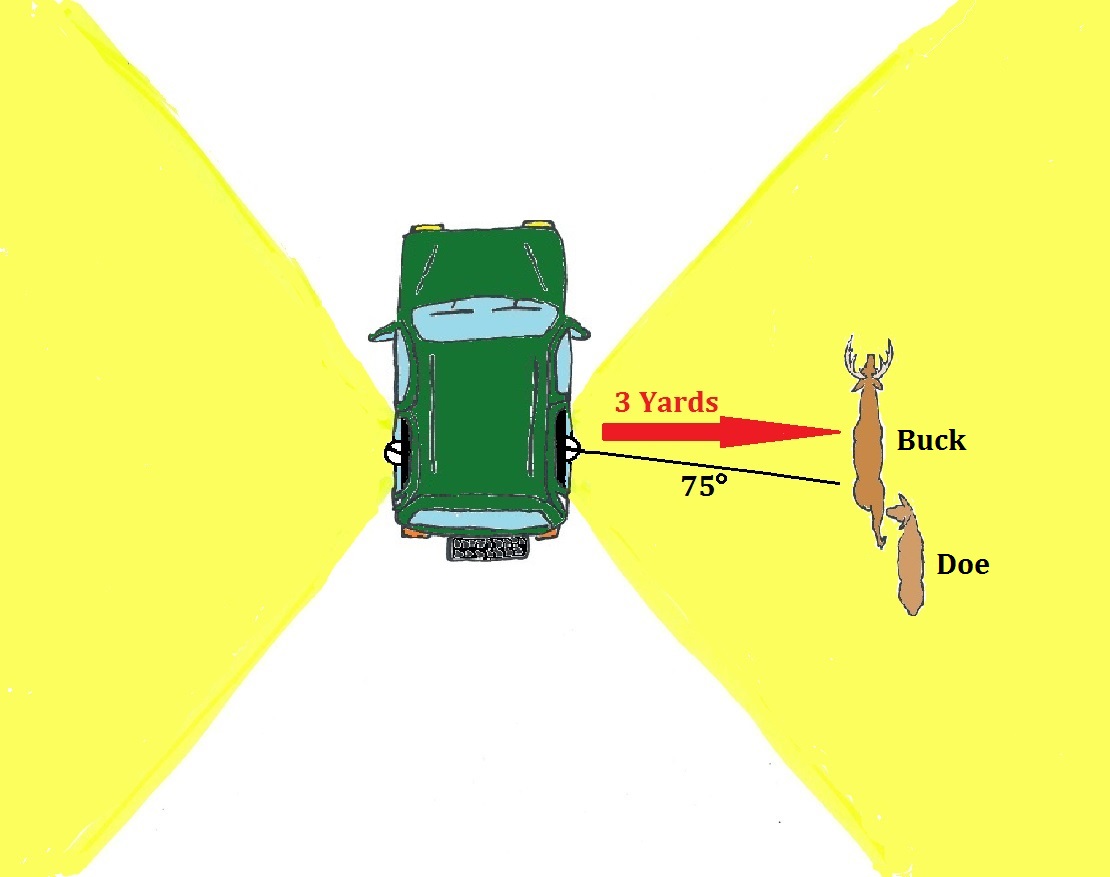
It is important to monitor wildlife populations to ascertain how a species is surviving and how that may impact other wildlife populations and forest biodiversity. In many of our state parks, especially in the Hudson Valley, we monitor the deer population and the effect that deer are having on the forest vegetation. One method we use to monitor the deer population is a “distance survey” conducted at night, using spotlights, a range finder (to determine the distance between the deer and the vehicle) and a protractor, for measuring the angle at which the deer were observed. Four people and a vehicle are needed in this survey. Two “spotlighters” sit in the back seat and search for deer, the driver keeps the vehicle at five mph and stops when a deer is seen to get the information on the deer, and a scribe sits in the passenger seat to record the data. Data recorded includes deer group size, sex, age, habitat type, distance in yards and angle from the vehicle. To determine a deer’s sex, the surveyor notes if the deer has antlers or not – age and sex are defined as fawn, doe or buck.

Deer Diagram

As an example, the above diagram shows a group of two deer at a distance of 3 yards and an angle of 75˚ from the side of the vehicle. The yellow color represents where the surveyors are shining their lights. The surveyor defines this as a  group of a buck, due to the antlers, and a doe. These observed deer are in a mowed hayfield, so this habitat type would be recorded as agriculture.

Click on an image above to read the caption.

After driving the predetermined distance sampling routes, we headed home for the evening. Back in the office, the data obtained will be entered into a statistical program that will calculate the number of deer per square mile in this particular park. This data will be compared to previous year’s data to track the deer population and will help determine future wildlife management decisions.

Post, diagram and photos by Lilly Schelling.


Lakes Have Seasons, Too

As the northeast transitions from fall to winter, watch for changes in Parks lakes and ponds nearest you.  You might notice that the water churns more than it did during the summer, or you might even notice ice beginning to form at the surface.  Such phenomena can mean exciting happenings deeper in the water.  One of the most fascinating changes to observe is lake-turnover, or the mixing of cool and warm waters.

Lakes that turn over twice a year are known as “dimictic”: di=twice, mictic= mixing.  They are one of the most common types of lakes on Earth.  Dimictic lakes freeze in the winter and melt completely by summer.  These lakes mix during the spring and fall, after ice melts and before ice forms.  Examples of dimictic lakes are seen across New York State, including Shaver Pond in Grafton Lakes State Park, Moreau Lake of Moreau Lake State Park, Lake George of the Adirondack region, and Lake Erie.

combined spring turnover image
Long Pond at Grafton Lakes State Park during spring turnover: ice melting after winter (top), followed by water mixing into the lake (bottom). Fall turnover is the opposite: water mixing followed by ice forming in early winter. Ice photo by OPRHP. Mixing photo cropped from original by L. Schelling, OPRHP.

Without turnover, aquatic life in different areas of a lake may not have enough oxygen or nutrients to thrive.  Calm waters tend to separate into layers – with denser, “heavier” waters sinking below less dense surface waters, creating an invisible boundary through which oxygen and nutrients cannot pass.  Water is most dense 4 degrees Celsius above freezing (4 OC, or 39OF) and becomes less dense as it cools or warms from this point.  In the summer, this means warmer water is at the surface, closer to the air and thus richer in oxygen for fish.  Meanwhile a layer of cooler, 4oC water settles at the bottom – where many nutrients accumulate, but also where decomposition of dead animals and plants can lead to little to no oxygen in the water.

adapted figure of dimictic temperatures
Dimictic lake temperature throughout the seasons, with the layering (“stratification”) and mixing of warmer (red) and cooler (blue) waters. Spring turnover results from ice melting, and fall turnover results from wind chilling and mixing surface waters. Image adapted from Figure 44.10 in “Ecology and the Biosphere” (Candela Learning).


As chilly, windy fall weather kicks in, some of the oxygen-rich surface water can cool, sink into the lower levels of the lake, and push the deeper, nutrient-rich waters up closer to the surface.  The result is a well-mixed habitat for fish.  In dimictic lakes, this turnover happens again in the spring, when the surface ice melts to that heavier, 4oC water and mixes into the deeper waters.

Why are some lakes dimictic and others not?  One reason is lake location — dimictic lakes are more common in temperate regions with warm summers and cold winters, where lakes may freeze over completely.  Another factor is lake size.  Two lakes that are famous for not having complete mixing are Round Pond and Green Lake in Green Lakes State Park.  These are the rare “meromictic” (mero=part) lakes which mix in the upper waters but are too deep to allow surface and bottom waters to mix.  Alternatively, some lakes may be so shallow that they mix frequently (“polymictic”). NY Natural Heritage Program describes 7 different types of lakes in the state.

Seasonal turnover is important for lake recreation as well as for fish and plant life within lakes.  Fishing can improve near the end of mixing periods in lakes that experience turnover, since now oxygen and nutrients will be better distributed throughout the water.  Many fish and aquatic life are sensitive to changes in their habitat – oxygen and nutrient levels, as well as temperature changes. Keeping an eye on the changes in the water is useful to biologists and park enjoyers alike.

Post by Erin Lennon, State Parks Water Quality Unit.

Sources and Further Reading

NY Natural Heritage Program Conservation Guide on oligotrophic dimictic lakes

New York Natural Heritage Program’s “Ecological Communities of New York State” 2014 edition describes all of the lake and pond types in the state

Ecology and the Biosphere” from Candela Learning.

Green Lake is a rare meromictic type.

Thermal stratification & the effects of a change in temperature on aquatic organisms.


The official blog for the New York State Office of Parks, Recreation & Historic Preservation