Tag Archives: John Jay Homestead State Historic Site

Pets From the Past at New York State Historic Sites

Companionship with animals ties humans together throughout time. Many of the people who lived and worked at our historic sites had pets who brought them friendship and joy. In our historic collections, we have paintings and photographs of these beloved pets.  How do you capture your furry or feathered friends?

Jolly Pets at John Jay Homestead

This portrait of Eleanor Kingsland Field with her pet Italian greyhound was painted in Rome when she was around fourteen years old. Eleanor’s family traveled to Italy frequently during her childhood and this portrait was commissioned during one of her trips. There is a long art history tradition of subjects being painted with their animals. In adulthood, Eleanor married John Jay II, grandson of the famous first Supreme Court Justice, and lived in the family home in Katonah that is now John Jay Homestead State Historic Site.

Eleanor Kingsland Field, Giovanni Battista Canevari, c. 1833, oil on canvas. New York State Office of Parks, Recreation and Historic Preservation. John Jay Homestead State Historic Site. Gift of Westchester County, New York, JJ.1958.295.A

Olana’s Animal Companions

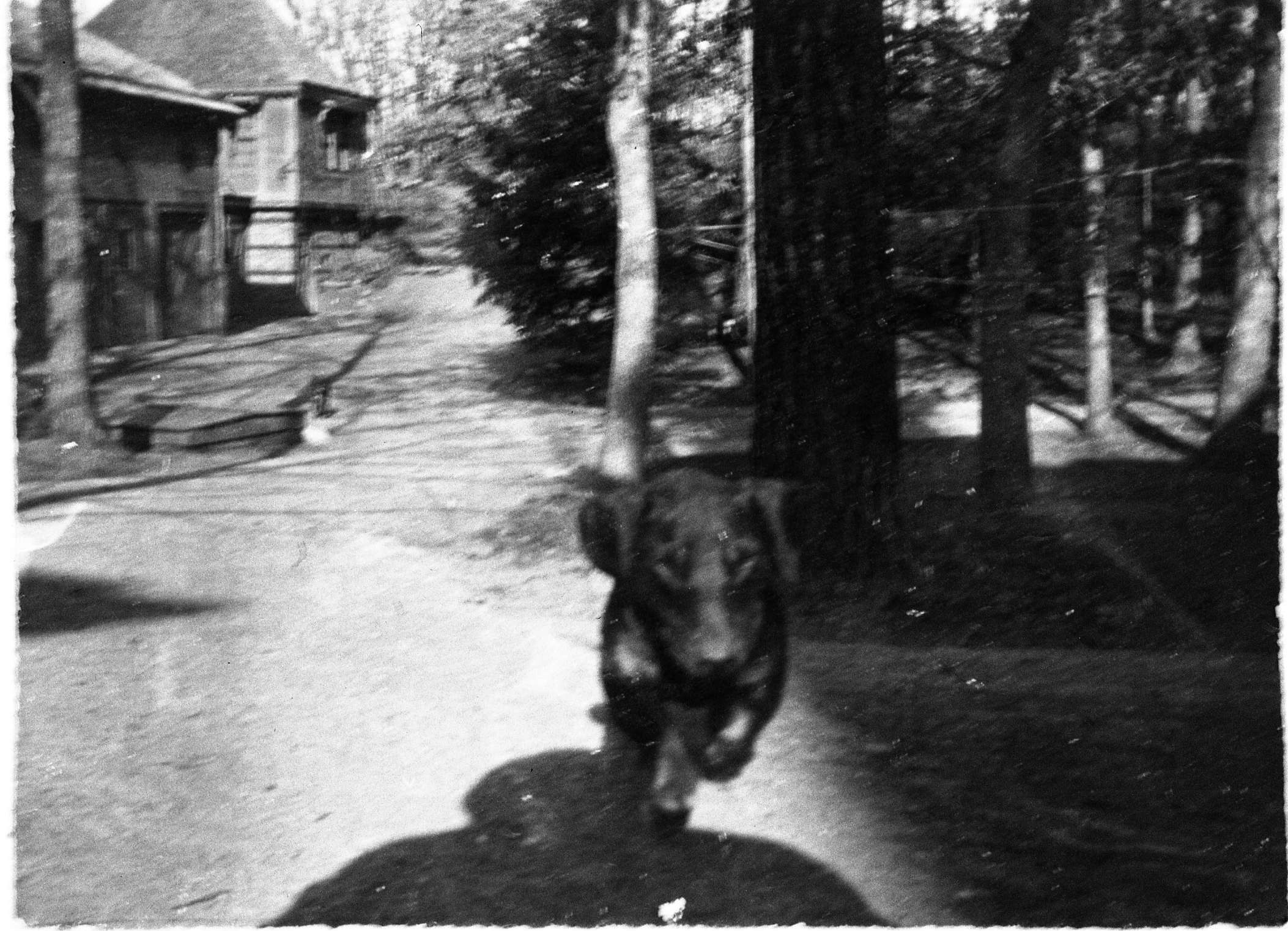
Frederic E. Church and his family lived at Olana State Historic Site outside of Hudson. They had many pets at the family estate, including dogs, a donkey and likely some goldfish. Two large goldfish bowls have survived in the site’s collection. Though this painting is of a goldfish pond, it is believed that Church painted one of the family goldfish from the bowl and created the natural environment around the fish. The painting now hangs in the corridor at Olana’s main house leading to Church’s studio. The family was also pictured with many of their dogs, both inside and outside the house.
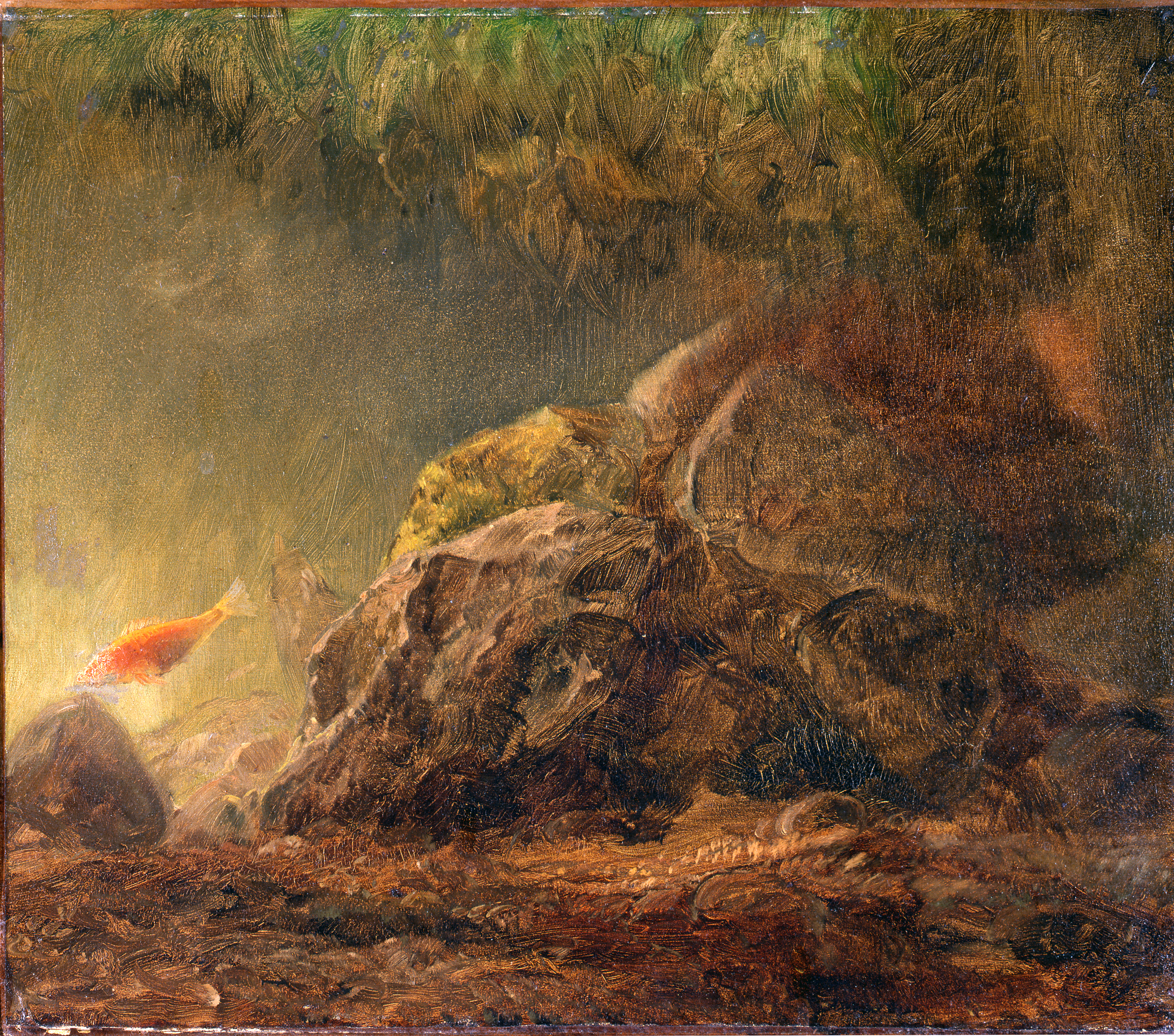
Credit: Goldfish Pond, Frederic E. Church, c. 1875-1880, Oil on paper mounted to canvas, New York State Office of Parks, Recreation and Historic Preservation. Olana State Historic Site. Gift of Olana Preservation, Inc. and Museum Purchase. OL.1981.44.A
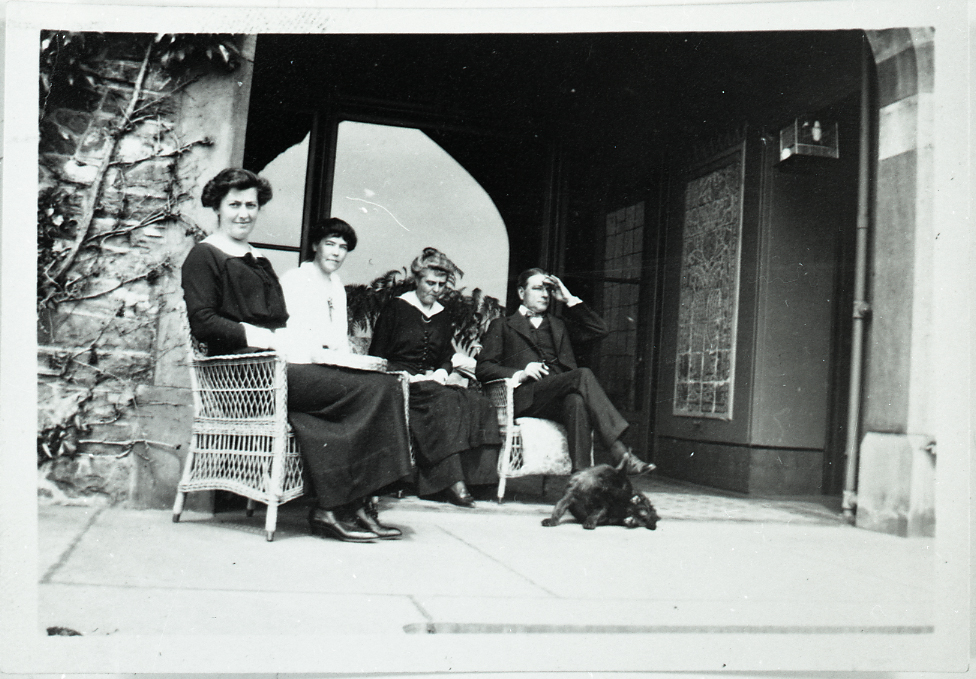
Credit:  Group Seated on Ombra Porch with dog at their feet & Dog Running behind Olana with Carriage House in Background, Photographs, c. 1910-1920. New York State Office of Parks, Recreation and Historic Preservation. Olana State Historic Site. Gift of Olana Preservation, Inc., and Museum Purchase. OL.1987.442 and OL.1987.64

Lorenzo’s Furry Friends

The collection at Lorenzo State Historic Site in Cazenovia also has mementos of cherished pets. Mickey was the dog of Carver Remington, the brother of Eliphelet Remington, one of the owners of Lorenzo in the 20th century. There is a lovely formal portrait of Mickey in profile, painted by central New York artist Dwight Williams.
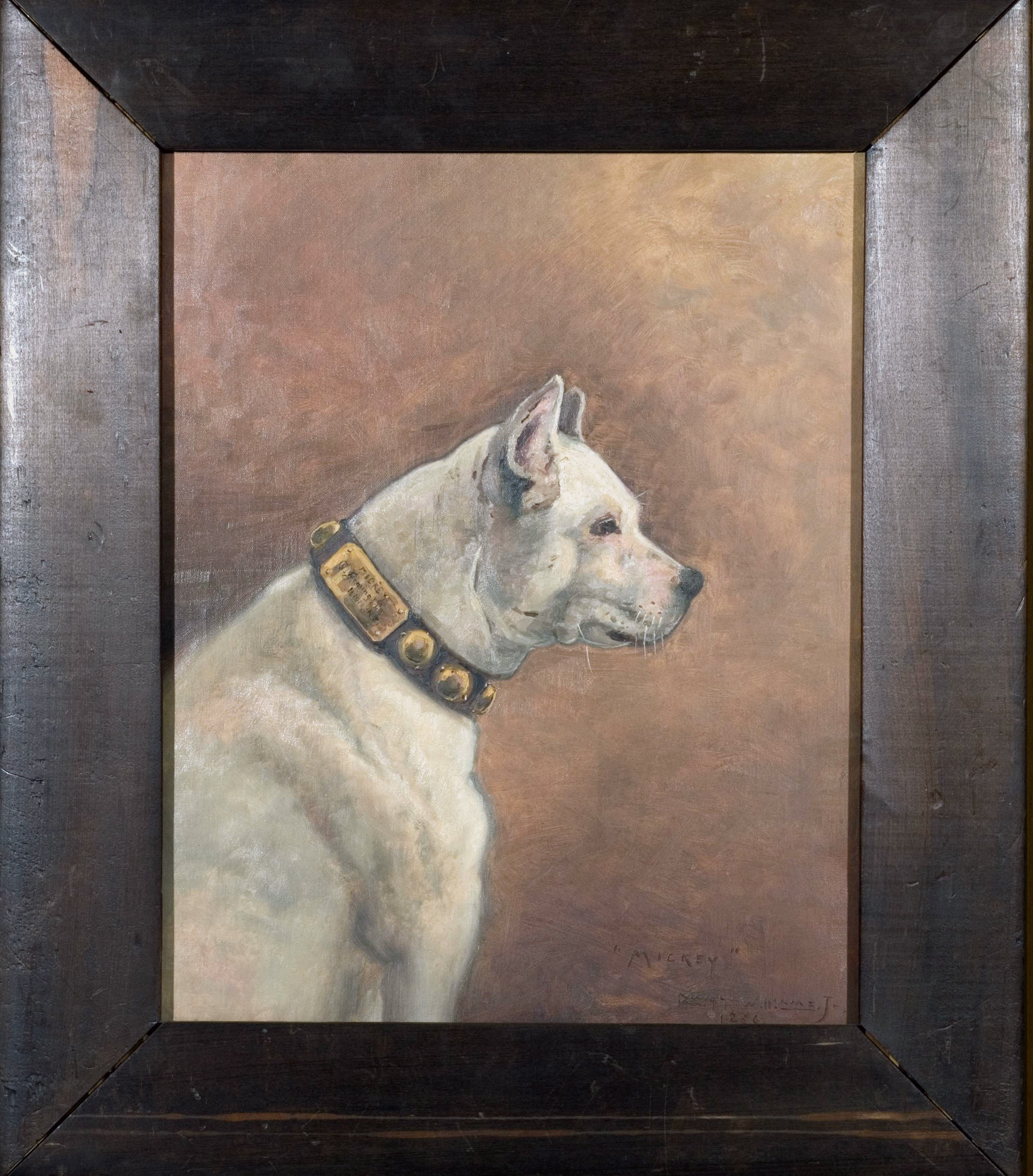
Credit: Mickey, Dwight Williams, c. 1886, oil on canvas. New York State Office of Parks, Recreation and Historic Preservation. Lorenzo State Historic Site. Museum Purchase, Founding Collection, LO.1974.511.AB

There are also informal renderings of family pets, like this drawing of Carlo. He was the pet of Ledyard Lincklaen, owner of Lorenzo from 1847 until his death in 1864. Carlo is a Newfoundland and shepherd mix. This rendering was done on April 27, 1856. We know Carlo’s breed because he was lost and Lincklaen placed an ad in the Cazenovia Republican offering “a suitable reward paid for his recover.” Thankfully, Carlo was recovered since the drawing adds “Obit April ? 1860,” marking the date of Carlo’s death.
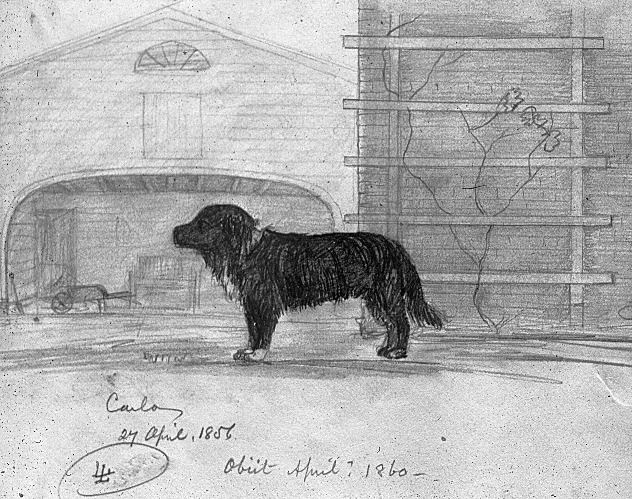
Credit: Carlo, Ledyard Licklaen, c. April 27, 1856, graphite on paper. New York State Office of Parks, Recreation and Historic Preservation. Lorenzo State Historic Site. Museum Purchase, Founding Collection, LO.1976.643.30.B

Clermont’s Cherished Childhood Pets

Janet and Honoria Livingston grew up at Clermont State Historic Site in Germantown, one of the Livingston ancestral homes. Their early 20th century childhood was captured in many family photo albums (as seen in a recent blog post on historic costumes). Their pets were frequently included. Their English bloodhound, Rufus, was especially treasured, and features in many photographs. The family also had horses, a pony, rabbits and a peacock named Solomon.
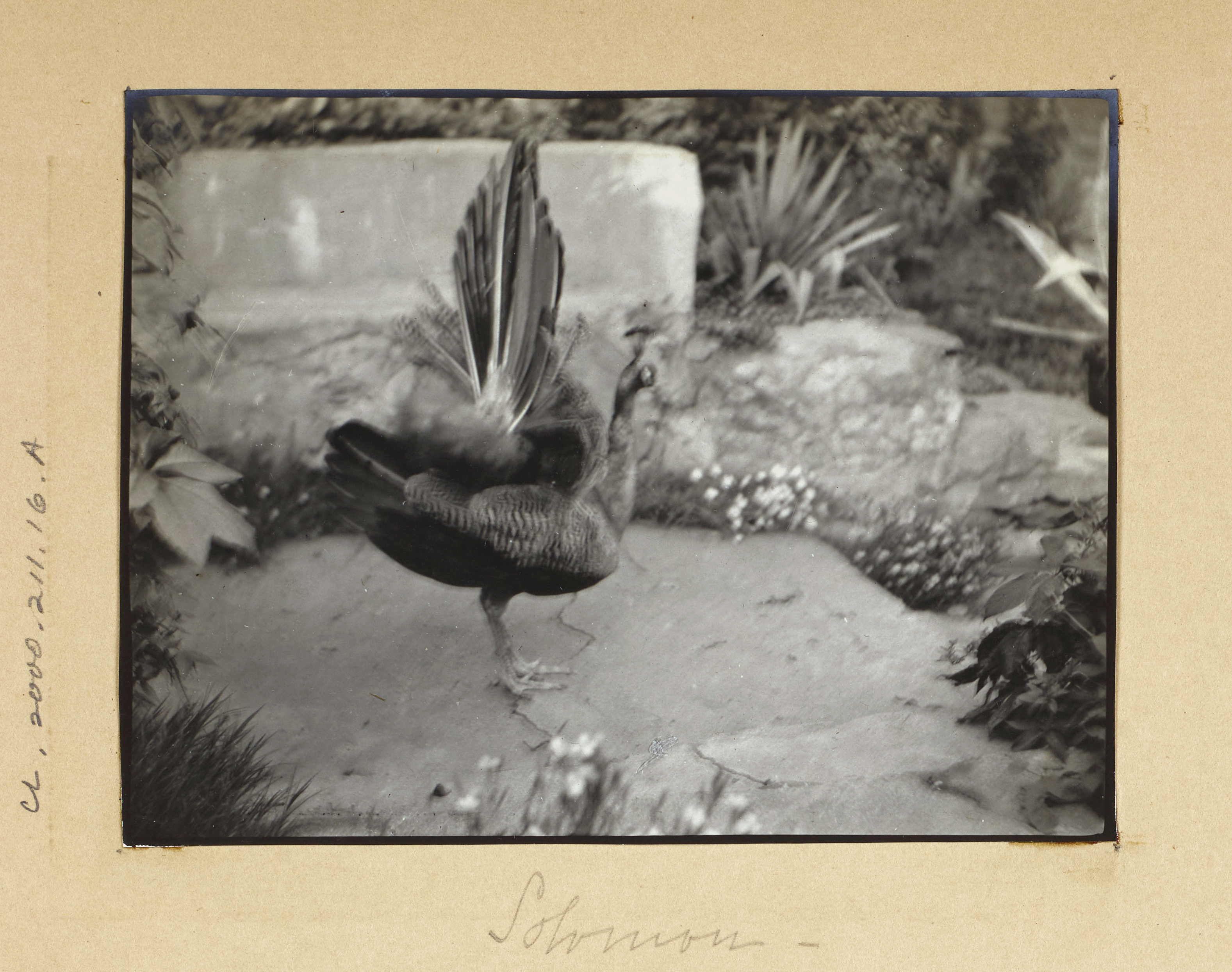
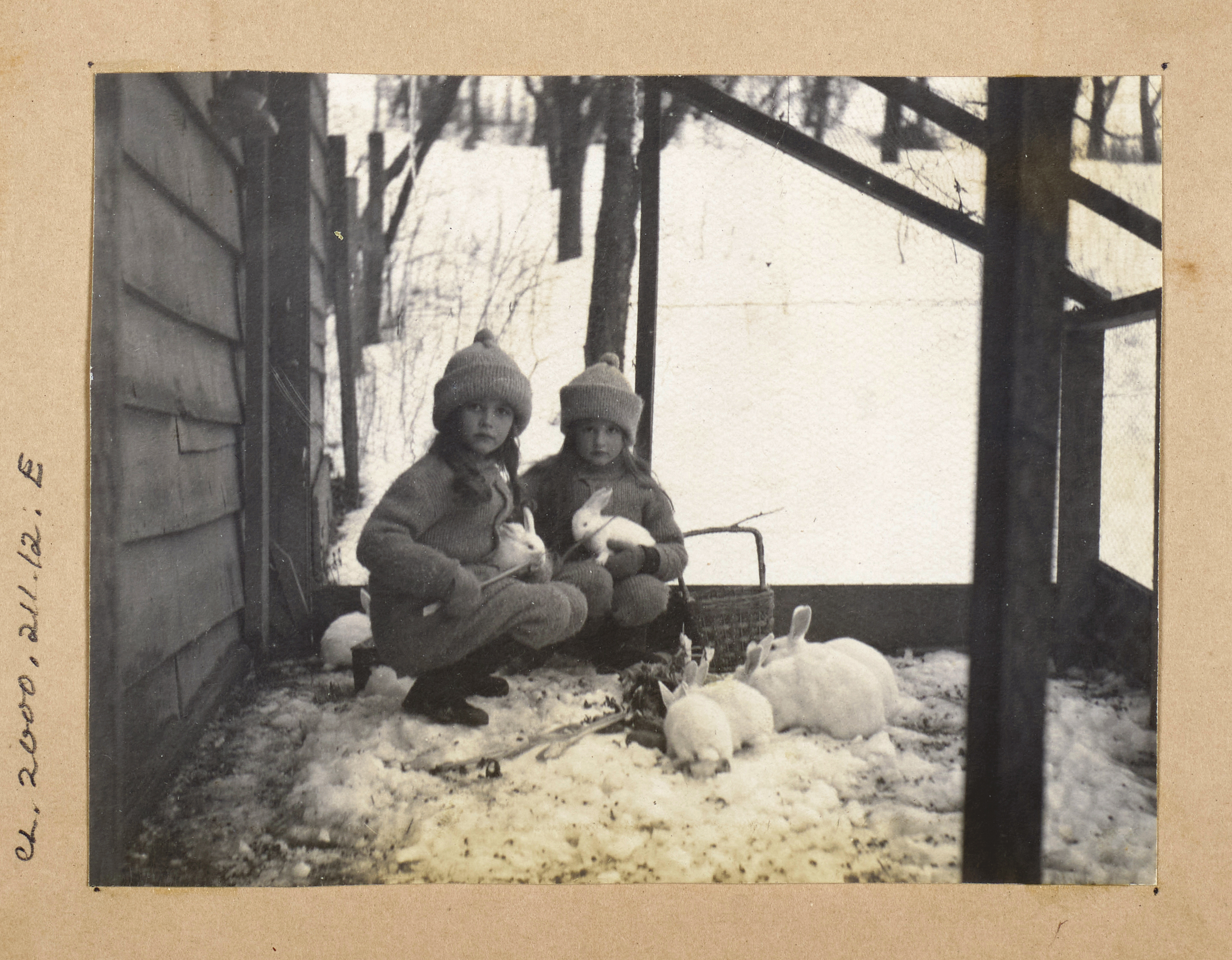
Credit: Solomon the Peacock, Janet and Honoria with Rabbits in Winter, Janet and Honoria Livingston with Rufus, Photographs in Album, c. 1915. New York State Office of Parks, Recreation and Historic Preservation. Clermont State Historic Site. Gift of Honoria Livingston McVitty, CL.2000.211.13.F, .12.E, and .16.A

Written and developed by Amanda Massie, Senior Curator, Bureau of Historic Sites

Playful Costumes From the Past, Just in Time for Halloween

Halloween is almost here and that means costumes! Maybe you’re putting the finishing touches on your own or your child’s. Maybe your creation has been done for weeks and you’re ready to show it off. Maybe you’re about to close this window and type “easy Halloween costumes for sale, next-day shipping” into your search engine. Or maybe all of the costume chatter simply brings back memories of costumes from years past.

Costumes are nothing new. Worn for parties or plays, they have been popular throughout history. Explore some costumes that were photographed and featured in the family albums from Clermont State Historic Site in Germantown and John Jay Homestead State Historic Site in Katonah. (Bonus: Some costumes were saved and are now part of their historic collections!) 

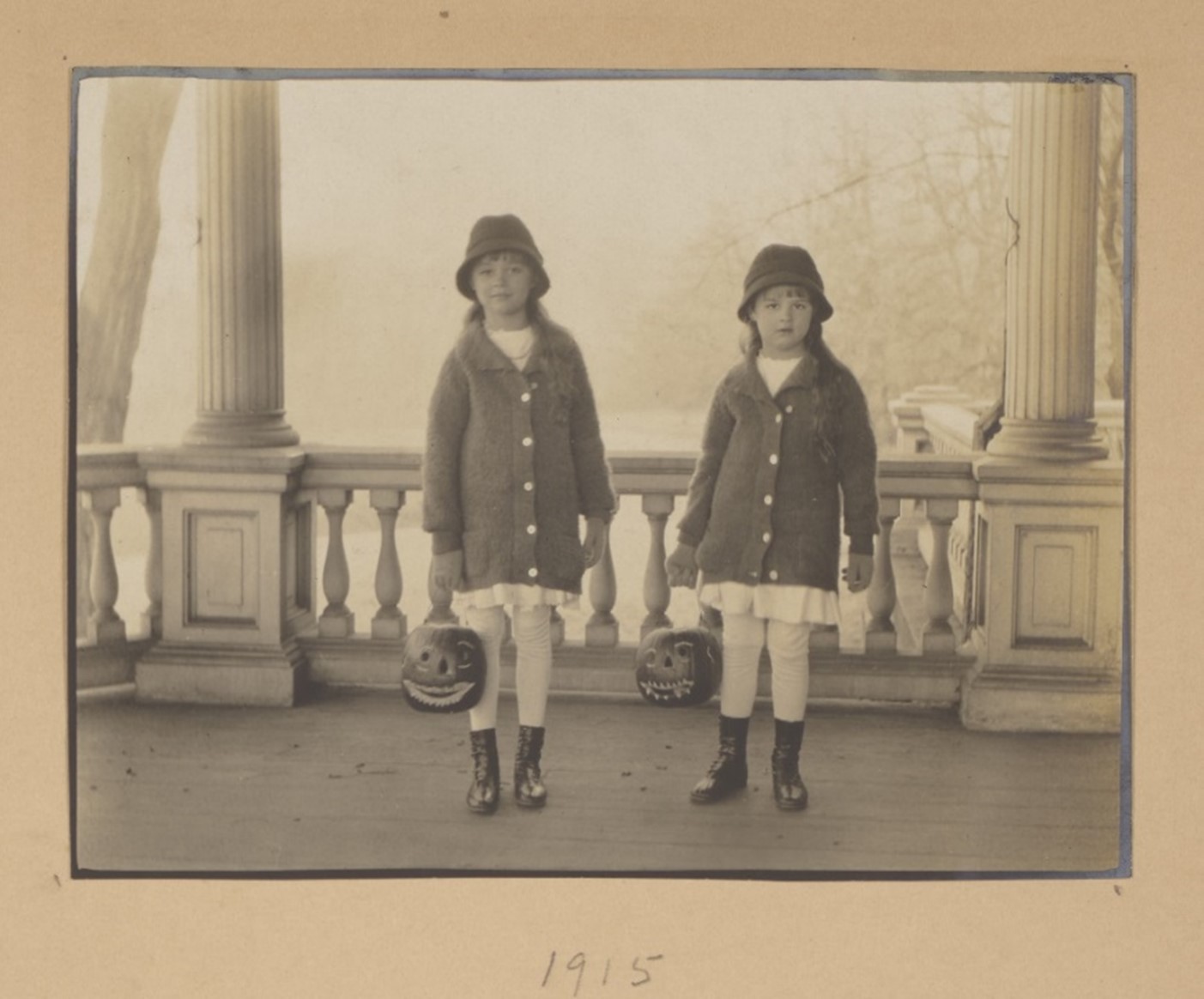
Two young girls stand next to each other on a columned porch. They wear matching hats, sweaters, dresses, and shoes. Both are holding carved pumpkin jack-o-lanterns.
Honoria and Janet Livingston on the porch at Clermont State Historic Site holding jack-o-lanterns (1915). Photograph in photo album. New York State Office of Parks, Recreation and Historic Preservation. Clermont State Historic Site. Gift of Honoria Livingston McVitty, CL.2000.211.20.F 
Continue reading Playful Costumes From the Past, Just in Time for Halloween

Returning Home: Solomon Northup at Saratoga Spa State Park

A statue of abolitionist and writer Solomon Northup, whose story was told in his memoir and the Academy Award-winning film Twelve Years a Slave, has provided a space for reflection at Saratoga Spa State Park this summer. The 13-foot bronze “Hope Out of Darkness” sculpture was unveiled during a July 10 ceremony attended by Northup descendants, area officials and community members on the lawn in front of the Lincoln Bathhouse.  

The Solomon Northup “Hope Out of Darkness” statue is on view in front of the Lincoln Bathhouse (65 South Broadway Saratoga Springs, NY 12866) through Oct. 19, 2025.  

Northup, a free-born Black American born in Minerva, NY, lived in Saratoga Springs with his wife and children for about seven years when he was tricked into joining a traveling circus. This sinister ploy led to Northup being kidnapped in Washington, D.C. in April 1841 and sold into slavery.  

Continue reading Returning Home: Solomon Northup at Saratoga Spa State Park

Telling New York’s Whole Story: Black History At State Historic Sites

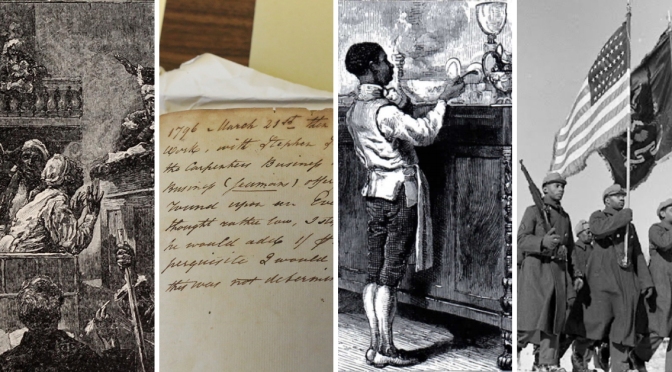
Black History Month is drawing to a close. But at the Office of Parks, Recreation and Historic Preservation, research into New York’s Black history is continuous. From the 1627 arrival of the first 22 enslaved African men to the 1827 abolition of slavery in New York and into the future, Black history is the history of New York and of the United States. This is a cornerstone principle of ‘Our Whole History,’ a Parks initiative launched several years ago to thoroughly research and share the stories of New York State from the points of view of all who lived it.

As research continues, a more complete picture of the past emerges. The stories of the Black New Yorkers who contributed so much to New York’s history are revealed through painstaking, detail-oriented research. Key caretakers, highly skilled laborers, folks who contributed to a smooth-running household become clearer.

To piece together their stories, our dedicated historians conduct archaeology, study physical objects, and delve deep into records of all kinds: account ledgers of both homes and businesses; census data; estate inventories; wills; letters and journals; city directories; diaries, and more.

Several of our historians shared with us the stories of Black figures who shaped the history of their sites.  

Continue reading Telling New York’s Whole Story: Black History At State Historic Sites

Curated Cemeteries Tell Tales at State Parks

With Halloween coming up, the setting of an old cemetery might come to mind. Cemeteries are beautiful, poignant, old and sometimes just creepy, but these places are also a powerful reminder of the past and a record of the people who came before.

As part of its mission to preserve the state’s heritage, New York State Parks is responsible for the care of numerous cemeteries – from dozens and dozens of small old homestead cemeteries and large military cemeteries to burial vaults and even pet cemeteries. And cemeteries, just like any other historic item, do require maintenance and repair from time to time.

It is the job of the Historic Site and Parks Services (BHSPS) to preserve these cemeteries and the individual gravestones. That means tackling the challenges posed by time and weather, but also repairing the damage done by vandals, who break or damage stones.

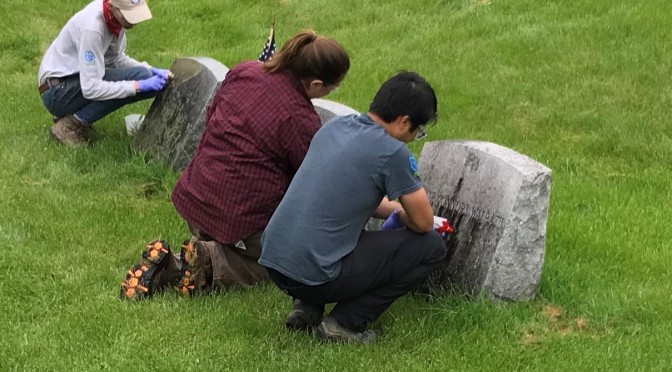
Intact stones can be cleaned and inventoried in place, but fractured stones in need of repair are brought to our historic preservation labs Peebles Island State Park, where conservators perform the needed repairs. That work has been assisted by members of the New York State Excelsior Conservation Corps, who learn how to document, map, clean and reset gravestones.

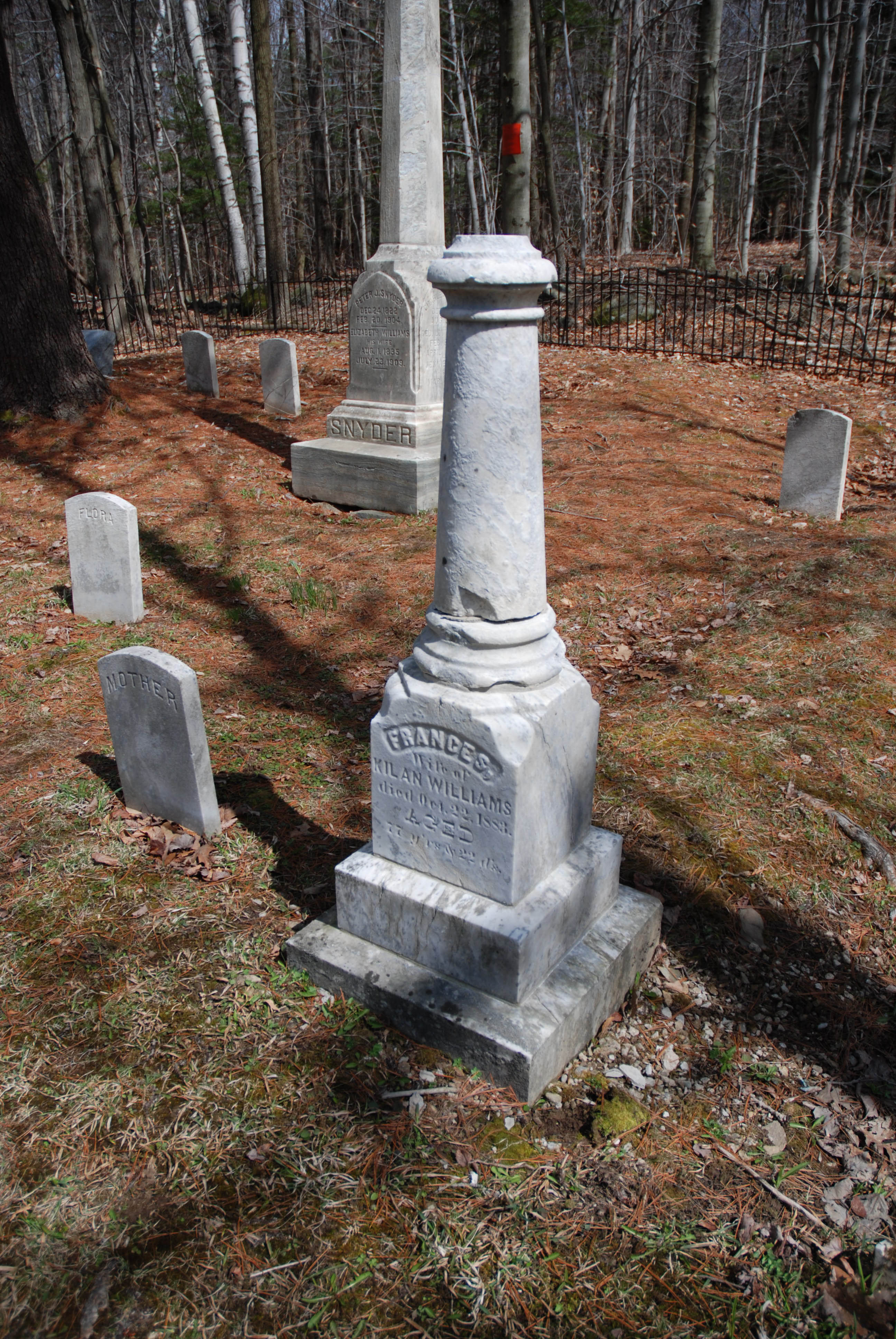
A visit to a historic cemetery can be a time of contemplation in a quiet natural setting. For example, Grafton Lakes State Park in the forests of the Rensselaer Plateau in the Saratoga/Capital Region, has four historic family cemeteries.  The Old Snyder Cemetery is just above the Mill Pond and shadowed by the forest.  The small cemetery, dating to the 19th century is surrounded by a decorative iron fence and features obelisks, and marble and bluestone gravestones.

At the historic preservation labs at Peebles Island State Park, a fractured gravestone from a historic family cemetery within Grafton Lakes State Park is reset.
Gravestones freshly cleaned by State Parks staffers shine at Grafton Lakes State Park.

The gravestones tell the story of life in 18th and 19th century New York. Some stones simply feature a name while others feature beautifully carved weeping willows or crosses.  The Thomas West, Frances West and Hicks cemeteries are smaller and buried deeper in the Park.  The cemeteries are marked by fieldstone walls or split rail fence.  

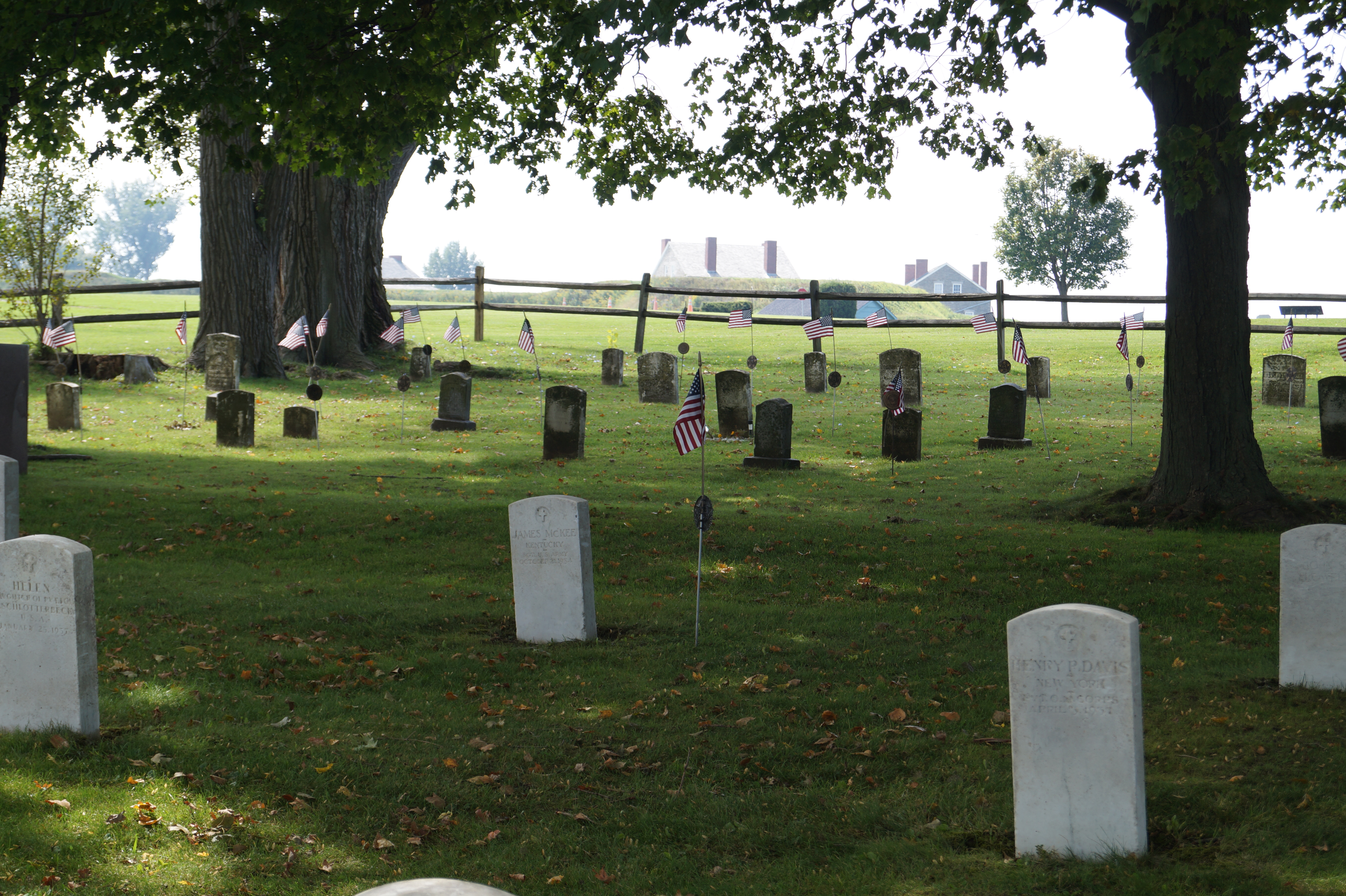
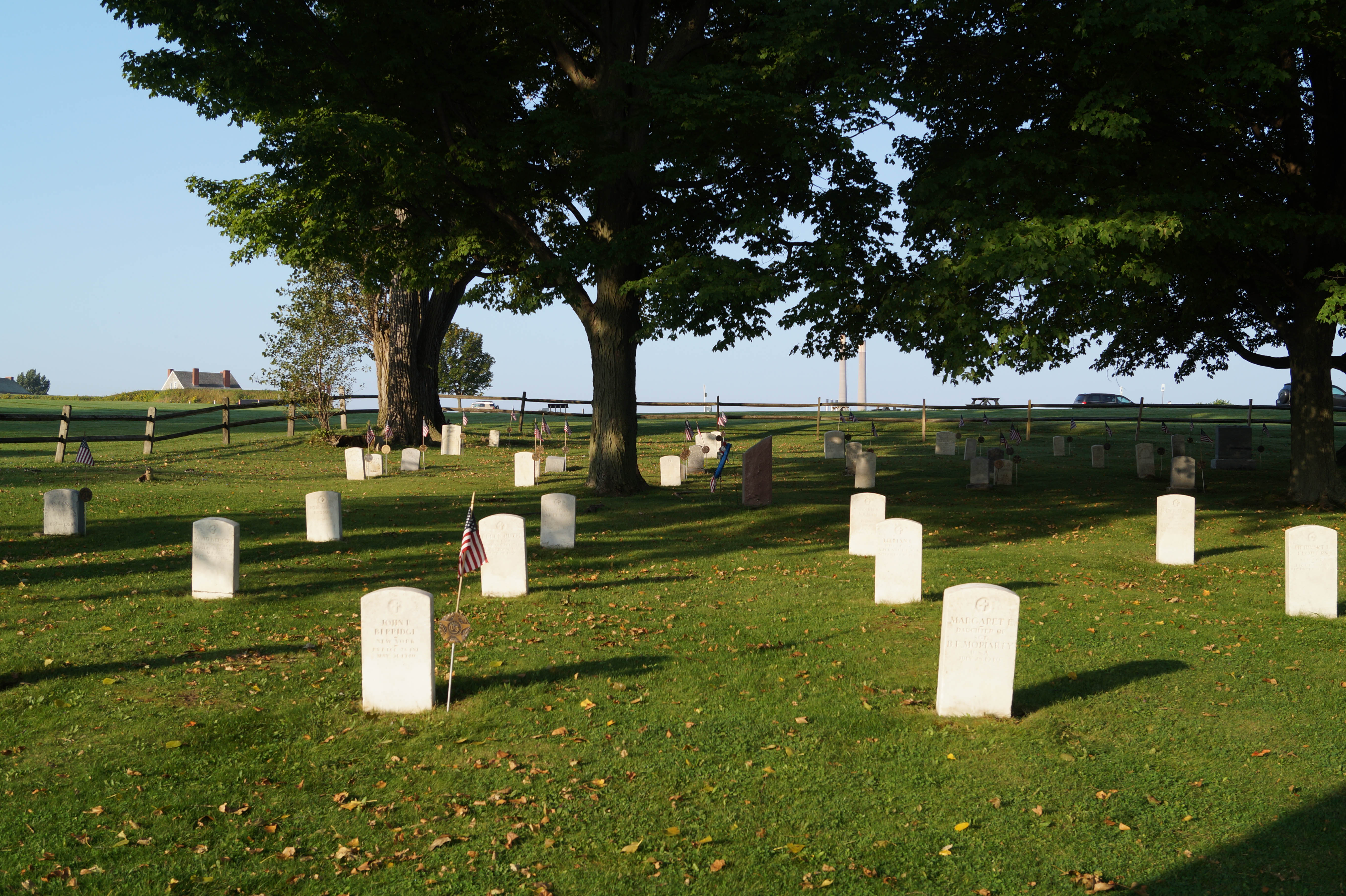
At the other end of the state, the 1812 Cemetery at the Old Fort Niagara State Historic Site, is the resting place of the fort’s soldiers and their families from the War of 1812 through the 1930s. This cemetery is shaded by mature oaks, pines and maple trees and overlooks the Niagara River.  Traditional military tombstones are intermixed with large granite and marble memorials to the Unknown Soldiers who died during the campaigns of Western Expansion, the Revolutionary War and the war of 1812. The Victorian and Gothic gravestones feature finely detailed cannons, urns, flowers, shields and crosses.   

State Parks conservator Heidi Miksch gently cleans the bronze plaque on a tombstone at Old Fort Ontario State Historic Site.
Gravestones at Old Fort Ontario during and after a cleaning session. Use the slider bar to compare pictures.

The Herkimer Home State Historic Site and Fort Ontario State Historic Site in central New York also feature military and local cemeteries. The Herkimer Home cemetery has large memorials flanked by cannons intermixed with delicate 18th-century marble gravestones and 19th-century zinc memorials, and includes the resting place of Revolutionary War General Nicholas Herkimer, who died of wounds after the Battle of Oriskany.

A member of the Excelsior Conservation Corps (ECC) cleans a gravestone at the Herkimer Home State Historic Site.

Back at the historic preservation labs at Peebles Island, an ECC member repairs a broken gravestone from Herkimer Home State Historic Site.
A map of the Herkimer Home cemetery created by Excelsior Conservation Corps members.

In Oswego at Fort Ontario, a small cemetery features 77 marble military tombstones of veterans from the French and Indian War to World War II. Inside the fort are fragile and rare gravestone from the 1700s.

Sonnenberg Gardens & Mansion State Historic Park in Canandaigua has a small pet cemetery under an old oak tree near the 19th century Victorian mansion. The cemetery is surrounded by a low iron fence and features large boulders carved with the names of family pets owned by Frederick and Mary Thompson, the estate’s former owners.  A marble statue of a resting dog guards the small resting place.

Pet cemetery at Sonnenberg Gardens, where a statue of a reclining dog stands watch.

At Katonah’s John Jay Homestead State Historic Site, in the historic house’s Terrace Garden, there is a simple marker in the memory of Old Fred, a horse that served in the Civil War with Colonel William Jay II, with both rider and steed coming home safely at war’s end.

Its inscription reads: “In memory of Old Fred, who carried Colonel Jay through the Battles of Chancellorsville, Gettysburg, Peeble’s Farm & Appomattox, and who died at Bedford in May 1883, aged 28 years.”

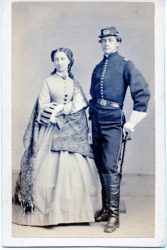
The grave and historical marker for Old Fred, the faithful warhorse of Colonel William Jay II. At bottom, Colonel Jay is shown in uniform with his sister, Eleanor Jay Chapman.

So, a quiet October afternoon could be a perfect time to appreciate the hand carved stonework, and imagine the lives marked by the gravestones, which are another aspect our shared history being protected by New York State Parks.


Cover Shot: Members of the Excelsior Conservation Corps cleaning gravestones at the Herkimer Home State Historic Site. (All photos by NYS Parks)

Post by Erin E. Moroney,  architectural conservator, Bureau of Historic Site & Park Services