From Ashes to Awesome: Sam’s Point

In April 2016, a wildfire engulfed around 2,000 acres of the Sam’s Point Area of Minnewaska State Park Preserve in the Shawangunk Mountains. The “Gunks” (a nickname for the Shawangunks) are well-known not only for climbing, but also for the globally unique community of high altitude dwarf pitch pine barrens which hold some interesting and charismatic flora and fauna. This year marks one year after the fire and it has been a very interesting time to be at Sam’s Point. Park staff have taken advantage of what some may consider destruction to learn more about the unique ecosystem that evolved along with fire. Student Conservation Association interns, State Park staff, and volunteer citizen scientists have researched how the ecological community at Sam’s Point is responding to the fire.

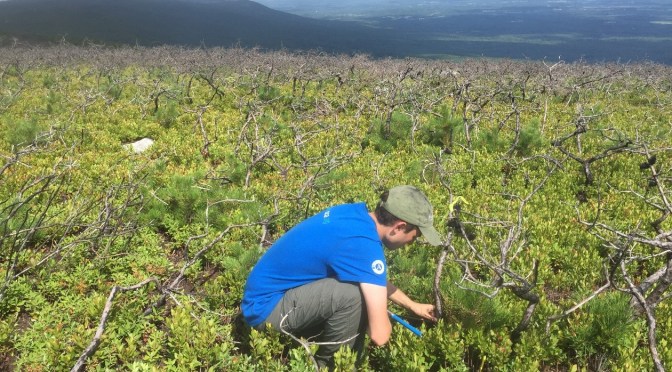
In the weeks after the 2016 fire, the State Parks staff set up twenty random plots within the pine barrens to study the regrowth of the forest after the fire. One year later, we continue to collect data on the changes that are taking place as the ecosystem bounces back. At each research site, pitch pines are measured and any new growth, or lack thereof, is recorded. We also search for pitch pine seedlings and this year we found more of them in our plots than last year! Pitch pines are a fire dependent species – this means that throughout their existence they have evolved to grow in areas with high incidence of fire and have adapted to survive and thrive in these areas. Perhaps most importantly to pitch pine survival, their pine cones need extreme heat, like the high heat produced from fire, to open up to release their seed. Although the high intensity of the fire may have damaged many of the older pitch pines, we can see the beginnings of a new forest through our observations.

At four of the 20 fire-regeneration plots, we took photos to collect visual data on changes over time. We are able to see changes in vegetation during the growing season and are able to compare vegetation levels from this year to last year. After a fire burns an ecosystem, the intensity of the burn creates a mosaic pattern on the land, making patches of different habitat. For those areas that are more severely burned, different plants may be found in those areas than areas that were less severely burned.  Through our data collection, we compare what is happening in different areas of the forest that were affected differently after the fire. We also look at any changes that occur over time as plants recolonize the scorched earth.

Changes over time, State Parks
Photo Points taken by Park staff and interns at Sam’s Point Area fire regeneration plots showing how the forest understory has changed in the past year, photo by State Parks and SCA.

Another study that was conducted this year was a breeding bird survey, where we compared the different bird species found in the burned area of the pine barrens to birds that were found in the unburned areas. Since the fire burned nearly half of the Sam’s Point Area, we looked at whether this change in habitat displaced breeding birds, welcomed new species, or if the number of breeding bird stayed the same. Interns, staff, and volunteers braved early mornings in May and June to conduct surveys in the park. Most often, we heard the eastern towhee telling us to “drink your tea”, the prairie warbler’s ascending song, and the “witchity witchity” of the common yellowthroat.  These species were found all over the park and we did not see many differences between the species we found within the burned area and outside of it. Generally, the differences we found had more to do with other aspects of habitat (i.e. birds were closer to water, closer to deciduous trees, etc.) than to the damage from the fire.

Fire has a long history on the Shawangunk Ridge and pitch pines are not the only species that has adapted to thrive with fire. Up until the 1960’s, berry pickers swarmed the mountainsides in the summer, picking huckleberry and blueberry and selling their juicy finds to city dwellers. Sometimes, they set fire to the ridge so that the next year, their bounty would be sweeter (in both size and taste!) Going further back into the history of the ridge, the Native Americans would also set similar, controlled fires, which today we would call prescribed burns, to keep the ecosystem healthy and productive. Although the 2016 fire was an intense wildfire and not a prescribed burn, we received the bounty of increased berry production in 2017. In mid-July the blueberries flourished, and modern day berry pickers, as well as animals that eat berries, such as chipmunks, squirrels, deer, birds, and bear, were able to indulge in these treats. By the end of July, the huckleberries had joined in on the fun so that at our August Berry Bonanza event, visitors could taste test and compare blueberry and huckleberry and choose their preference before they entered the berry-lined trails.

The 2016 wildfire at Sam’s Point has given us a lot to think about in the last year. We continue to learn more about our unique little corner of the world, and we share what we have learned with our visitors. We are also able to enjoy the beauty of the rebirth of an ecosystem. This strange, otherworldly beauty inspires park-goers with a new type of scenery they may have never seen before, making this one of a kind ecosystem seem even more special. To learn more about Sam’s Point Area of Minnewaska State Park Preserve or to get involved in Citizen Science visit https://parks.ny.gov/parks/193 , or even better, come visit us in person! We look forward to sharing our park with you.

Post by Leah Rudge, Student Conservation Association Intern

Featured image by  Leah Rudge, Student Conservation Association Intern

Floating Treatment Wetlands at Rockland Lake State Park

You may have noticed something new in the water at Rockland Lake State Park.  These are floating treatment wetlands!  Read our post below to find out more about these water treatment platforms.

Why are they here? 
In recent years, harmful algal blooms have become common in Rockland Lake. These algae blooms are largely caused by an unhealthy increase in nutrients such as phosphorous in the lake.  The nutrients come from many sources nearby, including excess lawn/garden fertilizers that wash into storm ditches after a rainfall, then drain into Rockland Lake.  One culvert (inlet) with consistently high nutrient levels is located near Parking Field 5 and it was chosen as the location for a new floating treatment wetland.  The goal of adding a floating wetland to the lake is to reduce the amount of nutrients – and by extension, harmful algal blooms – in the lake.

What are they?
Floating treatment wetlands (a.k.a. floating wetlands/islands) help to bring the benefits of natural wetlands to polluted water. They filter water to improve water quality and they provide important habitat for a variety of plants and animals. Floating wetlands can come in different shapes and sizes, but in general, wetland plants are supported atop a buoyant platform, with roots exposed in the lake water below.

What do they do?
Floating treatment wetlands help to create the right balance of submerged and non-submerged wetland habitat based on each individual site’s needs. As the plants grow, they use-up excess nutrients in the water. In addition, communities of beneficial bacteria form a film around the roots, further helping to filter nutrients and pollutants. Higher/lower elevations create areas with varying oxygen levels, promoting these different biological filtering methods. The floating platform blocks sunlight, preventing the growth of algae. Lastly, fish and wildlife enjoy the new addition to their habitat.

This is the first time that floating treatment wetlands have been used in New York State Parks.  Environmental staff will determine the effectiveness of this project by monitoring water quality changes over time (e.g. harmful nutrient levels and algal blooms by the inlet as well as lake-wide).  If successful, then floating wetlands may be used to help treat stormwater pollution and improve other aquatic habitats in New York.

Post by April Brun, Gabriella Cebada Mora, and Erin Lennon.

Rockland photos by Gabriella Cebada Mora, Aissa Feldmann, Matt Brincka, and Erin Lennon.

Resources

Floating Island/Wetland images and information

US Environmental Protection Agency information on nutrient pollution and harmful algal blooms:
(Website)                   (Video)

NYS Dept. of Environmental Conservation information on fertilizers and how to reduce nutrient runoff:

(Website)                   (Video)

Fall in Love with Autumn Camping

If you think camping in a state park campground is enjoyable in the summer, wait until you experience an overnight getaway in September or early October, when New York’s outdoors is awash in enough colors and sounds of the season to overwhelm the senses.

The autumn mist rising from the water’s surface on a brisk morning, paddling along a tree-lined shore edged in spectacular reds, oranges and golds, the crunch of leaves underfoot on a hike, the aroma of coffee over a crackling fire — these are just a few of the experiences awaiting those campers who prefer to camp once the crowds thin, schools are back in session, and Labor Day is in the rearview mirror.

Benefits to fall camping include fewer neighbors, fewer bugs, and a greater selection of sites from the peak summer season.  With the right clothes and gear, the slightly cooler temperatures make fall camping more comfortable than in the commonly muggy dog days of summer.

Plan to extend a leaf-peeping day trip and sleep under the autumn stars. You can book ahead to reserve a spot or opt for a spontaneous adventure and just grab your gear and go. Many state park campgrounds throughout New York are still open with availability for tent and trailer sites, yurts, cabins, and cottages.

Here are just a few of our fall favorites:

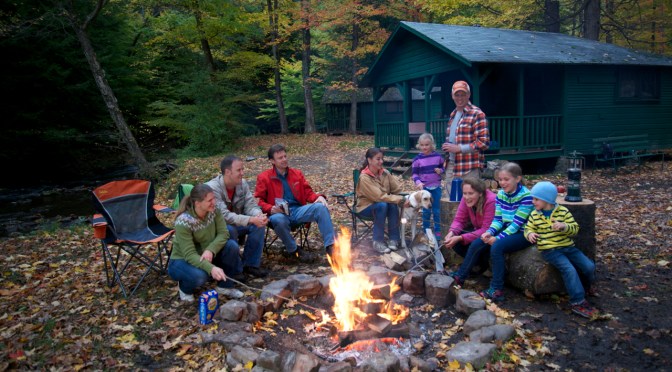
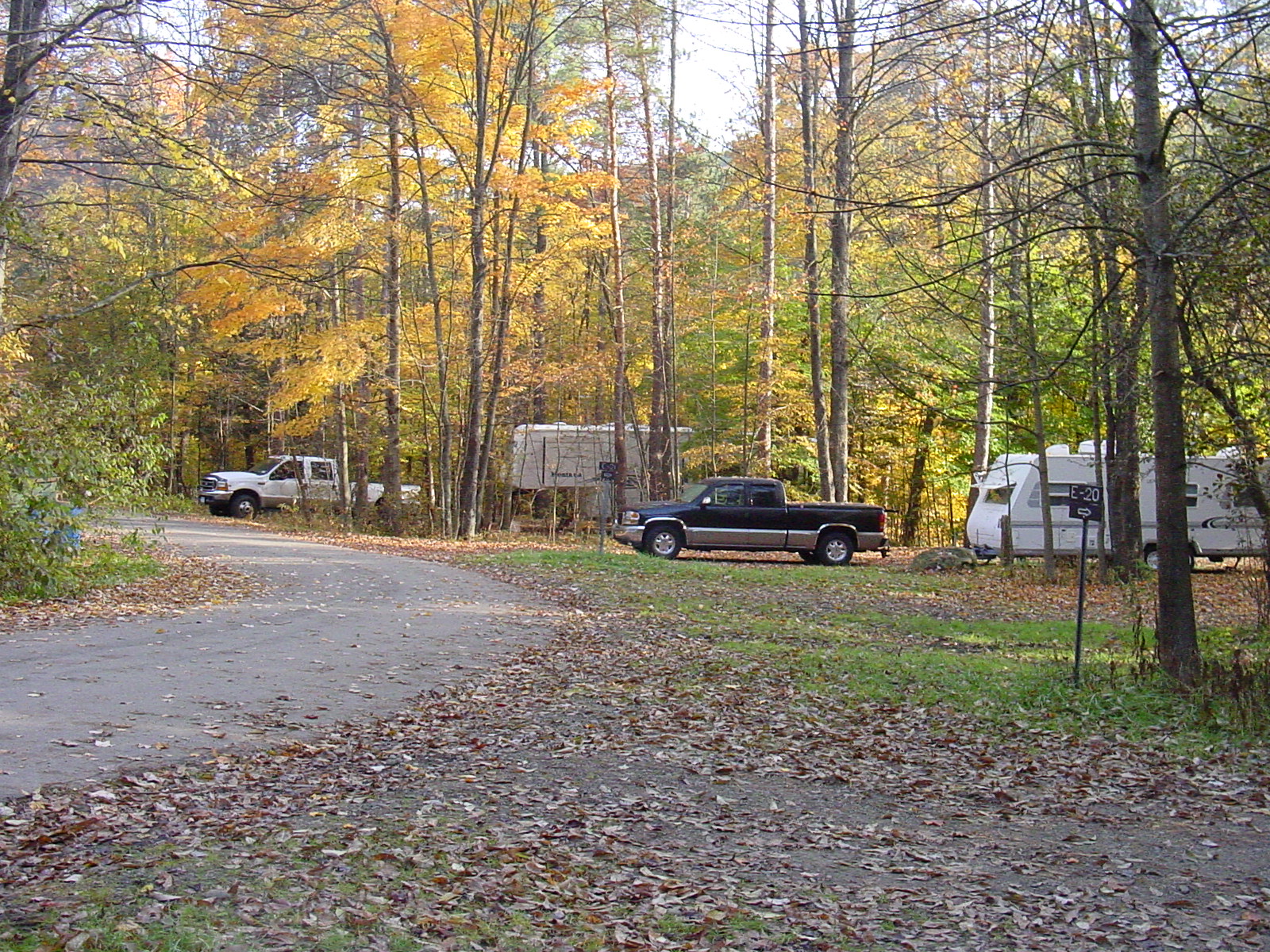
Red House CG, Fall Camping
Listen to the rustling leaves while you camp at Allegany State Park, photo by State Parks.

At 65,000 acres, Allegany State Park is the perfect setting for embracing nature’s colorful palette in the fall months.  Lakes, ponds, and miles of trails, beckon outdoor lovers for hiking, biking, nature walks, fishing, paddling, and more.  Choose from tent and trailer sites, cabins, and cottages.

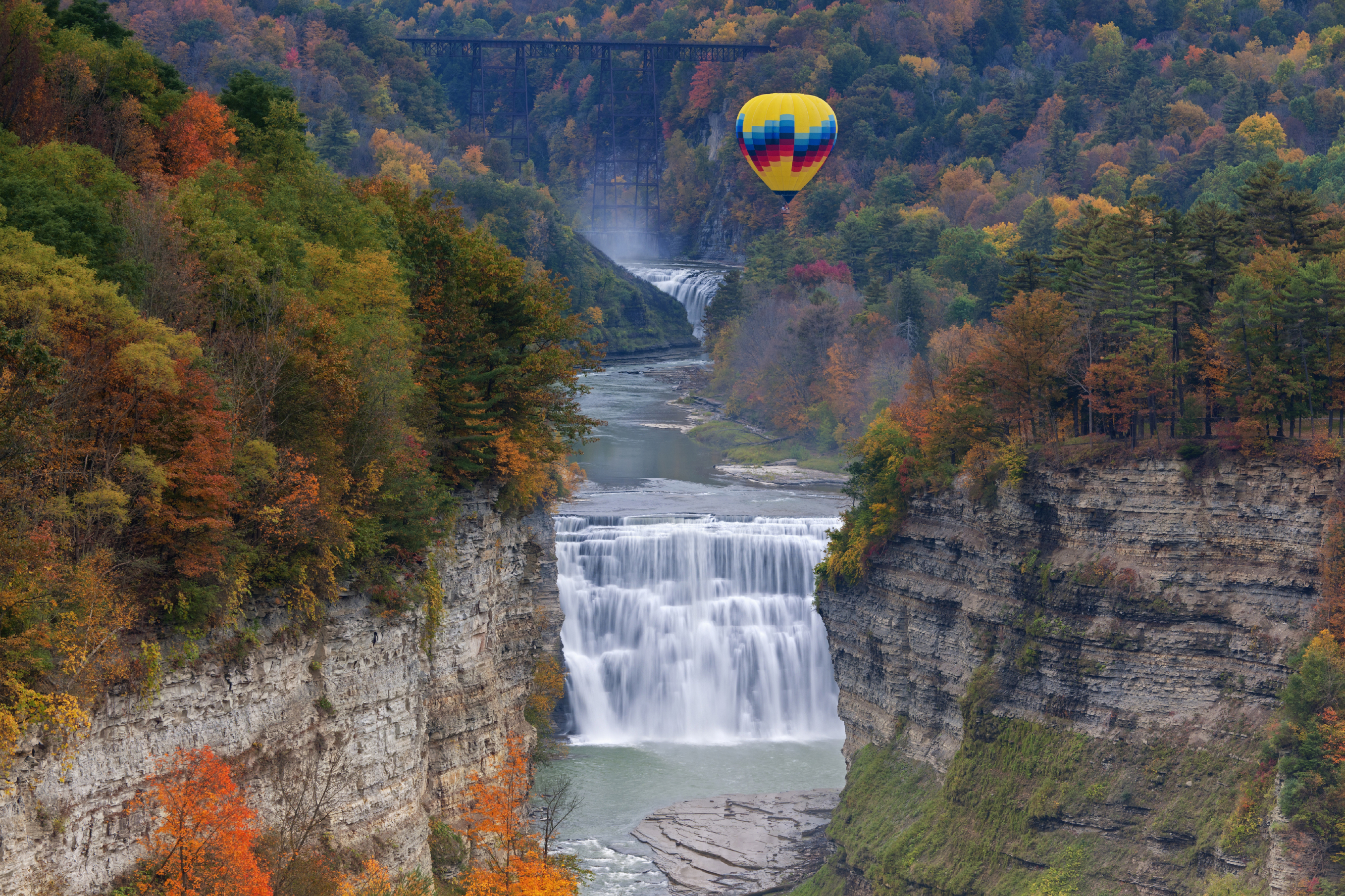
The Middle Falls At Letchworth State Park
Ballooning at Letchworth State Park, photo by Jim Vallee.

In the Genesee Valley, the sweeping views at Letchworth State Park are jaw-dropping in every season, but add vibrant foliage to the mix and prepare to be amazed by the sheer grandeur.  For campers, the park offers tent and trailer sites and cabins.  Visit the new Humphrey Nature Center or explore the gorge trail on your own — views from Inspiration Point and Middle Falls are a must-see.

Taughannock Falls State Park _DSC_0001
Enjoy the waterfalls at Taughannock Falls State Park, photo by State Parks.

The Finger Lakes gorge parks also provide a stunning backdrop for camping this time of year.  Take a break from campfire cooking and enjoy the bounty of farm-to-table restaurants or the premier wineries in the area. Home to 19 waterfalls, Watkins Glen State Park on Seneca Lake welcomes campers to an array of wooded campsites (many with electric hookups) and rustic cabins.  Walk along the winding paths of the gorge or take a bike ride on the nearby Catharine Valley TrailTaughannock Falls State Park on Cayuga Lake leaves visitors spellbound with its namesake waterfall and rocky cliffs that perch high above the gorge.

Green Lakes (15)
Fall camping with a furry friend at Green Lakes State Park, photo by State Parks.

The only thing more colorful than the fall foliage at Green Lakes State Park is the actual Caribbean-like hues of the glacial lakes themselves.  With campsites nearby including many full-service sites and renovated cabins, campers also have easy access to the park’s 20 miles of hiking trails and championship golf course.

Moreau Fall_0011-12 copy
If you camp at Moreau Lake State Park, take a hike around the lake, photo by State Parks.

Moreau Lake State Park is situated in the foothills of the Adirondacks with tent and trailer sites, cabins and cottages. Hike or bike on the 27 miles of trails and enjoy paddling and fishing on the scenic waters of the park’s beautiful lake or the Hudson River.  Wildlife viewing is a favorite!

Copake Falls Campers_JR2432email
Autumn campers at Taconic State Park, photo by State Parks

Taconic State Park offers autumn campers incredible sites for tents or trailers, cabins and cottages, and plenty to see and do including biking, hiking, fishing, paddling, and more.  As part of the adventure, be sure to check out the Harlem Valley Trail, the South Taconic Trail, Bash Bish Falls, and the Copake Iron Works Museum.

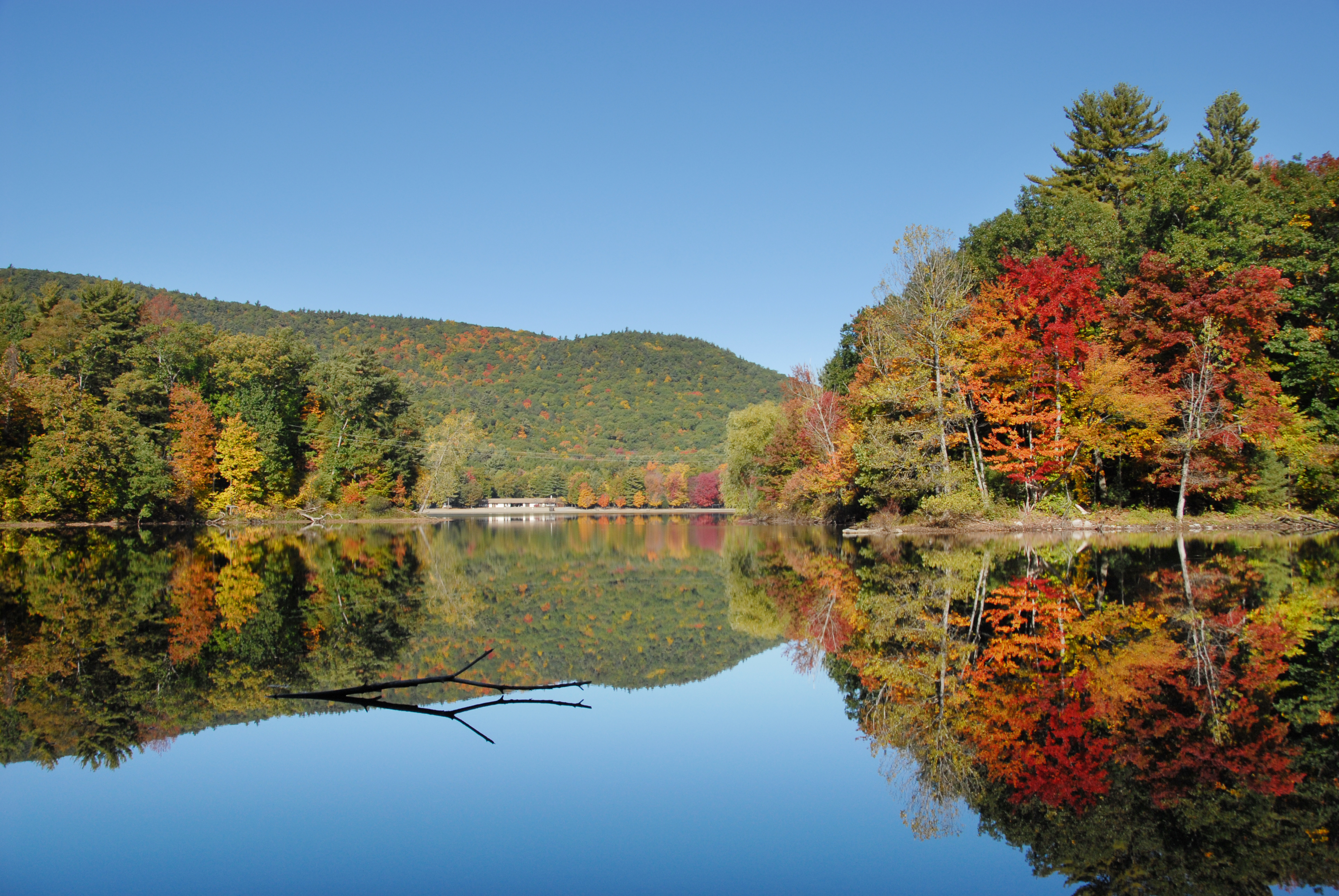
Bennington Battle Feild Fall DSC_0122b
Fall colors at Bennington Battlefield State Historic Site, photo by State Parks

Tip:  Whether planning a fall camping adventure or taking a leaf-peeping day-trip, a good resource to determine peak color location is the I Love NY Fall Foliage Report issued weekly.

Voting NO on Women’s Suffrage

Women have not always had the legal right to vote in America.  On August 18, 1920, the 19th amendment was ratified granting women the right to vote. This milestone in women’s history was the result of decades of sustained action: protests, political organizing, direct confrontations and debates with people who felt women needed no further rights. Suffragists were ostracized, fired from jobs, beaten, arrested and imprisoned – all because they dared to strive for the right to vote.

For the supporters of women’s suffrage gaining the vote was a matter of life or death. Women were subject to the will and mistreatment of their husbands, both financially and physically within the home. Husbands had complete legal authority over their wives and could abuse them with no fear of consequences. Any woman attempting to leave a marriage faced the loss of custody of their children and destitution. The workplace was no better; women faced sexual harassment, abuse, terrible working conditions and lower wages than their male counterparts with little to no legal recourse. Women were also barred from many professions completely. The vote meant access to the political power needed to reshape laws and gain equal treatment and dignity as human beings.

When it came to the issue of women’s suffrage, New York was a state at war within itself.  Major activists on both sides of the issue held meetings, published articles, and attempted to sway public opinion.

The anti-suffragists claimed that giving women the vote would move them too far away from their primary duty of running the home. They fully agreed with the notion that a “woman’s place” was in the home, although they did concede that women should contribute their time and talents to educational, charitable, religious and moral organizations.  These endeavors did not require the vote, nor included politics.

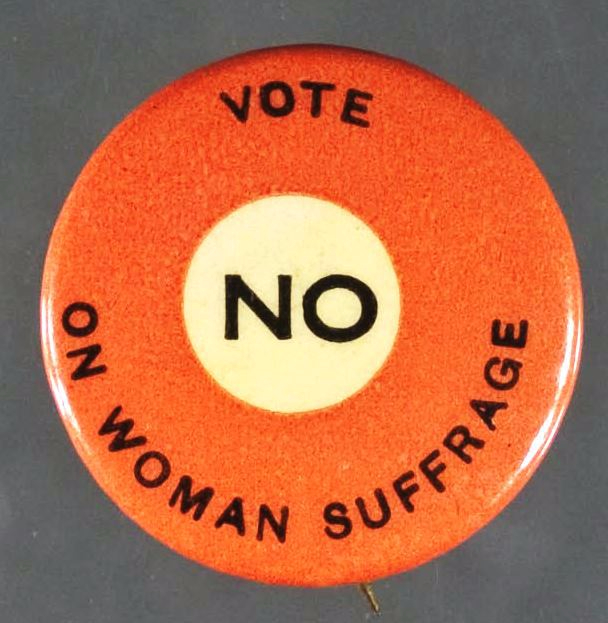
Charles S. Fairchild, husband of Helen Lincklaen, was a politician and served under President Cleveland as the Secretary of the Treasury. Fairchild was the fourth owner of the estate which would later become Lorenzo State Historic Site in Cazenovia N.Y. and a staunch supporter of anti-suffrage. He was an active local leader in the effort to prevent women from gaining the vote. The collections of Lorenzo include many anti-suffrage items, such as, printed speeches, several issues of The Woman Patriot, a button which reads: “VOTE NO ON WOMAN SUFFRAGE”, anti-suffrage pennants, and books and handbills with titles like Anti-Suffrage: Ten Good Reasons and The Menace of Women’s Suffrage in New York State—some with hand written personal inscriptions by the authors.

Fairchild was not alone in his views within the town of Cazenovia. Many prominent individuals, both men and women, considered themselves avid supporters of the anti-suffrage cause. The Cazenovia Anti-Suffrage Society was very active and held regular meetings to support their cause and raise funds. Many anti-suffrage groups were organized by women; and the majority of these organizers were members of the upper class with husbands in prominent positions in business and politics.

From our modern day perspective it may be difficult to imagine why so many women supported the anti-suffrage cause. But the popular view of society in the early 1900s holds many of the answers. Life was cleanly divided into two halves, the domestic realm and the public world. Men were believed to be ideally suited by their nature to be masters of public life. Aggression and a competitive spirit were seen as traits best suited to politics, finance and war. Women were the converse, the peacemakers, the orchestrators of a happy family, the creators of cleanliness and order within the home. These views were not only popular but for many unquestionably true.  Suffragists challenged this world view directly with the assertion that women were equal citizens and deserved the right to vote.

The first organized effort to seek the vote for women in New York began in 1846 when a small group of women in Clayton NY petitioned the state government asking for “equal, and civil and political rights with men.” It took nearly 75 years to shift public opinion away from these historic, engrained views towards a more equitable society.

ant-womens-suffrage-campaigne-button-exam-003-detail-obverse1.jpg