Wonders of the Winter Beach

Getting cabin fever? Well, bundle up and take a trip to a beach-front state park! Lake Ontario, Lake Erie, Lake Champlain, Long Island parks or the many parks on small lakes: Glimmerglass, Green Lakes, Long Point-Chatauqua Lake, Allegany, or many others.

This is the time to explore the many interesting patterns and colors of wintertime “icescapes.”


For now, enjoy some spectacular views from Southwick Beach State Park and its wild ice formations on the eastern shores of Lake Ontario. With no other visitors in sight on this day, there was no problem for this intrepid explorer to keep safe distances while enjoying the scenery.

During such visits, dress warmly and in layers, as shorelines can be chilly, as well as windy. But it is the wind that makes for fantastic ice sculptures along the shores. Sometimes the nearby trees or dune grasses will be laden with frost and salt spray. Or you may find some interesting driftwood and shells tossed up on the shore by the waves and wind.

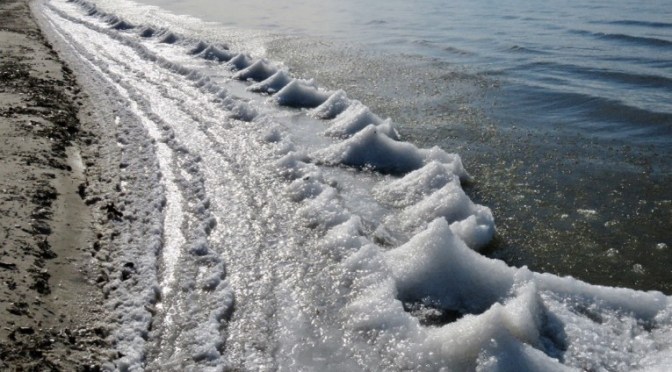
Look way out to the water’s edge and you will realize that maybe that is not water but rather the frozen froth of waves forming an icy ridge on the beach.

Finding animal tracks in ice, snow or even frozen sand also is often easier than in other seasons. Look for footprints; can you figure out who has been there?

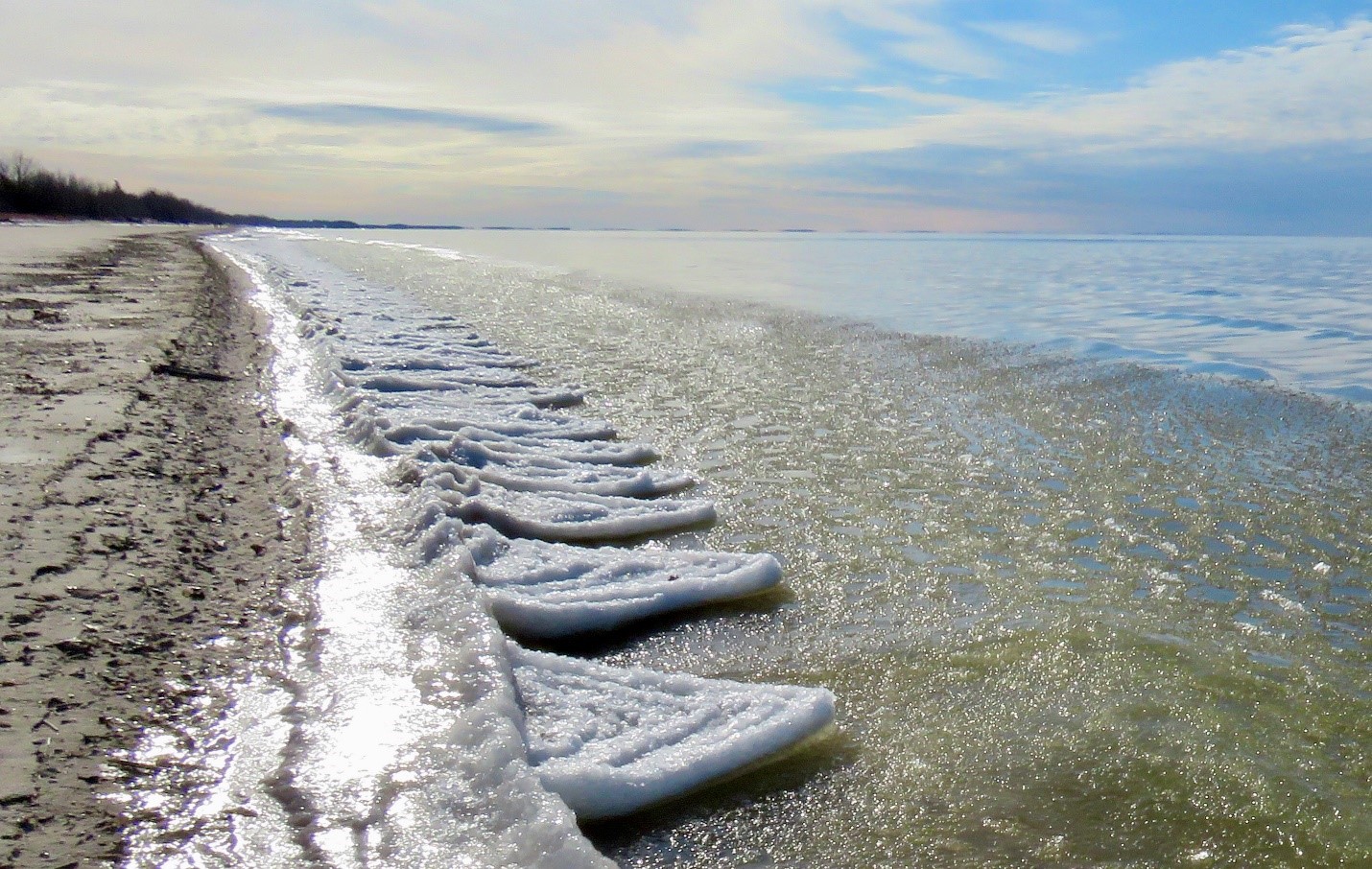
Ice can take interesting or fantastical shapes, as shown by the picture above at Southwick Beach.

How does the ice form shapes like this? A breeze pushes waves against the upper shore and the water at the top edge freezes as it hits the frozen sand. Then thin layers of water build up at the icy edge forming this wild pattern of ledges extending a mile down the beach.
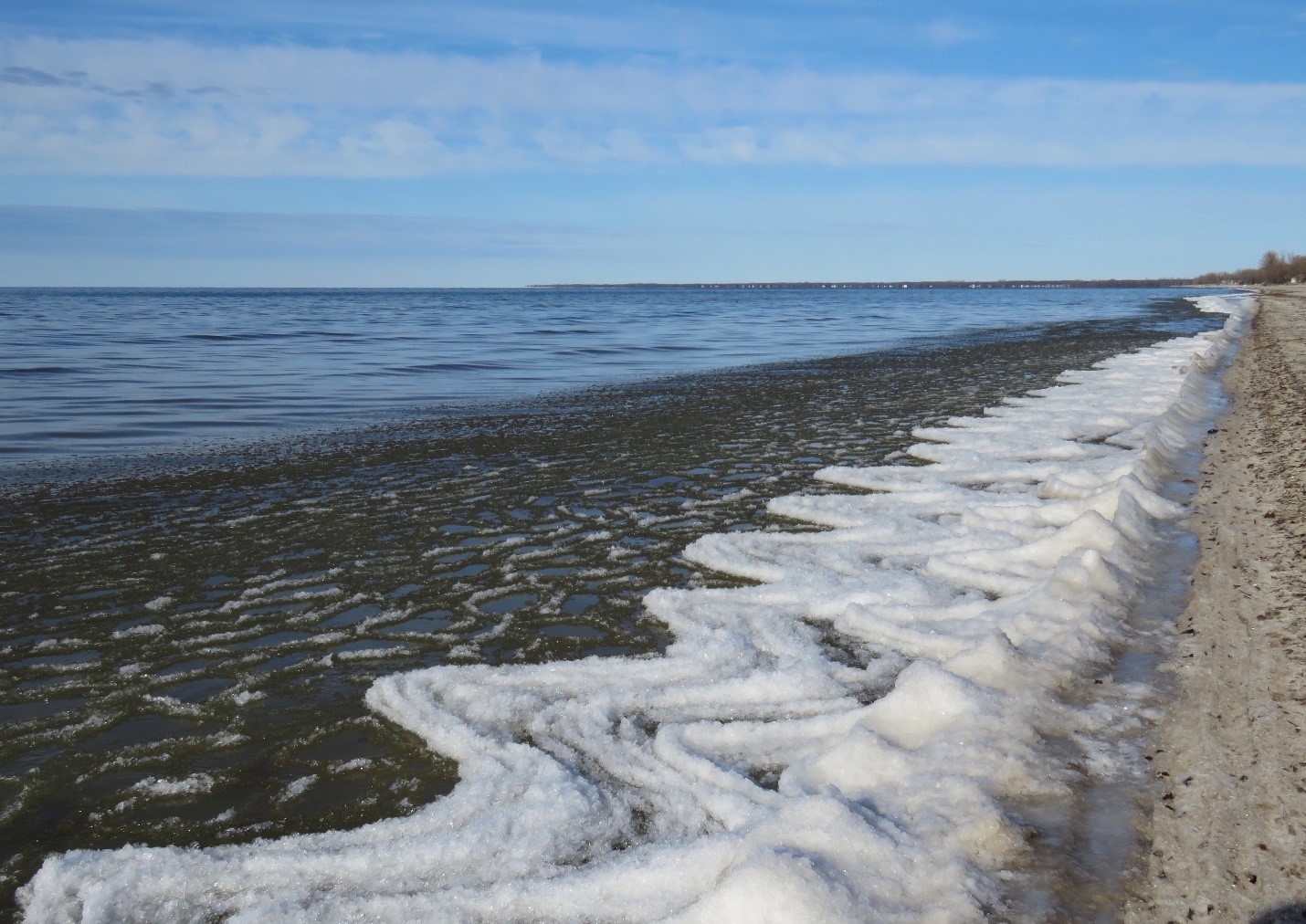
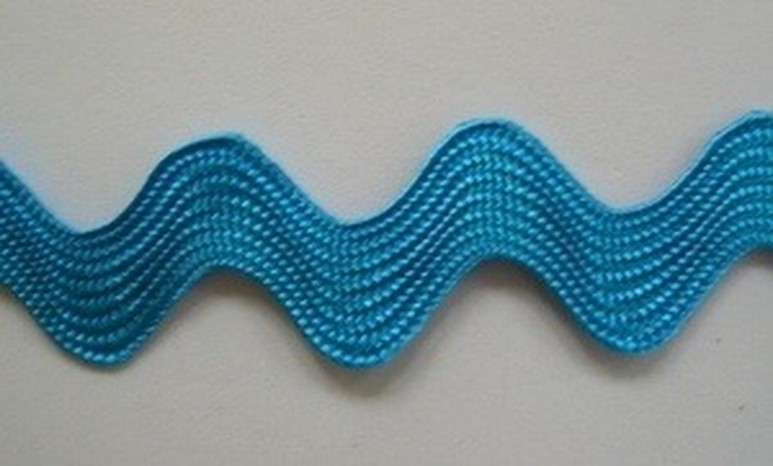
In a different section of beach, the ice forms a pattern much like rickrack, a form of braided trim in a zigzag pattern that was highly popular in the 1960s.


And wintertime can create its own interesting illusions, such as this picture above, in which it appears the forest is floating in the sky above the water. This phenomenon is known as a “superior mirage” which tends to happen in cooler weather, when the air is colder above your line of sight than below. In this case, the air temperature is colder than the lake water. On this day the air was about 20 degrees and the water 40 degrees.

Read more about the science of a superior mirage on Wikipedia.

There is so much to see along our shorelines even in winter. Get out in the fresh air, explore some winter beaches and take pictures to share.


All photos of Southwick Beach State courtesy of Kathy Faber-Langendoen

Post by Julie Lundgren, State Parks Ecologist, NY Natural Heritage Program


Prepare to Explore more of State Parks in the winter by reading these previous posts from the NYS Parks Blog.

Evangola State Park: Lake Erie’s Winter Playground!

Along the shores of Lake Erie, Evangola State Park becomes a winter sports mecca as the lake’s famous lake-effect snowstorms blanket the park! Lake-effect snow occurs when cold, Canadian air moves across Lake Erie evaporating its open waters and causing intense, local snow bands which can drop one to two inches of snow per hour.…

Enjoy Winter – Get the Kids Outside

It’s cold outside, it takes forever to get the kids bundled up and out the door. Is it worth all the trouble? You bet! You don’t need a lot of planning, just a few tips and tricks to encourage kids – and you – to enjoy the outdoors in winter. Bundle Up Look for hats…

Winter Tree Identification Part II: Evergreen Trees

Evergreen means these trees keep their “leaves” throughout the winter. Though we may call them pine needles, they are actually very skinny leaves that serve the same function as the leaves on a deciduous tree. Identifying evergreens during the winter months is almost the same as in spring and summer, with the added advantage of…
Remembering The Queen of The Mist

It is 1901 and the dawn of a new century. The Pan-American Exposition is going on in Buffalo, a world’s fair that was attracting people from all over the world, with many of those visitors taking train excursions to nearby world-famous Niagara Falls.

During the expo, visitation was running between 10,000 to 50,000 people daily at Niagara Falls Reservation State Park. And the attention of these crowds is exactly what Finger Lakes native Annie Edson Taylor wanted to grab.

A 63-year-old widow and retired schoolteacher living in Bay City, Michigan, Annie was in financial straights at that point in her life. Sensing an opportunity in Buffalo, she went there with the idea to become rich and famous by doing something no one had ever done – going over Niagara Falls in a barrel.

People had been barrel-riding the rapids below the falls to much popular acclaim during a time when there were no rules in place for such dangerous stunts. Today, there are laws in place at the falls making it illegal for anyone attempting such actions, which since the 1950s have been subject to prosecution and substantial fine by both the U.S. and Canadian governments.

Inspired by the daring barrel-riders in the Whirlpool Rapids below the falls, Annie had her own barrel made of white Kentucky oak to her specifications by a local company.  Cushions, pillows and a harness were placed inside for protection. The barrel had a tube through a hole so air could be pumped in when the barrel was sealed.

First, the rookie daredevil decided she had to test it. So Annie sent out the barrel with a cat inside for a run over Niagara’s Horseshoe Falls on Oct. 18, 1901. When the barrel washed to shore and was opened, the cat emerged unharmed, boosting Annie’s confidence that she too could survive the 167-foot plunge.

Annie Taylor with her barrel and a cat, possibly the cat that went in the test run over Horseshoe Falls. (Photo Credit – U.S. Library of Congress)

On Oct. 24 – her 63rd birthday – Annie set out with her two assistants, William Holleran and Fred Truesdale, to Port Day on the U.S. side of the river that led to the rapids above Horseshoe Falls on the Canadian side. She had announced her intentions, and onlookers had gathered.

The daredevil had changed into more comfortable clothes – a lightweight blue skirt and blue blouse for her journey. Her assistants tied the barrel to a rowboat, making sure Annie was secured inside before closing the lid. Some air was pumped inside the barrel using a hose, and the men rowed into the river with the barrel in tow.  With the rope cut, the barrel floated off toward the roaring falls.

Annie and her two assistants soak the barrel prior to the trip to help seal it. (Photo Credit – Niagara Falls Public Library)
Annie goes into the barrel before the top is sealed. (Photo credit – Niagara Falls Public Library)
Onlookers are onshore as Annie inside her barrel is rowed into the river above the rapids. (Photo credit – Niagara Falls Public Library)
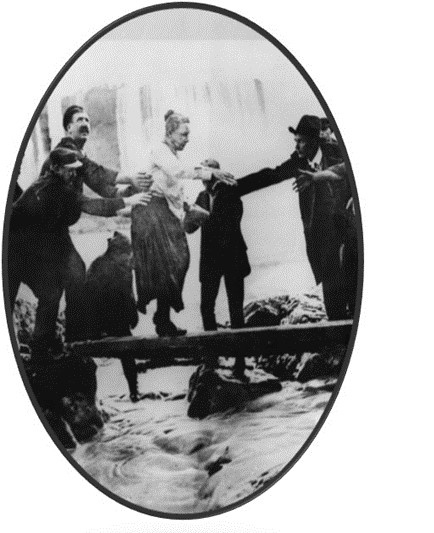
Annie comes ashore after her plunge, suffering only a few cuts and bruises. (Photo credit – Niagara Falls Public Library)

A few minutes later, several men waiting on shore drag the slightly beat-up barrel to the river’s edge on the Canadian side. They remove the lid to see how she has fared. And Annie is alive!

She gets out stumbling, with only minor injuries, for which she is brought back to the U.S. side and taken for medical treatment. Her stunt has worked, and she has made history as the first person to ever go over Niagara Falls in a barrel and survive.

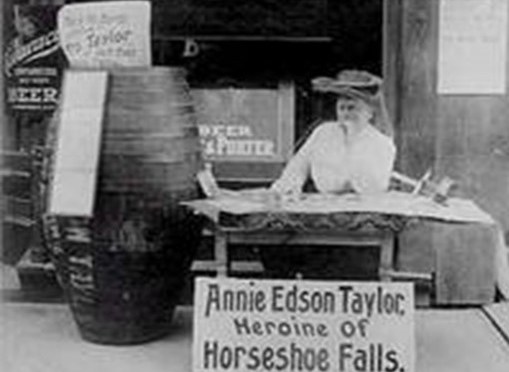
Now, she must have believed her quest for fame and fortune would be rewarded. Making an appearance at the Pan-Am Expo’s last day on November 1 to sensational newspaper headlines, Annie posed next to a barrel, most likely labelled, “Queen of the Mist.”

After this feat, Annie made her home in Niagara Falls hoping to cash in. While she had some immediate fame, fortune was to elude her. She found little success on the lecture circuit and even lost her barrel after it was stolen by her manager.

Rather than becoming rich, she was able only to eke out a meager living selling postcards and other souvenirs from a stand in front of a store near the falls. She never attempted any other stunt.

Indigent in her old age, Annie ended up becoming a resident of the County Home in Lockport. She became blind and passed away two decades after her famous plunge at age 82.

The people of Niagara Falls raised funds to help provide Annie with a burial plot at the historic Oakwood Cemetery in a section called “Stunters’ Rest” for daredevils who have braved the falls, either successfully or unsuccessfully, according to an entry on the cemetery in the National Register of Historic Places.

Other stunters buried there included Matthew Webb who died in 1883 in an attempt to swim the Niagara rapids and Carlisle Graham, who survived a trip through the rapids in a barrel in 1886.

While riches eluded Annie in life, her legacy from a bygone era of daredevils lives on. Her records as the first and oldest person to survive a trip over the falls remain intact, nearly a century after her death.

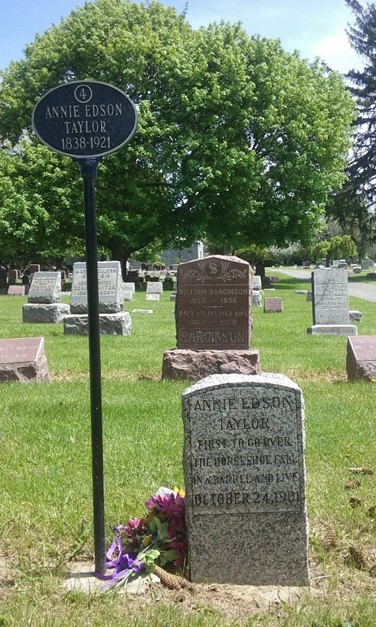
Annie Taylor’s final resting place in the Stunters’ Rest section of historic Oakwood Cemetery in Niagara Falls. (Photo Credit – Carol Rogers)

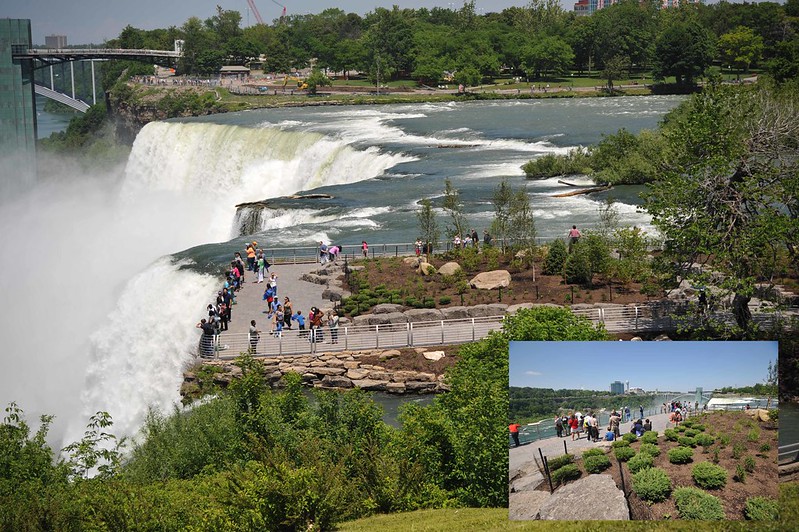
While Niagara Falls are essentially the same as they were in Annie’s time, Niagara Falls Reservation State Park, created in 1885 as the oldest state park in the United States, has undergone major improvements as part of the NY Parks 2020 initiative . The park remains open during the COVID-19 pandemic. Click through this slideshow to take a look…

Cover Photo – Annie Taylor on the street in Niagara Falls at her souvenir stand. (Photo Credit – Niagara Falls Public Library)

Post by Carol Rogers, Environmental Educator, Niagara Region Interpretive Programs Office, NYS Parks

Sources

Niagara Falls Public Library History Department, Niagara Falls

NYS Parks, Niagara Region, Interpretive Programs Archives

Oakwood Cemetery, Niagara Falls