All posts by New York State Parks

Camping Chenango Valley State Park

If I were to ask you to name the best state parks in New York just off the top of your head, parks like Letchworth or Watkins Glen are probably what leap to mind. However, there are an abundance of parks that have a lot to offer but never make the list. That’s not to downplay parks like Letchworth, by any means – they stand out for a reason. Still, there are other great parks in New York State, but they don’t make it onto people’s radar because they are overshadowed by these larger or more publicized parks. Chenango Valley is just one of these beautiful but unjustifiably underrated parks.

Outstanding Camping

New York State Parks offer visitors some of the best camping in the state. Our family has camped in many of the parks but have found few campgrounds that can compare with Chenango Valley. Chenango Valley has 182 campsites spread throughout three camping loops – Chipmunk Bluff, Sunrise, and Pine Bluff. We found some incredible wooded and private campsites that really gave the impression of being away from it all. This park is surprisingly uncrowded; we were able to get a great campsite without even having to make a reservation at the peak of summer. However, making a reservation in advance is still the best bet to insuring that you will get the site you want.

cv18-e1557426710909.jpg
The author’s campsite, photo by Kimberly Crawford.

People often shy away from wooded camping sites because they don’t want to deal with the mosquitoes that usually accompany the shaded sites. That isn’t usually a problem in Chenango Valley State Park. Why you might ask? This park has a large population of brown bats – but don’t let the idea of bats scare you. These little critters are actually quite helpful, eating between 600-1000 mosquitoes per hour which can help make your camping experience that much more comfortable.

Wildlife and Nature at Chenango Valley

My favorite part of getting out into nature is the opportunity to see animals, or at least evidence of their presence. This park is home to a large variety of animals. One night, as we sat around our campfire, we had the spine-tingling experience of hearing a pack of coyotes howling in the distance. Everything from the rarely seen black bears to more common white-tail deer roam the woods, in and around the park. Visitors might catch a glimpse of animals such as flying squirrels, gray squirrel, rabbits, chipmunks, skunks, red fox, beaver, raccoon, rabbits, and woodchucks. Although we didn’t see many animals during our time in the park, we did see evidence of beavers and met one spunky chipmunk who wanted to pose for a picture for us. Chenango Valley is also known for being an excellent park to bird watch as the trails run through a variety of habitats from woods, lakes, marsh and the river.

Things to do at Chenango Valley

Chenango Valley has a unique geological feature within the park, in the form of two kettle lakes. These lakes were formed by chunks of ice that broke away from a receding glacier. The chunks of ice sat in one place for a long time creating depressions in the earth, thus creating these small lakes. Lily Lake and Chenango Lake are both really quite lovely, with crystal clear water that is excellent for kayaking, canoeing, and fishing. Visitors can rent canoes and kayaks or bring their own and really enjoy the peacefulness of these pristine lakes.
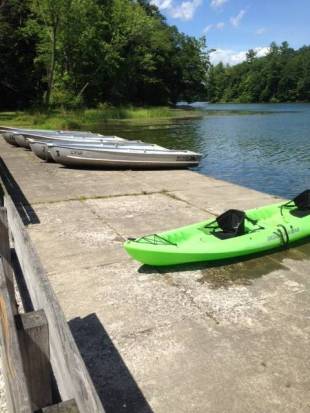
cv34
Kayaks and boats ready for a ride, photo by Kimberly Crawford.

Chenango Valley has one of the nicest swimming areas that I have found among the New York State Parks. Although the park calls it a beach, I’m not sure that title is really applicable. It is more like a pool cut into the end of the lake. The “pool” is divided into 4 sections of varying depth. This is excellent because there is a significant separation between the wading pool, perfect for the little ones, and the deep water of the diving area.
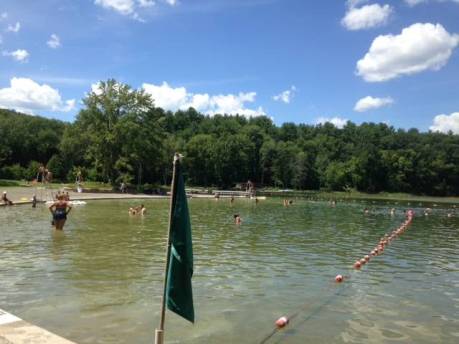
cv33
Swimming area, photo by Kimberly Crawford

The park is full of hiking trails too. Our favorites are the trails that circumnavigate the lakes as well as a truly unique section of the park, the bog. If you camp in the Sunrise Loop, you can very easily hike to this area. When I heard bog, I immediately thought of some dark, uninviting place, but this wetland area was spectacular. I’m quite serious when I say that the bog looks like you have stepped back in time to the Jurassic period and at any moment a brachiosaur is going to come walking past. This unusual natural community seemed completely out of place, but my kids loved it and had fun “dinosaur hunting.” Of course, for your own safety and for the protection of the bog environment, you will want to make sure to stay on the trail and not go wandering off into the bog.

LilyBogChenango_F13LUN06NYc06b_sphagnum
Lily bog, photo by NY Natural Heritage Program

Chenango Valley also has a world-class golf course for those looking to play a round within the beautiful and idyllic scenery of the park. Some of the hiking trails do take hikers pretty close to the golf course, so beware of flying golf balls.

cv30
Chenango Valley State Park Golf Course, photo by Kimberly Crawford

The New York State Parks offer visitors the chance to experience the most breathtaking and beautiful parts of our state. This gorgeous park is one of New York State’s hidden gems. Chenango Valley is a place where you can truly get away from it all and appreciate all the beauty that nature has to offer. A trip to this tranquil retreat is something everyone should experience.

Post written by Kimberly Crawford

Where is Jack?

Jack is in the pulpit.

Who is Jack?

‘Jack’ is the spike flower cluster (or spadix) of the early spring wildflower known as bog onion, wild turnip, brown dragon, and most commonly jack-in-the-pulpit.  Jack’s pulpit is a modified leaf (known as a bract) that wraps around and drapes over the top of the flower like a hood.

BractSpadix

Jack-in-the-pulpits (Arisaema triphyllum) are perennial plants that are found in moist woodlands throughout New York.  They can grow from 12”-26” inches tall, with the leaves in clusters of three on a separate stalk.

The flowers, Jacks, that we see are either female or male. Smaller, younger jack-in-the-pulpits make male flowers and older, larger plants produce female flowers.  It takes three years for the plants to start to produce the green flowers.

The plant relies upon flies including fungal gnats and lake flies to pollinate the flowers. They are attracted to the flower’s fungal, mushroom, smell.  Gnats and flies can escape from the male flowers through a small hole in the side of the flower, but they get stuck inside the female flowers because there is no escape route.

Once the flower is fertilized, plants produce a green fruit/seed stalk in summer, which turns a bright red in fall.

RobRoutledge,
Jack-in-the-pulpit seed stalk in the fall, Rob Routledge, Sault College, Bugwood.org

Resources and more information:

iNaturalist, Jack- in-the-Pulpit

New York Botanical Garden, Jack-in-the-pulpit: Pollination by Deception

New York Flora Atlas, Arisaema triphyllum ssp. triphyllum

St. Olas College, Jack-in-the-Pulpit

Wikipedia, Arisaema triphyllum

Wildflowers of the Southeastern US. Jack in the Pulpit

Take a Stroll on the Interpretive Trail at Wilson Tuscarora State Park

Wilson Tuscarora State Park, located on Lake Ontario in northern Niagara County, is just 12 miles east of historic Fort Niagara State Park  and the mouth of the Niagara River.  Established in 1965, the park, encompasses 386 acres bordered by the east and west branches of Twelve Mile Creek, and has approximately four miles of trails.

WilsonTuscaroraTrailMap

When you choose to hike the red Interpretive Trail at Wilson Tuscarora, you will experience several amazing things, particularly if you choose to visit in late spring. Along the trail, you will hike through many different habitats, including wetlands, successional fields (a field transitioning to a forest), shrub lands, ending in a mature beech-hemlock forest.

Your journey begins at the marina parking lot heading toward the large weeping willow tree, with its bright yellow green leaves drooping toward the ground.

WeepingWillow
Weeping Willow (Salix babylonica)

Once past the old weeping willow tree you will find the trail and the real journey begins through a successional field and into shrub lands as you follow the east branch of Twelve Mile Creek.  Along the trail, you will notice red-osier dogwood shrubs forming thickets on each side.  Quaking aspen trees are found along the way as well, revealing their name’s origin as each breeze cause the tree’s leaves to quiver or quake in the wind.

Keep your eyes on the wetlands too. You may see a beaver, or at least signs that they are active in the area.  If you are lucky enough you may catch a glimpse of the pileated woodpecker. Look for pileated woodpeckers in the mature beech-hemlock forest area of the park.  Chances are you will hear them before you see them.  Listen for a deep, loud drumming and shrill, whinnying call. 

Beaver Chew T Spencer
East Branch of Twelve Mile Creek beaver chew

This trail is best known for its spring wildflowers; especially trillium.  New York’s largest flowered trillium, the white trillium, blankets the forest floor in May.  The name trillium refers to three, the number of leaves, sepals (bud covers), and petals.

Trilium T Spencer
Carpet of white trillium (Trillium grandiflorum)

If you haven’t gone down Wilson Tuscarora’s Interpretative Trail yet, be sure to head there this late spring to see these unique natural features!

Post by Tina Spencer, State Parks

Locals Show Some Love

On May 5, 2018, the first Saturday of May, over 8,000 volunteers helped New York State Parks celebrate its sixth annual ‘I Love My Parks Day’ at 250 projects and 125 parks across the state.

Saturday morning was met with the fresh smell of a well overdue Spring. Birds were singing and bees were buzzing. The weather could not have been nicer with blue skies and a sun to warm your skin. In Horseheads, NY, volunteers came out to the Catharine Valley trailhead to help create a pollinator garden and clear brush and invasive plants to promote native species beneficial to birds. (About 50 small pollinator plants were purchased by the Audubon Society to create a pollinator garden.

Start_photos by Audubon NY1
Gearing up for the event, photo by Audubon NY

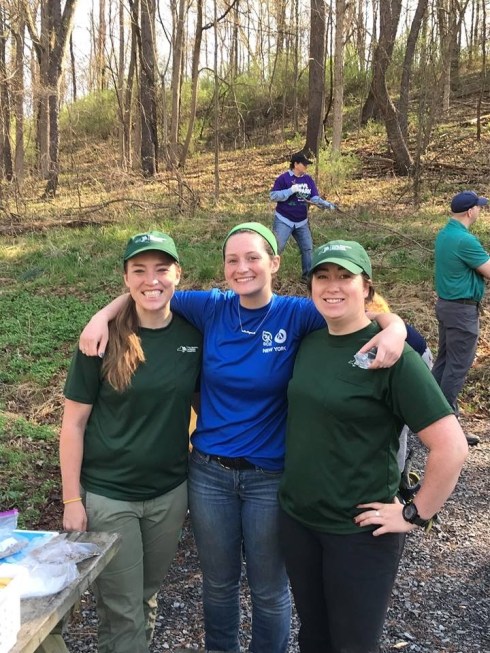
About 50 volunteers showed up to do their part – from energetic toddlers, to a girl scout troop, to seasoned gardeners and everyone in-between. Three NYS parks Environmental Educators and SCA Parks Corps members –  Tamara Beal, Lizzy Hawk, and Kyle Gallaher – also stepped in as volunteers and environmental educators.

Over 400 different species of bees call NY home. The role they play in pollinating plants is irreplaceable. It is estimated that 1 in every 3 bites of food deserves thanks in part to pollinators. In other words, if you like to eat, you have to like your pollinators! With so many helping hands, this seemingly large task was completed in no time. Holes were dug with shovels or towels, or even by hand and what started as a barren landscape was quickly transformed to a vibrant garden, ripe for pollinating.

Besides the pollinator garden, different parts of the birding trails were also attended to. Dead brush was raked, honey suckle was pulled, and sticks and branches were piled high. The birding trails at the head of the Catharine Valley Trail, on Huck Finn Road, are a well kept secret. A birding lover’s delight, these trails attract birds by providing an irresistible combination of shelter, food, and peaceful atmosphere. If you are able to walk quietly enough to become a part of nature, all sorts of creatures become noticeable on these trails. Volunteers were spread out in every direction creating a green space more attractive and enticing to our feathered friends.

In the last part of the event, some time was taken to appreciate and get up close with some of the wildlife in the area. Environmental educators Kyle, Lizzy, and Tamara took about 30 of the volunteers on a short walk to a nearby turtle nesting ground. The sandy soil of these manmade nesting gardens allows the turtles to easily bury their eggs for safe keeping. SCA members helped to clean up these nesting areas earlier in the year.

A mini program about snakes was also made possible when environmental educator Tamara Beal came across a garter snake in the grass (see featured photo).

This event was just one of the number of events that were hosted this “I Love my Park Day” throughout the state. Thank you to the thousands of volunteers who came out on May 5th to support their local parks! It is inspiring to see the number of people that show up for these kinds of events. 

Join us for the eighth annual ‘I Love My Park Day’ on May 4.

Team
NYS parks environmental educators and SCA parks corps members, Tamara, Lizzie, and Kyle

Post by Tamara Beal, 2018 SCA Finger Lakes Region intern

In Search of the Early Bloomers

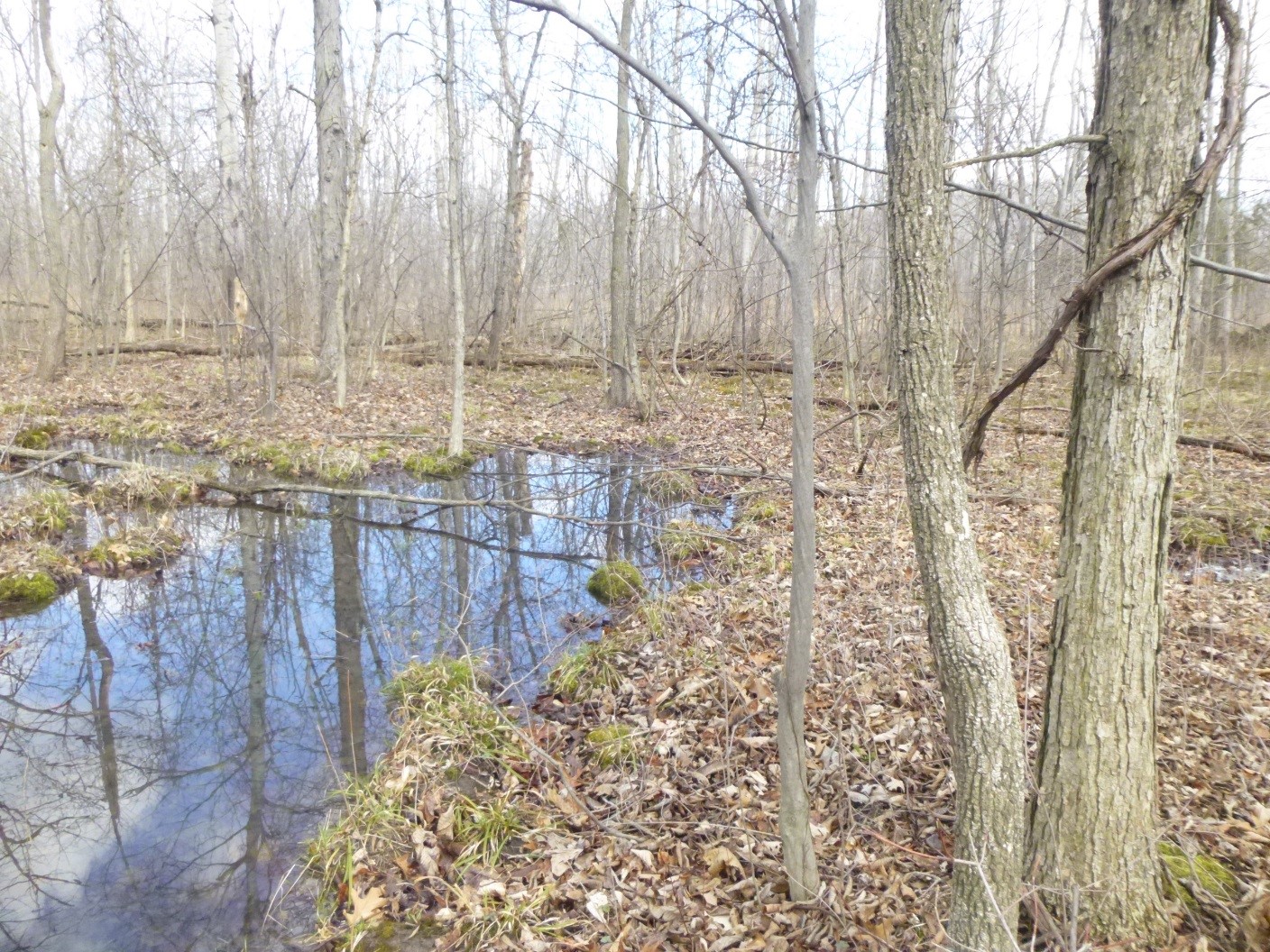
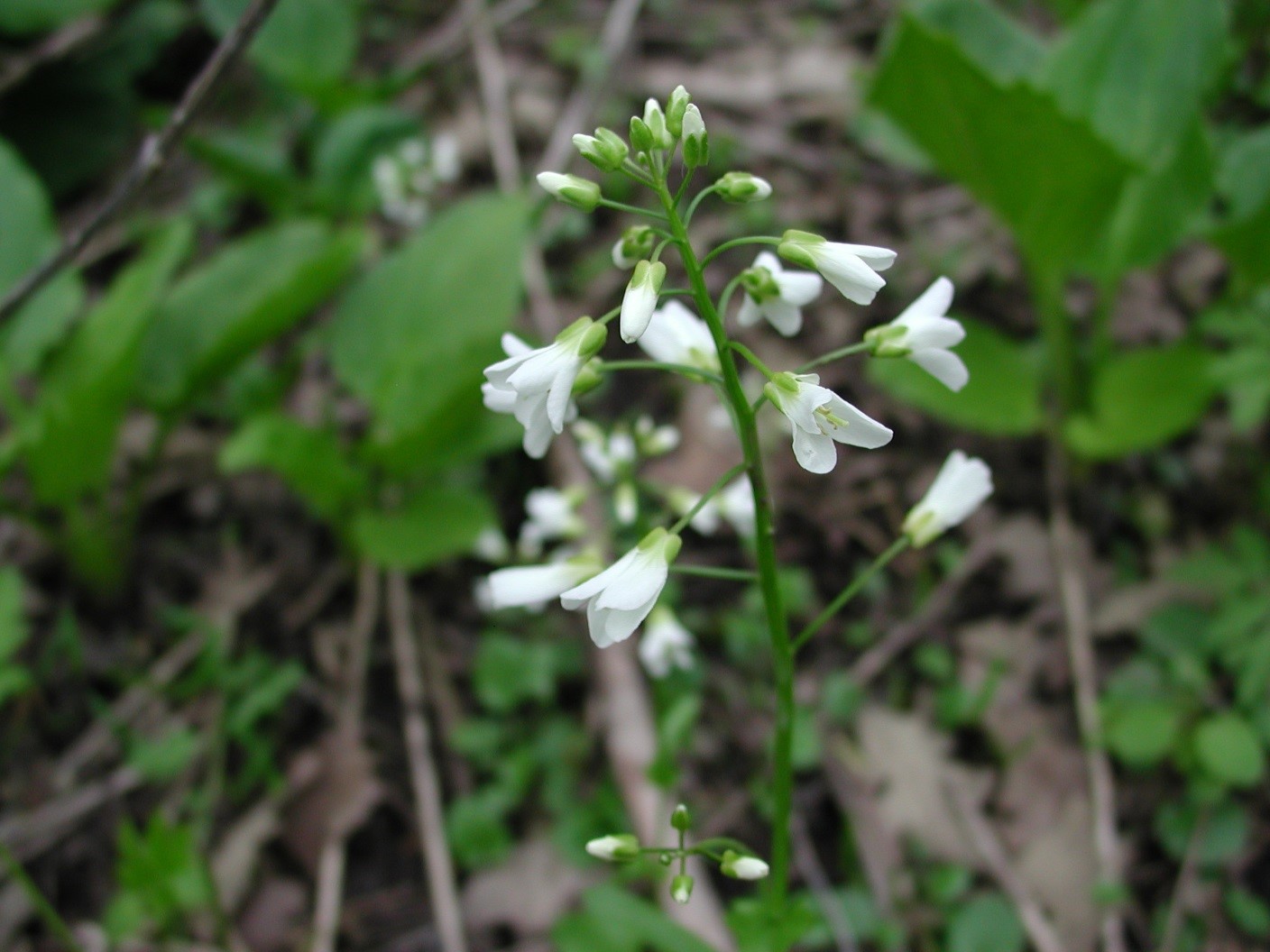
The ground is thawing out and the skunk cabbage is up – it’s time to start searching for the purple rock cress (Cardamine douglassii), a state-threatened plant. You may also find its more common cousins, all members of the mustard family – yes, like the mustard you eat, but with white to pink flowers rather than yellow. Moist woodlands with oak, hickory, and maple are a good place to look, including forests with vernal (spring) pools. Perhaps you might be out looking for frogs and salamanders around this time of year, if so -keep an eye out for these early flowering plants, too. Woodland rock cresses tend to be small, only about 3 to 8 inches tall, so they are easy to miss. If you see some patches of green that are not mosses or mounds of sedges (grass-like plants), take a closer look – you may be rewarded with some delicate flowers.

VernalPool_JLundgren
Photo by Julie Lundgren, NYNHP.

Forests with vernal pools or small streams or wetlands are a good place to look for these cresses.

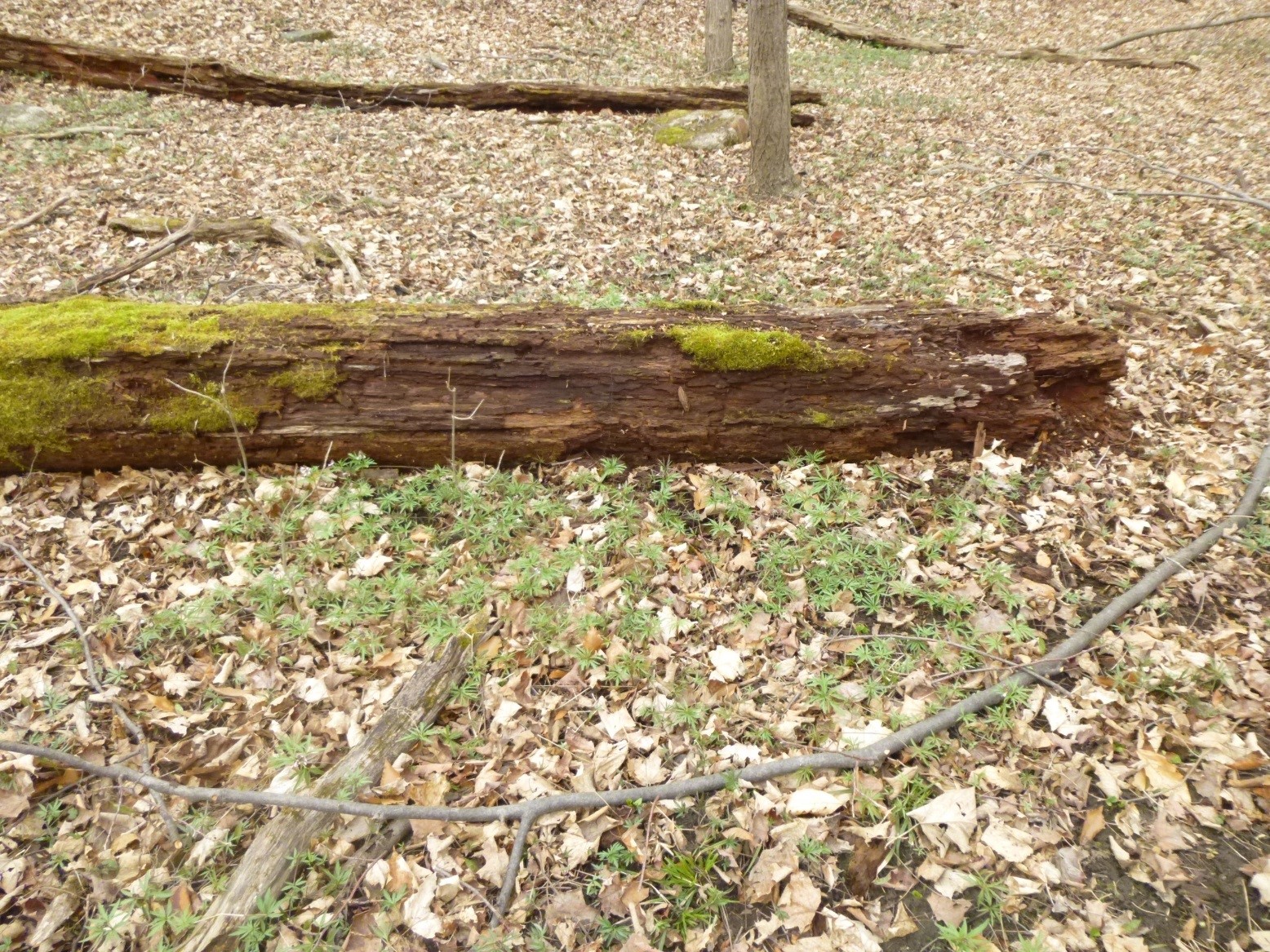
Log_JLundgren
Photo by Julie Lundgren, NYNHP.

Look for patches of green on the forest floor and take a closer look. You might find some flowers.

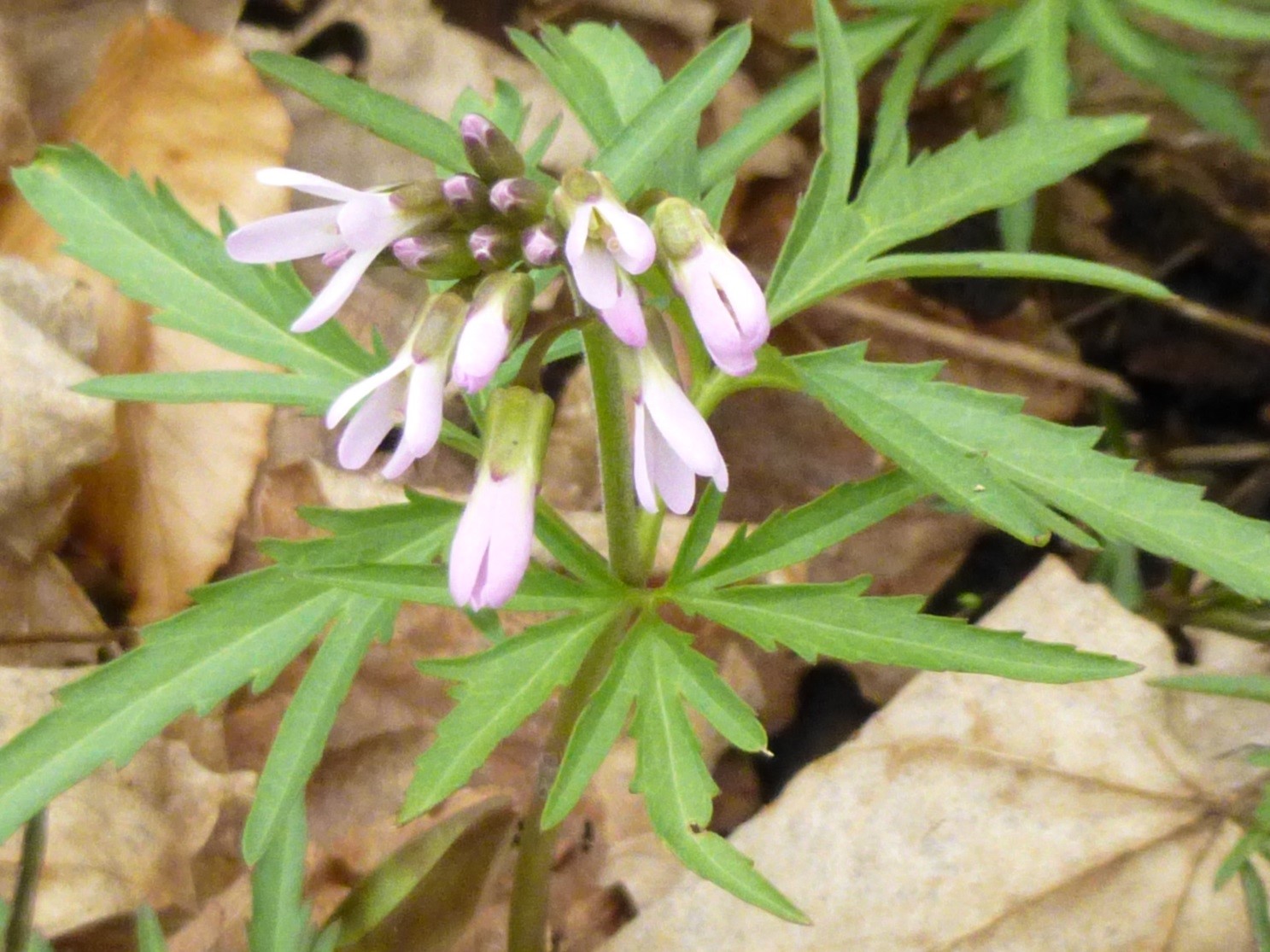
CutLeavedRockCress_JLundgren
Cut-leaved rock cress or cut-leaved toothwort, photo by Julie Lundgren, NYNHP.

A close-up of that woodland patch of green reveals this beautiful plant, the cut-leaved rock cress or cut-leaved toothwort (Cardamine concatenata), a common woodland wildflower. This used to go by the name Cardamine laciniata or Dentaria laciniata. It is easy to identify by its lacy leaves that look a bit like bird tracks.

CressLeaves_KPerkins
Rock cress, photo by Kelly Perkins, NYNHP.

Several of the other rock cresses, including the purple rock cress, have smaller and less complex leaves like this or just small roundish leaves on the stem or at the base of the plant (see in background).

SpringCress_SYoung
Spring cress, photo by Steve Young, NYNHP.

Spring cress (Cardamine bulbosa) is another common cress that blooms very early. The flowers can range from white to pink, and it can be hard to tell this apart from the rare purple rock cress. Note that all of the flowers in the mustard family have 4 petals regardless of their color.

CDouglassii_JLundgren
Purple rock cress, photo by Julie Lundgren, NYNHP.

Here is the rare Cardamine douglassii, so similar to the spring cress above. One has to consult the botanical keys in order to figure out which species you have. Some trout lilies are coming up too (leaves at upper left).

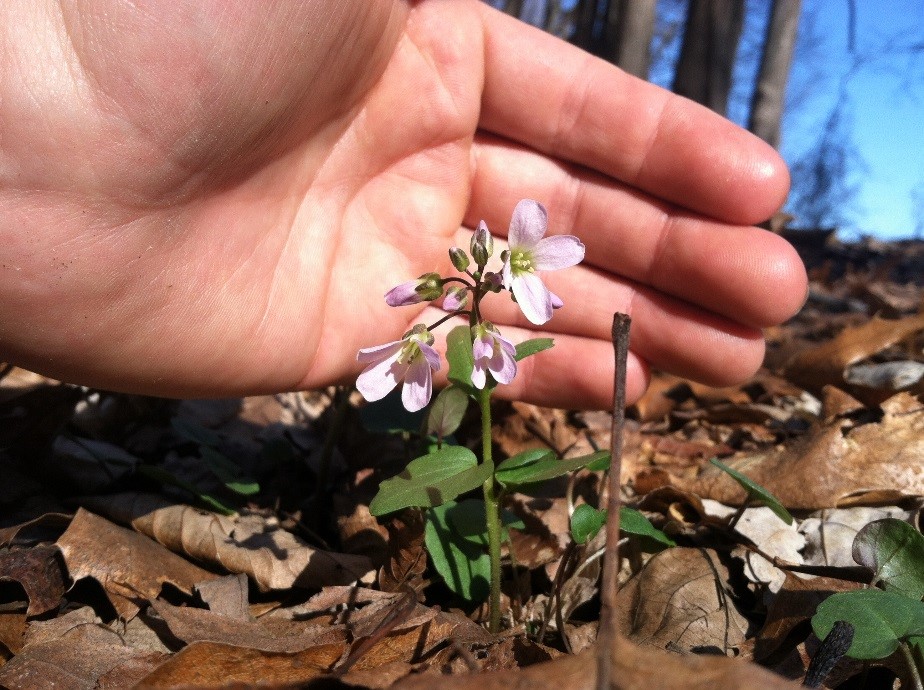
PurpRockCress_Scale_KWebster
Purple rock cress, photo by State Parks.

NY Natural Heritage and State Parks staff discovered two new locations for this rare species in State Parks in the past few years and hope that more are found in this year’s early spring surveys.

CressSeedPod_KWebster
Photo by State Parks.

The flowers of the cresses don’t last long, only until the trees leaf out. Once in fruit, you can still recognize them by their elongate seed pods, which give rise to yet another common name for this group of plants, the “rockets”.

Post written by Julie Lundgren, NY Natural Heritage Program

Featured image by Kyle Webster, State Parks

NY Natural Heritage Program is affiliated with SUNY College of Environmental Science and Forestry (SUNY ESF) and works in close partnership with NYS Parks and NYS DEC. NYNHP conducts many kinds of surveys and studies to provide guidance and tools for conservation of native biodiversity across New York State.

Recommended references for identifying the rock cresses:

https://gobotany.newenglandwild.org/genus/cardamine/

Newcomb’s Wildflower Guide by Lawrence Newcomb. Little, Brown and Co. 1989.

For more information:

NY Flora Atlas Purple Rock Cress

NYNHP Conservation Guides Purple Rock Cress