All posts by New York State Parks

Voting NO on Women’s Suffrage

Women have not always had the legal right to vote in America.  On August 18, 1920, the 19th amendment was ratified granting women the right to vote. This milestone in women’s history was the result of decades of sustained action: protests, political organizing, direct confrontations and debates with people who felt women needed no further rights. Suffragists were ostracized, fired from jobs, beaten, arrested and imprisoned – all because they dared to strive for the right to vote.

For the supporters of women’s suffrage gaining the vote was a matter of life or death. Women were subject to the will and mistreatment of their husbands, both financially and physically within the home. Husbands had complete legal authority over their wives and could abuse them with no fear of consequences. Any woman attempting to leave a marriage faced the loss of custody of their children and destitution. The workplace was no better; women faced sexual harassment, abuse, terrible working conditions and lower wages than their male counterparts with little to no legal recourse. Women were also barred from many professions completely. The vote meant access to the political power needed to reshape laws and gain equal treatment and dignity as human beings.

When it came to the issue of women’s suffrage, New York was a state at war within itself.  Major activists on both sides of the issue held meetings, published articles, and attempted to sway public opinion.

The anti-suffragists claimed that giving women the vote would move them too far away from their primary duty of running the home. They fully agreed with the notion that a “woman’s place” was in the home, although they did concede that women should contribute their time and talents to educational, charitable, religious and moral organizations.  These endeavors did not require the vote, nor included politics.

Charles S. Fairchild, husband of Helen Lincklaen, was a politician and served under President Cleveland as the Secretary of the Treasury. Fairchild was the fourth owner of the estate which would later become Lorenzo State Historic Site in Cazenovia N.Y. and a staunch supporter of anti-suffrage. He was an active local leader in the effort to prevent women from gaining the vote. The collections of Lorenzo include many anti-suffrage items, such as, printed speeches, several issues of The Woman Patriot, a button which reads: “VOTE NO ON WOMAN SUFFRAGE”, anti-suffrage pennants, and books and handbills with titles like Anti-Suffrage: Ten Good Reasons and The Menace of Women’s Suffrage in New York State—some with hand written personal inscriptions by the authors.

Fairchild was not alone in his views within the town of Cazenovia. Many prominent individuals, both men and women, considered themselves avid supporters of the anti-suffrage cause. The Cazenovia Anti-Suffrage Society was very active and held regular meetings to support their cause and raise funds. Many anti-suffrage groups were organized by women; and the majority of these organizers were members of the upper class with husbands in prominent positions in business and politics.

From our modern day perspective it may be difficult to imagine why so many women supported the anti-suffrage cause. But the popular view of society in the early 1900s holds many of the answers. Life was cleanly divided into two halves, the domestic realm and the public world. Men were believed to be ideally suited by their nature to be masters of public life. Aggression and a competitive spirit were seen as traits best suited to politics, finance and war. Women were the converse, the peacemakers, the orchestrators of a happy family, the creators of cleanliness and order within the home. These views were not only popular but for many unquestionably true.  Suffragists challenged this world view directly with the assertion that women were equal citizens and deserved the right to vote.

The first organized effort to seek the vote for women in New York began in 1846 when a small group of women in Clayton NY petitioned the state government asking for “equal, and civil and political rights with men.” It took nearly 75 years to shift public opinion away from these historic, engrained views towards a more equitable society.

ant-womens-suffrage-campaigne-button-exam-003-detail-obverse1.jpg

Kids in Nature

You’ve probably heard about kids not getting outdoors and in nature enough these days. The good news is you don’t have to be an expert on the outdoors to take kids into nature! Kids are curious beings. Taking the time to look and discover is more important than knowing the names of everything or how things work.

Kids are natural explorers outside, so your biggest challenge will be getting them back indoors. Others may not be used to bugs,  dirt and the freedom to look around and discover, so it may take a little encouragement.

Let’s get outside! Whether you are a parent, friend, babysitter, educator here are 7 fun ideas for getting kids outside in nature.

Tiny Explorers: All you have to do is make sure they are safe and they will figure out the rest. Walking on spongy grass, dabbling in puddles – who doesn’t love puddles – or feeling the roughness of a big log and learning the words to describe what they are feeling in nature is all part of the experience.

Beaches on Lakes, Rivers or the Ocean: These are great spots for exploring. There are almost always bugs,  shells and rocks to find. And of course water and sand make for endless opportunities for building castles and moats. Look for Learn-to-Swim classes, too. Lessons will help kids (and you) feel more at ease on the waterfront. 

Stream Watchers: Shallow rocky streams are also intriguing – especially for more active kids that like to climb on rocks or logs, launch sticks and watch them float down stream, and look for fish, frogs, stream insects and snails. Avoid fast moving or deep streams that can be hazardous. Remember to put any animals back where you found them as that is their home. 

Young Scientists: If your child has a deep interest in nature, they might like keeping a nature notebook like a real scientist. This boy was learning about logs in a program at Clay Pit Ponds State Park Preserve. How big is the log, were there holes, is there moss ora mushroom on it; did you see any insects or other animals on or inside it? Or collect some leaves – how many kinds can you find? Or draw pictures of the different insects and caterpillars one finds in the garden of meadow.

Bird and butterfly watching: This takes a bit more patience, waiting and watching, to see birds, butterflies or even dragonflies! But it is amazing what you can see when you take the time to watch. This activity is good for older kids as it takes some skill to focus the binoculars. Younger kids can practice using binoculars made from cardboard tubes. If you are new to this, look for guided programs aimed at young people or families. 

Children_in_nature
Youth with binoculars, photo by USDA

Get the Bug: Get a little butterfly net and see what you can find. This can be a good prop for kids who get bored with walks or just looking at stuff. Swinging a net, whether or not it catches anything, can be fun. Best to learn what bees and wasps look like first though, and to aim for the butterflies and moths instead. Look for fun pollinator activities at parks near you- these activities are for kids of all ages.    

Bike Riding: Bike riding in parks is great way to see and hear nature. You would be surprised at how much one is learning even when not specifically focused on looking at the trees, the birds or the bugs. Animals will dart across the trail or scurry away as you get closer, birds will be singing, and you will pass by hundreds of different species of plants (trees, wildflowers, ferns), increasing  your awareness of the diversity of the natural world. Having a physical activity and a sense of accomplishment from a bike ride or a hike can help sustain interest in getting outdoors. Check out trail maps on parks’ websites and remember your helmets! 

JT_IMG_20170429_112739257Elle
Some State Parks trails are great for bicycling, photo by Josh Teeter

What to do when you don’t know the answers?

What is it? Kids will ask but they don’t expect you to always have an answer. Feel free to say you don’t know, but take the time to look a little closer to explore together. “Hmmm, it is some kind of animal – see how it hops. It is very tiny. Can you see its eyes?” or “What a nice flower. Do you think the bees like it? Let’s watch to see if any bees or butterflies or other insects come to the flowers to feed. They like the sweet nectar.” A tip from educators: don’t reply with “it’s just a bug” or “just a flower”because everything is novel and interesting.

What is it doing? See if they can come up with an idea of what the animal is doing. Are they swimming, jumping, sunning, sleeping, searching for food, talking (in animal language), fighting, or running away. Why are they running away? Why do they burrow in the sand? If you don’t know, children often come up with pretty good ideas about what is going on if you encourage them to take the time to watch.

Special for 4th Graders!

Every Kid in a Park Program: Free entry for 4th grade students and accompanying family into National Parks across the country and NY State Parks in 2017  and

State Parks offer ideal places to bring children – the trails, interpretive signs, and beaches are ideal spots for kids to explore the nature world.  We hope to see you there!

Recommended Guide Books – check your library, bookstore or online distributor:

Peterson First Guides: A series of small, inexpensive books on insects, wildflowers, mammals, caterpillars, seashores, birds, and other topics. Highly recommended for young and old as an introduction and guide to more common plants and animals one might encounter.

Backyard Birds (Field Guides for Young Naturalists) by Karen Stray Nolting, Jonathon Latimer and Roger Tory Peterson 1999.

The Secret Lives of Backyard Bugs by Judy Burris and Wayne Richards 2011.

The Bumper Book of Nature: A User’s Guide to the Great Outdoors by Stephen Moss 2010.

The Tree Book for Kids and Their Grown-ups by Gina Ingolgia 2013. Published by Brooklyn Botanic Garden and full of questions and answers about trees in both city and countryside.

 Post by Julie Lundgren, NY Natural Heritage Program. The author grew up exploring the back yard and woods and has spent a lifetime working as an environmental educator and ecologist.

Stars in the Forest

In late summer, if the humidity is high and we’ve had lots of rain, look for earth stars on the forest floor.  Found in hardwood forests with beech, maple, birch, and ash trees, earth stars are the fruiting bodies of underground mushrooms.

Sporocarps, or fruiting bodies, are a specialized part of a mushroom that produce mushroom spores. These spores are how mushrooms spread, carried by the wind to new locations.  Puff balls and truffles are other examples of mushroom fruiting bodies and you may have seen mushroom spores if you have ever kicked a dry puff ball. The grey powder that comes out of the puff ball are mushroom spores.

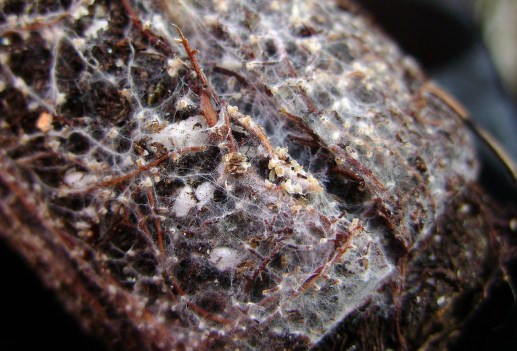
Earth star fruiting bodies make up only a small portion of a mushrooms mass.  The rest of the mushroom is growing underground as mycelium, thread-like part of the mushroom.  A mycelia (a single strand of mycelium) takes up nutrients from the place where they are growing. You may have seen mycelium growing under a log or in a pile of old leaves.

By André-Ph. D. Picard from WikiCommons
Mushroom mycellium, photo by André-Ph. D. Picard from WikiCommons

Since mycelium grow underground, it is hard to know the size of the fungus.  In 1998, forestry scientists discovered a single fungus from a honey mushroom in the Blue Mountains in Oregon that was found in nearly four square miles (1,665 football fields) of forest soil.

While the fungi in the northeast US are not as large as the northwest US, it is still fun to find mushrooms in the forest.  Keep an eye out for earth stars and other mushroom fruiting bodies during your walks and hikes in State Parks. Late summer through mid-October is a great time to see them.  If you do find some, share your photo.

Learn more about earth stars and other New York mushrooms:

Baroni, Timothy J.; Mushrooms of the Northeastern United States and Eastern Canada; Portland, OR: Timber Press, 2017.

Bessette, Alan; Mushrooms of Northeastern North America; Syracuse, NY, Syracuse University Press, 1996.

Rock, Stephen J. “Hunting Mushrooms”, NYS DEC Conservationist, July 2013: 23-27

Mushroom Observer

Join a mushroom club, they sometime lead walks in state parks and state historic sites:

Central New York Mycological Society

Connecticut-Westchester Mycological Association

Long Island Mycological Club

Mid-Hudson Mycological Association

Mid York Mycological Club

New York Mycological Society

Rochester Area Mycological Association

Susquehanna Valley Mycological Society

Western NY Mycology Club

Featured image by Lilly Schelling, State Parks

Lose the Loosestrife: Beetles for Biocontrol

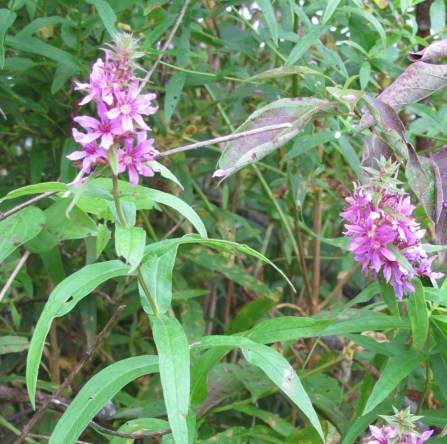
Purple loosestrife (Lythrum salicaria) is an invasive plant from Europe and Asia that can overcrowd native wetland plants. It is easily recognized by its tall and showy purple spike of flowers in the summer, lance-shaped leaves and square stems. As an invasive species, it lacks its natural predators and can spread quickly, producing as many as 2.7 million seeds a year.

Loosestrife flower, photo by A McGinnis
Purple loosestrife flower spikes at Silver Lake State Park. Photo by Amy McGinnis

Wetlands are rich habitats that support a diversity of plant, insect and animal species, such as marsh marigold (Caltha palustris,) twelve-spotted skimmer dragonfly (Libellula pulchella,) painted turtle (Chrysemys picta,) green heron (Butorides virescens.)  The introduction and spread of purple loosestrife has resulted in the loss of native plant and animals that depend on wetland habitats. In addition, purple loosestrife limits the growth of rare plants and can clog drainage ways and ditches, negatively affecting adjacent land and crops.

Loosestrife in bloom, photo by Amy McGinnis
Purple loosestrife plants in bloom at Silver Lake State Park. Photo by Amy McGinnis, State Parks

Since purple loosestrife grows in wetlands, methods to control this plant and promote native biodiversity aren’t always easy. Small young infestations can be removed using hand tools, but care must be taken to dig out all of the root portions to avoid regrowth. This may not be feasible for larger, more established infestations. The flower heads cut be cut, bagged and disposed of to prevent seed production and the spread of this plant. Chemical herbicides can be utilized by licensed applicators that follow strict protocols to avoid contaminating water bodies and non-target native species. However, there is an easier way to fight this invasive: biological control or biocontrol. Biocontrol is the control of an invasive species by introducing a natural predator of that species following very specific federal and state regulations and testing to make sure there will be no other negative impacts on the ecosystem. In this case, the biocontrol is the small purple loosestrife beetle, a beetle of the genus Galerucella. These are native to Europe and Asia and feed on purple loosestrife in its native range, keeping the plant in check.

Scientists must thoroughly test any biocontrol species to make sure they only affect the target invasive species and don’t negatively impact native species. In the U.S., studies have shown the beetles to be very host-specific, feeding and reproducing predominately on purple loosestrife. The beetles do not completely eradicate purple loosestrife, but they suppress the plants’ growth and ability to reproduce by feeding on its stems, buds and leaves. Thus, they reduce the plants’ dominance and impact within the ecosystem.  Since 1992, biologists working under state and federal permits have released millions of these beetles at numerous sites across the northeast, including at several New York State Parks, such as Silver Lake State Park in western NY.  In NY, the Department of Environmental Conservation continues to monitor the numbers and effectiveness of the beetles and to ensure there are no unforeseen problems.

The beetles are released in the summer when loosestrife is actively growing. They overwinter in the soil near the host plants and emerge in the spring to reproduce, with females laying eggs from May to June. When they hatch, the larvae feed on the loosestrife’s young growth and work their way down the plant where they eventually enter the soil to pupate. They emerge as adults in the summer and the cycle continues. Though they are not strong fliers, occasionally the beetles have been found 10-12 miles away from the initial release site.

Release sites for the beetles are determined by the dominance of purple loosestrife. These sites usually have a high percentage of loosestrife plants where hand removal of them is difficult. Biologists must submit an application to the Department of Environmental Conservation to justify the need for the beetles and receive a permit. The number of beetles depends on the size of the purple loosestrife infestation. Silver Lake State Park is one location where the beetles have been used as a biocontrol for this invasive plant. Silver Lake has an approximate 40 acre wetland with a purple loosestrife population of about 15%. In 2010, 800 Galerucella beetles were released in an effort to control the loosestrife. One meter by one meter plots were established in order to monitor the survivorship of the beetles and the defoliation, or the loss of leaves, stems and flowers, of the plants where the beetles have fed on them. Each summer after the beetles have emerged, the plots are assessed to determine the effectiveness of the beetles and if any more should be released. This is done by looking at the number of loosestrife plants that are defoliated (eaten, not flowering) vs. the number that are flowering, as well as the number of beetles that are seen. More beetles have been released at Silver Lake State Park since the initial 800 in 2010; the purple loosestrife plants have remained contained to that area and their growth has been restricted.  In 2016, State Parks biologists expanded the program to Letchworth State Park.

The extent of purple loosestrife has declined dramatically in areas with this biocontrol. It is unlikely that the beetles will eliminate purple loosestrife populations entirely. The hope is that as more Galerucella beetles are released across the state, the invasive loosestrife will be diminished, making room once again for the native flora and fauna at these sites.

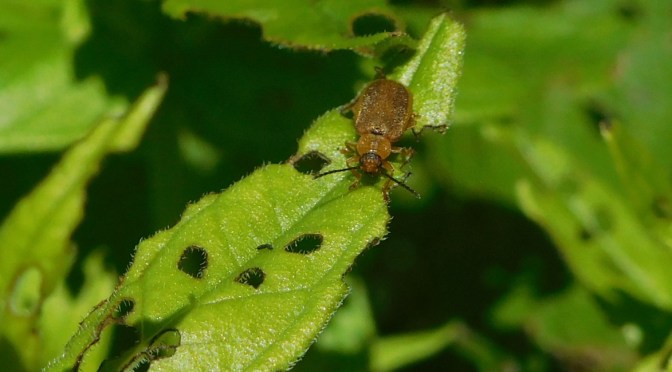
Beetle on loosestrife at Silver Lake SP, photo by A McGinnis
Galerucella calmariensis beetle on a purple loosestrife leaf at Silver Lake State Park, photo by Amy McGinnis, State Parks

Post by Amy McGinnis, State Parks

Featured image, Galerucella calmariensis beetle on a purple loosestrife, by Amy McGinnis, State Parks

5 Common Myths About Our State Park Critters

New York State is home to a variety of animals! There are nearly 100 mammal species, 375 bird species, and over 70 species of reptiles and amphibians found in New York. While we try our best to understand these animals, sometimes myths spread about them that may not be true. Can turtles come out of their shells? Do toads give you warts? These common animal myths stem from folklore, old sayings, misunderstandings, and more, but we can do our best to separate fact from fiction. Let’s take a look at some top myths about a few animals found in New York State Parks!

  1.  Are bats blind?

No, bats are not blind! The bats found in New York are part of a group called microbats, which do rely heavily on echolocation (the location of objects by reflected sound) to navigate and find insect prey. Scientists who have examined the eyes of these bats have determined that they have some night vision as well as limited daylight vision. Some species even have ultraviolet (UV) vision. Though not found in New York, megabats—the fruit-eaters—rely primarily on vision and smell, rather than echolocation. Overall, vision is important to help bats avoid predators and find food and shelter.

Fun fact: While several animals can glide (like flying squirrels), bats are the only mammals known in the world that are capable of true and sustained flight!

Little brown bat credit USFWS, Ann Froschauer
The little brown bat is one of the most common bats in New York. Photo by Ann Froschauer, USFWS
  1.  Will touching a toad give you warts?

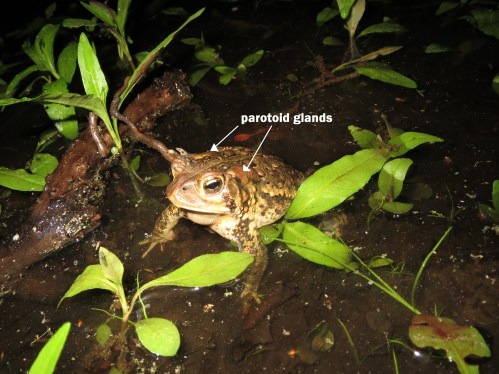
Good news for all of us that grew up catching frogs and toads. No, touching a toad will not give you warts! Warts are actually caused by a virus that is spread between people. This myth probably began because of the bumpy skin on a toad’s back. There are two bumps to be careful of though; behind the eyes of toads are two large areas called parotoid glands. As a defense mechanism, these glands produce a toxin that causes irritation to a predator’s mouth. So if you do catch a toad, it is still a good idea to wash your hands afterwards.

American Toad-Photo Taken by Lilly Schelling
The American toad is one of three toad species in New York. Photo by Lilly Schelling, New York State Parks
  1.  Can porcupines shoot their quills?

No, a porcupine cannot shoot its quills! First, let’s take a look at what a quill is. A quill is a very stiff, hollow hair that can be found mixed in with the softer hair of a porcupine. When threatened, a porcupine’s quills may stand up to scare away the threat, but they cannot be shot from the porcupine’s body. There must be direct contact with the quills for them to dislodge, but even the lightest touch can be enough to dislodge a quill or two. Best to keep our distance around porcupines!

Fun fact: The North American porcupine has around 30,000 quills!

Porcupine-BioDome-2
Porcupines often rest in trees. Photo by J. Gloverderivative work: WolfmanSF (talk) – Porcupine-BioDome.jpg, CC BY-SA 2.5
  1.  Can turtles come out of their shells?

No, there’s no way a turtle can come out of its shell! A turtle’s upper shell, called the carapace, is partly made of bone from the turtle’s rib cage and is actually fused to the turtle’s backbone. The lower shell is called the plastron and the two shells are joined by a bony bridge. The shell is part of the body and grows along with the turtle, which is different from crabs and lobsters that must molt or shed their exoskeleton. And to address another common animal misunderstanding, turtles are able to feel when something touches their shells, due to the presence of nerve endings in the shell.

  1.  Do all bees die after they sting you?

No, it depends on the species! Honey bees, for example, have barbs (hooks) on their stinger that can stick into the skin of the target and prevent the stinger from being pulled out by the bee. If the barbs are stuck in the target’s skin, the stinger is torn away from the bee’s body when it tries to fly away and the honey bee dies.  Other bee and wasp species, including bumblebees, yellowjackets, and paper wasps, have stingers with small barbs, enabling them to sting multiple times.

Post by Kelsey Ruffino, Student Conservation Association and New York State Parks

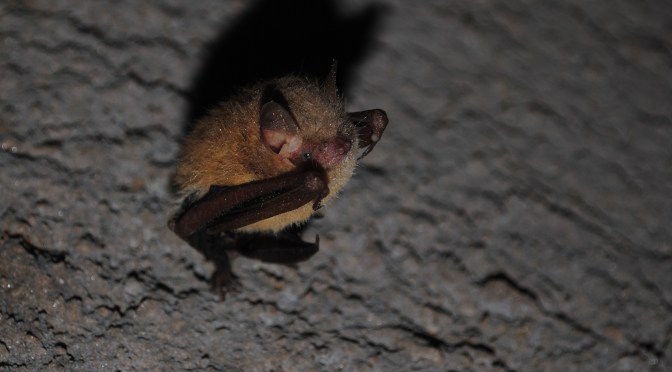
Featured image: Eastern Pipistrelle, photo by Lilly Schelling, State Parks