Category Archives: Art

Pets From the Past at New York State Historic Sites

Companionship with animals ties humans together throughout time. Many of the people who lived and worked at our historic sites had pets who brought them friendship and joy. In our historic collections, we have paintings and photographs of these beloved pets.  How do you capture your furry or feathered friends?

Jolly Pets at John Jay Homestead

This portrait of Eleanor Kingsland Field with her pet Italian greyhound was painted in Rome when she was around fourteen years old. Eleanor’s family traveled to Italy frequently during her childhood and this portrait was commissioned during one of her trips. There is a long art history tradition of subjects being painted with their animals. In adulthood, Eleanor married John Jay II, grandson of the famous first Supreme Court Justice, and lived in the family home in Katonah that is now John Jay Homestead State Historic Site.

Eleanor Kingsland Field, Giovanni Battista Canevari, c. 1833, oil on canvas. New York State Office of Parks, Recreation and Historic Preservation. John Jay Homestead State Historic Site. Gift of Westchester County, New York, JJ.1958.295.A

Olana’s Animal Companions

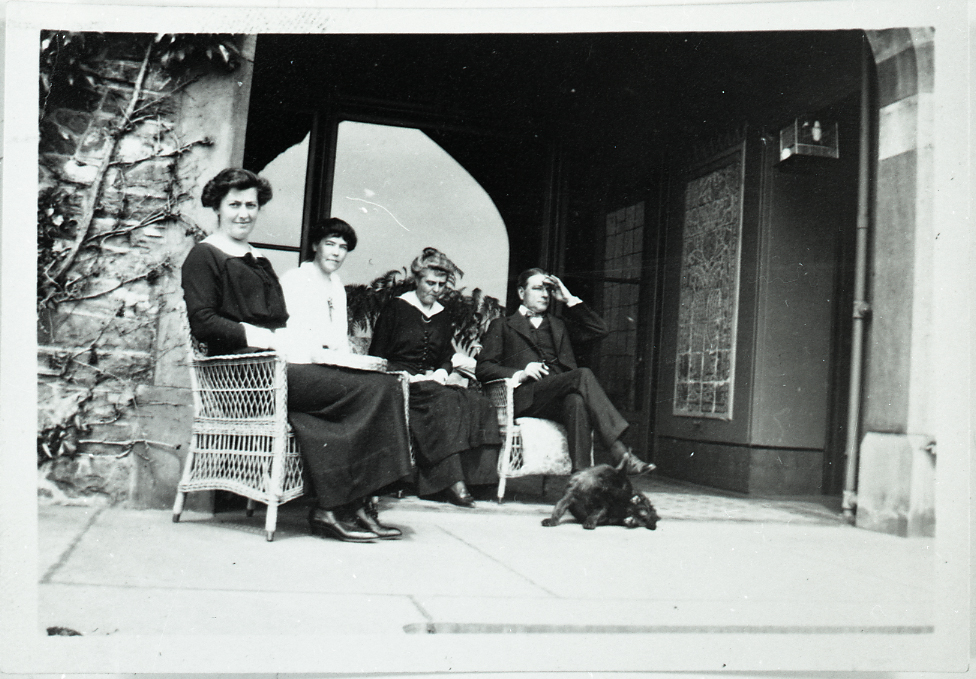
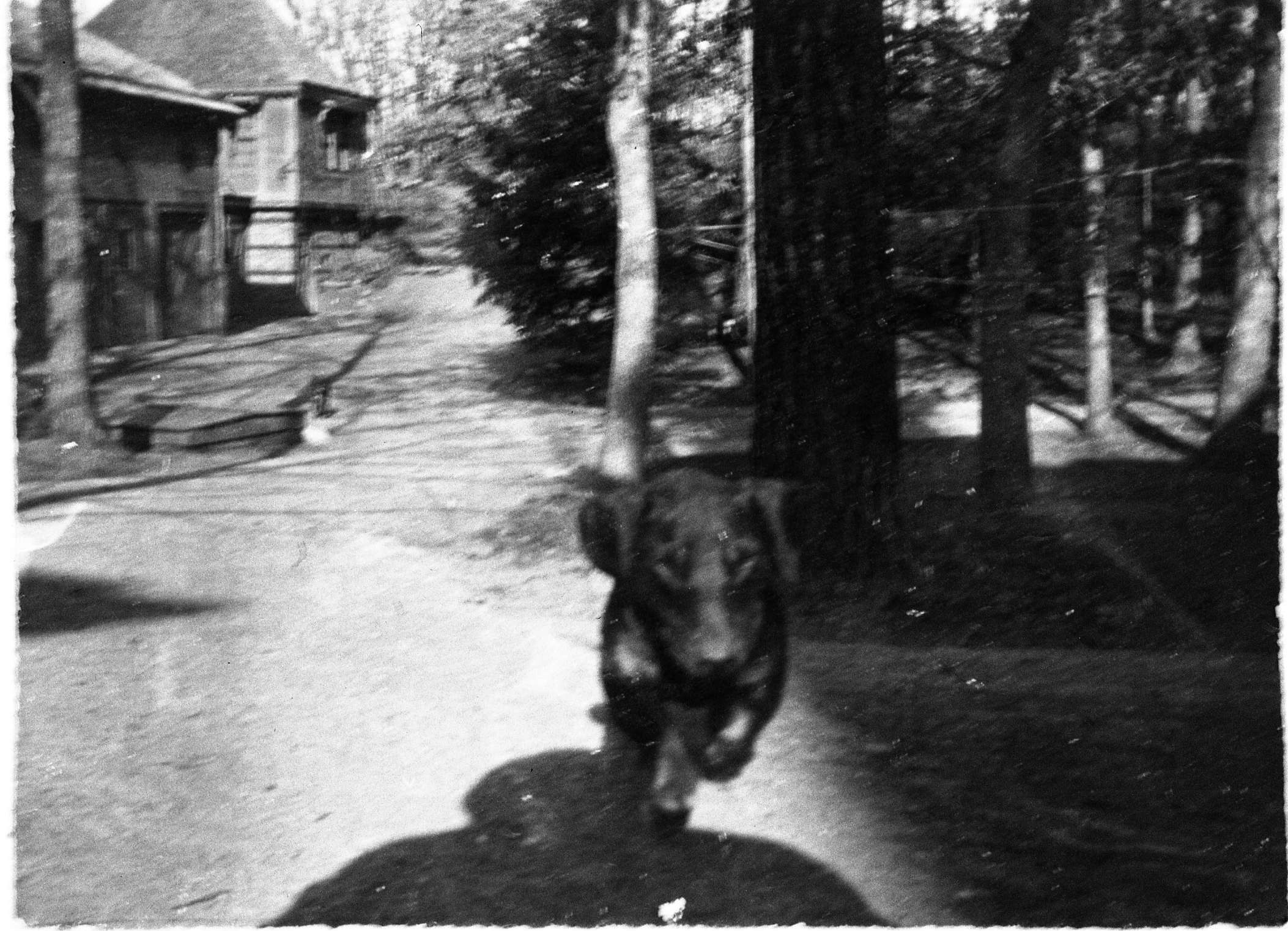
Frederic E. Church and his family lived at Olana State Historic Site outside of Hudson. They had many pets at the family estate, including dogs, a donkey and likely some goldfish. Two large goldfish bowls have survived in the site’s collection. Though this painting is of a goldfish pond, it is believed that Church painted one of the family goldfish from the bowl and created the natural environment around the fish. The painting now hangs in the corridor at Olana’s main house leading to Church’s studio. The family was also pictured with many of their dogs, both inside and outside the house.
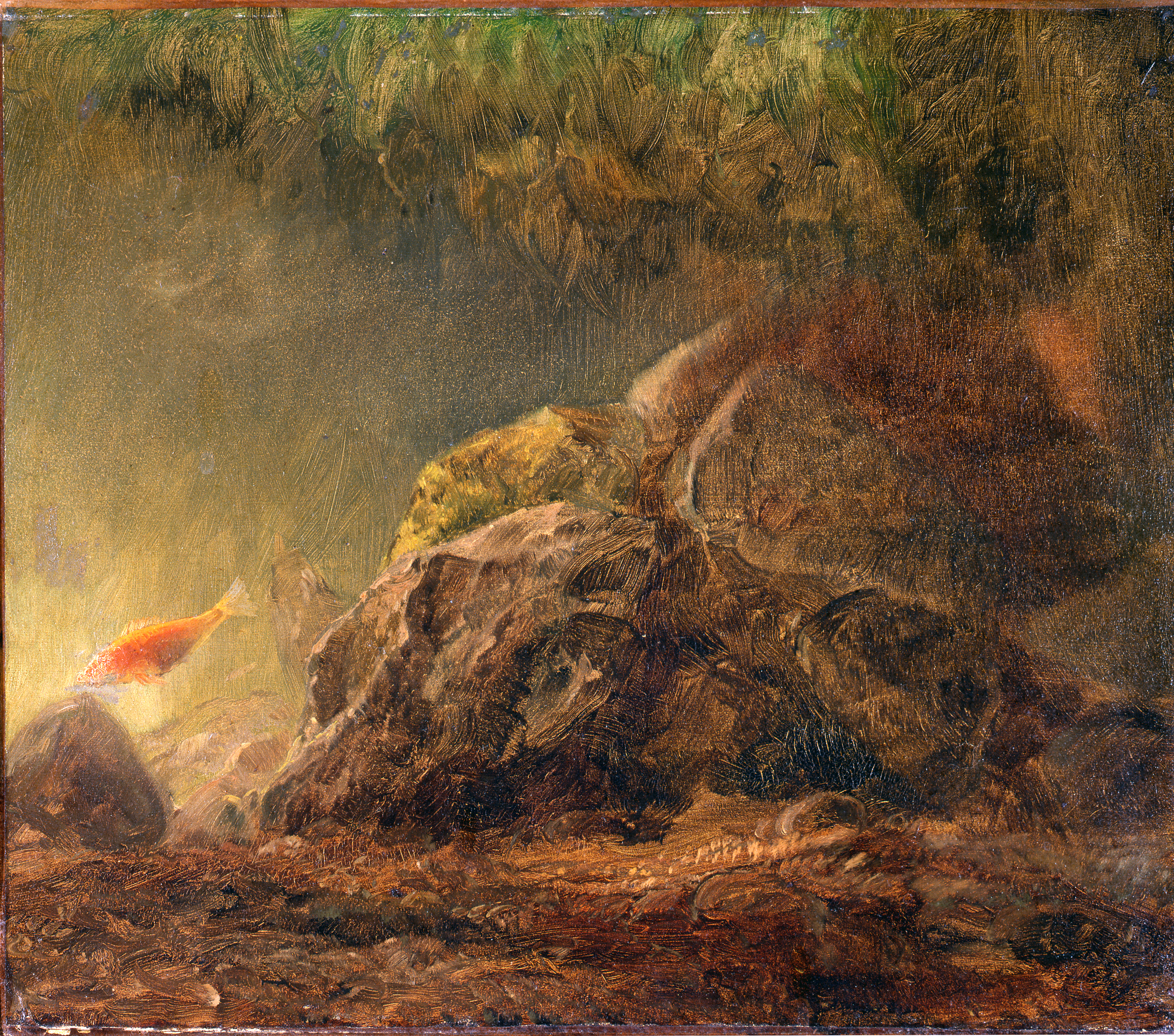
Credit: Goldfish Pond, Frederic E. Church, c. 1875-1880, Oil on paper mounted to canvas, New York State Office of Parks, Recreation and Historic Preservation. Olana State Historic Site. Gift of Olana Preservation, Inc. and Museum Purchase. OL.1981.44.A
Credit:  Group Seated on Ombra Porch with dog at their feet & Dog Running behind Olana with Carriage House in Background, Photographs, c. 1910-1920. New York State Office of Parks, Recreation and Historic Preservation. Olana State Historic Site. Gift of Olana Preservation, Inc., and Museum Purchase. OL.1987.442 and OL.1987.64

Lorenzo’s Furry Friends

The collection at Lorenzo State Historic Site in Cazenovia also has mementos of cherished pets. Mickey was the dog of Carver Remington, the brother of Eliphelet Remington, one of the owners of Lorenzo in the 20th century. There is a lovely formal portrait of Mickey in profile, painted by central New York artist Dwight Williams.
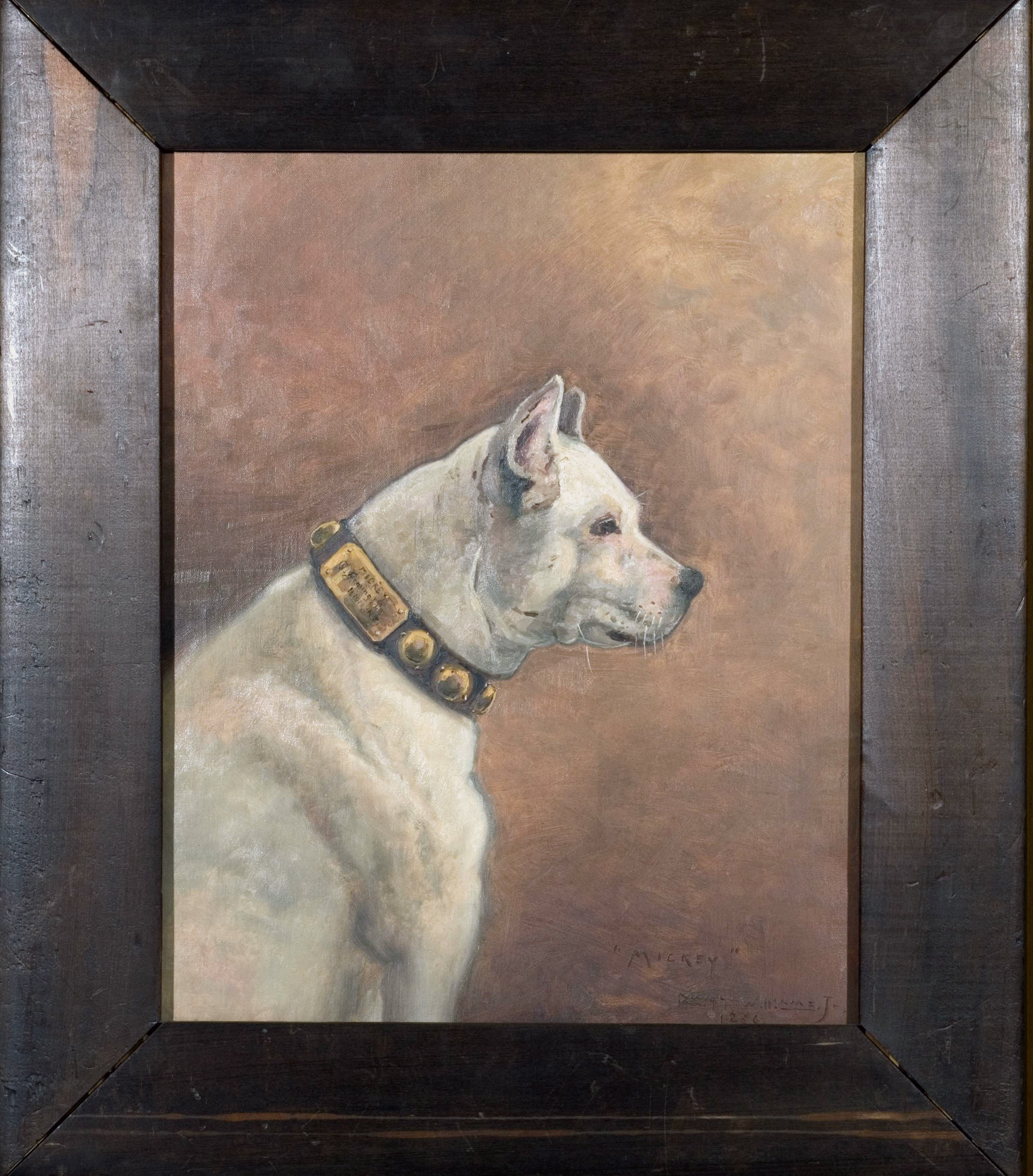
Credit: Mickey, Dwight Williams, c. 1886, oil on canvas. New York State Office of Parks, Recreation and Historic Preservation. Lorenzo State Historic Site. Museum Purchase, Founding Collection, LO.1974.511.AB

There are also informal renderings of family pets, like this drawing of Carlo. He was the pet of Ledyard Lincklaen, owner of Lorenzo from 1847 until his death in 1864. Carlo is a Newfoundland and shepherd mix. This rendering was done on April 27, 1856. We know Carlo’s breed because he was lost and Lincklaen placed an ad in the Cazenovia Republican offering “a suitable reward paid for his recover.” Thankfully, Carlo was recovered since the drawing adds “Obit April ? 1860,” marking the date of Carlo’s death.
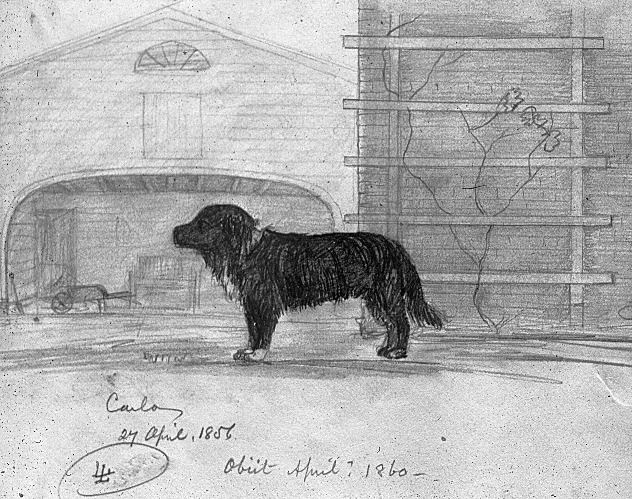
Credit: Carlo, Ledyard Licklaen, c. April 27, 1856, graphite on paper. New York State Office of Parks, Recreation and Historic Preservation. Lorenzo State Historic Site. Museum Purchase, Founding Collection, LO.1976.643.30.B

Clermont’s Cherished Childhood Pets

Janet and Honoria Livingston grew up at Clermont State Historic Site in Germantown, one of the Livingston ancestral homes. Their early 20th century childhood was captured in many family photo albums (as seen in a recent blog post on historic costumes). Their pets were frequently included. Their English bloodhound, Rufus, was especially treasured, and features in many photographs. The family also had horses, a pony, rabbits and a peacock named Solomon.
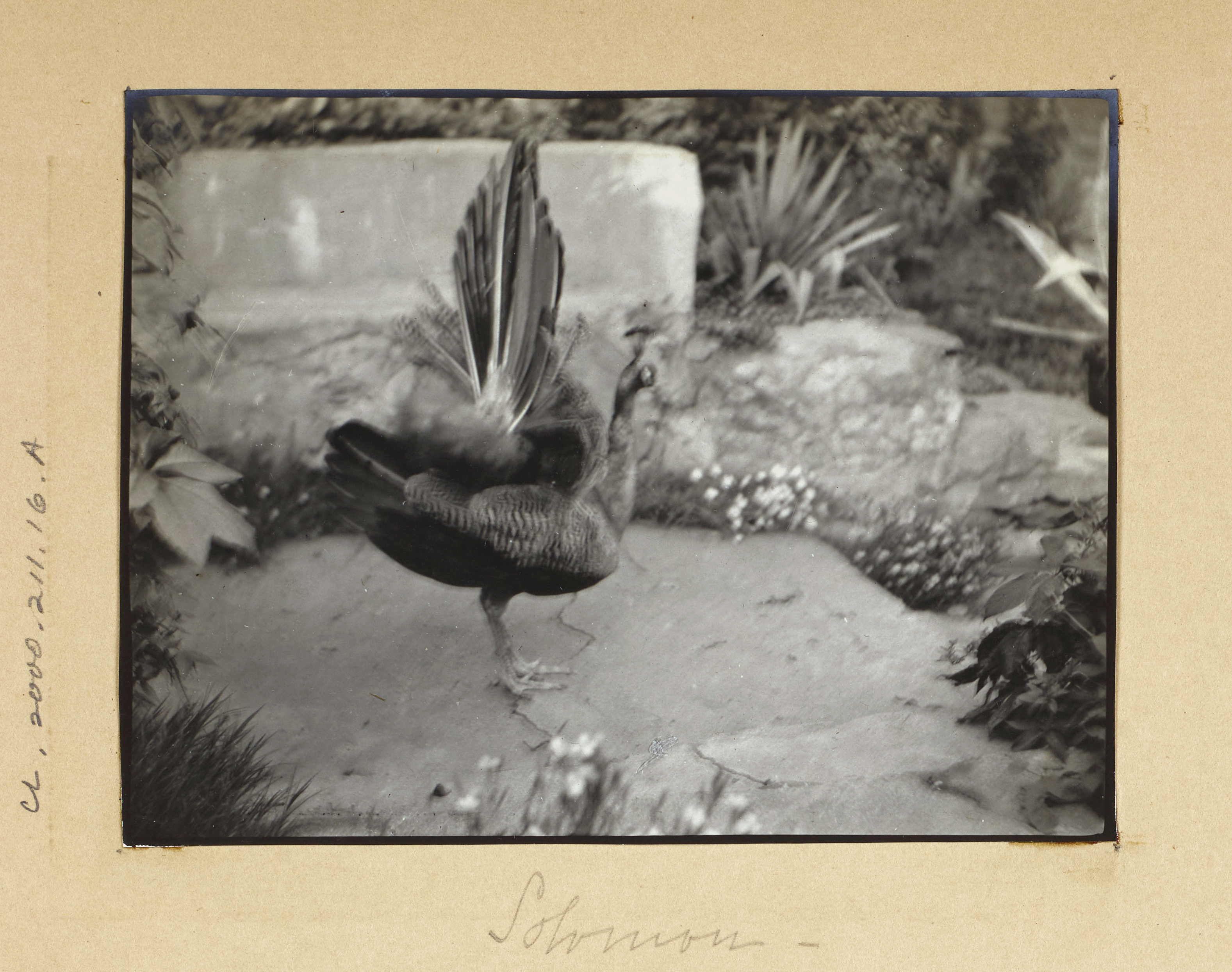
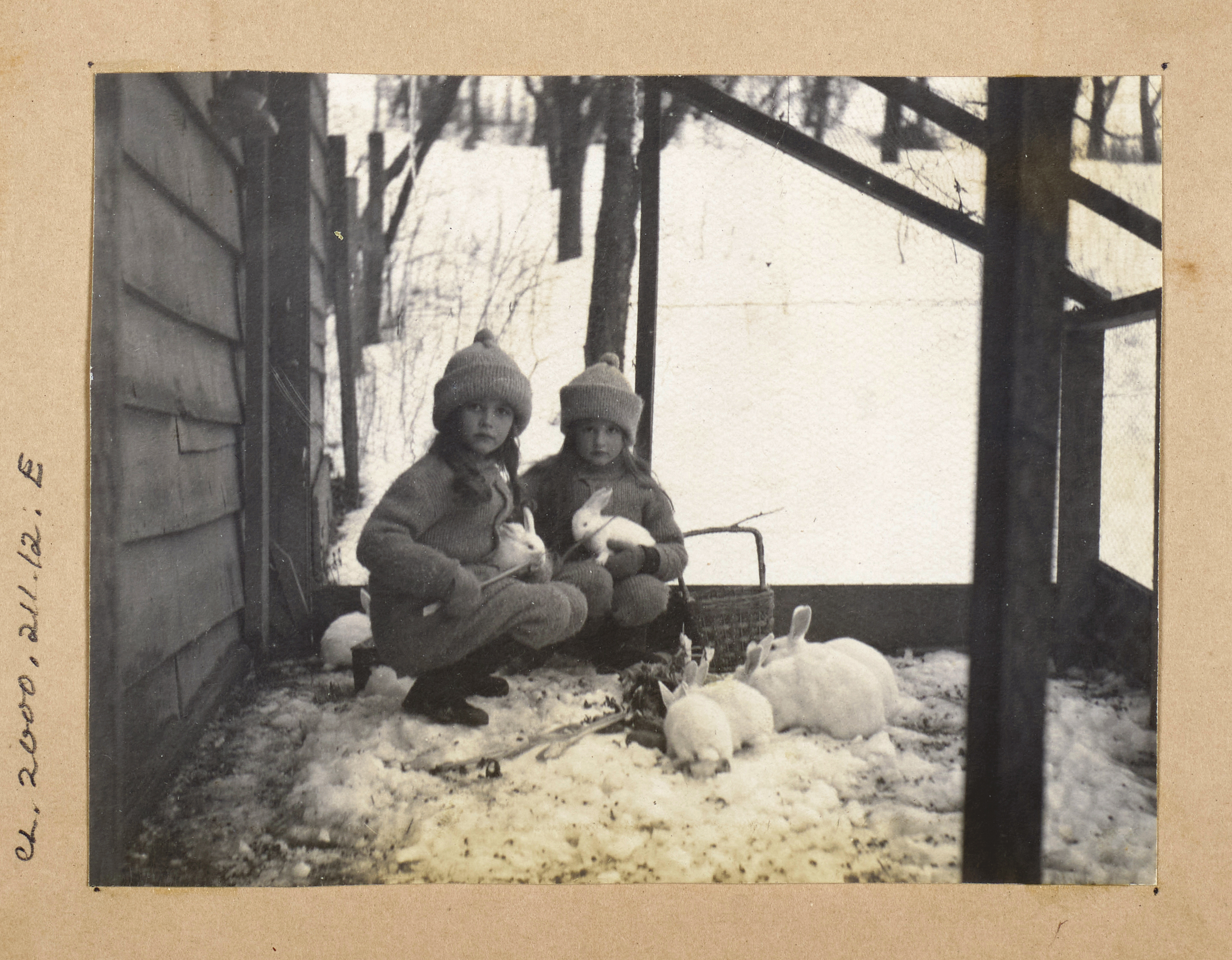
Credit: Solomon the Peacock, Janet and Honoria with Rabbits in Winter, Janet and Honoria Livingston with Rufus, Photographs in Album, c. 1915. New York State Office of Parks, Recreation and Historic Preservation. Clermont State Historic Site. Gift of Honoria Livingston McVitty, CL.2000.211.13.F, .12.E, and .16.A

Written and developed by Amanda Massie, Senior Curator, Bureau of Historic Sites
Recording Latin Music History in New York City 

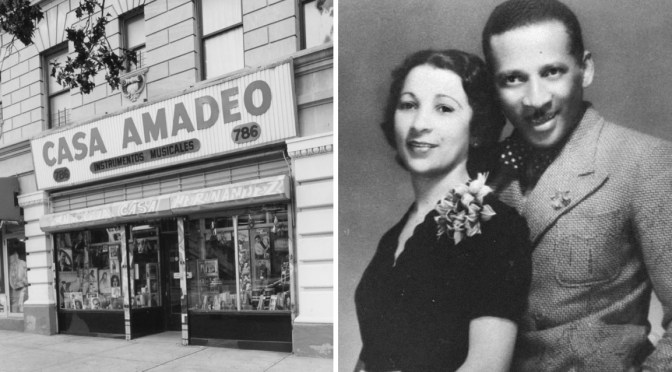
Added to the National Register of Historic Places in 2001, Casa Amadeo, antigua Casa Hernández is best known as the Bronx’s longest continually run music establishment and the oldest Latin music store in New York City. The store’s founder, Victoria Hernández, is one of the earliest female Puerto Rican entrepreneurs in the city. The National Register listing highlights her story and the lasting impact she had on the city’s Latin music scene.  

This history is just part of the story! Read the complete nomination for Casa Amadeo. 


Looming on a corner along Prospect Avenue in the Bronx, this 1905 Neo-Renaissance style apartment building is home to a cornerstone of New York City’s Latin music history.  

Historical black and white photograph of the Manhanset Building in the Bronx, featuring the storefront of Casa Amadeo on the ground floor, showcasing Neo-Renaissance architectural style with decorative cornices and windows.
The Manhanset, home to Casa Amadeo, antigua Casa Hernández, in operation since 1941. Casa Amadeo National Register nomination | Photographer: Martha Cooper (September 2000)
Continue reading Recording Latin Music History in New York City 

A Preview of Ganondagan’s Indigenous Music & Arts Festival

Ganondagan’s Indigenous Music & Arts Festival is a vibrant celebration of Indigenous cultures, held annually at Ganondagan State Historic Site in Victor, southeast of Rochester near Canandaigua. The festival began in 1989, just one year after Ganondagan was officially established as a New York State Historic Site. Originally named The Anniversary of the Dedication of the Site of Ganondagan, the event was later renamed The Native American Dance & Music Festival. In 2019, it adopted its current name: Ganondagan’s Indigenous Music & Arts Festival.

The two-day festival draws thousands of visitors from an array of cultures. Festival organizers view the event as an opportunity for cultural exchange.

In its early years, the festival was a one-day event, drawing just 200–300 attendees, with only one 40×40 tent and no volunteers. Today, it has grown into a two-day celebration that welcomes over 3,000 visitors and relies on the support of more than 125 volunteers. The festival now features multiple tents, including a large performance tent, and includes 25–30 Native vendors, Indigenous and non-Native food vendors, art demonstrations, Haudenosaunee (Six Nations) dancers, contemporary Indigenous performers, storytellers, a Native Arts Market and children’s activities.

Continue reading A Preview of Ganondagan’s Indigenous Music & Arts Festival

Kristine Mays Sculpture Exhibit Makes New York Debut at Jay Estate Gardens

From their earliest conception, the Jay Estate Gardens in Rye have been a place to host meaningful dialogues about American history and memory. A new outdoor wire sculpture exhibit created by acclaimed artist Kristine Mays expands upon that intentionality, celebrating and memorializing the spirts of enslaved people. Curated by the nonprofit Jay Heritage Center (JHC), “Rich Soil” is the first collection of fine art pieces to be installed in the historic landscape.

“I am breathing life into wire. With each work, I create a form that reveals the essence of a person and that speaks to humanity as a whole,” Mays said.

Continue reading Kristine Mays Sculpture Exhibit Makes New York Debut at Jay Estate Gardens

Landscape Architecture In Full Flower

Is there a greater source of inspiration than nature? The natural world has inspired great works of art in every genre and style from cave paintings to classical sculpture, lyric poetry to hit movies, orchestral works to electronic soundscapes. Landscape architecture takes this process one step further, in which nature becomes the art. A landscape architect studies for years to learn the art, science and craft of working with plants and trees to make an artistic statement that complements both the natural surroundings and the architecture and meets the needs of their client.

New York State Parks and Historic Sites preserves many remarkable landscapes. As National Garden Week draws to a close, discover iconic landscapes at our historic sites and the fascinating stories behind them.

Continue reading Landscape Architecture In Full Flower