Category Archives: Park History

Family History Guides Lighthouse at Golden Hill State Park

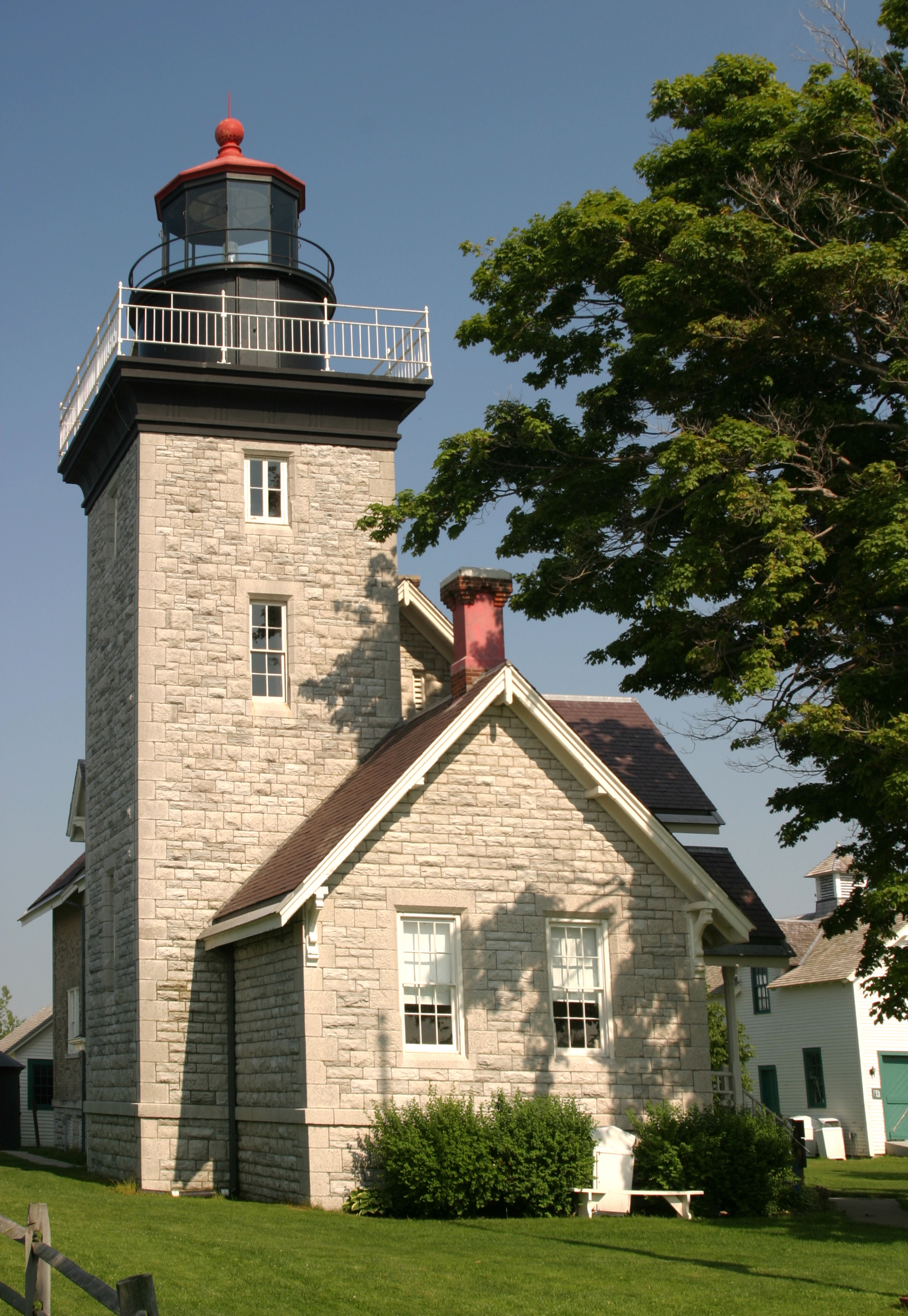
When Ann Rutland Schulze goes to the historic 30 Mile Point Lighthouse at Golden Hill State Park on Lake Ontario, she feels at home.

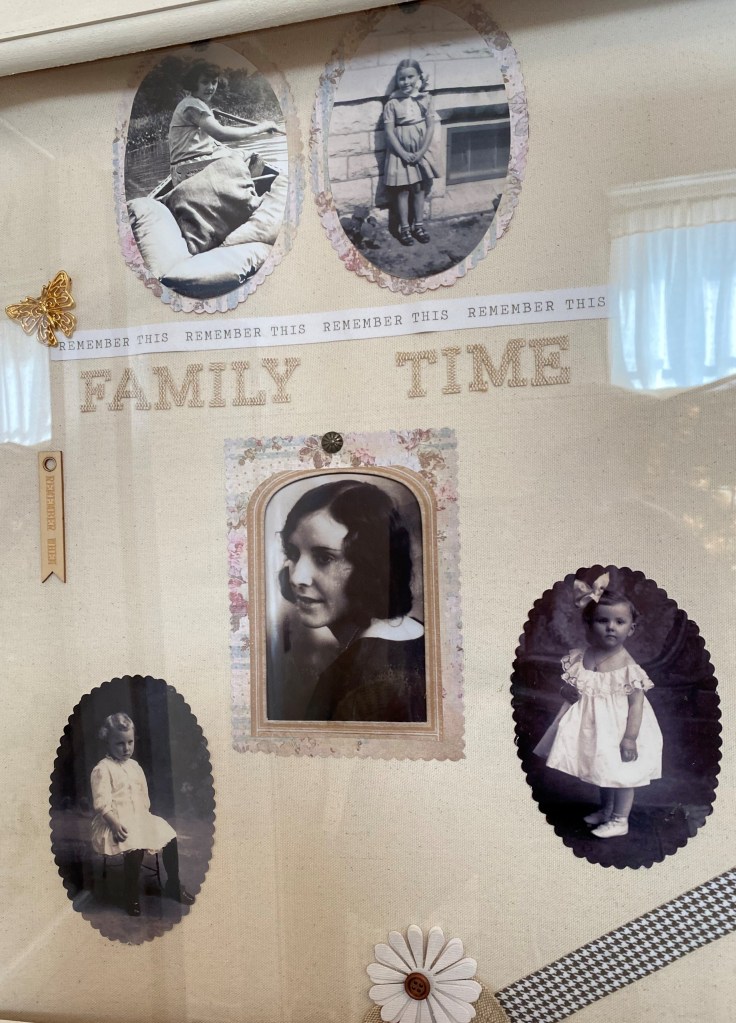
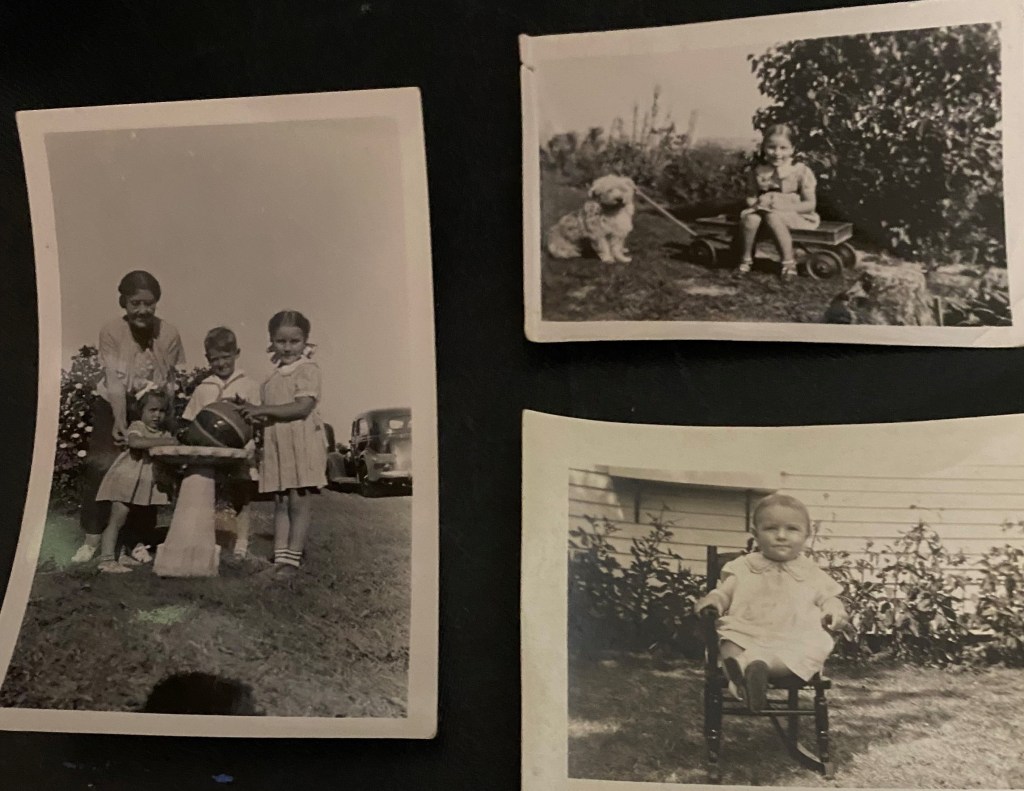
Inside one of the rooms are black-and-white pictures of a former lighthouse keeper and his family who once lived there. Some show their granddaughter, a little girl named Beverly who grew up to become Ann’s mother.

Not too far away, along the banks of a creek, a teenage boy who was fishing got teased by a friend about that girl who lived in the lighthouse with her grandparents. The boy’s name was Richard Rutland, and he later married Beverly. They had Ann and two other children, Julie and Richard.
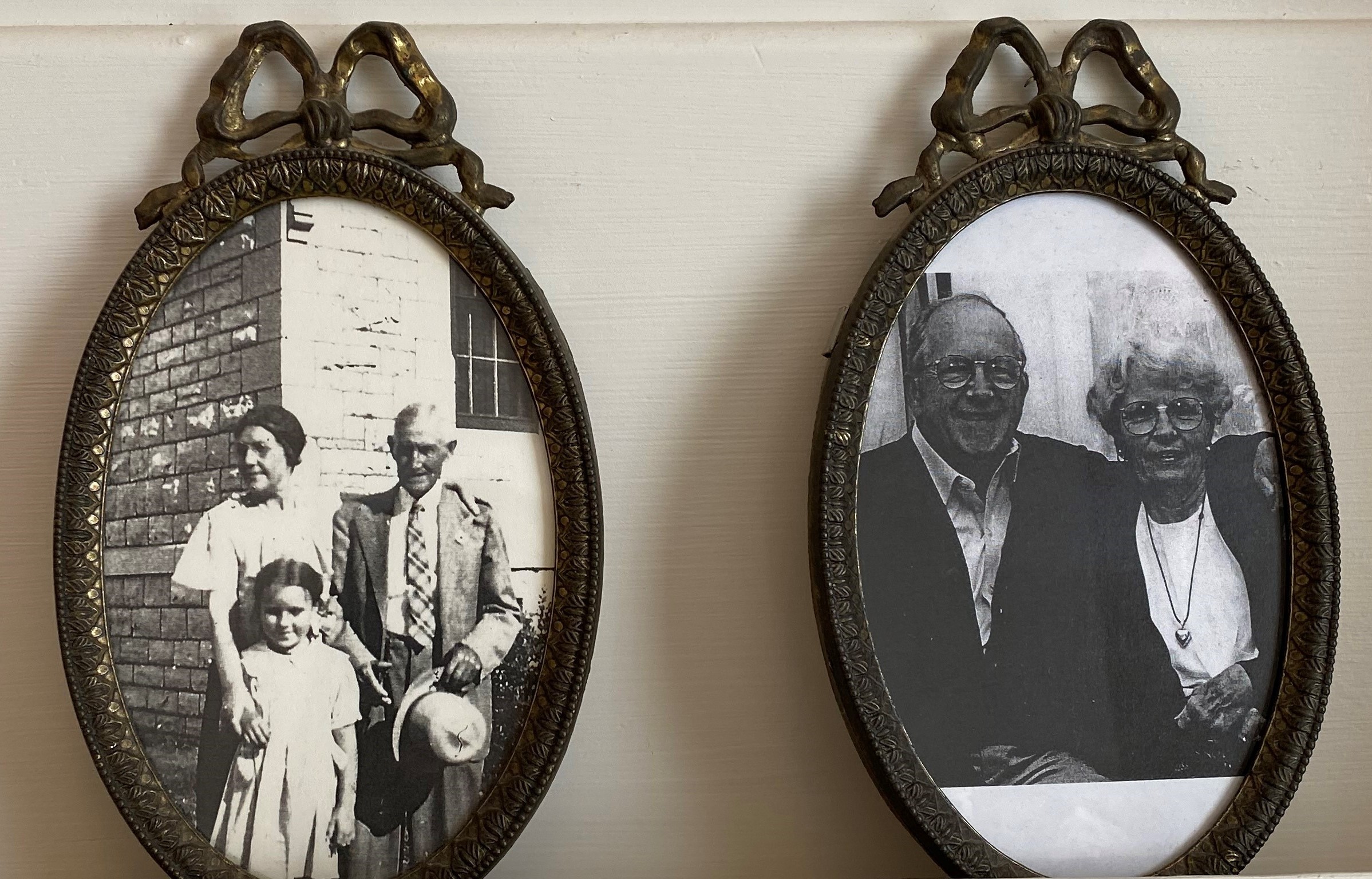
The picture to the left shows young Beverly with her grandparents, Glenn and Cora Seeley. Shown right is Beverly with her husband, Richard.

Now, Schulze , her husband Martin, and their sons Tyler and Shaun, run a family-owned vineyard and winery about a half-hour away from the lighthouse in the Niagara County town of Burt, where visitors can hear stories of a time when a family of six lived in isolation and simplicity in the lighthouse on a bluff overlooking the lake.

One of their wines even features a picture of the lighthouse.
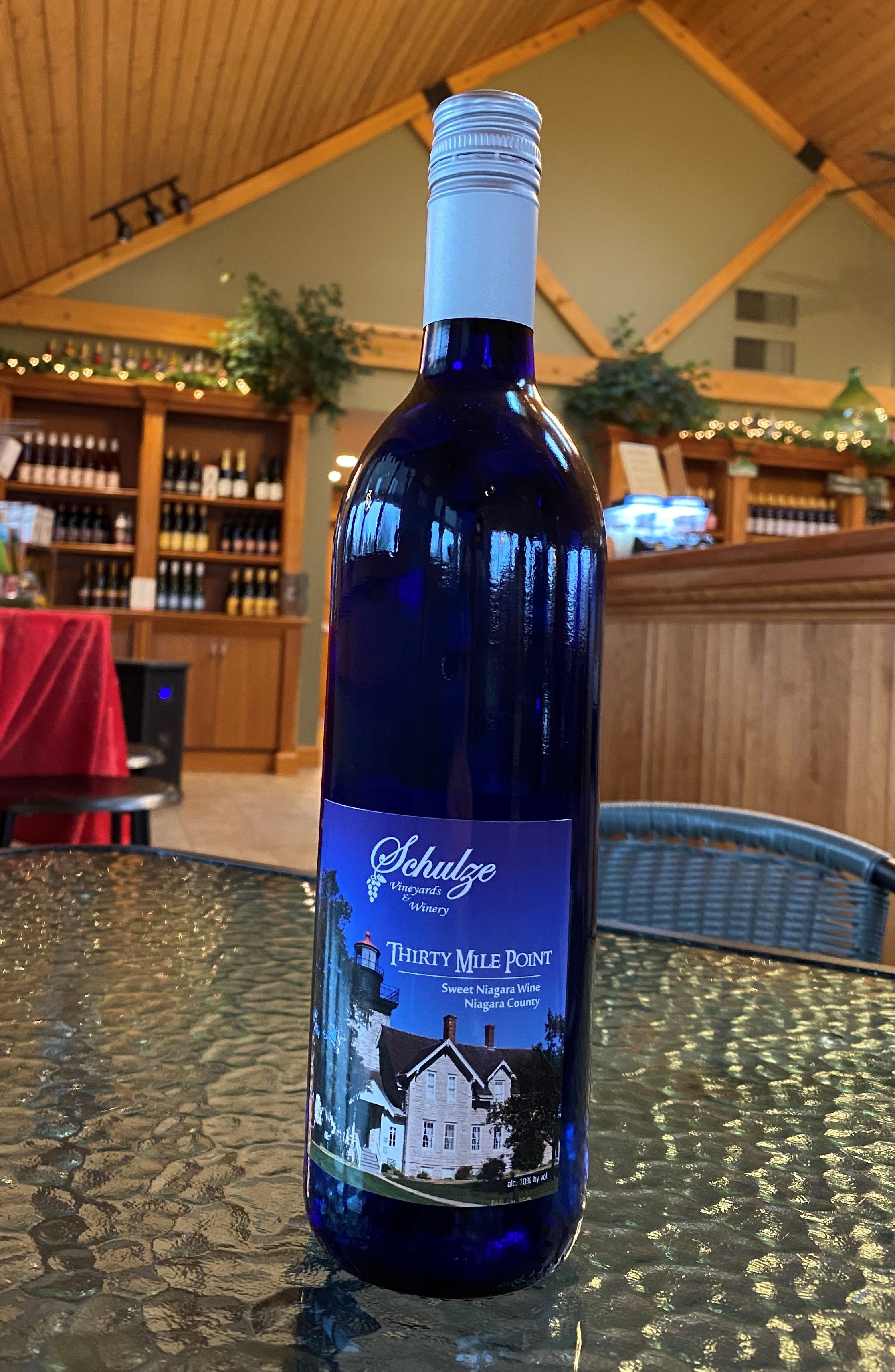
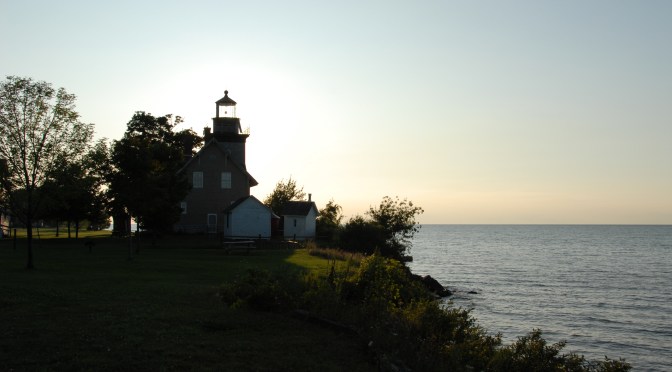
Use the slider bar to see on the left, the Schulzes’ wine featuring the 30 Mile Point Lighthouse, and on the right, the lighthouse itself on a bluff at Golden Hill State Park.

“My mother certainly enjoyed growing up here, and she was so pleased that this place wasn’t just let go after it was closed,” said Schulze. “This lighthouse has been so beautifully preserved as an emblem of the history of this region. It is the official town seal of Somerset. The downstairs of the lighthouse is the way it was when they lived here. It has what the park has named the “Beverly Room,” which has a wicker crib, a rocking chair, and pictures of Beverly and my great-grandparents.”
The 30 Mile Point Lighthouse, so named because it is 30 miles east of the Niagara River, was built in 1875 to help warn passing ships of dangerous shoals in the lake. It was decommissioned by the federal government in 1958 and its light removed, and in 1984 the U.S. Coast Guard transferred the lighthouse to Golden Hills State Park. The limestone structure is now on the Federal and State Registers of Historic Places.

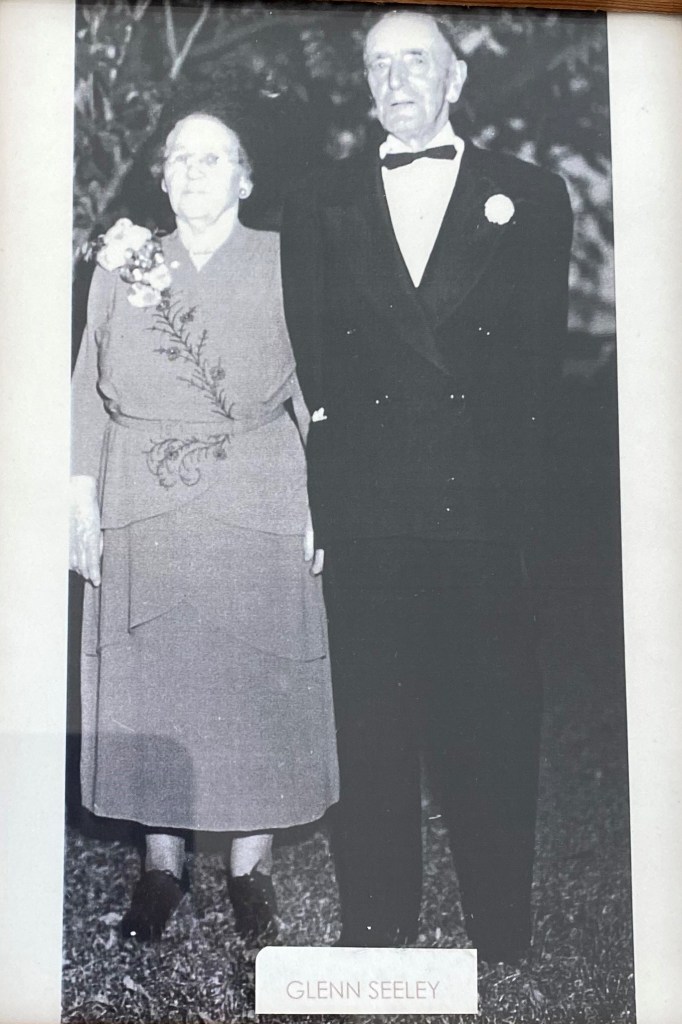
During the decades that passed in between, the lighthouse was a residence for 13 different keepers and their assorted families whose job it was to keep the light lit. The longest tenured of those, Glenn R. Seeley served from 1903 to 1945 with support from his wife, Cora. The couple had four children and also raised Beverly, their granddaughter, after their daughter passed away in childbirth.
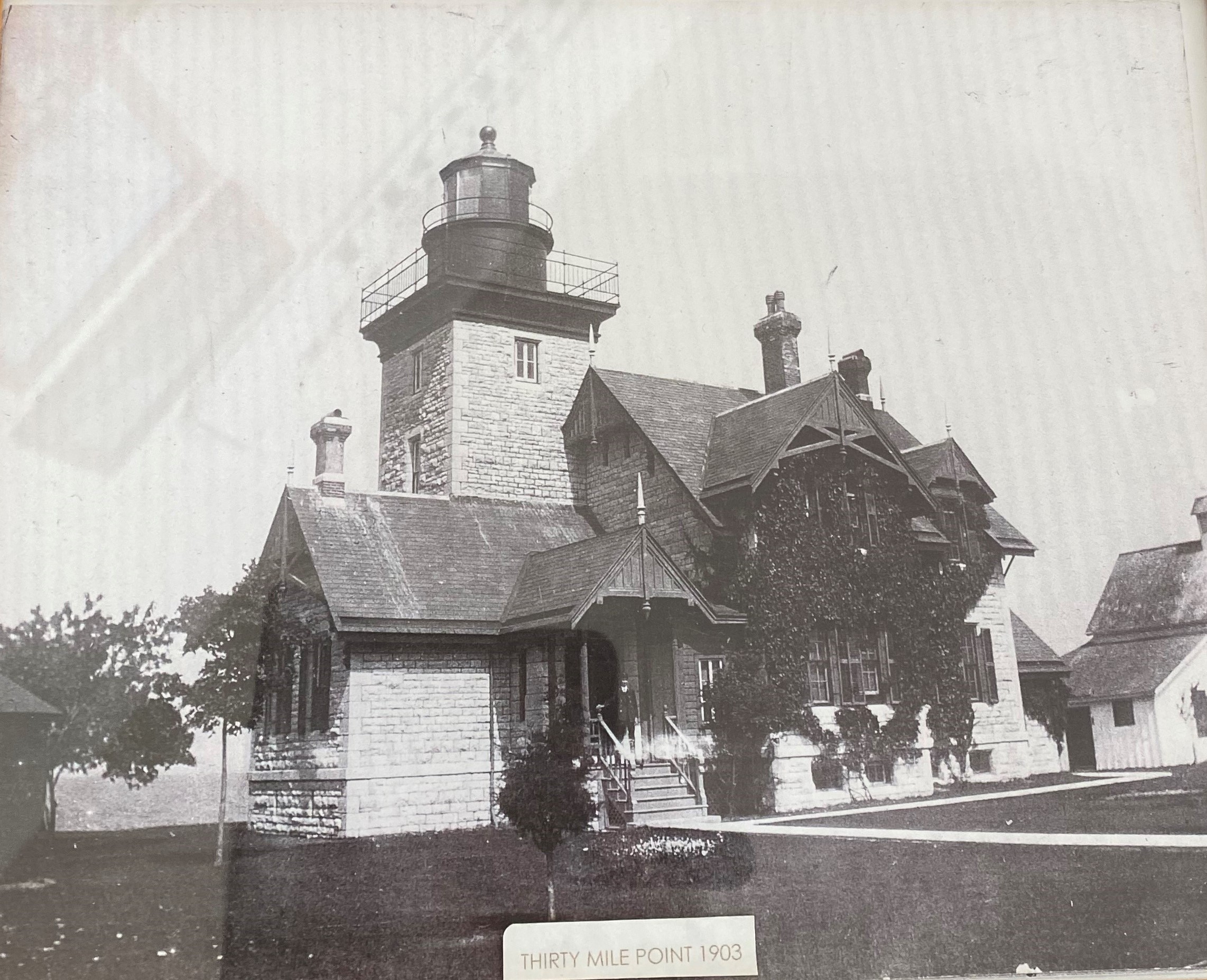
Glenn Seeley on the front porch of the lighthouse.

“My mother said it was wonderful place to grow up. She remembered her grandfather whitewashing the lighthouse once a year so it could be better spotted by passing ships and making her a concrete pond so she could have goldfish. Her grandfather would walk her to the nearby one-room schoolhouse. And she remembered that the lighthouse got the first telephone in the area,” said Schulze.

Beverly lived there until age 15, when her grandfather retired and moved the family to the nearby village of Olcott. She later went to college, became a public health nurse, and had a family of her own.

All through her life, Beverly remained connected to the lighthouse, coming there with her family for picnics or other events. “My three boys were in the Boy Scouts, and the troop came to the lighthouse when the U.S. Post Office issued a stamp for it in 1995. She was at the ceremony for that,” Schulze said.

The U.S. Postal Service issued a stamp featuring 30 Mile Point Lighthouse in 1995.

A year later, the not-for-profit Friends of the Thirty Mile Point Lighthouse group was formed, to support the preservation of the lighthouse. And in 1998, the light, which had been removed four decades earlier, was restored.

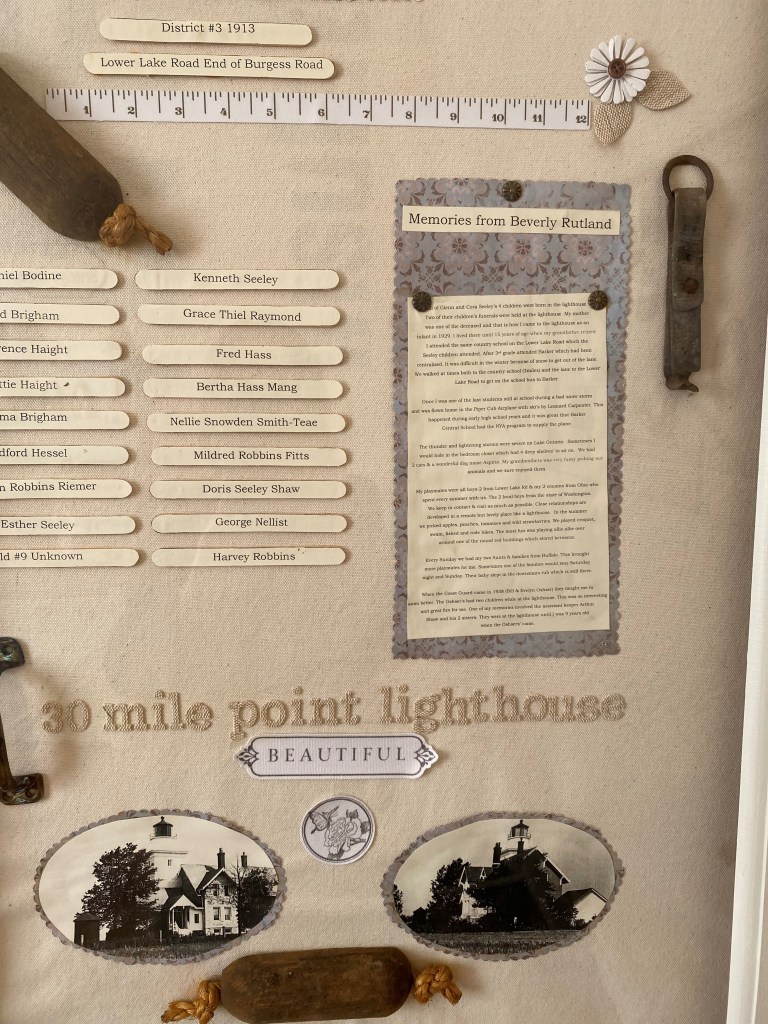
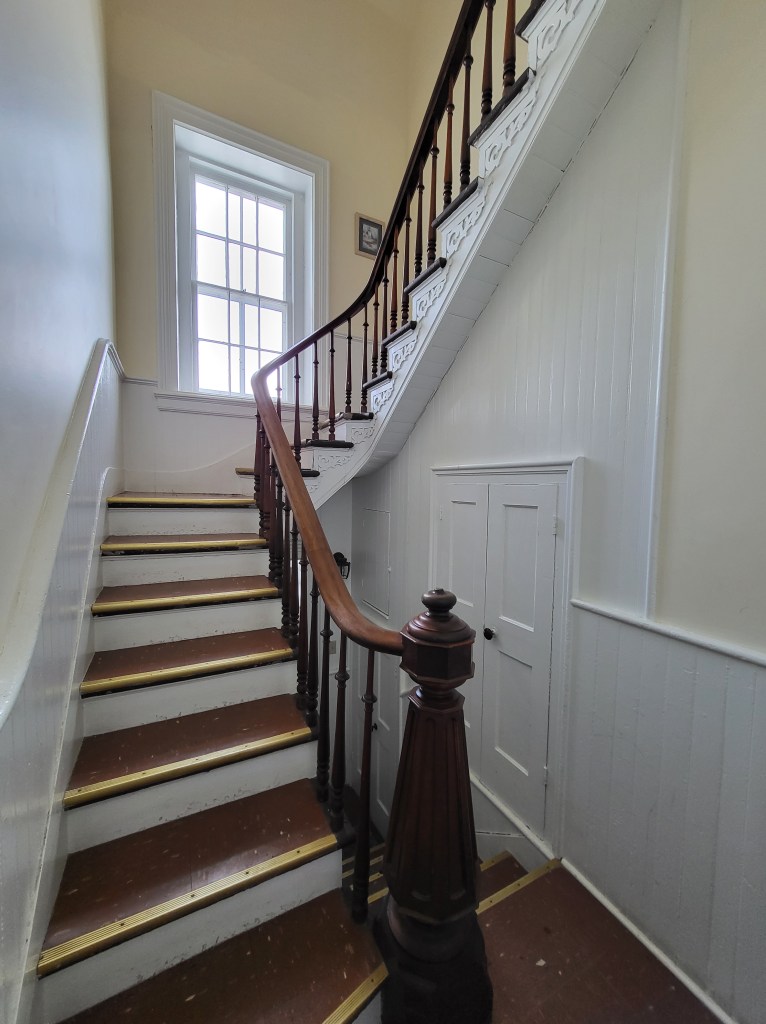
In her handwritten note cards, Beverly recalled the family doing its laundry in a washtub that was originally a copper boiler, and initially having no inside bathroom, only a privy that was cold in the winter. They later got the first inside toilet and telephone in town. She wrote how the children of the assistant keeper, who lived there in a separate residence with his family, taught her how to “swim and fish and play cards.” And that she was so afraid of the massive lightning storms that would cross the lake that she would hide in a closet under the stairs until the crashing passed.

Eventually, Beverly’s health began to fail, and such nostalgic trips to the lighthouse became impossible. Beverly passed away in 2010 at age 80.

Visitors who want to get a taste of lighthouse life can rent the second floor “cottage” of the facility for overnight stays. The former assistant keeper’s quarters, the cottage has a living room with an electric fireplace, bath with an old-fashioned tub, three bedrooms, and an awesome view of Lake Ontario.

Guests will notice the craftsmanship of the building, especially the original wooden double doors, with ornate knobs and lock set. All rentals are made through the website https://newyorkstateparks.reserveamerica.com/ or by calling 1-800-456-2267.

Click through the slideshow below to get a look inside…

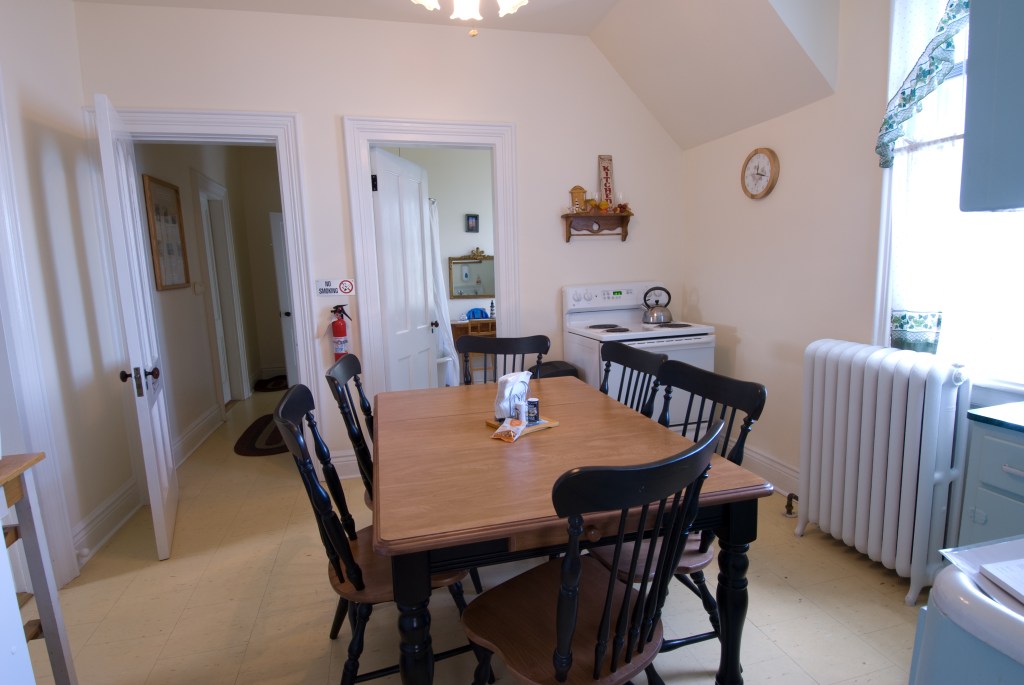
Renters are provided with a private picnic area with a barbecue grill and picnic table. This vacation rental offers a private entrance, kitchen with refrigerator, electric stove, microwave, coffee maker, cooking utensils, silverware and dishes, living room with electric fireplace, couch, two chairs and a writing desk, full bath with an old-fashioned bathtub, three bedrooms with queen size beds and pillows and a view of Lake Ontario that is stunning.

Visitors looking at the lighthouse’s “memory book” will see some entries written by Beverly herself. The lighthouse cottage is more than just a place to stay. It is place of beauty, reflecting lives filled with long nights, hard work, rough waters, violent storms, joy, heartbreak, and family bonds that don’t break.


Post by Brian Nearing, Deputy Public Information Officer, NYS Parks

About Golden Hill State Park


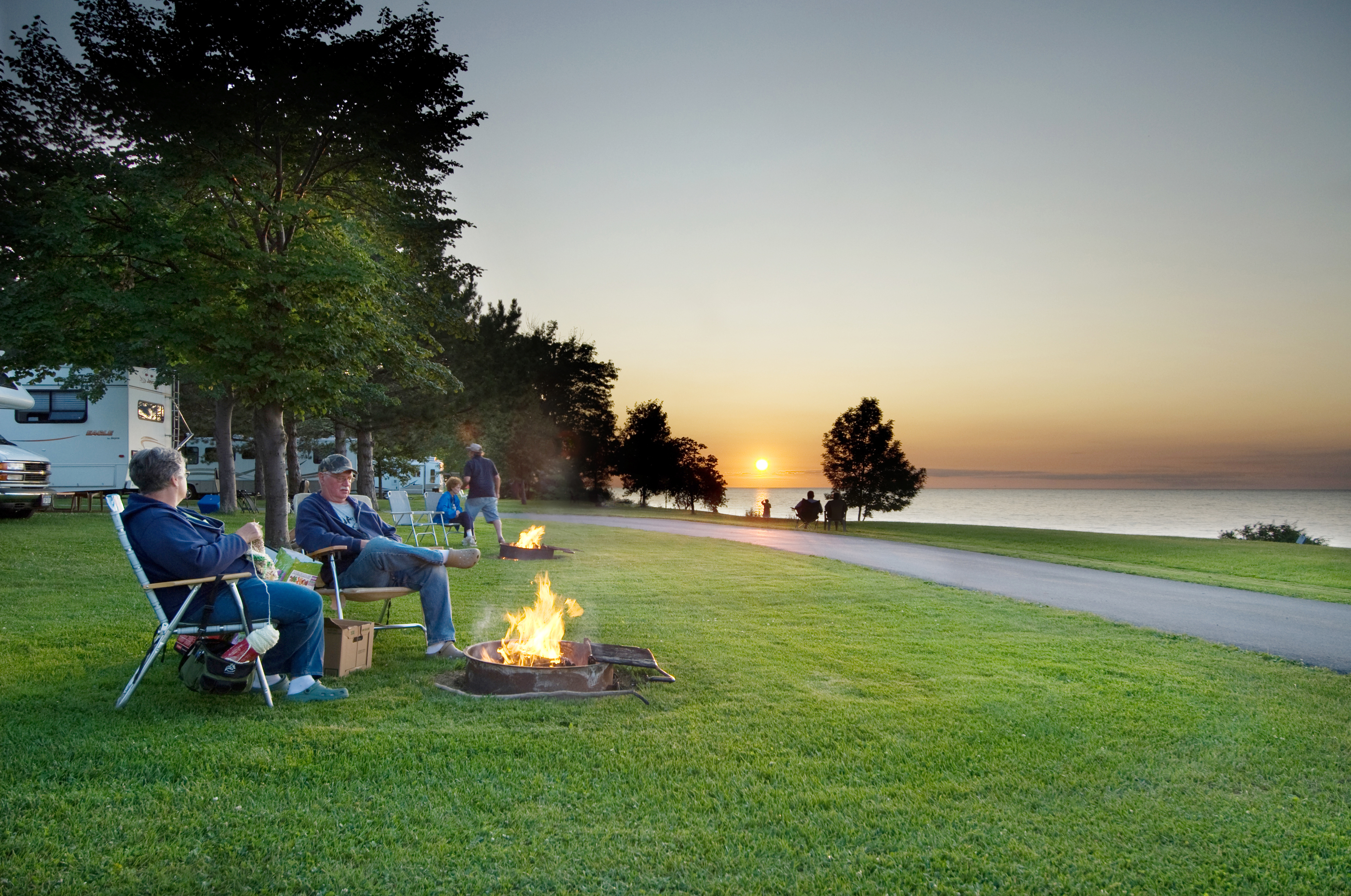
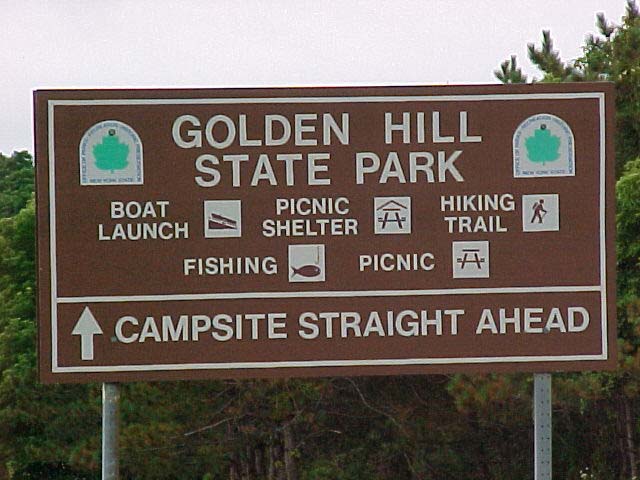
Located in Niagara County, this park along the Lake Ontario shoreline covers 510 acres. Created in 1962, the park has 59 campsites, six yurts, two pavilions, a new playground, a volleyball court, softball field, two picnic areas, hiking trails, a disc golf course, and a boat launch.

Niagara Falls State Park, Fort Niagara State Park,  and Old Fort Niagara State Historic Site are less than an hour away by vehicle.

All are Welcome Where They Once Were Not: New York’s First African American Vacation Resort

Vacationing in New York has not always been easy for African Americans. For most of the 20th century, cultural segregation was the norm. While Jim Crow laws in Southern states were explicit, here in New York there also were known rules of discriminatory racial separation in accommodations that could make finding a cool place on hot summer days challenging.

About an hour’s drive north of New York City, the popular mountain resort area of Greenwood Lake in Orange County near the border with New Jersey dated to the 1870s and for years had been off-limits to Blacks, Jews, and Italians. But in 1919, a change happened. Wanting to relax in this beautiful mountain setting and enjoy themselves without racial hassles, a group of prominent African American families, spearheaded by nine members of the Carlton Street YMCA in Brooklyn joined together to create the first African American vacation resort in New York State.

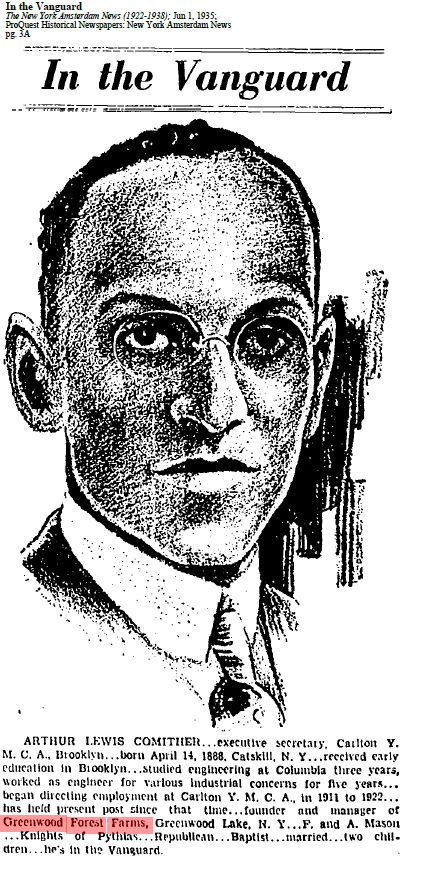
One of co-founders of Greenwood Forest Farms, Arthur Lewis Comither. (Photo Credit – ProQuest Historical Newspapers)

Sterling Forest Farms Incorporated purchased 143 acres of land high in the mountains surrounding Greenwood Lake and named it Greenwood Forest Farms. The ‘Colony’ as it came to be known was to become the summer place to be for African Americans well into the 1960s. 

By the mid-1930s, Greenwood Forest Farms was well on its way to becoming the place to be seen during the summer months. A July 1938 headline in the Black-owned New York Amsterdam News boasted “Greenwood Lake May Become East’s Most Fashionable Summer Colony.” A full-page story covered details of the site’s founding, and reporter Thelma Berlack-Boozer was given tours of several cottages, gardens, and all the amenities. At the time there were twenty-eight cottages set in beautifully landscaped gardens with thirty-five other lots in development. The writer described the wonderful natural forest surrounding the location, the luxurious summer furnishings on expansive porches and lovely interiors, the corporation’s plans, and how those who happened to not own cottages still could enjoy time there.

The corporation built a club house called the ‘Farm House’ where vacationers could enjoy live music, dancing, and a restaurant. For those who did not own a cottage, the Farm House was one of three locations where vacationists could rent rooms. The other two were private cottages which rented bedrooms during the summer, with one of those, the Justice House, opened during the winter for those interested in hunting. An August 1941 ad offered lodging at the Farm House for $15 per week or $4 for the weekend, with a car shuttle leaving from Harlem on Tuesdays, Thursdays, and Saturdays to make traveling upstate easy. The plan was completely upscale, to the point that in the 1940s the colony generated its own electricity. When completed, the Colony had a man-made lake, tennis, and hand-ball courts, and a nursey school for everyone’s use.

New York’s Black elite both owned the properties and visited their friends. Luminaries like Cecil McPherson (Cecil Mack) the famous lyricist and music publishing magnate, and his wife Dr. Gertrude Curtis, New York’s first African American woman dentist owned a cottage there. The poet Langston Hughes was among several literary figures who summered there with friends. Civil rights giants James Farmer, Harold W. Cruse, and Robert J. Elzy, the head of Brooklyn’s Urban League were among the property owners and guests.

If people wanted to know where to find the cream of the crop during the warmer months, society columns in the New York Amsterdam News kept people up to date. In 1933 the paper’s Brooklyn Society column informed all that the Elzys could be found at their cottage ‘Rob-Lou,’ and that Mr. and Mrs. Jesse Webster, and their weekend guests from Baltimore motored up to the Greenwood Forest Farm House on Sunday. Mrs. Willard J. Price and her daughters spent the week as guests of Mrs. Walter Taylor of Greenwood. The Jamaica News and Social Briefs shared that Mrs. Gordon Jones and her daughter, were at Sterling Forest Farm for the summer but had returned to Jamaica.

By the late 1960s as the older generation died, and options for vacation locations expanded for African Americans with the passage of the Civil Rights Act and the opening up of public accommodations, fewer people ventured up to Greenwood Forest Farms. In the 1970s the famous Farm House was lost to a mysterious fire, but many families continued to vacation and live there year-round. 

An account of the fire that destroyed the Farm House at Greenwood Forest Farm appeared in the New York Amsterdam News on Aug. 14, 1971. (Photo credit – ProQuest Historical Newspapers)

In 2007, the Greenwood Forest Farms Association, Inc was created by descendants of original property owners to preserve the legacy of the colony. Although diminished, Greenwood Forest Farms today remains a proud hamlet of the Town of Warwick and has a few multi-generational residents. 

Today, New York State Paths through History signs can be found along Nelson Road in the Town of Warwick commemorating Greenwood Forest Farm’s amazing story of resilience and joy. And this historic place is now preserved for the people of New York.

On January 11, 2022, Governor Kathy Hochul announced a 130-acre expansion of Sterling Forest State Park, with a portion of the land belonging to Greenwood Forest Farms. Now with the designation of this land as a State Park, awareness of the legacy of the area will grow.

As State Parks celebrates Black History Month, we are reminded that this property tells the story of a time when racial segregation in the North was found around Greenwood Lake. It reflects part of a long journey to today, when State Parks is committed to the message that “All Are Welcome Here.”


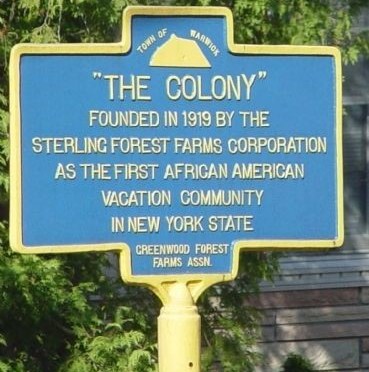
Cover Shot – Historic marker for Greenwood Forest Farms (Photo credit – Woodham, Rebecca. “”The Colony” Historical Marker (Greenwood Forest Farms).” Clio: Your Guide to History. December 27, 2017. Accessed Jan. 20, 2022.  https://theclio.com/entry/53333)

Post by Lavada Nahon, Interpreter of African American History, Bureau of Historic Sites, NYS Office of Parks, Recreation and Historic Preservation.

Learn More About Greenwood Forest Farms


Read this 2019 article and 2005 article from the Times Herald-Record newspaper.

Watch this accompanying video by the Times Herald-Record.

Read this 2005 article from the Warwick Historical Papers newsletter.

Learn more about Black history in New York State in previous posts on the the NYS Parks Blog:

Juneteenth — Coming to terms with Freedom

“Grand Old Fort: But Alas Manned by Colored Troops…” Buffalo Soldiers at Fort Ontario 

Do You Know Sojourner Truth?

Reviving a Dutch Holiday with African Flavor 

A Legacy of Strength: Civilian Conservation Corps

John Brown Farm: Growing Freedom in Adirondack Wilderness


About Sterling Forest State Park

Established in 1998, Sterling Forest State Park covers nearly 22,000 acres of nearly pristine natural refuge amidst of one of the nation’s most densely populated areas, a remarkable piece of woodland, a watershed for millions, and a tremendous outdoor recreation area. This unbroken deep-forest habitat is important for the survival of many resident and migratory species, including black bear, a variety of hawks and songbirds and many rare invertebrates and plants. Hunting, fishing and hiking opportunities are available.

The park’s Senator Frank R. Lautenberg Visitor Center overlooks the nine-mile long Sterling Lake and features exhibits about the local environment as well as an auditorium for related presentations.

The park has more than 80 miles of hiking trails, including a portion of the Appalachian Trail. It offers opportunities for horseback riding (permit required), hunting (permit required), fishing, biking, snowshoeing, cross-country skiing and ice fishing.

The park also is part of the Sterling Forest Bird Conservation Area, and includes such species as Peregrine Falcon (endangered), Pied-billed Grebe (threatened), Least Bittern (threatened), American Bittern (special concern), Osprey (special concern), Sharp-shinned Hawk (special concern), Cooper’s Hawk (special concern) Northern Goshawk (special concern), Red-shouldered Hawk (special concern), Common Nighthawk (special concern), Whip-poor-will (special concern), Red-headed Woodpecker (special concern), Horned Lark (special concern), Golden-winged Warbler (special concern), Cerulean Warbler (special concern), and Yellow-breasted Chat (special concern). Numerous other species contribute to the diversity of birds within the BCA including Broad-winged Hawk, Acadian Flycatcher, Least Flycatcher, Yellow-throated Vireo, Brown Creeper, Winter Wren, Hermit Thrush, Worm-eating Warbler, Blue-winged Warbler, Black-throated Blue Warbler, Pine Warbler, Ovenbird, Louisiana Waterthrush, Hooded Warbler, Canada Warbler, Scarlet Tanager, Rose-breasted Grosbeak, Orchard Oriole, and Purple Finch.

Sources

Greenwood Lake May Become East’s Most Fashionable Summer Colony, Thelma Berlack-Boozer, The New York Amsterdam News, July 23, 1938, ProQuest Historical Newspapers: New York Amsterdam News, pg. 10.

Brooklyn Society, Elzys ‘Rob-Lou,’ The New York Amsterdam News, September 6, 1933; ProQuest Historical Newspapers: New York Amsterdam News, page 11.

Brooklyn Society, Mr. & Mrs. Webster, The New York Amsterdam News, July 12, 1933; ProQuest Historical Newspapers: New York Amsterdam News, page 11.

Jamaica News and Social Briefs, The New York Amsterdam News, July 23, 1928; ProQuest Historical Newspapers: New York Amsterdam News, page 9.

Lights in the Night at Niagara Falls

A custom energy-efficient LED lighting system that produces a rainbow of colors nightly at Niagara Falls State Park is a far cry from the simple technology used at the start of the Civil War when the falls were illuminated for the first time in honor of a visiting English prince.
The evening of Sept. 14, 1860, the falls were lit up for a short time using so-called Bengal lights, which were a centuries-old type of chemical flare that burned with bluish light. While it worked for the prince’s visit, this short-term and cumbersome method of lighting the falls was not to be used again.

A few years later, a new technology developed during the recently concluded Civil War came to the world-famous falls.  Spotlights used then were powered by heating up piles of calcium quicklime until it glowed brightly, which is the origin of the phrase of putting something “in the limelight.” Union forces had used such spotlights during the war to illuminate Confederate positions at night.

The emerging technology of electric lights arrived at the falls in 1879 to herald the arrival of an official couple from the government of Canada. More than two decades then passed before Walter D’Arcy Ryan, an innovative lighting engineer with Schenectady-based General Electric Co., designed a massive new searchlight system in 1907 that used colored gelatin films changed by hand to project different colors onto the face of the falls.

For 30 nights in a row in 1907, Ryan used 44 searchlights with colored filters, and powered with steam engines, to illuminate the entirety of Niagara Falls for the first time. Following this acclaimed success, he was named head of GE’s Illuminating Engineering Laboratory, the world’s first institution for research into lighting, created the following year in Schenectady.

According to the New York Tribune of Sept. 5, 1907, Niagara Falls looked far more dramatic lit up at night such that “words fail to describe the magnificence of the spectacle”. Another observer wrote: “It was a riot of glorious beauty, so new, so strange, so marvelous – so like some unearthly and unexplained magic that it held the spectator startled, then spellbound, speechless and delighted.”

Officials pose with the General Electric searchlight system used to illuminate Niagara Falls in these undated photographs. (Photo Credit- NYS Parks)

Ryan’s system was incredibly powerful for its day, producing more than 1 billion candela (a measurement of luminous intensity). That was the equivalent to more 8.3 million standard 110-watt lightbulbs!

By then, the illumination of the falls was proving to be an increasingly popular attraction, and in 1925 a joint U.S.-Canadian group was formed to manage and operate lighting – the Niagara Falls Illumination Board. The five-member board saw to it that new, even more powerful electric lights were installed for a ceremony that year. Lights were upgraded again in 1958, 1974, and 1997.

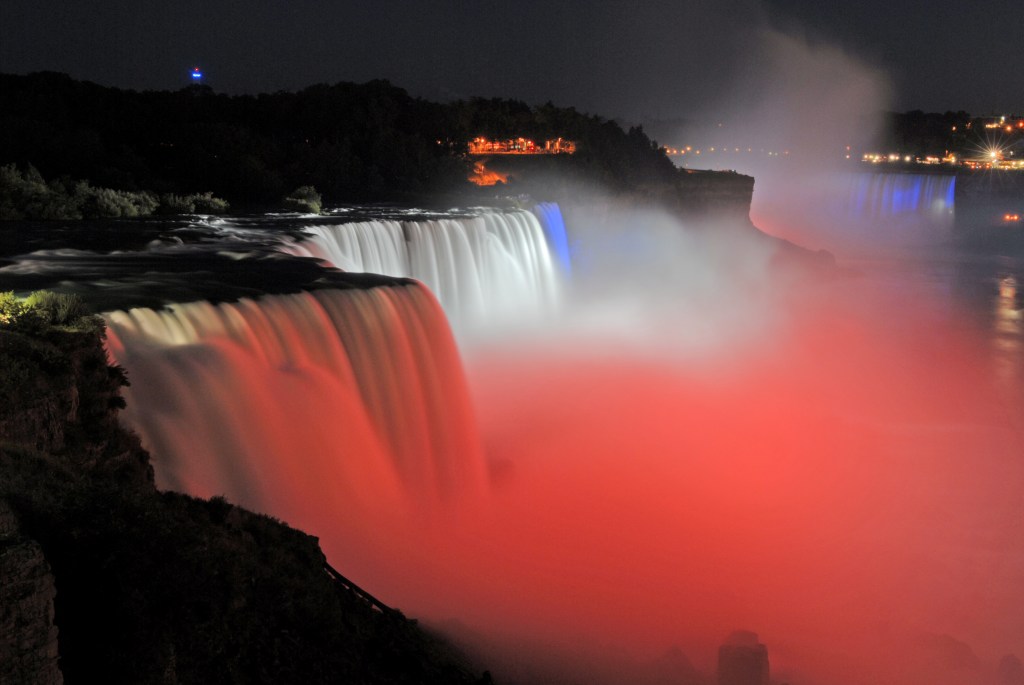
Today, visitors to Niagara Falls State Park are witnessing the work of an array of energy efficient LED lights that was installed in 2016. This $4 million custom system produces any color desired and has twice as much illumination as the previous lights, producing an enormous 8 billion candela. (For the lighting techies, that is more than eight times more powerful that the turn-of-the-century GE system, equivalent to the illumination from 66.6 million standard 110-watt lightbulbs!)

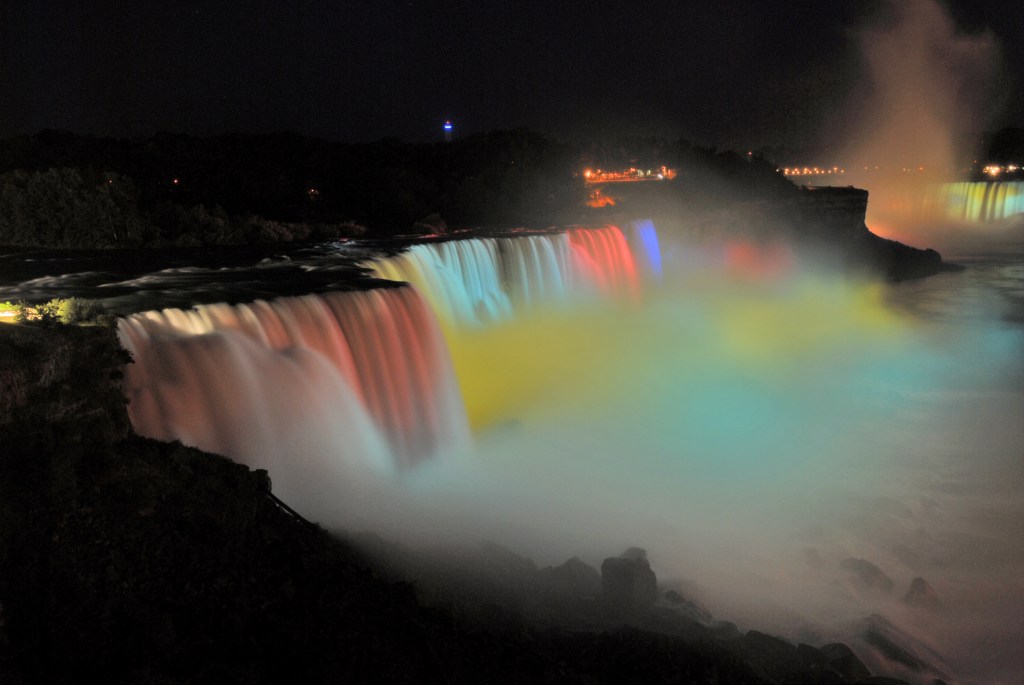
The array contains 12,600 LED lights, evenly divided among red, blue, green, and white. Red, blue, and green are the primary colors of light in physics and adjusting the ratios of each produces the full palette of colors. When all three colors are equally combined, that produces white light. The system at Niagara is powerful enough to span the 1,900 feet needed to reach the both the American and Horseshoe Falls.

A technician tests the new LED lighting system at Niagara Falls. (Photo Credit- Mulvey & Banani Lighting Inc.)

Click this slideshow below to see aspects of the LED array, including a close-up of the lights, their appearance once grouped, and use in action.

A schematic of how the LED light beams illuminate American Falls and Horseshoe Falls. (Photo Credit- Mulvey & Banani Lighting Inc.)

This unique custom system was designed by a consortium of companies including ECCO Electric Ltd., Salex Inc., Mulvey & Banani Lighting Inc., Sceneworks, and Stanley Electric. To test whether the LEDs could cast beams of light the distance needed, the crew successfully tested mockup systems across a lake in Ontario and along an abandoned aircraft runway!

The lights are operated via computer but can also be operated by two staff members who watch guard over the lights each night. They can even be programmed to perform shows such as “Inspired by Nature” which features colors and movements inspired by nature, including the sunrise, aurora borealis, rainbows and sunset.

Today the world-famous falls are lit up every night of the year in an ever-changing light show, the colors chosen to reflect a wide variety of causes, events, and people, all of which reviewed and approved by the board.

On June 15th, 2021, for example, the falls were illuminated in the official New York State colors of blue and gold in celebration of reaching 70 percent of New York adults receiving their first dose of COVID-19 vaccine.

In 2016, when Queen Elizabeth turned 90 on April 21, the falls were colored purple in her honor. It did cause a bit of unintended confusion.  The musician formerly known as Prince, who was closely associated with purple, died the same day so many people mistakenly thought the lighting was for him!

Other recent illumination highlights might be less well-known, including highlighting of the Republic of Bashkortostan, Wrongful Conviction Day, and Dress Purple Day, Bullying Prevention Month, Latvian Independence Day, and Dysautonomia awareness.

The falls have been illuminated blue to mark playoff appearances of the NFL Buffalo Bills, purple and gold to mark the tragic death of NBA star Kobe Bryant, a combination of red, white, and gold to honor the Canada’s gold-medal Olympic women’s soccer team, and blue and green for the Canadian professional basketball team Niagara River Lions.

The falls also have been lighted green for St. Patrick’s Day, rainbow colors for Pride Month, blue to mark the 70th anniversary of the North Atlantic Treaty Organization (NATO), and red to welcome Chinese New Year.

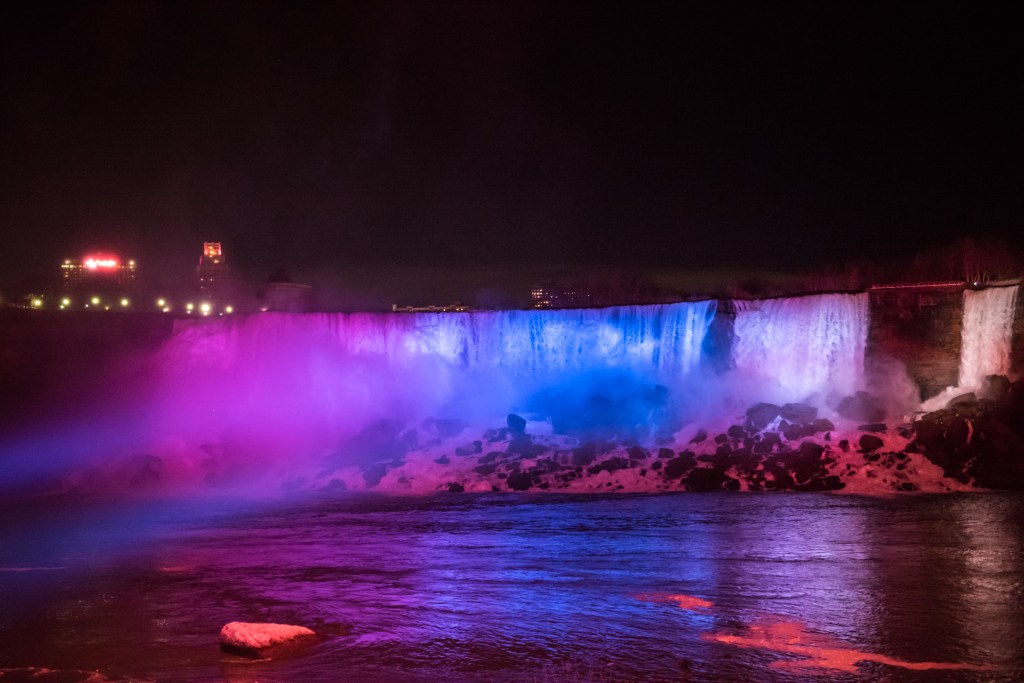
One night a year, March 26, the falls go dark for an hour in honor of Earth Hour, a global initiative aimed at drawing attending to ongoing human-induced climate change. Click on the slideshow below to see some of Niagara Fall’s amazing colors!

With the ability to shine light through mist and flood both the American Falls and Horseshoe Falls with every color under the sky, the nightly illumination is the highlight of any visit to Niagara.

Hours of illumination vary by seasonal timing of nightfall, starting between 4:30 and 8:30 p.m., and wrapping up from 1 to 2 a.m. With the earlier nightfall in winter, the falls are illuminated earlier in the evening. When the falls freeze in the winter, creating massive ice formations, the lights take on another beautiful dimension.

The Illumination Board is an example of international cooperation between the U.S. and Canada, with its membership consisting of New York State Parks, Niagara Parks (Canada), the New York Power Authority, Ontario Hydro (Canada) and the cities of Niagara Falls in both the U.S. and Canada, which pay annual dues to cover the expenses associated with this special attraction.

The group is also charged with fulfilling requests for lighting for charitable organizations, special causes, global events, and other special occasions.  As the Falls is such a global icon, hundreds of requests are received each year.

Under board rules, requests cannot be considered for commercial purposes, personal occasions like birthdays or marriage proposals, religious or political events, and institutions, such as hospitals and schools.

Be sure to include an overnight on your next visit to Niagara Falls to catch the illumination. Pro tip: The best viewing from the American side is from Terrapin Point or Prospect Point.

Check out the schedule of lightings and learn more about the nightly illumination here.

Post by Angela Berti, Marketing and Public Affairs Coordinator, Niagara Region, NYS Parks

Watch this Youtube video below by Mulvey & Banani Lighting to learn more about how the Niagara Falls are illuminated…


Learn more about the color of light from the American Museum of Natural History.

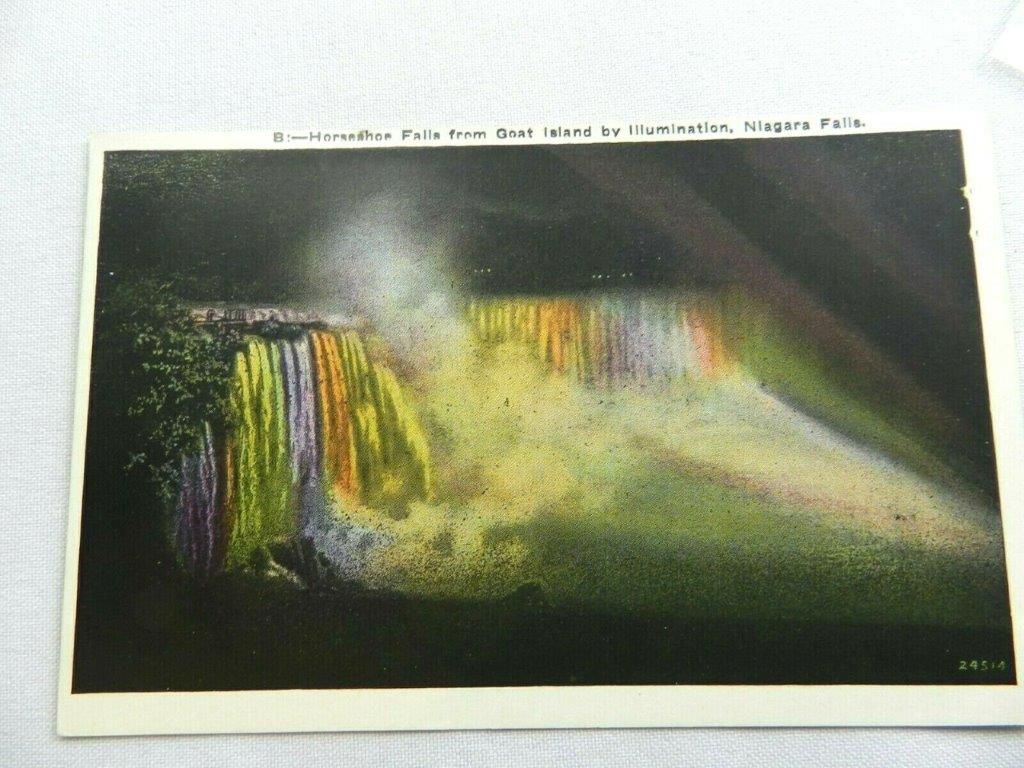
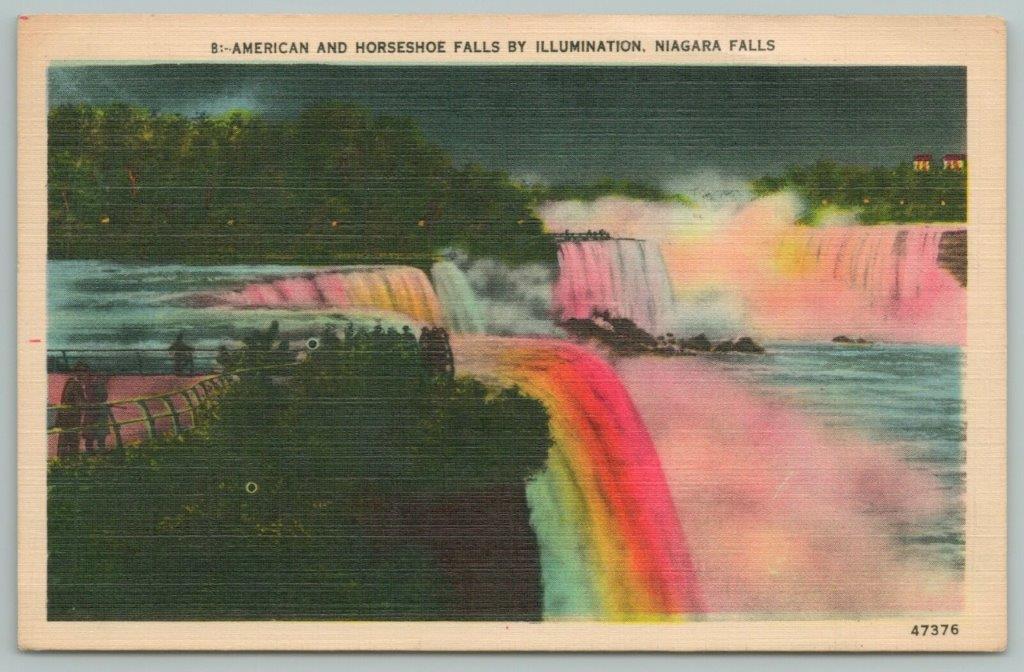
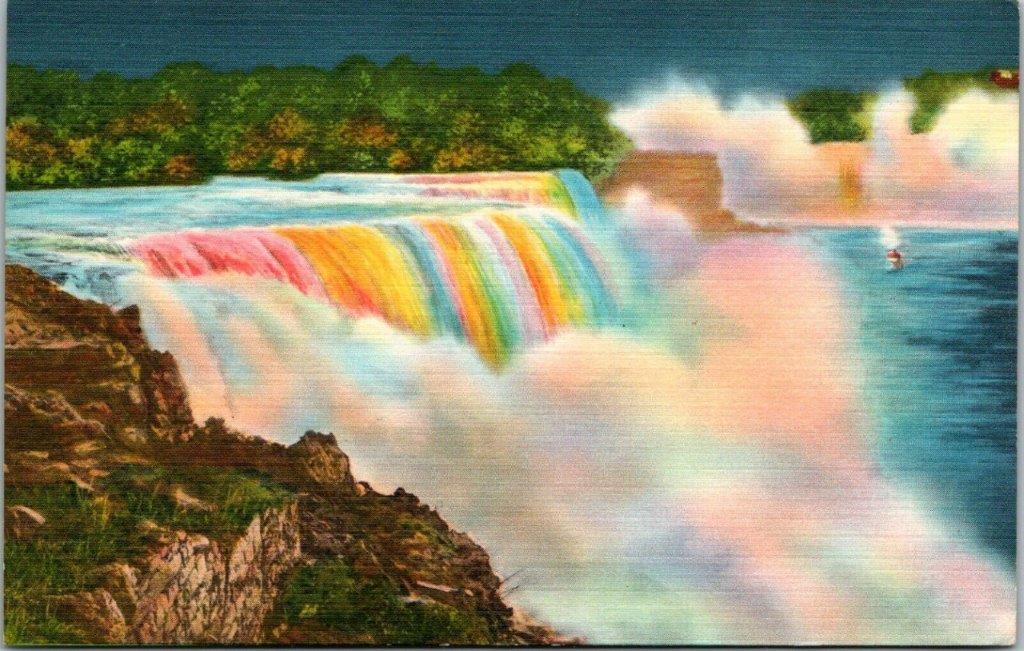
Click below for a slideshow of historic Niagara Falls’ postcards showing its illumination…

Celebrate a Centennial At Allegany State Park 1921-2021

A century ago this week, thousands of people flocked by car and even horse carriage to remote, wild and forested hills in southwestern New York’s Cattaraugus County, near the border with Pennsylvania, to celebrate the opening of a new State Park.

According to a contemporary account in the local Salamanca Republican-Press newspaper, the visitors to the new Allegany State Park used a roadway that had been quickly built over the bed of a former lumbering railway in the region, which also had been part of the state’s 19th century gas and petroleum industry. With people coming in from as far as Buffalo, parking was quickly filled and some people walked a great distance to reach the dedication site, located near an old lumber camp.

Enjoying a picnic of sandwiches, doughnuts, cookies, coffee, iced tea and “milk in unlimited quantities” as reported by the newspaper, the crowd listened as Albert T. Fancher, a former state senator from the region and chairman of the new park’s commission, vowed that Allegany was poised to quickly grow, with areas nearby suitable for creation of a man-made lake and game preserve.

Another speaker, Franklin Moon, dean of the state college of forestry, said the creation of public parks like Allegany were the best remedy for “national irritability,” as he reflected some of the trepidation in the U.S. over the then-recent rise of Bolshevism in Russia.

Some of the Opening Day crowd at Allegany State Park on July 30, 1921.

Today, Allegany State Park welcomes more than 1,500,000 visitors a year to explore western New York’s premier wilderness playground, created thanks to the vision of Fancher, a petroleum industry executive who was a political force in Cattaraugus County for several decades, as well as Hamilton Ward, a Spanish-American War veteran who later founded the Erie County Park Commission and became New York State Attorney General, and Chauncey Hamlin, president of the American Association of Museums and founder of the Buffalo Museum of Science.

Fancher became the park’s first director until his death nine years later in 1930. Fancher’s original cabin, where he stayed at the park with his wife, is still there. Hamlin supported the creation of a science camp at the park.

Starting out in 1921 with about 7,100 acres purchased for $35,800 (equivalent to about a half-million dollars today, or about $70 an acre), Allegany State Park has grown over the years to encompass more than 64,800 acres and includes rare remaining portions of old growth forest with trees more than 100 years old that were left undisturbed during the area’s lumbering and petroleum boom that ran from the early 19th century to the 1920s. Park naturalists have mapped more than 5,200 acres of old growth forests of hemlocks and hardwoods, with the majority of that in the Big Basin area. Some experts believe this is the state’s largest contiguous track of old growth outside the Adirondacks.

Given the uncertainty of planning during the pandemic, the park is not holding a mass gathering like was done in 1921, but is hosting a virtual celebration on July 30th 2021 that will include a library of digital content. The park is also offering a summer series of interpretive programs highlighting the park’s history.

The virtual celebration and other digital content can be viewed HERE starting noon on July 30, 2021.

Additionally, a set of four self-guided interpretive booklets are for sale at the park which guide visitors to 100 points of interest within the park, and includes topics of interest such as early European settlement, the petroleum and lumbering industries, early ski facilities in the state, and the work of Civilian Conservation Corps crews during the Great Depression.

Now New York’s largest State Park, Allegany has a wide variety of recreational resources certain to foster tranquility and soothe any irritability. Due to its size, this sprawling park is divided into two distinct areas – Red House and Quaker Run. Red House has 133 campsites, 130 cabins, 16 full-service cottages, two group camps, five miles of paved bike paths, many miles of hiking and horse trails, and swimming at man-made Red House Lake, with boat rentals. Its historic Tudor-style administration building, completed in 1928, includes a museum of park natural history

A canoeist paddles past the park’s historic Administration Building.

One of the new cabins at Allegany State Park.

The Quaker Run Area has two lakes, 189 campsites, 230 cabins, 37 full-service cottages, two group camps, many miles of hiking trails and horse trails, swimming at Quaker Lake, a boat launch at the Allegheny Reservoir, which has 91 miles of shoreline and is popular for boating, fishing, kayaking and waterskiing. Named for Quaker missionaries and settlers who came to the area in 1798 at the invitation of Seneca Chief Cornplanter to assist with agriculture and education.

The new bathhouse at Quaker Lake.
A fishing pier on Quaker Lake.

Hikers have a wide variety of trails to choose from, with some highlights including:

  • Located on the park’s Quaker Run side, the Blacksnake Mountain Trail is one of the oldest trails in the park with a unique history. Parts of the trail follow the 1888 section of A&K Railroad (Allegheny & Kinzua), which is evident in the gentle slope on the north side of the three-mile loop. In 1933, the professors of the Allegany School of Natural History, also known as “the School in the Forest”, (located near Science Lake) mapped out a hiking trail they officially named the “Nature Hiking Trail” to conduct their field studies with their students.  It was later renamed “Blacksnake Mountain Hiking Trail” in 1980 after Governor Blacksnake, an Iroquois Indian chief for the Seneca Nation of Indians, who allied with the United States in the War of 1812. The trail crosses several streams with new bridges, and a short steep climb leads to mature black cherry trees estimated to be between 100 and 130 years old. Cucumber magnolia, tulip trees and hemlock are other trees of interest along the way. This is a favorite trail for spring wildflower lovers. Trillium, Dutchmen’s breeches, squirrel corn, and spring beauties are just a few of the ephemerals that announce the changing of the seasons. Near the top of the trail, look for a granite milestone marker which represents the border of New York and Pennsylvania, where you can put a foot in each state.
  • Bear Paw Hiking Trail is named after a style of snowshoe used by Native Americans and was originally designed as an interpretive snowshoe trail in 2015 by park naturalists. The 2.4-mile trail starts at the rear of the Summit Area parking lot. Look for brown numbered markers which highlight unique flora such as ground cedar, various hardwoods, and lowbush blueberries. Halfway along Bear Paw, at the end of the loop, hikers will be treated to the masterfully built Stone Tower, an Allegany State Park landmark, constructed by the Civilian Conservation Corps in 1934. The tower offers beautiful views of large open valleys, the city of Salamanca and Red House Lake. The second half of the trail traverses the south side of the ridge, through beech and maple forests and into a meadow. Depending on the time of the year, hikers may get to sample low bush blueberries or wintergreen growing in this area. The last section has a short, steep incline that adds a bit of challenge. Bear Paw ends at the Summit Warming hut.
  • The 5.2-mile Robert C. Hoag Bicycle Path is named after the former Seneca Nation President and was dedicated in June 1990. Starting at the Red House entrance of the park, the path passes old apple trees and large stands of spruce and Scotch pine, along with many varieties of hardwoods, shrubs and wildflowers. The most used part of the path is around Red House Lake, where a 3.4-mile trail offers the potential to spot such wildlife as beaver, muskrat, great blue heron, and many species of waterfowl. Spurs off the trail lead to the Red House Wetland Interpretive Complex, Beehunter Cabin Trail and Camp Allegany. Several benches are located along the way to relax and enjoy the surrounding beauty.
  • Work on the new Quaker Multi Use Trail began in the summer of 2020 between the Taft cabin and the Quaker General Store. The second phase is in the final design stages and will continue the trail to Quaker Lake Beach.  Once complete, the trail will offer five miles of accessible paths winding though woodlands and fields along ASP Route 3 and Quaker Lake, including several scenic crossings of Quaker Run.

For birdwatchers, Allegany State Park contains a Bird Conservation Area, which provides breeding and migratory stopover habitat for forest-interior species such as Swainson’s Thrush, Blackburnian Warbler, and Scarlet Tanager. Of the 75 neotropical migratory songbird species that breed in New York, 64 have been observed within the park. The park supports a large breeding population of Osprey and one of the largest breeding concentrations of Cerulean Warblers found in New York, both of which are state species of special concern. The BCA also provides habitat for other state-listed species, including Bald Eagle (threatened), Northern Goshawk, Red-shouldered Hawk, Cooper’s Hawk, and Sharp-shinned Hawk (all species of special concern). Find a map of the BCA here.

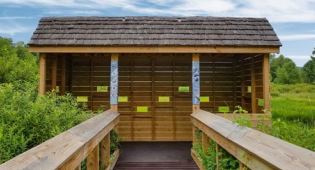
A birdwatching blind in one of the park’s wetland areas.

During the winter, the Art Roscoe Cross Country Ski Area boasts 26 miles of groomed cross-country ski trails. The area is named for an early park forester and ski advocate who later became assistant park manager and worked there from 1928 to 1968, earning the nickname “Father of Skiing” in western New York. For other winter sports enthusiasts, the Quaker Run and Red House areas also have a combined 90 miles of snowmobile trails.

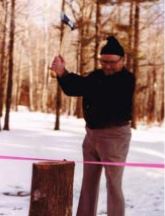
Art Roscoe uses an axe to cut the ribbon to open up the new cross country ski trail network in 1972.
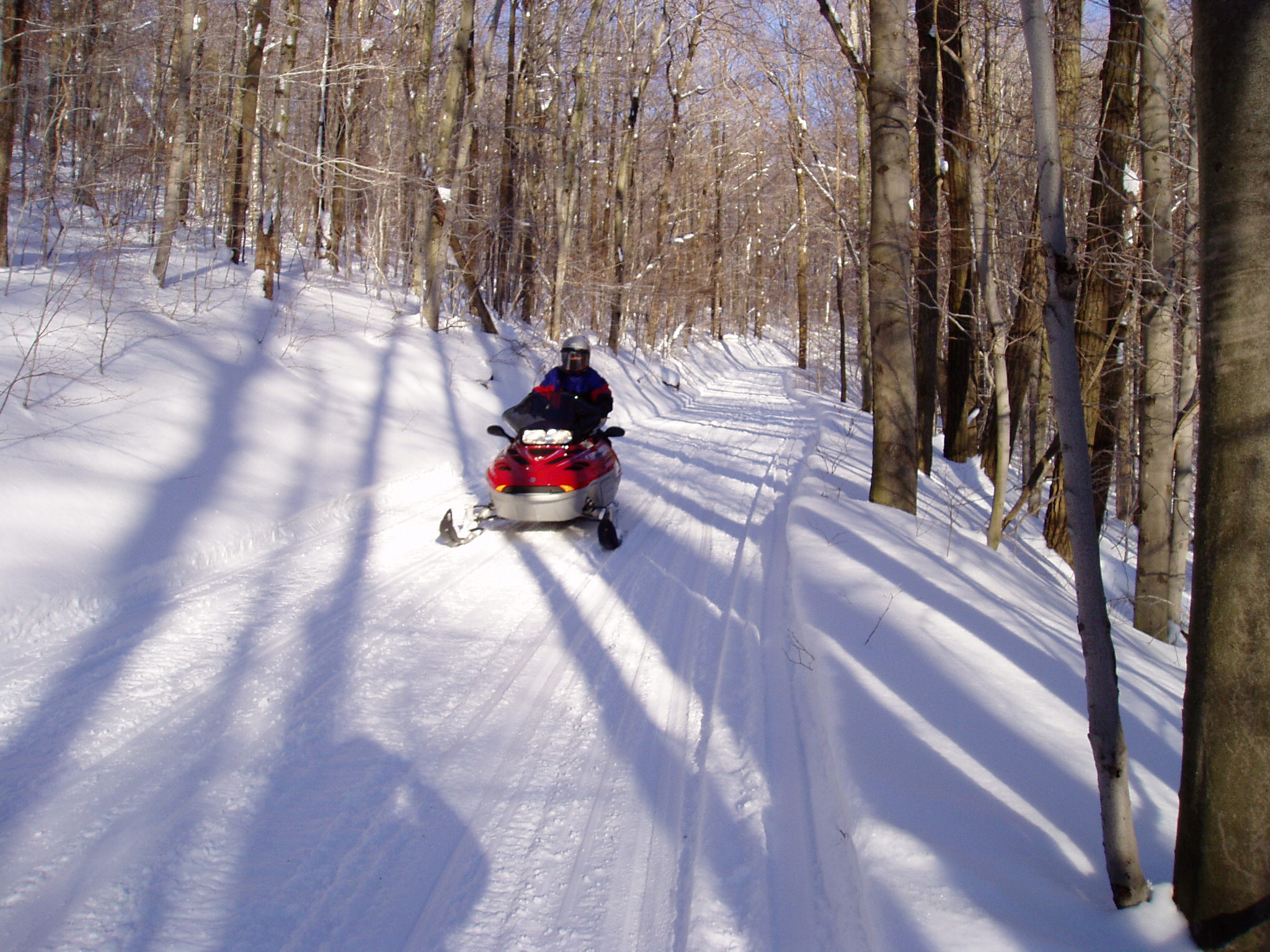
With 90 miles of snowmobile trails, Allegany State Park is popular with sledders.

Allegany also was the site of numerous fire towers, where observers would watch for signs of wildfires in the forests. One of those 60-foot towers, built in 1926 at the 2,365-foot summit of South Mountain, was restored and reopened to the public in 2006, and now offers a spectacular view of Red House Lake and the surrounding area.

The fire tower at the South Mountain summit offers panoramic views of the region.

For another gorgeous view, the Stone Tower, built between 1933-1934 by crews from the Civilian Conservation Corps, stands at 2,250 feet and overlooks the city of Salamanca. On a clear day, the view can stretch for up to 20 miles.

CCC crews also helped establish the park as a regional center for skiing, building a downhill ski center and two ski jumps, which allowed for competitions that would draw thousands of spectators through the 1970s, when the jumps were closed.

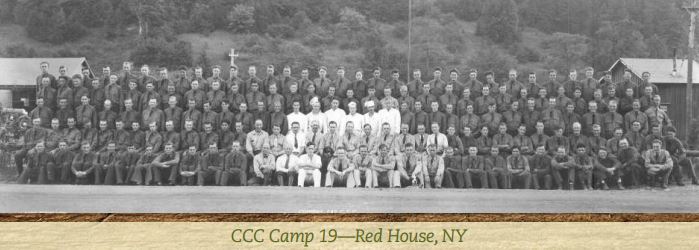
Top, one of the Civilian Conservation Corps crews stationed at Allegany State Park. Below, the Stone Tower that was among the projects built by CCC members.

Allegany also has a unique geological and natural history compared to elsewhere in the state. The park is part of a geological region called the Salamanca Re-entrant, which is the only area in New York that was never reached by glaciers during the last Ice Age some 12,000 years ago. This gives the region its distinctive soils, topography, surficial geology, and flora and fauna.

The well-known “Thunder Rocks” in the park’s Red House area may appear to casual observers to be some of the massive boulders scattered throughout much of the state by  Ice Age glaciers but this unusual “rock city” is actually bits of ancient inland seabed created some 400 million years ago, and revealed through geological uplift and erosion.

Thunder Rocks are sections of an ancient inland seabed that has been exposed through geological uplift and erosion.

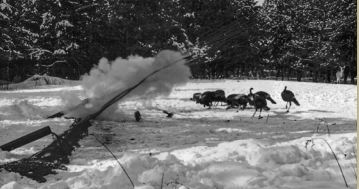
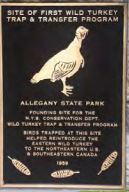
Wild turkeys, now widespread throughout New York, owe that comeback to Allegany State Park, the Regional Park Commission, and the Conservation Department. These birds were largely absent from the state by the beginning of the 20th century, due to overhunting and habitat loss, but in the 1940s, a small population of birds had come into the park, likely from Pennsylvania to the south. From the 1950s to the mid-70s, wild turkeys in the park were live trapped by wildlife officials, who used net-firing cannons to safely capture the birds, which were then taken to the Catskills, Adirondacks and elsewhere in New York state to reestablish the birds in the wild. Some turkeys were even sent to other states in the Northeast and to Canada as part of wildlife restoration efforts there.

All this only begins to scratch the surface of the park’s fascinating history and what it has to offer. So, in honor of the venerable park’s centennial and its next century to come, plan a visit to explore. Interactive maps of  Allegany State Park can be found here and here.

Above, wildlife managers fire a net from a cannon to trap wild turkeys as part of restoration efforts in New York and throughout the Northeast. A plaque now marks the location of the first efforts.

Cover Shot – A colorized historic postcard of Thunder Rocks in Allegany State Park. All photos by NYS Parks.

Post by Brian Nearing, Deputy Public Information Officer, NYS Parks

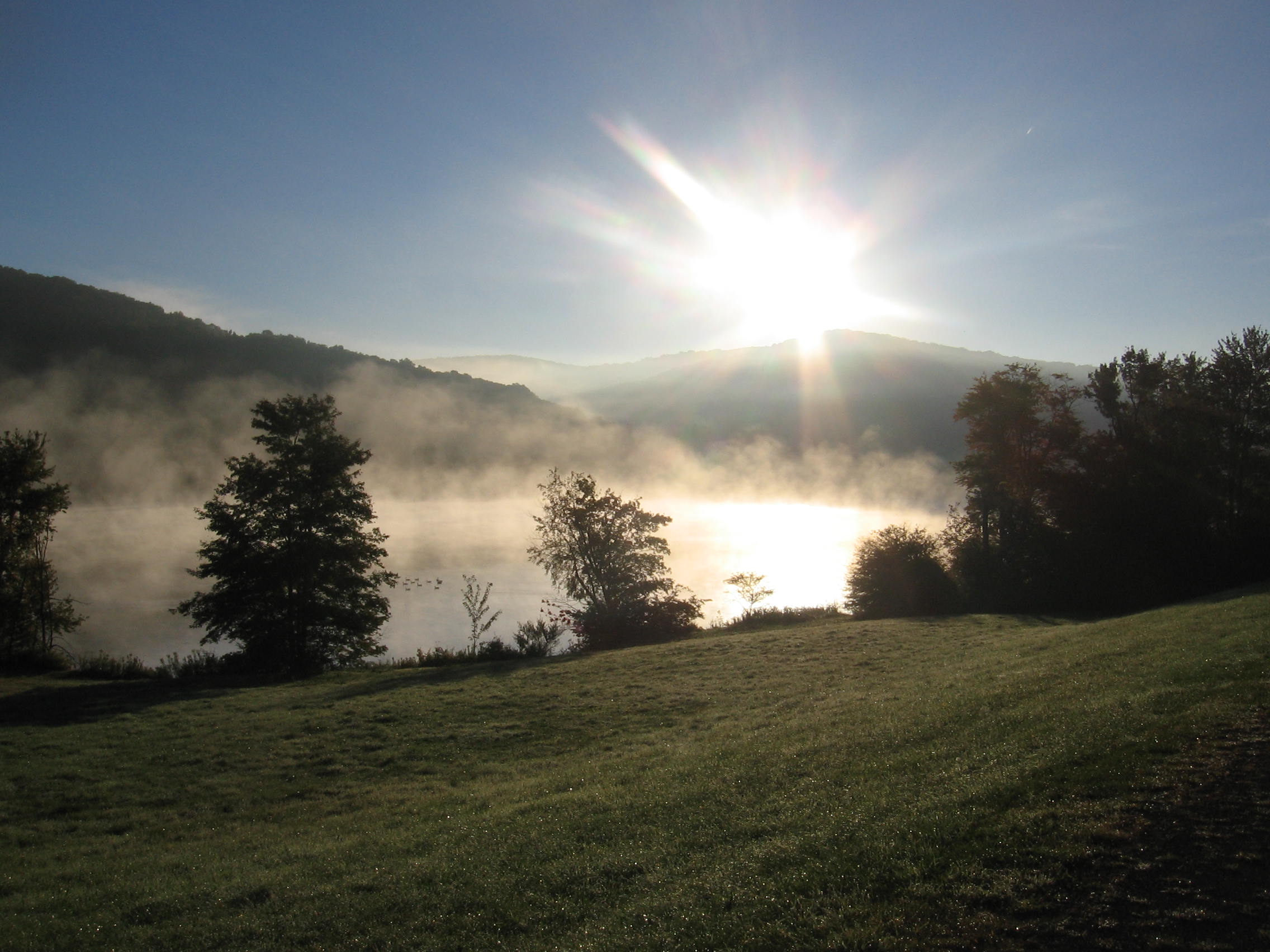
Early morning mist rises from Quaker Lake.

Women’s History Month for 2021 at New York State Parks

Women’s history has played a prominent role in the story of New York State, and some of these stories can be told through State Parks and Historic Sites.

In honor of Women’s History Month in March, the falls at Niagara Falls State Park will be illuminated March 7 in the historic suffragist colors of gold, white and purple starting at 6 p.m., and continuing on the hour through 11 p.m. The colors were the symbol of the National Woman’s Party, which advocated for women’s right to vote in the early 20th century.

According to a 1913 statement by the union, “Purple is the color of loyalty, constancy to purpose, unswerving steadfastness to a cause. White, the emblem of purity, symbolizes the quality of our purpose; and gold, the color of light and life, is as the torch that guides our purpose, pure and unswerving.”

The purple, white and gold flag of the National Woman’s Party. (Photo Credit- National Museum of American History/Behring Center)

Women’s History Month originated as a national celebration in 1981 when Congress requested that President Ronald Reagan proclaim the week beginning March 7, 1982 as “Women’s History Week.” In 1987, Congress passed legislation establishing March as “Women’s History Month” and Presidents have issued annual national proclamations on the event since 1995.

Here in New York, State Parks events and programming will bring some of these stories to life include:

  • Jones Beach Energy and Nature Center, Jones Beach State Park:  The center, which explores how energy consumption shapes the natural environment, will feature a series of professional profiles of women involved in the conservation and renewable energy fields entitled “Women & the Green Economy.” Themes including marine conservation, coastal resilience, solar energy and power distribution will illuminate the roles of women in New York State and the nation.
  • Philipse Manor Hall State Historic Site, Yonkers: A tour of the Colonial-era mansion will explore the potential relationship between George Washington and Mary Philipse, daughter of the Lord of Philipsburg Manor and a Loyalist during the American Revolution, based on the 2019 novel “Dear George, Dear Mary” by author Mary Calvi. Guided tours start at 1 p.m. March 6, March 13, March 20 and March 27; attendance is limited to COVID-19 safety protocols. The event is free for children and Friends of Philipse Mantor Hall, $3 for seniors and students, and $5 for adults. Advance registration is available by calling (914) 965-4027.
  • Clermont State Historic Site, Germantown: A Facebook Live presentation and lecture entitled “Suffrage in the Hudson Valley” will focus on the fight for women’s rights that resulted in the passage of women’s suffrage in 1917 in New York State, and nationally in 1920 with passage of the 19th Amendment. Presented by Ashley Hopkins Benton, Senior Historian and Curator of Social History at the New York Museum, the event begins at 2 p.m. March 13. Registration is available here.
  • Washington’s Headquarters State Historic Site, Newburgh: A presentation on the life of Martha Washington by Parks interpreter Karen Monti will be available on YouTube starting at 2 p.m. March 21. It will be followed by a presentation of the 2021 Martha Washington Woman of History Award to Sue Gardner, a published author, deputy historian for the town of Warwick, and a reference/local history librarian at the Albert Wisner Public Library. The program can be located by searching YouTube for “Palisades Interstate Park Commission Television.” More information is available by calling (845) 562-1195.
  • Clermont State Historic Site, Germantown: Interpreters will share a variety of stories on past women and girls in a program outside at the site at 2 p.m. March 20, as well as on Facebook in the event of poor weather. Registration is available here.
  • Clermont State Historic Site, Germantown: A free Facebook Live presentation will be made 2 p.m. March 6 on the story of Serena Livingston, which includes her courtship with a famous writer, her unhappy marriage to a famous general, and her adventures in the Old West. Registration is available here.
  • Jay Heritage Center, Rye: A Zoom virtual event will be held 6 p.m. March 8 by award-winning historian and Wall Street Journal columnist Dr. Amanda Foreman for a behind-the-scenes look at her documentary, “The Ascent of Woman” – the inspiration for her forthcoming book,  ‘The World Made by Women: A History of Women from the Apple to the Pill,’ scheduled to be published by Penguin Random House in 2022. Currently, Foreman is a columnist for The Wall Street Journal bi-weekly ‘Historically Speaking’ and an Honorary Research Senior Fellow in the History Department at the University of Liverpool. She is a co-founder of the literary nonprofit, House of SpeakEasy Foundation, a trustee of the Whiting Foundation, and an Honorary Research Senior Fellow in the History Department at the University of Liverpool. Registration is available here.
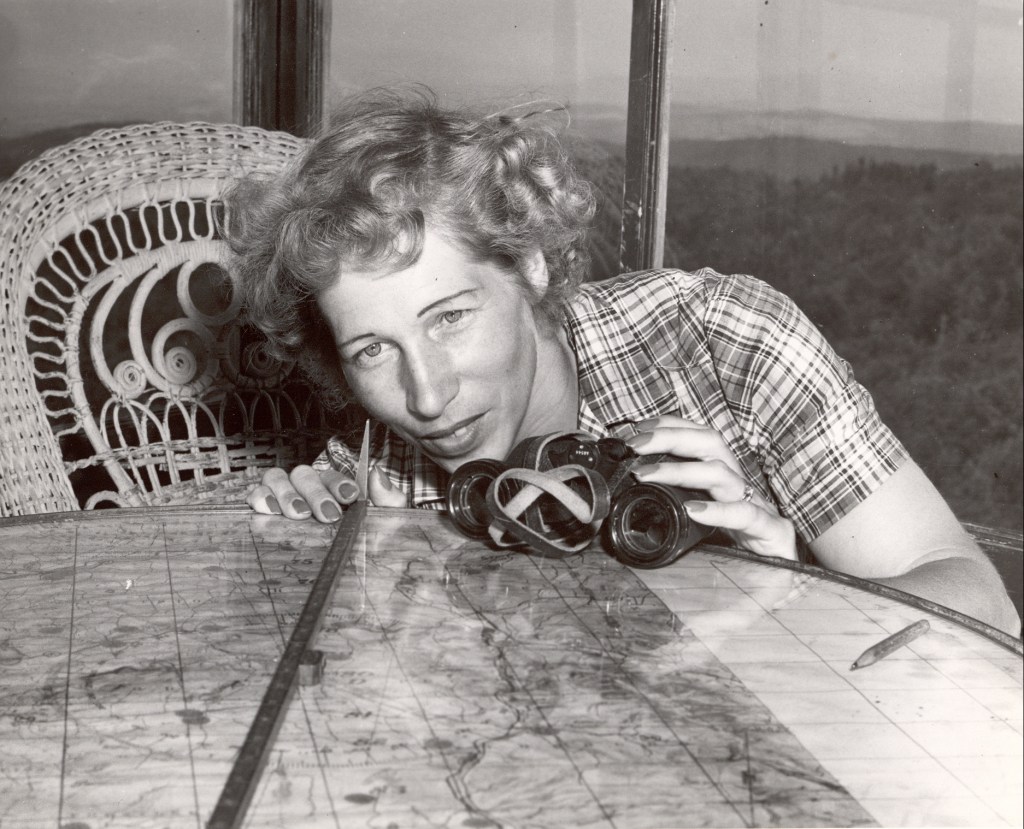
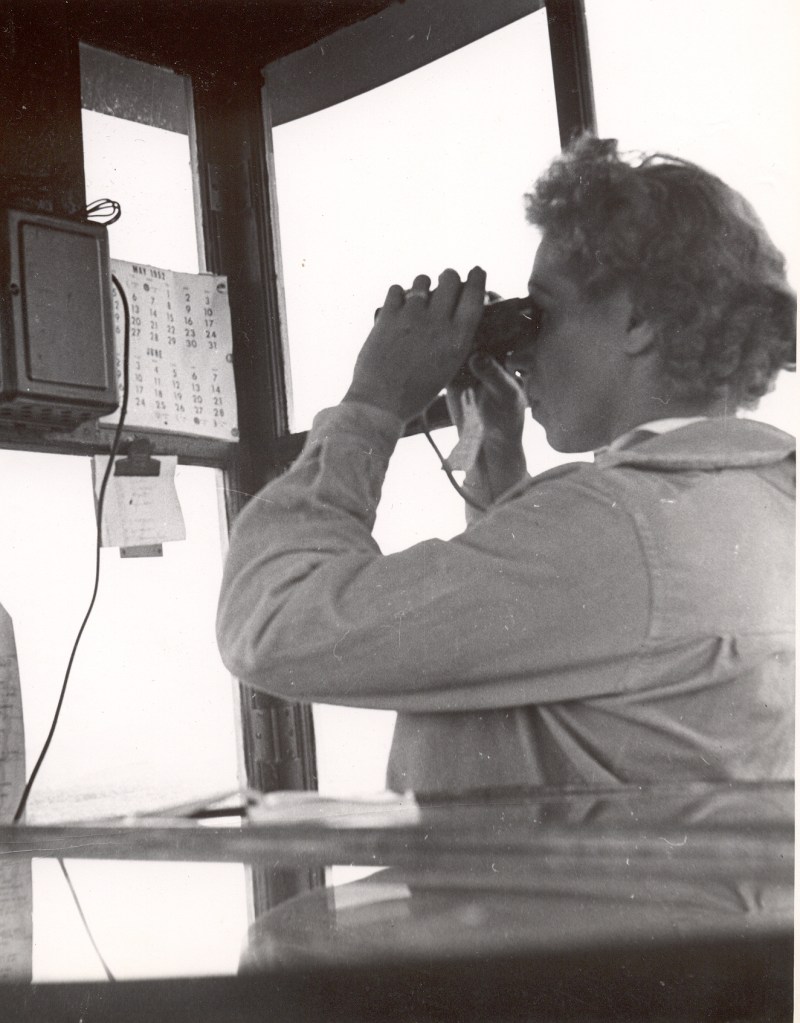
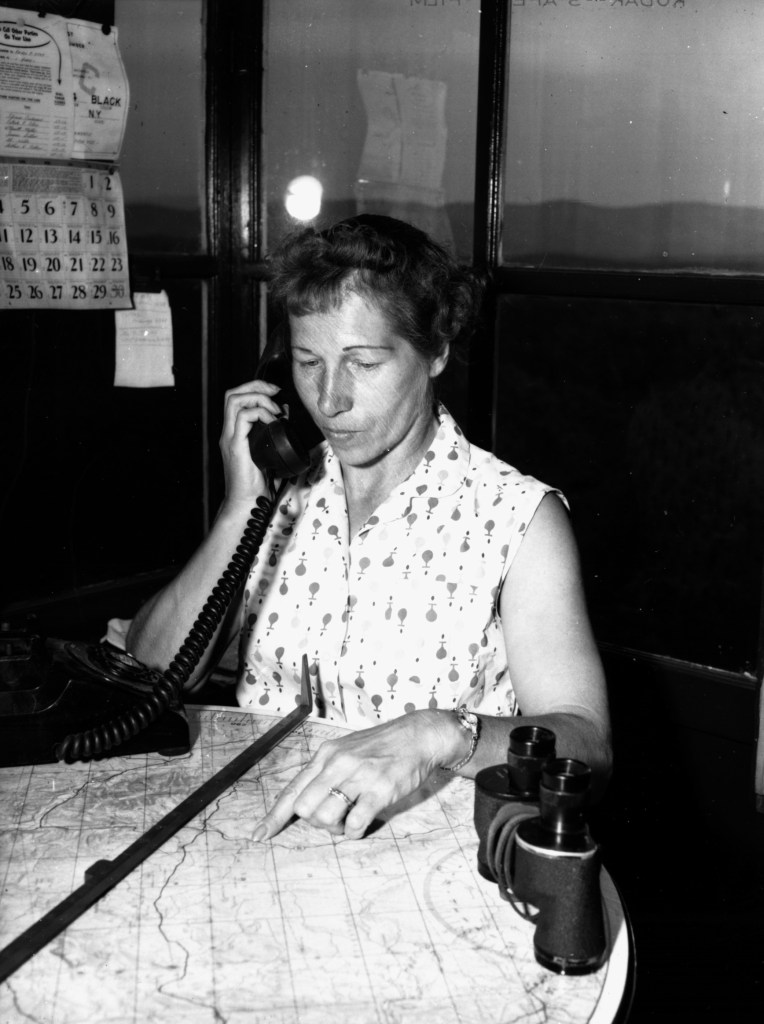
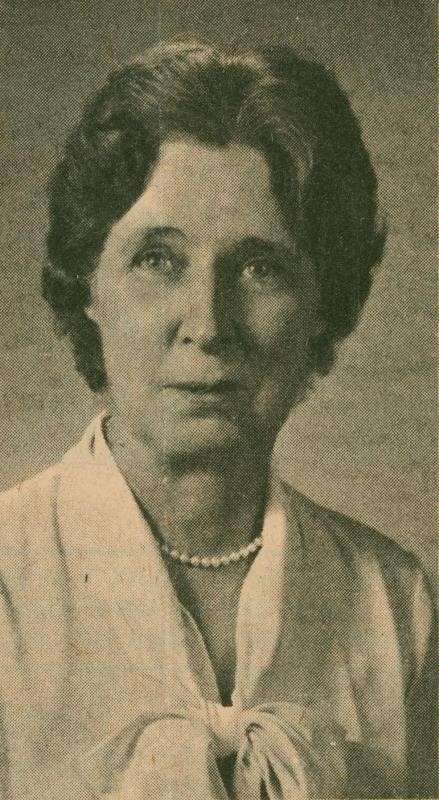
  • Grafton Lakes State Park, Grafton: A presentation will be made on the story of Helen Ellett, who was the second female fire tower observer in New York State, working at the parks Dickinson Fire Tower between 1943 and 1965. Ellett’s work influenced the creation of the Grafton Fire Department. The March 14 event will be held at 10 a.m. until noon, and again from 1:30 to 4:30 p.m. Preregistration is required no later than 4 p.m. March 9, and can be made by emailing graftonlakessp@parks.ny.gov. Attendance is limited due to COVID-19 safety protocols. Check out this slideshow of Helen Ellett at work…

And there are numerous State Historic Sites and Parks with links to women’s history that are outlined below.

Ganondagan State Historic Site 7000 County Rd 41, Victor, NY 14564: The women of the Haudenosaunee (Iroquois) lived in a society that afforded them a level of equality and freedom centuries before similar rights would be given to other women in the United States. Haudenosaunee women of the Seneca, Cayuga, Onondaga, Mohawk, and Oneida chose their chiefs, owned and managed their own property, and held key political positions. When women in New York State began to organize to demand their rights, the Haudenosaunee provided a model of equality. Learn more here.

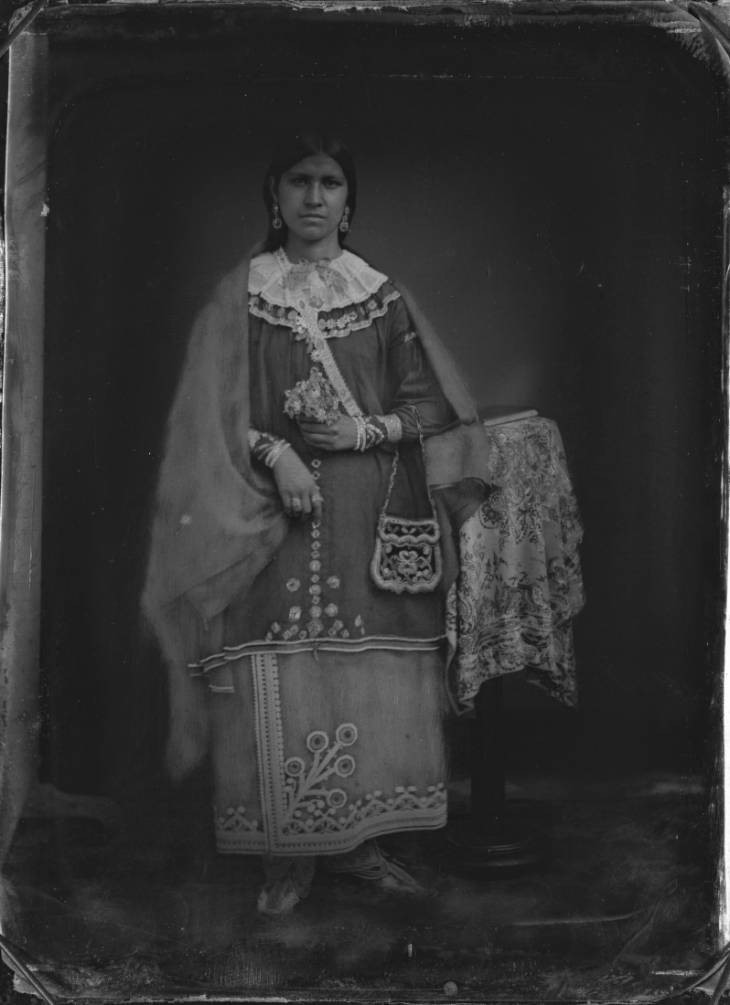
Caroline Parker Mount Pleasant, of the Seneca Wolf Clan, shown circa 1850 in an daguerreotype taken for Lewis Henry Morgan. (Photo Credit – New York Heritage Digital Collections)

Clermont State Historic Site1 Clermont Avenue, Germantown, NY 12526: Alida Schuyler Livingston was the matriarch of an influential early American family, but she was also a powerful businessperson in her own right who, along with her second husband, exerted significant political and economic influence in Colonial New York. She was part of a larger tradition of Dutch entrepreneurial women in the early colony that thrived thanks in part to the equal economic rights afforded to men and women under Dutch legal tradition. Learn more about her here and here.

Alida Schuyler Livingston. Photo Credit- Clermont State Historic Site.

Johnson Hall State Historic Site139 Hall Avenue, Johnstown, NY 12095: Known at different times of her life as Konwatsi’tsiaienni and Degonwadonti, Molly Brant was a Mohawk woman likely born sometime around 1736 and grew up near what is now Canajoharie, Montgomery County. By the age of 18, Molly was already beginning to participate in local politics and likely met Sir William Johnson, the royal English representative to the Native People of the Mohawk Valley, as she interacted with leaders in the area. Eventually, she and Johnson would become romantically linked and Molly would have eight children with him while living at his estate, Johnson Hall. She spoke her native Mohawk and dressed in the Mohawk style all her life and, after Johnson’s death, Molly would return to the Mohawk and lead as a Clan Mother during the turbulent Revolutionary War period. Learn more here.

A design for a 1986 Canadian postage stamp featuring an image of Molly Brant. (Photo Credit- National Park Service)

John Brown Farm State Historic Site 115 John Brown Road, Lake Placid, NY 12946: Abolitionist John Brown’s raid on Harper’s Ferry before the Civil War earned him a prominent place in history books, but the contributions of his daughter, Annie, have been overlooked for more than a century. Committed to the freedom of the enslaved, Annie served as a lookout for the conspirators leading up to the raid on an armory in Virginia, and was vocal in the shaping of her father’s legacy in public memory, speaking stridently against depictions of him as “mad.” Learn more here and here.

Annie Brown, daughter of John Brown. (Photo Credit- U.S. Library of Congress)

John Brown Farm remains as an historic site today in part due to the actions of another New York woman: Kate Field. Field was an American journalist, editor, outdoorswoman, and actress who helped to purchase the farm eleven years after the 1859 raid in order to preserve it “as a public park or reservation forever.” Learn more about her here.

Kate Field (Photo Credit- New York Public Library)

John Jay Homestead State Historic Site400 Jay Street, Katonah, NY 10536:Founding Father John Jay would serve New York as governor and the country as its first Chief Justice, but his daughters had a strong hand in managing his household and estates. Learn more about the Jay women here.

Jay Heritage Center 210 Boston Post Road, Rye, NY 10580: The Jay family also owned an estate in Rye, New York, where young John Jay was raised. The land remained in the family for generations and was vital in inspiring one of America’s first female landscape architects, Mary Rutherford Jay, John’s great-great granddaughter who began her practice at the turn of the 20th century. Learn more here and here.

Mary Rutherford Jay (Photo Credit- Jay Heritage Center Archives)

Lorenzo State Historic Site17 Rippleton Road, Cazenovia, NY 13035: The Federal-style mansion at Lorenzo looks out onto a garden designed in 1914 by Ellen Biddle Shipman, a woman pioneer of landscape design, to enhance her father’s garden layout with more formal perennial beds. In 1983, restoration was begun following that 1914 plan and today the garden and grounds are available to the public and are often used for wedding ceremonies and receptions. The Lorenzo grounds are open year-round. Plan your visit here.

Ellen Biddle Shipman in her home circa 1920. (Photo Credit- Wikipedia Commons)

Oriskany Battlefield State Historic Site7801 New York 69, Oriskany, NY 13424: During the Battle of Oriskany in the Revolutionary War, Oneida womanTyonajanegen (Two Kettles) accompanied her husband Han Yerry Tewahangarahken into battle, reloading his musket for him after he was wounded. She was known for her valor and her skills as a horsewoman, riding quickly to Fort Schuyler to warn of a coming attack. Learn more here.

National Purple Heart Hall of Honor – 374 Temple Hill Road Route 300, New Windsor, NY 12584: The National Purple Heart Hall of Honor has a mission to collect, preserve and share the stories of Purple Heart recipients from all branches of service and across all conflicts for which the award has been available. While there is no comprehensive list of Purple Heart recipients maintained by the government, the Hall maintains a Roll of Honor of recipients submitted by friends, family, and the recipients themselves. For the month of March, the Hall will feature 20 women recipients and additional women recipients on the site’s Facebook page.

Here is one such story, of U.S. Army Sgt. Cari Anne Gasiewicz, a native of Depew, Erie County. Sgt. Gasiewicz served two tours in Korea, where her aptitude for languages prompted her superiors to send to study Arabic at the Defense Language Institute Foreign Language Center. During Operation Iraqi Freedom, she served Iraq as an Arab language linguist with a military intelligence unit.

When her unit was being redeployed from Iraq to Kuwait, she volunteered to drive a supply truck rather than leave via aircraft. On the drive, her vehicle was hit by two I.E.D.s. (improvised explosive device) killing the 28-year-old  on 4 December 2004. In her honor, the Defense Language Institute, located at the Presidio of Monterey in California dedicated Gasiewicz Hall in her name. It is the first building there named for a woman.

Sgt. Carrie Ann Gasiewicz (Photo Credit- National Purple Heart Hall of Honor)

Schuyler Mansion State Historic Site32 Catherine Street, Albany, NY 12202: The success of the Hamilton musical has generated quite a bit of public interest in the Schuyler family history. Learn about Angelica Schuyler’s contributions to military intelligence on the patriot side during the Revolutionary War here. Learn about the stories of enslaved women at the mansion here. Tours of the restored mansion can be reserved in advance here.

Portrait of Mrs. John Barker Church (Angelica Schuyler), her son Philip, and a servant. (Photo Credit- Wikimedia Commons)

Bear Mountain State ParkPalisades Parkway or Route 9W North, Bear Mountain, NY 10911: Considered Colonial America’s first female botanist, Jane Colden (1724-1760) grew up on her family’s farm west of Newburgh. Orange County. After showing an early interest in plants, she went on to write her own Botanical Manuscript describing over 300 native flora. At the end of March, the park will unveil a hand-painted sign detailing Colden’s contribution to botany in the Hudson Valley. It will be located at the Jane Colden Garden at the park’s Trailside Museums and Zoo.

Staatsburgh State Historic Site – 75 Mills Mansion Drive, Road #1, Staatsburg, NY 12580: Ruth Livingston Mills, scion of the wealthy Hudson Valley Livingston family, was a dominating presence in the upper class social circles of the Gilded Age, entertaining from her grand Staatsburg mansion on the Hudson River in Dutchess County. Learn more here about a mysterious artist who painted the portrait of Ruth Livingston Mills and its connection to the suffrage movement for women’s rights.

The portrait of Ruth Livingston Mills. (Photo Credit- Staatsburgh State Historic Site)

Letchworth State Park Castile, NY, 14427: While preservation of the park’s scenic beauty and historic assets is the work of William Pryor Letchworth, his right hand in preserving “The Grand Canyon of the East” was his indispensable secretary, Caroline Bishop. She worked with Letchworth for 27 years, living at the Glen Iris estate with him and the rest of his staff and, after his passing, became the park’s first superintendent and Librarian/Curator of the park’s museum.

Letchworth also was the setting for the story of Mary Jemison, a Scotch-Irish colonial woman adopted by the Seneca during the French and Indian War. She later gained notoriety after writing a memoir of her life. After her death, her body was reinterred near the historic site of a Seneca council house, now within Letchworth State Park.

Statute of Mary Jemison at Letchworth State Park (Photo Credit- Letchworth State Park)

Saratoga Spa State Park – 19 Roosevelt Drive, Saratoga Springs, NY 12866: Grace Maguire Swanner graduated from Albany Medical College in 1933 and devoted much of her life outside of private practice to helping to preserve the park’s Lincoln and Washington baths. Dr. Swanner was named acting medical director of the spa in 1953, began a school of massage as a training facility for the spa, and  later wrote  a book detailing the geologic and sociologic history of the park called “Saratoga Queen of Spas”.  

Dr. Grace Maguire Swanner.

The State Parks Blog also has recent posts on women in New York State history, including Beatrice Mary MacDonald,  a World War I nurse who became the first woman to be awarded the Purple Heart; Annie Edson Taylor, a Finger Lakes native who became the first person to survive a plunge over Niagara Falls in a barrel; noted African American abolitionist and suffragist Sojourner Truth; and even anti-suffragists in New York who allied with efforts to deny them from obtaining the vote.


Cover Shot- NYS logo in the colors of the National Woman’s Party. (Photo Credit- National Park Service)


Post by Mary Patton, Historic Preservation Program Analyst, Division of Historic Preservation.