Category Archives: Park Personnel

Did Someone Say “Free Boat Wash?”

Yes its true, boaters can expect to be offered free boat washes from stations at select boat launches throughout the state, especially in places like the Adirondacks. The purpose of these stations are to provide free boat washes while also helping to prevent the spread of certain invasive species.

Everyone takes the time to give their cars a good wash periodically, but have you ever thought about how often you should be cleaning your boat? Boats can be carriers of invasive plants and animals. Most of the time, you can see these plants hanging off your propeller, bunks, and trailer and you can simply pick them off. However, some invasive species, like the young of zebra mussels and Asian Clams (called veligers) are so small they cannot be seen with the naked eye. Yet just adding a few of these into a lake or other waterbody is enough to start an invasion.

When we wash our boats, also known as decontaminating, it reduces the chances of transporting harmful invasive species, such as zebra and quagga mussels, spiny waterfleas, or Asian clams, to additional waterbodies.

How do boat wash stations work?

Boat washing begins with a general boat and trailer inspection.  A trained professional, typically a boat or watercraft steward, first checks over your boat to see if it needs to be cleaned. If a boat is noticeably dirty and has visible plant matter on it, or if the boat was previously in a different waterbody, there is a good chance the boat steward will offer to decontaminate your boat for free. After a visual inspection of the boat and trailer, the boat steward will ask you to lower your propeller, just low enough to check if there is any water in the engine. If water comes out, the engine will need to be flushed of that foreign water with 120o F water from the boat wash station.
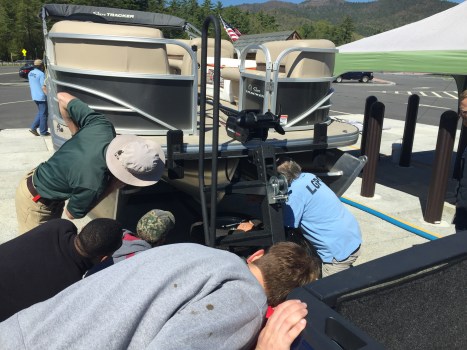
IMG_0154
State Parks staff working with Lake George Park Commission stewards to determine if this boat needs to be decontaminated, photo by Matt Brincka, State Parks

At pristine waterbodies like Lake George, boat stewards are more concerned with boats going into the lake that were previously elsewhere. In other lakes where many invasive species are already present, boat stewards may focus their decontamination efforts on boats exiting the water, to prevent furthering the spread of those species.

IMG_0160
Lake George Parks Commission Stewards using specialty “muffs” to run the engine while also flushing it clean of any water that could be carrying invasives, photo by Matt Brincka, State Parks

Afterwards, if the boat steward determines that you also should have a full decontamination, they will begin cleaning your boat.  The water in the boat wash station is heated up to 140oF with pressure as high as 1,400 PSI. This temperature and pressure has been shown to kill most animals and plants trying to hitchhike on your boat. For specific areas where electronics and engine components are exposed, lower pressure is used to prevent damage to the boats. Boat trailers with felt bunks will be soaked in 140 o F using a low pressure attachment to kill any invasive species that may be hitchhiking on this material.

Boat washing 2
Jake Barney, a State Parks Boat Steward, demonstrates using a Boat Washing Station.. The handle in the boat steward’s left hand is used to control the amount of pressure coming out of the hose, photo by Matt Brincka, State Parks

During the washing, it is important to wash the outside of the boat and trailer, including the propeller, hull, trailer hitch, and underneath the trailer. It is also important to flush the engine and drain the bilge to ensure the boat is properly decontaminated. Boat wash stations can recycle contaminated water and heat it again, ensuring that its runoff will not contaminate the waterbody.  Boat stewards take special care to be sure that no damage happens to the boats during cleaning.

IMG_6625
What your average portable boat washing station looks like. The yellow tanks on each side hold water used for decontamination. The machine has a gas engine but uses a diesel burner to heat the water to 140o F, photo by Matt Brincka, State Parks

Boat wash stations are an effective way to clean your boat of all invasives, including those that may be too small to see. Using the boat washing station is the most efficient and effective way to stop the spread of aquatic invasive species, while also providing a free cleaning of your boat and trailer!

Thanks for helping keep New York’s pristine lakes and rivers clean, so we can continue to enjoy them for generations to come!

11889668_10207450184282780_8820069053952744565_n
Kayaking at Fair Haven Beach State Park, photo by Tina Spencer, State Parks

Additional information:

Click here for more information on boat decontamination procedures:

Decontaminating your boat with a boat wash station is always suggested, but be aware that some lakes, such as Lake George, require you to get a decontamination before launching.

Heading to the Adirondacks or Lake George? Find a boat wash station here.

This summer, State Parks will be opening two boat wash stations, one at Allan H. Treman State Marine Park and the other at Saratoga Lake State Boat Ramp.

Post By: Jordan Bodway and Kristin King, Lead Boat Stewards, State Parks

Japanese Barberry: Not an Average Landscape Shrub

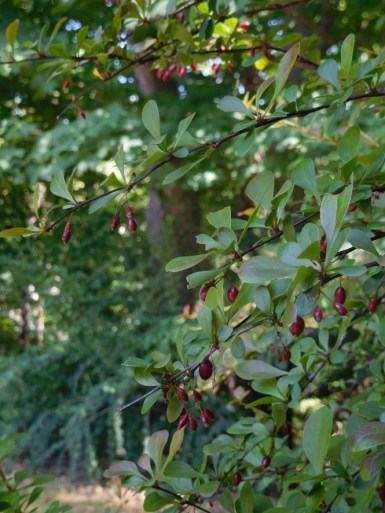
leaves
Barberry in fall, photo by Amy McGinnis, State Parks

Japanese barberry (Berberis thunbergii) is an invasive shrub from Asia. Invasives are species not native to our country or state and can cause ecological, economic or human harm. They arrive here as a result of international trade and intentional or accidental release. Outside of their native ranges, they lack predators or other factors that keep them from out-competing, or overcoming native species. Invasive species have been shown to degrade habitats and cause declines in native plant and wildlife populations. They can cause the loss of crops and income, and can also affect recreational opportunities in addition to other species. The United States spends billions of dollars a year in efforts to control invasive species and reduce their impacts.

Japanese barberry was introduced in the 1870’s for landscaping, and was used extensively for hedgerows and prized for its attractive red berries and bright red fall foliage. It is a dense spiny shrub (you might know it as a “pricker bush” that is common in neighborhoods and farms).  They can grow up to 8 feet tall, have zig-zag branches and small oval leaves that range from green to purple in the summer, with white to yellow flowers.

berries
Barberry fruit, photo by Amy McGinnis, State Parks

Barberry can produce large numbers of seeds at a rapid rate and tolerate a variety of conditions –which are typical of invasives. It escapes from gardens and farms and can crowd out native plants, which threatens native biodiversity and normal ecological functions in forest, field and edge habitats. Wildlife help barberry spread by eating the berries and dispersing the seeds in their scat (poop). Studies have shown that these berries have less nutritional value for wildlife than native fruits such as native cherry or viburnums. Barberry grows into dense thickets, crowding and shading out native plants and seedlings, reducing habitat and forage for other species. Additionally, barberry has been found to alter soil pH and the layer of vegetative litter on the ground. This change in soil pH can persist long after the invasive has been removed, further inhibiting native plant growth. It poses a threat to humans as well by creating prime habitat for deer ticks, which can transmit Lyme disease.

thicket
Thicket of Japanese Barberry in a forest community, photo by Amy McGinnis, State Parks

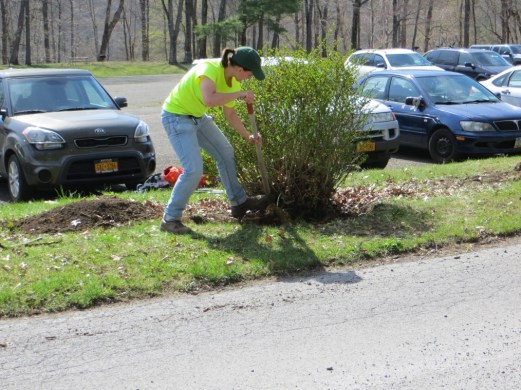
A simple control method for established Japanese Barberry plants is to dig them out.  Barberries are fairly shallow-rooted and typically easy to dig out, but all of the roots must be removed to prevent regrowth. The roots are easily identified by their yellow color when broken. Once dug from the ground, the shrub should be disposed of in a manner that leaves it dead and unviable. This can be done by burning, chipping or leaving the plant in the open sun to desiccate.  Plants may be bagged in thick heavy bags, such as contractor bags, and thrown out, particularly if berries are present to avoid establishment of new plants.

digging
Digging out a barberry, photo by State Parks

For very large shrubs or thickets where manual or mechanical removal may not be feasible, systemic herbicides may be used with a basal bark  (spraying the entire circumference of the lower trunk or stem of the plant) or cut stump application. Chemicals are recommended as a last resort and should be applied by a licensed applicator. It is advised that people carefully follow label instructions to minimize impacts on native species.

Though new regulations prohibit planting of Japanese Barberry in New York State, it is still sought as a landscape shrub because deer do not eat it, it is hardy (further traits of invasive species), and the red phase offers a pleasing color to gardens. Thus, established barberry plants continue to threaten native ecosystems and efforts to control invasives.

There are native deer-resistant shrubs that could be planted in place of this invasive, such as St. John’s Wort, Highbush cranberry, Winterberry, and Shrubby cinquefoil. You can consult native plant nurseries and other sources, but also check the New York Flora Atlas to make sure the shrubs are native to New York State.

The simplest precaution that can be taken to control invasive Japanese barberry is to increase awareness of it and plant only native plants in gardens. This helps to support native plant species and the wildlife and native pollinators that rely on them.  You can also look for volunteer opportunities in your local State Park for invasive species removal workdays in the spring to fall.

Resources:

Going Native: Invasive Species

New York Flora Atlas

New York State Prohibited and Regulated Invasive Species Regulations

Post by Amy McGinnis, State Parks

Summer Stewards of Hudson Highlands

Welcome to the Hudson Highlands, New York City’s backyard!  Just a short train ride or a car ride from NYC, people can regain their sense of summer freedom in the network of trails throughout the Eastern Hudson Highlands.  Patrons come from all over – day-trippers from neighboring states, as well as international hikers staying in NYC – to enjoy a pleasant hike.  The trails are as diverse as the people who visit, and there is a trail for every type of hiking goal.

breakneck-photo-by-penelope-guccione
Breakneck, photo by Penelope Guccione

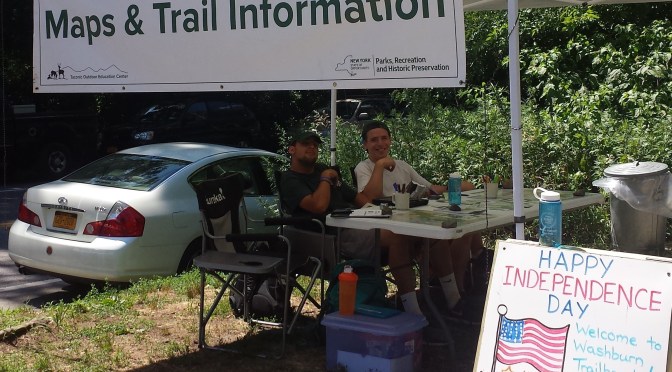
Breakneck Ridge and the Washburn/Cornish Trailhead are two of the most popular trailheads, which are places where trails begin.  These trailheads are where you are likely to bump into a summer trail steward.  New York-New Jersey Trail Conference (NYNJTC) staff is stationed at Breakneck while State Parks stewards are posted at Washburn on weekends and either location during the weekdays.  Say hello to the trail stewards at either spot; they can help suggest the best route options and point out unique features that can be found along your desired hike.  Trail stewards from State Parks are based out of the Taconic Outdoor Education Center (TOEC): Outdoor Educators, Student Conservation Association (SCA) members, and seasonal staff who all teach about the natural world.  Stewards are happy to answer questions about any animals you have seen or plants you have discovered.  You can even chat to get some information about local history and places to go post-hike.

Trail stewards are here to empower people with information about safety and about protecting the fragile natural area of the state park.  Working as a part if visitor services, trail stewards help hikers make more informed, positive decisions.  Did you know that trail blazes or trail markers indicate which way the trail winds through the forest?  Trail stewards are there to help brief people on how to read the blazes so that hikers stay on the trail.  Wandering off trail has a devastating impact on the mountains’ natural resources, which supports rare species and sensitive natural communities.  Some hikers purposefully stray from the path, thereby creating false or social trails that can easily mislead novice hikers and escalate erosion, a major issue in the state park.  The rocky summit communities along the ridgeline can be destroyed by visitors trampling the low lying vegetation.  So tread lightly and stick to the designated trails and viewpoints marked on the trail maps.  The goal is to allow people to utilize the mountains as a recreational resource without harming or putting too much stress on the ecosystem.  When hikers make informed decisions, the state park stays in better condition for current and future generations.

Breakneck and Washburn trailheads are the last outposts before you begin your journey to the ridgetops and woods, so make sure to prepare ahead of time.  There are many trails that intersect and overlap.  Grab a free detailed, colored map of the Eastern Hudson Highlands as well as valuable advice from the stewards.  Make sure to bring plenty of water: at least one to two liters during the hot, humid summer months.  Water needs vary based on climate, exertion, and individual needs.  Just remember that there are no water fountains or pumps along the trails.  Washburn has complimentary water most weekends in the summer to help unprepared hikers avoid dehydration.  Snacks may also be useful, providing fuel for long and strenuous hikes.  Other helpful items may include sunscreen, sturdy hiking shoes, and bug spray.  Trail stewards will remind you to “Leave No Trace” (LNT).  LNT is a set of seven principles that provide an outline for outdoor ethics, such as, “Plan and Prepare,” “Carry Out Items that you Carry In,” “Leave what you Find,” “Respect Wildlife,” and “Be Considerate of Other Visitors.”  Essentially, you want to leave no trace of your visit so that the mountains look the same as before entering the state park.  The LNT outdoor ethics are critical for patrons to observe in order to preserve the natural splendor of the Hudson Highlands.

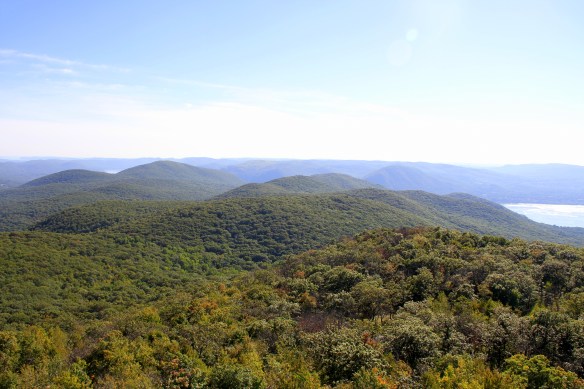
hudson-highlands-photo-by-penelope-guccione
Hudson Highlands, photo by Penelope Guccione

State Parks is also planning for improved management of the park by collecting and analyzing data.  Trail stewards keep track of the number of hikers who start their hikes from these trailheads and conduct surveys to get vital feedback from patrons.  Hikers can help influence future planning in the region by taking a moment to complete a brief survey.  You can take the survey by speaking with a summer trail steward or answering the questions online.  You can help by taking surveys for other trails by clicking on “Survey” under “Quick Links” at the bottom of the State Parks’ website.

As the summertime comes to a close, the trail stewards move from their summer post to other duties until the next summer season.  While the trail stewards may be gone, the trails are still eager to be traveled.  Soon there will be a crisp nip in the air signaling the beginning of autumn.  Will you be there when the forest erupts in a sea of rich, fall colors?  Will you help uphold the outdoor ethics to safeguard the natural resources of the Hudson Highlands?

Learn more about the forest and summits on these trails:

Pitch Pine-Oak-Heath Rocky Summit

Chestnut Oak Forest

Appalachian Oak-Hickory Forest

Post by Catherine Francolini, State Parks

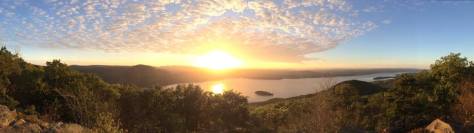
breakneck-sunset-photo-by-karoline-nowillo
Breakneck Sunset, photo by Karoline Nowillo

New York State Invasive Species Awareness Week 2016

This week marks New York Invasive Species Awareness week!

July 10th – 16th, 2016 the State of New York is celebrating their third annual Invasive Species Awareness Week (ISAW). The purpose of this week is to bring awareness to the public regarding the harmful effects of invasive species around our state. Invasive species are non-native species that inhabit a new environment, causing harm to that new environment. Not all non-native species are considered invasive. In order to classify a species as invasive, it can cause ecological, social, human health, and or economic damage. Invasive species often spread unintentionally through human activity. The trade of goods around the world is one of the primary sources of invasive species transfer. Cargo ships for instance can carry aquatic invasive species in their ballast tanks or insects in their shipping containers. Once established in these new environments invasive species can spread quickly because these ecosystems often have no natural predators or control. The presence of these hitchhikers is one of the leading threats to our native species and ecosystems. By out-competing, preying upon native species or carrying disease, invasive species can be detrimental to native species and the biodiversity of natural habitats.

Invasive species come from near and far and affect all types of habitats found throughout New York State. Since many of our commercial, agricultural, and recreational activities are dependent on a healthy native ecosystem the presence of invasive species can impact all people and the natural world. Aquatic invasive species such as hydrilla (Hydrilla verticillata), water chestnut (Trapa natans) or zebra mussels (Dreissena polymorpha) have inhabited many of New York’s water ways. On land, species such as Japanese knotweed (Fallopia japonica), can overcrowd native environments.

Boat Stewards
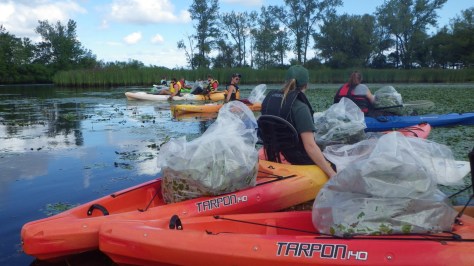
Over the years, NYS Parks has organized invasive species pulls to help lower the effects of invasive species in our park lands. Pictured above are State Parks Boat Stewards pulling Water Chestnut from Selkirk Shores State Park. Photo by Meg Phillips OPRHP

How you can help!

Boaters/Anglers Wash and dry your boat properly. Be sure to remove all plant matter from boat, ballast, prop, trailer and all equipment. Dispose debris correctly. Use aquatic invasive species disposal station if available.

Campers/Hikers/Bikers Check clothing, boots, pets, and camping gear for seeds, plant matter and insects. Clean gear and dispose of debris properly. Use local firewood.

Gardeners Plant only native plants. Educate yourself and others about the importance of using native species. There are many native look-alikes that are just as beautiful.

Whether you are a boater, fisherman, hiker, gardener or simply a concerned citizen, it is important to educate yourself and others on the different species found in your home state. You can make a difference in stopping the spread of invasives! Here you can find information on invasive species found in the State of New York.

Many State Parks have events during New York Invasive Species Awareness Week to involve the public in preventing the spread of invasive species.

Learn more by contacting your local PRISM! Partnership for Regional Invasive Species Management for more information on Invasive Species.

Help Stop the Spread!

Attention Boaters! Stop Aquatic Hitchhikers!

Are invasive species interrupting your boating and fishing experience? Did you know that if you conduct a quick inspection of your watercraft before and after each use and remove invasive species, you are helping protect and maintain our beautiful waterways? Did you know that many of the invasive species found on boats during inspections out-compete native species, displace waterfowl, decrease the size of sportfish, hinder recreational boating experiences, and damage our environment?

Completing survey
State Parks Boat Stewards work to help reduce aquatic invasive species in New York State waters, photo by Ro Woodard OPRHP

Over the summer, State Parks will have 15 Boat Stewards (Stewards) at many of our boat launches along Lake Erie, Niagara River, Lake Ontario, St. Lawrence River, Lake Champlain, Finger Lakes, and Saratoga Lake. The Stewards will conduct educational boat inspections to provide step-by-step instructions on ways you can effectively inspect your boat and dispose of invasive species. These demonstrations are both free and voluntary.

Sarah in AIS disposal box
AIS disposal boxes are great places to put any plant or animal species you find on your boat, photo by Meg Phillips, DEC


The New York State Park’s Boat Steward Program is one of many boat steward programs throughout New York State. These programs provide targeted educational programming to increase awareness about aquatic invasive species and other environmentally significant issues. When you come across a red-shirted Boat Steward please stop and ask us any questions you may have.

Plants on rake
Removing autotroph aquatic invasive plants, photo by Meg Phillips, DEC

Stewards participate in periodic educational events, festivals, and invasive species removal projects, such as water chestnut pulls. Also, feel free to follow us on the Boat Steward Blog. Stewards will be writing about their experiences and findings as the summer goes on.

Happy boating!

Download an Aquatic Plant ID sheet here. To learn more about other invasive species throughout the state, check out the New York Invasive Species Clearinghouse.

For more information on the boat steward program, please contact Matt Brincka, Ocean & Great Lakes Educator, New York State Parks, at 518-402-5587

Post by Matt Brincka, OPRHP