Category Archives: Park Projects

Getting to Know the Karner Blue Butterfly

Spring has finally arrived, and with it comes the birth of this year’s first generation of Karner blue caterpillars.  When these caterpillars hatch from the eggs that were laid by last year’s second generation of adults, they will eat only one thing, the leaves of the wild blue lupine plant.  And you thought your kids were picky eaters!

Wild blue lupine is a perennial plant that prefers dry, sandy soils in open patches of land.  It is typically found in pine barrens and oak savanna plant communities.  These habitats require ecological disturbances, such as wildfires, to sustain the sunny, open areas that wild blue lupine needs to survive.  Land development and the suppression of natural disturbances in these areas have led to degradation and loss of habitat, causing drastic declines in Karner blue butterfly populations. As a result of this, the Karner blue butterfly was declared endangered in New York in 1977 and federally endangered in 1992.  The Karner blue butterfly’s range extends from Minnesota to New Hampshire, along the northern portion of the blue lupine’s range.  In New York, populations are found from the Albany Pine Bush north to Glens Falls, with a segment of suitable habitat found in Saratoga Spa State Park.

Lupine 1
Wild blue lupine. Photo by USFWS; Joel Trick.

There are two generations of Karner blue butterflies born each year, the first of which hatches in May from eggs that were laid the previous July.  This timing coincides with the blooming of wild blue lupine flower stalks.  The caterpillars spend about two to three weeks feeding on wild blue lupine leaves before they pupate.  The adult Karner blue butterflies emerge at the end of May or beginning of June and typically live for about a week.  During this time, the adult females lay their eggs on the underside of wild blue lupine leaves or stems.  The eggs take around a week to hatch and the second generation of adults appear in mid-July to early August.  This time the females lay their eggs on the ground close to the stem of a blue lupine plant to provide them with more protection as they overwinter.

Larva 2
Karner blue caterpillar (larva). Photo by Paul Labus, The Nature Conservancy, Indiana.

Adult Karner blue butterflies are relatively small, with an average wingspan of about one inch.  You can tell the difference between males and females by looking at the coloration on the tops of their wings.  Males’ wings are silvery blue to violet blue with a black margin and white fringed edges, while females’ wings are grayish brown towards the edges, turning into violet-blue in the centers of the wings.  Both males and females are gray with black spots on their undersides and have a band of orange crescents along the edges of both wings.  Females also have bands of orange crescents on the tops of their wings, while males do not.

There are 18.5 acres of endangered Karner blue butterfly habitat in Saratoga Spa State Park.  In recent years, restoration efforts have re-established approximately 5 of these acres as suitable Karner blue butterfly habitat.  This was accomplished through the removal of small trees and shrubs that had taken over the habitat, as well as the scraping away of topsoil to remove invasive plant seeds and to expose the sandy soils that wild blue lupine needs to grow.  Wild blue lupine and native nectar species were then planted in the exposed sandy soil.  Saratoga Spa State Park staff monitors the Karner blue butterfly population and provide educational programs to the public about this endangered beauty.

In celebration of Earth Day, students from the Waldorf School contributed to the Karner blue butterfly habitat restoration effort by spreading the seed of the native blue lupine plant on 1.5 acres at Saratoga Spa State Park. Funding for this project was provided by Governor Cuomo’s NY Parks 2020 Initiative.

Saratoga Earth Day 2015 - 01
Waldorf School students spreading blue lupine seed. Photo by John Rozell, OPRHP.
Saratoga Earth Day 2015 - 05
Waldorf School students replenishing their seed supply. Photo by John Rozell, OPRHP.


Post by Allie Smith, Saratoga Spa State Park.

Sources:

Karner blue butterfly factsheet, NYS DEC,

http://www.dec.ny.gov/animals/7118.html

Karner blue butterfly, U.S. Fish and Wildlife Service Endangered Species, http://www.fws.gov/midwest/endangered/insects/kbb/kbb_fact.html

Karner blue butterfly, USDA Forest Service,

http://www.fs.fed.us/wildflowers/pollinators/pollinator-of-the-month/karner_blue_butterfly.shtml

Karner blue butterfly factsheet, NYS DEC,

http://www.dec.ny.gov/animals/7118.html

Wild lupine and karner blue butterflies, U.S. Fish and Wildlife Services Endangered Species,

http://www.fws.gov/midwest/endangered/insects/kbb/lupine.html


Celebrate I Love My Park Day

Clean a beach, paint a cannon, build a boardwalk, fix a trail, wash electric vehicles, set up exhibits, install fencing for erosion control or rare species protection, plant native trees.  These are some of the activities you can do during the 4th annual I Love My Park Day on May 2.

I Love My Park Day started in 2012 as a continuation of the support and enthusiasm for New York State parks and historic sites when tens of thousands of New Yorkers rallied to keep parks open when they were threatened with closure in 2010. Since this beginning, I Love My Park Day has brought together New Yorkers from across the state, including Governor Cuomo, who share a goal of supporting New York State parks and historic sites through community service.

Over 6,000 volunteers showed up for I Love My Park Day in 2014, 3,600 of which were new to state park volunteering. Those volunteers pitched in on more than 120 cleanup, improvement, and beautification projects at 83 state parks and historic sites.

This year more than 80 parks and historic sites are participating in I Love My Park Day.  Search and register for an event here. It’s a great opportunity to get outside and enjoy the camaraderie and look for signs of spring.

I Love My Park Day is a joint program organized by Parks and Trails NY (PTNY) in partnership with the New York State Office of Parks, Recreation, and Historic Preservation and local park Friends groups.

We hope you can join us for this stewardship day in New York State parks and historic sites.

myparkday_leafchange

I Love My Park Day cake at Fair Haven Beach State Park.


Happy 1st Birthday, Blog!

It is NatureTimes’ first birthday and it is spring! So get outside and celebrate, the snow will soon be melted and signs of life are appearing all around. Dust off your nature guides and your binoculars, get on your boots, and get out to a park near you. Last year, we posted some images of wildflowers that are the first to appear. Check that out – see how many you remember (hover over the photo to see the name). Here are some other flora and fauna to look for in the coming month.

To date, the Nature Times blog has 97 followers and 15,102 page visits. Thank you for keeping up with us, and be sure to tell your friends and family!

Post by Julie Lundgren, NYNHP.


Invasive Species Spotlight: Monitoring for Hemlock Woolly Adelgid

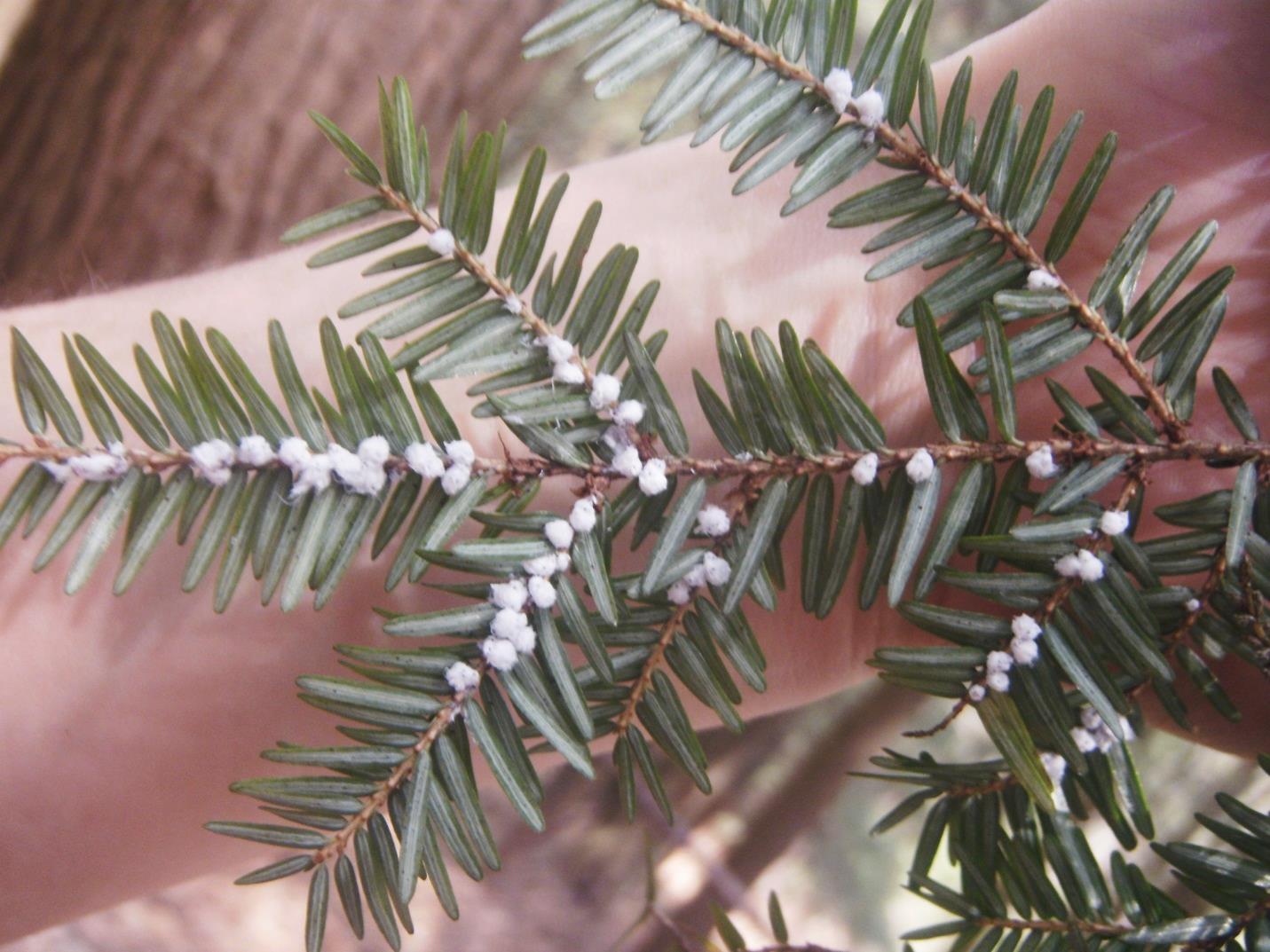
Hemlock Woolly Adelgid appears as white fluffy balls on the underside of hemlock branches during the cooler months.

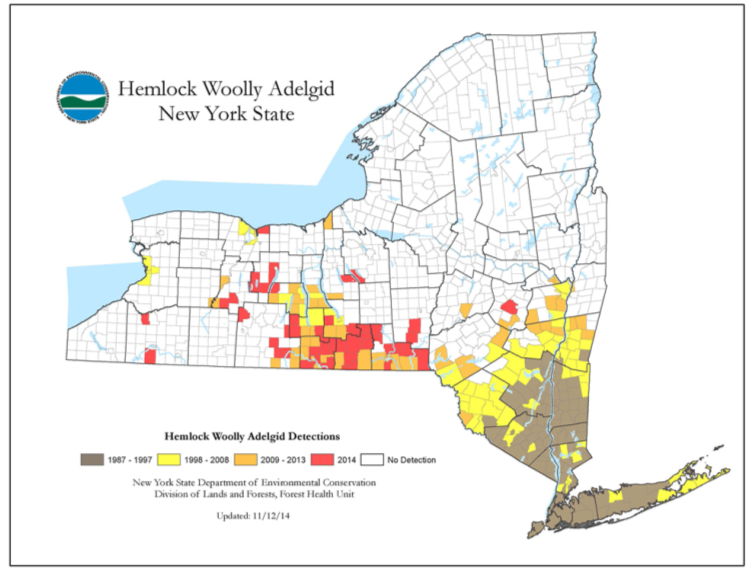
Hemlock Woolly Adelgid (HWA) is a tiny, invasive insect which kills hemlock trees in a matter of 6 years. Please see the previous post on HWA for more information. The insect was introduced in Virginia in the early 1900’s, and has steadily spread since then. New York state contains all stages of HWA infestation. There are heavily infested areas like the lower Hudson Valley, which have harbored HWA for 20+ years and contain increasing numbers of declining and dead hemlocks. Moderately infested areas include the Finger Lakes, where some areas have HWA and some do not. Several HWA early detections were made in Western NY’s Allegany State Park by dedicated volunteers, trained by Park staff to survey for the insect. Allegany just has a few isolated patches of HWA, and State Parks is working to keep those patches small. So far, the Adirondacks have escaped infestation, but they are not immune.

map
This map shows the spread of HWA by township since 1987. Map from http://www.dec.ny.gov/animals/7250.html.

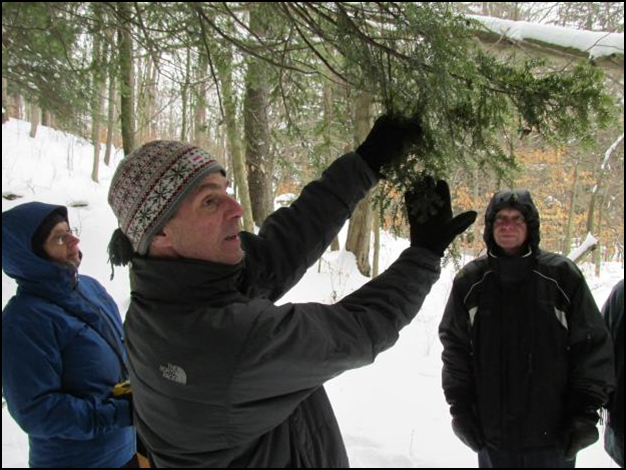
How do we know all this information? The first step in determining if HWA is present is simply to look for it. Surveying for HWA takes diligence; the insects’ most visible life stage is the egg sac, which is present in the fall and winter. A hand lens is necessary to identify the tiny adults in the summer. Primarily through grant funding and volunteers, Parks has surveyed for HWA in 20 State Parks, and that number increases every year.

Survey technique demonstration for volunteers in Allegany State Park.

After surveying, maps are created and examined and hemlock stands are prioritized for treatment. Prioritization is a rigorous process which includes collaboration with state and local experts. These experts ask questions like: Do dead/dying hemlocks pose a health and safety risk here? Is there an area of ecological significance, for example, an old growth stand or is there an insect or animal present which is dependent on hemlocks? Will the loss of hemlocks create a significant, negative change to aesthetics? Is this an area of early detection, where treatments could make a big difference?

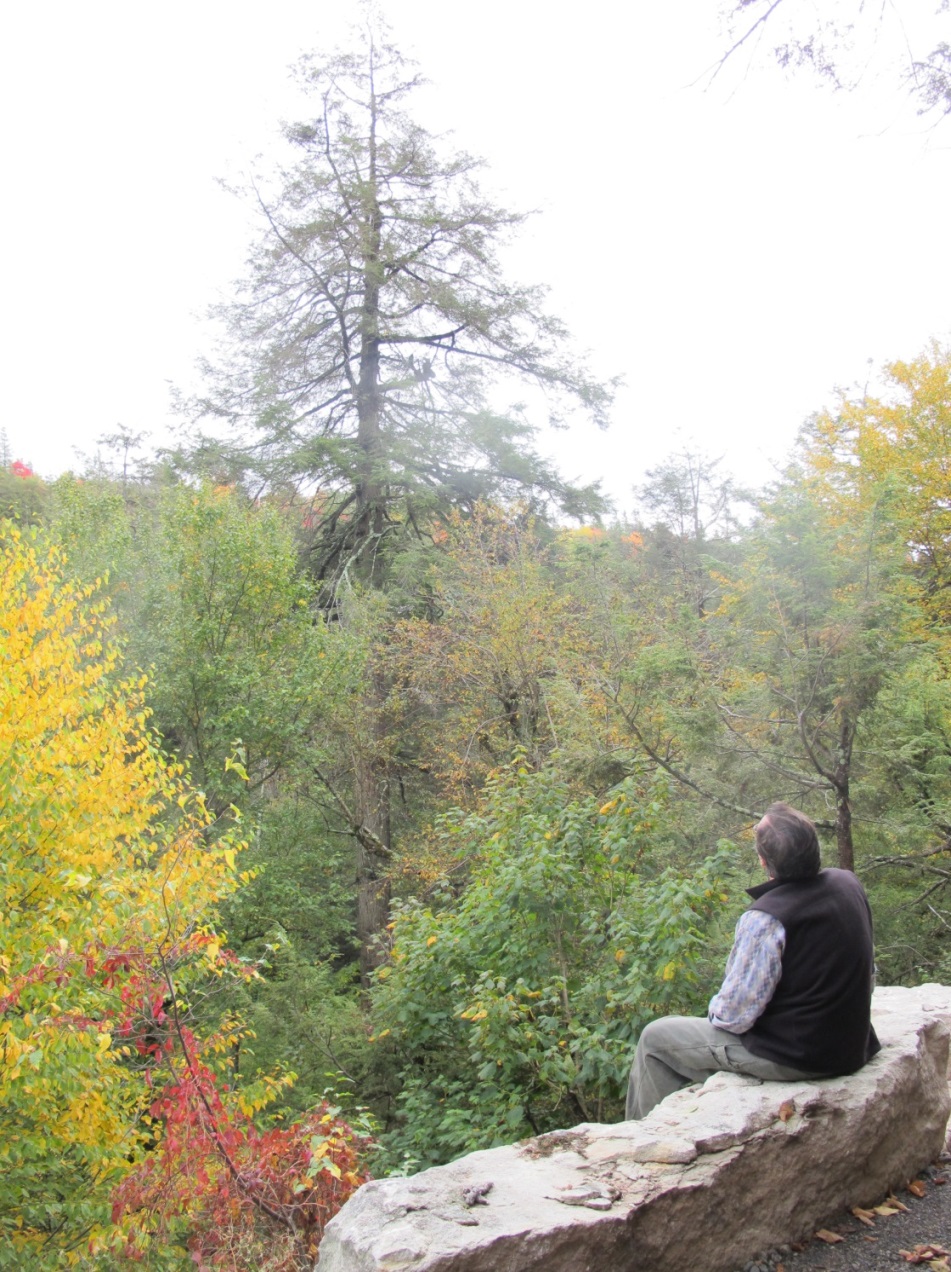
Mark Whitmore, of Cornell University, gazing at a hemlock in serious decline at Minnewaska State Park Preserve.

Treatment for HWA does exist. Parks has chosen our methods through regular consultation with experts, based not only on what works, but what has the least impact on the environment. Pesticides are carefully sprayed onto the bark of hemlock trees, in the spring or early fall. The pesticides are taken up rapidly through the bark and into the tree, where hemlock’s circulation system takes it throughout the tree, to all the little branches. The HWA will not survive on treated hemlocks for the next 7 years. While this is certainly not a permanent solution, it does buy us much needed time.

In conjunction with these treatments, Parks is also releasing biological control beetles. Biological control insects have an extensive approval process which can take a decade or more through the USDA. Many states have biological control review processes as well, including NY. These processes are designed to assess and evaluate the insect and its host specificity, the reproductive and cross breeding potential, and other factors. If, and only if, the insect is passes the host specificity and other tests, is it approved for release. Many biological control insects have been explored for control of HWA, one showing some promise is Laricobius nigrinus. These biological control beetles feed exclusively on HWA, and while they will not eliminate their food source, they can keep HWA populations in check so they are no longer killing hemlocks. While this is the ideal end result, it can take a decade or more before this is attained. Releasing a few hundred L. nirginus against millions of HWA means we need to buy time, through the use of pesticides, as these beetles work to increase their populations to levels where they can match HWA and keep it in balance.

Invasive insects are notoriously difficult to contain. While we may never stop the onward march of HWA, we can reduce the negative impacts of hemlock loss in specific areas through human intervention.

Sign up for an upcoming iMap Invasives training to learn how to report HWA when you spot it in State Parks’ forests.

Post and photos by Alyssa Reid.


Safety, Streams & Salts

Whether you’re enjoying one of the numerous recreational opportunities of the season, or keeping warm by the cozy fire, one thing is on every New Yorker’s mind- snow! This frigid ice blanket provides more than a slick surface to ski, sled, and snowboard on; it can also create a hazard on our roadways and sidewalks. New York State, along with several other northeastern states, has historically used salt to melt any existing ice, prevent further ice from forming, and improve traction. While this method of salting has greatly improved the safety of our roadways, it has an acute impact on the environment- particularly on New York State’s reputable freshwater lakes, ponds, and streams.

snowfall at Allegany_KH
Fresh snowfall at Allegany State Park. Photo taken by Kate Haggerty, NYSOPRHP EMB Water Quality Unit (12/1/2010).


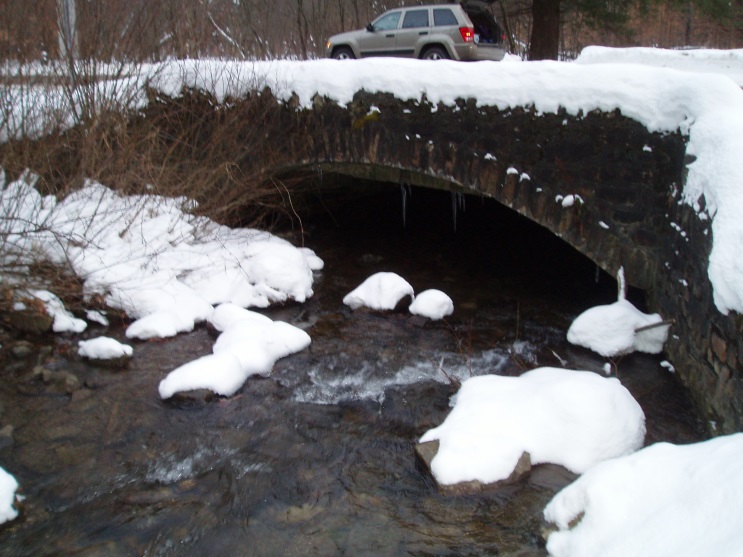
Cleared roadway over stream xing_Allegany_DM
Cleared roadway over a stream crossing in Allegany State Park. Photo taken by Dan Munsell, NYSOPRHP EMB Water Quality Unit (1/08/2013).


During the washout period of the spring, when snow and ice melt due to increasing outdoor temperatures, residual salts (and other chemicals) wash off of roadways and into our freshwater waterways. In large amounts, these salts can be toxic to aquatic organisms by altering the chemical composition of our waters. Several of our favorite fish, amphibian, and plant species aren’t adapted to these saltier environments, which can lead to substantial changes in the aquatic food web.

Currently, innovative alternatives are being studied to reduce the amount of road salt needed in the winter. This includes the use of granular volcanic material, beet molasses, and fireplace ashes to minimize or even replace road salts. Innovative infrastructure designs, such as pervious (porous) concrete roadways have also been suggested to reduce the amount of water (and ice!) accumulated on street and sidewalk surfaces. These innovative alternatives could ultimately eliminate the need for road salt use during New York’s winters, while still providing safety for drivers and walkers alike!

In order to decrease the environmental impacts of using road salt, while also ensuring the safety of our patrons, NYS Parks adopted a policy to minimize the use of road salt in our parks. By focusing the use of road salt on high-risk park roadways, and using other materials to improve traction (such as sand and gravel), NYS Parks reduces the amount of salt needed, which has further protected our park enthusiasts and our beloved freshwater resources!

Post by Nate Kishbaugh, photos by Dan Munsell and Kate Haggerty.