Category Archives: Park Projects

BioBlitz results!

On May 3, 2014, over a hundred volunteers with scientific backgrounds gathered at Minnewaska State Park Preserve in Ulster County and Clark Reservation State Park in Onondaga county for two concurrent Bioblitzes, 24-hour inventories of the park’s biodiversity. Our objectives were to search the park for as many rare species and natural communities in the park as we could find. This was a collaborative effort between NY Natural Heritage Program (NYNHP), State Parks, and Parks & Trails New York. Participants included biologists with various specialties and affiliations including NYS DEC, NatureServe, Syracuse University, SUNY-ESF, Mohonk Preserve, U.S. Geological Survey, and the Student Conservation Association. At least 9 different organizations were represented.

Rhodora (Rhododendron canadense), a rare plant documented at Minnewaska. Photo by Alyssa Reid

The main survey period was between 9am and 5pm on May 3rd, but some intrepid volunteers stayed through the night to look for nocturnal animals, while others arose on May 4th between 5am and 11am to identify spring migratory birds. In both parks, small teams sought out rare species and high biodiversity areas. The weather was overcast and cool on May 3rd, which made some of the surveys particularly difficult.

At Minnewaska State Park, we were able to document approximately 262 plants, animals, and fungi, as well as 7 of the NYNHP significant natural communities. The summary of our findings includes at least 100 plants and 150 animal species: 89 birds, 6 fish, 16 herps (amphibians and reptiles), 16 mammals, and 23 invertebrates. The species included cool mammals like the American mink (Neovison vison), shy amphibians like the northern dusky salamander (Desmognathus fuscus), delicate insects like the spring azure (Celastrina ladon), and steadfast trees like the American chestnut (Castanea dentata).

Painted turtle, by Matt Schlesinger, NYNHP

At Clark Reservation, we documented over 372 different species of plants, animals, and fungi and updated records for the 4 high-quality natural communities known in the park. The tally includes 193 species of plants (including lichens) and 96 species of animals, including 6 mammals, 7 herps, 46 birds, 4 fish, and 116 invertebrates. Of the many invertebrates identified, some of the largest groups were beetles (18), millipedes (10), caddisflies (10), and snails (6). The list of species included some entertaining names, such as bugle sprite (a snail), poverty grass, tortured tortella moss and seductive entodon moss. The Bioblitz proved to be an invaluable opportunity to get experts out in the park cataloging groups of species, like mosses and snails, which are often overlooked in typical biological inventories.

Due to the timing of the Bioblitz to coincide with I Love My Parks Day on May 3rd, our bird surveys included both passing migrants and potential park residents. Whip-poor-wills (Caprimulgus vociferous), a species of special concern, were sighted in several locations at Minnewaska, and based on last year’s NYNHP surveys, they are known to nest in the park. At Clark, the highlights were osprey (Pandion haliaetus) and sharp-shinned hawk (Accipiter striatus), both of which are species of special concern in New York.

The invertebrate team working hard at Clark Reservation. Photo by Julie Lundgren

The bioblitz was an extension of the long-standing partnership between NYNHP and State Parks to document rare species and natural communities in New York State Parks. Scientists found a wealth of biodiversity and enjoyed collaborating across organizations and areas of expertise in a beautiful natural setting. We hope to continue these valuable efforts to bring experts together to share knowledge, contribute to our understanding of the biota in New York State Parks, and to encourage further opportunities for park staff and the public to learn more about the special features in parks.

featured image is a spring azure butterfly by Mike Adamovic, post by Paris Harper, Erin White and Julie Lundgren
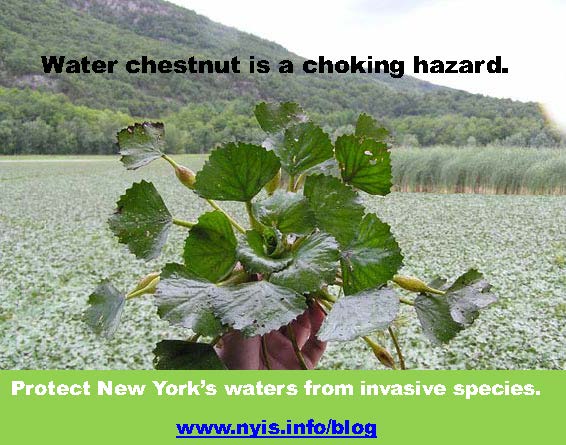
Invasive Species Awareness Week

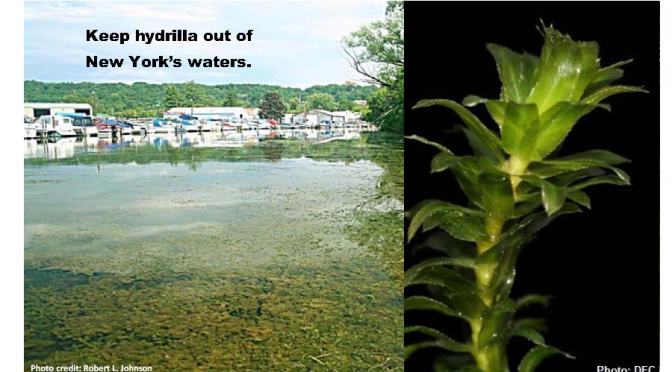
New York State is celebrating its first Invasive Species Awareness Week July 6-12, 2014!

Invasive species affect all New Yorkers – from hikers to highway personnel, from birders to boaters and from farmers to foresters. The mission of the New York Invasive Species Awareness Week (ISAW) is to promote knowledge and understanding of invasive species to help stop their spread by engaging citizens in a wide range of activities across the state and encouraging them to take action.

To celebrate the very first awareness week, Partnerships for Regional Invasive Species Management (PRISMs) across the state are hosting fun volunteer events targeting invasive species. These include awareness-raising nature walks, a garlic-mustard pesto making event, and a vigorous mile-a-minute vine removal.

To learn more about Invasive Species Awareness Week Events near you, check out the blog on the NYIS website, or the NYS Parks events calendar.

Water_chestnut2


Wetland Mitigation at Evangola State Park

In 2010, the NYS Thruway Authority planned to make much needed improvements to I-90 near Irving, NY, a project which would inadvertently affect about 2 acres of emergent marsh wetlands in the area.

In order to mitigate these adverse impacts on the marsh habitat, the NYS Thruway Authority teamed up with Evangola State Park and Watts Architecture & Engineering by reclaiming a dry, rocky, flat fill area and transforming it into a valuable and productive habitat.

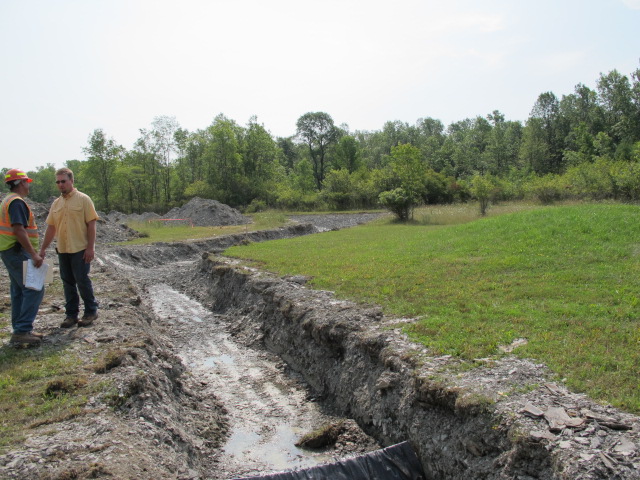
July 28, 2010 - the project area at the beginning of construction - not very impressive, is it?

July 28, 2010 – the project area at the beginning of construction – not very impressive, is it?
The project, well underway!

Taking advantage of the area’s natural hydrology and terrain, landscape engineers created a three acre wetland along Evangola’s entrance parkway. This new habitat feature is home to various amphibian, reptile, and fish species, as well as a nesting and foraging site for a variety of birds and ducks.

Wetlands play a very important role in the environment, including ecosystems services that are valuable to humans. Wetlands act as water purification system, flood control, and they improve the stability of shoreline. Wetlands are also often the most biologically diverse ecosystems in a region, serving as home to a wide range of plants and animals. In New York, wetlands are used as stopovers for migrating birds, as a breeding habitat for migratory birds and other birds that nest in wetlands, and as a winter home for many amphibian species.

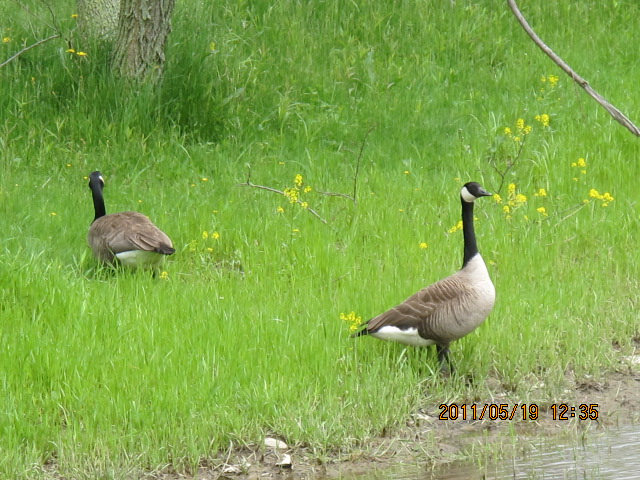
These Canada geese were some of the first creatures checking out the new real estate

The human-made wetland at Evangola also presents various opportunities for educational ecological study to school groups, summer camps, and scout troops that visit the park. A hands-on outdoor classroom allows students to gain first hand experiential knowledge of this important ecosystem type.

The beautiful wetlands, finally completed.

The project’s overwhelming success prompted the American Council of Engineering Companies of New York to Award the Wetland Mitigation project at Evangola State Park the Gold Award for Engineering Excellence to the New York State Office of Parks, Recreation & Historic Preservation, the first landscape project to ever win this prestigious award. The award was a nod to the project’s excellent design, and the educational opportunities it created.

photos by NYS Parks

Deer Survey at Schunnemunk Mountain

Keeping track of the deer populations in NYS Parks isn’t a pretty job. On Monday, March 31st, a team from New York State Offices of Parks, Recreation, and Historic Preservation traveled to Schunnemunk Mountain to carry out a deer pellet survey. Schunnemunk Mountain is located in Schunnemunk State Park in Orange County. One problem that the state parks are facing is deer overpopulation. The large populations of deer are eating native plants and causing a decrease in biodiversity. To inform our knowledge of deer populations, State Parks monitor the deer pellets left in parks to estimate the number of deer in a region.

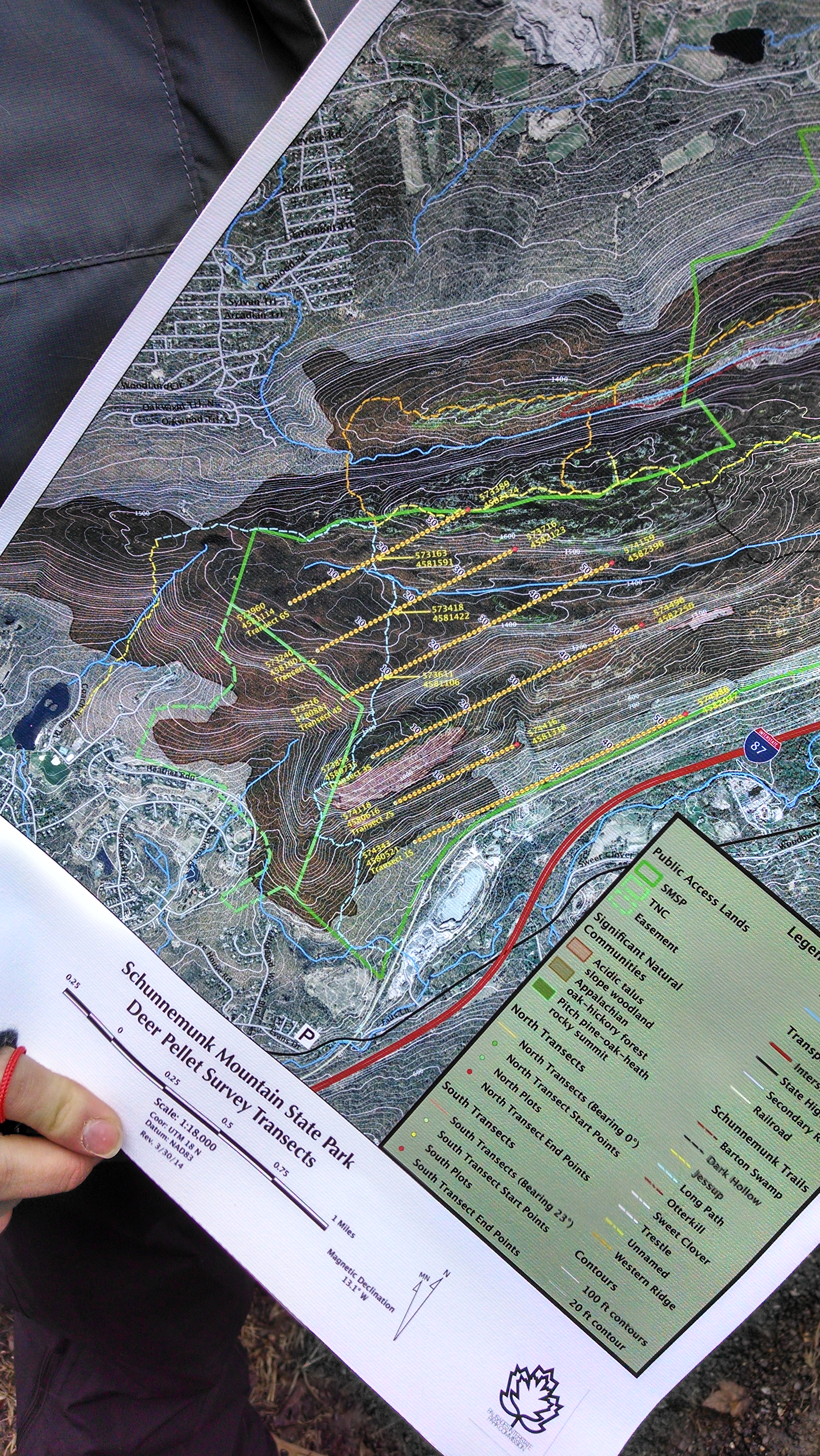
To make estimates of deer numbers in a large area, wildlife specialists draw parallel transects across the park area.

Schunnemunk transect map

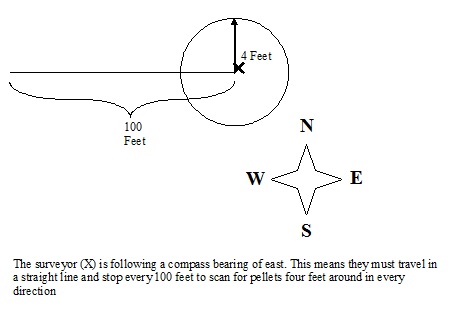
Schunnemunk deer pelletsFollowing the transect using compass and GPS, the surveyors measure out points 100 feet apart and scan the ground for pellet groups at each point. Points have a radius of four feet in every direction (See figure below). When counting pellets, we look for at least 10 pellets in a grouping. The number of pellet groups can help surveyors estimate the number of deer living in the area.

Schunnemunk diagram

Naturally, this process involves scrambling through thick brush, across boggy creeks, and over big rocks, but it is all in the name of science!

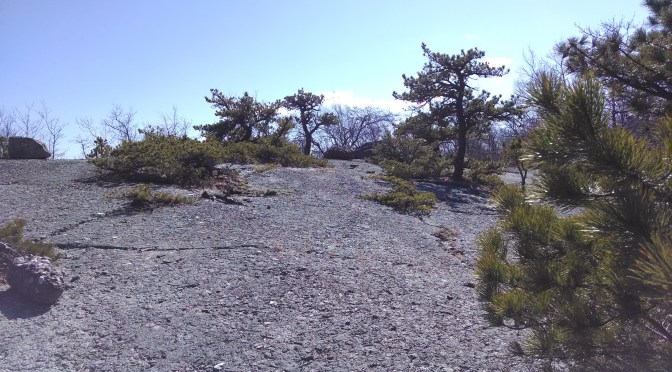
Of course, it also means catching some lovely views from the top of Schunnemuck Mountain.


Post by Mary Greagan and Paris Harper, photos by Paris Harper

Bear Tagging

The NY Department of Environmental Conservation maintains about 3-5 radio-collared female bears every year in order to collect long-term data on the reproduction and movement of black bears. As you can imagine, getting collars on bears is not an easy business. This winter, when a rabbit hunter hunter reported a denning black bear with cubs at Pinnacle State Park, the DEC knew that this was an opportunity that couldn’t be missed.

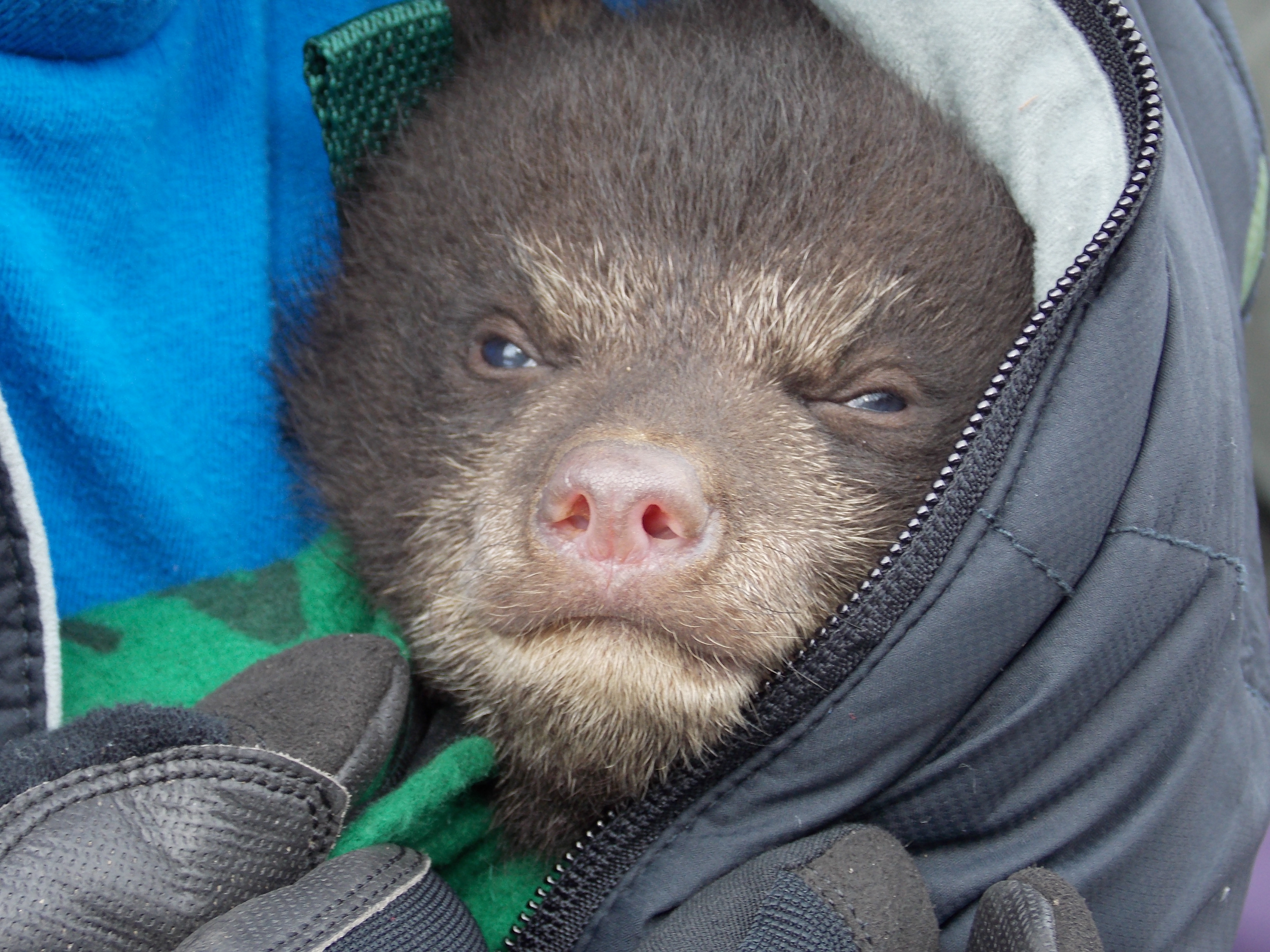
Adult female black bears give birth every other year, with birthing occurring around mid-January. Collars are never put on small cubs because they grow quickly and the collar would pose a strangulation risk. However, DEC felt that the mother bear identified by the hunter would be an ideal target for collaring.

This winter, DEC partnered with State Parks, the Black Bear Management class at Finger Lakes Community College in Canandaigua, and veterinarians and technicians from Seneca Park Zoo in Rochester in order to radio-collar one female black bear.  The process involves tranquilizing the bear while still in her den in order to attach the collar. Because the bear is usually immobilized for half an hour to an hour, the specialists also need to care for the cubs and keep them warm while others are working on their mother.

The following link to a YouTube video will give you a good idea of what a den visit entails,

http://www.youtube.com/watch?v=vJRDpTUIrJI

bear tagging 3

Bear cubs are very cute, but please remember that approaching mother bears and cubs, in their dens or out, is extremely dangerous!

photo by Josh and Jim McGonigal