Any settlement story of the state parks along the Genesee River in the western part of New York State begins with the Onöndowa’ga:’, the People of the Great Hill.
The Genesee River’s sweeping valley, with naturally re-nourishing floodplains, hills, and well-draining glacial moraines ideal for farm towns, is the dominant land feature of the region. Flowing to Lake Ontario in Rochester, the Genesee River’s tributaries branch through Monroe, Livingston, Wyoming, Genesee, Ontario, Allegany, Steuben, and Orleans Counties. The Onöndowa’ga:’ are master agriculturalists who established the first permanent towns on this landscape, known regionally today as the “Genesee Country.”
From their earliest conception, theJay Estate Gardens in Rye have been a place to host meaningful dialogues about American history and memory. A new outdoor wire sculpture exhibit created by acclaimed artist Kristine Mays expands upon that intentionality, celebrating and memorializing the spirts of enslaved people. Curated by the nonprofit Jay Heritage Center (JHC), “Rich Soil” is the first collection of fine art pieces to be installed in the historic landscape.
“I am breathing life into wire. With each work, I create a form that reveals the essence of a person and that speaks to humanity as a whole,” Mays said.
Crisp air. Crunchy leaves. Fall is a magical season. Temperatures are just right for hiking, biking and outdoor adventure. There’s vibrant color everywhere and honking geese overhead. It’s the season of apple cider donuts, pumpkin spice, and of course, Halloween! Maybe that’s why fall has eclipsed summer as the busiest time of year at our parks and historic sites? For your consideration and enjoyment, our seasonal outdoor fun experts have returned to help you squeeze every last drop out of this delightful season!
Happy birthday to us! The New York State parks and historic sites system is now 100 years old, and we celebrated our founding and lit up almost two dozen landmarks around the state in Parks green and Centennial gold to mark the day last week.
Although several of our parks and historic sites have existed for more than 100 years—Washington’s Headquarters State Historic Site and Niagara Falls State Park, for example—it was on April 18, 1924, that the State Council of Parks (SCOP) was formed, creating our modern parks system.
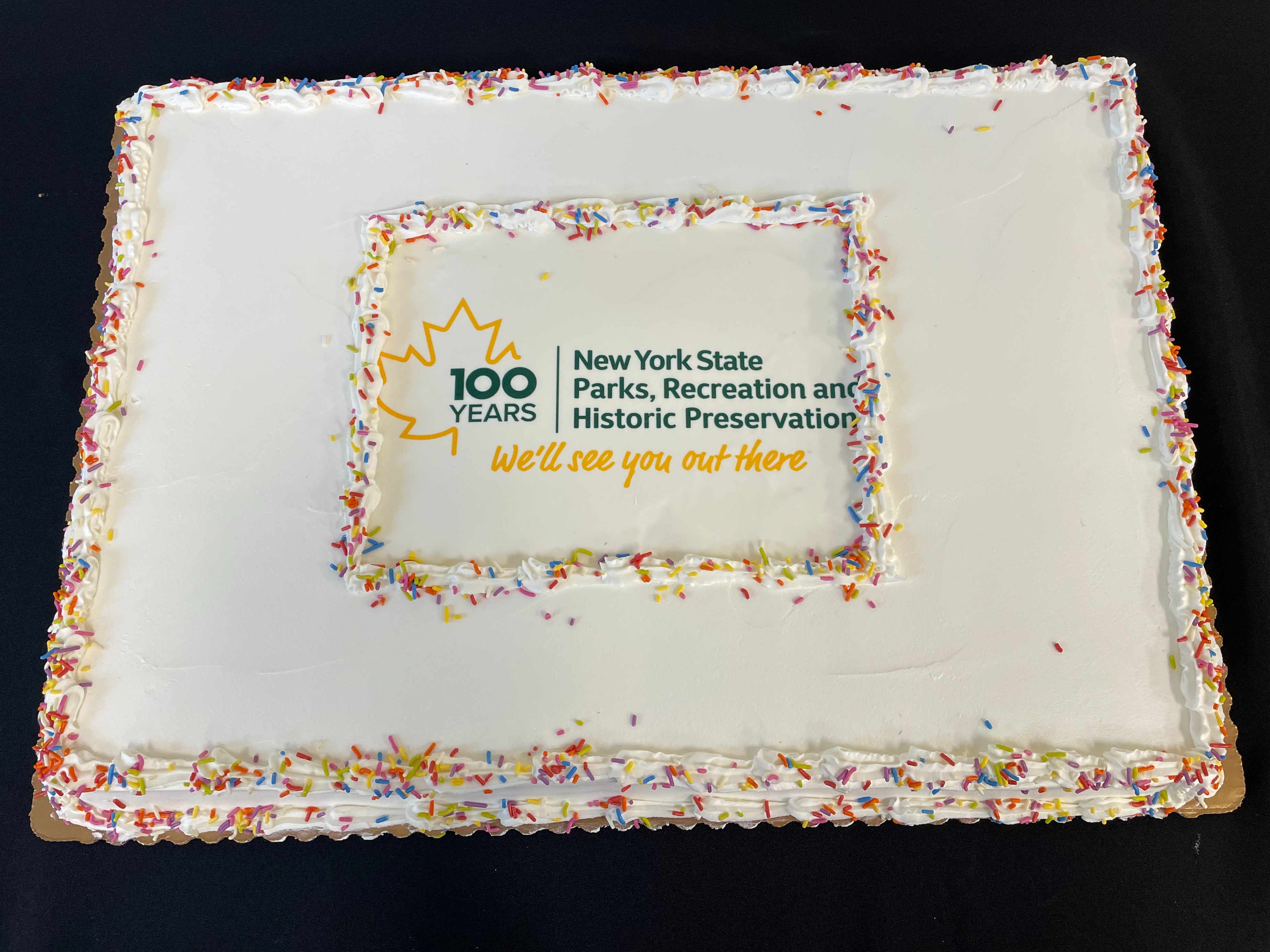
A Centennial birthday cake at the newly opened Robert H. Treman exhibit reception in Ithaca.
Established by Governor Alfred E. Smith and the New York State Legislature in 1924, SCOP and subsequent voter support for a $15 million Bond Act placed the future of many of New York’s public lands in our hands. Alongside great partners, staff at our agency have served as stewards since then, preserving New York’s most treasured lands and historically significant places. Today our system spans over 250 properties in every part of the state, improving the lives of millions of New Yorkers and connecting communities to the outdoors.
Missed our birthday? No problem. We created a video recap documenting the events of the day. You can find this video, along with other Centennial content, on our YouTube channel. Be sure to subscribe if you haven’t already, as we’ll be adding even more announcement videos into this digital goody bag as the year goes on!
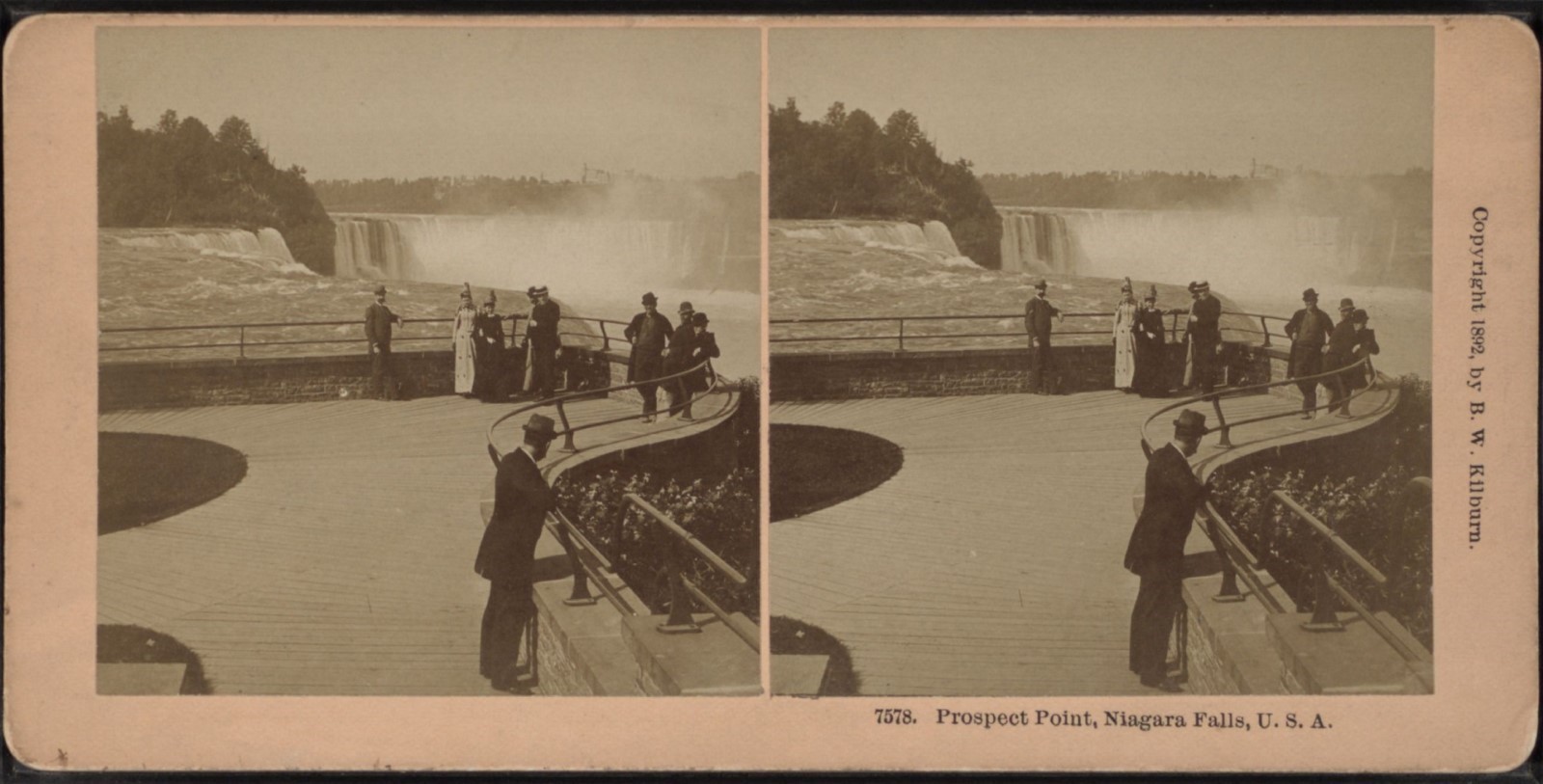
A stereographic photograph taken at the Prospect Point observation area of Niagara Falls. Image courtesy of the New York Public Library.
Beginning with the acquisition of Washington’s Headquarters in 1850, Blazing a Trail delves into more than 170 years of stories and milestone moments, divided into eight chronological eras. The timeline experience, showcased in a modern and mobile-friendly way, introduces important figures in the State Parks’ history and examines the social and political context of each era of our park and historic site system’s development. With our Centennial celebration already in full swing, additional eras will be launching throughout 2024, reminding New Yorkers that New York’s state parks are truly made for them.


 New York State Parks and Historic Sites Blog