Category Archives: Stewardship

Training Protects Threatened Rattlesnakes

Twenty-five years ago, as a young Fish and Wildlife Technician with the state Department of Environmental Conservation, I was recruited for an unusual field outing on State parkland in the Hudson Highlands of southeastern New York: a first of its kind, hands-on training to become a certified nuisance rattlesnake responder.  

As a responder, I would be on a short list of people willing to safely and legally relocate timber rattlesnakes that had wandered into compromising situations on private property – a win-win for both the homeowner and snake.  No such system was in place in the Hudson Valley and, without it, many homeowners took matters into their own hands, often with a shovel or shotgun.

Randy Stechert, a long-time herpetologist and regional rattlesnake expert who has worked through New York, New Jersey, Connecticut and elsewhere, led our small group to a remote rocky clearing in search of Crotalus horridus, the timber rattlesnake. The largest of New York State’s three venomous snake species (the others being the northern copperhead and massasauga rattlesnake), the timber rattlesnake was in trouble, owing to centuries of habitat loss and direct persecution, including a bounty system lasting into the 1970s.

These depredations were so effective the State declared the species Threatened in 1983, a designation requiring conservation measures to keep it from slipping to Endangered status or worse. Currently under New York State Environmental Conservation Law, it is illegal to capture, kill or possess any native snake at any time without a permit, including rattlesnakes.

The mission of that long-ago outing was to familiarize our ragtag group of would-be responders with this species in the flesh. Randy would show us a wild rattlesnake and how to safely handle it, while imparting his wisdom about all things rattlesnake in his booming baritone voice.

And boy did he deliver.

I will never forget the robust, nearly all-black rattlesnake plucked from a huckleberry patch and deposited on the open bedrock just feet in front of me. Most memorable was how easily we could stand beside this now agitated wild animal with little concern about its intentions. It was in a clearly defensive posture, coiled and ready to repel any further attacks from this presumably malevolent band of primates.

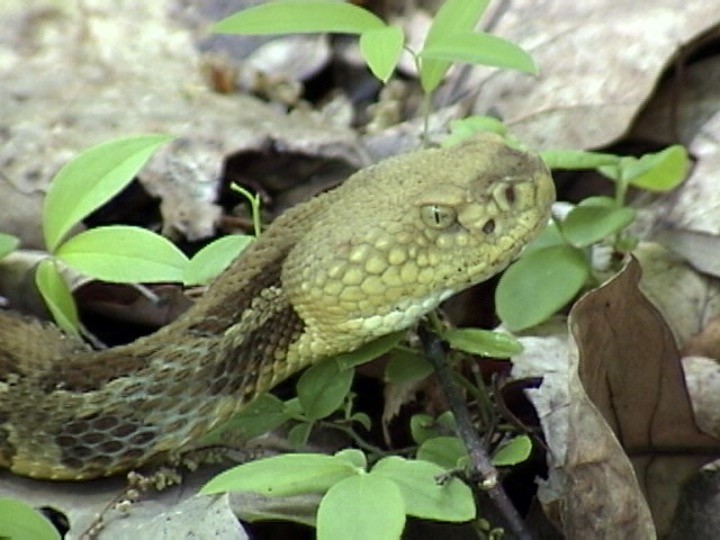
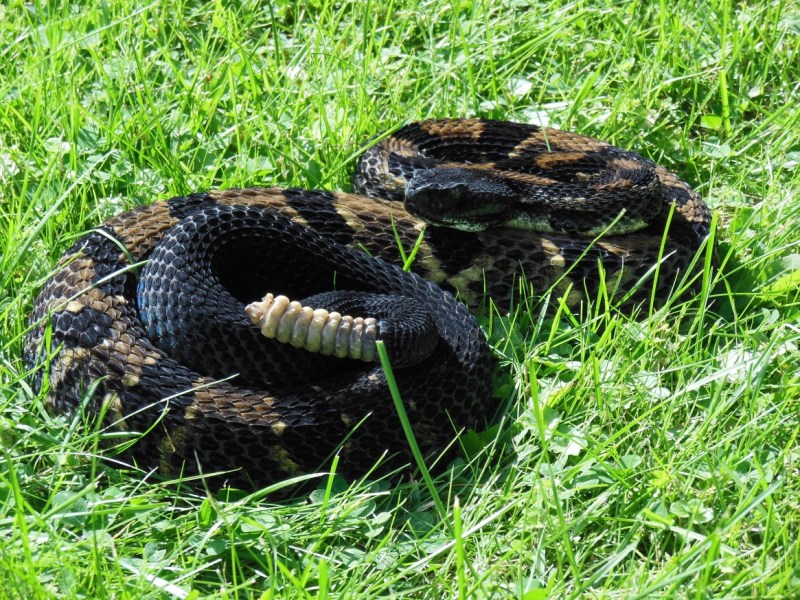
A black morph timber rattlesnake. Colors range from nearly jet black, to browns, to sulfur yellow. (Photo credit – DEC/William Hofman)
A yellow morph timber rattlesnake.

In the ensuing decades, and after handling dozens of rattlesnakes in my research and as a nuisance responder, I’ve come to understand them as pacifists at heart.  Despite their considerable weaponry – two hypodermic needle-like fangs and potent venom – they really just want to be left alone.  In fact, their first response to human presence is to remain motionless, and hope their camouflage shields them from detection.  If detected and a retreat is available, such as a rock crevice, they will typically make a rapid exit to safety.  But if they feel exposed, vulnerable, and without a means for escape, they quickly switch gears in an attempt to intimidate their aggressor.  A cornered rattlesnake coils, inflates to look more girthy, and rapidly vibrates its namesake rattle to audibly back up the message. This menacing version is our popular notion of a rattlesnake but, ironically, is merely a response to the perceived threat posed by us. 
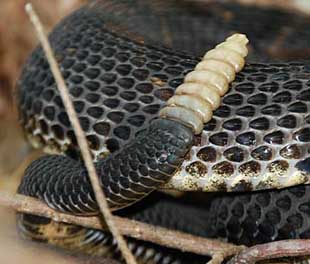
The snake’s rattle is made from rings of keratin – the same hardened protein our fingernails and hair are made of. A new rattle segment is formed every time a snake sheds its skin. When the snake rapidly shakes its tail, the rings vibrate and produce a rattling or buzzing noise used by the snake as a warning to keep away. (Photo credit – New Hampshire Fish and Game Department/Brendan Clifford.)
Hear a rattlesnake rattle…

Since that indelible first encounter with a wild rattlesnake on State Park land, I have become increasingly entwined with this charismatic species. I’ve rescued them from homeowner’s yards, conducted field surveys for their winter dens, and ultimately took a very deep dive into unraveling the timber rattlesnake’s mating system and reproductive ecology as a graduate student.   

Still managed by the DEC, the nuisance rattlesnake response program includes most members of that original group recruited in the mid-1990s.  While Randy Stechert continues to host trainings (now done with captive snakes, rather than wild ) in recent years, he has passed the torch to another generation of trainers, including myself here at State Parks. 

Where I work at  Trailside Museums and Zoo at Bear Mountain State Park , natural resource staff, backcountry rangers and our own zookeepers have been trained using our captive rattlesnakes under this program, expanding Parks’ in-house capacity to respond to nuisance situations at all our locations. 

Other conservation measures have been installed as well in recent years.  For example, all park development projects are “screened” by location to assess their potential for rattlesnake impacts. When possible, projects sited within snake habitat are scheduled for November to March, when the snakes are less likely to be active and in harm’s way.  When this can’t be done, the contractor is required to develop a rattlesnake response plan and have an onsite snake monitor to head off conflicts. In some cases, when habitat loss or direct impacts are considered unacceptable, the project is relocated, reconfigured, or even denied.

The timber rattlesnake has been a survivor, persisting in the rocky uplands of the Hudson Valley, Southern Tier and eastern Adirondacks for at least the last six thousand years. Our past concerted efforts to eliminate it from the landscape were unsuccessful, and good thing. As more species disappear and the fabric of nature unravels, thread by thread, the value of having formidable, wild creatures about us only increases.

State parklands are a critical refuge for this imperiled snake in New York and can remain this way with a little foresight, planning, and, frankly, empathy, on our part.  If we can successfully accommodate the long-term survival of the timber rattlesnake, it will bode well for biodiversity overall.

Timber rattlesnakes reach the northern limit of their range in New York and New England.(Photo credit – NYS DEC)
A researcher marked this snake’s rattle with red paint to aid future identification.

What To Do If You See a Rattlesnake?


If you are on State parkland or elsewhere in the wild, observe the snake from a safe distance (at least six feet), and take a moment to enjoy this majestic animal. If you snap a picture with your cell phone and want to share it with others over social media, it is best to do this without disclosing exact location information. You can either share a screenshot or make sure location services are disabled on your phone. This will keep the location secret from snake poachers attempting to mine online location data. After briefly observing the snake, back away and make a detour around its location to continue your hike.

In a nuisance situation where the snake’s presence is problematic, such as in or near a dwelling or public space, a certified relocation expert can be obtained by calling 911 or the DEC. Please remember: Do not attempt to disturb or capture the snake yourself.  Seeking expert assistance in this instance is one way to help New York preserve its biodiversity.


Cover shot – A yellow morph timber rattlesnake blends into the forest floor. All pictures NYS Parks unless otherwise credited.

Post by Ed McGowan, PhD, Director of Science and Trailside Museums & Zoo, Bear Mountain State Park

Resources


New York Natural Heritage Program guide to the timber rattlesnake.

Read a recent scientific study on how rattlesnakes use their rattles to make a snake sound closer than it actually is.

Read about a DEC and multi-agency investigation between 2006 and 2009 into the illegal wildlife trade in rattlesnakes, other reptiles and amphibians.

Learn more about the timber rattlesnake in this previous post in the NYS Parks Blog…

Respect for Rattlers

Threatened in New York State and often misunderstood, the Timber Rattlesnake is an impressive and unique species that is essential for healthy ecosystems. At an average of 3-4 feet in length and described as “stocky,” timber rattlesnakes are the largest venomous snake species in New York. They are easily identified by their broad triangular-shaped head…

Propelling History At New York State Parks

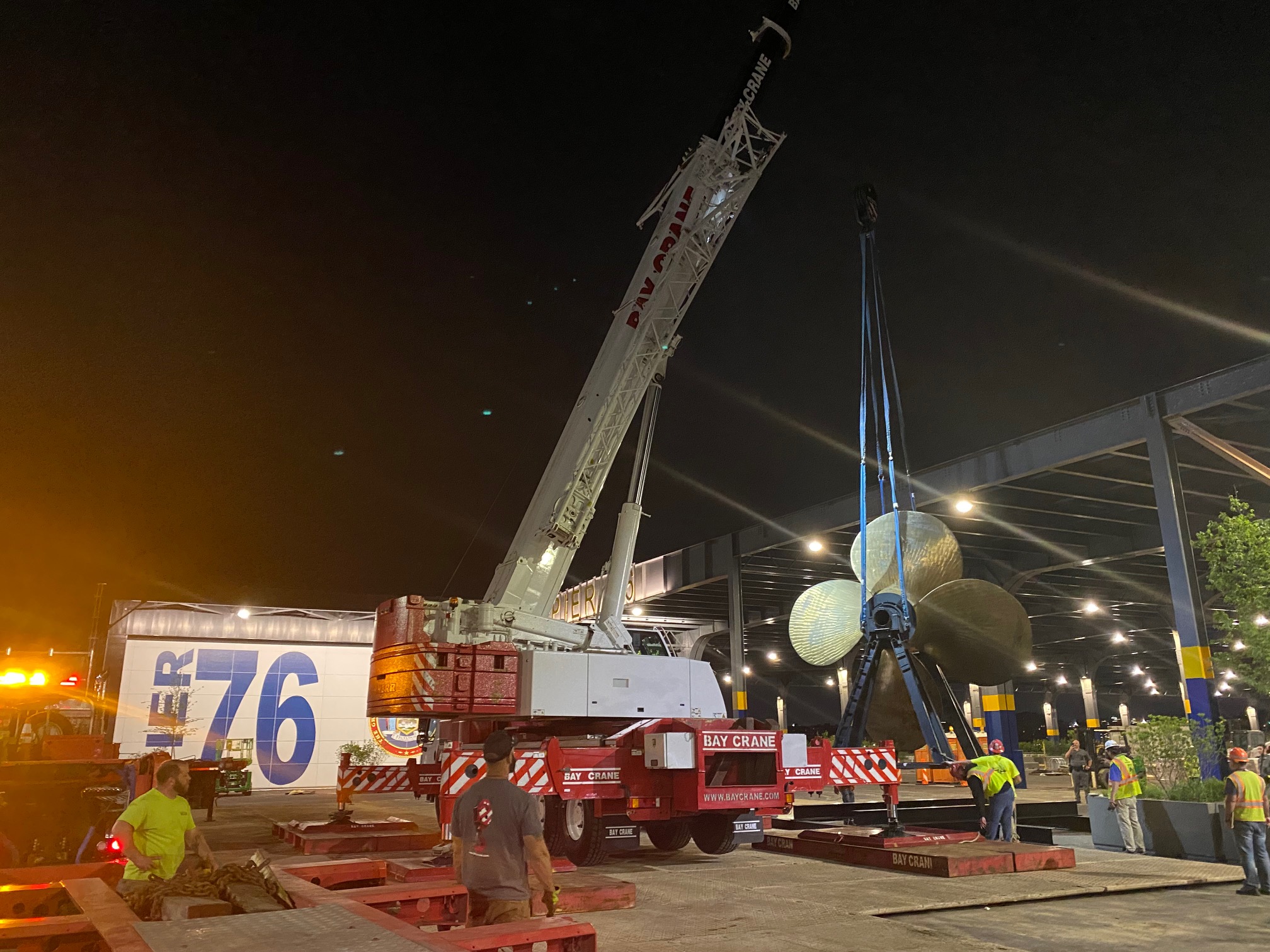
At this summer’s grand opening for the revamped Pier 76 in Manhattan, most visitors likely noticed a massive ship propeller on display near the entrance. At 18 feet in diameter and weighing more than 30 tons, it is certainly hard to miss.

State Parks oversaw the propeller’s installation from the nearby Intrepid museum as part of its $31 million construction and renovation project to remake Pier 76 into the newest public recreational and cultural space in the city’s Hudson River Park. But another part of State Parks’ mission is preserving and documenting history, such as this massive nautical object and the story behind it.

Workers lower the massive propeller into place at Pier 76.

It is a story of a bygone era of luxury transatlantic travel aboard the SS United States, a liner launched during the Korean War whose passengers included such celebrities as Marilyn Monroe, John Wayne, Judy Garland, Bob Hope, Elizabeth Taylor, and a former king of England, as well as four U.S. Presidents – Truman, Eisenhower, Kennedy and Clinton, who crossed the ocean as a college student on his way to Oxford University in England. After iconic animator and filmmaker Walt Disney traveled to Europe aboard, he used it as the setting for one of his family-friendly comedy movies of the 1960s. The ship featured prominently in the advertising of the 1950s and 1960s as an epitome of style and casual elegance.

The bronze-manganese propeller at Pier 76 was one of four that allowed the SS United States – a ship longer and heavier than the ill-fated RMS Titanic – to have blazing speed. Able to go faster in reverse than the RMS Titanic could go forward, the “Big U” set a speed record for passenger liners using only two-thirds of its power on its July 1952 maiden voyage from New York City to Europe. That record still stands today, decades after jet aircraft became the preferred way for people to cross the ocean.

The SS United States set a speed record for crossing the Atlantic Ocean in 1952 that still stands. (Photo Credit – Wikipedia Commons)
The SS United States shown in her homeport of New York City harbor in the 1950s.

This year marks the 70th anniversary of the SS United States being launched and christened, with 2022 as the 70th anniversary of that record-setting maiden voyage. After its brief but illustrious 17-year career, the ship was permanently withdrawn from service in 1969, the victim of changing travel habits, increasing fuel costs, and loss of government support. Since then, numerous attempts to repurpose the vessel have fallen through.

Now docked in Philadelphia while a national not-for-profit group, the SS United States Conservancy, seeks to preserve it, the SS United States is one of the world’s last surviving examples of ocean-going luxury.

When the ship was completed, it cost approximately $78 million, with about two-thirds of that cost covered by the U.S. Navy, which wanted to create the world’s fastest ship for military use. That was equivalent to about $800 million today, enough to cover the expense of two modern Boeing 777 passenger jetliners. At the time, many details of the vessel’s construction were a military secret, since the Navy wanted a liner that could be converted quickly into a troop ship in the event of war. The SS United States was capable of carrying up to 14,000 troops, 1,444 crew, and a 400-bed hospital for 10,000 miles without refueling.

In addition to speed and military adaptability, the liner also had modern, distinctly American stylings setting it apart from the more traditional luxury vessels of earlier days. Designed by naval architect William Francis Gibbs of Gibbs & Cox (designer of 5,400 World War II vessels, including the famed “Liberty Ships”) and constructed in Newport News, Va., the ship was marketed as a vacation in itself. Advertising campaigns during the 1960s emphasized that ocean voyages, even for business, could be a pleasure – you would arrive faster on an airplane, but you would arrive happier on an ocean liner!

An advertising poster touts the speed of the SS United States, and its sister ship, the SS America.

To further emphasize this vision, designers Dorothy Marckwald and Anne Urquhart worked for three years with a dozen assistants to design the interior decoration of the ship’s public spaces and hundreds of passenger staterooms. Discarding the stuffy old-world style previously found on American ships, the SS United States had a contemporary look that emphasized simplicity over the palatial, and restrained elegance over glitz. The ship’s modern interiors were soothingly homelike.

Gibbs also was concerned with fire risks and mandated that no flammable materials could be used in the ship including construction materials and interior décor. Aluminum was used extensively in the structure, making the ship lighter (and thus faster) while also fireproof. The only wood found in the ship was the kitchen’s butcher blocks and the mahogany Steinway pianos.

Marckwald and Urquhart’s decorating included several commissioned works of American-themed art for public spaces from Hildreth Meière, Louis Ross, Peter Ostuni, Charles Lin Tissot, William King, Charles Gilbert, Raymond Wendell, Nathaniel Choate, Austin M. Purves Jr., and Gwen Lux. Marckwald humorously noted of the interior : “One thing we don’t do on a ship is use color that is at all yellowish green—you know, anything that will remind a traveler of the condition of his stomach.”

After Walt Disney traveled aboard the SS United States, he was so impressed that he decide to use the ship – its exterior colors were patriotically red, white and blue – as a setting for his 1962 comedy film “Bon Voyage!” about an American family’s European vacation.

This publicity still for Bon Voyage! shows stars Jane Wyman, Fred MacMurray, and Kevin “Moochie” Corcoran throwing paper streamers over the railings as the SS United States set sail. (Photo Courtesy of SS United States Conservancy)

What gave the vessel its speed was a propulsion system of eight boilers and four 1,000-psi steam turbines that provided more than 240,000 horsepower (more than four times that of the RMS Titanic) to four independent propellers, two with four blades and two with five blades. These designs reduced both cavitation – the formation of partial vacuums in a liquid by a swiftly moving solid body such as a propeller – and resulting ship-wide vibration.

Despite the enormous fuel consumption, the ship could carry enough fuel and supplies to travel non-stop up to 10,000 miles at a cruising speed of 34 knots and a top speed of 38.32 knots (about 44 miles per hour). This incredible combination of weight, power, and speed allowed the ship to make its 1952 maiden crossing at an average of 34.51 knots (or nearly 40 miles an hour).

This earned the Big U the Blue Riband – an unofficial accolade given to the fastest transatlantic passenger liner.

A worker checking one of the four-bladed propellers of the SS United States prior to its 1951 launch. (Photo Credit – Alfred Eisenstaedt/The LIFE Picture Collection via Getty Images)

Pioneering marine engineer Elaine Kaplan was responsible for overseeing the design of the ship’s unique propeller configurations. She began working at Gibbs & Cox during the early 1940s while attending Hunter College in New York City and pursuing a mathematics degree. Kaplan’s efforts were noted by the firm’s chief marine engineer Walter Bachman as well as William Francis and Frederic Gibbs.  As a result of her intelligence and meticulous work, she was ultimately assigned to design the propulsion system for the SS United States.

Another aspect of the design that aided performance was the underside of the hull, especially the bow, which used an unusual bulbous shape instead of the traditional knife-edge. This improved high-speed performance and reduced water resistance and friction. For many years, this and other below-water details were classified information, and no public drawings or photos below the waterline were available. Display models of this sleek and modernistic liner showed a flat bottom and no details!

Intensely proud of his vision, Gibbs said of his ship: “You can’t set her on fire, you can’t sink her, and you can’t catch her.”

Despite all this, the SS United States was retired from active service in 1969 due to increasing pressure from affordable trans-Atlantic airline flights, increased operating and fuel costs, and the U.S. government’s decision to end its operating subsidies after determining the vessel would never be used as a troop ship. By 1980 the vessel was considered obsolete for military use and subsequently sold off to a successive series of private entities.

In 1999, the ship was added to the National Register of Historic Places. The preservation group SS United States Conservancy, headed by Gibbs’ granddaughter Susan, purchased the ship in 2011 and has been raising funds and promoting redevelopment plans to save it from being dismantled. Now striped of much of its interiors and its trademark funnels faded, the vessel is currently berthed in Philadelphia, Pa., where it has been since 1996. It is not currently open for public tours.

“We appreciate New York State providing such a prominent location for one of the ship’s iconic propellers. It is awe-inspiring to see this sculptural component of the ship on proud display back in her homeport of New York,” said Susan Gibbs, President of the SS United States Conservancy.

“For the past decade the Conservancy has kept the SS United States safely afloat,” she said. “Although “America’s Flagship” remains endangered, this iconic symbol has enormous potential to once again welcome and inspire millions of visitors as a thriving mixed-use destination and dynamic museum on the waterfront. We are working every day, along with our partners and supporters from across the country and around the world, to save the United States.”

Two other SS United States propellers also are displayed in New York State. One is at the State University of New York Maritime College at Fort Schuyler in The Bronx, and the other is at the American Merchant Marine Museum at Kings Point, in Nassau County on the North Shore of Long Island. An additional propeller on public display is located at The Mariners’ Museum in Newport News, Va.

A historic postcard of the SS United States.
The propeller against the backdrop of the Manhattan skyline. Pier 76 served as a freighter terminal for New York City-based United States Lines, owners of the SS United States. The company vacated the pier in the 1970s.

Cover shot – SS United States propeller on display at Pier 76. Images from NYS Parks unless otherwise credited.

Post by Daniel Bagrow, historic preservation program analyst NYS Parks, and Brian Nearing, Deputy Public Information Officer, NYS Parks.

RESOURCES

Watch this video of the SS United States by Bright Sun Films.

A look at the ship’s role in the Disney film BonVoyage!

SS United States Conservancy Facebook Page

SS United States Conservancy Conservancy web page

Learn about the SS United States Conservancy’s plans to redevelop the ship

Technical details about the SS United States’ propellers

Empire State Native Pollinator Survey – You Can Help!

Summer is in full swing, with flowers blooming and bees buzzing. Our native pollinators, which also include flies, butterflies, and beetles, are an important part of New York’s ecosystems. They work hard to pollinate our trees, wildflowers, gardens, and crops. Some of these native pollinators appear to be declining. To learn more, scientists have been evaluating the populations of pollinators throughout New York as part of the four year Empire State Native Pollinator Survey (ESNPS).

The ESNPS is a project that aims to determine the distribution and conservation status of target pollinator species in New York. This project is made possible through work by both scientists conducting statewide surveys and community members submitting pollinator pictures and specimens they have observed.

In the last few years, zoologists with New York Natural Heritage Program (NYNHP) have visited more than 60 State Parks throughout New York State searching for a variety of target pollinator species. Community scientists have also been contributing their finds with photos added to the ESNPS iNaturalist project page.

More than 21,000 observations had been submitted to this multi-year project byMarch 2021, with the project constantly growing. These observations have been submitted by over 600 people and represent over 1,400 species. The Empire State Native Pollinator Survey is accepting photo submissions through September 2021 and you can help!

Be A Community Scientist

Do you want to help contribute to pollinator survey efforts? The project is accepting photo submissions through September 2021! Photographs can be submitted through the ESNPS iNaturalist project page or through the iNaturalist app after joining the project online. This can be a fun activity to do solo or with friends and family the next time you visit a State Park. Pollinators can be found in a variety of habitats – keep an eye out for wildflowers on warm and sunny days to see what you can find.  If you are able to snap some good pictures and upload them to iNaturalist, experts can help you identify the species you have found. It is a great way to learn, too.

What to Look For

Below are some pictures of the target species for this project that have been found in New York State Parks. New York’s pollinators have so much variety! These are just a few examples of what to look for and photograph.

Cuckoo Bee


One of the interesting bumble bees we have in New York is Fernald’s Cuckoo Bumble Bee (Bombus flavidus=fernaldae). Cuckoo bumble bees are a group of parasitic bees that are unable to collect pollen or raise young. These bees will take over the already established nests of other bumble bees by invading and incapacitating or killing the queen. The Cuckoo bumble bee then forces the workers to raise its young.

Fernald’s Cuckoo Bumble Bee (Bombus flavidus=fernaldae) Photo Kevin Hemeon

Bee Mimics

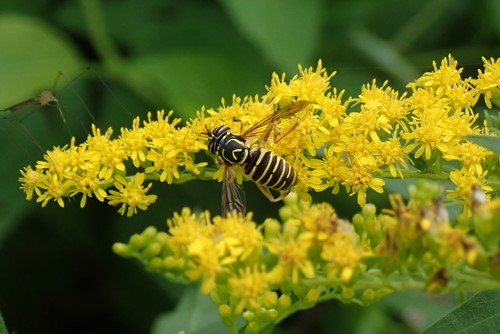
Look closely at the Bare-eyed Bee-mimic Fly (Mallota bautias) and Eastern Hornet Fly (Spilomyia longicornis); these are flies that are called bee mimics. Bee mimics can look very similar to bees, hornets, or wasps. Imitating insects with stingers is a defense mechanism for these harmless flies. 

Bare-eyed Bee-mimic Fly (Mallota bautias) Photo Paweł Pieluszyński
Eastern Hornet Fly (Spilomyia longicornis) Photo Laura Shappell
Greater Bee Fly (Bombylius major) Photo Alan Wells

Longhorn Beetles

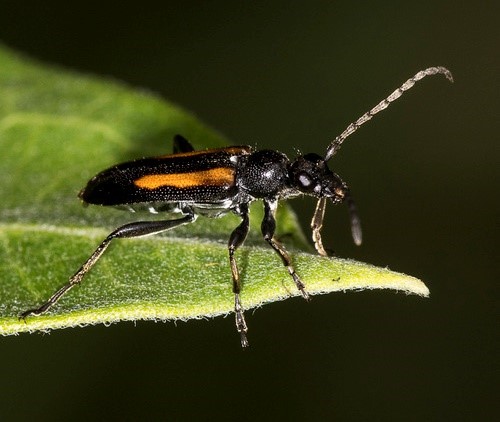
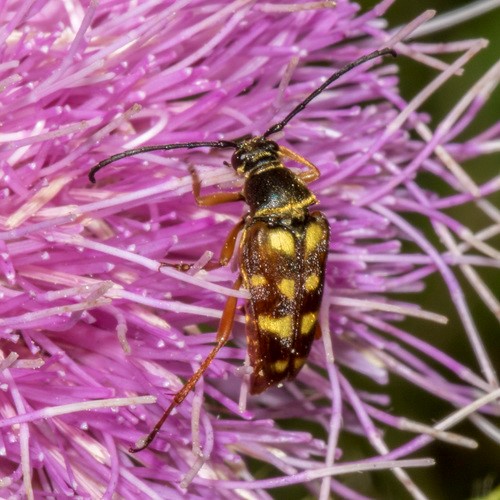
The project is also interested in information on the 100 species of longhorn beetles. These beetles generally have very long antennae and come in a wide variation of colors and patterns. They too are pollinators.

Strangalepta Flower Longhorn Beetle (Strangalepta abbreviata) Photo Alan Wells
Banded Longhorn Beetle (Typocerus velutinus) Photo Alan Wells

Where Should I Look?

You can find native pollinators all over. State Parks have a great variety of natural habitats where you can find interesting pollinators. Sunny days with not too much wind are ideal. Some of the counties that would benefit from additional surveys are Chenango, Cortland, Fulton, Lewis, Montgomery, Orleans, Tioga, and Yates.

Look for flowers along trails through fields, meadows, dunes, forests, or even in marshes and stream sides if you kayak or canoe. Stop and look for a bit to see if any pollinators settle down on the flowers. Photograph from a distance first and then try to move in for some close-ups. The insects are often so intent on feeding that they don’t fly away.

If you can help, sign up for the Empire Pollinator Survey ESNPS iNaturalist project page and submit your photos on that project page or the APP before Sept. 30, 2021. The results from the project are anticipated to be available in spring 2022.

Post by Ashley Ballou, Zoologist, NY Natural Heritage Program  www.nynhp.org

Resources

Read more about State Parks and our efforts with pollinators in previous posts in the NYS Parks Blog.

Pausing to Ponder Pollinators

It is Pollinator Week, the week we celebrate pollinators small and tiny.  Our native pollinators, including bumble bees, mining bees, bee flies, longhorn beetles, and flower moths, play an important role in supporting the diversity of plant life in New York. Since 2016, State Parks staff has been working hard to help protect our native…

Protecting Pollinators

Across New York, State Parks staff is working hard to help support the diverse populations of pollinators from bees to butterflies, beetles, wasps, and more.  Here’s a sample of the pollinator protection projects going on this year in State Parks. Rockefeller State Park Preserve Wild Bees Photo Exhibit Working from their photographs from both Rockefeller…

Plants for Our Pollinators

New York State Parks is abuzz with excitement for pollinators.  From June 20-26, we celebrate both National Pollinator Week and New York State Pollinator Awareness Week.  Our local bees, butterflies, moths, birds and other pollinators are to thank for most of the food we eat, as well as for many of the trees and flowers…

State Parks Strengthens Niagara River Island Ecosystem

Just upriver in Erie County from Niagara Falls State Park lies New York State’s third largest island. Home to more than 20,000 people and split by Interstate-190, Grand Island is 28 square miles and divides the Niagara River into east and west branches.

Industry and commerce dominated this river and its shoreline for more than a century, leaving a legacy of water pollution, fish unsafe to eat, and loss of wildlife habitat so extreme that in 1987 the U.S. Environmental Protection Agency (EPA) declared the entire 36-mile river an Area of Concern.

That federal listing set the stage for years of remediation efforts by New York State to clean up the river and shoreline. And now, it has led to State Parks, working with several partners, to begin the next chapter in healing the river – the restoration of several wetland areas of habitat along Grand Island critical for many fish and bird species that rely on the river for survival.

Grand Island is in the Niagara River between Buffalo and Niagara Falls.

These projects focus on two State Parks on the island – the 895-acre Buckhorn Island State Park on the northern tip, a nature preserve which has some of the island’s best remaining marshland wildlife habitat, and the more-developed, 950-acre Beaver Island State Park on the southern tip.

With funding support from the EPA under a plan finalized in 2018, Parks staff have finished two habitat restoration projects at Grand Island and two more are under way this season.

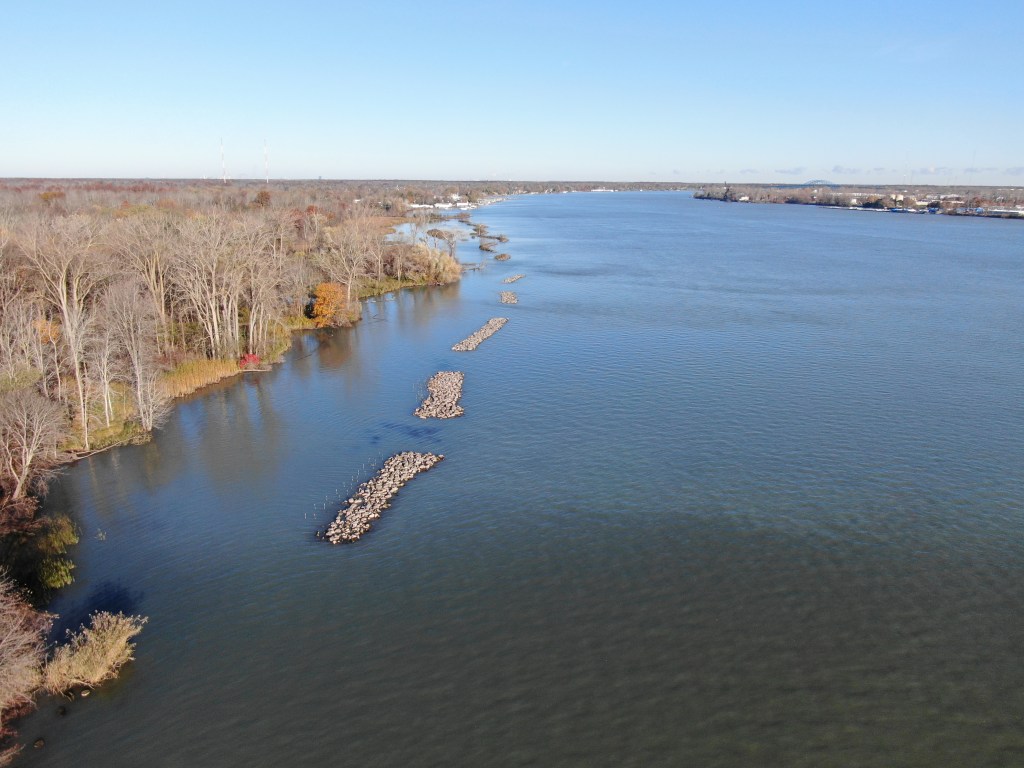
At Beaver Island in the south, offshore rocky reefs have been added in the river to an area called East River Marsh to protect the shoreline from further erosion caused by boat wakes and wind. Thousands of native plants have been planted by hand to provide important habitat for fish and other wildlife.

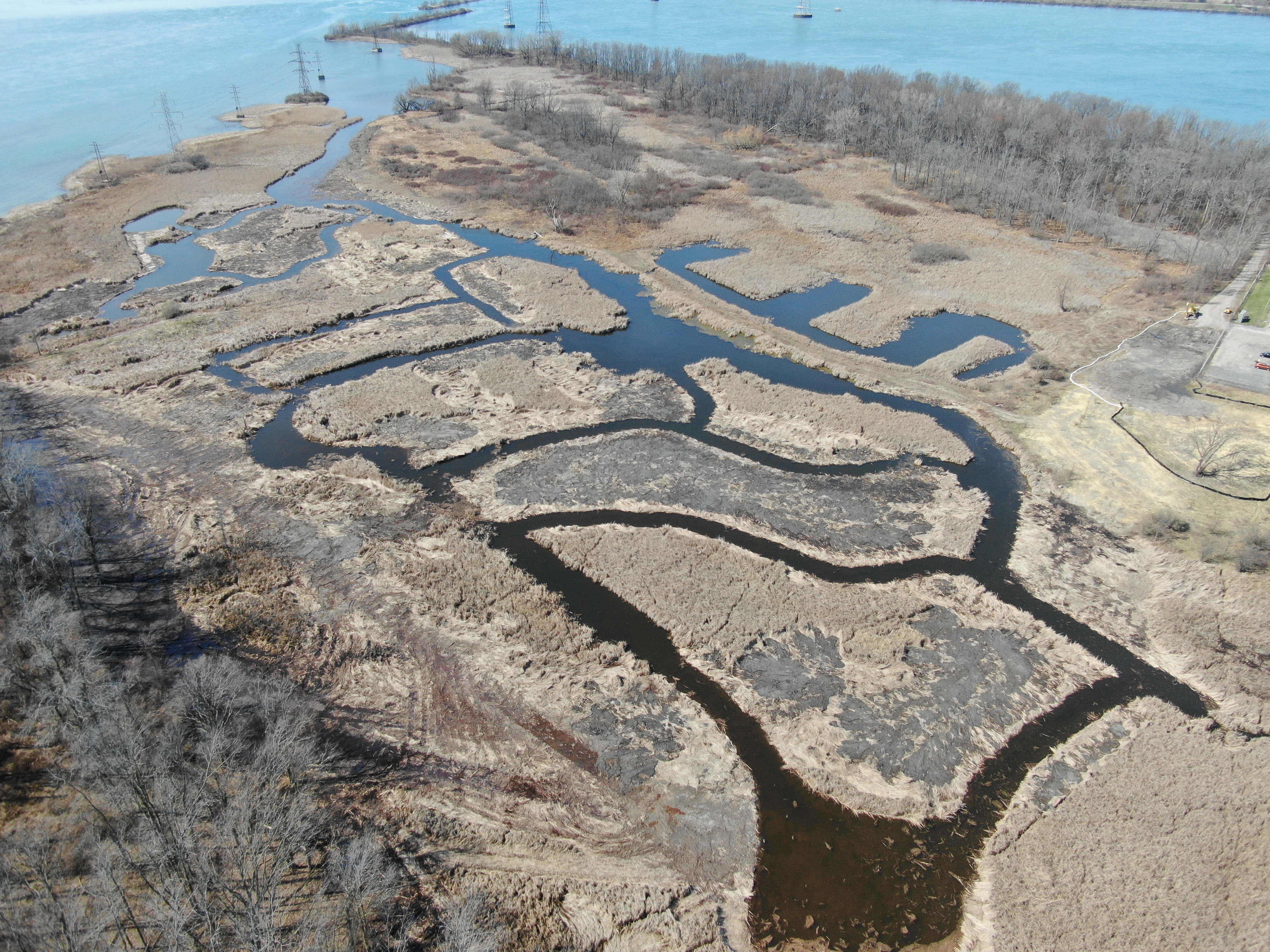
In the north, Buckhorn Island has one of the largest remaining cattail marshes on the Niagara River. At a place called Burnt Ship Creek, contractors hired by Parks have created open water channels and “potholes” in the marsh to provide pathways needed for fish such as Northern Pike to feed and spawn. The new open spaces also allow sheltered nesting sites for such secretive marsh birds as the threatened Least Bittern, which prompted the conservation group Ducks Unlimited to partner with State Parks for this restoration project.

Habitat restoration projects on Grand Island by New York State Parks and other entities are shown on this map. Buckhorn Island State Park is at the northern tip of the island, and Beaver Island State Park is at the southern tip.
Completed habitat restoration project at Burnt Ship Creek at the northern tip of Grand island near Buckhorn Island State Park.

This season, parks crews are working at a place called Grass Island, which is not actually an island at all, but rather an area of shallow water filled with cattails and other aquatic plants, both above the water and submerged. Sometimes also called Sunken Island, Grass Island is just east of Buckhorn Island State Park across from the city of Niagara Falls.

In addition to cattails and other plants visible above the water, Grass Island is also made up of many acres of submerged plants, predominantly a species known as water celery or American eel grass. This plant provides food and cover for several types of fish, including the Muskellunge, the state’s largest freshwater sportfish, which spawns among the eel grass each spring. The Upper Niagara River is one of state’s most important habitats for this fish.

Above the water, many species of waterfowl and marsh birds use the island for nesting, feeding and nighttime cover. Pied-billed Grebes, a threatened species in New York, nest and raise chicks there in the summer. During the fall migration of Purple Martins, the birds will roost in the cattails by the thousands.

Grass island, as seen in a drone photograph. On the above map, Grass Island is at the top right of Grand Island.

Together, Grass Island forms a 20-acre ecosystem designated as a protected wetland by the state Department of Environmental Conservation (DEC). While Grass Island provides some of the most important habitat in the Niagara River above the falls, this area has been steadily shrinking in recent decades due to wave erosion caused by boat wakes or wind. Between 2007 to 2018, Grass Island shrank by more than a third, losing an estimated 1.5 acres of its above-water vegetation.

Use the slider bar to show the decreasing size of Grass Island. The left image is from September 2018, while the right image was taken in August 2007.

This season at Grass Island, Parks contractors are constructing underwater rock reefs similar to those successfully constructed at East River Marsh. Once the reefs are finished, crews will add submerged tree trunks with the roots still attached (called rootwads) to provide underwater structure needed for good fish habitat. Also, large numbers of native wetland plants will be planted behind the protective rock reefs to expand the area with dense vegetation.

Also this summer, similar rock reefs, rootwads, woody material, and native plantings will be installed along the shoreline at Buckhorn Island State Park to restore and protect coastal wetlands. And finally, another similar project is in the works for the shoreline along the new West River Shoreline Trail at Buckhorn.

These projects join other ongoing conservation efforts at Grand Island being done by DEC, and the Buffalo-Niagara Waterkeeper, a not-for-profit conservation group. Find a FAQ on the projects here.

Buckhorn Island State Park is also a listed Bird Conservation Area, with its marsh providing important nesting habitat for threatened species such as Least Bittern, Northern Harrier and Sedge Wren. The marsh serves as a feeding, resting and breeding area for ducks, coots, moorhens, and rails. Common Tern find suitable habitat for foraging here. Additional birds of interest include a variety of species of ducks, herons, coots, moorhens, and rails. Spring and fall migrations along the Niagara River corridor can bring large numbers of gulls to this site.

Some of the birds of Grand Island known to be in the Bird Conservation Area.

Gorge-ous Gulls of the Niagara in Winter

The Niagara River is well-known as an international destination for its tremendous waterfalls, which form spectacular ice formations during the winter. Perhaps a lesser known fact, however, is that the river is also a critical haven for migrating birds during this time of the year. Gulls, in particular, are a common sight along the Niagara,…


Together, these wetland restoration projects at Grand Island aim to maintain and strengthen this urban island ecosystem in a river that fuels the spectacular waterfalls only a few miles away that draw millions of visitors each year.

If a visit to Niagara Falls is in the works, consider also making a trip to Buckhorn Island State Park and Beaver Island State Park, both of which have car-top boat launch sites, to see this part of Niagara River and witness some of the efforts to help restore it. Please remember that these are sensitive ecological areas and habitats for secretive wildlife, so be respectful and take care when visiting these special places.

As always, whenever hiking, or in this instance, more likely paddling, consider “Leave No Trace” principles to minimize your impact on the environment. Learn more on how to practice “Leave No Trace” by clicking on this previous post in the NYS Parks Blog.

Beaver Island State Park: This park has a half-mile sandy beach for swimming, adjacent 80-slip marina with both seasonal and transient boat slips, fishing access, car-top boat launch, multiple canoe/kayak launches, about four miles of bike and nature trails, nature center, playgrounds, picnic areas, athletic fields, horseshoe pits, an 18 hole championship disc golf course, an 18-hole championship golf course. In winter, visitors can snowmobile by permit, cross-country ski, snowshoe, sled or ice fish. Waterfowl hunting is allowed in-season by permit.

Also located in the park is the River Lea house and museum, home to the Grand Island Historical Society and built by William Cleveland Allen, cousin to Grover Cleveland who visited the family farm on several occasions.

Buckhorn Island State Park: For a wilder experience, try this less visited park, which is a nature preserve of marsh, meadows and woods that mark the last vestige of once vast marshlands and meadows that bordered the Niagara River. There are nearly two miles of nature trails for hiking, biking, and cross-country skiing. The preserve includes two launches for kayaks and canoes. There is ongoing restoration to re-establish wetland cover and water levels and increase the diversity of native flora and fauna. This effort aims to increase public access with more non-intrusive trails, overlooks and bird watching blinds.


Cover shot: A work barge involved in habitat restoration at Grass Island. All photos courtesy of NYS Parks.

Post by David Spiering, Great Lakes Habitat Restoration Coordinator, NYS Parks

Stewardship Saturdays At State Parks Long Island

The New York State Office of Parks, Recreation and Historic Preservation offers the opportunity for environmental volunteers to get to work!  Stewardship Saturdays are a great way to come together with a community of people that care about the environment and want to give back to nature.

For example, this spring at the Bayard Cutting Arboretum State Park along the Connetquot River on the southern shore of Long Island, volunteers guided by Parks employees kicked off the season by trimming the historic Rhododendron bushes that line the paths.  Rhododendron bushes can grow as tall as small trees if they are not trimmed once a year, but thanks to volunteers, the trails were ready for summer. 

The original bushes were planted by the Bayard family during the turn of the 20th century.  Gilded Age financier and philanthropist William Bayard Cutting wanted people to “Think of us as a museum of trees, not a park.”  The family donated the 691-acre estate in Great River to New York ” to provide an oasis of beauty and quiet for the pleasure, rest and refreshment of those who delight in outdoor beauty; and to bring about a greater appreciation and understanding of the value and importance of informal planting.”

The arboretum has many miles of trails to explore the grounds. Find a trail map by clicking HERE.

Our volunteers have a range of reasons for wanting to help on Stewardship Saturdays.  They also come with different levels of knowledge about plant life, so people who are not experts can still contribute by learning from others.

Volunteers this spring take a break from cutting back Rhododendron bushes at Bayard Cutting Arboretum State Park. Below, evidence of their efforts to reopen a pathway for visitors.

One such volunteer, named Laura, said, “We volunteer as a family because we care about conservation and we are always looking for opportunities to give back to the community. George (also a volunteer) invited us to Stewardship Saturdays and we are glad to be here.”

Another volunteer, James, who was there with his wife Jeanette, said, “I am retired so I have a lot of time and like to keep busy.  We are involved with Island Harvest, Long Island Cares and help with the flower garden at Planting Fields Arboretum in Nassau County.  I volunteer about three days per week.  I don’t know about the plants but I’m here to help with anything the park needs.”

Joe has a lot experience volunteering with New York State Parks with his family.  He found out about Stewardship Saturdays through the State Parks’ web site: “We went to a meeting and it sounded like a great opportunity to give back to the community and get out into nature for a change.  After the first time, we were hooked and we now show up for about 95 percent of Stewardship Saturdays.  My family has been to around six different state parks so far and it’s fun.  I have lived on Long Island for 45 years and had no idea that this beautiful park existed.  When I was in college I worked for Habitat for Humanity and my job was to build houses for people in need.  When there is an opportunity to get away from electronics, I jump on it.  It’s easy to pick up your phone, but here at Bayard, we are giving back and having some downtime which is nice.  I volunteer all year.”

According to research, Rhododendron, meaning “red tree,” refers to the red flowers and woody growth of some species, but Rhododendrons range from evergreen to deciduous and from low-growing ground covers to tall trees.  Flowers may be scented or not and are usually tubular to funnel-shaped and occur in a wide range of colors—white, yellow, pink, scarlet, purple, and blue.

The collection of “Taurus Red Rhododendron” plants were named in honor of former Bayard Cutting Board of Trustees member Doris Royce.

 One Stewardship Saturday volunteers, Jenna, has some knowledge about the history and how to care for these plants “The Rhododendron plants are from the 1800s brought by boat from England.  They started planting them when Frederick Law Olmsted designed the park.  These specific ones grow very tall so we have to cut them back when they start to get too big and before they push buds, which helps with next year’s growth.  You can cut them but they will grow right back and very fast.”

Two other volunteers contributed to the conversation.  Josh said, “I have no knowledge of plants.  I am here so that I can help to maintain the historic park which is important to people who live on Long Island”.  And another man named Joe who was volunteering said “I love nature.  I have my own garden at home.  When you volunteer, it is a way to meet like-minded people.”

Everyone in the Long Island community is welcome to volunteer during Stewardship Saturdays! For more information, visit website: https://parks.ny.gov/environment/nature-centers/6/details.aspx or contact us at 631-581-1072.

Come join the fun!

All photos by Melissa Hunter, NYS Parks

Post by Sage Saperstein, State Parks Long Island Region