Hispanic Heritage Month, spanning mid-September to mid-October, is a time for Latinx people in the U.S. to celebrate their roots. Through the vantage of Hispanic / Latinx staff, we reflect on the namesake for Roberto Clemente State Park — the sole park in our system named in honor of a Hispanic icon.
Roberto Clemente State Park first opened in 1973 as the Harlem River Bronx State Park. In that same year, the New York State Commission met to rename the park after the famous Puerto Rican Hall of Fame Baseball player, Roberto Clemente, who tragically died in a plane crash off the coast of Puerto Rico taking aid to Nicaragua.
The decision to rename the park after Clemente was not because he was a famous baseball player, but because he believed in helping people and doing good. He was truly a humanitarian. “Anytime you have an opportunity to make a difference in this world and you don’t, then you are wasting your time on Earth,” he once said.
I am joyful to be a Latina “Boricua” and oversee the first State Park built in New York City, and especially proud that it holds the name of Roberto Clemente. When I was a young child, I remember my mother speaking about how, although we came from a town next to his, our cousins lived in the town Roberto Clemente came from. I often remember him and think of my baseball card collection.
With the chill in the air and pumpkins popping up everywhere, many folks are making plans for Halloween. Signs are out inviting ghosts and goblins, large and small, to join historic cemetery tours that highlight the resting places of the victims of murder and mayhem as well as the rich and famous, some even by candlelight. If you’re thinking of adding a cemetery visit to your agenda, these tours offer safe ways to weave through complicated landscapes and monuments for the dead. For many reasons, however, the last ten years have also seen a marked increase of people visiting historic cemeteries around Halloween on their own.
In the 19th and early 20th centuries, cemeteries in or near urban spaces were used as places to picnic and relax before public parks were readily available. These days, Halloween, which is fast approaching the social status of a major holiday, has increased people’s interest in them. Not just for visiting family or friends buried there, but also as locations for weddings and other celebrations. Mortuary art has evolved over the years, and the artistry of historic gravestones and mausoleums can often rival what is seen on public and private building, allowing people to get up close in a way they cannot in many locations.
New York’s historic cemeteries range from the 17th through the early 20th century and cover every culture. Many offer visitors a rare opportunity to travel the state’s historic timeline for hundreds of years within their acreage. The variety of headstones is amazing to behold. This higher number of visitors is, unfortunately, often causing unrepairable damage to grave markers or headstones. Fragile historic artifacts that often appear more solid than they may be.
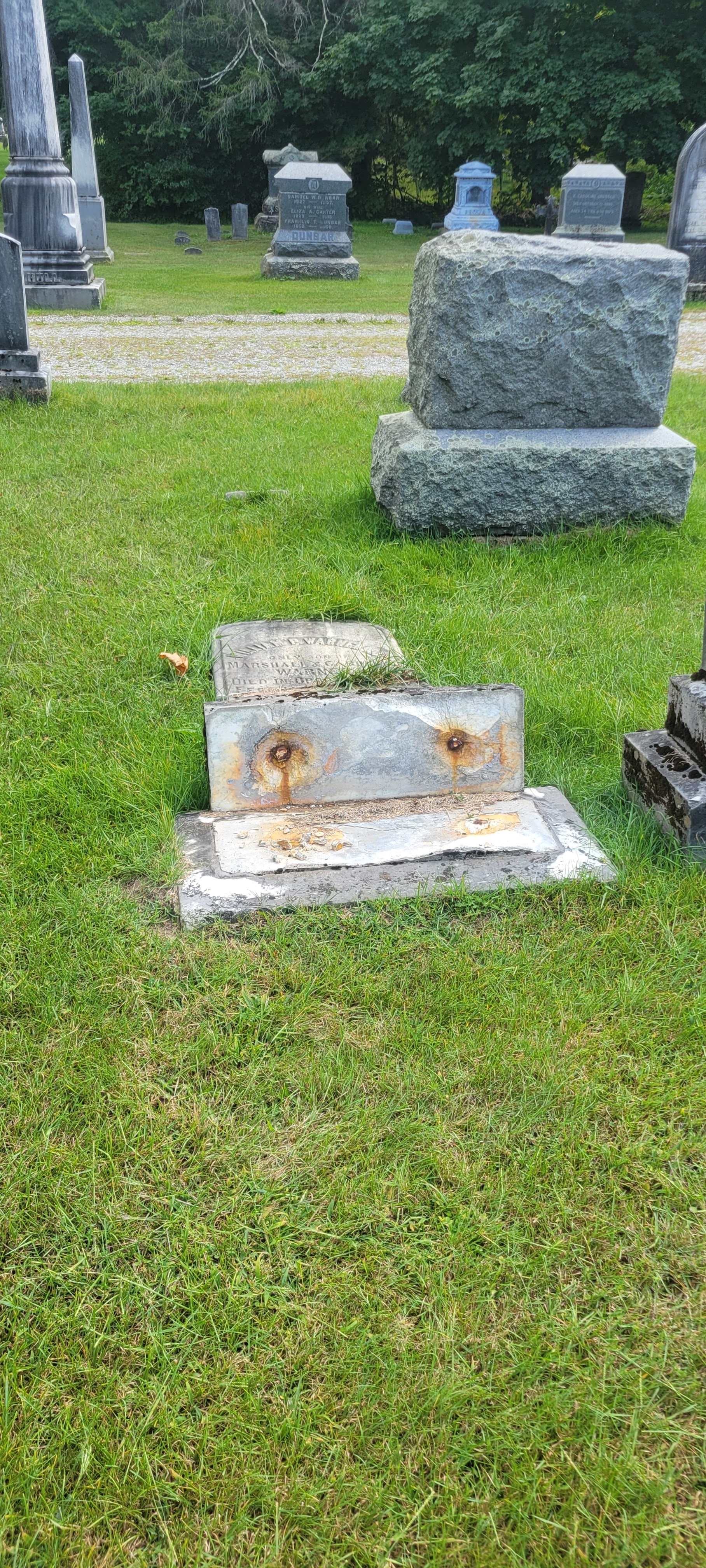
A toppled headstone. Photo credit: Ian Stewart, Preservation Inc.
Within these sacred spaces the sizes and types of stones or cement work used to mark graves can range from folk art to opulent cement work and newly created stones with laser cut designs. To preserve these artistic and historically significant pieces it is important that a few etiquette rules be observed. By doing so, we can ensure the history they represent remains for years to come.
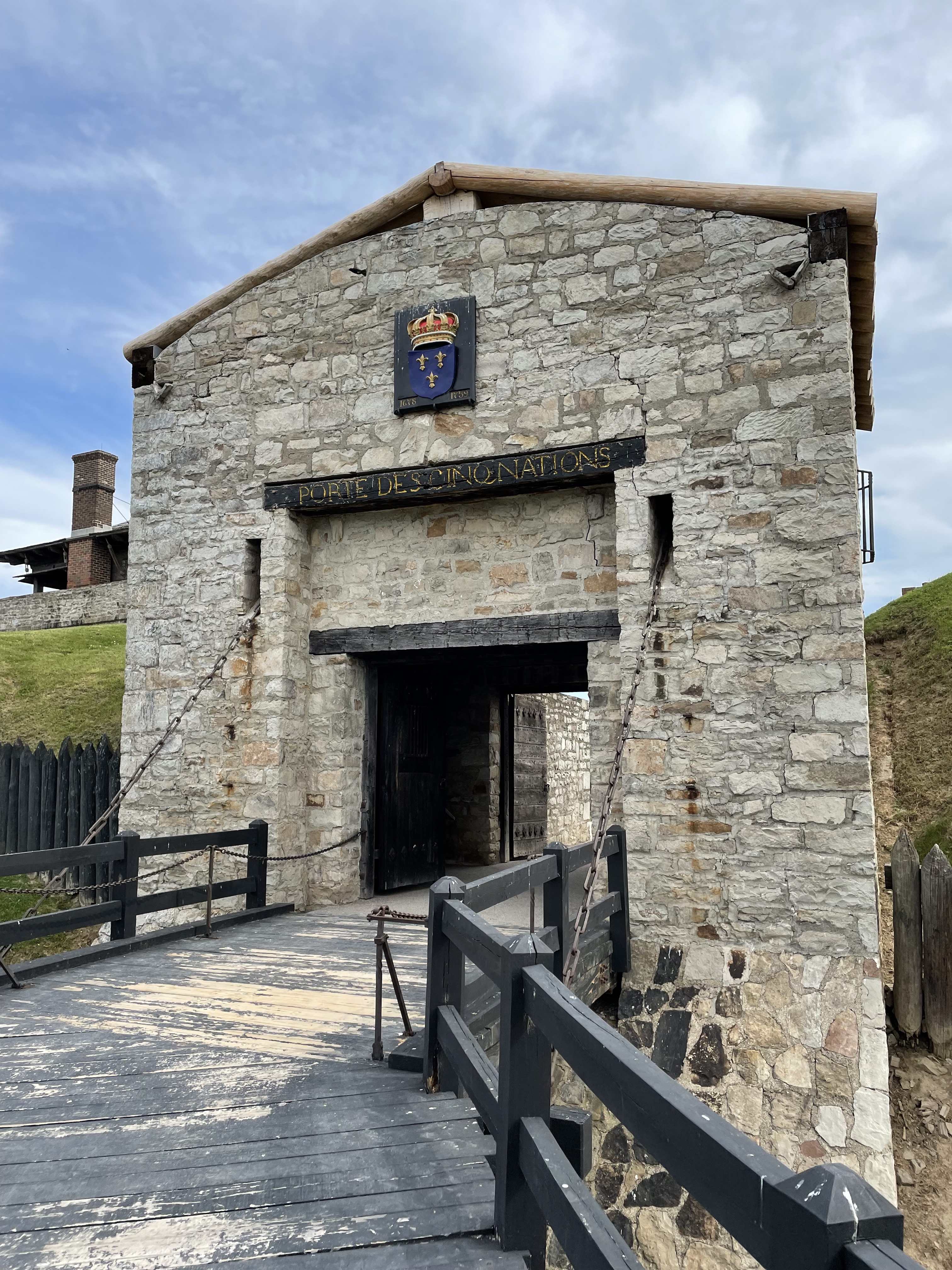
The digital chirrup of my alarm shakes me from my slumber. I dress, kiss my wife goodbye, get in my car and drive to work. After burning my tongue on hot coffee, I step through the doors of my workplace. This, however, is no ordinary door. It is a wooden drawbridge across a dry moat, guarded by five iron cannons pointed directly at me as I hurry to clock in.
Old Fort Niagara’s first entrance, a drawbridge over a dry moat.
The second door I must pass is a stalwart oaken gate attached to a great stone tower built by British engineers in 1770. I step into our office, the façade of the old provisions warehouse that once supplied every English fort in the Great Lakes region. Once inside, my colleagues and I receive the morning’s briefing and decide who will dress in what uniform and who will carry what firearm onto the field today.
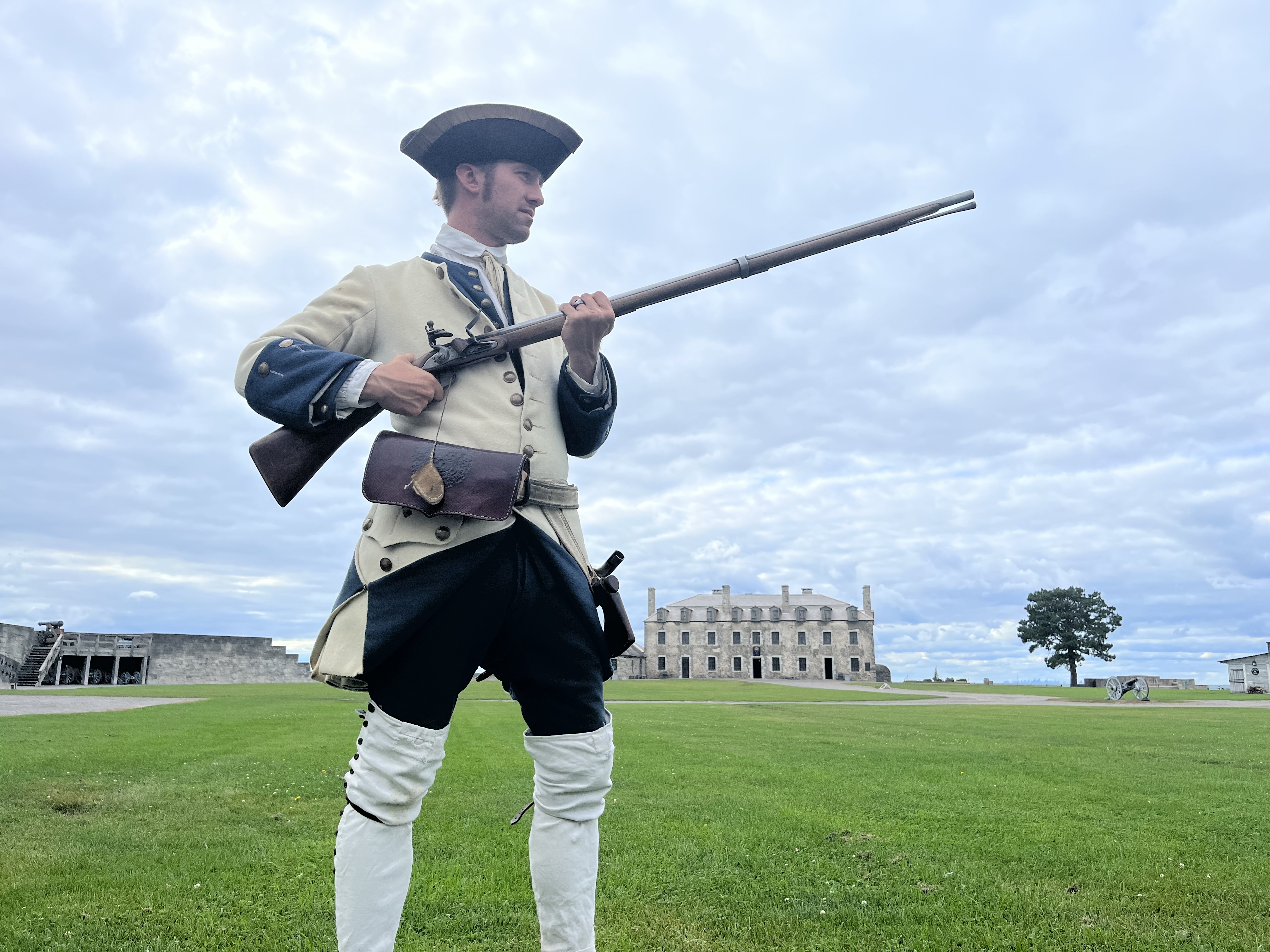
Allow me to introduce myself: My name is Derek, and I am a historical interpreter at Old Fort Niagara. It is my job to portray — in a living, breathing image — the lifestyle of a soldier in the eighteenth century.
Blog post authorDerek Schultz, historical interpreter at Old Fort Niagara.
I suppose I should begin where it makes most sense to begin; getting ready for “battle,” so to speak. In the case of our current garrison, this involves layering a linen shirt, wool socks, wool breeches, a double-layered long-sleeved wool vest, a double layered long-sleeved wool overcoat, a leather belt and cartridge box, leather buckled shoes, and a wool felt hat. Perfect for summer weather!
In 2024, New York State Parks and Historic Sites will celebrate our Centennial, commemorating the 100th anniversary of the founding of our parks and sites system. While we have incredible public properties older than the 100-year-old system, the Centennial celebrates the vital legislation that allowed us to build and expand our network of parks and sites, forging the system we know and love today.
As OPRHP Commissioner, I am reminded every day of the immense pride and enjoyment New Yorkers take in our facilities. To prepare New York State residents and visitors from around the world for the exciting year ahead, I recently embarked on a two-day journey to showcase the breadth of our parks and sites system, highlighting various activities and partnerships that make our system so unique.
Ashley Longo, an environmental educator working for New York State Parks’ Long Island Regional Environmental Education Office was awarded a scholarship opportunity to attend a Teacher and Educator’s Course at the Bimini Biological Field Station Foundation in South Bimini, Bahamas. Through her participation, NY State Parks was represented along with 13 other educators out of nearly 200 applicants. More commonly known as the Bimini Shark Lab, this world-renowned research facility was established in 1990 by Dr. Samuel Gruber and has contributed to advancing the world’s knowledge on elasmobranchs (sharks, rays, skates, and sawfish)through several research projects as well as providing educational opportunities for future scientists and the public.
When you hear the word, “Shark” what comes to mind? Does it evoke a sense of fear in you? Does it stimulate your curiosity? Is your immediate first thought about how they are so negatively portrayed in the media and how unjust it is?
Sharks are some of the most talked about animals on the planet, often portrayed in a very negative light. With increasing sightings of them off Long Island in the past couple of years, misinformation and public fear can spread, something first started by the movie Jaws. It should be made clear, however, that increased shark sightings are actually a sign of a healthier ecosystem!
Blog post author Ashley Longo, an environmental educator working for the Long Island Regional Environmental Education Office in front of the Bimini Shark Lab sign in South Bimini, Bahamas.
Sharks (rays & chimaeras too), the elasmobranchs, are one of the most advanced groups of animals in the world, with specialized sensory adaptations, reproductive methods, and migration patterns not seen in other living creatures. More than half the species of sharks in the world don’t grow bigger than three feet (one meter) and most live in the waters of the deep sea, never seeing the ocean’s surface or a human being. There’s a lot more to sharks than many people realize, including myself, and I am excited to be bringing that knowledge back to the beaches of Long Island after being at the Bimini Shark Lab in the Bahamas.
Life at the Bimini Shark Lab
South Bimini, Bahamas is located alongside the Gulf Stream some 46 miles from Miami, Florida. The level of biodiversity is high surrounding Bimini and because of this many shark species can be found around Bimini and the rest of the Bahamas. Many shark species will migrate between Bimini and the United States. In 2011, the Bahamas declared their waters as a shark sanctuary, becoming the 4th country in the world to do so at the time. The value of a shark alive is worth far more than a dead shark in the Bahamas, with the diving industry there being among the highest earning in the world. As the Shark Lab has so cleverly coined, the Bimini is not infested with sharks, but INVESTED!




 New York State Parks and Historic Sites Blog