It is almost time to put 2020 in the books, and bid farewell to a year that brought so much uncertainty and tribulation into so many people’s lives.
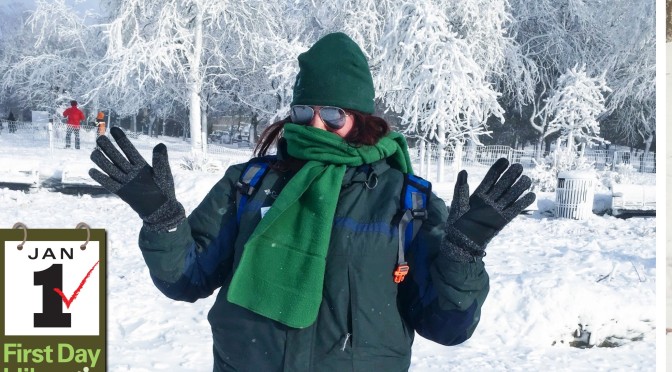
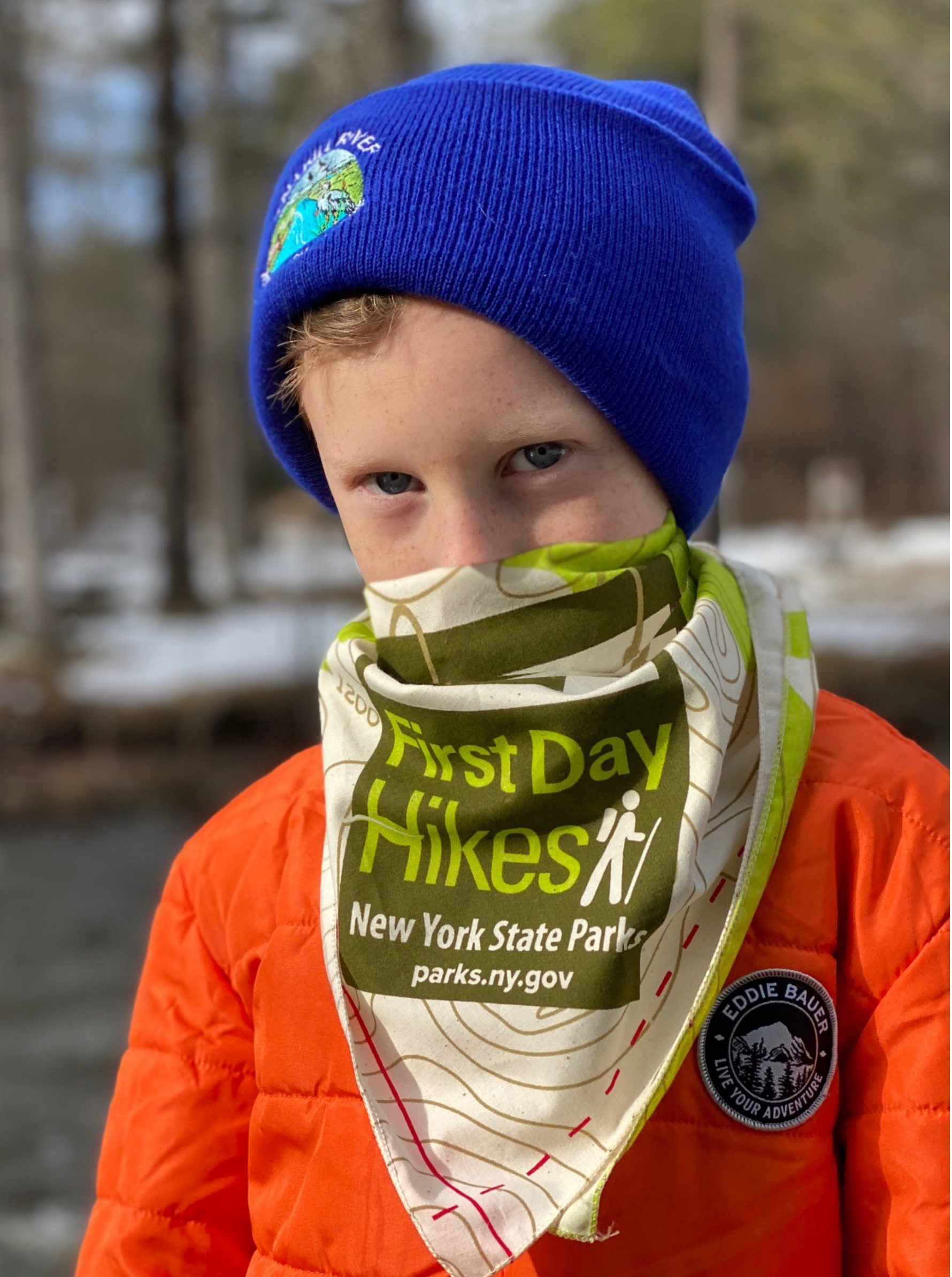
And to help New Yorkers do that, State Parks is again encouraging people to take part in the First Day Hikes program, now marking its tenth year in New York.
Of course, because of the ongoing COVID-19 pandemic, this series of outdoor events will be a little different than before, with the addition of many self-guided hikes, requirements for social distancing, masking and capacity limits.
So, it is more important than ever to check in advance with any specific site that you may be interested in and pre-register if necessary, since restrictions on staff- and volunteer-guided events may limit the number of people who can attend.
The walks, hikes, and self-guided options are family-friendly, and typically range from one to five miles depending on the location and conditions.
So, to give people more options for 2021, many First Day events will now be held multiple times over the course of the first weekend in January.
Hikes are being offered at more than 60 state parks, historic sites, state Department of Environmental Conservation lands, wildlife areas, Forest Preserve trails and environmental education centers.
Click here for a listing of Parks events, or use this interactive map below to locate hikes.
As New Yorkers adapted to COVID restrictions this year, which limited many forms of indoor activities, they turned to healthy and safer outdoor alternatives on hiking trails at State Parks and other state lands.
State Parks Commissioner Erik Kulleseid, who last year took part in a First Day Hike at Thacher State Park, is again encouraging New Yorkers to take part in this annual family-friendly event.
According to the Commissioner, “First Day Hikes have grown into a popular tradition for many New Yorkers and we look forward to welcoming families and friends out on the trail at many of our parks and historic sites. While this year’s program may look a little different from previous events, exploring the outdoors is still the perfect way to enjoy the winter landscapes, unwind with loved ones and kick off the coming year.”
As always with winter hiking, remember to dress warmly and in layers, while keeping in mind this old Scandinavian saying: “There is no such thing as bad weather, only bad clothing.”
And with snow and ice possible on many hiking trails, make sure to use proper footwear, and consider adding traction devices, like Microspikes, for additional stability.
Whether maintaining a safe distance in a group or hiking on your own, remember that you are still part of something that is happening across the U.S. in all 50 states, and dates back to the initial First Day Hikes that started in Massachusetts in 1992.
So, get outside, keep safe, and let’s ring in 2021 to welcome better days ahead!
Holiday cooking is one tradition that most people partake in, even those who normally order take-out or nuke something frozen for dinner. Family recipes are unearthed from the back of the recipe box or perhaps your junk drawer. The house fills with the nostalgic smells of favorite treats. Recipes are often our most evident tie to our heritage and historians can glean a lot from one family recipe.
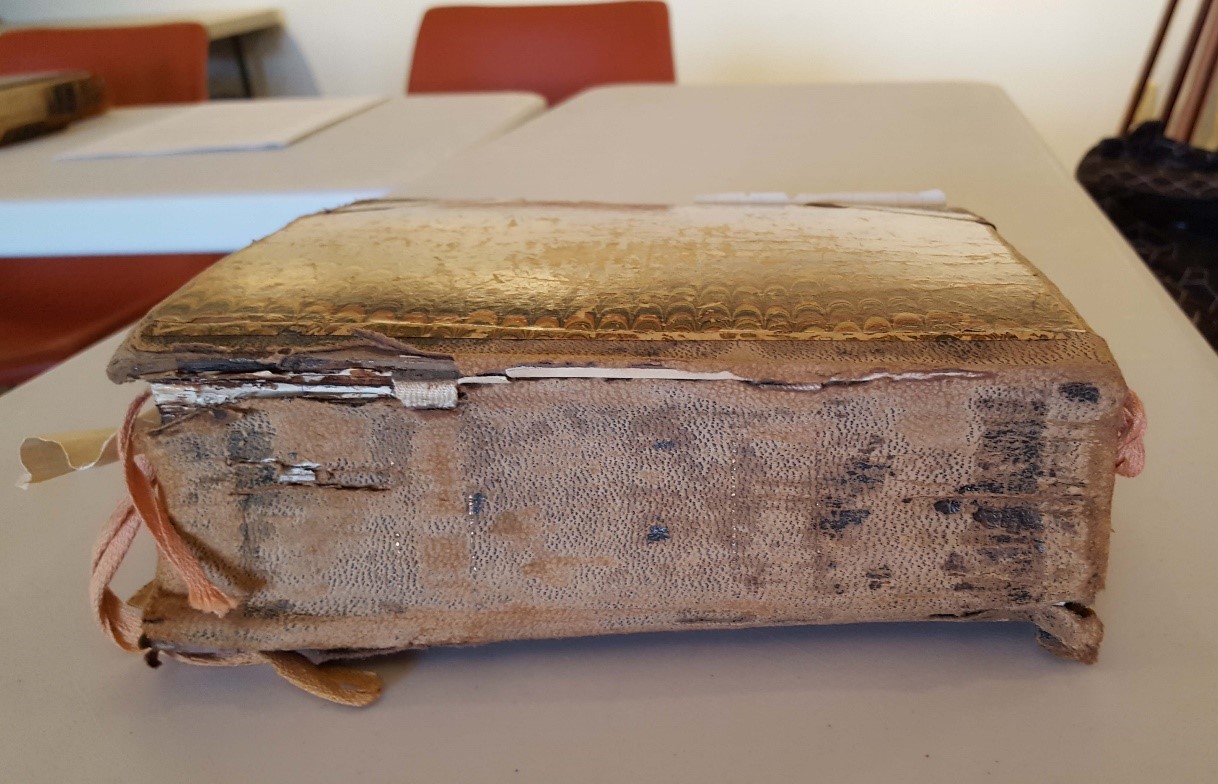
Lorenzo State Historic Site in Cazenovia has their own treasure trove of handwritten recipes from the families who have lived there. Spanning the early 1800s to the early 20th century, these cookbooks contain both handwritten recipes and clippings from newspapers. In addition to food, there are also entries for home remedies for health and cleaning.
Recently, these cookbooks were digitized so that the books themselves, which are quite fragile, no longer need to be handled and so can be protected from accidental damage. Researchers will be able access the books digitally, helping us better understand generations of the Lincklaens, Ledyards, and Fairchilds who lived at Lorenzo. Established in 1807, the Federal style home of John Lincklaen, Holland Land Company agent and founder of Cazenovia, Lorenzo was continually occupied by the family and its descendants until the property was conveyed to New York State in 1968.
One of the fragile cookbooks that was digitized so it now can now be handled as little as possible. The cookbooks at the Lorenzo State Historic Site have been one of the most requested items for research.(Photo Credit – NYS Parks)
What can historians learn from recipes over the years? The foods we eat can tell us about media, transportation, technology, and trade.
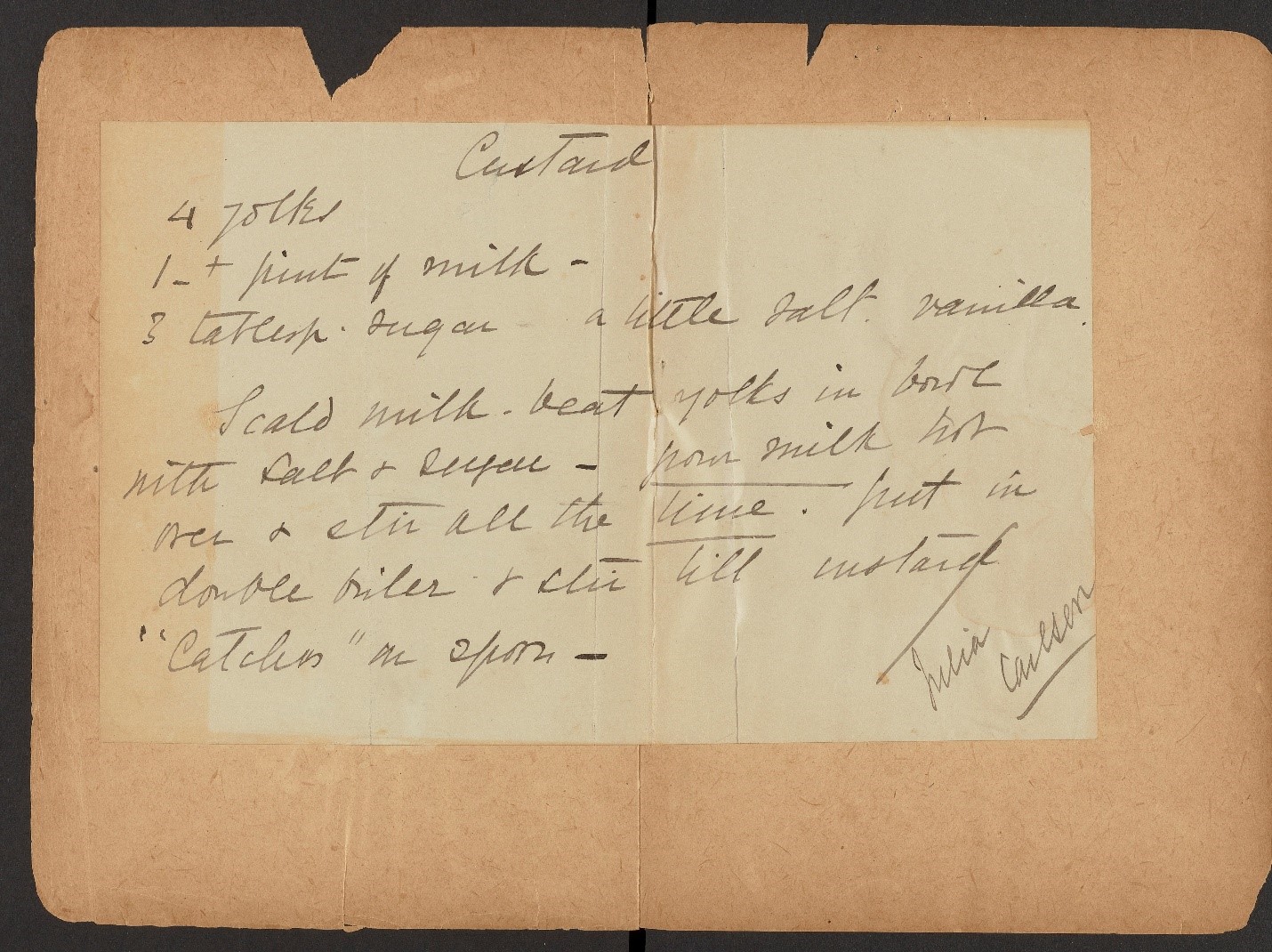
For example, vanilla was used sparingly prior to the mid-19th century. This fragrant spice is native to central and South America and vanilla orchids were brought to Europe and Africa through colonizers of the 16th, 17th and 18th centuries, but without successful cultivation of the fruit.
That all changed in 1841, a young enslaved man named Edmond Albius, living on the island of Réunion, a French island off the east coast of Madagascar in the Indian Ocean, developed a hand pollination technique for the orchid, which only blooms for 24 hours. With the agricultural production of vanilla beans now made possible, the vanilla industry was catapulted around the world, which made the spice much more affordable. Cookbooks started to fill with this popular flavor by the end of the 1800s. Since the plants are still hand pollinated today, vanilla is one of the most expensive spices, second only to saffron. Prior to vanilla being widely available, many foods were seasoned with rose water or orange flower water.
This hand-written custard recipe comes from one of the cookbooks and uses vanilla. It is likely that this recipe dates from the second half of the 19th century. It is from a cookbook estimated to have been kept between 1910 and 1917 by Helen L. Fairchild. (Photo Credit – Lorenzo State Historic Site)
Many earlier recipes used spices that are often associated with the holidays today such as nutmeg, ginger, allspice, cardamom, and candied citrus peel. These ingredients were imported to the United States and Europe at significant expense and added interest and flavor. Nutmeg was originally imported from Indonesia. The Dutch, in addition to colonizing New Netherland, which became New York when England took control, also colonized Indonesia, primarily for the profitable spice trade. Nutmeg continues to be an important ingredient in both sweet and savory holiday recipes. How spices are used also gives a hint to your family’s heritage.
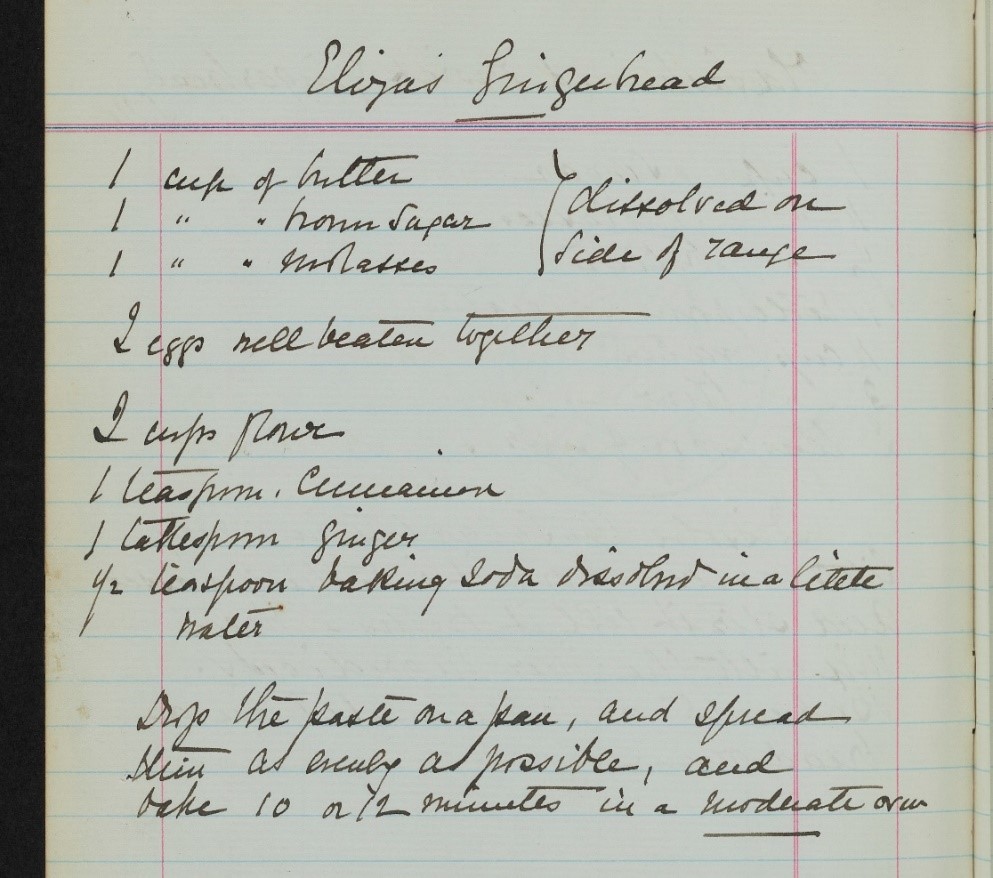
Also found in the cookbook kept by Helen L. Fairchild, “Eliza’s Gingerbread” recipe looks quite familiar to modern bakers. The earliest know gingerbread recipes originated in ancient Greece. Other recipes date to 10th century China. Europeans were eating gingerbread by the late Middle Ages, and its appeal continues to this day.(Photo Credit – Lorenzo State Historic Site)
Not all the recipes in these books seem palatable to modern audiences. There are many ingredients that have gone out of fashion. Suet, the rendered fat of beef, is an ingredient in many puddings. Tongue, calves head, and terrapin (turtle) are also present in recipes. Folks were also willing to put just about anything into gelatin including little ham balls seasoned with cayenne pepper.
Whether these dishes were daily fare or for special occasions is hard to decipher from these cookbooks, although terrapin became quite popular by the end of the 19th century until overharvesting made the creatures quite rare and expensive.
It is interesting to note that a few recipes are repeated in more than one cookbook. Perhaps each generation of women passed down the recipes to the next. The recipes might have been recopied in a new book when the old one deteriorated.
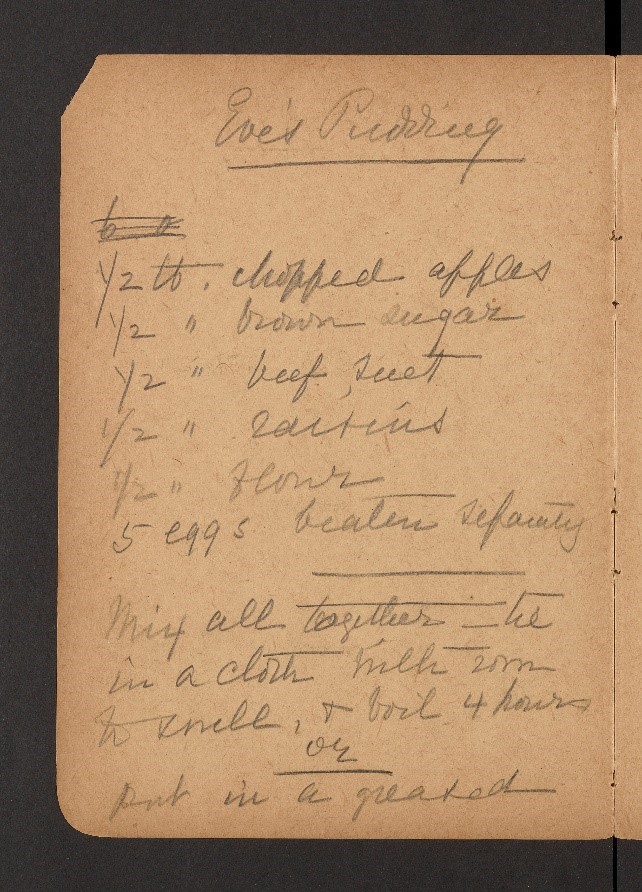
Eve’s pudding recipe is for a traditional pudding much like those still eaten during holidays in the United Kingdom. Puddings were a common desert, especially before the widespread availability of leavening agents like baking soda and baking powder. This pudding contains apples and raisins, but other examples could have included other dried or candied fruits, breadcrumbs instead of flour, nutmeg, and, of course, some brandy for a holiday glow.(Photo Credit – Lorenzo State Historic Site)
Lorenzo State Historic Site can now keep these recipes safe and accessible for many generations to come. And that is something you can do at home, too.
Which recipes will you be serving at your holiday table? What do those recipes say about your family’s heritage or status?
Recipes are considered primary source documents if your grandmother or great-grandmother was the first to write it down. How will you preserve this tradition? Share a recipe with your family and friends. Tell the stories that surround your memory of that food. This is intangible history, but just as important as your recipes. Stay safe and well fed this holiday season.
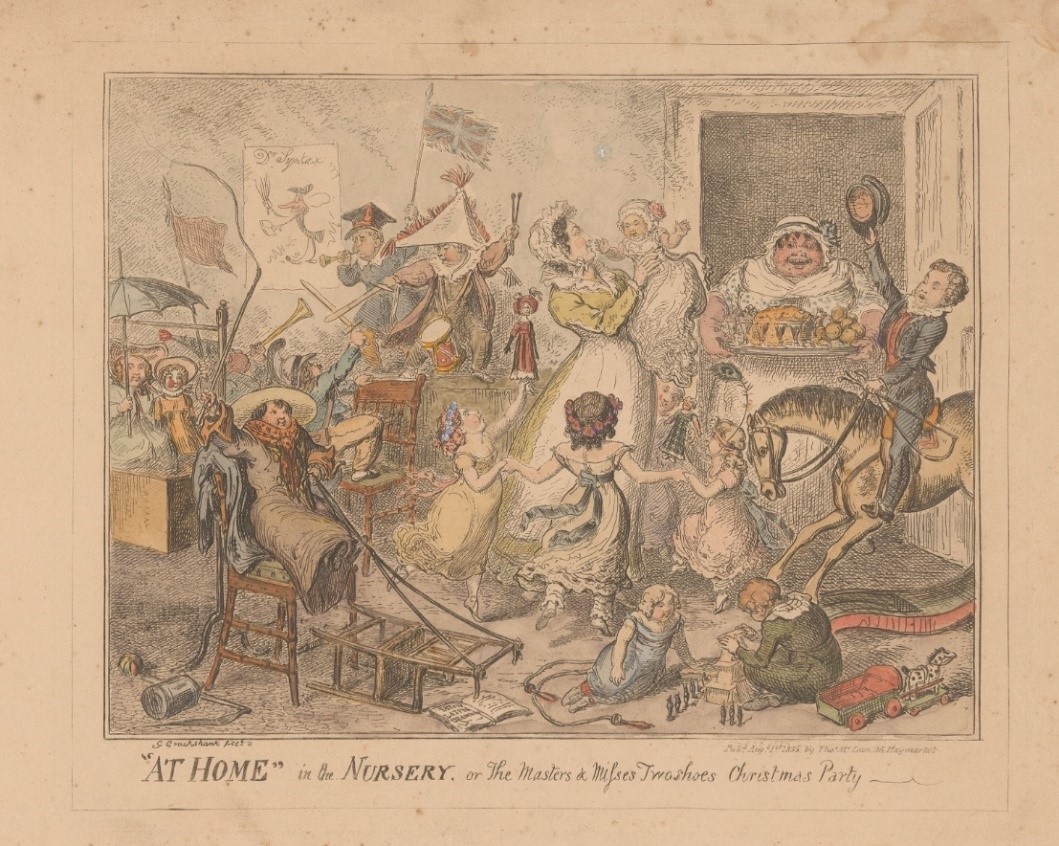
This satirical print made by George Cruikshank in 1835 is titled At Home in the Nursery, or The Masters and Misses Twoshoes Christmas Party. A popular English illustrator in the mid-19th century, Cruikshank portrayed the chaos of the nursery at Christmas that is well understood by any parent of small children. Of course, a tray of tasty treats is being brought into for their enjoyment. (Photo Credit – Rijksmuseum)
Cover Shot: The first commercial Christmas card, printed in 1843 in England and sent from John Callcott Horsely to Henry Cole, shows folks dining as a symbol of the holidays. In the same way so much of our celebrations revolve around food, with recipes often a cherished tradition passed to each generation. (Photo Credit – Victoria and Albert Museum, London)
Post by Amanda Massie, Curator at Bureau of Historic Sites, Division for Historic Preservationat NYS Parks.
Want to have some fun at home with historic recipes from Lorenzo State Historic Site? Here are some to try… And Happy Holidays to you and yours from New York State Parks!
With a fire-damaged dwarf pitch pine forest at the Sam’s Point Area of Minnewaska State Park Preserve rebounding slower than expected from a devastating wildfire, a State Parks greenhouse in the Finger Lakes is helping to grow a new generation of trees.
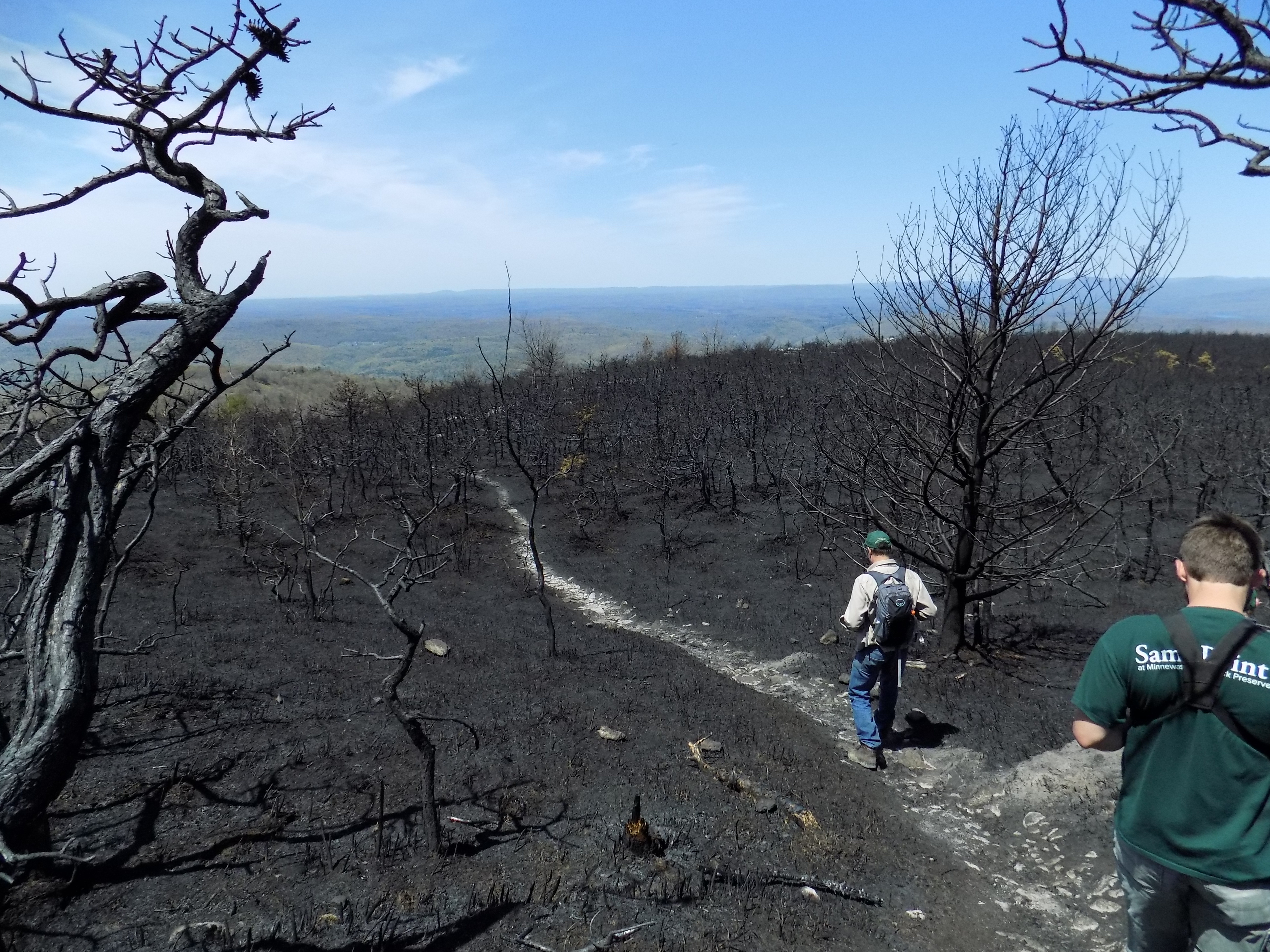
Since fire burned more than 2,000 acres in April 2016 at Sam’s Point, State Parks staff there has been monitoring the health of this globally rare forest ecosystem in Ulster County.
This high ridge in the Shawangunk Mountains is predominantly pitch pines (Pinus Rigida), a fire dependent species of conifer. The pitch pines at Sam’s Point are dwarfed, which means they can be hundreds of years old, while still only roughly as tall as a person.
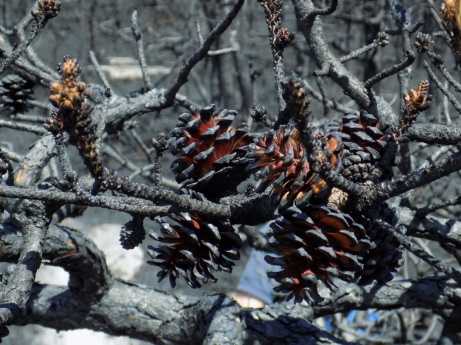
Pitch pines have serotinous cones, which means the cones require heat from fire in order to open protective scales and cast seed. These trees also have non-serotinous pine cones, which release seeds from November into the winter and do not require heat. Pitch pines take two years to fully develop cones with mature seeds, and the serotinous cones can remain sealed for years until the outbreak of fire.
Burned pitch pine cones at Sam’s Point after the 2016 fire. (Photo credit – Lindsey Feinberg)
The Sam’s Point fire burned hot and quick, which left parts of the duff soil layer still covering underlying mineral soil that is necessary for pitch pine seeds to germinate into seedlings. Duff is made up of partially and fully decomposed organic matter, including pine needles, branches and mulch.
While these exposed pitch pine seeds released after the 2016 fire were a nutritious bonanza for red squirrels, turkeys, and other seed-eating animals, that also meant fewer pitch pine seedlings were taking root to replace trees that had been lost.
Pitch pine forests require regular moderate fires to expose the proper mineral soil and regenerate successfully. The Sam’s Point fire was the first large fire in this area in 70 years and had some exceptionally hot patches. While pitch pines are resilient to fire due to extra thick bark, an especially hot and large fire like 2016 can badly damage or simply incinerate the trees.
During the summer of 2020, it was determined that 77 percent of the pitch pines had died within 20 different plots in the burned zone being monitored by Parks staff. This was a 17 percent increase from an initial survey done in 2016, where 60 percent of the pitch pines were deemed lost to fire damage.
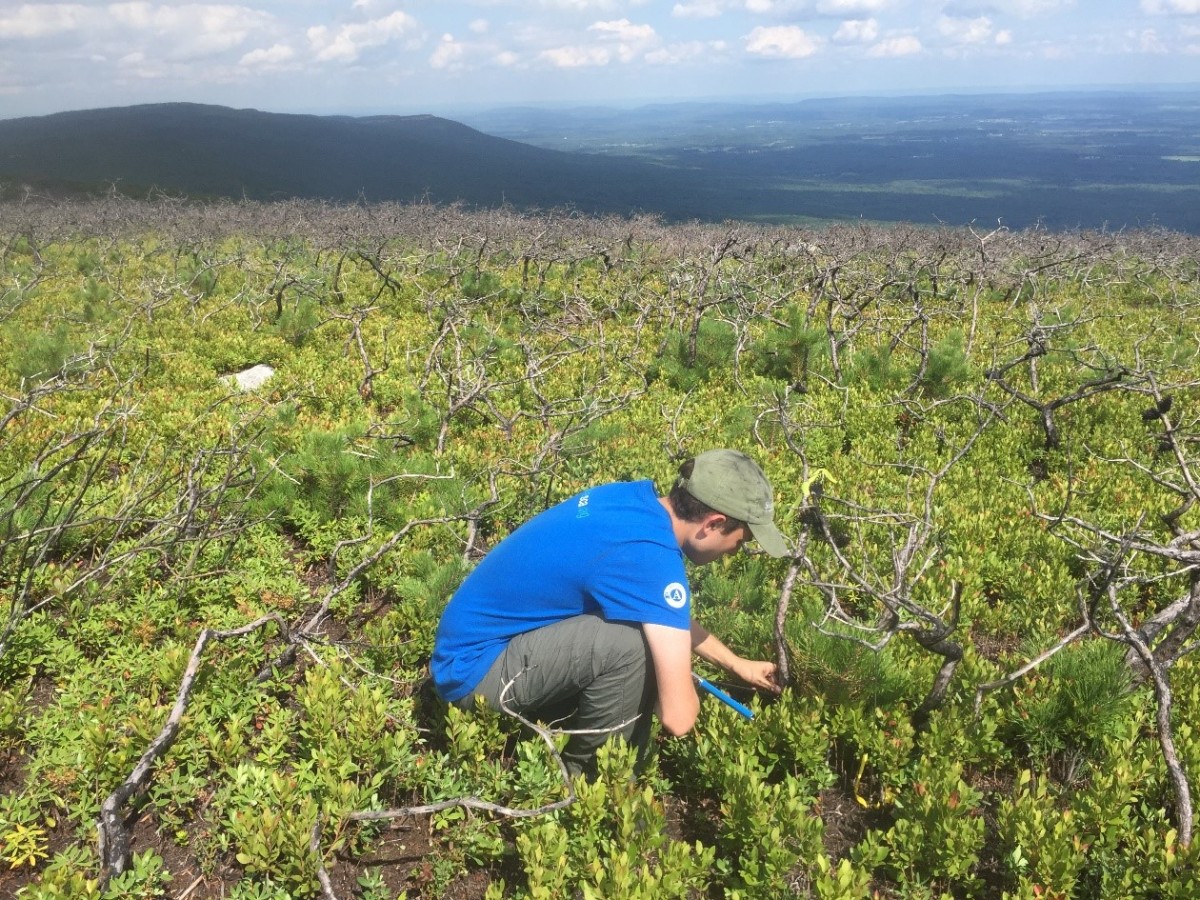
In the immediate aftermath of the fire, State Parks staff went into the burned zone along the Indian Rock path to survey the damage.
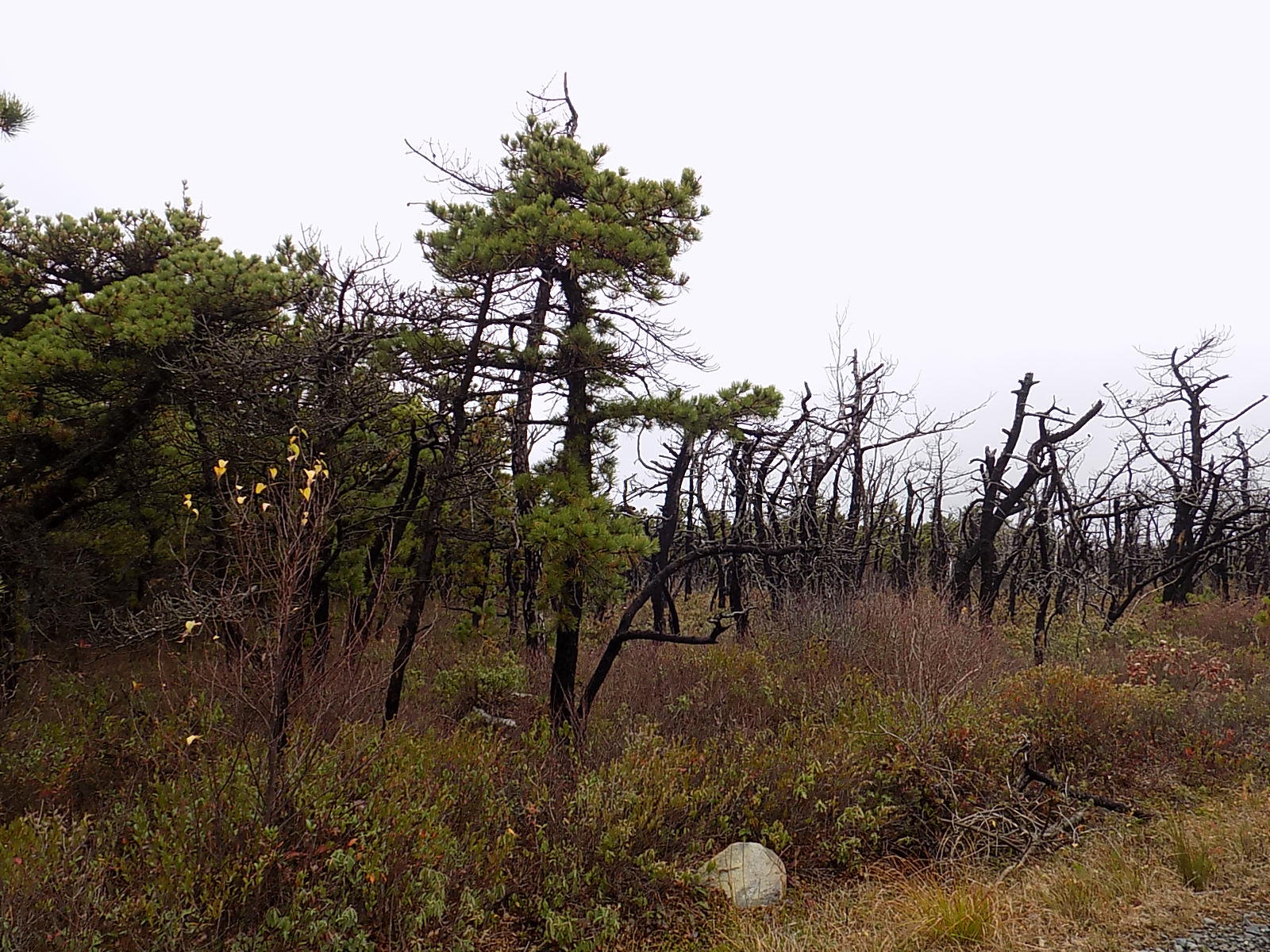
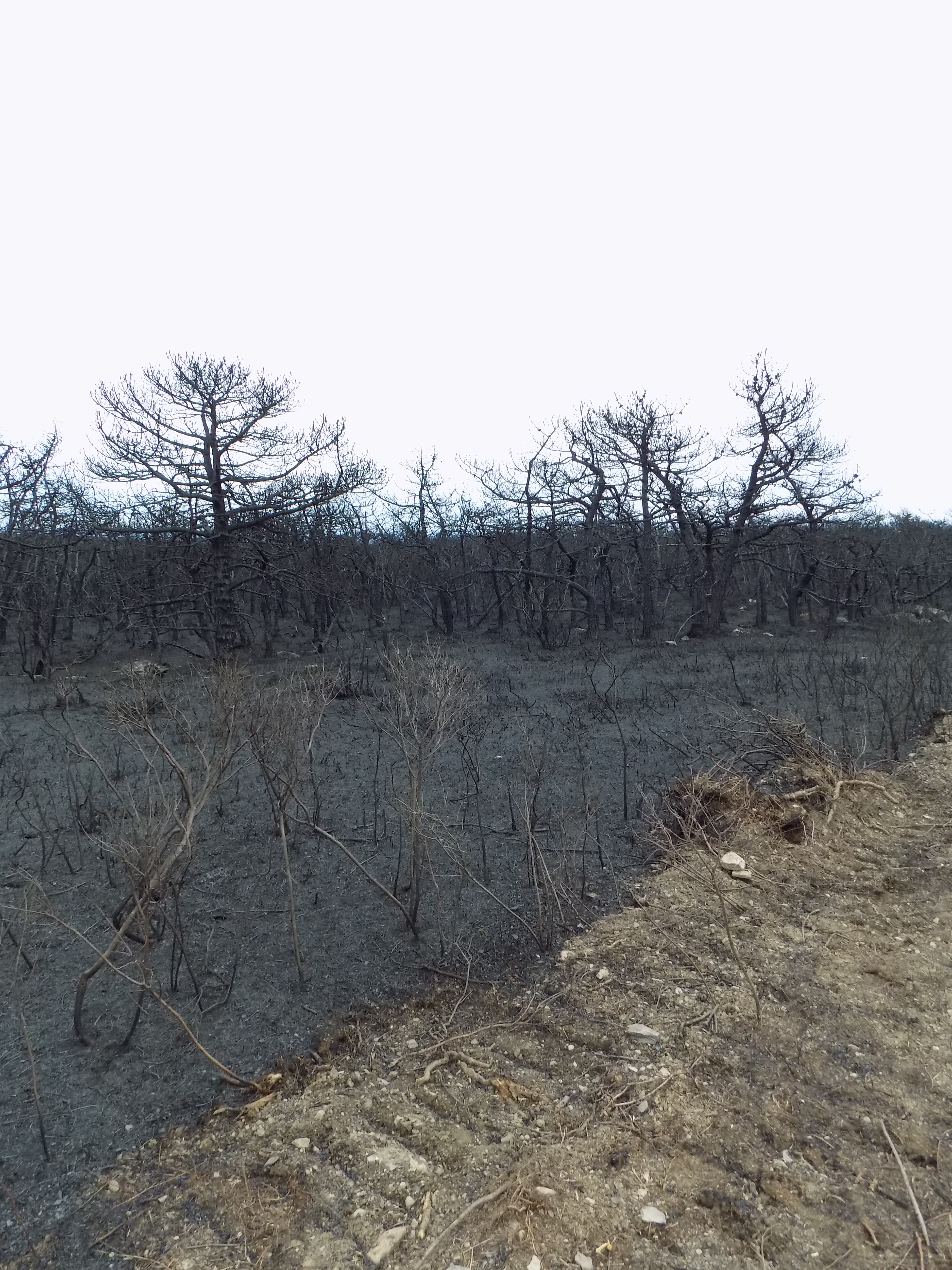
In this photograph taken in November 2020, the extent of the fire still shows in this area where pitch pines remain dead (left).
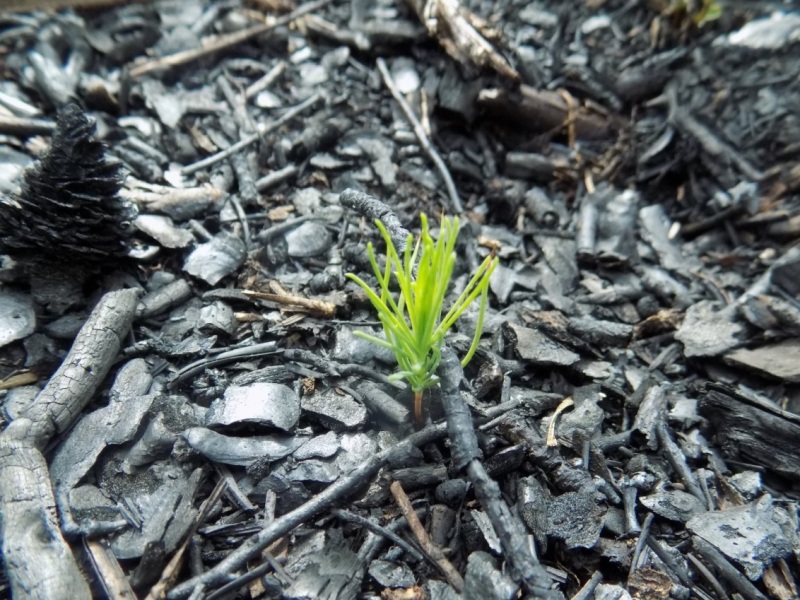
At the same time, fewer seedlings were growing in the aftermath of the fire. Monitoring of the forestry plots has found pitch pine seedling growth peaked in 2017 with 85 seedlings but has continually declined since then. This year only 27 seedlings were found within those 20 plots.
And with fewer trees and lagging replacement growth, it was feared that bird habitat was being lost. Minnewaska State Park Preserve is a designated state Bird Conservation Area as an exceptional example of a high elevation forest community with a diverse forest dwelling bird population.
It also is notable that the duff layer at Sam’s Point has increased by almost three-quarters of an inch since the fire. This is due to a lack of any fire succession since 2016. Deeper duff means that the regrowth of this globally rare pitch pine forest will be very slow and difficult, as seedlings continue being inhibited from taking root.
Right after the fire, staff at Sam’s Point wrote a Burned Area Recovery Plan (BARP), using a template created by the National Park Service. Several important actions are outlined in this plan included:
Creating and monitoring 20 forestry plots to study pitch pine regeneration
Monitoring impact of the fire on songbirds which depend on the unique trees and understory found at Sam’s Point for their breeding grounds in the spring through annual species counts
Monitoring and mitigating new fire breaks for erosion, invasive species, and blocking off firebreak and recreational trail intersections with plantings or brush
This work has been carried out carefully by Sam’s Point staff and regional stewardship staff. Assistance was provided by Student Conservation Association Hudson Valley Corps interns as well as interns and staff from regional universities and colleges.
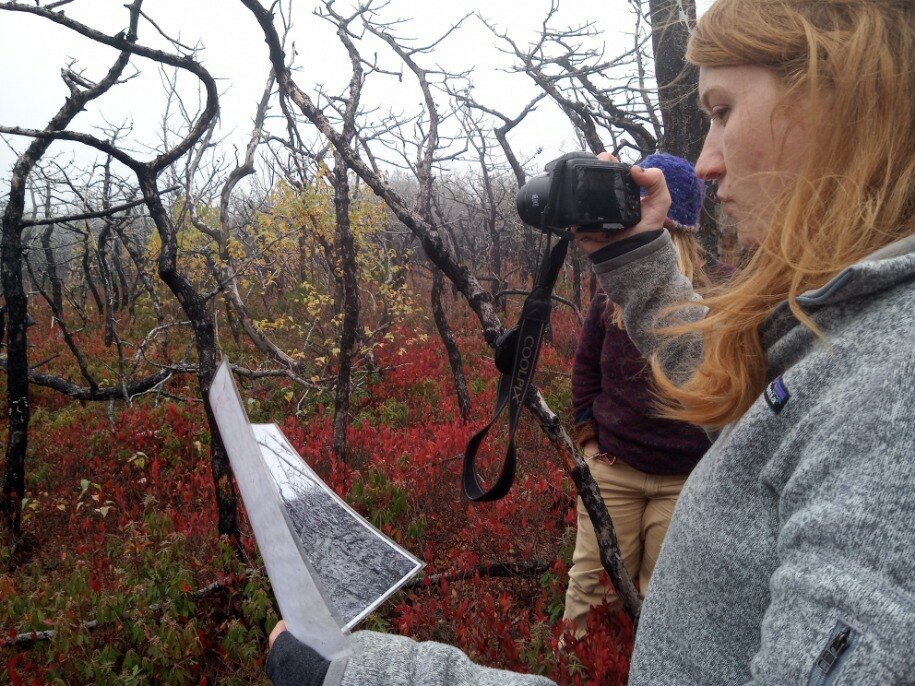
Daphne Schroeder, a Parks staff member from Sam’s Point, takes part in a survey of one of the burned areas.
In early 2019, the Plant Materials Program Staff at Sonnenberg Gardens & Mansion State Historic Park in the Finger Lakes region, reached out to Palisades regional Stewardship staff to discuss restoration projects. Out of nine proposed Palisades projects, two projects were to grow pitch pine seeds collected from Sam’s Point to help regenerate this rare forest.
Sonnenberg Plant Materials Program Lead Technician Dave Rutherford and staff visited Sam’s Point and gathered pitch pine cones in mid-November 2019.
The cones were carefully selected from an area near Lake Maratanza. Specimens needed to have ‘scales’ fully closed, and have a light brown, healthy luster. Older, closed pitch pine cones are dull and grey, so to ensure viability the seeds, these cones were not collected. No more than 20 percent of the cones were collected from any individual tree. Cones were cut from the base of the tree and kept in a woven plastic bag until it was time to process them.
Back at Sonnenberg, cones were heated in small batches at 400°F to simulate the effect of a fire. Crackling and popping as resin softened and melted, cones opened up their protective scales. After the cones had cooled, staff at Sonnenberg turned each one upside down for seeds to fall out for collection.
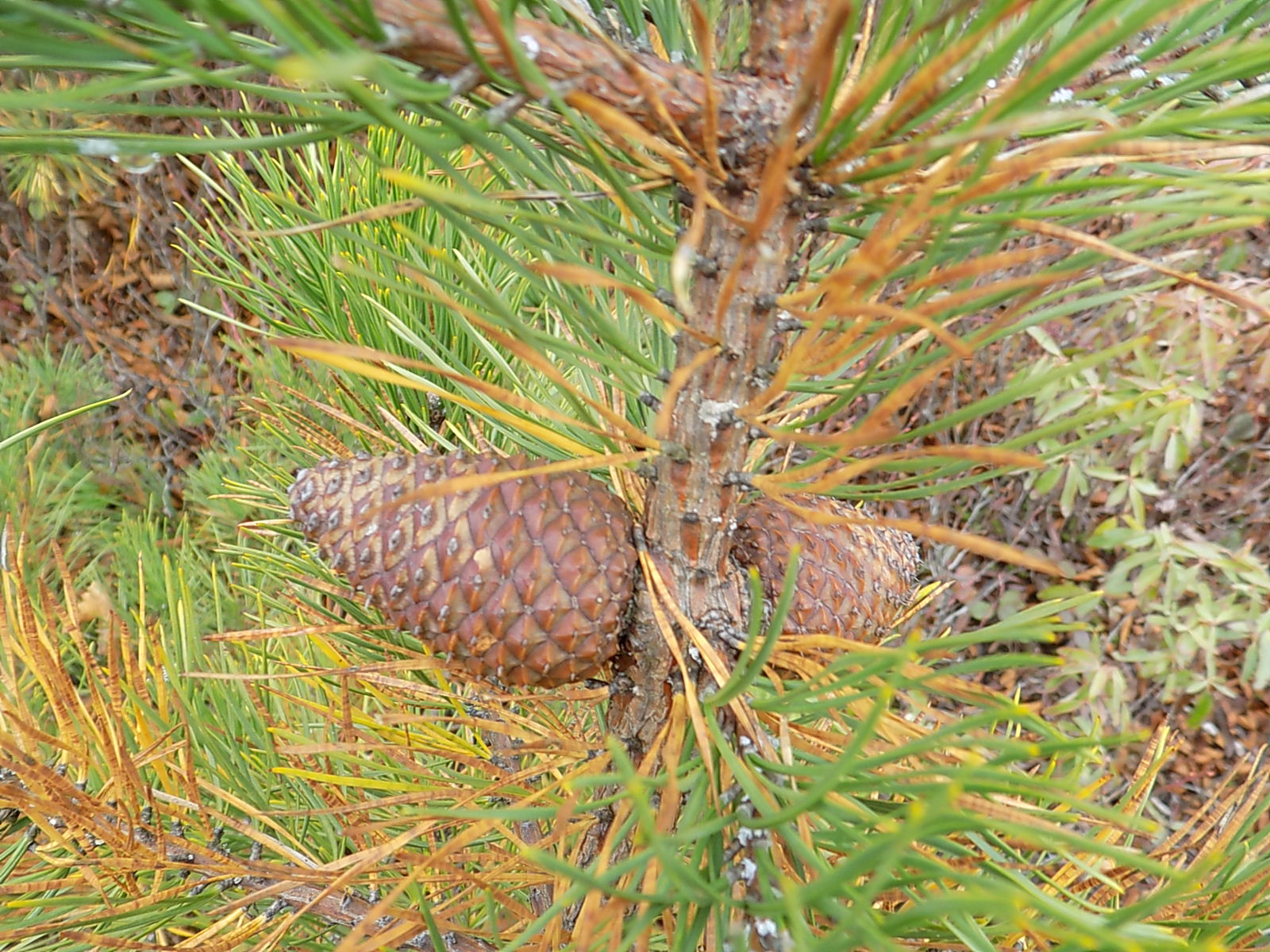
A healthy, mature pitch pine cone suitable for collecting for seed.
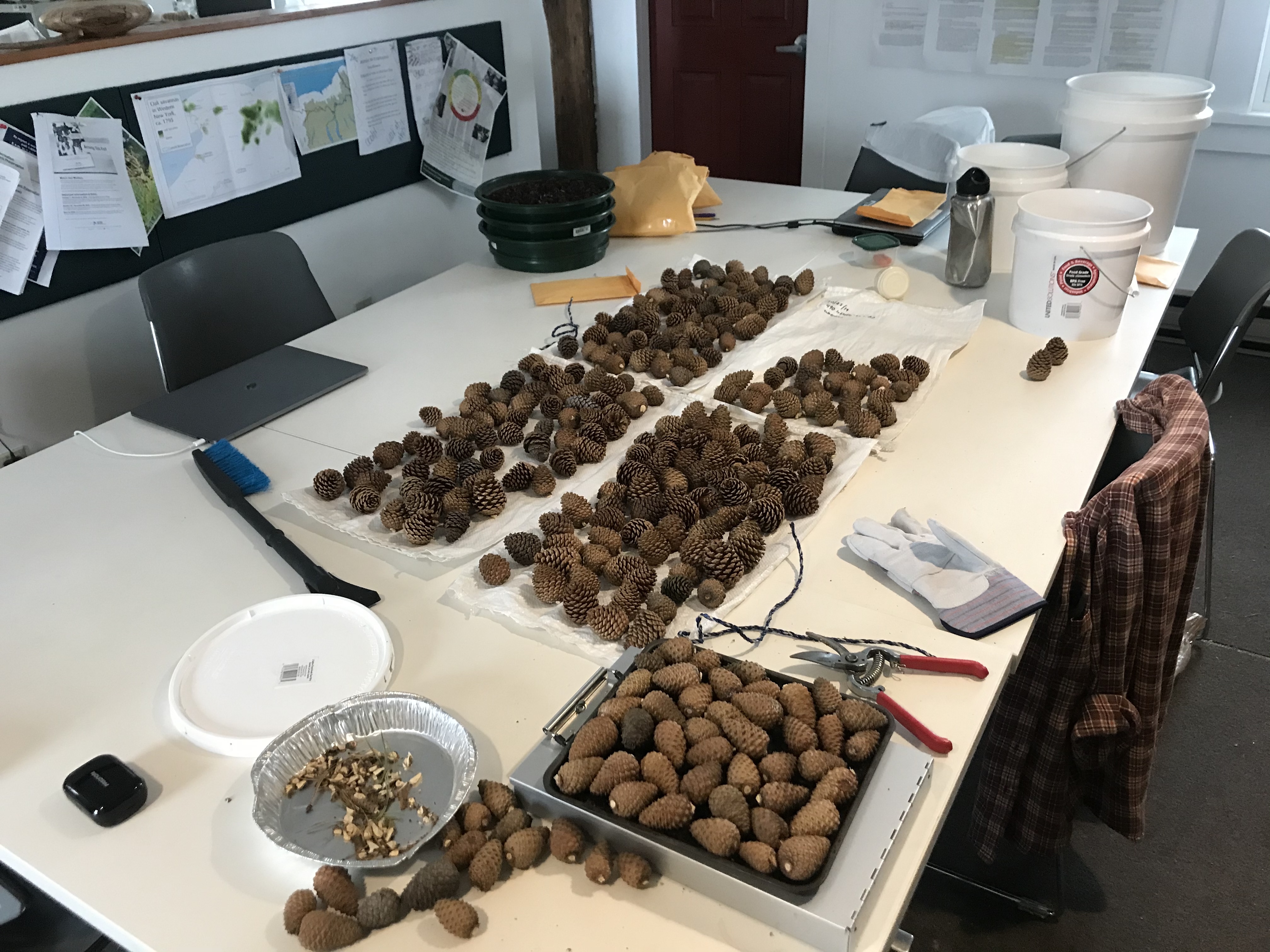
Pitch pine cones arranged for seed harvesting at Sonnenberg Mansion & Gardens State Historic Park.
The heat is on…
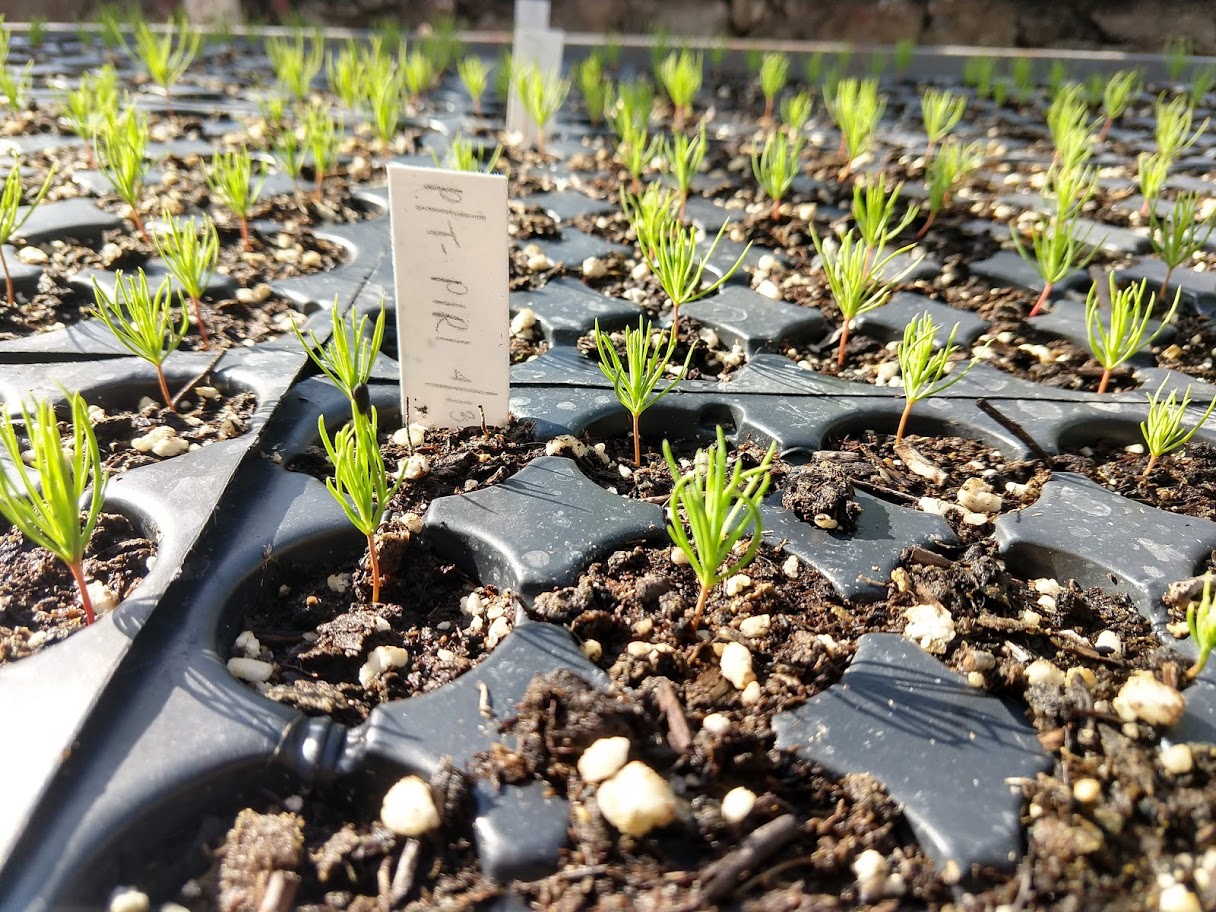
These efforts resulted in about 10.5 ounces of seeds, estimated to contain more than 41,000 individual seeds, each one about two-tenths of an inch long. Plant Materials staff started growing some seeds in April of 2020, and now have more than 500 pitch pine seedlings in their greenhouse.
Learn more in the NYS Parks Blog about the work being done at Sonnenberg Mansion and Gardens to grow native plants as part of Parks’ mission of responsible environmental stewardship:
State Parks contain a diversity of habitats, from forest and fields, to shrub swamp, marshes and streams. All these landscapes support a wide variety of native plants. As part of efforts at Parks to restore land and protect biodiversity, it is important to have the right plants for the right habitats in order to support…
Another area of degradation at Sam’s Point due to fire damage are fire breaks, especially when created by a bulldozer. Crews made these breaks by removing trees and other potential fuel from the path of the fire to contain its spread.
Fire managers who worked on the Sam’s Point fire added eight miles of new fire breaks around the park preserve using bulldozers. This equates to adding eight miles of new and hastily planned roads in a semi-wilderness.
A fire break made by a bulldozer in the immediate aftermath of the fire. Breaks were made to remove potential fuel from the path of a fire.
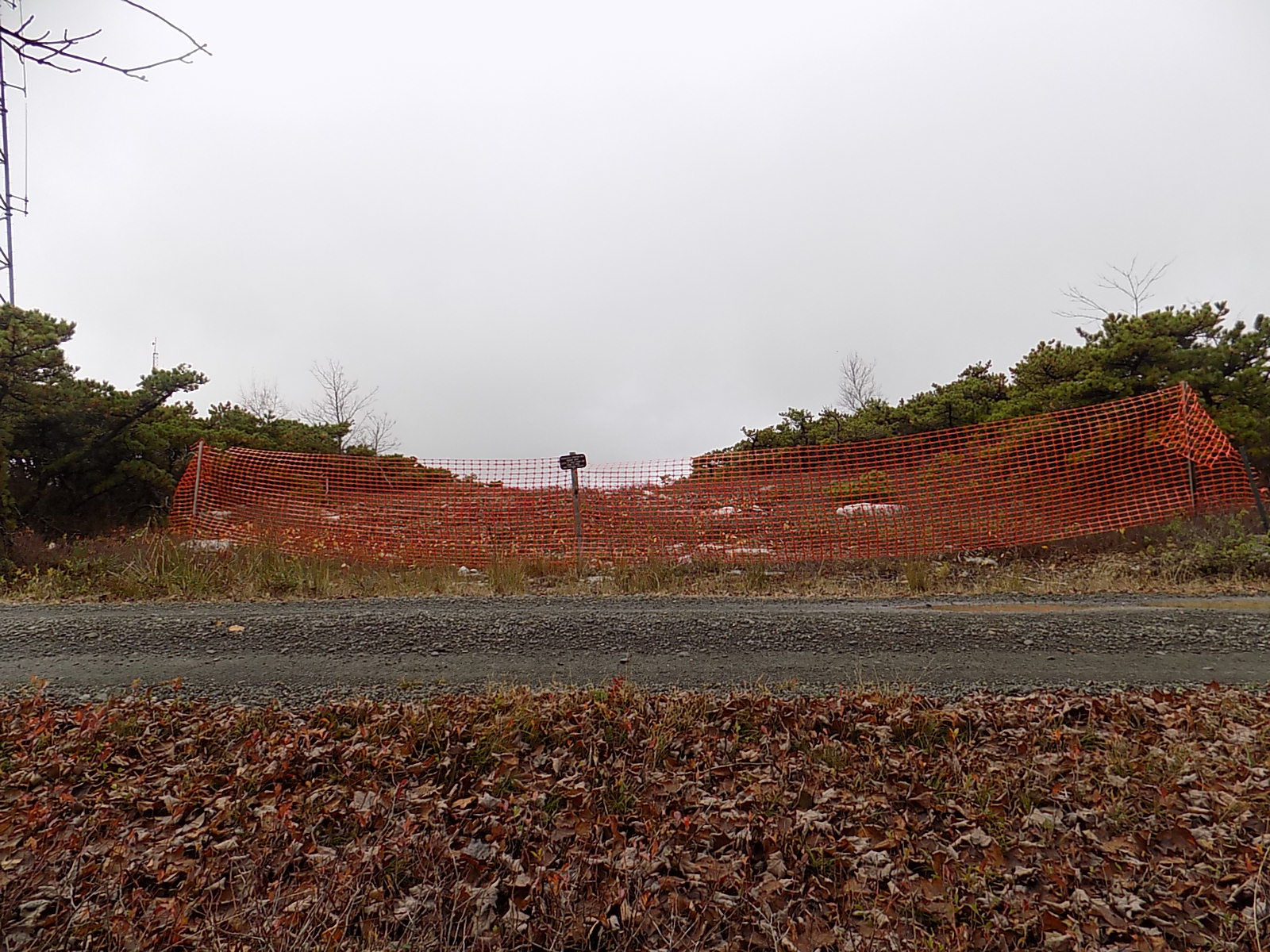
One of the fire breaks at Minnewaska created by bulldozers to contain the 2016 fireis blocked off to discourage hikers from using it.
Potential impacts of concern from these dozer breaks are erosion, spread of invasive plants and creation of new, unplanned, travel corridors by hikers within the park preserve.
Existing recreational carriage roads do serve as a natural fire break, but new dozer lines had to be made to control wildfire spread. There are a few places where dozer lines intersected with the park preserve’s carriage road and trail systems. These fire breaks are now open, linear, areas with knee high shrubs (huckleberries and blueberries) growing amongst the rocky duff layer.
This is potentially a perfect storm for invasive species to take hold, if people are out hiking on these new scars. People are a powerful vector for transporting invasive plant species. These dozer lines also provide a clearing for people to wander off in and get lost or injured. The intersections between fire breaks and carriage roads are a perfect place to establish re-growth of pitch pines, to hide these open scars.
These seedlings now growing at Sonnenberg will be a year old in April 2021, and hopefully can be planted at Sam’s Point sometime next year as the final piece to our restoration plan after the Sam’s Point fire. These seedlings will go into dozer break scars and hot spots.
It is important to note that because the seeds were collected from the globally rare pitch pine forest at Sam’s Point, the native biome is preserved. Once these seedlings are planted, these trees will be growing for hundreds of years, eventually blending in and keeping this forest intact and healthy for generations to come.
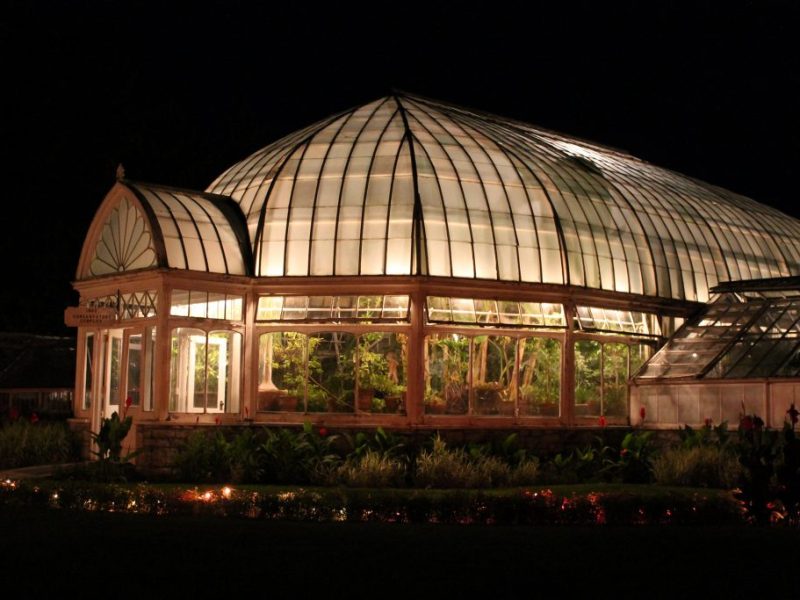
The new pitch pine seedlings growing at Sonnenberg’s greenhouse in preparation for being planted at Sam’s Point Area in 2021.
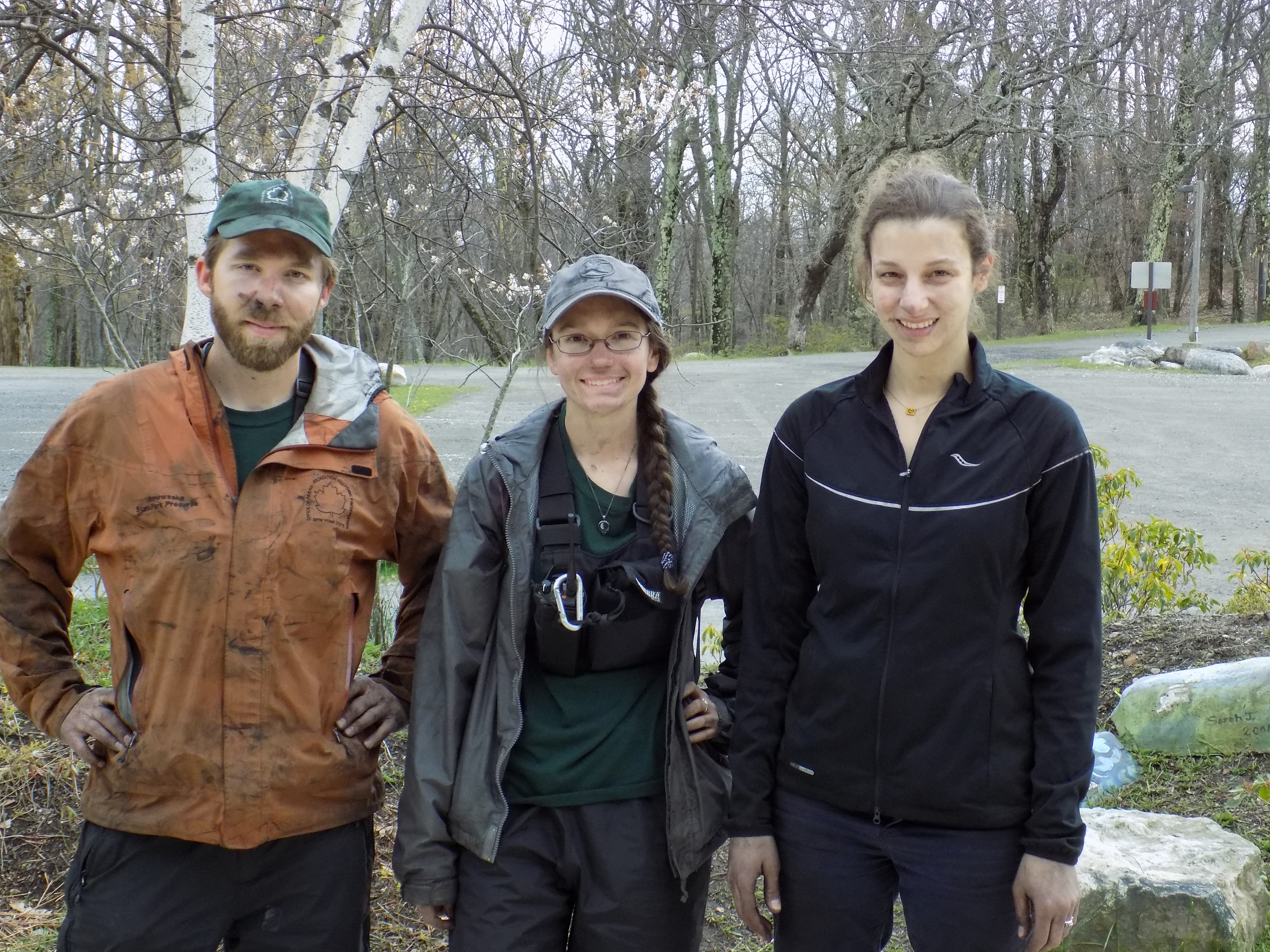
Working in fire-burned areas can result in a bit of soot here and there, as these three Parks staffers show after a day doing surveys at Sam’s Point.
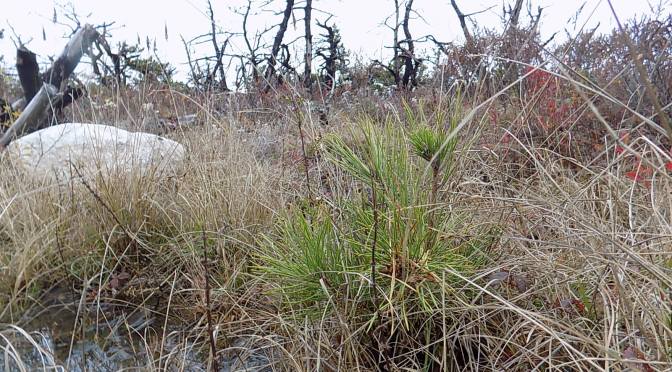
Cover shot – Pitch pine seedlings grow at Sam’s Point Area. All photos from NYS Parks.
Post by Rebecca Howe Parisio, Interpretive Ranger, Sam’s Point Area of Minnewaska State Park Preserve.
Learn more about the immediate aftermath of the 2016 fire at Sam’s Point and initial signs of recovery in the year following in these posts from the NYS Parks Blog:
Text and photos by Lindsey Feinberg, Student Conservation Association Intern at Sam’s Point Please ask permission to use photos. Located within Minnewaska State Park Preserve is Sam’s Point, an area of unique ecological significance encompassing roughly 5,000 acres in the Shawangunk Mountains of southern New York. Toward the end of April, during a particularly dry…
In April 2016, a wildfire engulfed around 2,000 acres of the Sam’s Point Area of Minnewaska State Park Preserve in the Shawangunk Mountains. The “Gunks” (a nickname for the Shawangunks) are well-known not only for climbing, but also for the globally unique community of high altitude dwarf pitch pine barrens which hold some interesting and…
The Adirondack Park is often considered one of the most pristine, beautiful, wild places in New York, if not within the entire eastern forests of America. It is home to vast forests and rolling farmlands, towns and villages, mountains and valleys, lakes, ponds and free-flowing rivers, private lands and public forest.
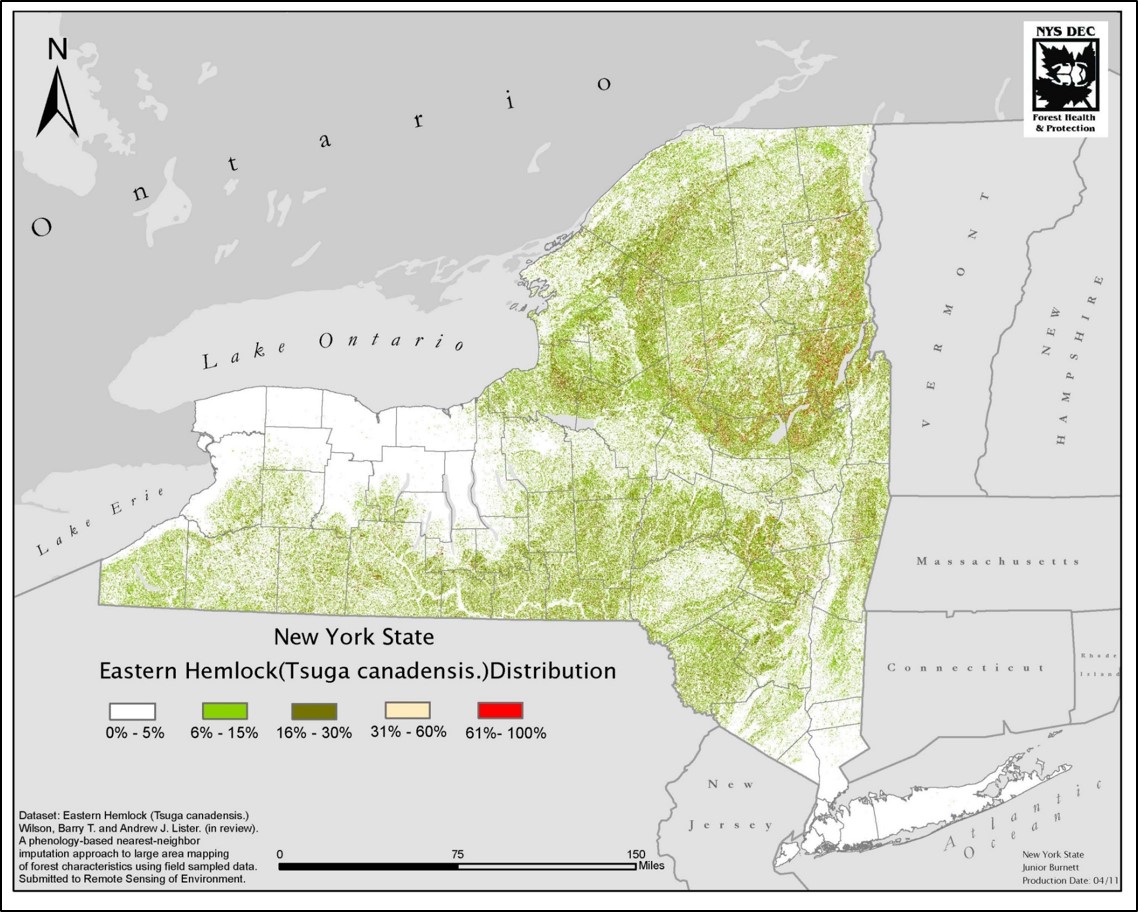
Throughout this rich and varied landscape are some of the densest quantities of eastern hemlocks, one of New York’s most abundant and significant tree species … and those trees are under attack by an advancing invasive species that State Parks is trying to help hold back.
This invader is the Hemlock Wooly Adelgid (HWA), an invasive forest insect native to Asia that has decimated millions of hemlocks along the eastern seaboard since being accidentally introduced into Virginia in 1951.
Adelgids are tiny insects that insert piercing-sucking mouthparts into hemlock twigs, causing damage to woody tissue that inhibits water and nutrients from reaching emerging hemlock buds. This limits the growth of new twigs and eventually kills the tree.
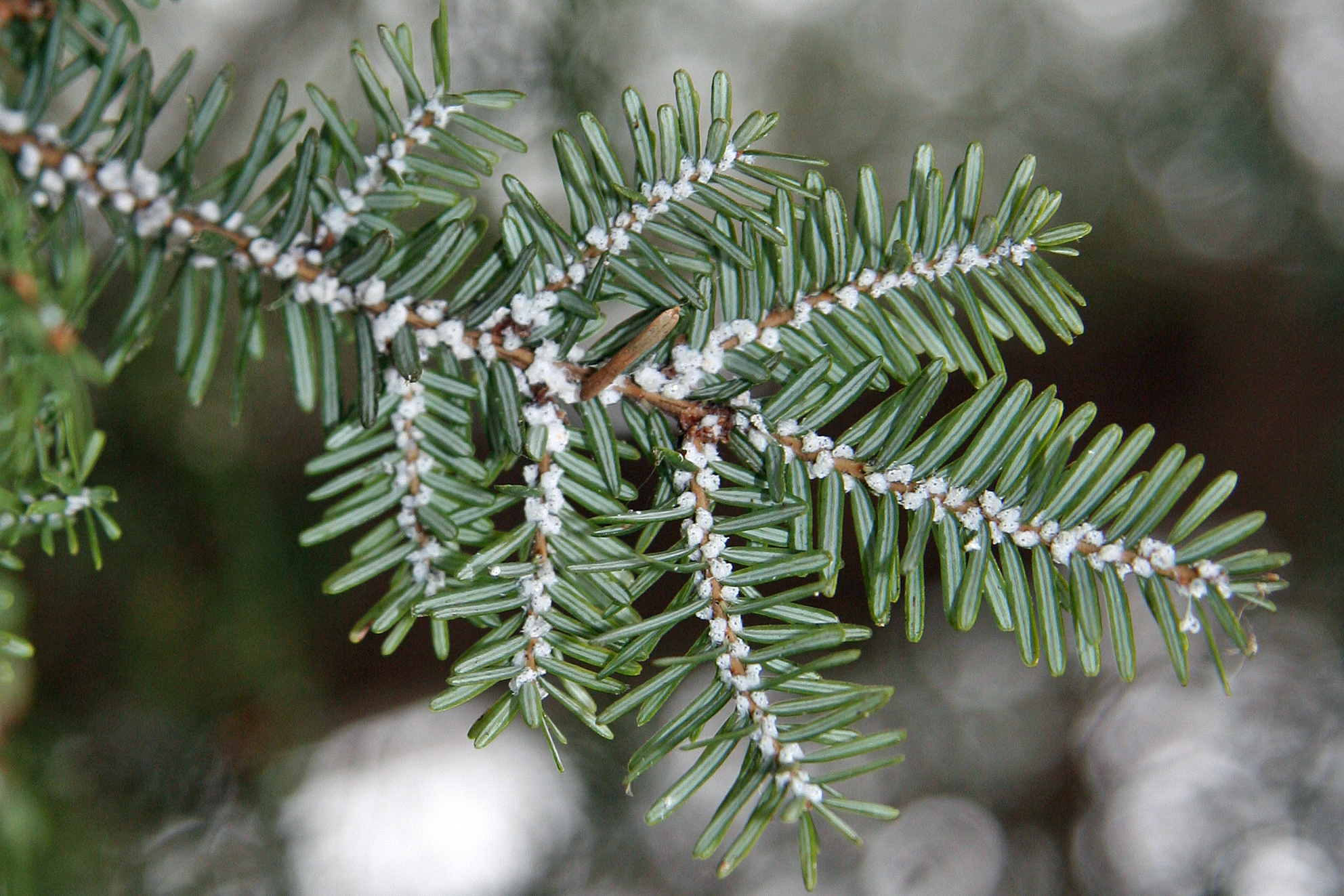
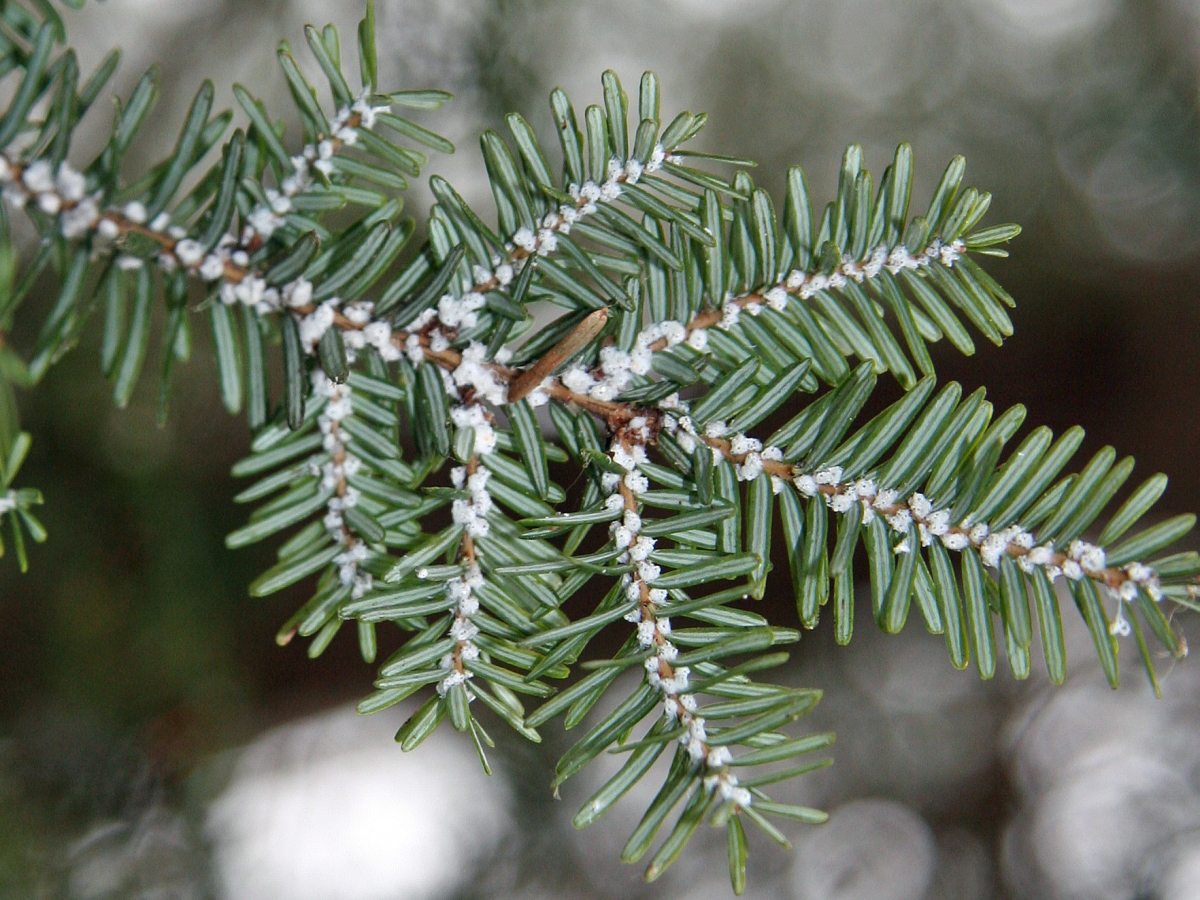
At about 6/100ths of an inch long, the flightless adelgids are hard to spot with the naked eye, but in the winter through early summer leave distinctive white “woolly” egg masses on hemlock twigs.(Photo Credit – NYS DEC)
Due to the lack of any sort of natural resistance of eastern hemlocks to HWA and without any natural predators to manage populations, the pest has spread quickly. Once infested, a hemlock tree can die in as little as four years, or as long as 20, depending on environmental factors.
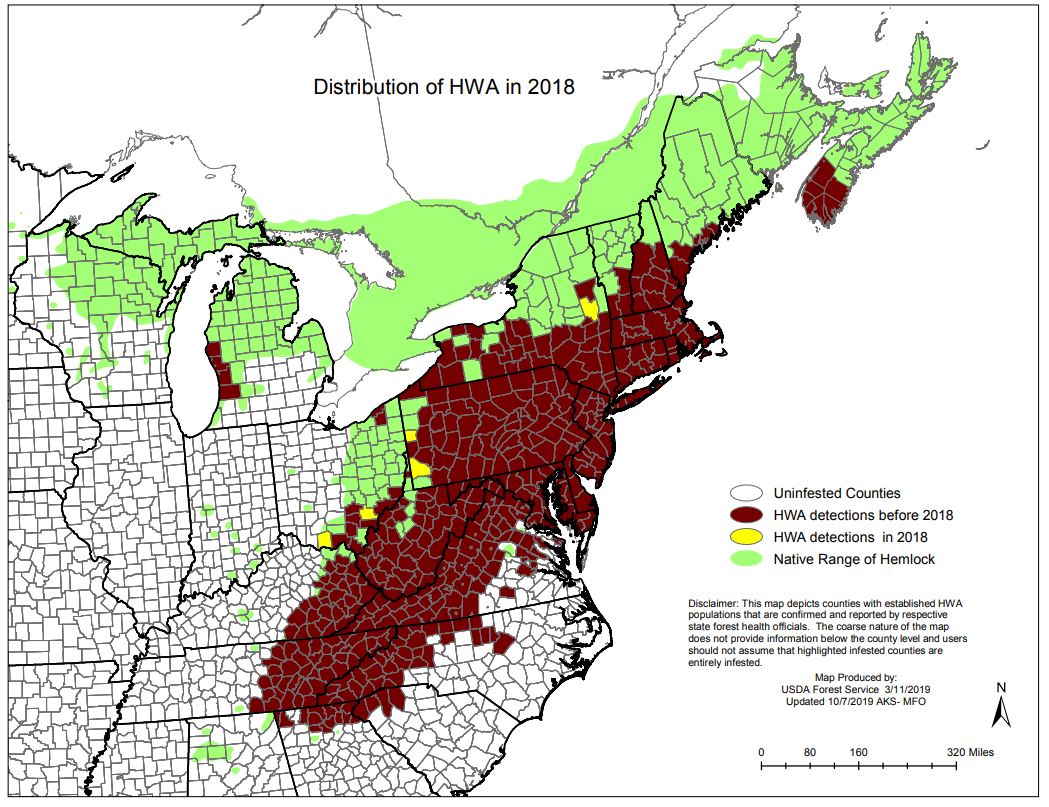
During the years since, the insect spread steadily south and northeast, finally making its way to New York in the 1980’s on Long Island and then into the Hudson Valley. With each year, it has expand its range further north and west.
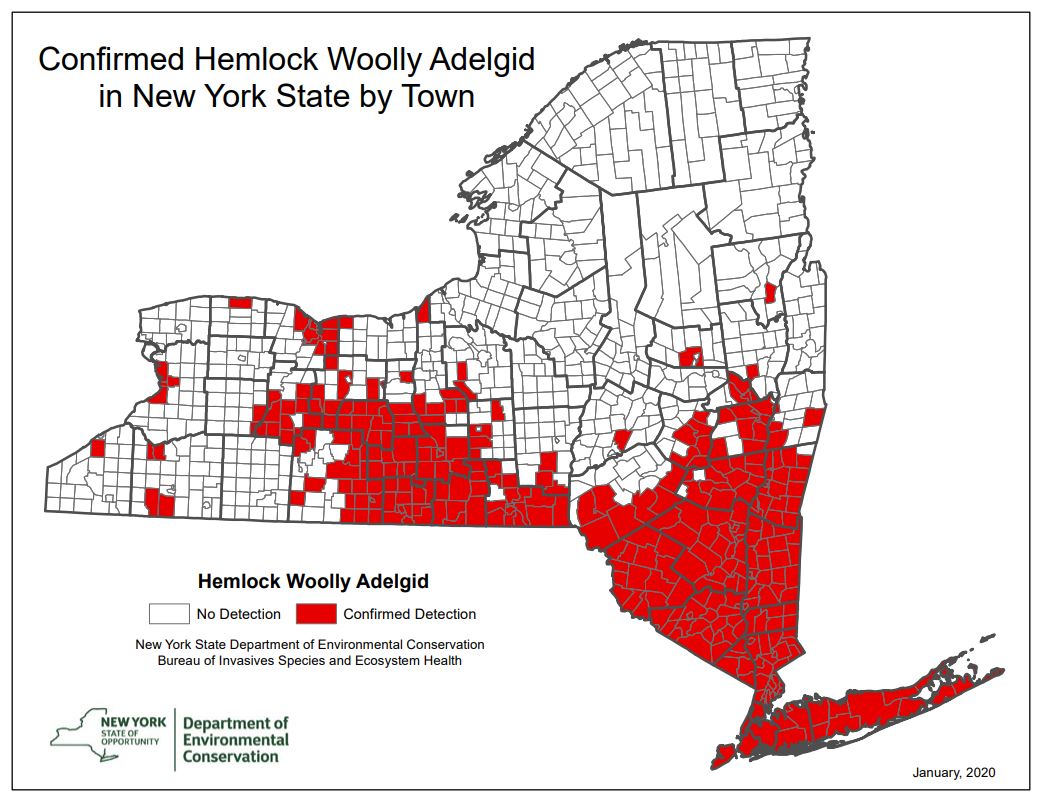
Use the slider bar to compare known Hemlock Wooly Adelgid locations in New York State (left), with the density of hemlock forests in the state (right). Charts from New York State Department of Environmental Conservation
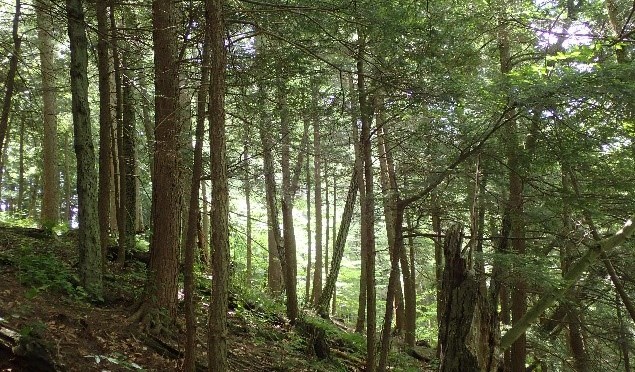
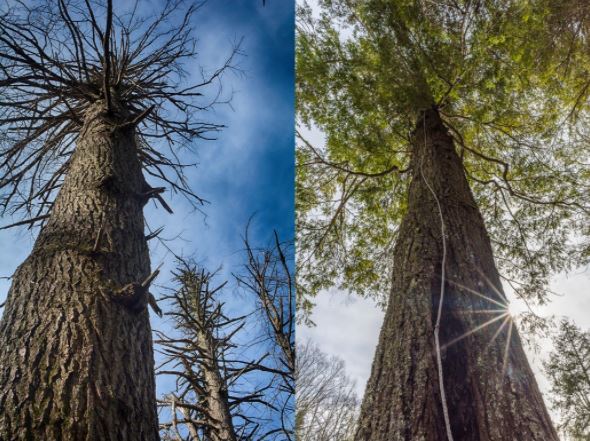
On the left, hemlock trees killed by HWA. On the right, a healthy, uninfested hemlock.
In 2020, HWA was found in hemlocks at two locations in the Adirondacks, most recently along the eastern shores of Lake George, posing a huge threat to spread into some of the finest hemlock forests in New York.
As climate change contributes to more mild winters, experts anticipate more rapid movement and increasing HWA populations. Last winter in New York was extremely mild and there is a boom in HWA populations statewide as the existing population expands.
The insect is now so abundant across the range of eastern hemlocks, it will never be removed, or eradicated, from the environment. The ultimate answer to fighting this threat to our hemlocks to restore the balance. This comes in the form of biological control, using predatory insects from hemlocks in western U.S. that keep HWA from overwhelming and killing hemlock trees.
Since being introduced into Virginia in the early 1950s, the Hemlock Wooly Adelgid has spread steadily south and northeast. It is now in much of New York and this summer was found along the eastern shoreline of Lake George in the Adirondacks. (Map Credit – U.S. Department of Agriculture/Forest Service)
Here in New York, this effort is being led by the New York State Hemlock Initiative (NYSHI) based at Cornell University, where forest entomologist Mark Whitmore heads the Hemlock Woolly Adelgid Biocontrol Research Lab. Several biocontrol species have been evaluated and releases have occurred in New York State Parks and other forests across the state, but it takes time for predators to establish and begin having a measurable reduction of HWA populations.
As research continues on biological control, HWA continues to impact our forests. In the interim, the only viable means of control is using insecticides to temporarily preserve trees until the natural enemies of HWA can take over.
Read more about these natural control efforts in this previous post in the NYS Parks Blog…
As the third most common tree in New York, hemlocks fill our forests and are found in many New York State Parks. Located along hiking trails, streams, gorges, campsites, and lake shores, the evergreens can live to be hundreds of years old, providing vital ecosystem services and supporting unique habitats. In addition to providing homes…
While the Department of Environmental Conservation (DEC) and others in the Adirondack Park combat HWA within the Blue Line, New York State Parks also is actively playing a role in protecting the Adirondack Park and its precious resources.
By targeting its chemical treatments at Park sites along the “leading edge” of the expanding range, State Parks is trying to slow the spread of HWA and protect some core hemlock patches, buying more time for continued research and establishment of biological control. Reducing or locally eliminating HWA from State Parks not only preserves the hemlocks, but also reduces the possibility of HWA hitching rides on cars or hikers’ boots, a potential a source of introduction to the Adirondack Park or other currently uninfested hemlock forests.
Current efforts to slow the spread include targeted surveys and treatments in state parks in the Saratoga-Capital Region with abundant hemlock forest such as John Boyd Thacher State Park, where treatments were done rapidly following early detections in 2018-19, as well as Moreau Lake and Grafton Lakes State Parks, where HWA has yet to be detected but surveys are on-going.
Another key strategy New York State Parks is employing, is protecting some of the most valuable hemlocks in areas that have been infested for several years before those specimens are lost. In Finger Lakes Region, State Parks staff as part of the Finger Lakes Hemlock Preservation Program have been trained and certified to conduct these treatments which began in 2018 and continue today.
Many of the gorge parks including Taughannock Falls, Buttermilk Falls, Robert H. Treman, and Watkins Glen all have threatened hemlocks growing on the steep slopes and cliff edges where many other tree species would not thrive. Protecting these trees helps maintain the indispensable ecological processes but also preserves the landscape that makes these parks so unique and such a draw to people from across the state and beyond. In other parts of the state, highly specialized contractors are employed to perform these technical treatments.
Statewide, hundreds of acres of hemlock forest including thousands of individual trees have been protected. Once treated, trees are tagged so that they can be identified later and are monitored annually to determine the effectiveness of the treatment and track the tree’s response.
As the HWA and the stress that they cause are removed, trees typically show flushes of bright green new growth the following spring. The insecticides have proven to be very effective but must be used responsibly and within limits. Each year, State Park staff evaluate potential areas for treatment and make difficult decisions working with limited resources as these treatments are expensive, temporary, and labor intensive.
HWA is a serious threat but there is much reason for optimism. Chemical control has proven to be a safe, effective tool against the pest although has its limits in size and scale. Biological control has been increasingly successful in some states to the south where it has been ongoing for longer than New York and there are promising early returns where releases have occurred here but it is still too early to tell if and when the biological controls could become the primary weapon against HWA.
While the management of hemlocks through chemical and biological control can only be done by the experts, you can help by volunteering to look for and report HWA sightings and even preserving hemlocks right at your own home. Each and every piece of information about the distribution of HWA in New York through volunteer sightings allows land managers and researches to stay right on the heels of this pest.
Hemlock Woolly Adelgid (HWA) is a tiny, invasive insect which kills hemlock trees in a matter of 6 years. Please see the previous post on HWA for more information. The insect was introduced in Virginia in the early 1900’s, and has steadily spread since then. New York state contains all stages of HWA infestation. There are…
Email report and photos to Department of Environmental Conservation Forest Health foresthealth@dec.ny.gov or call the Forest Health Information Line at 1-866-640-0652.
Contact your local Partnership for Regional Invasive Species Management (PRISM) by visiting http://www.nyis.info/.
Slow the spread of HWA in our forests by cleaning equipment or gear after it has been near an infestation, and by leaving infested material where it was found.
While the John Brown Farm State Historic Site is the former Adirondack home of a famed abolitionist, the farm also is part of a larger story about an ambitious, well-intentioned but ultimately unsuccessful effort in those rugged mountains before the Civil War to help free African Americans gain prosperity and political rights.
Located just outside of Lake Placid, the 270-acre farm occupied by Brown’s family reflects his common belief with prominent New York State abolitionist and social reformer, Gerrit Smith, as well as many others in that movement, that owning and farming land would aid people of African descent move from enslavement to freedom.
A photograph of John Brown taken in 1859.
Throughout most of human history, the ownership of property in the form of land has been greatly esteemed. During medieval times, property set apart the landed gentry from the serfs, while in colonial-era New York it meant the wielding of political power by the “Lords of the Manor” over their rent-paying tenants.
Political power after the American Revolution was narrowly held, compared to today, as property ownership was directly linked to whether a man of any color could participate in civil engagement. In the 1906 book, A Political History of the State of New York, De Alva S. Alexander noted that “The right of suffrage was so restricted that as late as 1790 only 1,303 of the 13,330 male residents of New York City possessed sufficient property to entitle them to vote for governor.”
In 1790, legal slavery still existed in the new state of New York. There also were quite a number of free men of African descent but like men of other races, they had to own property to be able to cast a ballot.
In New York, men regardless of race had to hold a minimum of $100 worth of property before they could participate in elections. In 1821 New York state ratified its second constitution, which required Black men to have at least $250 worth of property (about $5,700 in today’s dollars) while eliminating any such property requirement for whites. This change almost completely disenfranchised the Black community.
Such discrimination was opposed by Smith, a wealthy, land-rich abolitionist and social reformer in Madison County who also owned 120,000 acres of land in the Adirondacks across Essex, Franklin and Hamilton counties. In 1846, Smith offered a free piece of that land to any Black man willing to stake a claim.
Gerrit Smith (Photo Credit – Library of Congress)
Broken into 40 to 50-acre parcels, deeds for Smith’s land were granted to individuals and families, with the idea that with improvements land values would increase beyond the $250 requirement, giving not only industry and wealth to the family, but also the right to vote to the male head of household.
Throughout the 19th century, farming as a way to both sustain a family and grow financial wealth was pushed as the preferred way for free people of African descent to become valuable members of society.
Since enslaved people of African descent had worked on farms, it was a collective belief by Smith and other abolitionists that farming, husbandry, and related industries were natural bridges to civil advancement. However, he and many others pushing this idea didn’t consider that working a mono-crop plantation in the mild climate of the South was very different from clearing timbered forests in northern New York.
Nor did they think about those who had spent their entire lives in urban environments. Many viewed Smith’s generosity as truly expansive, but few, including Smith himself, took a close look at the land he’d shared or considered the substantial costs involved in getting a productive farm up and running. The maps with their neatly drawn sections looked good on paper but the actual parcels were often filled with thin soil, rocky terrain and ancient trees in a land with poor roads, brutal winters and a shortened growing season.
Unaware of such hurdles, thousands of people from across the mid-Atlantic states applied for the free land. Men from New York City, and many Hudson River and Central New York counties, were among those who traveled north. About 3,000 people accepted land, with initial settlers facing numerous challenges with varying degrees of success. Gerrit’s scheme and arrival of early homesteaders, especially those struggling with limited farming knowledge, caught the attention of the abolitionist John Brown, who lived in Springfield, Massachusetts at the time.
Brown had grown up on a farm and wanted to be of service in Smith’s project, by being a living example of how things were to be done and available to provide direct assistance if needed. Brown wrote to Smith, saying he’d like to support the new farmers by renting acres for himself and his growing family. Smith took Brown up on his offer, and it wasn’t long before the Brown family found themselves with their own bit of Smith’s mountain paradise near what is now Lake Placid.
The close proximity of some of the plots lent to the natural development of colonies or small villages which gave both support and protection to those living there. North Elba saw a long standing African American community as a result.
Other grantees arrived from outside of New York. Articles appeared in Black newspapers bringing people from Philadelphia and other southern cities, many taking up the plough for the first time in their lives. Sometimes plots were granted, but those seeking a new way of life never appeared. None of Smith’s acreage in Hamilton county was ever given out.
This area near Lake Placid also was home to another small colony called Timbuctoo, named for the ancient center of learning in the African nation of Mali, and was mentioned by Brown in several of his surviving letters. The presence of it in his writings gives focus to an exhibit on the historic site, sponsored by the friends group John Brown Lives! titled ‘Dreaming of Timbuctoo.’ (Click on the slideshow below) On-going archeological research keeps the memory of this colony alive, even as it and other sites of these intrepid homesteaders have long ago faded from the area.
Despite the hardships, a few grantees of Smith land prevailed to become established and active residents of the Adirondacks. Lyman Erastus Epps arrived in 1849, with his wife and two of his eight children. Epps left a rich legacy of his life in the area. Not only did he farm, but he also taught music to local residents in North Elba, was a charter member of its first church, was one of the founders and an early trustee of the Lake Placid Public Library. He also became a well-known guide in the High Peaks region of the central Adirondacks.
Brown himself was ever on the move and spent little time at the farm, although his wife and younger children were there. He and his older sons spent time in Kansas and other locations as part of their abolitionist activities, which eventually culminated in his failed raid with three of his sons on the federal arsenal at Harpers Ferry, Va. in 1859.
In addition to being the benefactor of the Adirondack project, Smith was very involved with the Underground Railroad – a network of abolitionists who helped guide escaped enslaved people to freedom – and his estate in the Madison County hamlet of Peterboro was an official stop that abolitionist Harriet Tubman and others used regularly. The remains of his estate are part of New York’s Underground Railroad Heritage Trail and a National Historic Landmark.
Putting historical figures like Brown, Smith and Epps into the full communities in which they lived allows us to see a vast tapestry. No one lives alone in a silo, they are part of a multicultural, multi-linguist world much like what we live in today. Enrich the story, look beyond the obvious tale, and see what was really going on. You’ll discover one of our most treasured secrets, what a wonderful place we live in!
Cover Shot- John Brown Farm State Historic Site, NYS Parks Timbuctoo photographs courtesy of John Brown Lives!, exhibit curator Amy Godine and exhibition designer Karen Davidson Seward.
Post by Lavada Nahon, Interpreter of African American History, New York State Parks
Resources
Sally E. Svenson, Blacks in the Adirondacks, 2017
Leslie M. Harris, In the Shadow of Slavery, African Americans in New York City 1626-1863, 2003
Tom Calarco, The Underground Railroad in Upstate New York, 2014






 New York State Parks and Historic Sites Blog