On land and In Water: 2016 Invasive Species Removal Efforts

Terrestrial Invasive Species

Since 2010, State Parks has hired seasonal Invasive Species Strike Teams to perform removals of terrestrial invasive plants in New York State Parks and Historic Sites.  The work of the Strike Teams allows Parks staff to identify and protect areas of ecological significance that are vulnerable to the growing threat that invasive species pose.

In 2016, two crews were hired, an Eastern Strike Team and a Western Strike Team. Each crew worked a 25-week field season (May 30 – November 18), camping out for much of the time and carrying heavy packs and gear to work sites.
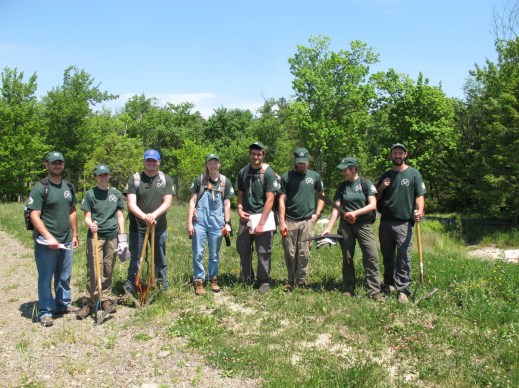
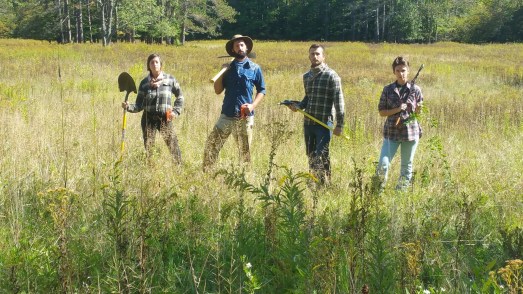
2016-eastern-and-western-strike-teams-bob-obrien-state-parks
2016 Eastern and Western Strike Teams, photo by Robert O’Brien, State Parks.

The Eastern Strike Team covered Parks and Historic Sites in the Saratoga-Capital, Taconic, Palisades and Long Island regions.

  • Over the course of the field season, the crew visited 29 parks in 12 counties.
  • They worked on 38 different projects, targeting 32 invasive plant species.
  • The top three focal species were: Oriental Bittersweet (Celastrus orbiculatus – 18 acres removed), Phragmites (Phragmites australis – 12 acres removed) and Japanese barberry (Berberis thunbergii – 10 acres removed).
  • Surveys and invasives removals were done on a total of 98 acres.
  • Much of the work focused on protecting rare elements including:
    • Karner Blue Butterfly and Sandplain Gerardia – federally endangered
    • Slender Blue Flag Iris and the rare Pink Tickseed – state threatened
    • Cerulean Warbler and Golden Winged Warbler – state listed species of special concern
    • A globally rare maritime grassland habitat
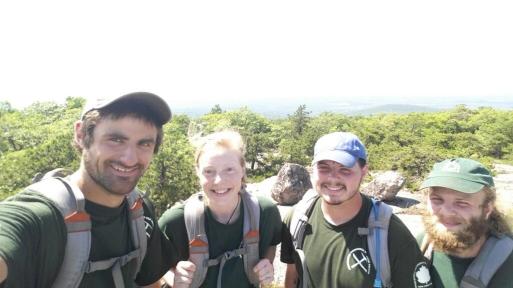
taylor-ouderkirk-casey-bannon-mike-ferri-david-hendler-by-taylor-ouderkirkstate-parks
Taylor Ouderkirk, Casey Bannon, Mike Ferri, David Hendler, photo by Taylor Ouderkirk, State Parks.
left-eastern-strike-team-removes-asiatic-sand-sedge-at-jones-beach-ny-right-strike-team-member-david-hendler-removes-black-swallow-wort-photos-by-casey-bannon-state-parks
Left: Eastern Strike Team removes Asiatic sand-sedge at Jones Beach, NY; Right: Strike Team member David Hendler removes black swallow-wort, photos by Casey Bannon, State Parks.

The Eastern Strike Team also spent a portion of their time surveying for the Southern Pine Beetle, an insect native to the southeast U.S., which has spread to the northeast, causing large-scale pine die-off on Long Island. The beetle has been detected in traps in State Parks in the Hudson Valley, but no confirmed infestations have yet been found in Pitch Pines in that region. Surveys were conducted in Schunnemunk State Park, Harriman State Park, and Minnewaska State Park Preserve.
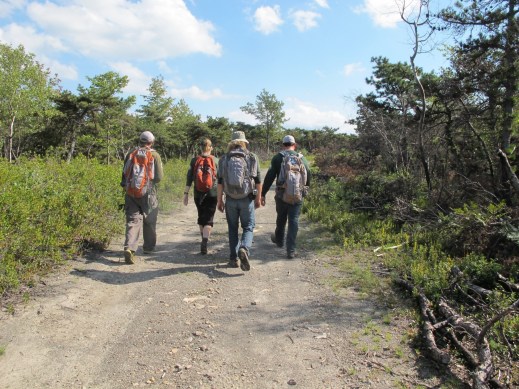
the-eastern-strike-team-performs-southern-pine-beetle-surveys-at-minnewaska-state-park-preserve-sara-travalio-state-parks
The Eastern Strike Team performs Southern Pine Beetle surveys at Minnewaska State Park Preserve, photo by Sarah Travalio, State Parks.

The Western Strike Team focused on the Finger Lakes, Central, Thousand Islands, Niagara, Allegany and Genesee Regions.

  • Over the course of the field season, they visited 22 parks in 15 counties.
  • They worked on 50 different projects, targeting 19 invasive plant species.
  • The top three focal species were: Pale Swallowwort (Cynanchum rossicum), Honeysuckle (Lonicera spp.) and Buckthorn (Rhamnus spp.).
  • Topping the ranks in numbers or volume removed were: 2.79 acres of Japanese Knotweed (Fallopia japonica) surveyed and removed, 35,025 Garlic Mustard (Alliaria petiolata ) plants, 34 bags of Pale Swallowwort (Cynanchum rossicum), and 7 dumpsters filled with Phragmites (Phragmites australis).
  • the-2016-western-strike-team-left-to-right-sienna-mcdonald-phil-bossert-dallas-ortel-and-melissa-kirby-state-parks
    The 2016 Western Strike Team (left to right): Sienna McDonald, Phil Bossert, Dallas Ortel, and Melissa Kirby, photo by State Parks.
western-strike-team-members-phil-bossert-left-and-dallas-ortel-right-remove-honeysuckle-at-john-burroughs-memorial-field-state-historic-site-sarah-travalio-state-parks
Western Strike Team members Phil Bossert (left) and Dallas Ortel (right) remove honeysuckle at John Burroughs Memorial Field State Historic Site, photos by Sarah Travalio, State Parks.

State Parks also hired two Forest Health Specialists to perform surveys for two non-native insect pests: Hemlock Woolly Adelgid (HWA) and Emerald Ash Borer (EAB). These surveys alert New York State Parks invasive species staff to new infestations, assist staff in identifying infested trees that can potentially be saved and allow for the identification and removal of trees that may pose a risk to the safety of park patrons. Forest Health Specialists also performed HWA canopy monitoring (tree-climbing) surveys at sites where HWA-infested trees had been treated previously with chemical insecticides. At these sites, the crew collected data on infestation levels and overall tree health in order to assist invasive species staff in monitoring the effectiveness of treatments.

  • Over the course of the 18-week field season, the crew was able to visit 17 different parks.
  • HWA canopy monitoring surveys were performed in 8 parks, and a total of 42 trees were surveyed.
  • All hemlock trees that had been treated with insecticides in previous years showed either no sign of infestation or signs of improvement.
  • Emerald Ash Borer (EAB) surveys were performed in 14 different parks, and the crew confirmed two new sites of EAB infestation.
forest-health-specialists-jacob-sidey-and-abigail-pierson-prepare-to-climb-a-hemlock-at-r-treman-state-park-and-abigail-shows-how-they-climb-using-ropes-and-no-spikes-sarah-travalio-state-parks
Forest Health Specialists Jacob Sidey and Abigail Pierson prepare to climb a hemlock at Robert H. Treman State Park and Abigail shows how they climb using just ropes and no spikes, photos by Sarah Travalio, State Parks.
surveying-hemlocks-jacob-sidey-left-and-center-at-mine-kill-state-park-and-abigail-pierson-right-at-robert-h-treman-state-park-sarah-travalio-state-parks
Surveying hemlocks: Jacob Sidey (left and center) at Mine Kill State Park and Abigail Pierson (right) at Robert H Treman State Park, photos by Sarah Travalio, State Parks.

Aquatic Invasive Species

The New York State Park’s Boat Steward Program is one of many boat steward programs throughout New York State. These programs provide targeted educational programming to increase awareness about aquatic invasive species (AIS) and other environmentally significant issues.
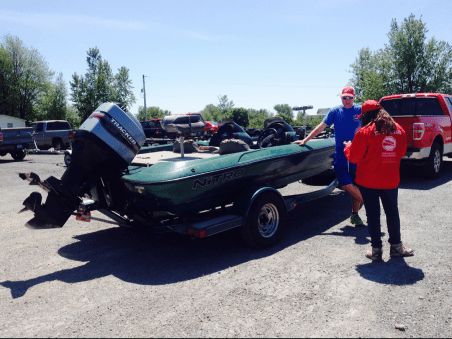
ariana-london-lake-champlain-steward-completes-a-boater-survey-on-her-tablet-computer-at-the-great-chazy-boat-launch-in-2015-meg-philips-state-parks
Ariana London, Lake Champlain Steward, completes a boater survey on her tablet computer at the Great Chazy boat launch in 2015, photo by Meg Phillips, State Parks.

Did you know that NY State Parks adopted regulations in 2015 to help try to protect our lakes and rivers from the costly effects of invasive species? Find an FAQ about the new regulations here.

The regulations states that a boater:

  • shall not launch or retrieve their watercraft from a Parks-owned boat launch facility unless the watercraft’s water-containing compartments (livewell, bilge, bait bucket) are dry.
  • has inspected the watercraft to ensure that there is not plant or animal material attached to the motor, trailer, body of the vessel, etc.

The Boat Steward Program has stewards at many of our Parks-owned boat launches across the state who conduct educational boat inspections to provide step-by-step instructions on ways you can effectively inspect your boat and dispose of invasive species. These demonstrations are both free and voluntary.

Boat Stewards can help you learn about what to do to prevent spreading aquatic invasives and what to look for. They are primarily educators and do not play a role in the enforcement of regulations.

Many Parks-owned boat launches across the state are also equipped with disposal stations for aquatic plant or animal material. The disposal stations are designed to provide a place for plant or animal material to dry out in an upland area. The dried out material is typically collected and placed in the garbage to prevent any further spread.

When you come across a red-shirted Boat Steward, please stop and ask any questions you may have.
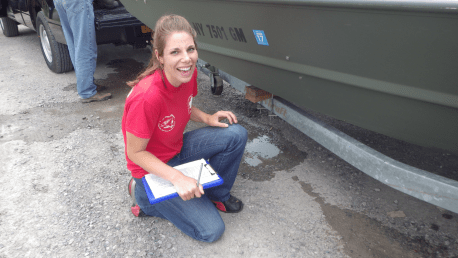
becca-reile-buffalo-harbor-steward-completes-a-boat-inspection-in-2015-meg-philips-state-parks
Becca Reile, Buffalo Harbor Steward, completes a boat inspection in 2015, photo by Meg Phillips, State Parks.

2016 Boat Steward Program Highlights:

  • 2016 was the first year of a 2-year $500,000 grant from the Environmental Protection Agency to expand the boat steward program at state park launches
  • 16 stewards worked 30 launches within the Great Lakes Basin, Lake Champlain Basin, and Saratoga Lake
  • There were 21,431 voluntary inspections out of 22,344 boats (95% of boaters allowed their boat to be inspected)
  • 2,982 boats were discovered carrying aquatic invasive species
  • 54,627 boaters interacted with Stewards, with many boaters receiving education about Clean-Drain-Dry and aquatic invasive species
  • 11 invasive species removal projects in partnership with Strike Teams and other partners
  • 10 educational events
  • Approximately 500 bags, or around 12.5 tons, of water chestnut were removed from Selkirk Shores State Park.
jared-reed-saratoga-lake-steward-participates-in-invasive-species-awareness-week-in-albany-matt-brincka-state-parks
Jared Reed, Saratoga Lake Steward, participates in Invasive Species Awareness Week in Albany , photo by Matt Brincka, State Parks.
kelly-butterfield-sunset-bay-steward-and-holly-flanigan-fort-niagara-steward-pulling-invasive-water-chestnut-at-grindstone-marsh-in-selkirk-shores-state-park-matt-brincka-state-parks
Kelly Butterfield, Sunset Bay Steward, and Holly Flanigan, Fort Niagara Steward, pulling water chestnut (an aquatic invasive species) at Grindstone Marsh in Selkirk Shores State Park, photo by Matt Brincka, State Parks.

Click on these links for more information about the Boat Steward Program and aquatic invasive species.

If you are interested in volunteering to help remove invasive species in your area, become a member of your local Partners for Regional Invasive Species Management (PRISM) program.

If you are interesting in seasonal work removing invasive species in State Parks, check out the State Parks employment page.

Hudson Valley’s Ice Harvesting Heritage

Rockland Lake, a 256-acre spring-fed lake at the foot of Hook Mountain, is today one of the most popular state parks in the Hudson Valley.  Its two golf courses, pool, tennis courts, hiking trails, and ball fields attract legions of people in the summer months, who come to fish, picnic and play in this park along the Hudson River.  And while few people know that the lake once (still might?) claimed to be the home of the world’s largest snapping turtle, there is a growing number of people who proudly point to Rockland Lake’s massive stone ruins along its eastern shore as laying claim to global fame on a distinctly different level, one that is very, very cool.

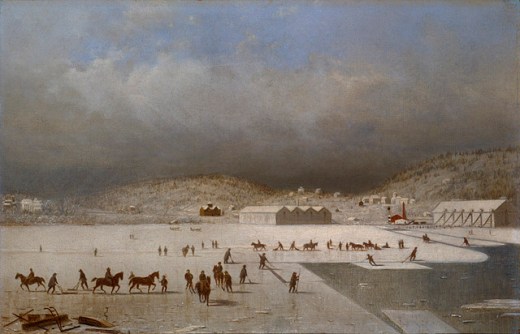
In 1806, up in Boston, a young and enterprising man named Frederick Tudor cut chunks of ice out of his family’s pond, loaded it onto a boat, and set sail for Martinique, convinced that the world would soon have an insatiable desire for ice in their drinks.  He was a man ahead of his time, and after many false starts, bankruptcies, and even debtor’s prison, his idea finally caught on, and the demand for ice to cool drinks and preserve food spread around the globe.  Rockland Lake, because of its clean spring fed water and proximity to the Hudson River, New York City, and international shipping lanes, soon became the undisputed leader in this new and sustainable industry, and the Knickerbocker Ice Company was formed in 1831 to meet that demand.  What began as a single warehouse to store the ice blocks neatly cut into 20” x 40” rectangles soon became three massive structures capable of containing over 100,000 tons of ice.

ice-harvest-rockland-lake-new-york-historical-society-_flickr
Andrew Fisher Bunner (1841-1897), Cutting Ice, Rockland Lake, N.Y., New York Historical Society, accessed from flickr

A railway was built to convey the ice over Hook Mountain, and included a gravity-fed incline took the cars down the steep face of the mountain to a massive pier, where ice barges on the river were filled and shipped to the city. New York’s “Meat Packing District” was located on the Lower West Side to take advantage of the ice shipped down the Hudson on these barges to cool the meat.  Soon, the ice from Rockland Lake became so famous around the world that imitators sprung up, and even a lake in Sweden was renamed Rockland Lake so that its owners could claim that they sold “Rockland Lake” ice.  It’s hard to imagine that blocks of ice were shipped from a rural New York lake to exotic destinations like Australia and Asia, but for many people and businesses no other ice was as clear and clean as Rockland Lake Ice.

The ice at Rockland Lake was so famous that, in 1900 Thomas Edison Films documented the entire process of harvesting the ice at Rockland Lake, from the horses drawing the ice plows to the workers loading it onto the barges. Watching that film, it is hard to imagine that today the same site is far from the industrial zone depicted in the grainy black and white film.

By the early 20th Century, however, technology had caught up with demand, and artificial ice began to displace naturally harvested ice for most purposes, and while natural ice harvesting continued (and continues today) to be a sustainable source for cooling elsewhere, the harvests stopped at Rockland Lake in 1924.  In 1926, while demolishing the facilities to make way for what eventually became summer cabins and hotels, a fire broke out in one of the buildings whose huge double-sided walls were packed with tons of sawdust to keep the ice cool.  When the smoldering fires were finally extinguished (anecdotally, some said that they burned for over a year), all that was left of the houses were the massive stone walls at the base of Hook Mountain.  Eventually, in the 1950s, the Palisades Interstate Park Commission began buying up private parcels, and in 1965 Rockland Lake State Park welcomed its first guests.  The ruins of the ice house remained, lost but not forgotten.

In 1988, park manager Jack Driver and his wife Barbara led tours of the ruins to those curious about their history and Barbara led volunteers in the successful effort to have the ruins designated as an official Clarkstown Historic Site.  While they managed some success, the Drivers moved to another park assignment away from Rockland Lake, and no proper dedication had ever taken place.  Twenty years later, after jogging past the ruins countless times on the lake’s three-mile paved path, Rockland resident Timothy Englert inquired about the walls, which now contained a tangle of black locust and other trees.  John Burley and Mike Krish, park managers, handed Mr. Englert a manila folder, inside of which was a trove of information regarding the history of the lake’s icy past, as well as official-looking documents attesting to its historic status.  The forgotten folder also contained a faded black and white panoramic photograph of the ice harvesters standing atop the frozen lake, a photo that evoked the pride of place and industry that employed thousands of people during a period of great growth.

This slideshow requires JavaScript.

Mr. Englert realized that no dedication had ever taken place. He enlisted the help of Robert Patalano, a fellow Clarkstown resident and professional ice sculptor, who sculpted an 18’ ice replica of the original Knickerbocker Ice house, while Mr. Englert took one of the rot-resistant locust logs and created the Knickerbocker Bench to commemorate the site with something a bit more durable than ice.  On a bitter cold weekend in January of 2007, the Driver family returned to Rockland Lake as the guests of honor at the Knickerbocker Ice Festival, which grew from a few hundred people that first year to over 25,000 people two short years later.  The festival included massive ice sculptures and historic tours.  That first sculpture lasted five weeks before it melted away.

Today, the legacy of ice at Rockland Lake lives on in historic markers placed throughout the ice house ruins at the park.  Rockland Lake isn’t the only State Park where ice was once harvested.  Both Bear Mountain and Schodack Island once also had ice houses of their own.  And while the ice festival is no longer an annual event, the spirit of the ice lives on in the Knickerbocker benches found along the park’s trails, and in the pride of Rocklanders, who can walk into the ruins of Ice House #3 on a hot summer day and imagine themselves surrounded by 100,000 tons of ice.

Post by Timothy Englert, Friends of Rockland Lake and Hook Mountain, Inc.

Want to try snowshoeing? Park experts tell where to go

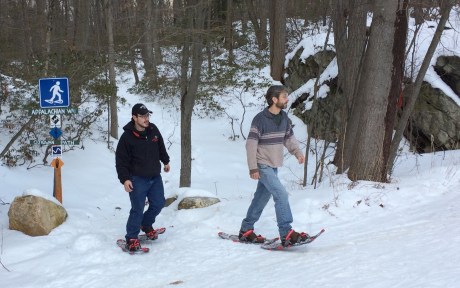
Don’t let the snow deter you from exploring State Parks – just grab or borrow a pair of snowshoes and head out to the trail.  Go snowshoeing on a trail in a nearby park or try one of State Park staff’s favorite snowshoeing spots.

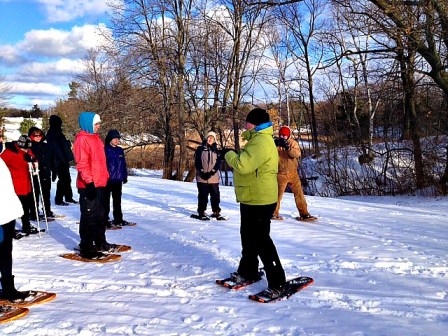
2014-first-day-hike-at-wislon-tuscarora-state-park
A group pauses during a snowshoe trip at Wilson-Tuscarora State Park, photo by State Parks

In western New York, Tina’s favorite snowshoeing spot is at Wilson-Tuscarora State Park located on Lake Ontario in northern Niagara County in Wilson.  This is where you will find the Red interpretive trail nestled along the east branch of Twelve Mile Creek.  As you snowshoe through the changing landscapes, you’ll pass through successional fields, marshland, and finally through a mature forest of old growth beech and hemlock trees.  Keep your ears open for calls of the pileated woodpecker.

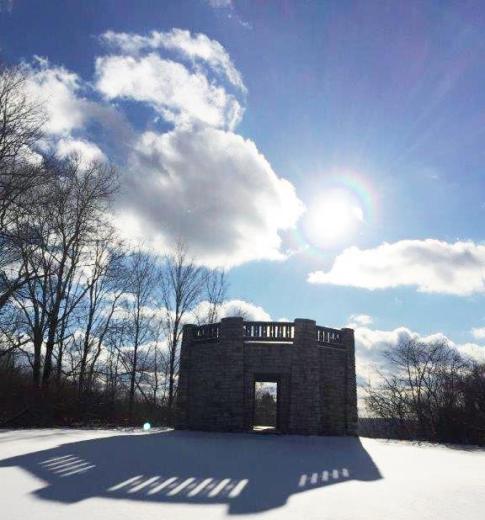
stone-tower-jan-16-allegany
Snowshoe to this historic tower at Allegany State Park, photo by Adele Wellman, State Parks

At Allegany State Park in Salamanca, Adele recommends the Bear Paw Trail located across the road from the Art Roscoe cross-country ski area on the Red House side of the Park.  Bear Paw Trail is the newest trail built for the snowshoeing enthusiast.  The 2.4-mile long, easy to moderate trail has 15 interpretative sights and runs along the ridge above Salamanca to historic Stone Tower. The trail loops through large stands of Black cherry and White ash trees. Look for small secret plants such as wintergreen and princess pines along the trail. Each Monday evening in January and February, the park offers sunset snowshoe hikes. The Environmental Education Department has a few pairs of snowshoes to borrow during programs.

In central New York, Katie’s favorite part about snowshoeing is how the landscape constantly changes during the winter. Even if you snowshoe at your favorite local park, in her case Clark Reservation State Park in Jamesville, everything looks different in the winter.

After the leaves fall off the trees, you can see so much farther into the woods. You will be snowshoeing along at Clark Reservation, and suddenly notice that the ground drops away not far from the edge of the trail into a steep ravine. You might never notice the ravine in the summer because rich greenery hides it from view. Winter’s arrival reveals forests secrets. Soon though, they are covered up again, this time with ever changing blankets of snow. Nature’s snow sculptures change daily, so you really need to hit the trails often so you don’t miss out!

About once a year, the park gets special permission to host a moonlit snowshoe hike it’s amazing how bright the forest is with the light from a full moon reflecting off the snow. You can even see your shadow! Keep your eyes on the calendar to find out when this year’s Moonlight Snowshoe Hike will be, or come out on your own any day to check out this special place.

mac
Family fun at Wellesley Island State Park, photo by State Parks

At the Minna Anthony Common Nature Center at Wellesley Island State Park, Thousand Islands, Molly notes that there are four trails open to snowshoeing.  Probably the most heavily snowshoed trail is North Field Loop.  Only a half mile long, it meanders through a forest full of white pine trees, passes through a seasonal wetland, and into a forest of towering red oak trees.  School groups explore this trail on snowshoes and the nature center staff lead moonlight snowshoe hikes on the trail throughout the winter months.  There is nothing prettier than snow covered woods on a moonlit night.  The park has both children and adult snowshoes available for rent for $3 a pair.

grafton-state-park-snowshoeing
Snowshoeing through Grafton Lakes State Park, photo by State Parks

In the Capital Region, Liz at Grafton Lakes State Park suggests the Shaver Pond trail loop. Just under two miles, it offers picturesque views of Shaver Pond, with a trail winding through forest of hemlock and maple trees over easy terrain.  Inquisitive visitors may see mink or fox tracks along the way.  Trail maps are for sale & snowshoe rentals are available at park office on a first-come, first served basis for $5 for four hours.

snowshoeing_moreau
Family snowshoe program at Moreau Lake State Park, photo by State Parks

At Moreau Lake State Park, Rebecca mentions that the park has 30 miles of trails and there are new places to explore as the seasons change.  The parks offers snowshoe hikes and classes for all ability levels, including first timers.  The park also has snowshoes available for rent to hikers or people who want to go out and try it on their own for $5 for a half day and $10 for a full day rental.

kids-snowshoe-group_thacher
Fun times with friends at Thacher State Park, photo by State Parks

At Thacher State Park, the Fred Schroeder Memorial Trail is one of Nancy’s favorite snowshoe walks. This three mile loop in the wilder northern part of the park takes you through beautiful woodlands of mixed hardwoods with stands of spruce and hemlock trees and across a couple of open fields,  without much elevation change.  Midway on the loop, you can take in the scenic snow-covered views from the cliff edge at High Point.  Emma Treadwell Thacher Nature Center rents snowshoes to the public.

img_1188
Heading out on the trail at Fahnestock Winter Park, photo by State Parks

In the Hudson Valley, Kris at Fahnestock Winter Park mentions two unique snowshoeing trails. If you’re looking for more rugged terrain, and challenging descents, “Appalachian Way” treks along a ridge line to a stunning overlook of Canopus Lake. The trail “Ojigwan Path” offers the beginner and intermediate snowshoer a snaking walk through hemlock groves and strands of mountain laurel. Both routes take around 2.5 hours to complete. Snowshoe rentals are located in the newly renovated winter park lodge, where you can also warm up with a cup of delicious chili!

dscn3635crop
A beautiful day on snowshoes at Sam’s Point, photo by State Parks

Laura D. recommends a snowshoeing trail that will lead you to expansive cliff top vistas, through the globally rare dwarf pitch pine barrens, and around the glacially carved Lake Maratanza. The Loop Road at the Sam’s Point Area of Minnewaska State Park Preserve is the perfect trail for viewing these breathtaking vistas. While on the three-mile Loop Road, stop at the Sam’s Point Overlook, where on a clear day, you can see four states!  Snowshoe rentals are available at the Sam’s Point Visitor Center for $15 per adult and $14 per junior (17 years and under) for the day or $5 to join a public program.

From Region Minnewaska
Minnewaska Falls, photo by State Parks

A novice snowshoer will find the modest Mossy Glen Footpath loop just right for a snowshoe trip at Minnewaska State Park Preserve notes Laura C.  This approximately four-mile route follows the Mossy Glen Footpath as it hugs the edge of the scenic Peter’s Kill stream, winding through quiet forests. At the end of this Footpath, take the Blueberry Run Footpath to the Lower Awosting Carriage Road back to your starting point. This loop begins at the Awosting Parking Lot.

snowshoes_feet
photo by State Parks

These are just a sampling of the many trails you can explore on snowshoes .  We hope to see you out on the snowshoe trail this winter.

Post by State Parks Staff

More than forty winks: who will be hibernating this winter?

When the temperature drops and the days grow shorter, many of us feel like climbing into bed and waiting it out. Well, for a lot of animals in New York State, this is exactly what they do. To conserve energy during the season when food sources become scarce, some animals go into an inactive or sleep-like state called hibernation.  How and where the animal hibernates, as well as the amount of time it hibernates usually varies by species, but all end hibernation when the warmer spring weather returns.


Most mammals will prepare for hibernation by spending the months leading to winter gorging themselves and building up their fat stores. To these animals, every day is Thanksgiving when they are getting ready to hibernate. Once the animals sense shorter days, colder temperatures, and less food, it knows that hibernation should soon begin.

When most people think of an animal hibernating, they think of a bear curled up asleep in its den all winter long. While bears do hibernate, they are not the only animals that spend their winter this way. Many other mammals, including reptiles, amphibians and even insects hibernate the winter months away.

groundhog-leaving-its-den-wikimedia

Let’s take a closer look at these hibernation strategies. While bears hibernate in their pre-made dens, groundhogs will build special burrows just for hibernation. Deer mice don’t completely hibernate but instead enter a light hibernation often conserving warmth by snuggling together. The little brown bat enters into such a heavy state of hibernation that they appear to be dead with their breathing slowing so much it could take an hour for them to take one breath.  The meadow jumping mouse is one of the longest hibernators; they sleep from early October until early May

Cold-blooded amphibians and reptiles hibernate differently than warm-blooded animals. Instead of sleeping the months away, they will enter a state of suspended animation sometimes called brumation. Animals that are in brumation are actually semi-conscious and have no control over their body temperature.  Snakes, turtles, and frogs will undergo brumation in burrows, mud or underwater anywhere  the temperature might be above freezing  for them to survive. Often times they will borrow themselves so far they are below the frost line. Some frogs cannot hide from winter’s cold; they hibernate under rocks and logs and may freeze during the cold winter days.  Natural chemicals and processes in the animal’s blood prevent them from freezing.  The animal’s body produces an “anti-freeze” (a cryoprotectant) as the temperature begins to drop; the animal’s body concentrates sugars and other compounds that prevent the animal’s organs from freezing.  The antifreeze prevents the animal’s organs from freezing.  A frozen animal will stop breathing and the heart will stop beating. Most of the fluid in the blood pools in the animal’s body cavity.  Learn more about freezing frogs in a previous blog.


Some insects known for hibernating are the Mourning cloak butterflies and Woolly bear caterpillars. One of the first species you see when spring is on its way, the Mourning cloak butterfly, spends the winter months frozen but alive usually under loose tree bark. One of the most recognizable insects, the woolly bear caterpillar can spend its winters frozen as well. These insects also survive freezing by producing a cryoprotectant that shields their tissues from being damaged by the freezing temperatures.

mourning-cloak-wikimedia

One mammal that does not hibernate is humans, so make sure to get out and enjoy all the beauty New York State Parks has to offer this winter!

Wooly Bear Video:

http://www.discovery.com/tv-shows/frozen-planet/videos/woolly-bear-caterpillars/

Resources:

Cold-blooded in the cold: hibernation Conservationist for Kids, NYS Dept. Conservationist

Post by Kristin King, State Parks

featured image from Wikicommons

Groundhog photo credits:
Wikimedia Commons
Creator’s User Name: Ladycamera – Own work
License: CC BY-SA 4.0
File: Emerged from hibernation in February, groundhog takes leaves to line the burrow nest or toilet chamber DSCN0900.jpg

John Burroughs: A Naturalist for the Ages

Upon his death in 1921, the New York Times devoted an entire page to John Burroughs.  The New York State Senate adjourned, and the Daily Times of Los Angeles reported that a resolution passed in Burroughs’ honor by the California State Assembly – it read in part, “whereas press dispatches today announce the death of John Burroughs, foremost naturalist of the United States, be it resolved that in his death the nation has sustained the loss of one who as scientist, citizen and man, occupied a deservedly high place in the regard of all people…”

When I was in my teens, I stumbled upon one of John Burroughs’ 27 books in a local library.  His writing was simple yet elegant and wonderfully descriptive of the natural world.  I was hooked.

Every walk in the woods is a religious rite, every bath in a stream is a saving ordination.

Who was this man of such great fame 100 years ago but who today is almost forgotten?

John Burroughs was first and foremost a farmer who developed an intimate, deep-rooted connection with the land.  Born in 1837, Burroughs dropped out of school after the sixth grade.  He spent 17 years working on his family’s farm and read every single book from his small local library.  His father was a strict Baptist, but Burroughs resisted organized religion.

jb-looking-at-a-bird

I never went to Sunday school and was not often seen inside the church.  My Sunday’s were spent roaming in the woods or fields… following the streams and swimming in the pools. 


He briefly attended the Cooperstown Seminary, but formal schooling was not for him.

I can learn more about a cat by it jumping on my lap than by dissecting it in a laboratory.

 At age 20, Burroughs married Ursula North, and like most of his family and acquaintances, she did not support his intense interest in writing.  Undaunted, Burroughs began to write seriously for the Saturday Press and the New York Leader. By age 23, he was regularly publishing essays in the Atlantic Monthly and would continue to do so for the rest of his career.

At age 26, he met Ralph Waldo Emerson who was a great influence on him as a writer.  He then moved to Washington D.C. where he met another writing mentor, Walt Whitman, who ultimately became a close friend.  By age 48, Burroughs was a full-time writer and farmer gleaning much of his inspiration for his essays from the natural world that surrounded him.  This is what set him apart from other writers of his time(?).

John Burroughs is credited with inventing the nature essay, a truly American form of creative writing, and he did so in a way that spoke to the masses.  His writings soon became standard in popular magazines, as well as in many schools across the nation where his descriptions of nature enthralled students and piqued their interest in the out-of-doors.

The student and lover of nature has this advantage over people who gad up and down the world, seeking some novelty or excitement; he has only to stay at home and see the procession pass.  The great globe swings around to him like a revolving showcase.

By his late sixties, John Burroughs was a household name across the nation.  He had befriended John Muir and traveled with him as the naturalist on the Harriman Alaska Expedition in 1899.  Industrialists of the age, including Edison, Firestone and Ford, sought out John Burroughs as the guest naturalist on camping expeditions.  President Roosevelt, a big fan of Burroughs’ essays, steamed up the Hudson River in his presidential yacht to visit the famous writer at his small writing cabin that Burroughs had named “Slabsides.”

The most precious things in life are near at hand, without money and without price.  All that I have ever had or will have can be yours by reaching forth your hand and taking it.

It is impossible to know what influence Burroughs’ work and friendship had on all of these important figures in American history.  What we do know is the extent to which they sought him out, and undoubtedly he helped form their impressions of the natural world and man’s relationship to it.

Our civilization is terribly expensive to all of its natural resources.  One hundred years of modern life doubtless exhausts its stores more than a millennium of the life of antiquity.

John Burroughs died at age 84 on a train heading for home from California.  He was laid to rest in his home town of Roxbury, New York, adjacent to what he referred to as “boyhood rock”, the giant rock he played on as a child.  The property and gravesite are proudly maintained by New York State Parks.  His summer get-away home in his later years, “Woodchuck Lodge”, stands adjacent to his gravesite and is maintained by “Woodchuck Lodge Inc.”  His writing cabin “Slabsides” in West Park, New York, is maintained by the John Burroughs Association.

John Burroughs’ nature writing remains relevant today for several reasons, but perhaps most importantly, because it focuses on nature close at hand, right outside our door.  Wherever we are, there too is nature with all its mystery and wonder.

Young people (and old) are getting outside less, suffering from what Richard Louv described in his book “Last Child in the Woods” as nature deficit disorder.  All of us at State Parks play a critical role in reversing this trend.  We are providing more and more opportunities for young people to get outside to learn about nature and have fun while enjoying the great outdoors!

I suspect John Burroughs would approve.

I am not always in sympathy with nature study as pursued in schools… such study is too cold, too mechanical and likely to rub the bloom off of nature.  It lacks soul and emotion, it misses the accessories of the open air and its exhilarations.

Post by Tom Alworth, State Parks

boyhood-rock-and-gravesite
Boyhood Rock and Gravesite, photo by Tom Alworth

Featured image John Burroughs and grandchild courtesy of New York State Archives

The official blog for the New York State Office of Parks, Recreation & Historic Preservation