
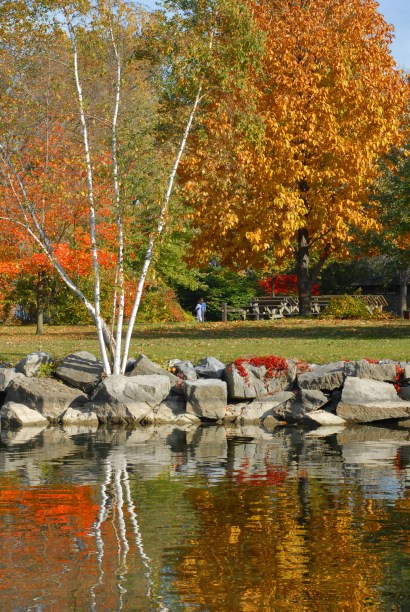
This weekend, take a walk, ride your bike, go for a paddle and enjoy the beautiful fall colors in a state park.


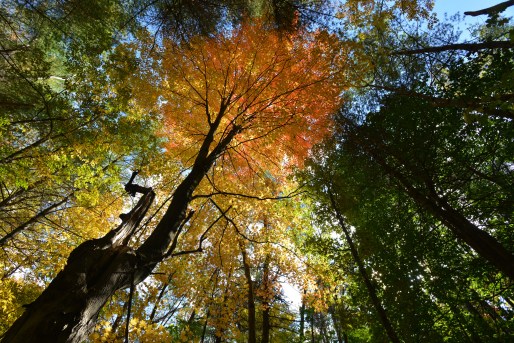
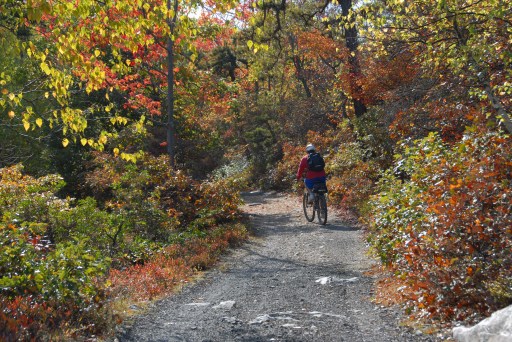

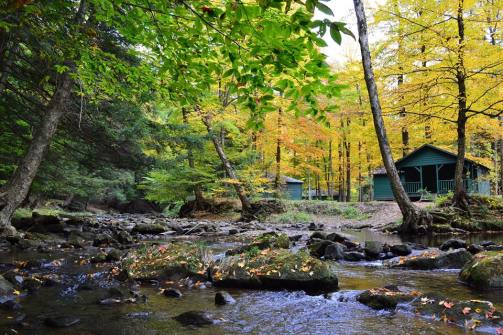
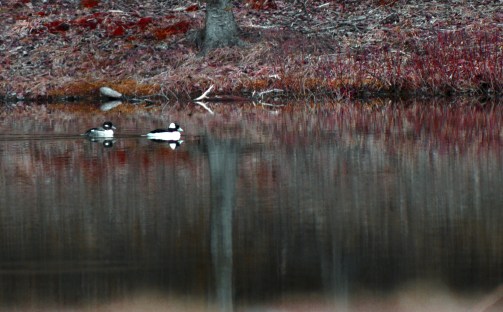
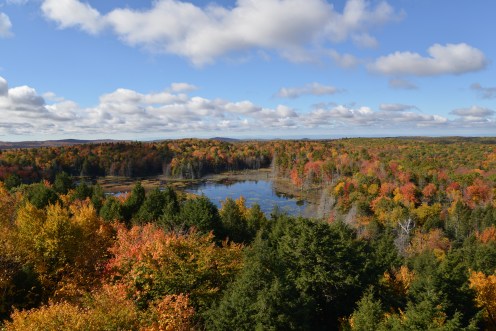


Autumn is such a great time to enjoy the outdoors in our State Parks.

This weekend, take a walk, ride your bike, go for a paddle and enjoy the beautiful fall colors in a state park.
Autumn is such a great time to enjoy the outdoors in our State Parks.
Among the many recreational outdoor activities available in our state parks, hunting is one that many may overlook. Hunting is a long-standing tradition in our nation, both as a necessity and an opportunity to be connected with the outdoors. Hunting is a safe and economically important activity; providing an excellent source of food and promoting family traditions while nurturing an understanding and respect for the environment and the complexity in which it functions. Today, an individual looking to take advantage of hunting opportunities must first complete a hunter safety course, and obtain a hunting license. The hunter safety course will provide instruction on firearm/ bow safety and planning a hunt, by providing information about the biology of the game species in New York State.

During this fall season many New York residents and out-of-staters will venture out into the woods and wetlands to take part in the multiple hunting seasons that New York State has to offer. Among the vast huntable acreage across the state are properties managed by the Department of Environmental Conservation (DEC) and New York State Parks. In State Parks alone there are about 80 parks, 3 historic sites, 3 golf courses and 50 boat launches that provide opportunities to hunt an array of wildlife from small game, waterfowl to big game species like bear and deer.
Being a hunter – what does it take?
Let’s take a step back and investigate what is involved in becoming a hunter. Besides the hunter safety course and a New York State Hunting license, the hunter must understand the biology of the animal and how that animal interacts with its habitat. Hunters have to be keen observers in order to be successful. Let’s learn about some of the signs a hunter looks for when pursuing whitetail deer.
Deer Path: Deer tend to travel through the forest in a path of least resistance – clear of downed trees and shrubs. Over time these paths become visible as the deer travel them regularly, just like a hiking trail.

Tree Rubs: Male deer, or “bucks”, will make rubs on small trees with their antlers to mark their territory, deposit scent and declare their presence to other deer. A hunter must look for rubs in the woods and learn how to tell the difference between and old rub and a new rub. This can be done by closely looking at the tree. A new rub will have the presence of shavings or sawdust on top of the leaf litter that are scraped off when the buck makes a rub. Additionally a new rub will be contrastingly much lighter in color compared to an old rub that is weathered and darker.


Scat: Where deer eat, they poop! A hunter will look for fresh scat (poop) as evidence of recent activity. Fresh scat will be on top of the leaf litter – whereas old scat will be noticeably under leaves and sticks.


Sounds: Deer make a variety of sounds including a soft bleat, grunting, stomping with their hooves, and blowing air. The varying sounds and body language have different meanings. For example a deer may stomp their hooves and blow air out their nose when they smell or see a person in the woods. Observing how deer interact with each other and the sight and scent of humans helps a hunter better understand deer behavior.
A hunter should look for signs of deer well before the hunting season begins to learn the habits of the animal he/she is hunting. Equally important is practice, practice, practice! To be proficient with a firearm or bow a hunter must hone their skills year round. Hunting isn’t easy, it takes practice, time and a lot of patience to be successful. There are many hunter safety education courses available through DEC including the popular “Becoming an Outdoor Woman” (BOW) series. Take a look for yourself.

Learn more:
Department of Environmental Conservation Sportsman Education
Post by Lilly Schelling, State Parks
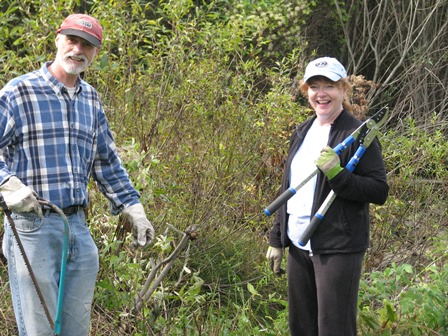
Twelve years ago the Environmental Education/Recreation Department at Allegany State Park decided to host a new event –National Public Lands Day (a National Environmental Education Foundation program). It is our nation’s largest one-day event designed to give people a chance to give back to the public lands they use and love by volunteering some of their time. This mission of National Public Lands Day really resonated with park staff.

From its beginnings in 2005 when we thought it was a great idea to have service projects all over our 65,000 acre park, our volunteers have done much to improve Allegany and enhance the visitor experience for park patrons. We quickly got smart and now rotate this event between the Red House and Quaker sides of the park each year. A few of our accomplishments include:
We are immensely grateful for our volunteers and count ourselves fortunate to work with so many great individuals, families, community groups, area high school and college students, and scout troops. They are the driving force that makes National Public Lands Day a success!
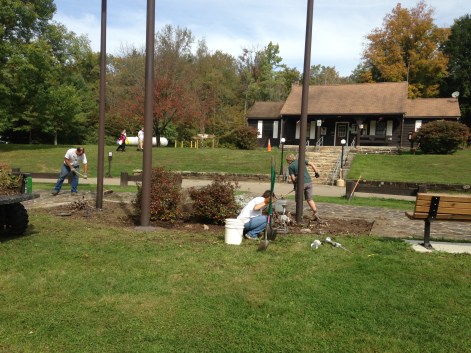
According to the Independent Sector (www.independentsector.org), the estimated dollar value for volunteer hours in 2015 was $23.56. That means that the 100 volunteers who turned out for last year’s event contributed a total value of $11,780. That is amazing for a 5 hour workday! A big thank you to all who made this possible!
2016 finds us preparing for our twelfth National Public Lands Day celebration. We are looking forward to seeing our core of “regulars,” and extend an invitation to all Allegany State Park fans interested in caring for this New York State treasure. Please join us! This year’s celebration is on Saturday, September 24th and takes place on the Red House side of the park. Check-in/Registration is from 9:00 a.m.-10:00 a.m. at the Red House Toll Booth. Service projects are from 10:00 a.m.-3:00 p.m. (please bring a lunch) followed by a barbecue chicken dinner at 4:00 p.m. (for a very nominal charge). We ask that you come dressed for the weather and plan to get dirty. This event will be held rain or shine.
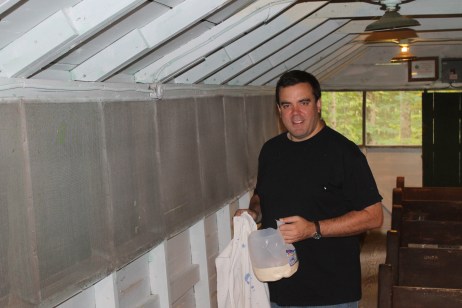
For more information and to pre-register (by September 19th) please contact the Environmental Education/Recreation Department at 716-354-9101 ext. 236 or email Katie.vecellio@parks.ny.gov. We will also gladly accept walk-in volunteers the day of the event.
Hope to see you there!
Please note: There are many other volunteer events taking place in our state parks around the state. Please visit our Events Calendar to search for opportunities near you.

Post by Heidi Tschopp, Allegany State Park Educator
What Are Macroinvertebrates?
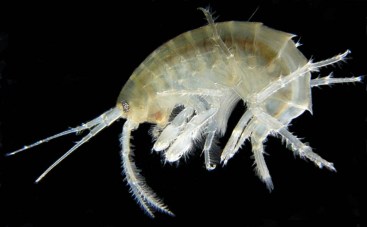
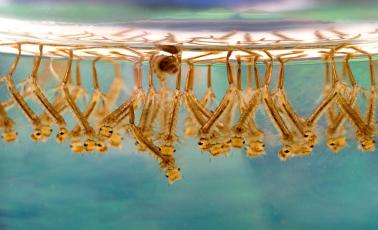
Freshwater benthic macroinvertebrates, usually simply called macroinvertebrates, are small animals that live in the water. They have three parts to their name: “Benthic” refers to the bottom part of a body of water, “macro” means that we can see it with our naked eye, and “invertebrate” means that it has no spine, or vertebrae. So, a benthic macroinvertebrate is an organism that lives at the bottom of streams, rivers, lakes, and ponds for part of its life, can be seen with the unaided eye, and has no backbone. Some macroinvertebrates have three life stages, while others have four. If the life cycle has four stages, it is called complete metamorphosis. If it only has three stages, the life cycle is called incomplete metamorphosis. The stages of complete metamorphosis are egg, larva, pupa, and winged or aquatic adult. The stages of incomplete metamorphosis are egg, nymph, and flying adult. Adult macroinvertebrates sometimes leave the water but live near it, and others continue to live in the water. Macroinvertebrates are a vital food source for fish, turtles, wading birds, and small mammals.
They are well suited to live in water, and many have interesting adaptations that allow them to thrive underwater. Caddisfly larvae build mobile protective cases out of stones, leaves, and small sticks to keep themselves safe. Mayfly nymphs have large gill areas to help them breathe. Predaceous diving beetles carry small bubbles of oxygen at the ends of their abdomens from the surface to use to breathe while underwater.
Another interesting thing about macroinvertebrates is that they can be used as an indicator of health for a body of water. This is because some species of macroinvertebrates are more sensitive to environmental stressors than others. Rivers, streams, and ponds with a variety of macroinvertebrates are considered healthy.

A mayfly nymph on the left; a mayfly adult on the right. Notice the gills along the back end of the nymph, this is how the animal gets oxygen from the water, similar to a fish.
Macroinvertebrates need dissolved oxygen in order to breathe in the water, just like fish. Dissolved oxygen references the microscopic bubbles of oxygen gas that are mixed with the water for aquatic creatures to breathe. Dissolved oxygen is sometimes measured in parts per million (ppm). Most fish do well in water with 5ppm of dissolved oxygen or higher. Pollution can cause water temperatures to rise, which reduces the amount of dissolved oxygen in the water. So, pollution decreases dissolved oxygen levels, making it hard for macroinvertebrates to breathe. A healthy body of water will have dissolved oxygen levels that are at or above 5ppm.
Macroinvertebrates as Indicators of Water Quality
There are many different types of macroinvertebrates, all with different sensitivities to temperatures, the amount of dissolved oxygen in the water, and pollution levels. Macroinvertebrates require similar dissolved oxygen levels as fish, but some species, such as mayflies, caddisflies, and stoneflies, need low temperatures and high levels of dissolved oxygen to survive. If you look for macroinvertebrates and find mayfly and stonefly nymphs in a stream, you can conclude that the stream is fairly healthy because those organisms could not survive otherwise. Those species are considered to be sensitive to pollution.
There are also species that are somewhat tolerant of pollution, like dragonflies, damselflies, and crayfish. These organisms do not need as much dissolved oxygen or as cool of temperatures as those that are sensitive to pollution and can stand a small amount of pollution in the water. If one were to find dragonfly nymphs in a stream but no mayfly, caddisfly, or stonefly nymphs, that could be an indicator that the stream has some pollution.
Finally, there are species that are tolerant of pollution. Some of these species are midges, backswimmers, and aquatic worms. These organisms can withstand a moderate amount of pollution, can live in warmer water, and do not need as much dissolved oxygen to survive. So, if one were to find many midge larvae and aquatic worms in a stream and little else, this would indicate that the water there is fairly polluted. Sometimes, tolerant macroinvertebrates can be abundant in degraded waters since they are not competing with others for resources like food and shelter.
Below is a list of several species of macroinvertebrates with their varying tolerances of pollution.
| Sensitive to Pollution
(found in water with little or no pollution) |
Somewhat Tolerant of Pollution
(found in water with little to some pollution) |
Tolerant of Pollution
(found in water with little to substantial pollution) |
| Stonefly | Scud | Water Strider |
| Mayfly | Crayfish | Backswimmer |
| Caddisfly | Alderfly | Midge |
| Hellgrammite (Dobsonfly) | Black Fly | Aquatic Worm |
| Water Penny | Aquatic Beetle | Leech |
| Gilled Snail | Crane Fly | Pouch Snail |
| Dragonfly | Mosquito | |
| Damselfly | ||
| Freshwater Clam | ||
| Sow Bug |

Pond Investigators Program
Clay Pit Ponds State Park Preserve’s education team has done several surveys of the ponds within the park to get an idea of the water’s health. Clay Pit Ponds is the only NY state park on Staten Island; the park contains 265 acres of forest, fields, wetlands, and five ponds. The park offers an educational program all about macroinvertebrates called Pond Investigators. In this program, students learn to identify macroinvertebrates, understand them as an indicator of water quality, and conduct a survey of one of the ponds. The most recent survey was conducted in Goode’s Pond, which is located along the Clay Pit Pond trail (orange markers). To survey for macroinvertebrates, the students and the Clay Pit Ponds education team scraped the bottom substrate of the pond, including some aquatic vegetation, with a dip net. Off to the side, a tub was partially filled with pond water. The collections from the dip net were transferred into the tub, and any macroinvertebrates found were placed into separate cups. This was repeated three times, and then the students recorded their findings.
Goode’s Pond is very close to the West Shore Expressway, which makes it an interesting pond to study due to the likely presence of runoff pollution from the highway. These surveys were completed along with water quality tests to check pH, dissolved oxygen, water temperature, and salinity. During these surveys, the Clay Pit Ponds education team and students found damselfly nymphs, dragonfly nymphs, backswimmers, midge larvae, crane fly larvae, black fly larvae, mosquito larvae, aquatic beetles, snails, and aquatic worms. While no pollution sensitive species have been found, which would indicate cleaner water, the samples did include many species that do not tolerate heavily polluted water. From this study we learned that the water in the ponds is in fair to moderately good condition at this time. With continued efforts to clean up in and around the ponds, we can keep this important habitat clean and preserve opportunities to see a diversity of wildlife, from dragonflies to great blue herons.

If you would like to help Clay Pit Ponds State Park Preserve improve the health of its ponds, join in for the National Public Lands Day Clean-Up on Saturday, September 24th from 10:00AM to 1:00PM! Participants will clear litter from the highways that border the park to prevent it from being washed into the ponds. The clean-up will start at the Nature Interpretive Center located at 2351 Veterans Road West, Staten Island, NY. All ages are welcome! Please RSVP by contacting Emily Becker at emily.becker@parks.ny.gov or (718) 605-3970 x201.
Post by Mikey Bard, SCA/Americorps Member serving as Assistant Environmental Educator at Clay Pit Ponds State Park Preserve
Is kayaking on your bucket list? Have you ever wanted to try it? Paddle sports are on the rise according to paddle sport statistics and kayaking is the most popular form of paddling. Kayaking allows you to experience new things and have your own unique experience with nature. Being only a few inches off the water and a few feet away from wildlife, you gain a new connection and understanding of the natural world around you. Kayaking is a recreational activity that is fun for all ages.


Here at the Niagara Region Interpretative Programs Office, we share our love of this paddle sport and pass our knowledge on to park patrons through free Smartstart paddling orientation kayak programs during the summer season. Our adventures lead us to paddle in the following waterways within New York State Parks:
The Lagoon at Beaver Island State Park
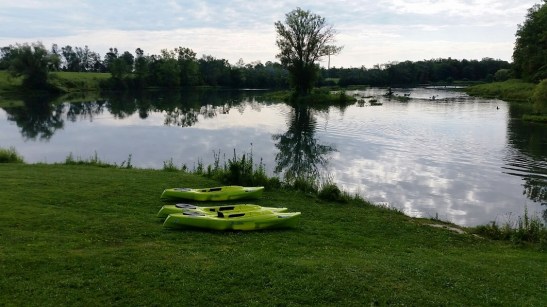
Gallagher Beach on Lake Erie at Buffalo Harbor State Park, the newest state park

Woods Creek at Buckhorn Island State Park
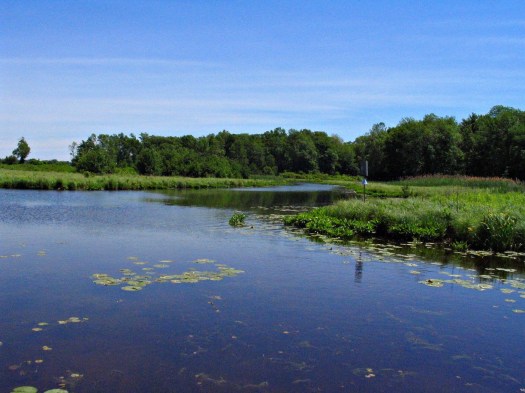
East branch of Twelve Mile Creek at Wilson Tuscarora State Park

And the west branch of Twelve Mile Creek at Wilson Tuscarora State Park

Beaver Island State Park Kayak Experience
Escape the daily grind, leave the phones and tablets behind and join us for a kayak lesson. Learn about kayaks, paddles, apparel and how to be safe on the water.
We’ll start our journey by launching off the EZ Dock Launcher, where you just put your kayak (which we supply) down on the rollers and roll off into the water.
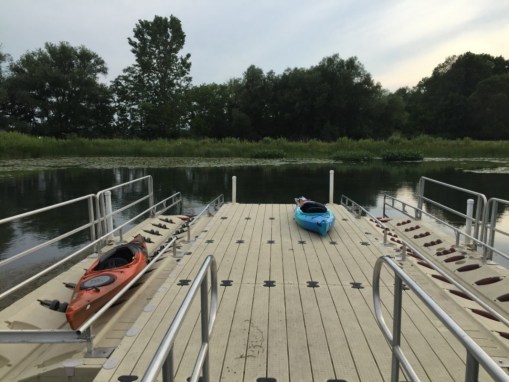
As soon as you’re floating on the water, chances are you will float right into a patch of fragrant water lilies, which are scattered all throughout the lagoon.


Along with the aquatic plants, there is an abundance of wildlife. You can witness Great Blue Herons wading in the shallow waters or flying overhead, while common terns are diving next to you trying to catch their next meal!


In the lagoon, we have an Osprey nesting platform. From our kayaks below we have had the pleasure of seeing the parent birds keeping watch over their chicks.


Swimming right below our kayaks is a diverse group of aquatic life such as fish and turtles, while flying around us are dragonflies and damselflies.
Our evening kayak classes are often accompanied by the ever telling song of the bull frog, singing along with the cicadas which are heard all throughout the park on any given summer day.


Getting out on the water with us can give you a chance to see all of this; but also give you a new understanding of kayaking as a sport, learn more efficient ways of paddling, and a few tricks of the trade. So what are you waiting for? Find a kayak class near you and see where your next adventure will take you. We are here. Where are you?

Post by Tina Spencer and Kelly Sieman, OPRHP, Niagara Region Interpretive Programs Office, Park Naturalists



 New York State Parks and Historic Sites Blog


