Tag Archives: Conservation

An Update on the Rare ‘Chitt’ Snail from Staff Snailblazers

From the sculpted drumlins of Chimney Bluffs to the majesty of Niagara Falls, each of our parks are memorable in their own way. But Chittenango Falls State Park has something you’ll find nowhere else on earth: the Chittenango Ovate Amber Snail, or Novisuccinea chittenangoensis.

You’re looking at one of the world’s rarest snails: the Chittenango Ovate Amber Snail, found only at Chittenango Falls State Park in central New York.

First discovered in 1905, the Chittenango Ovate Amber Snail (known to its friends as “COAS” or “Chitt”) is what scientists call an endemic species, meaning it’s found in only one place. While this makes COAS a very special snail, it also makes it a very vulnerable snail. Flooding, drought, climate change, invasive species, and human activity threaten the small snail colony and its habitat. Never very numerous, the colony numbered only about 70 individuals during the 2023 census.

Continue reading An Update on the Rare ‘Chitt’ Snail from Staff Snailblazers
With Reduced Mowing, State Parks Are Letting It Grow

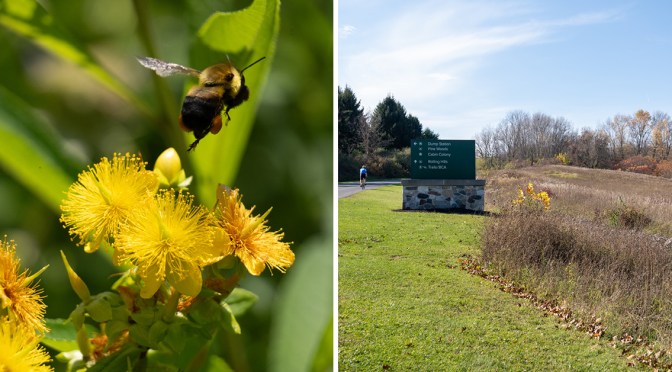
Close your eyes and picture this: You’re visiting your favorite New York state park, and as you drive along park roads or walk pathways near the visitor center, you notice tall grasses swaying in the breeze, bees and butterflies flitting between flowers, a chorus of young birds chirping in the distance, and a peaceful quiet without the hum of constant landscaping machinery.

Sound like a dream? Well, it’s become a reality! Through the ongoing implementation of the Reduced Mowing Policy—part of the New York State Pollinator Protection Plan—grow zones have become a staple at all state parks and historic sites. These zones, where native grasses and wildflowers are allowed to grow tall, continue to benefit the environment and local wildlife, proving to be more sustainable than traditional mowed areas and enhancing visitor experience in new ways. 

These signs greet visitors at many of the reduced mowing sites at our parks and historic sites in an effort to inform them of our work.
Continue reading With Reduced Mowing, State Parks Are Letting It Grow

New Stories Behind State Parks Expand History Timeline 

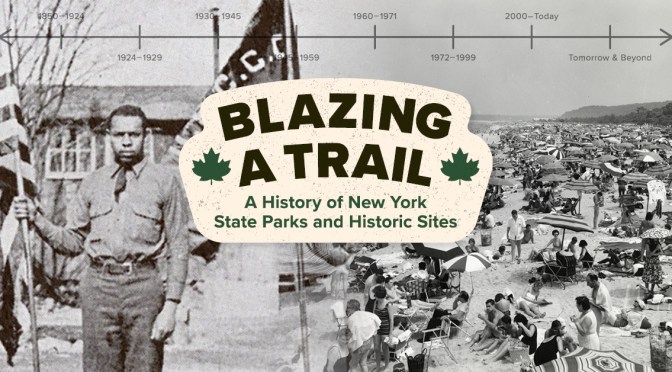
In celebration of our Centennial anniversary this year, we have been telling the story of New York State parks and historic sites through our interactive history timeline, Blazing a Trail. Since our last update on the blog, we’ve covered a lot of ground with three densely packed additions illuminating two eras of State Parks history.

Picking up where we left off in 1929, the new additions to the online exploration of our history span from the start of the Great Depression in 1930 until the end of post-war recovery in 1959.  

Continue reading New Stories Behind State Parks Expand History Timeline 

Sunken Meadow and Audubon NY Celebrate Latino Conservation Week

On Sunday afternoon, September 15, New York State Parks partnered with Audubon New York to host the second annual Latino Conservation Week event at Sunken Meadow State Park attended by hundreds of patrons. The goal of the event was to increase accessibility of coastal education and outreach messaging, including Audubon New York’s shorebird conservation outreach to the Latine community on Long Island. Towards this goal, four Spanish language interpreters lent their services to make this a bilingual event.

Continue reading Sunken Meadow and Audubon NY Celebrate Latino Conservation Week

What To Do During Wildlife Encounters

If you have ever been out enjoying New York’s great outdoors, chances are you have encountered wildlife. From chipmunks in the picnic grounds to bald eagles flying overhead, New York’s state park system provides over 350,000 acres of habitat that is home to hundreds of species of wildlife. These animals are important natural components of New York’s ecosystems.

If you are out hiking, biking, paddling, camping, hunting, or any other outdoor activity, there are some steps you can take to keep both you and wildlife safe.

  • Be aware of your surroundings. Keep your ears and eyes sharp while outdoors, and watch where you put your hands and feet.
  • Don’t feed wildlife. This disrupts their natural feeding habits and can lead to human-wildlife conflicts if the animals learn to take food from people. Always store your food properly. Never leave food unattended.
  • Stay on designated trails.
  • Always keep pets on a leash to protect them from any encounters.
  • Respect wildlife and give them space. When outdoors, remember you are in their habitat. If you are lucky enough to see an animal, remain at a safe distance.

Read on to learn more about a few specific animals and how you can stay safe if you encounter them.

Continue reading What To Do During Wildlife Encounters