New York is a state of great eats. Some of the regional delicacies born here have conquered the world, like Buffalo’s wings and Saratoga’s potato chips. Others, like Utica’s tomato pie and Plattsburgh’s Michigans, remain fiercely local treasures. But they all pair magnificently with a state park or historic site!
Follow along as our team plays sommelier with the Empire State’s distinctive dishes — and our agency’s unforgettable destinations. Pack your bags and bring your appetite!
Memorial Day and the unofficial kickoff to summer is nearly here. Many of us will be headed to our favorite state park for a weekend of camping fun or a relaxing afternoon picnic.
If you are looking for some easy recipe ideas for your trip, may we suggest…
MaryAnn’s breakfast sandwich, photo by van-Amos Public Domain
Maryann’s Easy Skillet Breakfast Sandwiches
Ingredients
Bagel or English muffin, 1 per person
Bacon, 2 slices per person
Eggs, 1 per person
American cheese, 1 slice per person
Equipment
Cast iron skillet
Fork
Spatula
Directions
Cook the bacon in the skillet and remove
Remove some of the bacon fat and grill the bagel or muffin
Remove the bagel or muffin and add the eggs
Cook easy over eggs adding cheese went egg is flipped.
Place the egg/cheese on one half bagel or muffin, place two slices of bacon, and top with the other bagel or muffin half.
Season to taste with salt, pepper, hot sauce or other seasoning.
Jackson’s pita pizza, photo by Jeffrey, accessed from Wikicommons
Pita Pizza, one of Jackson’s favorites:
Ingredients
Pitas
Tomato sauce (stored in a sealable plastic jar, plastic bags are a no-go)
Shredded cheese
Other toppings optional
Equipment
Spoon for spreading sauce
Tinfoil is optional but does make a more evenly cooked pizza
Cooking grate optional – you can also use a Y-shaped stick
Directions
Gather all ingredients: pitas, pizza sauce, pizza meat, and toppings and assemble your pizza
Get your campfire hot with low flames
Assemble the pita pizzas and lay them on the grill or Y-shaped stick over the campfire (your Y-shaped stick will not catch on fire as long as it is thick and you are cooking over coals and low flames- do not let the flames touch the stick or pita too much)
Cover the pizzas by tenting some tinfoil
Remove from the fire when the cheese is melted
Stefanie’s skillet nachos, photo by twopeasandtheirpod
Skillet Nachos are one of Stefanie’s favorites:
Ingredients
1 bag corn tortilla chips
1/4 cup onion ; diced
1/4 cup black olives; sliced
1/2 cup pepperoni; chopped
1 cup cheddar cheese; shredded
1/4 cup tomatoes; diced
2 tablespoons vegetable oil
1/4 cup sour cream
1/4 cup salsa
Equipment
10” cast iron skillet
Directions
Heat oil in a cast iron skillet. Spread evenly in layers the chips, onions, olives, pepperoni, tomatoes then the cheese. Cover and heat until the cheese melts.
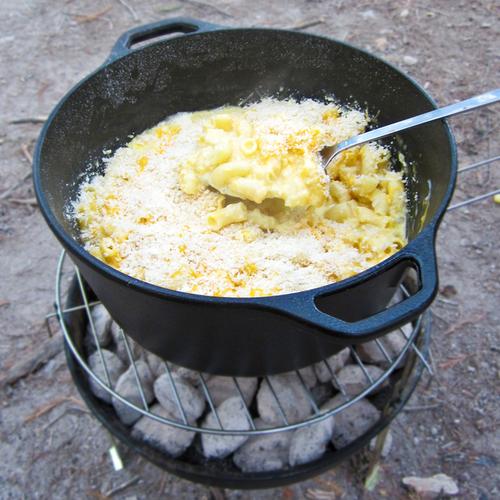
If you have a hankering for macaroni and cheese, Maryann suggests:
Skillet Mac N Cheese
For camping, measure out the ingredients before the trip and pack in smaller containers or Ziploc bags to save time and space.
Ingredients
2 cups uncooked elbow macaroni (about 8 ounces)
1-1/2 cups half-and-half cream
2 tablespoons butter
3/4 pound cheese (cheddar and smoked cheddar), shredded
2 tablespoons all-purpose flour
Optional toppings: cherry tomatoes
Equipment
10” cast iron skillet
Wooden spoon
1-1/2 qt. pot with lid
Directions
Cook macaroni according to package directions; drain.
Meanwhile, in a large cast-iron or other heavy skillet, melt butter over medium heat. Stir in flour until smooth; gradually whisk in cream. Bring to a boil, stirring constantly. Cook and stir until thickened, about 2 minutes. Reduce heat; stir in cheese until melted.
Add macaroni; cook and stir until heated through. Top as desired.
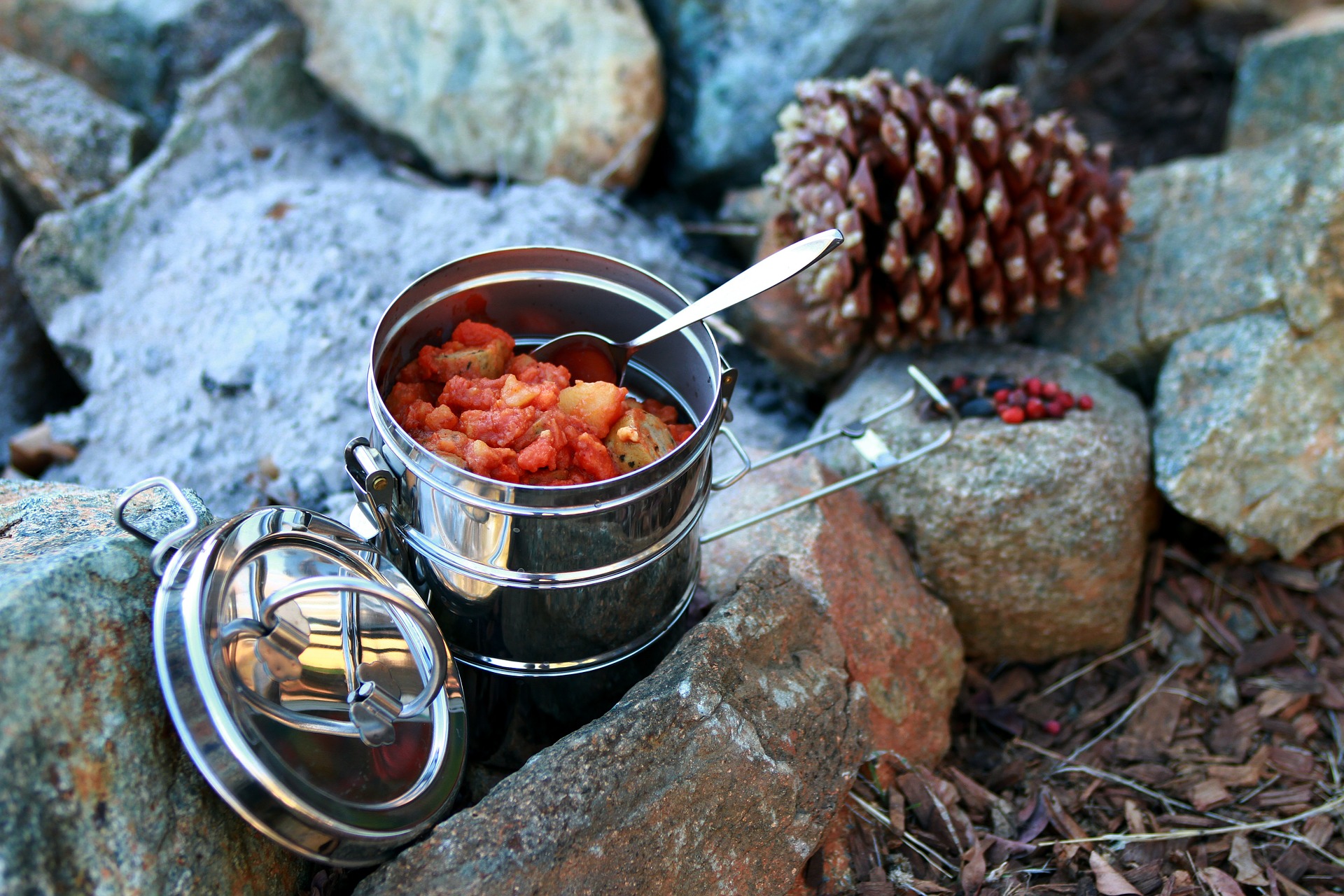
Ro’s one-pot stew, photo by PXHERE
Ro recommends this one pot meal:
Campfire Stew
Serves 12 people
Ingredients
3 lbs. 90% ground beef
3 10 oz. cans of concentrated alphabet vegetable soup
1 large onion, peeled and diced
Salt and pepper
Equipment
2-qt. pot with lid
Knife
Cutting board
Wooden spoon
Directions
Brown ground beef
Add onions and fry until soft
Add vegetable soup and just enough water to keep from sticking.
Cover and heat until hot.
Who can forget dessert?
Sarah’s peach cobbler, photo by Okie Boys, accessed from Flicker
Lazy Peach Cobbler from Sarah:
Ingredients
2 (30 ounce) cans sliced peaches, in syrup
½ stick (1/4 cup) butter
1 package white or yellow cake mix
1 can whipped cream, optional
Ground cinnamon to taste
Equipment
12” camp Dutch oven (the ones with feet and a flat top)
Directions
Place a 12-inch camp Dutch oven over 15 hot charcoal briquettes.
Pour contents of peach cans into oven. Spread dry cake mix evenly over peaches. Sprinkle cinnamon over all to taste. Cut butter into equal slices and arrange on top.
Put lid on top of oven and place 10 hot charcoal briquettes in a checkerboard pattern on top. Bake for about 45 minutes or until done.
Spoon into bowls and add cream, ice cream or whipped cream, if desired.
Dip the bread into the milk and then roll in coconut
Toast on a stick over embers, or cook in a pie iron or a reflector oven.
From Cooking Out of Door compiled by Alice Sanderson Rivoire published by Girl Scout of USA, 1960
Allison’s helpful hint for making refrigerated items last: fill 1-gallon jugs or large yogurt containers with water and freezing them to put in your cooler. They will last longer than a bag of ice and your food won’t be swimming in water as the ice melts.
Need more ideas? Check out these books and websites.
Books
Bell, Annie, The Camping Cookbook, Kyle Books, 2010.
Hansel, Marie, The Campout Cookbook: Inspired Recipes for Cooking Around the Fire and Under the Stars, Workman Publishing, 2018
Time Books, The Outdoor Adventure Cookbook: The Official Cookbook From The Ultimate Camping Authority, Oxmoor House, 2017
White, Linda, Cooking on a Stick: Campfire Recipes for Kids, Gibbs Smith, 1996
Long before refrigeration and supermarkets made it possible to get fresh fruits and vegetables from around the world, our predecessors relied upon drying, salting, fermenting, and pickling summer’s bounty for winter meals.
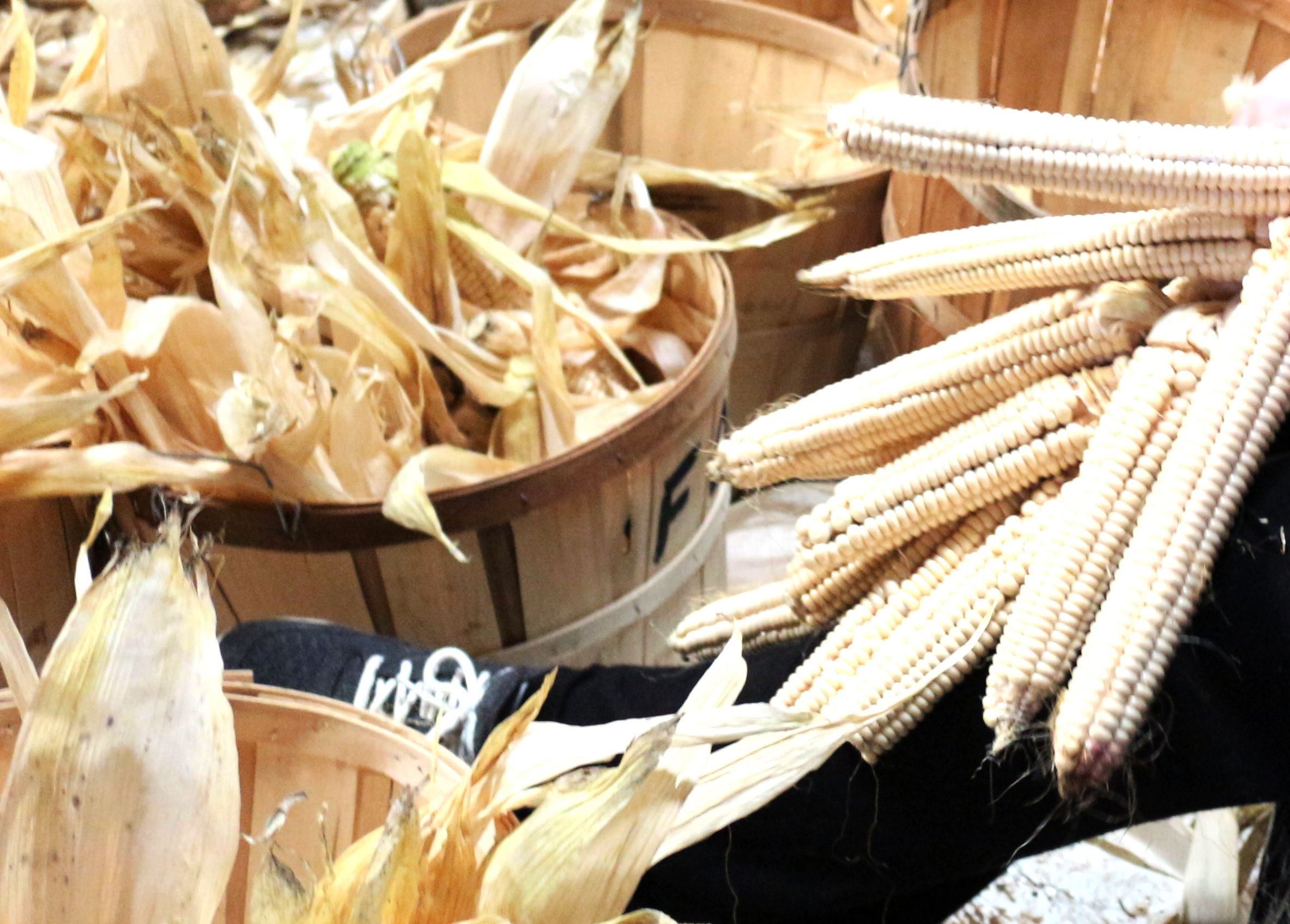
Allowing the wind and sun to dry food is the oldest method of food preservation. The Seneca and other New York Native American tribes dried millions of bushels of corn each year. The dried corn was turned into hulled dry corn and corn flour to sustain people during the colder months. Native Americans also dried meats, fish, and fruits such as blueberries for their winter meals.
Ganondagan State Historic Site Husking Bee, photo by Carol Llewellyn
Pickling vegetables and fruits goes back as far as 2030 BC. Pickling can be done in two ways, soaking the fruit or vegetable in either vinegar or saltwater (brine). The word pickle is a variation of the Dutch word for brine – pekel. Soaking vegetables in a brine bath is known as lacto-fermentation where lactic acid bacteria turn sugar in food to lactic acid.
Pickles of one sort or another have been produced and eaten in New York homes for many generations. Early European settlers sometimes used New World ingredients in their Old-World pickle recipes. One example of this is black walnut pickles, a variation of Old World English walnut pickles. Pickle recipes were passed down from one generation to another, with housewives recording the recipes in their special recipe book.
New York’s first European colonists were the Dutch, who maintained settlements along the Hudson River as far north as Fort Orange (now Albany). The van Rensselaers were a prominent Dutch family in the Hudson Valley. When sturgeon was abundant in the Hudson River, Maria van Rensselaer (a cousin to the Fort Crailo van Rensselaers) would use this hand-written recipe to pickle the sturgeon.
van Rensselaer family recipe to pickle Sturgeon, from Kellar, p. 12
And this recipe to pickle cucumbers:
Keep the Fruit n pickle till green, changing it often, then in cold water 2 days changing very frequently, then wipe and dry them & to every six lb fruit 8 lb Sugar, 6 lemons, ¾ raw ginger a bit of Mace- boiled to a clear Syrup. When cold pour it on the fruit, the day after pour it off & give it another boil – the next day as the same & as often as necessary, never pour it on hot, for it will spoil them.
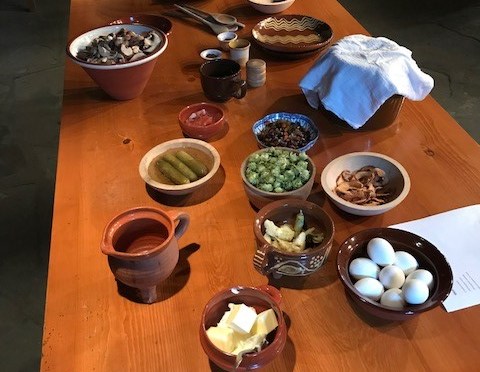
Eggs were one of many foods that were pickled because egg production is linked to day length; hens need about 13 hours of light a day to lay eggs. Staff at Loyalist home Philipse Manor Hall may have used a recipe similar to this recipe from The Lady’s Assistant (p. 277) to make pickled eggs.
To pickle Eggs.
BOIL the eggs very hard: peel them, and put them into cold water, shifting them till they are cold. Make a pickle of white-wine vinegar, a blade of mace, a bunch of sweet herbs, and a little whole pepper; take the eggs out of the water, and put them immediately into the pickle, which must be hot; stir them a good while, that they may look all alike; untie the herbs, and spread them over the top of the pot, but cover them with nothing else till they are turned brown; they will be fit to eat in nine or ten days.
Bruise some cochineal; tie it up in a rag; dip it in the vinegar, and squeeze it gently over the egg, and then let the rag lie in the Pickle. This is a great addition.
During his stay at the Hasbrouck House in the Hudson Valley it is possible that George Washington, who was a big pickle fan, dined on some of his wife’s pickles. Recipes from Martha Washington’s hand-written Booke of Cookery includes recipes (or receipts as they were once called) for pickling a variety of food from cowcumbers (cucumbers) to mackerel – George probably enjoyed them all!
From Martha Washington’s Booke of Cookery
Dianthus, formerly known as cloue (clove) gillyflower, photo by Noordzee 23, accessed from Wikicommons
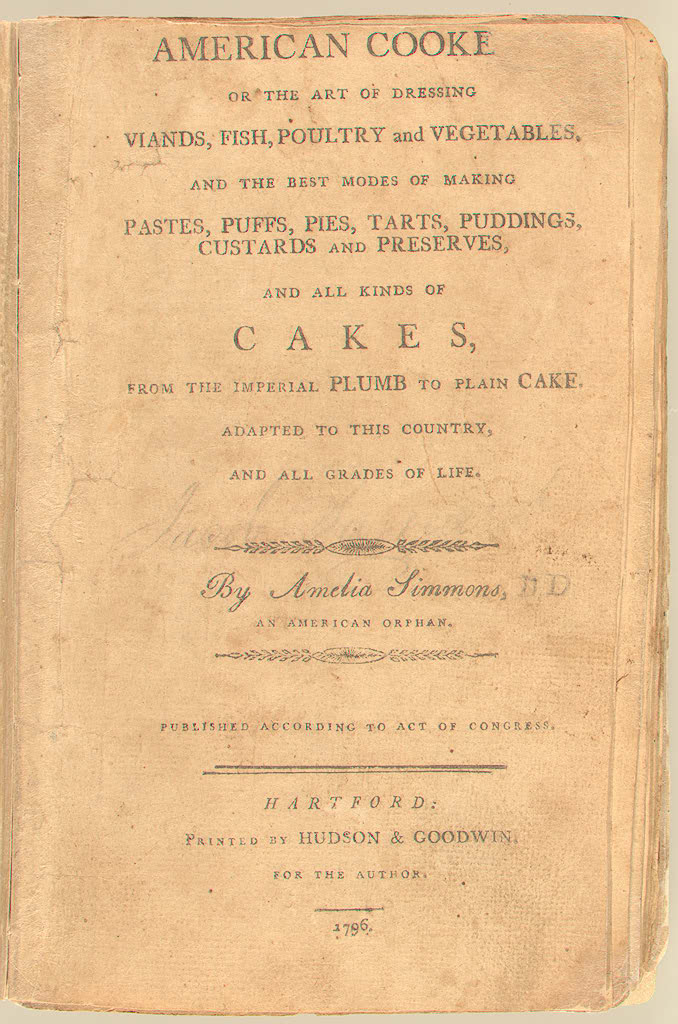
Cooks in the Jay, Livingston, and Schuyler families may have had access to Amelia Simmons American Cooke, the first American cookbook It was first published in Hartford, Connecticut 1796, with a second publication in Albany New York also in 1796.
Pickling recipes in Simmons cookbook included pickling the barberry fruit:
To pickle Barberries, from Simmons, page 43
Barberry fruit, photo from Wikicommons
The Lincklaen family recipe book from Lorenzo House included to pickle Chalottes (shallots) and to pickled cucumbers.
Recipes for pickled Chalottes (shallots) and cucumbers from the Lincklaen family cookbook.
Frederic Church’s family maintained a farm and gardens at Olana in the Hudson Valley. Some of the produce from the farm was used to make pickles, including this Sweet Variety pickle:
Church family recipe for Sweet Variety pickle
Pickles were not only important part of many New York family meals, they were also a menu staple on the military bases in New York as this menu from Fort Ontario illustrates.
Christmas dinner menu, 1939, Fort Ontario.
If you would like to learn more about preserving the summer harvest, maybe you can join in on the We Can Pickle That! program at Clermont State Historic Site on September 8.
Please note: recipes in this blog are for historic reference only and should not be made at home. The National Center for Home Food Preservation provides a wealth of information about food preservation as well as food preservation recipes for the modern family.
Kellar, Jane Carpenter. (1986) On the score of hospitality : selected recipes of a van Rensselaer family, Albany, New York, 1785 – 1835 : a Historic Cherry Hill recipe collection. Albany, NY, Historic Cherry Hill.
Mason, Charlotte. (1778) The Lady’s Assistant3rd Edition, London.








 New York State Parks and Historic Sites Blog