Halloween is almost here and that means costumes! Maybe you’re putting the finishing touches on your own or your child’s. Maybe your creation has been done for weeks and you’re ready to show it off. Maybe you’re about to close this window and type “easy Halloween costumes for sale, next-day shipping” into your search engine. Or maybe all of the costume chatter simply brings back memories of costumes from years past.
Costumes are nothing new. Worn for parties or plays, they have been popular throughout history. Explore some costumes that were photographed and featured in the family albums from Clermont State Historic Site in Germantown and John Jay Homestead State Historic Site in Katonah. (Bonus: Some costumes were saved and are now part of their historic collections!)
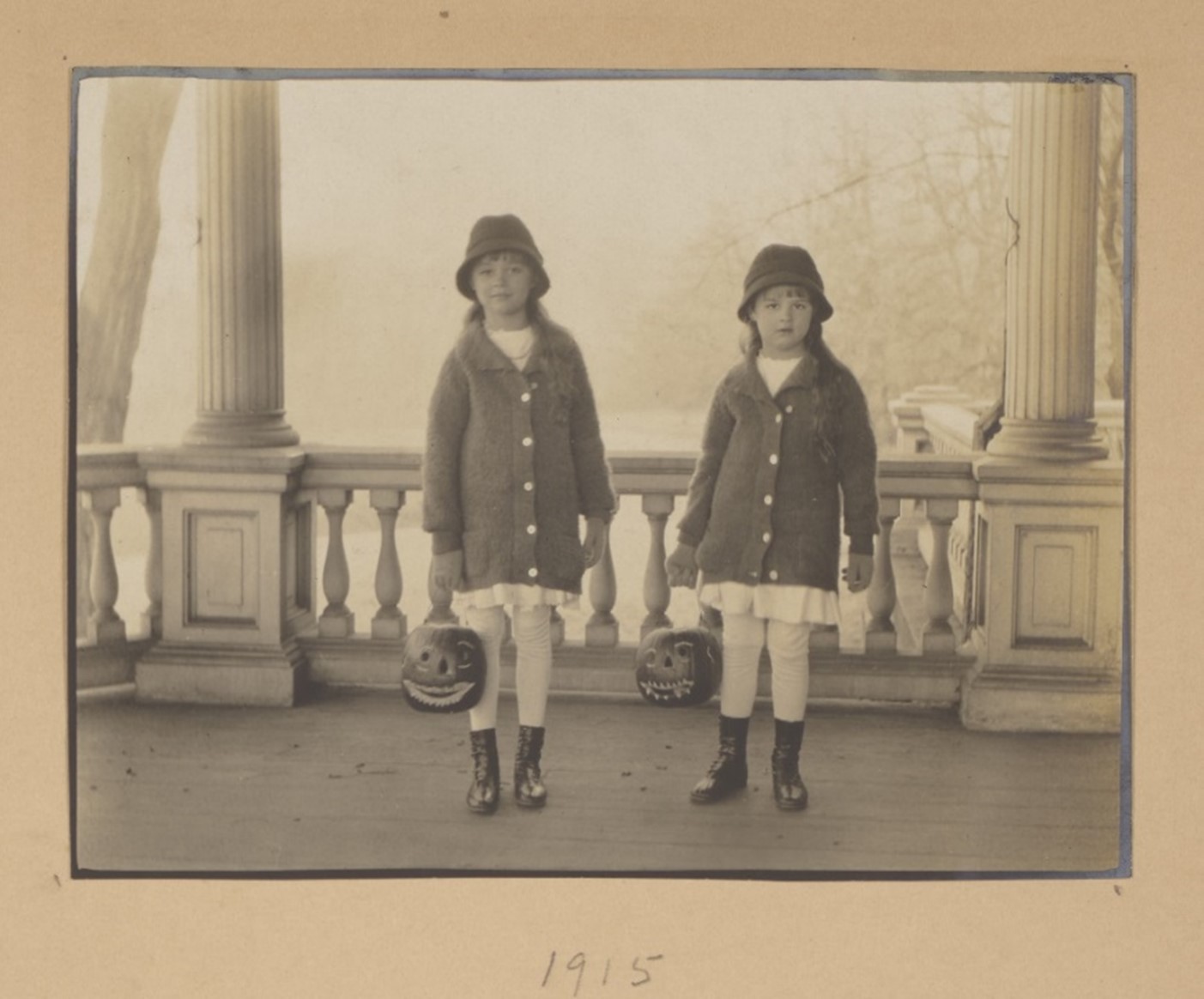
Honoria and Janet Livingston on the porch at Clermont State Historic Site holding jack-o-lanterns (1915). Photograph in photo album. New York State Office of Parks, Recreation and Historic Preservation. Clermont State Historic Site. Gift of Honoria Livingston McVitty, CL.2000.211.20.F
Crisp air. Crunchy leaves. Fall is a magical season. Temperatures are just right for hiking, biking and outdoor adventure. There’s vibrant color everywhere and honking geese overhead. It’s the season of apple cider donuts, pumpkin spice, and of course, Halloween! Maybe that’s why fall has eclipsed summer as the busiest time of year at our parks and historic sites? For your consideration and enjoyment, our seasonal outdoor fun experts have returned to help you squeeze every last drop out of this delightful season!
With the chill in the air and pumpkins popping up everywhere, many folks are making plans for Halloween. Signs are out inviting ghosts and goblins, large and small, to join historic cemetery tours that highlight the resting places of the victims of murder and mayhem as well as the rich and famous, some even by candlelight. If you’re thinking of adding a cemetery visit to your agenda, these tours offer safe ways to weave through complicated landscapes and monuments for the dead. For many reasons, however, the last ten years have also seen a marked increase of people visiting historic cemeteries around Halloween on their own.
In the 19th and early 20th centuries, cemeteries in or near urban spaces were used as places to picnic and relax before public parks were readily available. These days, Halloween, which is fast approaching the social status of a major holiday, has increased people’s interest in them. Not just for visiting family or friends buried there, but also as locations for weddings and other celebrations. Mortuary art has evolved over the years, and the artistry of historic gravestones and mausoleums can often rival what is seen on public and private building, allowing people to get up close in a way they cannot in many locations.
New York’s historic cemeteries range from the 17th through the early 20th century and cover every culture. Many offer visitors a rare opportunity to travel the state’s historic timeline for hundreds of years within their acreage. The variety of headstones is amazing to behold. This higher number of visitors is, unfortunately, often causing unrepairable damage to grave markers or headstones. Fragile historic artifacts that often appear more solid than they may be.
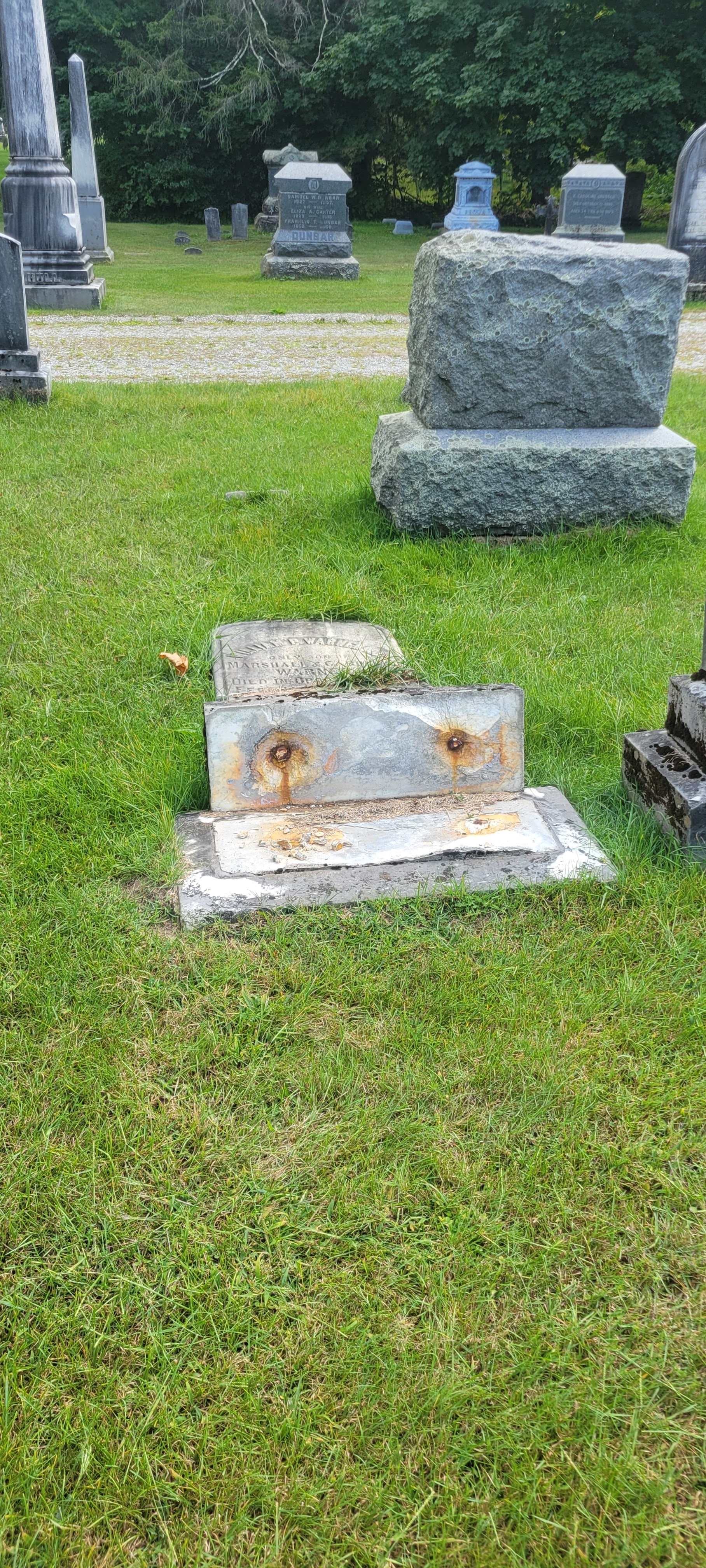
A toppled headstone. Photo credit: Ian Stewart, Preservation Inc.
Within these sacred spaces the sizes and types of stones or cement work used to mark graves can range from folk art to opulent cement work and newly created stones with laser cut designs. To preserve these artistic and historically significant pieces it is important that a few etiquette rules be observed. By doing so, we can ensure the history they represent remains for years to come.
Crown Point State Historic Site lies at the tip of a peninsula, jutting northward into Lake Champlain, a place at one time quite remote with a unique history at the crossroads of war, laced with more than a few tales of folklore, mystery, and imagination befitting the Halloween season.
A calico patchwork in fall of orange, red and gold, the Adirondack Mountains flank the western shore of the lake while the Green Mountains of Vermont rise along the eastern side, just beyond the farmland of the valley floor. It is a majestic, glorious landscape with a sky so expansive, it is a daily reminder of our small place in this universe, a place where young 18th century soldiers who once manned this stone fortress must have felt far removed from the rest of the world they knew
As twilight approaches, the breath and expanse of this geography folds into itself as the darkness envelops the mountains and lake. The mere depth of the night is unnerving enough but without the benefit of sight, sounds are amplified in the deep black of the understory of the trees. Owls calling above and rustling in the brush below are reminders of how vulnerable we seem in the vast darkness of this wilderness even today.
Located in Essex County, Crown Point has been on both the historic State and National Registers of Historic Places since 1976, significant as the location of ruins of the French-built Fort St. Frederic (1734) and the British fort, H.M. Fort at Crown Point (1759), the largest fortification erected on the North American continent at the time. The French and British fought bitterly for decades over control of this place – precisely because of the sightlines the majestic landscape could afford those who wanted command of the waters of Lake Champlain, pointed like a silver dagger from Canada into the heart of Colonial New England.
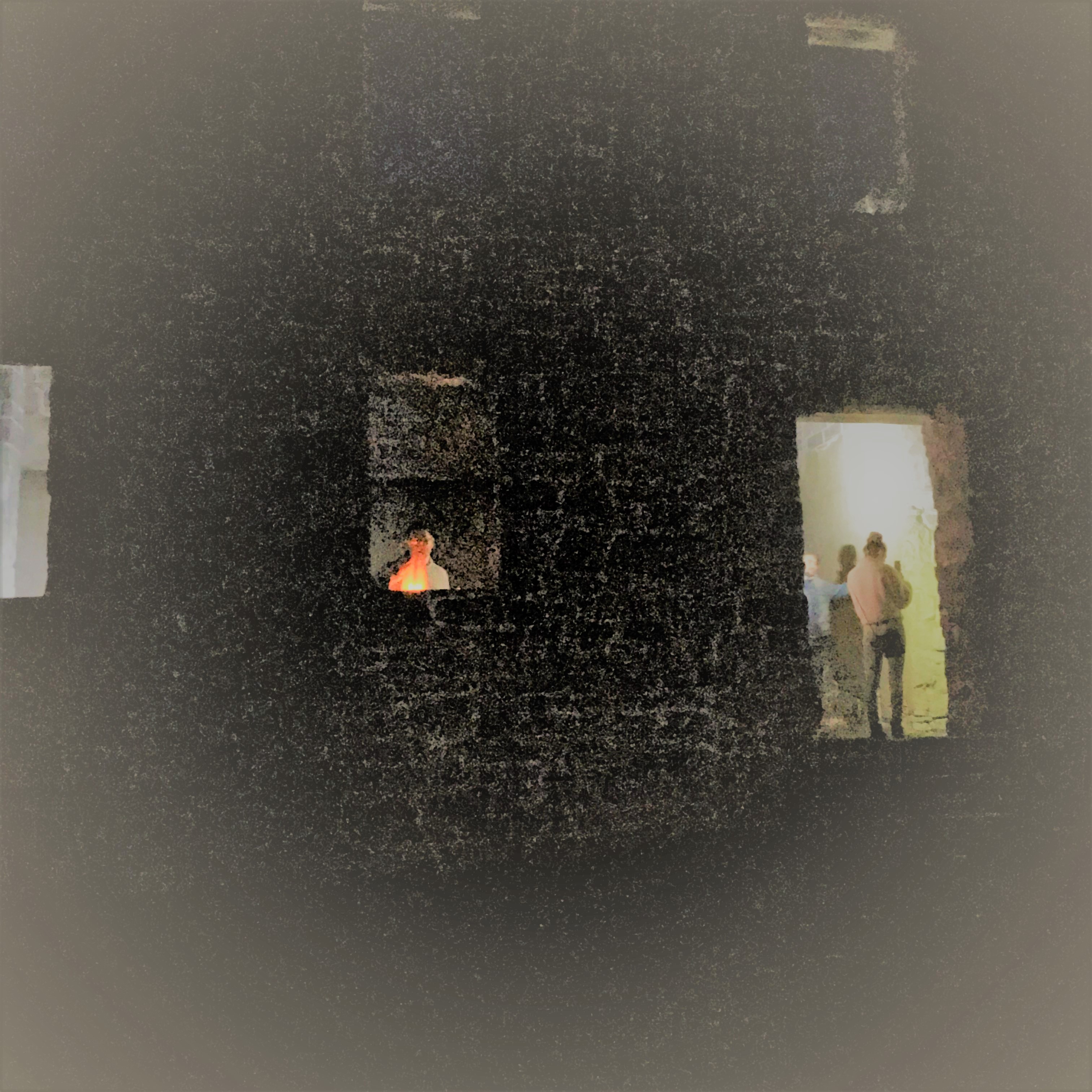
NYS Office of Parks, Recreation and Historic Preservation endeavors to preserve the Crown Point ruins in their current state as part of the 1910 stewardship agreement when New York State was gifted the property. One of the defining features of the site are the officers and soldiers’ barracks in the British parade grounds, stones silently stacked and hidden behind the fort walls. The structures are missing stairways, second story flooring and roofs; there is an ethereal quality upon viewing them, when conscious of the intended permanence of these structures and the ravages of time since people lived, worked, suffered and died within.
Take the darkness of night, mix with centuries old ruins, top off with harrowing local lore and this proves to be the perfect elixir of sinister, spooky, and spine-chilling. Visitors to the Haunted Histories at the Forts scheduled for October 29 will be welcomed with cider and donuts donated by local orchards and greeted with the first of many true, but unexplained tales at the site.
Visitors to a previous Haunted Histories at the Forts events hear tales of some of the mysteries at and around the Lake Champlain historic fortress.
Present day meets the past in the most unfortunate of coincidences – this is not the first epidemic witnessed at Crown Point. The winter of 1775-76 found Boston in the throes of a smallpox epidemic. Many know of the story of the artillery recovered from Crown Point and how General George Washington used the guns to drive out British troops during the Siege of Boston; however less well known, is at the time of liberation, the city was also ravaged by a pandemic of smallpox.
Most British troops had been inoculated or had the smallpox previously and were immune. In Europe, where smallpox was pervasive, most would have been exposed to the disease and likely had antibodies to protect them. 1 This protection was not the case for Indigenous peoples nor the colonists, and the disease persisted in Boston throughout the beginnings of the war, peaking in July 1775 and gradually subsiding by September of that year. At that time, little was known about virology, and isolation was used as the primary control of transmission.
But then as now, that was only the first wave of the epidemic in the Colonies. During the summer of 1775, the Continental Army launched the ill-fated Northern Campaign in an attempt to dislodge British forces in Canada. Crown Point became the launching pad for these Patriot attacks directed at British-controlled Montreal and Quebec on the St. Lawrence River.
The second wave of the epidemic came in the midst of this campaign in 1776. Patriot Major General John Thomas, Commander of the Army in Quebec, died of the disease in the summer of 1776 as the disease-weakened Continental Army was repelled from Quebec. By that point, an estimated 3,000 men of the Northern Army were sick, most with smallpox.2 After a five-month siege on Quebec, defeated, diseased colonial troops withdrew to Crown Point where a hospital was set up.
William Scudder, an officer serving in the New York 4th Regiment during the campaign, wrote in his journal:
“In June, I had the command of some batteaux…that were loaded with provisions to go to Crown Point, where our army then lay, under the command of General Sullivan, having retreated from Canada, – an such a scene of mortality was exhibited at that place, I never had beheld. The hospital I judged to be about one hundred and fifty feet in length; on the lower floor in two ranges on each side, the poor sick and distressed soldiers. Their disorder was chiefly the small-pox – Some groaning and begging for water, some dying and other dead and sewed up in their blankets; let it suffice to say, that by the middle of the afternoon they would begin to carry the dead from the hospital; I counted twenty-one carried out at one time, and it was common to bury fifteen or twenty in a day.” 3
Archeologists have been working at Crown Point from the mid-1950’s to the present. In addition to first-hand accounts of those laying their final rest here, there are the Fort St. Frederic parish birth and death records of the French that inhabited the site prior to both the British and Colonial occupations. Despite all the historical records, and the extensive archeological work throughout the 21st century, no evidence of human remains have ever been found. The French were Catholic, which prohibited them from burning the bodies, and even if the diseased soldiers had been disposed of by incarceration, there would be carbon remains. No reasons can be found to explain this mysterious absence.
It’s not only the history that cannot be explained, but the mountains and lakes that surround Crown Point that are just as elusive and mystifying, as evidenced proven by both news reports and stories local inhabitants have passed down through generations.
Long before any European settlers arrived in the area, both the Abenaki and the Haudenosaunee native people had stories about a large creature inhabiting the lake. It was called Ta-to-skok by the Abenaki, a word meaning creature with two tusks. Early in the 18th century, Abenakis warned French explorers about disturbing the waters of the lake, so as not to disturb the serpent.
Samuel de Champlain’s diary reveals the following entry:
“. . . [T]here is also a great abundance of many species of fish. Amongst others there is one called by the natives Chaousarou, which is of various lengths; but the largest of them, as these tribes have told me, are from eight to ten feet long. I have seen some five feet long, which were as big as my thigh, and had a head as large as my two fists, with a snout two feet and a half long, and a double row of very sharp, dangerous teeth. Its body has a good deal the shape of the pike; but it is protected by scales of a silvery gray colour and so strong that a dagger could not pierce them.”
Never one to miss a trick, showman P. T. Barnum offered a reward of $50,000 in 1873 for “hide of the great Champlain serpent to add to my mammoth World’s Fair Show.” 4 No one ever claimed it.
The Regional Office of Sustainable Tourism lists many 19th century sightings, with 1873 being a particularly robust year. A New York Times story reported that a railroad crew had seen the head of an “enormous serpent” in Lake Champlain, with bright silvery scales that glistened in the sun. In July that same year, Clinton County’s Sheriff, Nathan H. Mooney, reported an “enormous snake or water serpent” he thought was 25 to 35 feet long. Then in August, the steamship W.B. Eddy encountered Champ by running into it. The ship nearly turned over, according to many of the tourists on board. Never one to miss a trick, showman P. T. Barnum offered a reward of $50,000 for “hide of the great Champlain serpent to add to my mammoth World’s Fair Show.” 4
The stories continue through the decades, marked by a roadside sign upon entrance to the neighboring town, Port Henry, where they celebrate Champ Day each summer, hoping to catch sight of him again.
Fun folklore or relative of Nessie, world famous occupant of the Scottish Loch Ness? Fast-forward to contemporary times, and a quick Google search on Champ turns up what may be the only existing photo of his presence, taken by Sandra Mansi in 1977 while vacationing in northern Vermont. 5
A 1977 photograph allegedly showing the mysterious Lake Champlain beast, taken by Sandra Mansi. Below, the Champ sign outside Port Henry.
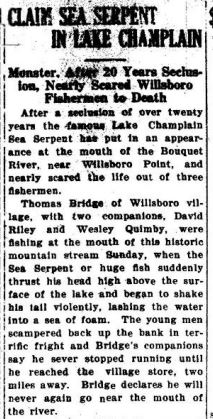
Local newspaper accounts of Champ sightings, (left to right) from the Essex County Republican (1895), and Ticonderoga Sentinel (1929, 1937)
Ronald Kermani, a former investigative reporter for the Times Union, whose family has a camp on Lake Champlain. He has spent summers here for the past five decades and told of his experience, at 7:10 a.m. on July 2, 1983, when he was fishing in a rowboat with a girlfriend.
He said he saw a creature about 30 feet away with “three dark humps — maybe 12 inches thick — protruding about two feet above the surface … two or three feet apart.”
Kermani wrote: “We watched in disbelief for about ten seconds. The humps slowly sank into the water. There was no wake, no telltale sign of movement. Unexplained. Eerie. Unsettling.”
He did not get a picture because he did not have a camera. Ever since, Kermani, who is retired and lives in Guilderland, has carried a camera in the boat with him when he is out on the lake — just in case. 6
It’s not just below the surface that menaces. In the mountains to the west of the peninsula are indigenous burial grounds. Coot Hill near Port Henry has long been a reported locus of visions, vengeful murders, and accumulation of gruesome accidents. Maybe they should have looked for property elsewhere to settle.
There’s not enough space to even address the French werewolves, apparitions appearing in the parade grounds, drowned Scottish soldiers or sounds that emerge and then follow a person as they try to retreat. History books can explain some, but not all. Coupled with deep darkness and imagination, that makes for a chilling trapse across the grounds at Crown Point, particularly in the dark of night. For the Haunted History event, 18th century costumed interpreters will portray the restless soul of French settlers, who would have arrived at Fort St. Frederic with stories of their own to tell.
Keep your friends close and your flashlight on!
Post by Lisa Polay, Site Manager, Crown Point State Historic Site.
SOURCES
1 Gil Jr.l, Harold B. Colonial Germ Warfare. Colonial Williamsburg Journal. Spring 2004.
2 Fenn, Elizabeth A. The Great Smallpox Epidemic. History Today. Vol 53: Issue 8. August 2003.
3 The Journal of William Scudder, an officer in the late New York Line, who was taken captive by the Indians at Fort Stanwix, on the 23rd of July, 1779, and was holden a prisoner in Canada until October, 1782, and then sent to New York and admitted on parole. Evans Early American Imprint Collection
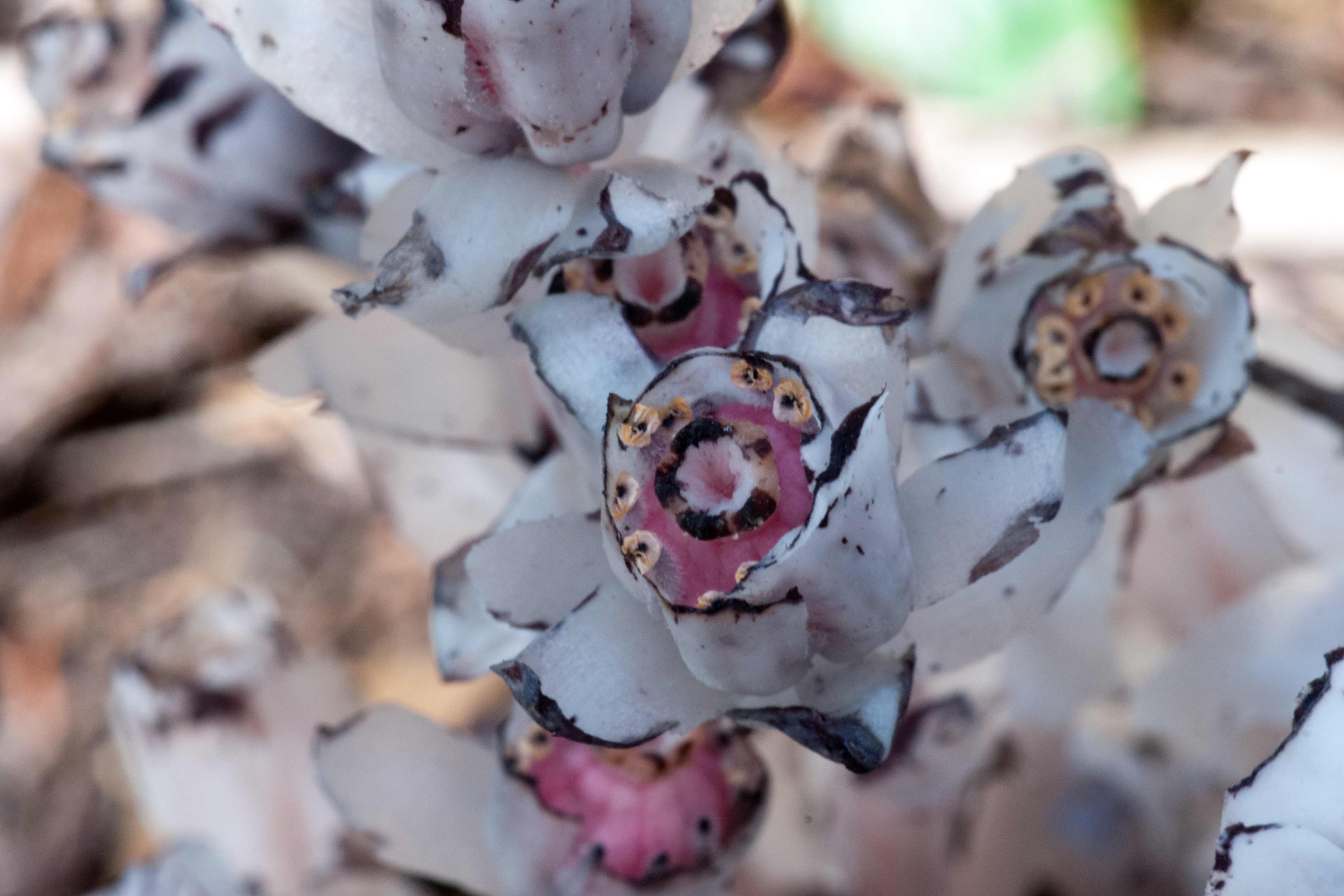
What’s black and white and spooky all over? The ghost plant! More commonly known as Indian pipe (Monotropa uniflora) since it is said to resemble a Native American peace pipe, it is also known as corpse plant, death plant, and ghost flower. This unusual looking plant is often mistaken as a fungus because it is mostly white and doesn’t have any chlorophyll… but it is really a flowering plant and is actually part of the same Family (Ericaceae) that includes blueberries, cranberries, azaleas, and Rhododendrons. Weird, right?
Photo by Missouri Department of Conservation
You’ll often find Indian pipes in dark and spooooky environments. Since it doesn’t have any chlorophyll it doesn’t need light to photosynthesize its own food. Instead, the food source for this plant is a lot more sinister, for it is actually a parasite! Specifically, Indian pipes are parasitic on mycorrhizal fungi in the soil. Mycorrhizal fungi have a symbiotic relationship with trees (epiparasitism), meaning both the fungi and trees both benefit from each other. The tree gathers sunlight and use it to turn water and carbon dioxide into sugars and other carbohydrates. The fungi harvest minerals in the soil. The tree and fungi then exchange these resources in a process that resembles a harmonious story of cooperation and mutual benefit. It is then exploited by the Indian pipe.
Emerging Indian pipe flowers, photo by Treegrow, accessed from Wikicommons
Rare pink Indian pipes, photo by Magellan, accessed from WikiCommons
What happens is the tree obtains its energy (sugars and other carbohydrates) from photosynthesis and the fungus obtain some of those sugars directly from the tree roots. So how does the Indian pipe get its energy from the fungus? Some menacing tom-foolery, that’s how! The Indian pipe actually tricks the fungus into thinking it is forming a mycorrhizal relationship, but in fact the Indian pipe is parasitizing the fungus! The Indian pipe essentially gets a free ride and doesn’t have to produce its own energy or absorb its own minerals. Typically, when a parasite exploit a host the host fights back, but for some reason the fungus and tree goes along with the Indian pipe’s menacing ploy.
Indian pipe flowers, photo by Staben, accessed from Wikicommons
After months, and sometimes years, of gathering its nutrients from the fungus into its root system, the Indian pipe, almost rather suddenly, develops above ground. White stalks and then flowers are produced, which are then pollinated by insects. Once pollinated the Indian pipe releases tens of thousands of extremely tiny seeds, which hardly have the food storage capacity to start a new plant. Those seeds are dispersed long distances by wind and settles to the ground. Once there, the seeds actually don’t start growing right away. In fact, the seeds chemically mimic a tree’s root systems and wait for certain types of mycorrhizal fungus to come along. The fungus then attaches to the seed as it would to a tree, but then is forced into providing nutrients the tiny seeds needs to grow! So essentially, from seedling to growth to pollination to seed dispersal, the Indian pipe does almost absolutely nothing itself!
Dried Indian pipe flowers, photo by Ryan Hodnett, accessed from Wikicommons
Due to its fascinating nature, the Indian pipe has been immortalized by many poets and storytellers in their works, including Emily Dickinson, whose favorite flower was the Indian pipe. She drafted the poem “‘Tis whiter than an Indian Pipe-” in 1879:
Tis whiter than an Indian Pipe –
‘Tis dimmer than a Lace –
No stature has it, like a Fog
When you approach the place –
Not any voice imply it here –
Or intimate it there –
A spirit – how doth it accost –
What function hath the Air?
This limitless Hyperbole
Each one of us shall be –
‘Tis Drama – if Hypothesis
It be not Tragedy –











 New York State Parks and Historic Sites Blog