From placid lakes and intimate mountain streams to broad rivers and sea-foamed saltwater coast, the state park system offers limitless fishing possibilities and the enticing prospect of “tight lines.” Striped bass, bluefish, salmon, trout, panfish and freshwater bass are but a few of the many popular fish species that can be fished for at state parks, with angling set amidst the backdrop of some of the state’s most compelling and dramatic natural scenery.
For a reel-y good time: fishing is a whole different way to connect with the outdoors. Photo by Susan Lananger, Allegany State Park.
While some anglers may prefer the fall striped bass bonanza at Montauk Point, with its festive atmosphere and challenging rock-strewn shoreline, others may find flyfishing for brook and brown trout on the remote hemlock-lined streams of Allegany more to their liking. State parks additionally offer numerous options for recreational boat fishing. Launches for motorized boats are located strategically throughout the state on prime angling waters, along with smaller docks and launches providing lake and river access for canoes, kayaks and the like.
State parks offer anglers premier opportunities on two great lakes, the Hudson, St. Lawrence, Niagara and other smaller rivers, numerous streams and brooks, countless lakes of varying size and setting, and the saltwater shores of Long Island Sound and Atlantic Ocean. If there’s a fish to be angled for in New York State, be it fresh or saltwater, chances are good that it can be found in a state park.
Through I Fish NY, the New York State Department of Environmental Conservation helps New Yorkers understand the basics of fishing legally and offers opportunities to try the activity. Our parks often hold fishing programs as well. Read on for our guide to angling at state parks!
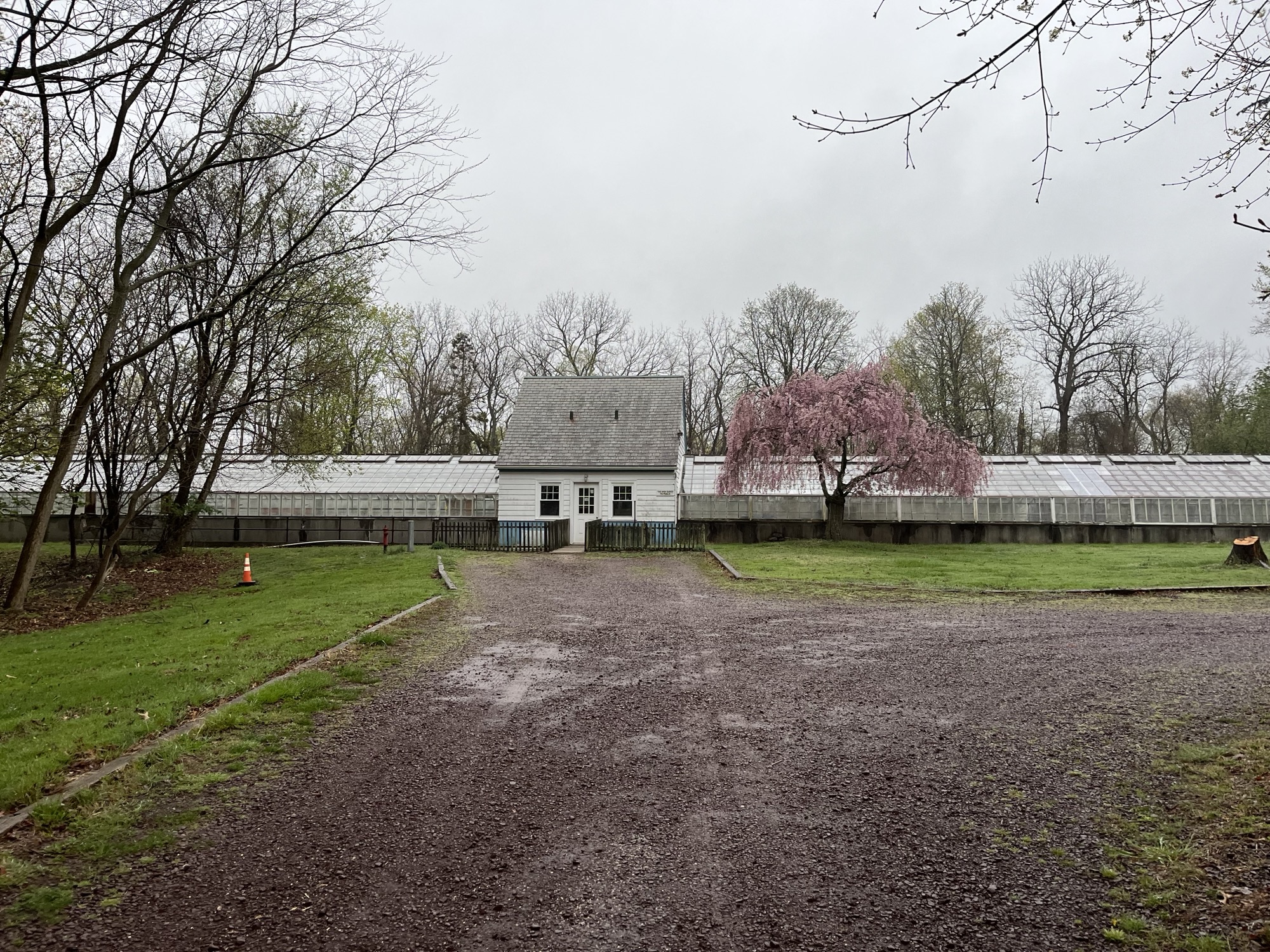
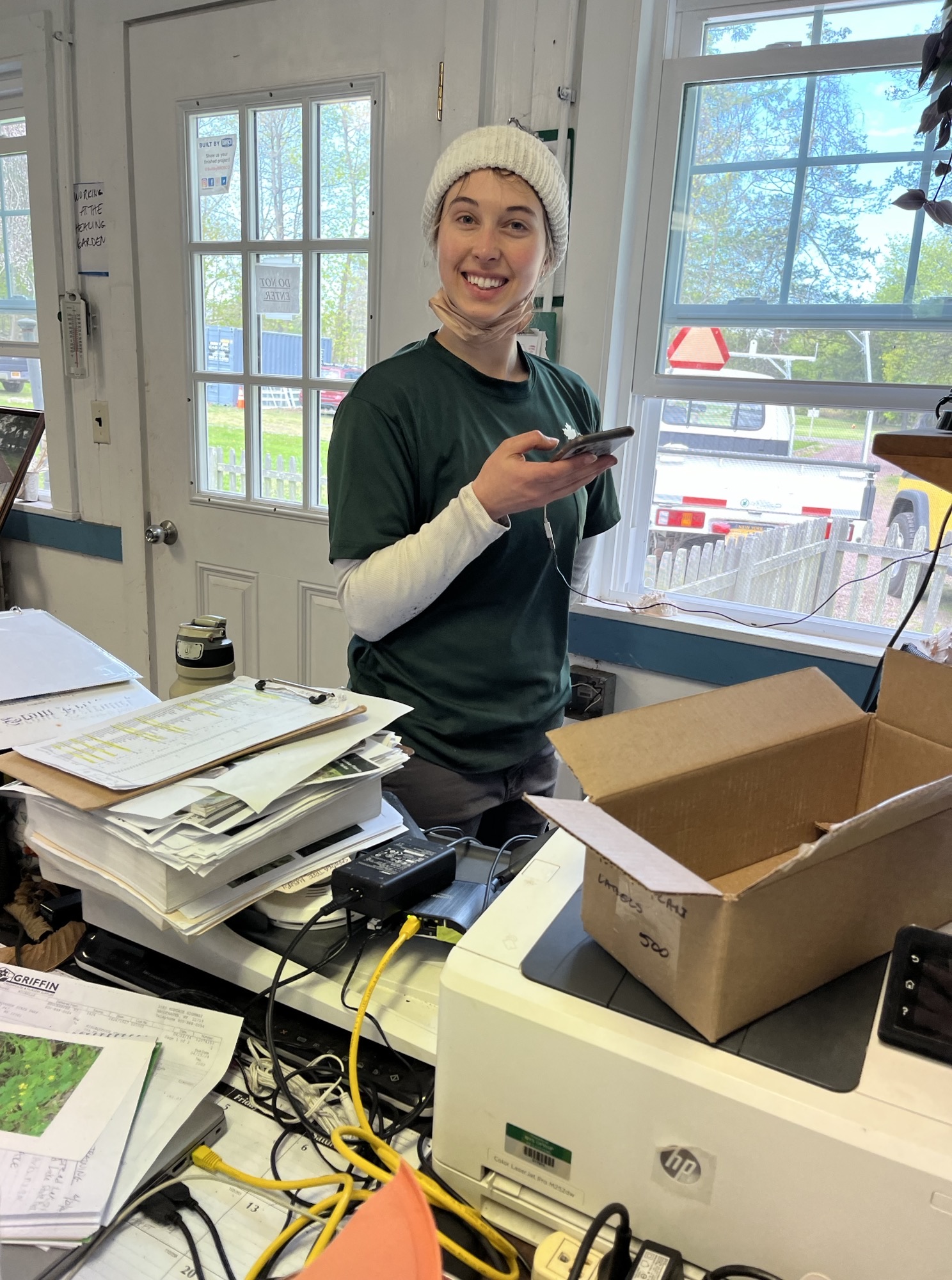
Where does New York State Parks get its flowers, perennials, shrubs and trees? For the parks on Long Island, the answer for the past two and a half years may be simply “Michelle.” Since becoming the manager of the Nissequogue River State Park greenhouse, Horticulture Technician Michelle Doran-Leute has launched an ambitious program of seed collection, propagation and planting that’s not only making Long Island parks beautiful, but supporting its ecosystem. Her mantra has always been: You can’t have a park without plants! Follow along as Michelle takes us inside the operations at the Nissequogue River greenhouse and nursery.
L to R: the historic Nissequogue River State Park greenhouse and nursery;Michelle and a colleague pose at the potting bench;Emma Halliday at work.
The Nissequogue River State Park (NRSP) greenhouse and nursery is home to the growing operations for the Long Island Region of New York State Parks. Operated and managed by myself and assistant Emma Halliday, its main purpose is to grow plant material to be distributed to the state parks of Long Island. We focus on growing native United States perennials, trees, shrubs, and ornamental mums, cabbage, kale, and asters for the fall season.
Long Island has a distinct ecology, salt spray, exposure to tides and hurricanes, and increasing urbanization. From the beach parks to forest parks, we have differences in the plants that naturally grow here.
On Sunday afternoon, September 15, New York State Parks partnered with Audubon New York to host the second annual Latino Conservation Week event at Sunken Meadow State Park attended by hundreds of patrons. The goal of the event was to increase accessibility of coastal education and outreach messaging, including Audubon New York’s shorebird conservation outreach to the Latine community on Long Island. Towards this goal, four Spanish language interpreters lent their services to make this a bilingual event.
Starting in the wee hours of Friday, November 19, the upcoming Beaver Moon eclipse will be the longest partial lunar eclipse in six centuries, clocking in at nearly 3 ½ hours. Visible throughout North American, this celestial occurrence also is a reminder that stargazing nights are among many events available at State Parks, some of which have relationships with local astronomy clubs.
But to start, a naturalist question: Why is this upcoming full moon that will undergo this eclipse called the Beaver Moon? Well, according to state DEC naturalist Tom Lake, this description originates with the Indigenous peoples of the Northeast, who in November observed that beaver would stock up provisions to get through the coming winter when ponds, lakes, and other waterways freeze over. Beaver instinctively collect forage, including branches, limbs, even small trees, dragging it into their ponds, and securing it on the bottom for later retrieval as needed during the cold and ice of mid-winter.
Now, what about this lunar eclipse? What will happen, when will it happen and how best to observe it? According to the National Aeronautics and Space Administration, during the peak of the eclipse, the earth’s shadow will cover 97 percent of the moon’s surface, likely casting the moon in a dark, rusty reddish color.
The partial eclipse phase will last 3 hours, 28 minutes and 24 seconds, making it the longest partial eclipse in nearly 600 years! But to see this cosmic dance of earth, moon and sun unfold, two things are needed: Clear nighttime skies and a willingness to be awake when most people normally are asleep.
When the eclipse starts at 1:02 a.m. on Nov. 19, as the earth begins to pass between the sun and the moon, the changes initially will be subtle and difficult to see. That is because the earth actually casts two types of shadows _ a lighter, broader shadow known as the penumbra and a full, dark shadow, called the umbra. After initially entering the penumbra, the full moon will start entering the umbra at 2:18 a.m., gradually darkening and reddening until maximum eclipse is reached at 4:02 a.m. The moon then will start exiting the umbra, followed by the penumbra, until the eclipse ends completely at 7:03 a.m.
This graphics shows the progress of the eclipse. Note, the times shown are in Universal Time (UT). The local times in Eastern Standard Time are part of the description above this graphic. Photo Credit- NASA/Sky & Telescope
No special equipment is needed to safely observe a lunar eclipse, unlike a solar eclipse, which should never be looked at directly without special protective gear. A pair of binoculars can reveal more detail of the moon’s surface. For photography buffs, NASA has tips here for how to best photograph the moon and eclipses.
In State Parks’ Long Island Region, several Parks will remain open for those who want to observe the Beaver Moon eclipse. A requirement for a stargazing permit, which is normally needed to be in those parks after normal operating hours, is being waived for this event.
Long Island State Parks that will remain open for viewing are:
Upstate, the light pollution that present around metropolitan New York City is not as much of an issue, so finding a place to see the eclipse will be relatively simple.
Some of the darkest night skies in the New York are found in the Adirondack Region, and the John Brown Farm State Historic Site outside of Lake Placid will be open that night and morning with a telescope available for visitors who want to see the Beaver Moon eclipse.
And for those interested in astronomy, keep in mind that State Parks offer a variety of stargazing events throughout the year, with a calendar listing available here.
Some Parks also host events by local astronomy clubs, like the Mid-Hudson Astronomy Association in the Hudson Valley which has a Dec. 3 public event at Lake Taghkanic State Park and the Rockland Astronomy Club, which has an November 27 event at the Anthony Wayne Area at Harriman State Park and Dec. 8 event at Rockefeller State Park Preserve. Rockefeller State Park Preserve also hosts free monthly stargazing events, with a Rockland Astronomy Club member donating use of telescope and his expertise. The next such event is Dec. 2.
At Moreau Lake State Park in Saratoga County, a telescope will be is expected available for visitors on the night of Dec. 14 for the Geminids meteor shower, which can produce up to 120 meteors a minute. Fort Niagara State Park will also be open Dec. 13 for the meteor shower.
Ecosystem-Based Management, sometimes referred to as EBM, is a planning tool. It helps guide decisions on where to place development such as roads, buildings, trails, beaches etc., while also considering the long and short term impacts to the environment. It also looks at how development effects not just the surrounding environment, but also the upstream and downstream environment. EBM helps remind us to take the big picture view when we do work in our State Parks.
New York State Parks’ Environmental Management Bureau has been implementing Ecosystem-Based Management (EBM) in our parks statewide since 2008.
EBM relies on citizen participation, partnerships, science-based approaches, and taking a long-term view to provide an informed and adaptive approach to protecting our ecosystems while providing park patrons with experiences that connect them to the natural world.
There are 6 main components to EBM. These include:
Place-based focus;
Scientific foundations used for decision-making;
Measurable management objectives to direct and evaluate performance;
Adaptive management to respond to new knowledge;
Recognition of interconnections within and among ecosystems; and,
Involvement of stakeholders.
Taking this approach allows us to look at interacting systems, like watersheds, rather than individual components, such as a specific plant or animal or isolated water quality parameters. NYS Parks has used this approach to help better understand, protect and manage our resources, such as swimming beaches, lake water quality, forest health, species richness, and aquatic connectivity.
In addition to helping us look at our natural environment in a more integrated way, EBM provides a means to communicate with multiple stakeholders including citizens, scientists, the private sector and government officials.
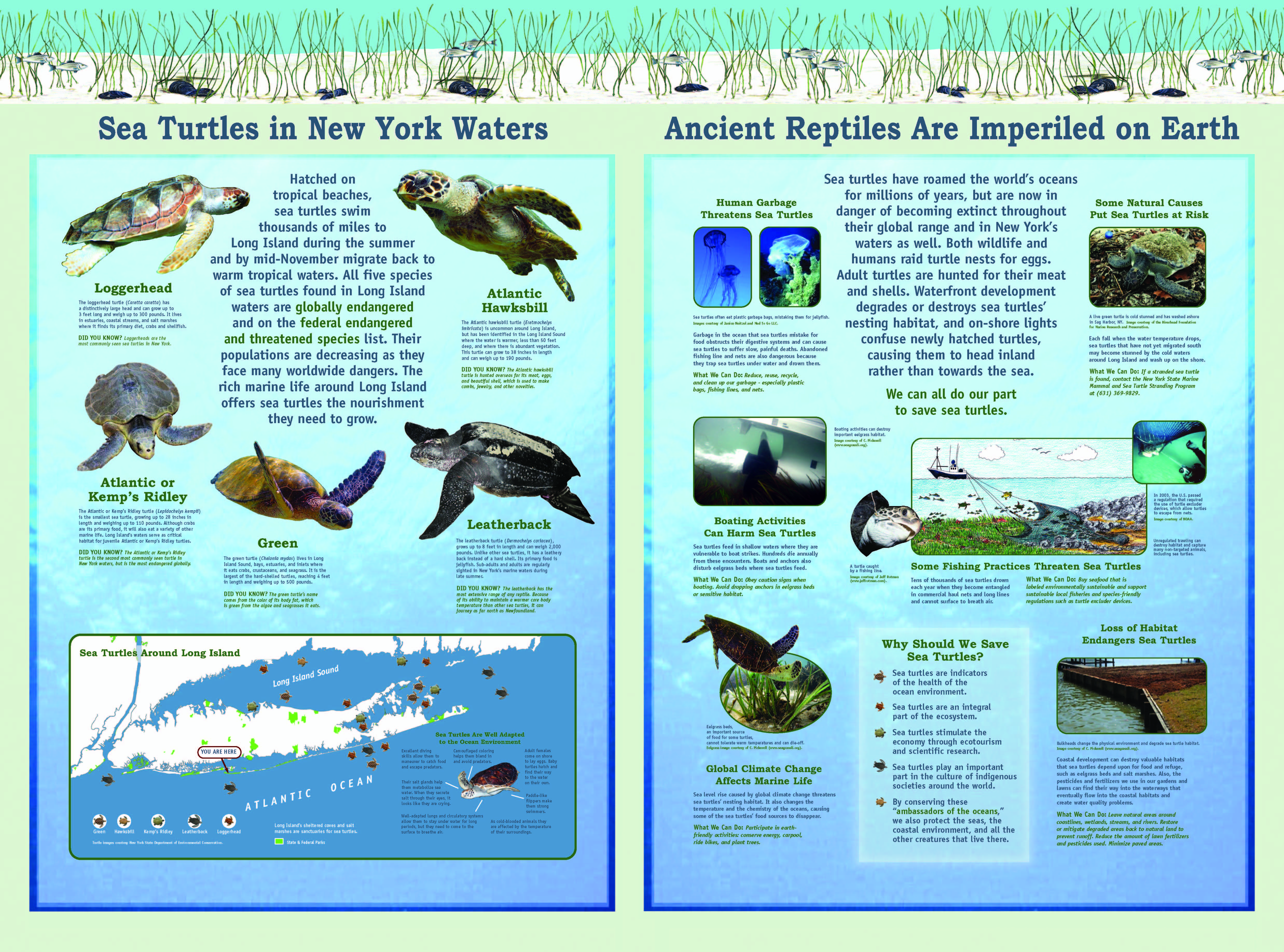
Ecosystem Based Management Panels at Sunken Meadow State Park on Long Island. Click to enlarge images.
NYS Parks will continue to integrate EBM into programs andactivities through training, watershed educational materials and ecosystem research, as well as projects which demonstrate that healthy ecosystems mean healthy communities. Look for these EBM educational panels at Sunken Meadow State Park on Long Island (pictured above)! More educational panels and kiosks showing how our parks are part of the larger landscape are in the works for parks along the St. Lawrence River and Great Lakes. Keep an eye out for them!






 New York State Parks and Historic Sites Blog