Tag Archives: plants

Bark, Buds and Beyond: A Guide to Identifying Winter Trees  

When the weather turns brisk and the leaves have dropped, tree identification can feel like a puzzle with missing pieces. But winter reveals its own set of clues — bark, buds, branch patterns, fruit and leaf scars. By learning to read these signs, you’ll see your winter woods in a new light. 

Bark: The Tree’s First Impression 

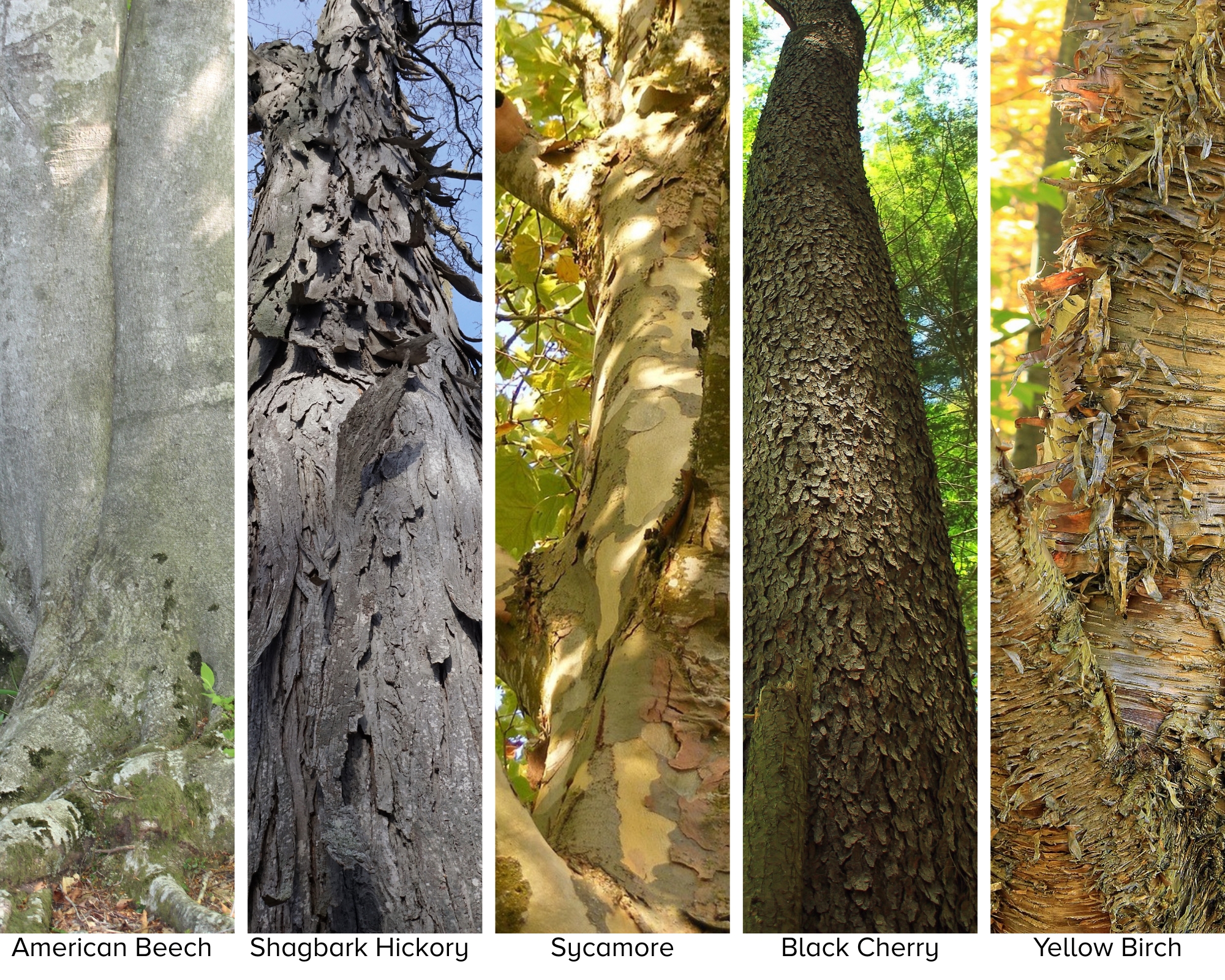
Bark is often the first clue you’ll notice. Some trees have such distinctive bark that once you have learned to recognize it, you can spot it instantly.  

Image showing the bark textures of five different tree species: American Beech, Shagbark Hickory, Sycamore, Black Cherry, and Yellow Birch.
Continue reading Bark, Buds and Beyond: A Guide to Identifying Winter Trees  

From Seed to Park, Nissequogue River State Park’s Greenhouse Supports Long Island’s Ecosystem

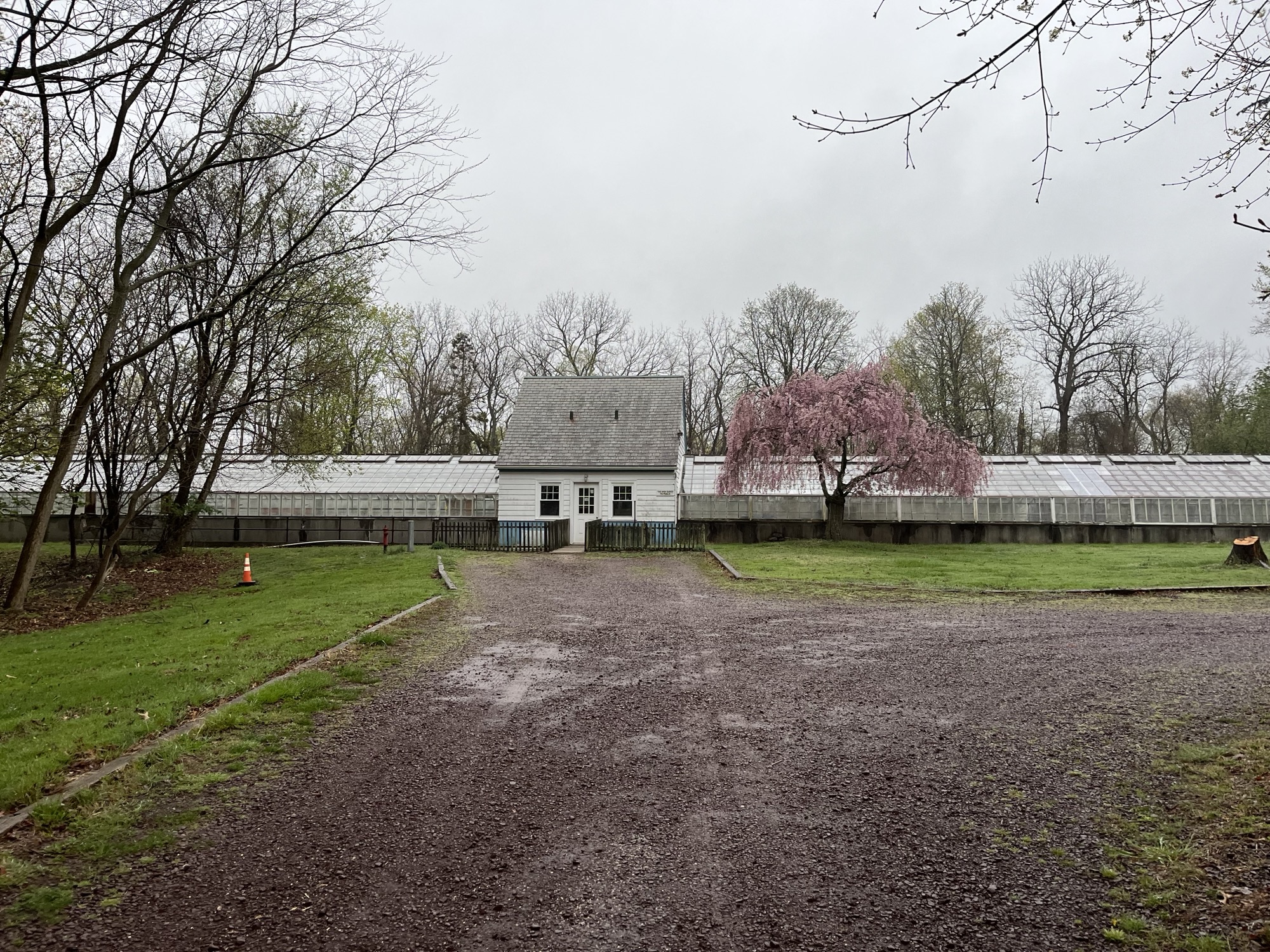
Where does New York State Parks get its flowers, perennials, shrubs and trees? For the parks on Long Island, the answer for the past two and a half years may be simply “Michelle.” Since becoming the manager of the Nissequogue River State Park greenhouse, Horticulture Technician Michelle Doran-Leute has launched an ambitious program of seed collection, propagation and planting that’s not only making Long Island parks beautiful, but supporting its ecosystem. Her mantra has always been: You can’t have a park without plants! Follow along as Michelle takes us inside the operations at the Nissequogue River greenhouse and nursery.

The Nissequogue River State Park (NRSP) greenhouse and nursery is home to the growing operations for the Long Island Region of New York State Parks. Operated and managed by myself and assistant Emma Halliday, its main purpose is to grow plant material to be distributed to the state parks of Long Island. We focus on growing native United States perennials, trees, shrubs, and ornamental mums, cabbage, kale, and asters for the fall season.

Continue reading From Seed to Park, Nissequogue River State Park’s Greenhouse Supports Long Island’s Ecosystem

Landscape Architecture In Full Flower

Is there a greater source of inspiration than nature? The natural world has inspired great works of art in every genre and style from cave paintings to classical sculpture, lyric poetry to hit movies, orchestral works to electronic soundscapes. Landscape architecture takes this process one step further, in which nature becomes the art. A landscape architect studies for years to learn the art, science and craft of working with plants and trees to make an artistic statement that complements both the natural surroundings and the architecture and meets the needs of their client.

New York State Parks and Historic Sites preserves many remarkable landscapes. As National Garden Week draws to a close, discover iconic landscapes at our historic sites and the fascinating stories behind them.

Continue reading Landscape Architecture In Full Flower

More Early Spring Bloomers – Flowers of April and May

With snow finally receding and spring on the way as the ground thaws, it is time to start seeing some of New York State’s earliest flowering trees, plants and shrubs.

So, during these early season hikes, be on the lookout for some of these early bloomers as they seek light, nutrition, and pollination by the insects that are also making a reappearance.

Service berry (Photo credit – Ed McGowan)

Many tree species like the maples and willows bloom in early spring. The white flowers of service berry (Amelanchier), either a tree or a shrub, are easy to spot in April and May. Amelanchier is also known as Juneberry, shadbush or shadblow.


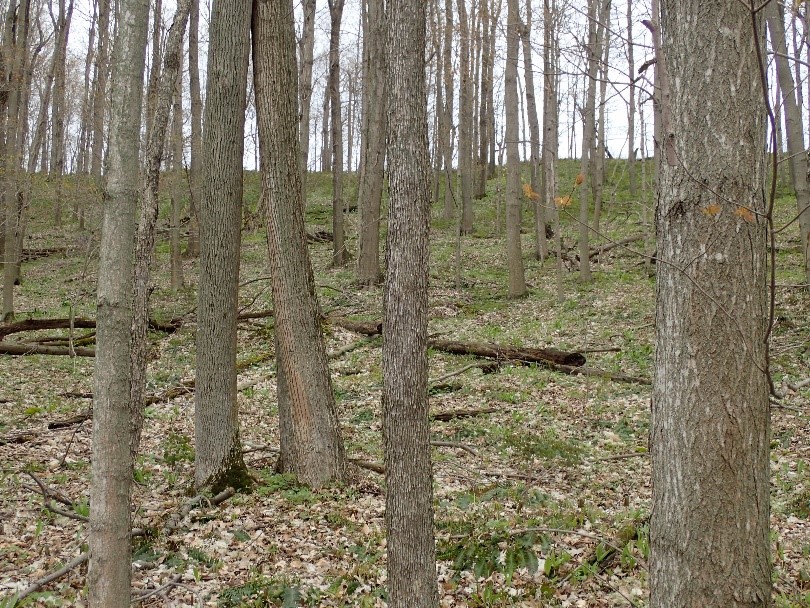
At the onset of spring, the trees have not leafed out yet, allowing lots of sunlight to reach the forest floor. Take a closer look. This is the chance for many smaller plants to spread their leaves, fuel up and put out their flowers to attract pollinators.


Trillium

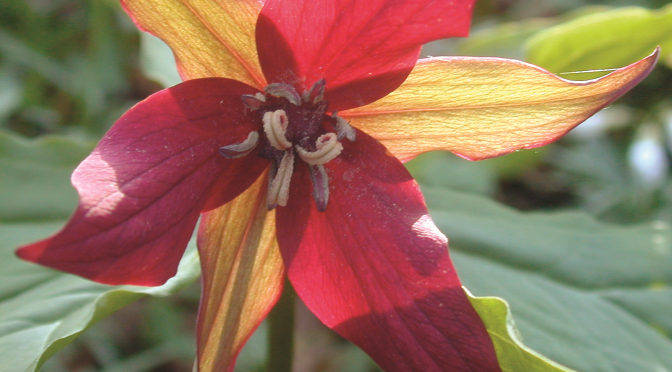
Trilliums are among the most familiar woodland plants, with their three leaves and three petals in red, white or pink. This is the great trillium, Trillium grandiflora.


Trout lily

It is easy to miss the flowering of trout lily (Erythronium americanum) shown here in bud. The deep yellow flowers often finish flowering before the leaves come up. The leaves are waxy and often have dark patches that make them recognizable even without the flowers.


Buttercup

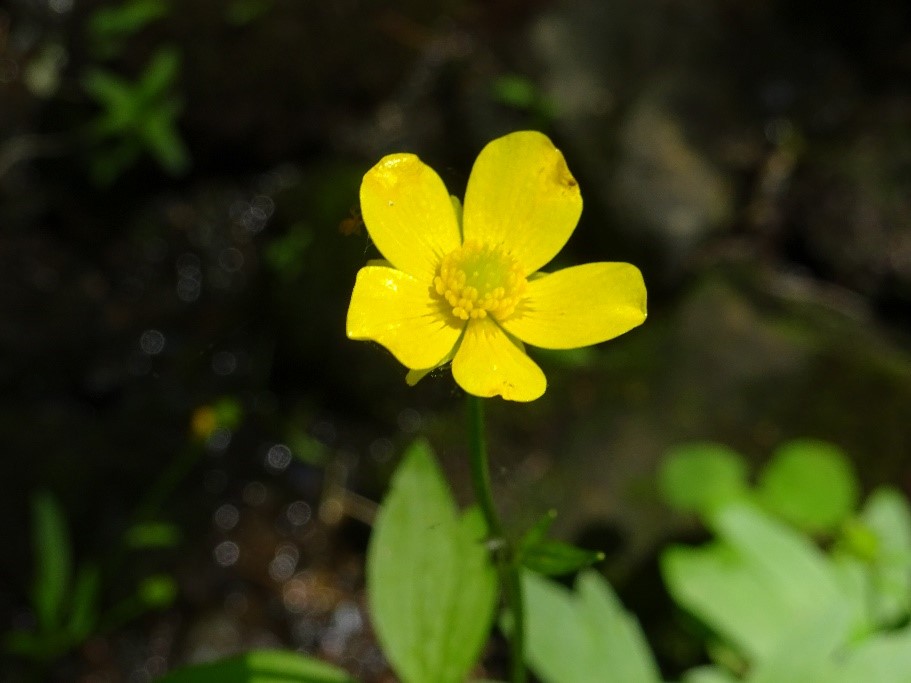
An easy flower to recognize is the buttercup (Ranunculus sp.). These grow in the woods, meadows, tall lawns, or in streams and wetlands. There are many species of buttercups but all have five shiny yellow petals.


Dutchmen’s breeches

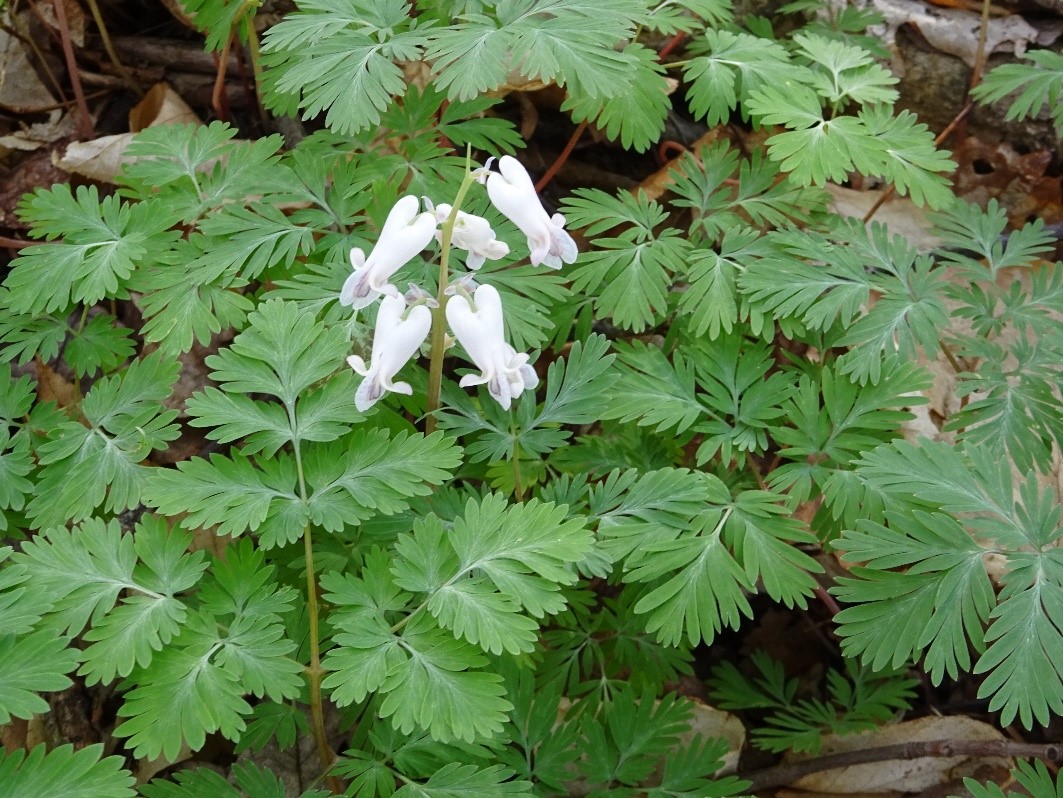
Dutchmen’s breeches (Dicentra cucullaria) look like upside-down bloomers. They occur in moist woodlands, often more calcareous sites and sometimes in large colonies.


Squirrel corn

A cousin to Dutchman’s breeches is squirrel corn (Dicentra canadensis) with its heart-shaped flowers. Notice how the leaves of both of these species look the same; they often grow together. Squirrel corn is related to the cultivated bleeding heart in pink or white that you see in gardens.


Wild geranium.

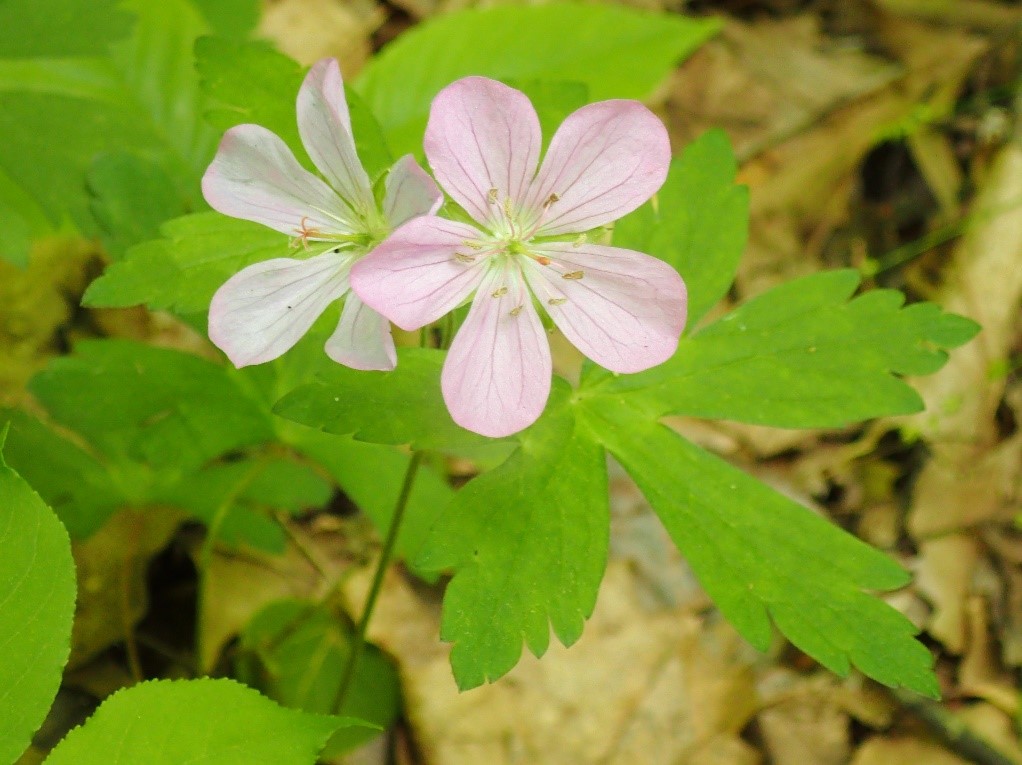
Wild geranium (Geranium maculatum) is a common native plant of the northeastern forest. The flowers look similar those of the red geranium that you see in window boxes and planters, also in the Geranium family but in a different Genus (Pelargonium) that is not native to the northeast.


Wild raspberry and blackberry

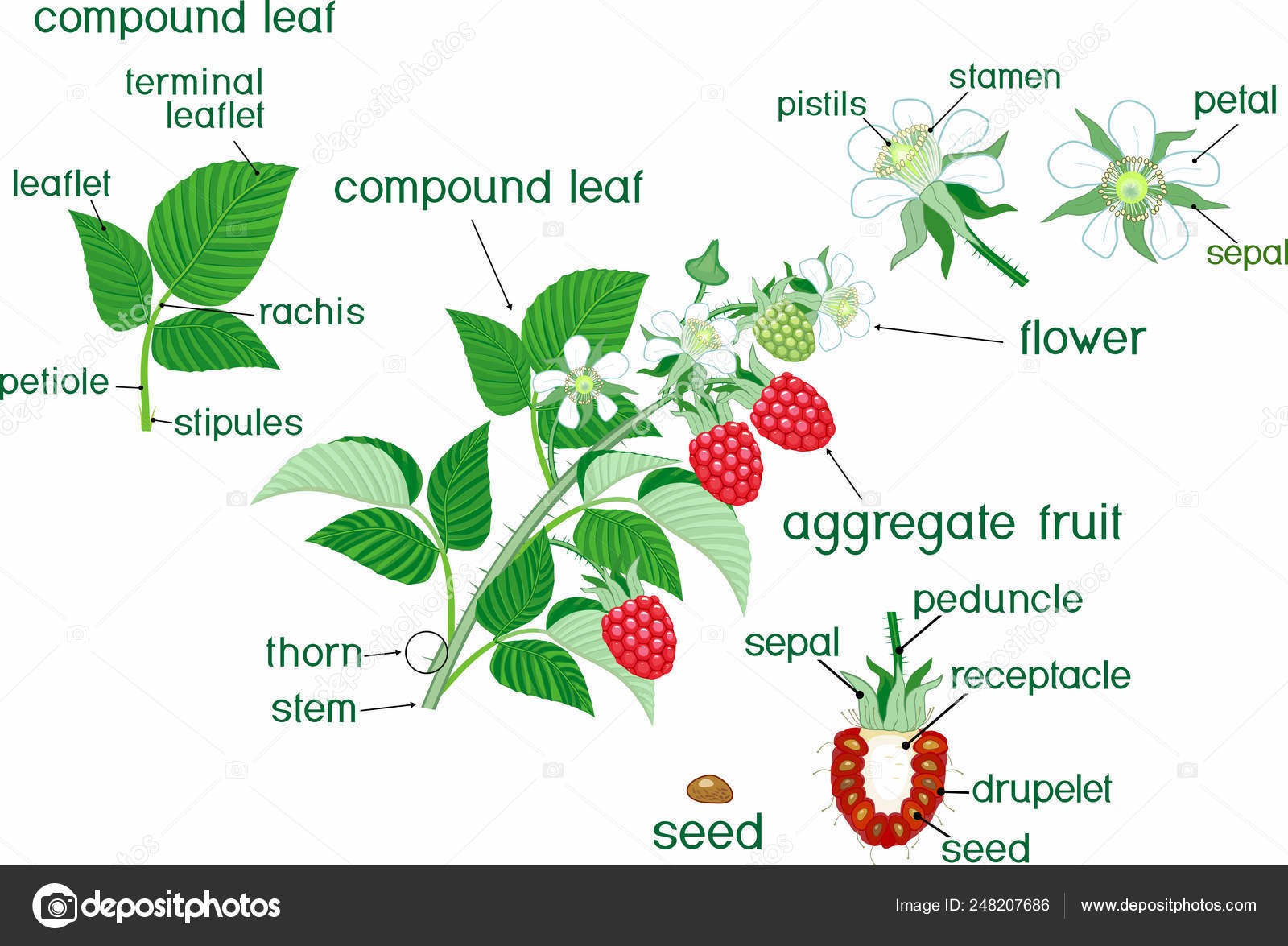
Don’t overlook the wild raspberries and blackberries (Rubus spp.) with their prickly stems and bright white five petaled flowers and an abundance of stamens. They can be shrubs or vines, some growing tall and others like the dewberry growing close to the ground. They bloom from May through August.

The graphic below illustrates the parts of a raspberry.


Ostrich ferns

Not quite in the same category, the ferns start emerging at this time as well. Here the curled fronds or “fiddleheads” of ostrich fern (Matteuccia struthiopteris) slowly emerge on a moist floodplain before the trees leaf out. Many other kinds of ferns will be coming out as well.


Mayapples

Like umbrellas in the woods, these mayapples (Podophyllum peltatum) are just unfurling their leaves. A creamy white flower will emerge a bit later beneath the leaves. Some will develop into a “fruit” or seedpod that looks like a small green apple – do not eat as mayapple is poisonous to both humans and dogs.


Spicebush

Spicebush (Lindera benzoin) is very common in moist woods and along streams. If you scratch the stem you can smell the spiciness, a bit like cinnamon. Note the clusters of tiny five-petaled flowers along the stems.

Leatherwood

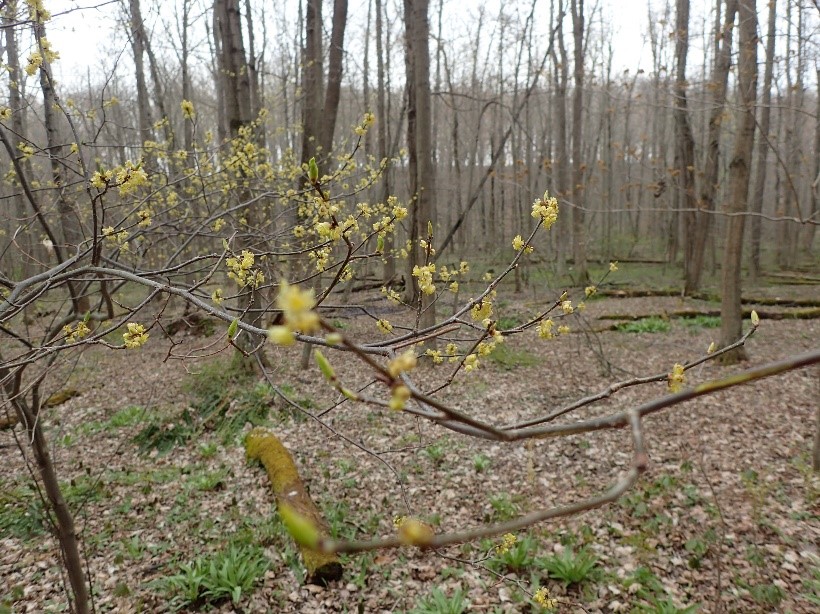
Much less common and usually found in calcareous soils, often in moist woodlands, is leatherwood (Dirca palustris). This gets its name from the very pliable branches – you can bend them in a U shape without breaking it. The flowers of leatherwood are like small tubes. They might be mistaken for honeysuckle (Lonicera spp.) which have larger and more open flowers and more brittle twigs.

And learn more about some of these early bloomers in these previous editions of the New York State Parks Blog.

In Search of the Early Bloomers

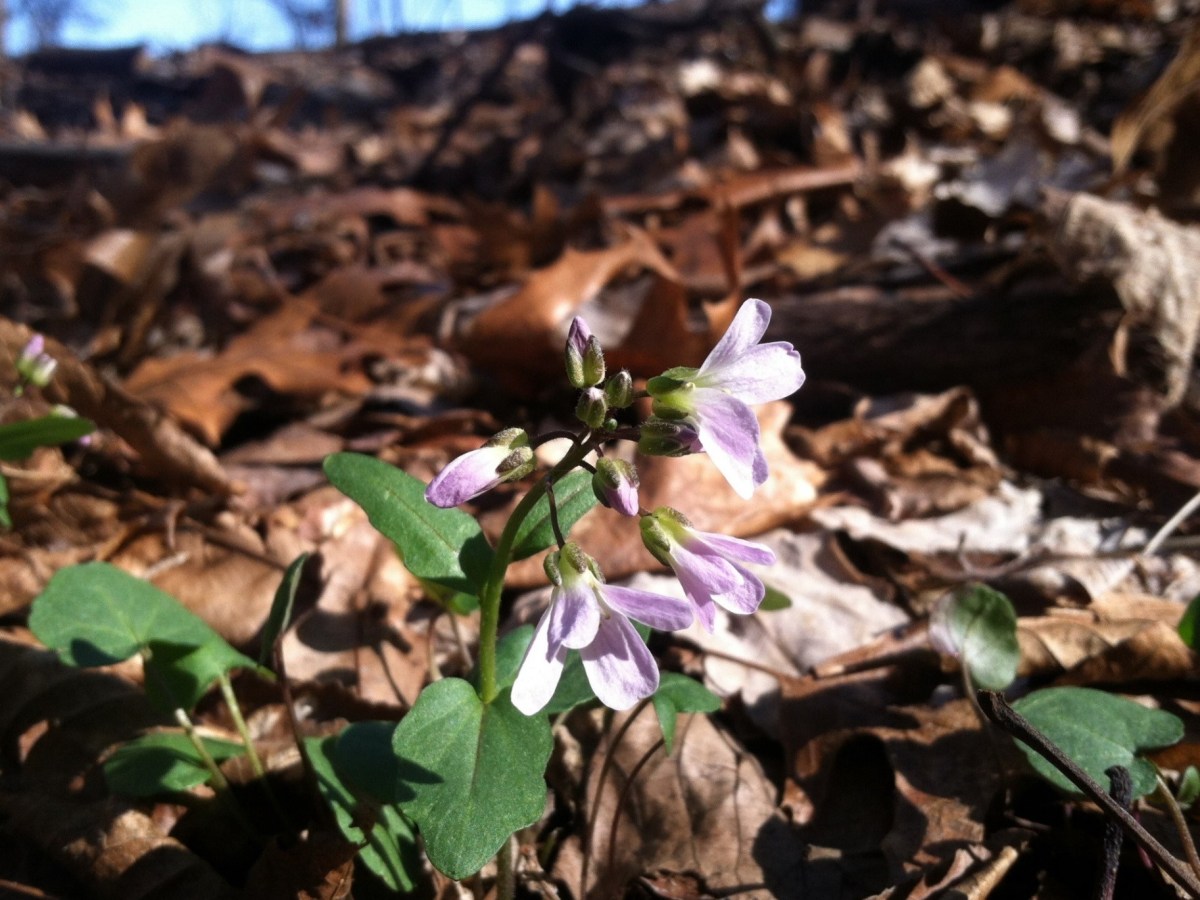
The ground is thawing out and the skunk cabbage is up – it’s time to start searching for the purple rock cress (Cardamine douglassii), a state-threatened plant. You may also find its more common cousins, all members of the mustard family – yes, like the mustard you eat, but with white to pink flowers rather…

Native Spring Wildflowers

Spring is in the air and with warmer temperatures come the spring flowers everyone hopes to glimpse.  Most of the flowers people have come to associate with spring are not native to North America though.  Crocus, daffodils, hyacinths, and tulips, for example, are all European flowers.  There are, however, many native plants that “spring” up…

And when late spring arrives, here are some of the other wildflowers that will appear described in the New York State Parks Blog.

Late Spring Flora

Finally the weather is warming and the flowers are popping out. Time to get outside and look for spring flora! You can find wildflowers in the woods, at the pond or along a stream, in the dunes, or maybe even in your back yard or neighborhood. Here are some native wildflowers in bloom to look…


Cover shot – Dutchmen’s breeches


Post by Julie Lundgren, State Parks Ecologist with NY Natural Heritage Program

NY Natural Heritage Program is affiliated with SUNY College of Environmental Science and Forestry (SUNY ESF) and works in close partnership with NYS Parks and NYS DEC. NYNHP has a partnership with State Parks to conduct field surveys to describe and map natural communities and to search for rare plant and animal species. These surveys inform park management, environmental stewardship and outreach. While doing these surveys, we also collect information and photos of many common species across the state like the ones shown above.

Learn more about New York State’s flora here, here and here.

Learn more about the NY Natural Heritage Program Partnership with State Parks here.

Late Spring Flora

Finally the weather is warming and the flowers are popping out. Time to get outside and look for spring flora! You can find wildflowers in the woods, at the pond or along a stream, in the dunes, or maybe even in your back yard or neighborhood. Here are some native wildflowers in bloom to look out for in May and June.

In the Woods

One of the best places to see an abundance of spring flora is in moist hardwood forests with sugar maple, basswood, ash, and red oak. These are often on slopes and along streams. More acidic forests or drier forests dominated by pines, black or scarlet oak, huckleberries, and blueberries tend to have a less-diverse spring flora. These are common on rocky soils, ridgetops, sandplains (like Long Island or Saratoga). Below are some common wildflowers to look for in either of these types of forests.

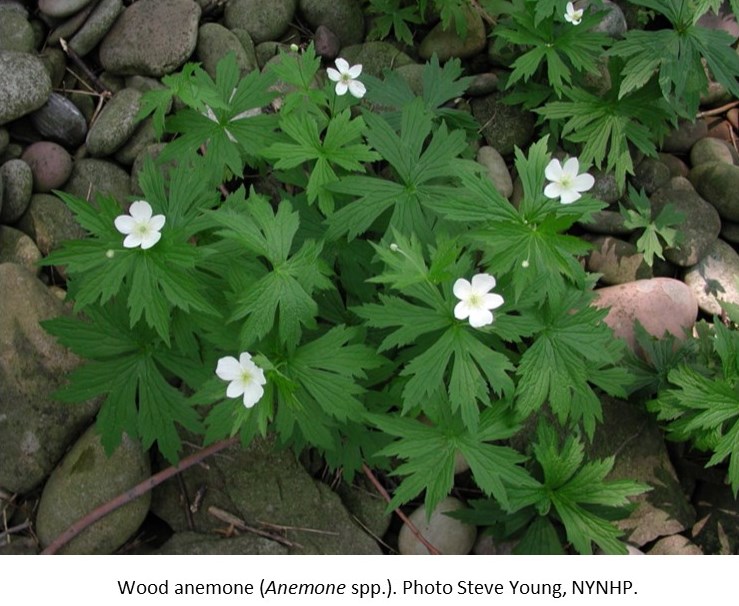
Wood anemones (Anemone) are named after the Greek word for “wind”. They have five white petals, divided leaves – shaped kind of like an outstretched hand – and start to bloom before the trees are fully leafed-out. Believe it or not, these are actually related to buttercups!Wood anemone S Young NYNHP1
Bellworts (Uvularia spp.) are common woodland flowers in our parks. They have delicate bell-shaped flowers with six pale yellow petals. There are three common bellwort species in NY state: large-flowered bellwort (Uvularia grandiflora) that likes nutrient-rich or calcareous soils, perfoliate bellwort (Uvularia perfoliata), and sessile-leaved bellwort (Uvularia sessilifolia). The latter is the most common across the state and is also known by the name “wild oats.”

Large bellwort Steve Young NYNHP1

Our native dogwoods (Cornus spp.) have white to pink flowers and include one flowering tree species, several shrubs, and one non-woody (herbaceous) wildflower species. Bunchberry (Cornus canadensis) grows low to the ground, but its flowers look just like those of the flowering dogwood tree (Cornus florida). They may even be blooming at the same time. Dogwoods are identified by the curving veins on the leaves, and flowers with four white or pink bracts that look like petals.
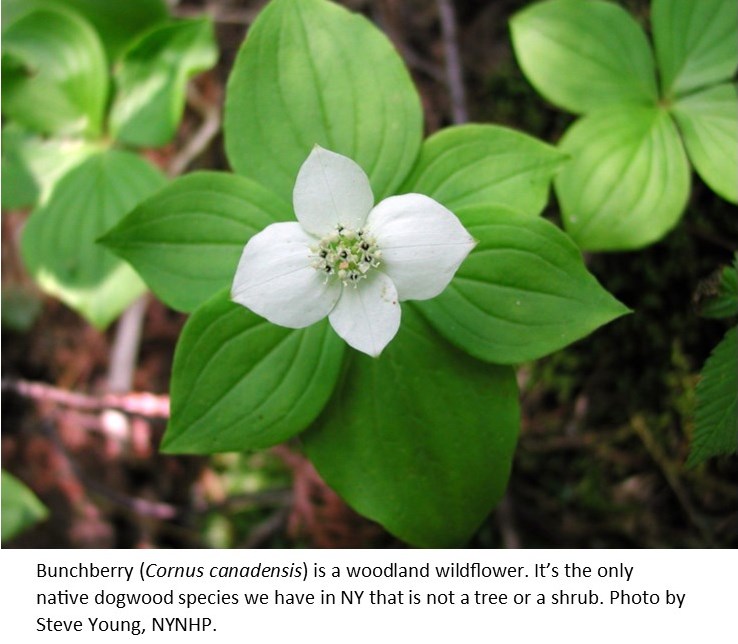
Bunchberry Steve Young NYSNHP1

Shrubby dogwood Gregory Edinger NYNYP1

In Wetlands, Ponds or Streams

Marsh marigold (Caltha palustris) is an easy one to spot because it grows in big clumps or sometimes in large patches. It is always in wet spots, either along slow streams or in open or forested wetlands or seeps. Like the anemones above, this too is in the Buttercup (Ranunculaceae) family.

Marsh marigold Steve Young NYNHP1

Canada lily (Lilium canadense) grows in somewhat open forested wetlands and wet thickets — habitats that are often harder to see from trails and boardwalks. This beautiful lily is widespread across the state, but not nearly so common as marsh marigold.

Canada lily Timothy Howard NYNHP.1jpg

In June, start looking for water lilies in vegetated ponds. We have several native pond lilies, including this stunning White pond lily (Nymphaea odorata) and several yellow pond lilies (Nuphar spp.). Water lilies often serve as landing pads for insects like bees, beetles, damselflies, dragonflies and frogs often hide in the water nearby. You may see some of these critters if you approach slowly and quietly; it’s a good way to keep kids interested too.

White pond lily Kimberly Smith NYNHP1

Sunny Spots from High to Low: Outcrops, Shorelines, and Dunes

Some plants need a lot of sun and can tolerate extremes of heat, wind and/or drought. Here are some of those rugged spring wildflowers to look for:

On rocky trails and summits in the Palisades and Hudson Highlands Parks and elsewhere, look for the pale, yellow flowers of bush honeysuckle (Diervilla lonicera). Bush honeysuckle is one of our native honeysuckles and it attracts many pollinators. It is much less common than the non-native honeysuckles, so a little harder to find and often overlooked.

Bush honeysuckle Gregory Edinger NYNYP1

Find a rocky outcrop, rocky lakeshore, or streamside outcrop anywhere in the state and you may find this delicate looking flower: the Bellflower or Harebell (Campanula rotundifolia). You can find it on the rocky shorelines of Lake Ontario in Wehle State Park or other Thousand Islands Parks, on streamside outcrops in the Finger Lakes or Whetstone State Park gorges, or on the rocky summits and slopes of parks like Minnewaska, Hudson Highlands, or Taconic State Parks. This is the bellflower you are most likely to see, but there are native and non-native lookalikes (though usually not in these open rocky spots).

Harebell-bellflower J Lundgren NYNHP1

How about on the sunny dunes of Long Island? Have you ever seen Beach heather (Hudsonia tomentosa) in full bloom? It grows in gray-green mounds on the dunes and sports its tiny but profuse yellow blooms in June. Visit duneside trails at Jones Beach, Hither Hills, Napeague, or Orient Beach State Park. Remember to stay on trails to protect this fragile ecosystem. Local native bees take advantage of this food source.Beach heather Steve Young & Kimberly Smith NYNHP

What’s in a name?

Did you know that every plant (and known organism) is given a unique scientific name? Those are the names in parentheses above. The scientific name consists of a genus followed by a species name like Lilium (genus name) + canadense (species name) = Lilium canadense. While there may be few different plants referred to as Canada lily, or someone might call this plant a meadow lily or wild yellow-lily, the scientific name of Lilium canadense refers to just one kind of plant. So, biologists and landscapers and other people working with plants or animals will use the scientific names when they want to make it clear exactly what species they are referring to. You will see these names in the wildflower guides (books or websites) noted below.

The scientific name also helps to see what species are related — organisms with the same genus name are closely related. So Lilium canadense and Lilium superbum are closely related because they are both in the Lilium genus. Common names are not reliable for this purpose. For example, the white water lily is not a close cousin of the Liliums, as it is in a different genus (Nymphaea). In fact these two kinds of “lilies” are in completely different plant families, the Liliaceae and the Nymphaceae, like distant branches on the family tree.

Both called lilly Timothy Howard and Kimberly Smith, NYNHP

TO LEARN MORE:

Newcomb’s Wildflower Guide by Lawrence Newcomb. Paperback. 1989. The standard field guide for flora in the northeast. Relies on flower structure so takes a little more time to learn, but includes more species than Peterson’s guide.

Peterson Field Guides, Wildflowers – key by color and shape. Great for the casual observer, or if just starting out, try the Peterson First Guide to Wildflowers.

Go Botany – a great online plant key to flora of New England, but includes most of plants you will see in New York.

NY Flora Atlas – the most current taxonomy, atlas, see what is native or not, rare or common, links to other sources.

NY Flora Association – information about field trips, classes, “Learn 10” programs for all levels, calendar of botany field trips and events across the state, links to other information on flora.

NYNHP Conservation Guides – These provide descriptions of the Natural Communities in New York – different kinds of forests, wetlands and other habitats. Use Advanced Search to find what types are in your county. Each Guide gives a few examples of where you can see it and some characteristic plants.

Post by Julie Lundgren, State Parks Ecologist with New York Natural Heritage Program (NYNHP).

Images by NYNHP 2018; may be used with permission only.  http://www.nynhp.org