When the weather turns brisk and the leaves have dropped, tree identification can feel like a puzzle with missing pieces. But winter reveals its own set of clues — bark, buds, branch patterns, fruit and leaf scars. By learning to read these signs, you’ll see your winter woods in a new light.
Bark: The Tree’s First Impression
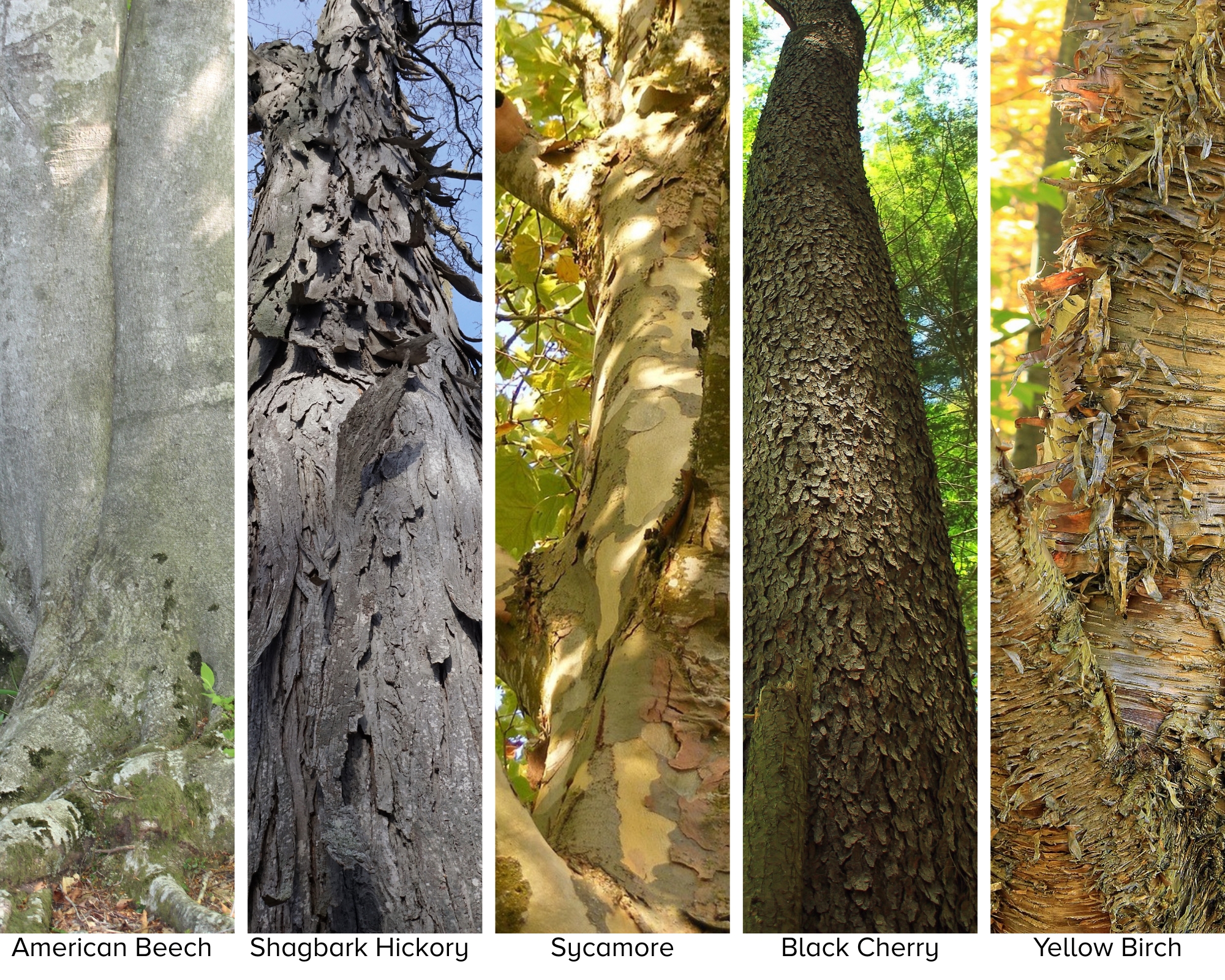
Bark is often the first clue you’ll notice. Some trees have such distinctive bark that once you have learned to recognize it, you can spot it instantly.
In New York, spring means maple! Maple syrup and sugar are key agricultural products in New York and part of the state’s heritage. Many of our state parks and historic sites offer maple programs during the late winter and early spring. The last two weekends of March are Maple Weekends in New York, when producers large and small invite the public to see the process and sample some syrup. In this post, we’ll not only tell you how maple syrup is made, but uncover its past as a symbol of American independence and of the anti-slavery movement.
From Sap To Syrup
Making maple syrup has a lengthy tradition in Northeastern North America. Long before anyone wrote about it, Native Americans gathered sap from cuts made in maple trees that they boiled to concentrate the sugar. Once Europeans arrived in North America, they too began collecting sap and boiling it in large pots, evaporating the water to make syrup and sugar.
Is there a greater source of inspiration than nature? The natural world has inspired great works of art in every genre and style from cave paintings to classical sculpture, lyric poetry to hit movies, orchestral works to electronic soundscapes. Landscape architecture takes this process one step further, in which nature becomes the art. A landscape architect studies for years to learn the art, science and craft of working with plants and trees to make an artistic statement that complements both the natural surroundings and the architecture and meets the needs of their client.
New York State Parks and Historic Sites preserves many remarkable landscapes. As National Garden Week draws to a close, discover iconic landscapes at our historic sites and the fascinating stories behind them.
Longer days. Warmer temperatures. More birdsong. The signs of spring have been growing stronger in New York for weeks, and now the season has arrived. We’re proud to share some of the delights of spring with you at our parks and historic sites — here’s hoping we’ll see you out there.
Springing from the Earth
Getting out on the trail in the springtime is an exhilarating experience, as wildflowers begin to bloom, trees return to leaf, and the smells of nature fully return. If you enjoy identifying the plants, insects and animals you see on the trail, consider joining the global nonprofit iNaturalist project. You can use their app to identify flora and fauna you find, record your sightings, or find out from other users what’s been sighted nearby. Below are a few plants to look out for!
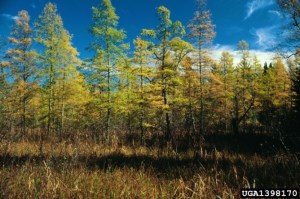
This time of year, much of New York’s landscape is dappled with bare-branched deciduous trees and dark, evergreen conifers. These cone-bearing conifer trees are adapted to survive harsh, cold weather, from the microscopic structure of the leaf to the overall shape of the entire tree. Despite the needle-like shape, conifer leaves serve much the same function as the flat, broad leaves of a sugar maple or oak tree. Most conifers keep their needles year-round. Do you know which New York native conifer drops its needles every fall? It is the tamarack (Larix laricina), a member of the larches, shown below.
Steven Katovich, USDA Forest Service, Bugwood.org
Rob Routledge, Sault College, Bugwood.org
On the left, these tamaracks are changing color. Every autumn the needles turn bright yellow and will fall off the tree by winter, so they are not considered an “evergreen.” On the right, a closer view of tamarack needles, which grow from a woody spur in clusters of ten to twenty. The needles are approximately ¾” to 1 ¼” inches long.
When talking about evergreens, pines may first come to mind, but conifers also include firs, spruces, hemlocks, and others. But how do we tell which is which? Here are a few quick tips to help narrow down the tree group simply by looking at the needles.
Pines
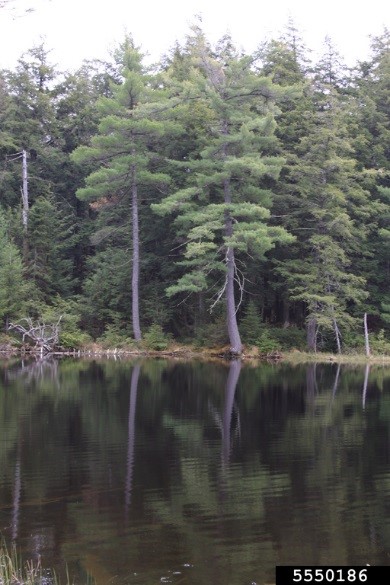
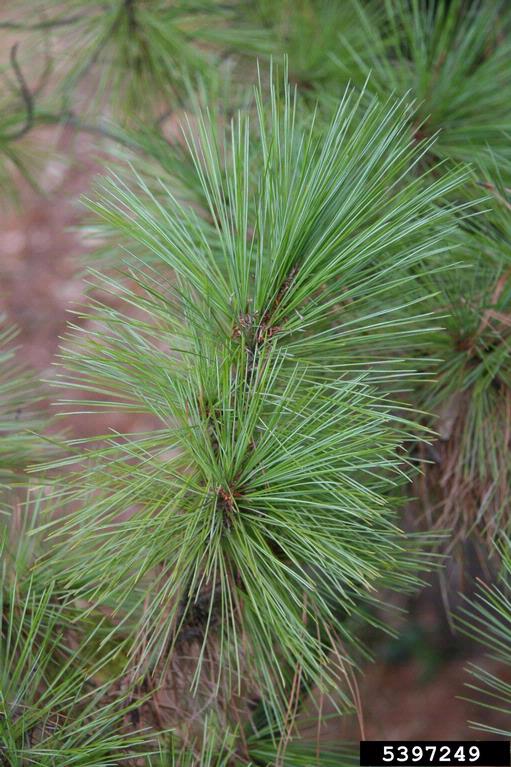
First, let’s look at pines. Pine trees have needles in bundles on the stem. The number per bundle depends on the species, but if you find bundles of five needles or less, you’ve likely discovered a pine. There are six native species of pine in New York, but two you may be most likely to encounter are white pine (Pinus strobus) and red pine (Pinus resinosa).
Steven Katovich, USDA Forest Service, Bugwood.org
Robert Vidéki, Doronicum Kft., Bugwood.org
Bill Cook, Michigan State University, Bugwood.org
The eastern white pine (left) and its bundled needles (middle and right). This species of pine has five needles per bundle (and as a memory trick, there are five letters in the word “white”). The needles are soft and flexible, measuring about 2 to 4 inches long.
Spruces
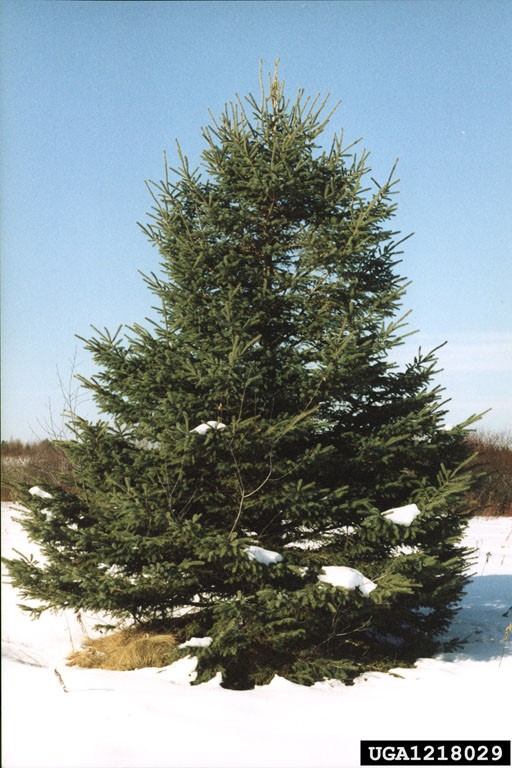
Spruce trees have needles that are individually attached to the branch with small woody pegs. A key characteristic for spruce needles is that they are square and can roll easily between your fingers. They are usually sharply pointed. Also, if any needles are shed the woody pegs make the branch feel rough, unlike the smooth branches of firs. There are three native spruces in New York: the white spruce (Picea glauca), the black spruce (Picea mariana), and the red spruce (Picea rubens).
Bill Cook, Michigan State University, Bugwood.org
Joseph OBrien, USDA Forest Service, Bugwood.org
The white spruce (left) and its needles (right), notice the woody pegs that attach the needle to the branch. Needles are stiff and measure about ½” to ¾” inches long. This species is sometimes called skunk spruce or cat spruce due to the strong odor from broken needles.
Firs
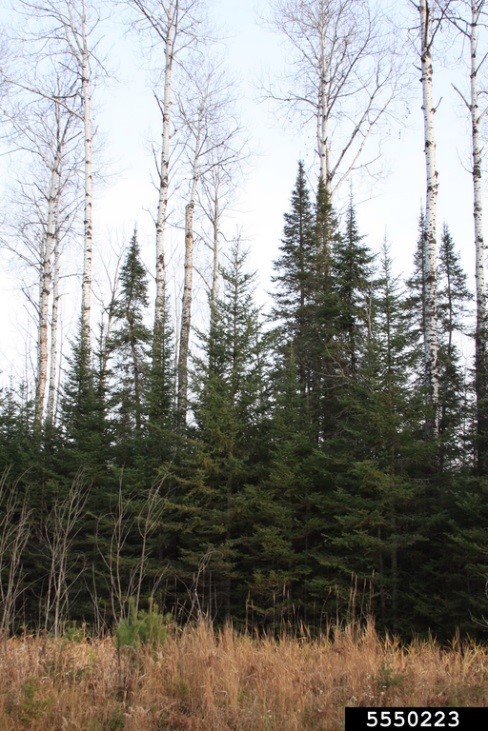
Fir needles are also individually attached, but unlike spruces, they are attached by what resembles a suction cup (look for a circular base). They are typically soft and flat with rounded needle tips. There are two whitish lines on the bottom of the needle. Another distinguishing characteristic of firs is that their cones stand upright on the branches, rather than droop down. The only native fir that can be found in New York is the balsam fir (Abies balsamea).
Steven Katovich, USDA Forest Service, Bugwood.org
Joseph OBrien, USDA Forest Service, Bugwood.org
A stand of balsam fir (left) and its needles (right). Balsam fir needles are dark green and measure around ¾” to 1 ½” in length. The tips of the needles can be blunt, rounded, or notched.
Hemlocks
Hemlocks have individually attached needles that are flat. Unlike firs, each hemlock needle has a small stem attached to a woody peg. In New York there is only one native hemlock species, the eastern hemlock (Tsuga canadensis). While you’re out testing your needle identification skills, keep an eye out for the invasive pest hemlock woolly adelgid, which creates white woolly masses at the base of hemlock needles. This insect causes tree health to decline and can lead to the death of the hemlock in as little as four years.
David Lee, Bugwood.org
Rob Routledge, Sault College, Bugwood.org
A young eastern hemlock stand (left) and its needles with stems (right). Needles are usually a shiny green. On the underside of each needle, you can see two characteristic white lines (shown in the picture). The needles are typically one inch or less in length.
So there you have it! Next time you’re out scratching your head, wondering if you’ve encountered a white spruce or a white pine, ask yourself these simple questions:
Are the needles in bundles or individually attached?
Does the needle roll easily between your fingers or is it flat?
Are the needles attached to a stem, woody peg, or a “suction cup” structure?
Just by taking a quick look (and maybe pluck) at the needles, it is often possible to categorize the conifer into pine, spruce, fir, or hemlock. If you come across a conifer that doesn’t fit into these categories, try looking at cedars or junipers too. And the best part of studying conifers is that you can look at needles all year long! Unless it’s a tamarack, of course.
If you’d like to learn more about some key conifers, check out this blog post to learn about identifying specific species you may encounter in State Parks!









 New York State Parks and Historic Sites Blog