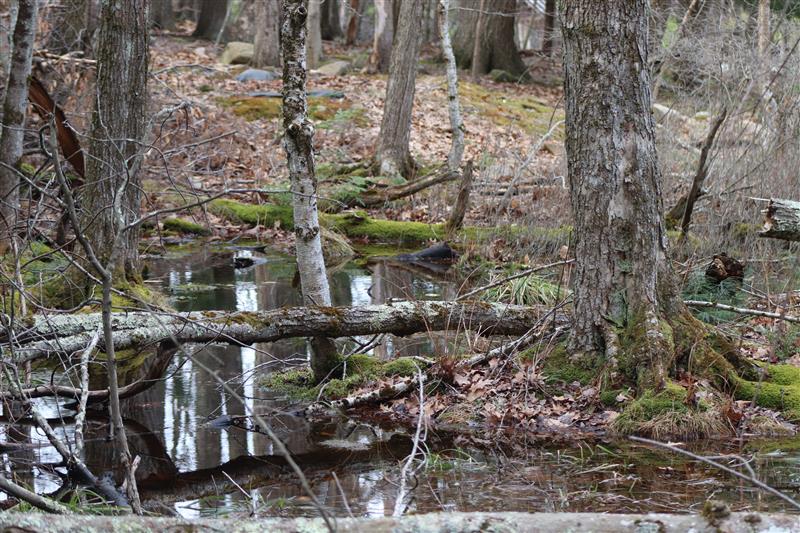
Winter lingers long on the Rensselaer Plateau. The snow piles deep, muffling the landscape in an icy hush, and the trees stand still in their frozen slumber. But as the days lengthen and the sun begins its slow work of softening the land, the transformation begins. The snow melts, trickling down into the forest floor, pooling in low spots, carving out secret, glistening pockets of water between the trees. These pools, often small and shallow, are the first sign of life returning to the woods.
More than just large puddles, vernal pools like these are essential to life for frogs, salamanders, and insects.
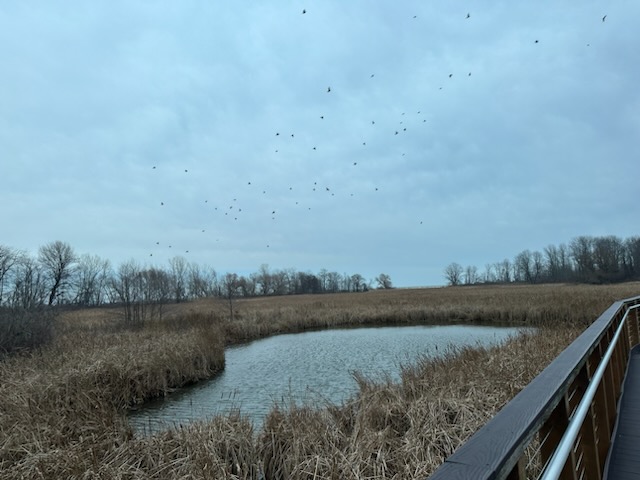
At the western edge of Hamlin Beach State Park, beyond a row of trees, is Yanty Marsh Trail. The trail loops through a deciduous (broadleaf) forest along the lake, pausing to overlook a large marsh and winding beneath the canopy of a white pine grove. In the fall, beech leaves paint the sky in their wistful yellow hues as the birdsongs of spring and summer slowly grow fainter. Chipmunks gather their last nuts for the winter and the mystical great blue heron observes overhead. The white pines stand stoic among the falling leaves. As chilly mornings and early sunsets lure the marsh into slumber, the world stalls. The 65 acres of Yanty Marsh are released from the sweltering days of summer, the balance of the seasons returning.
The beauty of Yanty Marsh.
A hundred years ago, this scene looked different. With each freeze and thaw of the marsh, the stories of its past fade alongside time. An area once deforested and at risk of disappearing, the marsh and surrounding land have transformed over the past hundred years into the deciduous trail and marsh so many enjoy today.
You’re looking at one of the world’s rarest snails:the Chittenango Ovate Amber Snail, found only at Chittenango Falls State Park in central New York.
First discovered in 1905, the Chittenango Ovate Amber Snail (known to its friends as “COAS” or “Chitt”) is what scientists call an endemic species, meaning it’s found in only one place. While this makes COAS a very special snail, it also makes it a very vulnerable snail. Flooding, drought, climate change, invasive species, and human activity threaten the small snail colony and its habitat. Never very numerous, the colony numbered only about 70 individuals during the 2023 census.
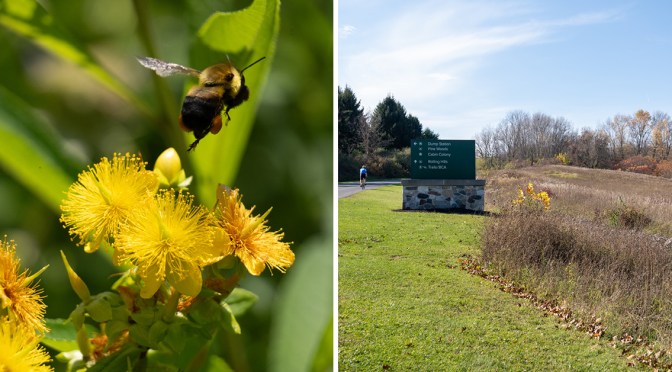
Close your eyes and picture this: You’re visiting your favorite New York state park, and as you drive along park roads or walk pathways near the visitor center, you notice tall grasses swaying in the breeze, bees and butterflies flitting between flowers, a chorus of young birds chirping in the distance, and a peaceful quiet without the hum of constant landscaping machinery.
Sound like a dream? Well, it’s become a reality! Through the ongoing implementation of the Reduced Mowing Policy—part of the New York State Pollinator Protection Plan—grow zones have become a staple at all state parks and historic sites. These zones, where native grasses and wildflowers are allowed to grow tall, continue to benefit the environment and local wildlife, proving to be more sustainable than traditional mowed areas and enhancing visitor experience in new ways.
These signs greet visitors at many of the reduced mowing sites at our parks and historic sites in an effort to inform them of our work.
There’s more to nature in New York City than rats and pigeons! From wriggly eels to soaring falcons, there are plenty of species that thrive in and around the concrete jungle. Prehistoric creatures roam our shorelines. Ancient trees line our streets. Read on to learn more about some of the species that make up the hidden nature of NYC.






 New York State Parks and Historic Sites Blog