

On Sunday afternoon, September 15, New York State Parks partnered with Audubon New York to host the second annual Latino Conservation Week event at Sunken Meadow State Park attended by hundreds of patrons. The goal of the event was to increase accessibility of coastal education and outreach messaging, including Audubon New York’s shorebird conservation outreach to the Latine community on Long Island. Towards this goal, four Spanish language interpreters lent their services to make this a bilingual event.
Continue reading Sunken Meadow and Audubon NY Celebrate Latino Conservation WeekTag Archives: Wildlife

Share Your Story: Gabriella Cebada Mora And The Haunting Cry Of The Wild
Throughout 2024, our staff have celebrated the Park and Historic Site Centennial by recounting moments in their careers through the Share Your Story project. Ladders to the Outdoors Statewide Coordinator KeJuan Harmon reflected on his upbringing in a disadvantaged community and what it means to provide children of a similar background with their first outdoor experiences. Environmental Educator Conrad Baker recalled his awe at seeing neurodiverse visitors connect with nature through the nation’s first Autism Nature Trail at Letchworth State Park. And Melissa Ann Miller looked back fondly on the experience of raising her children within Grafton Lakes State Park.
In this latest staff account, Gabriella Cebada Mora shares how her defining State Parks moment began with something simple but profound: a sound. Cebada Mora is the Director of the Division of Environmental Stewardship and Planning, “basically the environmental wing of the agency,” she explained. Having limited experience with wildlife initially, she first moved to the Albany area for her career and was eager to get outdoors. To become acquainted with the region and with the agency, she visited Moreau Lake State Park in Gansevoort, roughly 40 miles north of the city.
It was there, by the lake, that she heard the eerie sound.
“I absolutely freaked out. I was like, ‘what is that?’ Sounds like a rabid dog. Maybe it’s a chupacabra. Maybe I should go inside,” she said, laughing.
After her initial fright had passed, she noticed that none of the people around her seemed distressed by the loud, haunting cry that had pierced the air. A fellow park employee pointed out the source of the sound: a common loon, gliding on the lake.
“That absolutely blew my mind, that an animal I had no idea about could sound like that. It was just embedded in my soul. It was the most haunting sound I’ve heard in my life, and now I actively seek it out,” she said.
For those who spend a lot of time hiking, camping, or birdwatching, Cebada Mora’s story may seem unremarkable and routine: a simple bird cry, leading to a pleasant conversation with a team member nearby. But in addition to leaving her with an affection for loons, the experience illuminated the greater purpose of the agency and illustrated how Cebada Mora’s daily work forges connections and affects lives.
“Being there and being able to have that in-person connection with wildlife and with other people is just truly an experience that Parks provides to everybody,” she said.
Now that you’ve experienced Gabriella Cebada Mora’s story, we invite you to share yours. Use the online form, email stories@parks.ny.gov, or post on social media using #NYStateParksStory and tell us about a memorable moment you experienced at one of our parks or historic sites.
– Written by Kate Jenkins, Digital Content Specialist, Public Affairs

What To Do During Wildlife Encounters
If you have ever been out enjoying New York’s great outdoors, chances are you have encountered wildlife. From chipmunks in the picnic grounds to bald eagles flying overhead, New York’s state park system provides over 350,000 acres of habitat that is home to hundreds of species of wildlife. These animals are important natural components of New York’s ecosystems.

If you are out hiking, biking, paddling, camping, hunting, or any other outdoor activity, there are some steps you can take to keep both you and wildlife safe.
- Be aware of your surroundings. Keep your ears and eyes sharp while outdoors, and watch where you put your hands and feet.
- Don’t feed wildlife. This disrupts their natural feeding habits and can lead to human-wildlife conflicts if the animals learn to take food from people. Always store your food properly. Never leave food unattended.
- Stay on designated trails.
- Always keep pets on a leash to protect them from any encounters.
- Respect wildlife and give them space. When outdoors, remember you are in their habitat. If you are lucky enough to see an animal, remain at a safe distance.
Read on to learn more about a few specific animals and how you can stay safe if you encounter them.
Continue reading What To Do During Wildlife Encounters
Black Birders Fly in New York City
Each year, New York State Parks’ New York City region collaborates with partners BlackAFinSTEM, NYC Audubon, Latino Outdoors, Feminist Bird Club, and Outdoor Afro to convene Black Birders Week events. Together, these local organizations have created a network of support for historically marginalized people in communities that call this diverse and populated metropolis home, and our state parks are proud to serve as venues for some of the week’s activities.
Black Birders Week is just one example of how an injustice can inspire a community of people to come together to advocate and inspire change. On May 25, 2020, Christian Cooper – a Black man – was birding in Central Park when he encountered a white woman with her dog in the Ramble and politely asked her to put her dog on a leash so as not to disturb nesting birds. In response, the woman called 911 and asserted that a Black man was threatening her and her dog.
The video of this encounter went viral, making national news and demonstrating the challenges Black people face when engaging in outdoor activities. The incident, and others like it, led to the creation of Black Birders Week, now in its fourth year. The week itself aims to celebrate and uplift budding Black birders, expert Black birders, and all birders in between.
Join us in celebrating Black Birders Week with a full slate of events at three New York City parks named after historic Black and Afro-Caribbean leaders: Marsha P. Johnson State Park, Shirley Chisholm State Park and Roberto Clemente State Park.
Continue reading Black Birders Fly in New York City
Environmental Stewardship At NY State Parks
Environmental conservation was a driving force in creating New York’s state parks system that you know and love today. From protecting Niagara Falls from industrial development to preserving the views outside of Albany at Thacher State Park, our agency has been working to preserve our lands and make them available for public enjoyment since its founding. This simple mission has taken on a different meaning in the face of climate change and the shift to clean energy. Here are some ways we’re meeting the challenges of environmental conservation in the 21st century.
Shifting to Renewable Energy
New York State Parks is charged with shifting all operations to renewable energy by 2030, either through the purchase of renewable energy or through generating our own.
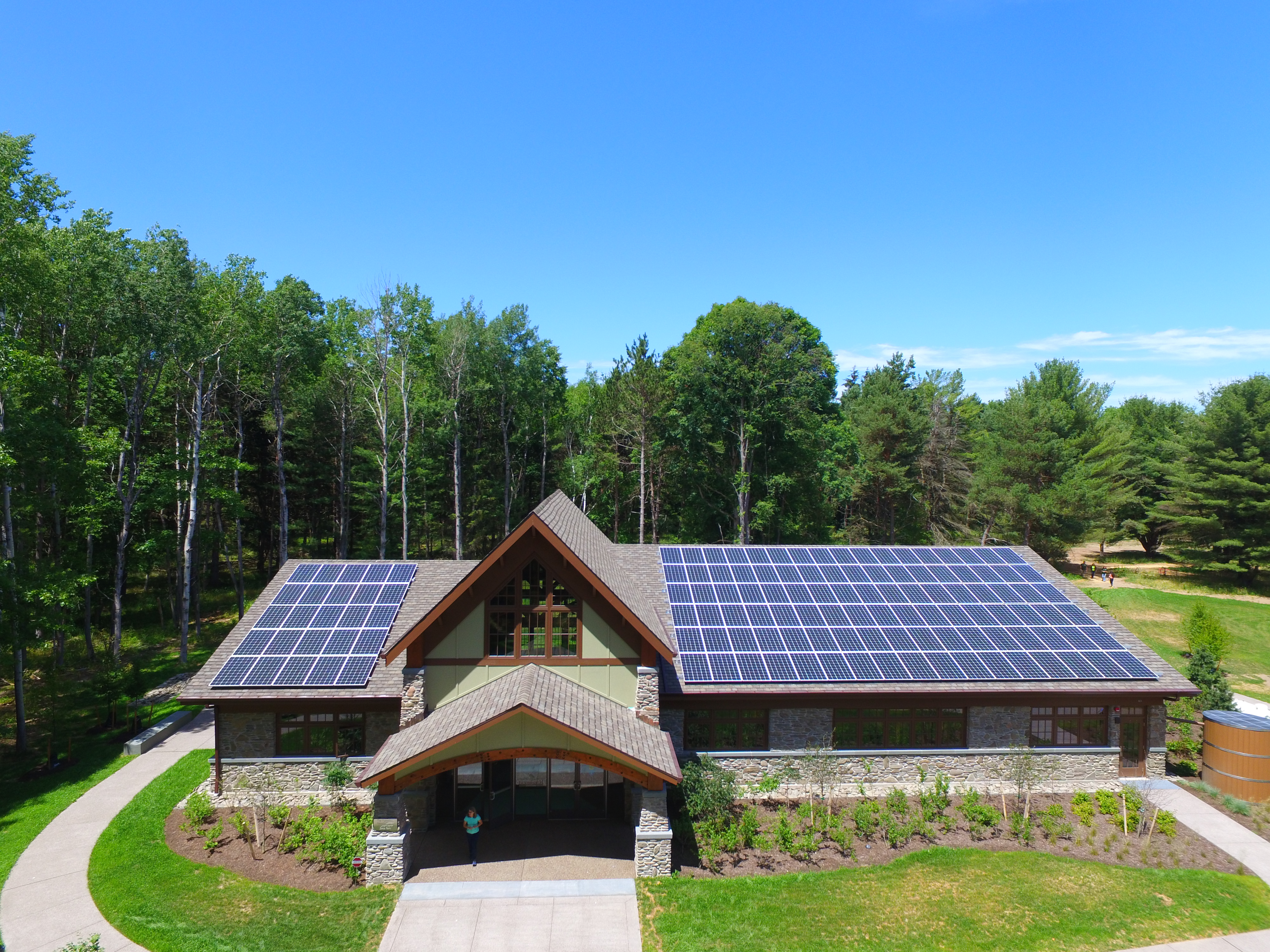
Statewide, Parks operations consume around 45 million kilowatt hours of electricity (the same annual usage as about 4,000 homes). The agency currently has 50 solar arrays around the state generating more than 6MW, which help reduce carbon emissions and save money. This includes everything from roof-mount arrays to large ground-mounts built in pre-disturbed areas like the back of parking lots.
Continue reading Environmental Stewardship At NY State Parks New York State Parks and Historic Sites Blog