

Fall fungi comes in a wide range of appearances, often in striking shapes and colors. Due to the moist air of autumn in New York State, our parks and trails abound with opportunities to see them in all their uniqueness. Many of them have fantastically creepy names or appearances, just in time for the spookiest time of year.
Read on to meet some eerie and funky fall fungi to search for on your fall hikes and walks!

Eastern Jack-o-Lantern, Omphalotus illudens, is a striking gilled mushroom that grows in clusters at the base of trees. It gets its name from the bright orange color which resembles a fresh pumpkin, and the faint bioluminescence (it glows in the dark!) it produces. Jack O’ Lantern are commonly found at the base of hardwood trees like oaks, but only ones that are already starting to decay. They do not attack healthy trees.
Jack O’ Lantern mushrooms are the #1 cause of mushroom poisoning in the United States, likely because they are often mistaken for wild chanterelles. It is important to never eat wild foraged fungi unless 100 percent confident in the identification of the specimen, or better yet, after it has been examined by an expert. Even then, it’s wise to exhibit caution, as individual sensitivity may vary.
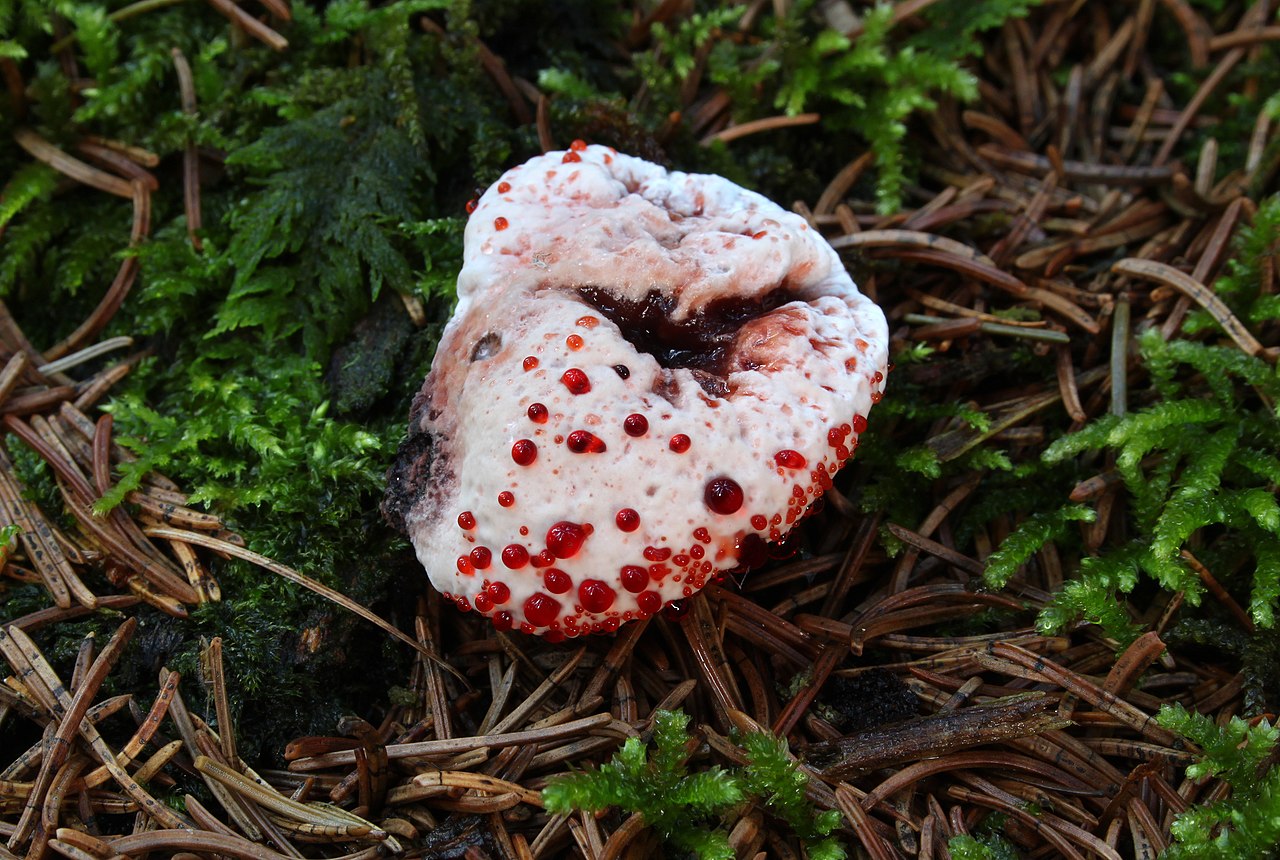
Bleeding Tooth, Hydnellum peckii, has more than just a creepy name; it is an unusual looking fungus. The aboveground fruiting bodies, commonly called caps, look like lumpy funnels covered in fine “hairs” that give it a velvety texture that starts off pinkish-white but matures darker. Instead of gills, it has vertical spines or tooth-like projections that hang from the underside. Fresh young caps can often be seen with bright red guttation droplets on their surface, making them look like they are bleeding. This has resulted in many of their descriptive monikers: Devil’s Tooth, Strawberries And Cream, Red-juice Tooth, and Bleeding Hydnellum. Look for them in mature coniferous forests.

Shaggy Mane, Coprinus comatus, is a fungus you might easily see this autumn, as it grows suddenly in lawns and other disturbed areas, and is very common. While its name and appearance are not particularly terrifying, it definitely deserves a spot on our list of spooky season ‘shrooms. When they first pop out of the ground, they are easily recognized from the white cylindrical shaped cap that mostly covers the stem, which has shaggy scales – hence the name. However, as the spores mature (or within a couple hours of the mushroom being picked) it will begin to deliquesce (‘melt’ or autodigest) into a black ooze filled with spores.
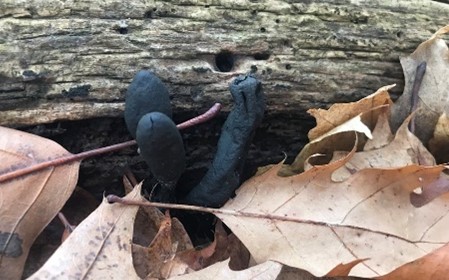
Dead Man’s Fingers, Xylaria polymorpha, invades wood that is dead or dying. These club-like structures or “fingers,” called stroma, which normally appear in clusters of three to six, are often found at the base of unhealthy or dead trees and stumps, but can also sometimes grow in mulch. When they first emerge in early summer, they appear light blue-gray with a white tip, but by fall will darken to look like the knobby arthritic digits of its namesake. Not only is this fungus toxic for humans, but mulch made from infected wood is known to cause black root rot in apple trees. So this one is best admired but left alone.

Witches’ Butter, Tremella mesenterica, is also called Yellow Brain Fungus, for obvious reasons. Their fruitbodies are semitranslucent folds and bumps of bright yellow, though over time they can darken to orange or brown. Beyond the spooky names for this jelly fungus, it also has what some may consider strangely creepy attributes. It generally first appears during rainy or very humid weather, growing in the crevices of bark on trees that are affected by wood decay fungus. That is because Witches’ Butter is a cannibal! OK, not really, because individual types of fungi are even more different than individual types of mammals. However, it does consume the living tissue of other fungi, specifically wood-decay fungus. As the weather dries, the large, pliant, jelly fruitbodies shrivel up to small, rubbery, hard to spot bracket – until the next rain, when it ‘comes back to life.’
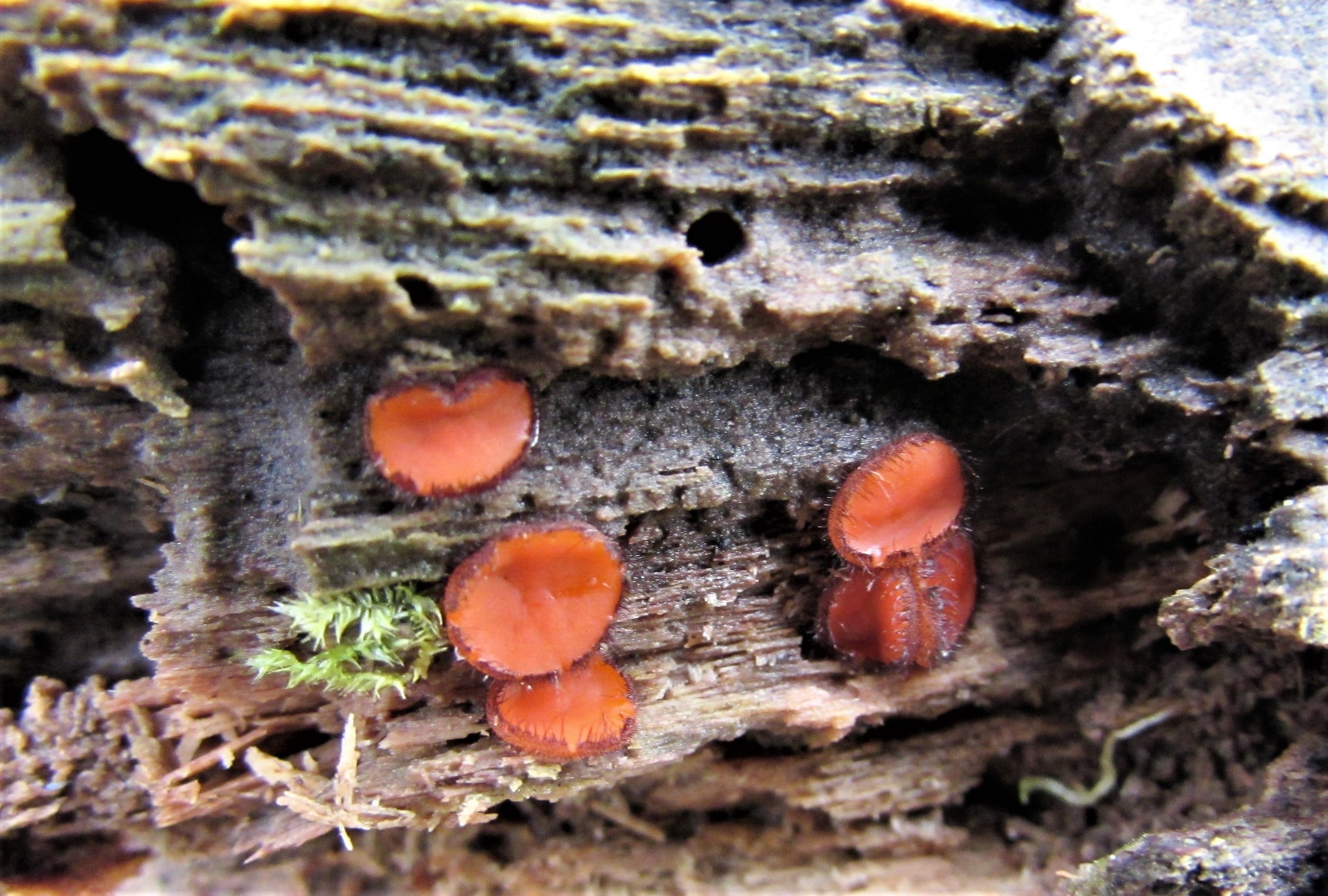
Common Eyelash Cup, Scutellinia scutellata, the final creepy fungi we’ll look for on our journey, is tiny and can be easy to overlook, getting to be no bigger than 1 centimeter per disc and preferring very moist environments. But if you see a fallen log near the riverbank with what looks like a cluster of tiny eyes looking back at you, you may have found the Eyelash Cup Fungus. It is recognizable by its red cup or disc shaped fruiting bodies lined around the edges with short dark hairs that give it this ‘spooktacular’ eyelash look.
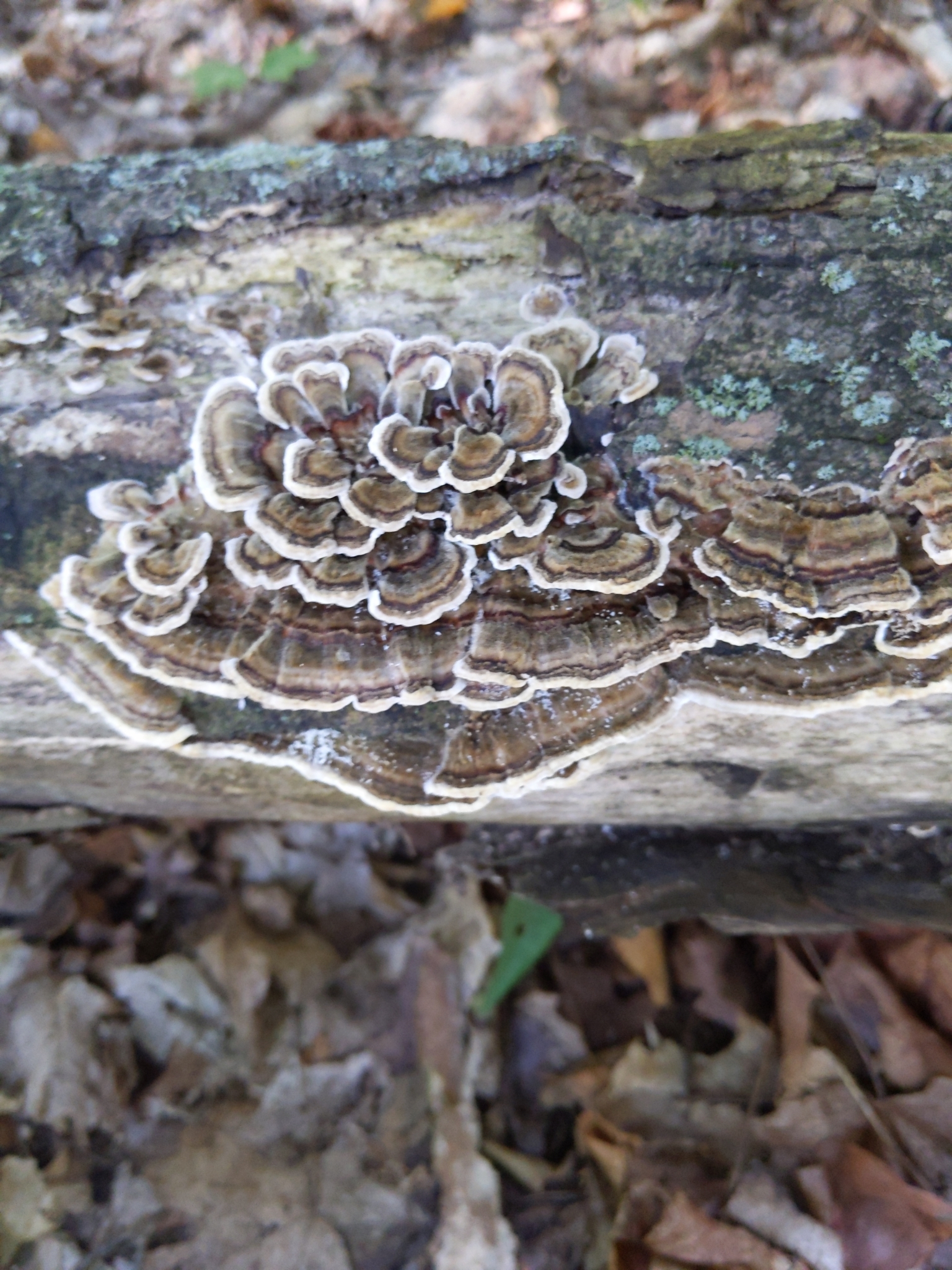
Turkey Tail, Trametes versicolor, is also fungus that can be found year round, but really gets us in the autumn feeling! If you aren’t into spooky season and prefer to think of feasting when considering fall time, keep an eye out for the nearly omnipresent Turkey Tail mushroom. One of the most common mushrooms in North American woods, you’ll find the Turkey Tail anywhere there are hardwood tree stumps and logs in need of decomposing. The top surface of this leathery textured fungi has concentric zones of different colors ranging from beige to cinnamon, and russet to dark brown. Sometimes, these zones will have algae growing in them, giving them a green appearance. The overlapping growth of colorful, fan-shaped brackets resemble the tail feathers of the star of our Thanksgiving feast and give this polypore its name.
In the wild world of fascinating fungi, these are just a few of the fun ones that can be spotted this fall. Some are huge, like the Giant Puffball, and some are tiny and easily overlooked, like the diminutive Birdsnest Fungi. The shapes, colors and types of fungus in the fall are as numerous as the flowers of spring. As you walk the 2000+ miles of trails at our state parks and historic sites this fall, keep your eyes open!
– Written by Angelina Weibel, Niagara Region Environmental Educator. Photos by Angelina Weibel and the Niagara region environmental education team except where otherwise credited.
 New York State Parks and Historic Sites Blog
I recently saw the Turkey Tail fungus at Stony Brook National Park in New York State. It was a very impressive specimen, and I appreciate your informative article. Thank you!
Thank you!