All posts by New York State Parks

Tundra Swans at Beaver Island State Park

It’s winter on the Niagara River.  While most of us are looking forward to spring, migratory birds from the high Arctic are frolicking here as if the river were a tropical resort.

The tundra swan foreshadows the arrival of winter on the Niagara frontier.  During the waning days of autumn, large flocks of these elegant birds congregate along riverbanks and small islands wherever there is shallow water where they remain for several months feeding mostly on the roots of submerged aquatic plants.  Sometimes they are joined by lesser numbers of mute swans  and trumpeter swans.

Tundra Swans P Leuchner1
Adult tundra swans along the Niagara River.

As our tundra swans settle into their winter environs they often behave in a stealthy manner, choosing to lead a low-key existence until the annual waterfowl hunting season ends. However, it’s easy to locate these birds from their unique calls which are reminiscent of those of a baying dog but with a bit of a musical lilt.  By the end of January, large flocks of hundreds of birds emerge where they can be observed feeding, preening their feathers or engaging in mating rituals.  One of the best areas to observe the tundra swan is at Beaver Island State Park located at the south end of Grand Island where the Niagara River is widest.
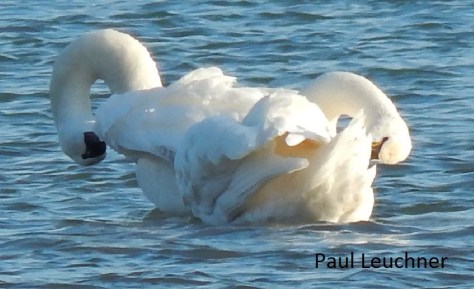
Preening Tundra Swans P Leuchner1
Adult tundra swan preening it’s feathers.  During preening, or straightening and smoothing the feathers, swans distribute uropygial oil, a special oil that helps keep their feathers dry.  Swans and other water birds produce uropygial oil in their uropygial gland.

It’s easy to identify the tundra swan.  Adult birds are pure white with black legs and have a black bill with a distinctive yellow spot just below the eye. This area of the bill is known as the lore.  Immature tundra swans are also white but their head and neck is streaked with gray.  They often travel with the adults.  Contrast that with the features of the mute swan, a non-native species brought over from Europe, which has an orange bill with a black base and short legs.  The neck is slender and is always held in a graceful shape resembling the letter “S”.   A trumpeter swan on the other hand, has a heavy all white body with a long neck that is held straight whether on the water or in flight. The bill and the legs are black.

Tundra Swans_P Leuchner1
Adult and juvenile tundra swans.

The tundra swans will remain here until early spring.  As the weather warms they will depart on the long journey to their breeding grounds above the Arctic Circle.
Greenway Corridor
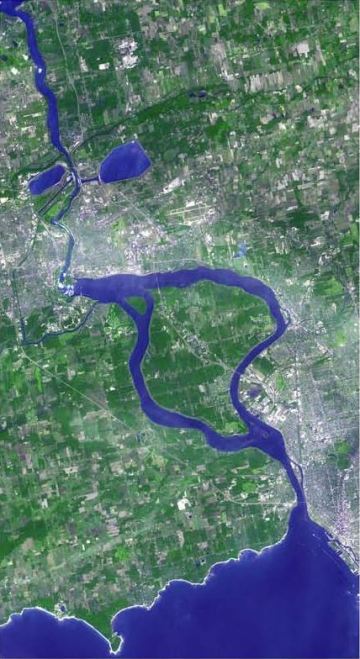
Aerial view of the Niagara River Greenway

The ecological significance of the Niagara River has long been recognized.  In 1996 it was the first to be designated a Globally Significant Important Bird Area.  Then in 2005 New York State added further support officially establishing the Niagara River Greenway.  Since that time millions of dollars have been invested in habitat restoration and enhancement projects significantly enhancing the biodiversity of the Niagara River corridor.

Post and photos by Paul Leuchner

Staff Favorite Ski Trails

If there is six inches or more of snow on the ground, get those skis ready to hit the trail in a State Park.  Across New York, there are 105 state parks and state historic sites that have cross-country ski trails.  If you are looking to try a new cross-county ski trail, try one of State Parks staff member’s favorite trails.

Nicandri Nature Center staff member Tracy mentions that there are over five miles of trails wind through the woods and along the St. Lawrence River in Robert Moses State Park, Massena, NY. The center offers free ski and snowshoe loans for all ages as well as ski instruction. Post ski, skiers can head into the nature center to enjoy a hot beverage, check out interactive exhibits, and warm up in front of the fire.

State Parks volunteer Judy notes that all of the trails at the Higley Flow State Park  just west of the Adirondacks, have their own unique scenic character and are popular with different ability levels for different reasons. The Overlook Trail is the most heavily used trail at the Park because it is a comfortable length (1.3 miles), relatively flat with a few smaller hills, and passes through a pine and spruce forest.  Skiers are never further than ¾ miles from the Lodge if they want to cut their ski short.  It links with the Woods’ backcountry trail (1.9 miles) and the Warm Brook trail (1.6 miles) for those wishing to challenge themselves further.

Higley Flow
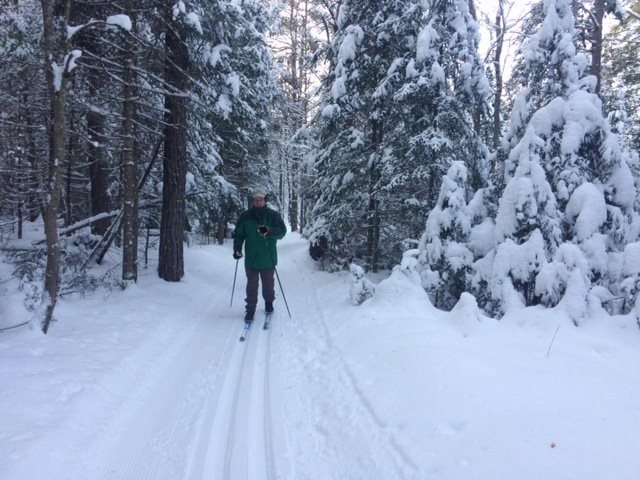
A skier enjoys new snow in Higley Flow State Park.

With over 20 miles of groomed ski trails located in the Art Roscoe Trail system at Allegany State Park in western New York, State Parks staffer Adele finds it hard to pick a favorite, but for a fun fast ski, recommends Christian Hollow.  This 1.5-mile loop starts .7 miles from the trail head. After a mild uphill to get the heart pumping, the trail mellows into a long level area where a skier can find that sweet smooth rhythm – ride and glide, ride and glide- click on this link to learn the ride and glide technique.

A short heart-pounding downhill leads to the well-marked entrance of Christian Hollow. This old logging road rolls past hemlocks, maples, beech and oak. Look for squirrel, mice and deer tracks  and other animal signs along the way.

Although it is marked as an intermediate trail, there is something for everyone. Easy descents lead to short steep uphills where the herringbone or duck-walking technique is key! This video can help you master going uphill on skis.

The reward for the hill climb is a gorgeous view of the Allegany plateau from highest picnic table in the park (2,242 feet). Back in the tracks, the loop continues with a long fast downhill and more rolling terrain with views along the ridge before winding back to Ridge Run. It’s an easy one mile ski back to the trail head. Taking only an hour which includes time for photos and a snack, this trail is exhilarating for both body and soul. Find out more about the trails www.alleganynordic.org.

Minnewaska State Park Preserve, located in the bucolic Hudson Valley, offers over 16 miles/26 kilometers of cross-country ski trails, groomed for both classic and skate skiing.  Skiers of all levels of ability will find a route they can enjoy, with breathtaking clifftop views and scenic carriage roads that meander through pristine forests featuring two sky lakes. You won’t find more picturesque and exciting skiing this close to New York City and Albany anywhere else. State Parks staff member Laura notes that the prices make skiing here affordable for the family, at $10 per adult, $9 per senior and $7 per child.

We have the perfect cure for the winter blues at Fahnestock Winter Park – 20 km of ski trails for beginner to expert extend out in every direction from our lodge.  Fahnestock is the perfect location for your first skiing experience. You can rent you all the gear you need and right out the door of the lodge is our most popular trail the Lake Trail.

Ice conditions permitting, we groom two kilometers of trails on our lake, a perfect place to learn to ski as it is flat and safe. Advanced skiers also love it because they can go fast on the groomed trail.

The trail will take you by a beaver lodge, over the dam built by the Civil Conservation Corps during the Great Depression, and past many small islands. Ice fishermen, skaters and snowshoers can also be found on the lake.

State Parks staff member Declan finds that gliding west towards the sun on a January day is spectacular way to experience the park in winter in a safe environment.

Skiing on the beach in the winter, and then returning to swim at the beach in the summer, is one of the best ways to experience all the seasons in Fahnestock!

fahnestock-winter-park.jpg
Family fun at Fahnestock Winter Park.

February Staycation Fun in New York State Parks

February vacation is a great time to get out and explore our state parks. Many parks are offering free programming to keep you and your family occupied this February break.  Here is a sampler of just some of the many programs State Parks is offering this year. Our programs include active outdoor fun, wildlife ID, and parties!

Got a hankering to try ice fishing?  Then head out to Glimmerglass State Park in central NY on February 21, Moreau Lake State Park, north of Saratoga Springs, on February 22, or John Boyd Thacher State Park, Thompson Lake just west of Albany, on February 24 for a free fishing clinic led by Department of Environmental Conservation staff. All the fishing gear will be provided during these workshops. Remember that proper clothing is critical for safe ice fishing outings.  Dress warmly, paying extra attention to your head, feet and hands – dressing in layers is essential.

Perhaps you are hoping to get to know our natives.  Many parks are offering wildlife and plant identification walks, ranging from seal walks at Jones Beach State Park on Long Island to an owl prowl at Max V. Shaul State Park in the northern Catskills, as well as a winter tree identification workshop at Knox Farm State Park in western New York.

If you are looking for a little adventure, check out the snowshoeing and cross-country skiing trails at Parks across the state or join in on a guided hike. The Lake Erie ice volcanos are particularly exciting, and you can visit them at Evangola State Park in western New York.

Many state parks across the state will be offering programs for preschoolers during February vacation.

Tiny Tot Clay Pit Ponds
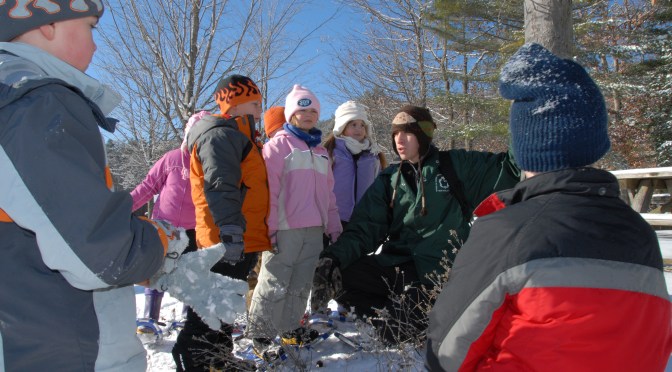
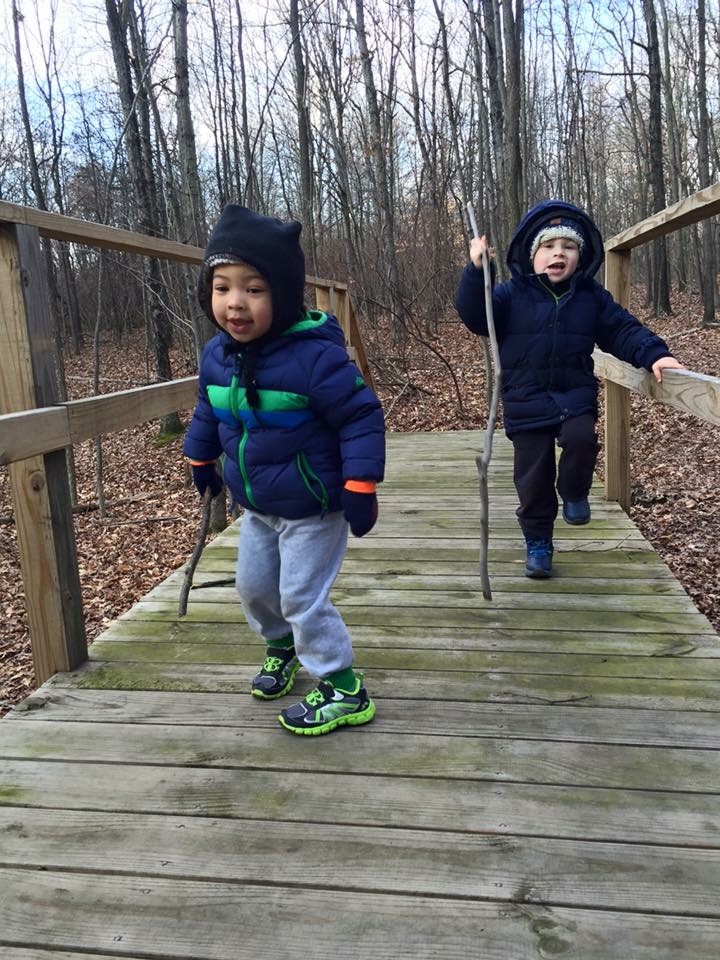
February is a great time to get the young explorers outdoors, photo by State Parks.

Maple sugaring starts in February! Clay Pit Ponds State Park Preserve on Staten Island Caumsett State Historic Park Preserve on Long Island, and Letchworth State Park south of Rochester will have maple programs this week. Visitors can learn how to identify and tap maple trees, and the sugaring process.

OLYMPUS DIGITAL CAMERA
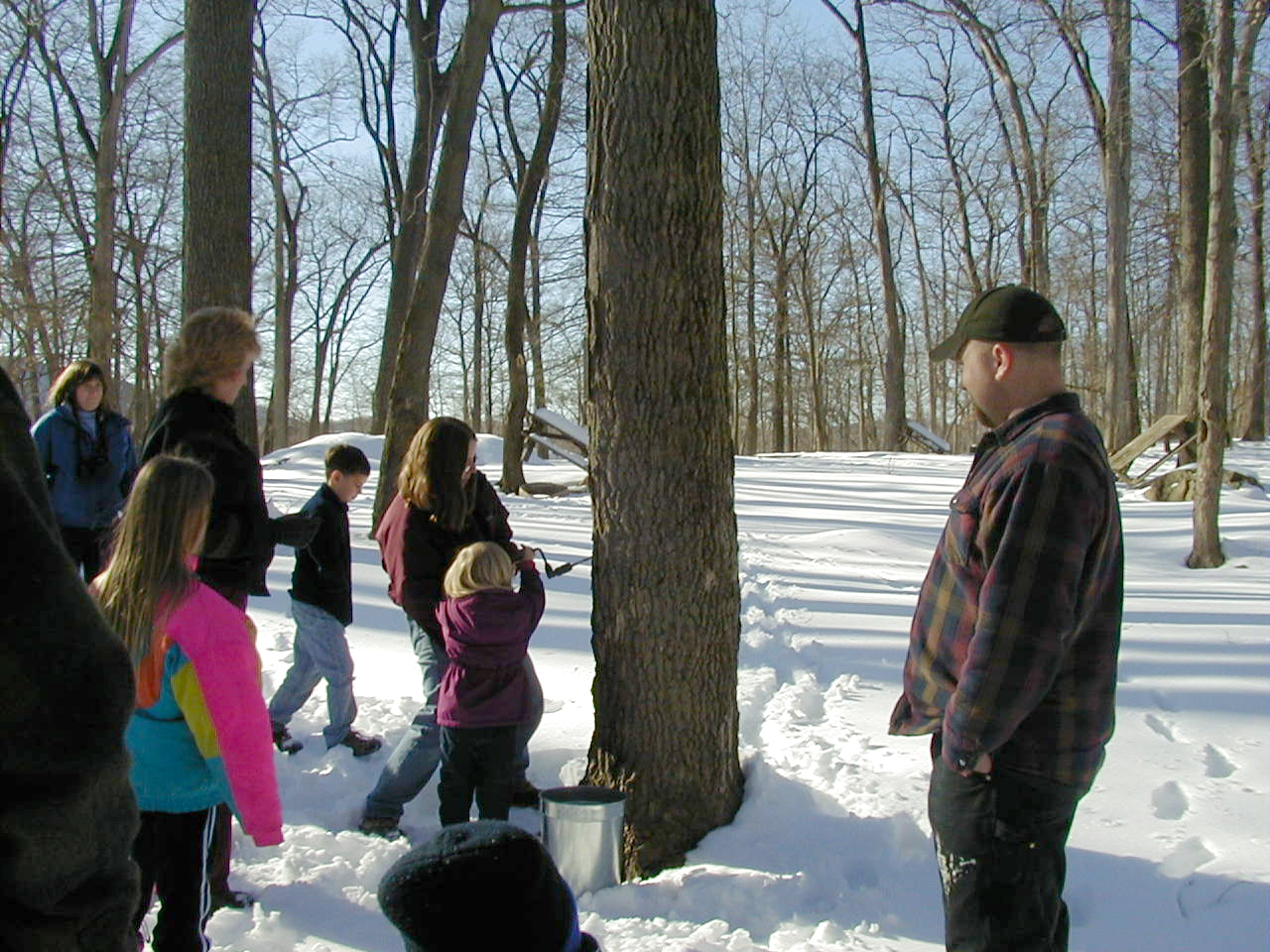
Tapping a maple tree, photo by State Parks.

You can also celebrate George Washington’s 286th birthday at Washington’s Headquarters, Knox Headquarters, New Windsor Cantonment or John Jay Homestead State Historic Sites all located in the Hudson Valley.

Winter Sunset, Allegan State Park Toners
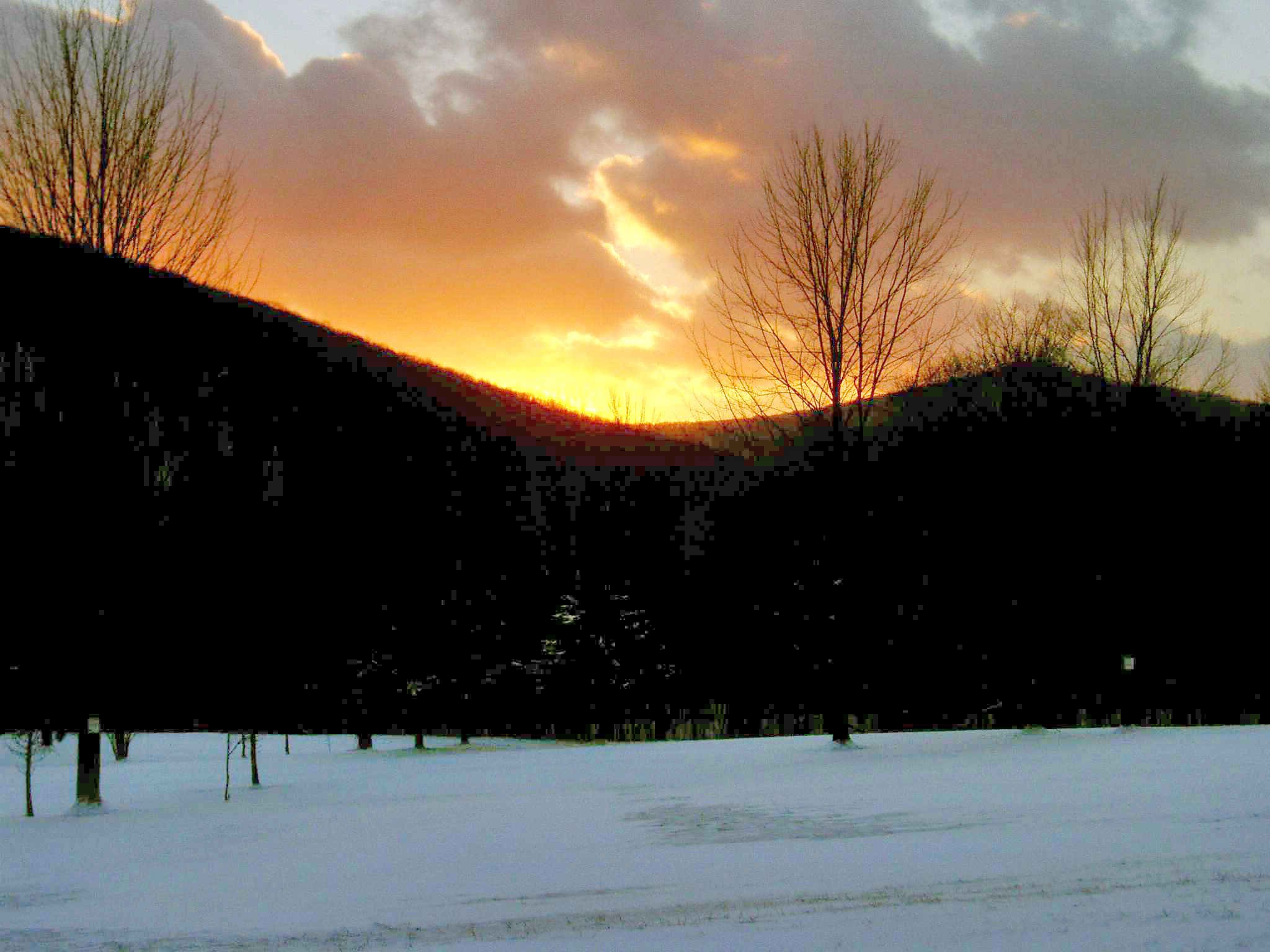
Perhaps you can catch the sunset in a State Park, photo by State Parks.

Skating in New York State Parks: Ice Ice Baby!

As the 2018 Winter Olympics kick off in PyeongChang, South Korea, figure skating, speed skating and hockey will be among the marquee events. Generations of young skaters will be inspired by the aerial feats, athletic prowess and teamwork showcased on the ice, while dreaming of standing on the medal podium proudly representing their country.

For amateur and recreational skaters who want to enjoy some quality ice time with family and friends a little closer to home, select New York State Parks offer a variety of locations and experiences throughout the winter months, including rinks and many frozen ponds. From Riverbank’s roof-top skyline in Manhattan to the oval at historic Bear Mountain to the quiet beauty among the pines in Saratoga, these scenic settings are the perfect backdrop to embrace the weather in the northeast and stay active in the outdoors.

Whether your specialty is a triple lutz, or you skew closer to a full-time klutz (or somewhere in between), ice skating is a fun way to exercise for people of all ages. The New England Baptist Hospital and M. Kathryn Steiner, M.D., the physician for the Skating Academy of Boston, recently noted the many fitness benefits of skating including strength, flexibility and balance.

For ice enthusiasts who prefer a net and some action, pond hockey is more popular than ever before.  Both Chenango Valley and Saratoga Spa State Parks host annual multi-day tournaments that draw visitors from across the U.S.  These, together with parks such as Schodack Island, Grafton Lake, and Glimmerglass, hold winter festivals and regular programs throughout January and February with some offering instruction to help grow new legions of skaters.

Along with inspiration for general winter recreation, the State Parks’ website (parks.ny.gov) offers a full list of State Parks with ice skating.  Many sites offer skate rentals, lessons, special events, warming huts and refreshments.  Call ahead for conditions and hours, and be sure to carve out some ice time for yourself this season!

This slideshow requires JavaScript.

A Real Winter Wonderland

It is without question that Niagara Falls State Park is one of the most beautiful places our state and country has to offer, drawing an average of nine million tourists every year. People come from all over the world to experience the power and wonder that is Niagara Falls. Designated as a national historic site and the nation’s very first state park, it comes as no surprise the amount of attention it receives.

However, something most people miss out on is the endless beauty of Niagara Falls in the winter. Watching the cascading water crash through the pure white snow and ice creates a unique and memorable experience only attainable during the winter. Visiting the Falls in the wintertime offers tourists stunning views and the beauty of freezing mist covering the landscape.

Nicole Czarnecki
Overlooking the frozen Cave of the Winds Staircase, photo by Nicole Czarnecki.


Nicole Czarnecki
Impromptu snowball fight, photo by Nicole Czarnecki.

Nicole Czarnecki
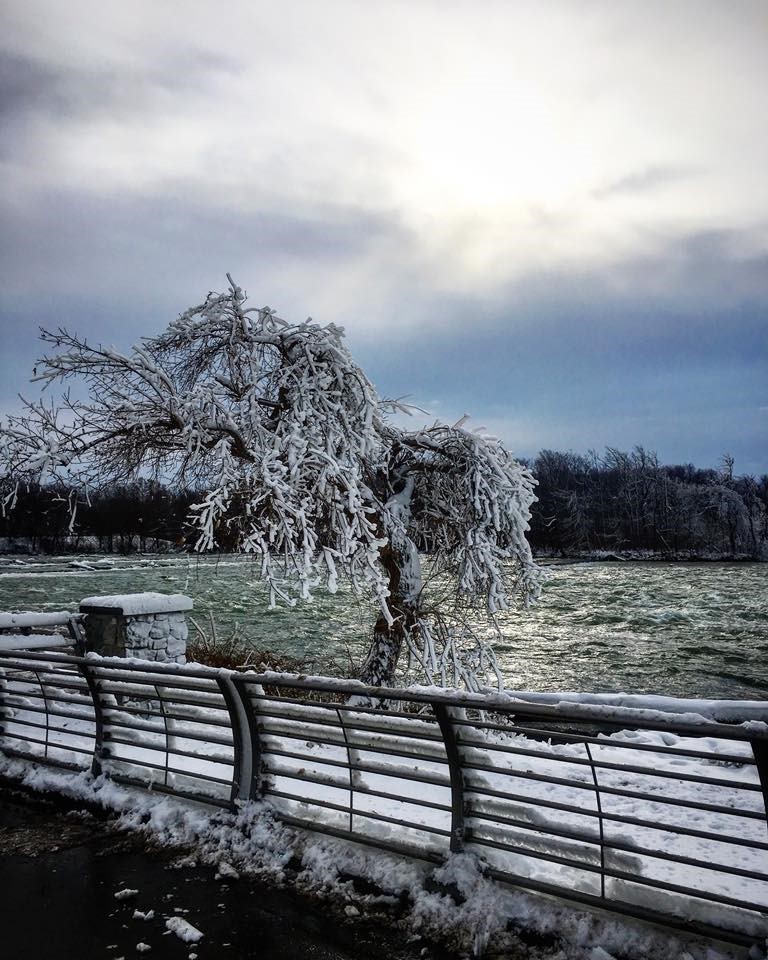
Frozen tree just before the Falls, photo by Nicole Czarnecki.

The newly constructed Cave of the Winds pre-show attraction is now open year-round and offers audiences interactive and virtual exhibits as well as an escape from the chilly temperatures.

Although the Park has received some attention recently pertaining to the beautiful winter wonderland, some articles have mentioned the falls being “iced over” or “freezing over”. It is important to note that the only documented incident of the Falls being frozen completely came in March of 1848 when the Buffalo Express Newspaper stated the cause to be ice damming at the mouth of Lake Erie. The installation of an ice boom at the mouth of the Niagara River has made the likelihood of this event recurring very low if not impossible. Even during the infamous Polar Vortex of 2014 the Falls continued to flow.

Niagara_Falls_Lights_and_Snow_-_panoramio
Light show in January 2014 during the Polar Vortex, photo from Wikimedia Commons.

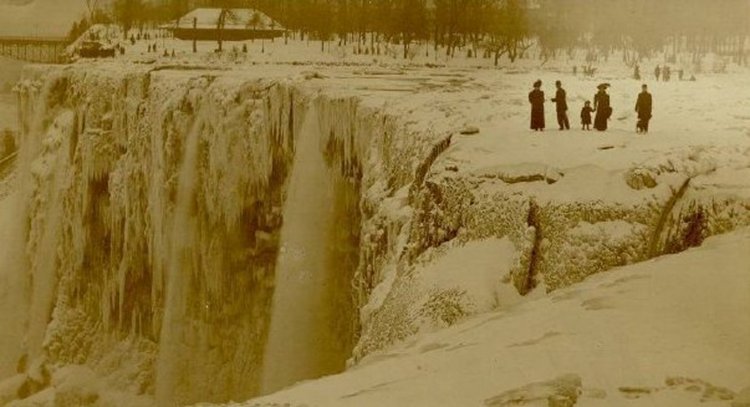
This does not mean that it has not come very close to freezing since then. During the early 1900’s tourists would often walk out onto “ice bridges” forming across the top of the Falls. This activity proved to be very dangerous and was forbidden after February 1914.

260369-545424
People standing on ice above the Falls 1909, photo from Niagara Falls Pubic Library.

2 historic images

All photos provided by State Parks Naturalist Nicole Czarnecki were taken during the Winter Wonder Photography hike. Look for other events at Niagara Falls and surrounding parks this winter on their Facebook page.

Post by Kristin King, State Parks