From the tip of Long Island, to the St. Lawrence River, the forests of the Taconic Mountains to the Niagara River Gorge, New York State is home to thousands of miles of trails. Every year on the first Saturday in June we celebrate these places with National Trails Day®.
Created by the American Hiking Society in 1993, the 2017 celebration marks the 25th anniversary of the event. National Trails Day® seeks to connect people and trails across the country. Organized trail events are hosted at parks and recreation locations across the country and people are encouraged to “participate, recreate, and give back”. Many locations have events where folks can join other trail lovers in an organized hike, paddle, bike or horseback ride. Other spots host trail work days where volunteers can lend a hand and clean up their favorite stretch of trail or even help a trail crew construct a new one. In 2016 there were over 100 events in New York alone!
Outdoor recreation is more popular than ever and many people are finding enjoyment on trails. Whether it’s cycling on a greenway trail, hiking to a scenic view, or paddling a river, trails provide a connection to the natural world. That connection is important as studies now show that, in addition to our hearts, lungs, and legs, trails are good for our brains as well![1]
With greater numbers of people heading out on the trail, it’s more important than ever to recreate responsibly by following the seven principles taught by the Leave No Trace Center for Outdoor Ethics.
The Seven Principles are:
Plan Ahead and Prepare
Travel and Camp on Durable Surfaces
Dispose of Waste Properly
Leave What You Find
Minimize Campfire Impacts
Respect Wildlife
Be Considerate of Other Visitors
It is also good practice to prevent the spread of damaging insect pests and weeds by brushing off your boots or boat before you leave the trail or water. Following these steps will help you have a safe and satisfying experience and ensure that the trail will be there for the next person to enjoy as well.
To find out more information on National Trails Day® including links to events near you, visit the American Hiking Society’s website. To learn more about the Leave No Trace Center for Outdoor Ethics, visit their website. For maps and information on trails in New York State Parks, visit Trails webpage. National Trails Day® events in State Parks can be found here.
No need to chase down the end of a rainbow to find a hidden treasure. What if I told you that you could find unique knick-knacks, rubberstamps and secret messages in parks near you? This spring I challenge you to explore participating New York State Parks and Historic Sites and try out these fun treasure-hunting activities!
Geocaching (geo= Earth, caching= hiding/storing) is a great hide-and-seek activity that started in 2000 with the rise of Global Positioning System (GPS) technology. Geocachers use location coordinates and a GPS device such as a smartphone to find a hidden container.
A geocache hidden near a tree. Geocaches can vary greatly in size and appearance. Public domain image
Inside each container is a logbook, and if the container is big enough there are trinkets that you can see and swap (See Resources below for details about the different kinds of geocaches). Occasionally the “hidden treasure” is the scenic location itself. If searching in a New York State Park, it’s not uncommon for geocaches to be along trails with peaceful waterbodies or iconic views nearby. Bring a buddy or two to serve as extra eyes, especially since GPS location information can vary by a few meters.
Letterboxing is a much older hobby (at least 150 years old) which involves exchanging unique rubber-stamped images instead of trinkets. Traditionally you find the hiding places using clues or written directions, but some hybrid letterboxes may have coordinates as well.
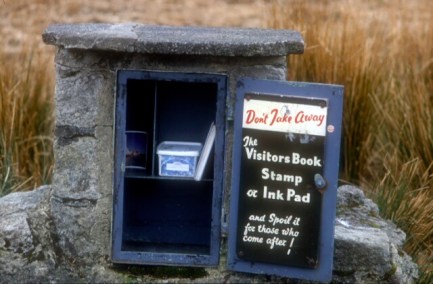
The famous Cranmere Pool letterbox in England, photo by Patrick Gueulle
Each letterbox has a special, often hand-made rubber stamp for you to stamp into a journal like a passport; in return, you use your own personal stamp to “sign” the letterbox logbook. This outdoor activity began in the mid-1800s, when a trail guide left his business card in a bottle at Cranmere Pool in Dartmoor, England. Others who hiked through the notoriously rough terrain found the bottle, and they began to place their own business cards inside as a way to say, “I was here.” This turned into travelers hiding boxes in the woods and meadows for postcards and, eventually, stamps. If you like clues, art, traveling and walking through beautiful trails, then I recommend giving letterboxing a try.
Who can participate in these local adventures? Anybody! Both activities are a great way to find new nature trails, historic sites or hidden treasures near you. Are you ready to go letterboxing or geocaching in New York State Parks? Here’s how!
Search for an active geocache/letterbox at a Park near you.
There are different websites and mobile apps to search for letterbox clues and geocache spots (See Resources below). Use the “Search” features to find stamps or caches nearby, in a place you’d like to visit, or at a State Park that you enjoy. Letterboxes and geocaches have been found in every region of the state. Just remember that locations are subject to change, as caches/stamps can go missing or can be retired by their owners. As a courtesy, people often record their findings online to update the status of a letterbox/geocache.
Pack your supplies
If you are geocaching:
The geocache coordinates
GPS device or cell phone
A pen
(optional) A trinket of your own
If you are letterboxing:
The letterbox clues/directions
A notebook
Your own, “signature” rubber stamp
(optional) Your own ink-pad, just in-case
A pen to sign, date and write any comments about your trip in the letterbox journal or your own. Make sure to sign with your trail name and not your real name!
Prepare for the weather/terrain
As with any kind of adventure, consider the weather and terrain beforehand. A few geocaches and letterboxes are indoors, but many others require going out on a trail. If you are treasure-hunting on a sunny day, wear a hat and bring water. Wear long pants and long-sleeved shirts if going out in colder weather, or in an area that might require you to be walking on a path with lots of brush nearby. Wear sturdy, closed-toed shoes, and keep an eye out for poison ivy, stinging nettles, slippery surfaces, etc.
Learn the rules & be respectful of nature.
Stay on trails, and do not trample native plants in search of a letterbox or geocache. If you see any litter while out on a trail, remember, “Cache In, Trash Out.” This is part of an environmental beautification effort by geocachers worldwide. When you find what you’re looking for – whether letterbox or geocache – be subtle. You don’t want to ruin the surprise for others, and you definitely don’t want to draw the attention of folks who might not be letterbox- or cache- friendly. Put everything back exactly where you found it and as you found it, and remember to record your find (or attempt) online! See online communities and resources below for other code-of-conduct guidelines.
Have fun! You may find yourself discovering new places you never knew existed in your own neighborhood, or trails you wouldn’t have otherwise visited. You can log your experiences at one of the many hobby websites.
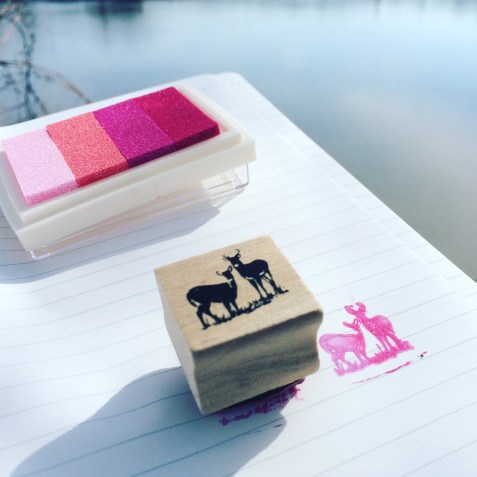
Stamp, inkpad, and notebook by a river, photo by Erin Lennon, State Parks
Resources and Relevant Links:
For geocache locations & rules: www.geocaching.com, www.earthcache.org, http://www.cachegeek.com/cache-listing-sites.html, and see various mobile apps (search “geocaching” in the app store for your smartphone). For some services, you may need to create an account. As a note, State Parks is not affiliated with any geocaching or letterboxing organizations. And always check with landowners and local rules before creating new caches or routes.
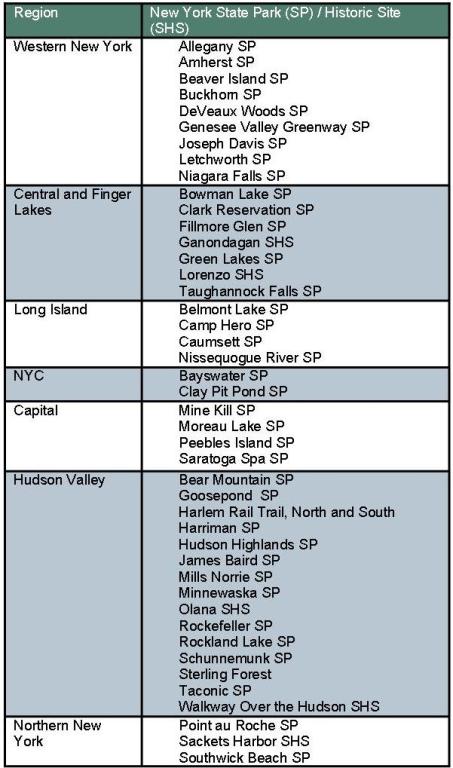
Keep in mind that cache/box locations and maintenance statuses are subject to change. Here are a few State Parks and Historic Sites to begin your search for geocaches or letterboxes:
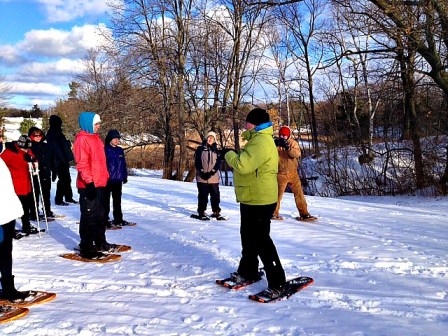
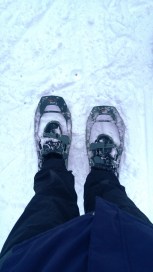
Don’t let the snow deter you from exploring State Parks – just grab or borrow a pair of snowshoes and head out to the trail. Go snowshoeing on a trail in a nearby park or try one of State Park staff’s favorite snowshoeing spots.
A group pauses during a snowshoe trip at Wilson-Tuscarora State Park, photo by State Parks
In western New York, Tina’s favorite snowshoeing spot is at Wilson-Tuscarora State Park located on Lake Ontario in northern Niagara County in Wilson. This is where you will find the Red interpretive trail nestled along the east branch of Twelve Mile Creek. As you snowshoe through the changing landscapes, you’ll pass through successional fields, marshland, and finally through a mature forest of old growth beech and hemlock trees. Keep your ears open for calls of the pileated woodpecker.
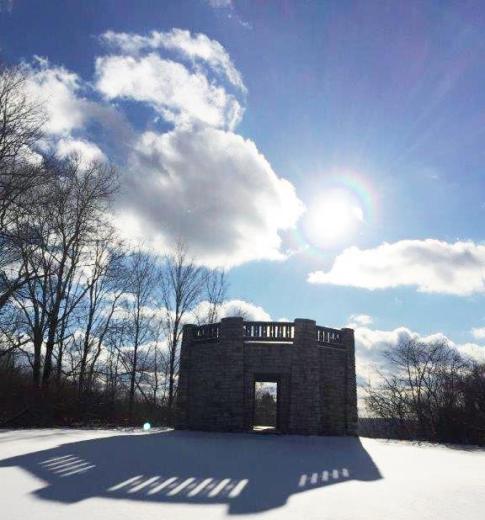
Snowshoe to this historic tower at Allegany State Park, photo by Adele Wellman, State Parks
At Allegany State Park in Salamanca, Adele recommends the Bear Paw Trail located across the road from the Art Roscoe cross-country ski area on the Red House side of the Park. Bear Paw Trail is the newest trail built for the snowshoeing enthusiast. The 2.4-mile long, easy to moderate trail has 15 interpretative sights and runs along the ridge above Salamanca to historic Stone Tower. The trail loops through large stands of Black cherry and White ash trees. Look for small secret plants such as wintergreen and princess pines along the trail. Each Monday evening in January and February, the park offers sunset snowshoe hikes. The Environmental Education Department has a few pairs of snowshoes to borrow during programs.
In central New York, Katie’s favorite part about snowshoeing is how the landscape constantly changes during the winter. Even if you snowshoe at your favorite local park, in her case Clark Reservation State Park in Jamesville, everything looks different in the winter.
After the leaves fall off the trees, you can see so much farther into the woods. You will be snowshoeing along at Clark Reservation, and suddenly notice that the ground drops away not far from the edge of the trail into a steep ravine. You might never notice the ravine in the summer because rich greenery hides it from view. Winter’s arrival reveals forests secrets. Soon though, they are covered up again, this time with ever changing blankets of snow. Nature’s snow sculptures change daily, so you really need to hit the trails often so you don’t miss out!
About once a year, the park gets special permission to host a moonlit snowshoe hike it’s amazing how bright the forest is with the light from a full moon reflecting off the snow. You can even see your shadow! Keep your eyes on the calendar to find out when this year’s Moonlight Snowshoe Hike will be, or come out on your own any day to check out this special place.
Family fun at Wellesley Island State Park, photo by State Parks
At the Minna Anthony Common Nature Center at Wellesley Island State Park, Thousand Islands, Molly notes that there are four trails open to snowshoeing. Probably the most heavily snowshoed trail is North Field Loop. Only a half mile long, it meanders through a forest full of white pine trees, passes through a seasonal wetland, and into a forest of towering red oak trees. School groups explore this trail on snowshoes and the nature center staff lead moonlight snowshoe hikes on the trail throughout the winter months. There is nothing prettier than snow covered woods on a moonlit night. The park has both children and adult snowshoes available for rent for $3 a pair.
Snowshoeing through Grafton Lakes State Park, photo by State Parks
In the Capital Region, Liz at Grafton Lakes State Park suggests the Shaver Pond trail loop. Just under two miles, it offers picturesque views of Shaver Pond, with a trail winding through forest of hemlock and maple trees over easy terrain. Inquisitive visitors may see mink or fox tracks along the way. Trail maps are for sale & snowshoe rentals are available at park office on a first-come, first served basis for $5 for four hours.
Family snowshoe program at Moreau Lake State Park, photo by State Parks
At Moreau Lake State Park, Rebecca mentions that the park has 30 miles of trails and there are new places to explore as the seasons change. The parks offers snowshoe hikes and classes for all ability levels, including first timers. The park also has snowshoes available for rent to hikers or people who want to go out and try it on their own for $5 for a half day and $10 for a full day rental.
Fun times with friends at Thacher State Park, photo by State Parks
At Thacher State Park, the Fred Schroeder Memorial Trail is one of Nancy’s favorite snowshoe walks. This three mile loop in the wilder northern part of the park takes you through beautiful woodlands of mixed hardwoods with stands of spruce and hemlock trees and across a couple of open fields, without much elevation change. Midway on the loop, you can take in the scenic snow-covered views from the cliff edge at High Point. Emma Treadwell Thacher Nature Center rents snowshoes to the public.
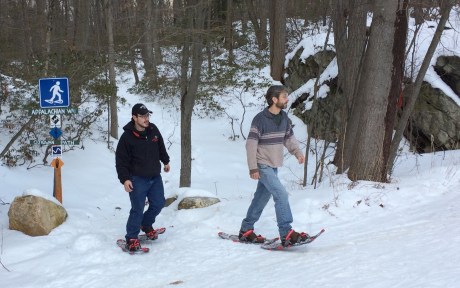
Heading out on the trail at Fahnestock Winter Park, photo by State Parks
In the Hudson Valley, Kris at Fahnestock Winter Park mentions two unique snowshoeing trails. If you’re looking for more rugged terrain, and challenging descents, “Appalachian Way” treks along a ridge line to a stunning overlook of Canopus Lake. The trail “Ojigwan Path” offers the beginner and intermediate snowshoer a snaking walk through hemlock groves and strands of mountain laurel. Both routes take around 2.5 hours to complete. Snowshoe rentals are located in the newly renovated winter park lodge, where you can also warm up with a cup of delicious chili!
A beautiful day on snowshoes at Sam’s Point, photo by State Parks
Laura D. recommends a snowshoeing trail that will lead you to expansive cliff top vistas, through the globally rare dwarf pitch pine barrens, and around the glacially carved Lake Maratanza. The Loop Road at the Sam’s Point Area of Minnewaska State Park Preserve is the perfect trail for viewing these breathtaking vistas. While on the three-mile Loop Road, stop at the Sam’s Point Overlook, where on a clear day, you can see four states! Snowshoe rentals are available at the Sam’s Point Visitor Center for $15 per adult and $14 per junior (17 years and under) for the day or $5 to join a public program.
Minnewaska Falls, photo by State Parks
A novice snowshoer will find the modest Mossy Glen Footpath loop just right for a snowshoe trip at Minnewaska State Park Preserve notes Laura C. This approximately four-mile route follows the Mossy Glen Footpath as it hugs the edge of the scenic Peter’s Kill stream, winding through quiet forests. At the end of this Footpath, take the Blueberry Run Footpath to the Lower Awosting Carriage Road back to your starting point. This loop begins at the Awosting Parking Lot.
photo by State Parks
These are just a sampling of the many trails you can explore on snowshoes . We hope to see you out on the snowshoe trail this winter.
You may not see any snow when you look out the window right now, but winter is here and now is the time to think about all of the outdoor activities it brings. One of the best ways to experience New York State’s natural winter beauty is on a snowmobile, exploring the snowmobile trail system that crisscrosses 45 counties through woods, fields, towns and our State Parks. Snowmobiling is a fun, family-friendly way to enjoy winter scenery and wildlife, especially for those people with disabilities who are unable to do strenuous activities like cross-country skiing and snowshoeing.
With over 10,000 miles of public trails, there’s something for everyone to enjoy from local loops to weekend getaways. Many of our parks have trails connecting to the statewide trail system. And some parks, like Allegany State Park, have not only over 60 miles of groomed trails but also winterized cabins that are open year-round for a warm winter weekend retreat.
The New York State Parks Snowmobile Unit has a few tips to make sure you return from your trips safely and are ready to ride again another day:
-Attend a New York State Snowmobile Safety Course. Adults are not required to take a course but it’s recommended that everyone take one, regardless of experience or age. Requirements and a list of upcoming courses are available here.
-Always ride with a buddy, and always leave a travel plan including a return time with someone at home.
-Never drink and ride. Alcohol effects reaction time and judgement.
-Wear a helmet any time you’re operating a snowmobile, no matter how short the trip.
-Ride as conditions allow and within your ability. Slow down at night and when weather such as falling snow reduces sight distance. Check local conditions before crossing frozen bodies of water to ensure the ice is thick enough to ride. Always obey posted speed limits and local regulations.
-The safest place to ride is on the trail. New York State snowmobile trails are maintained by dedicated club volunteers, and deep or drifting snow off the trail may hide dangerous hazards. In addition, the majority of trails are actually located on private property with the permission of the property owner, and trespassing can close trails permanently for everyone.
If you’re new to the sport, or have never been on a snowmobile before, the New York State Snowmobile Association is teaming up with New York State Parks to offer Take a Friend Snowmobiling events where you can learn more and take a free snowmobile ride, conditions permitting. An event is scheduled at Grafton Lakes State Park during the annual Winter Fest on January 26, 2019. Necessary equipment will be provided; participants are urged to dress appropriately for outdoor weather conditions. More Take a Friend Snowmobile events can be found at the Snowmobile Association website.
This New Year’s Day, many New York state parks and historic sites are inviting the public to celebrate 2017 in the outdoors with a First Day Hike. The guided hikes are part of the sixth annual First Day Hikes program taking place throughout the nation, giving people of all ages an opportunity to connect with nature and experience the guided walks with family and friends.
Here in New York, fifty hikes are being hosted, nine more than the previous year, at 44 state parks and historic sites with some facilities offering multiple hikes for different age groups, skill level and destinations within the park. State park staff and volunteers will lead these family-friendly walks and hikes, which range from one to five miles depending on the location. This past year’s program welcomed more than 2,860 people who hiked a total of 6,897 miles.
The start of the new year is the perfect time to leave the hectic holiday pace behind and embrace the outdoors with a walk or hike in New York’s breathtaking scenic settings. First Day Hikes are a family-friendly tradition that offer a fresh seasonal perspective of the state’s natural treasures and vast opportunities open year-round at State Parks.
Among the many programs being offered this year are a seal walk, winter woodlands, a walking history tour, a snowshoe waterfall hike, pet-friendly treks, gorge walks, canal artifacts, nature detectives and more. New entries for 2017 include the Jones Beach boardwalk, Gilbert Lake’s wilderness trail, Green Lakes’ hike around the lakes, Seneca Lake and the Cayuga-Seneca Canal, exploring Grafton’s lakes and following along the Old Croton Aqueduct.
If weather conditions permit, some First Day Hikes may include snowshoeing or cross-country skiing. Many hikes will be offering refreshments. A listing and details about hike locations, difficulty and length, terrain, registration requirements and additional information are available at nysparks.com.


 Created by the American Hiking Society in 1993, the 2017 celebration marks the 25th anniversary of the event. National Trails Day® seeks to connect people and trails across the country. Organized trail events are hosted at parks and recreation locations across the country and people are encouraged to “participate, recreate, and give back”. Many locations have events where folks can join other trail lovers in an organized hike, paddle, bike or horseback ride. Other spots host trail work days where volunteers can lend a hand and clean up their favorite stretch of trail or even help a trail crew construct a new one. In 2016 there were over 100 events in New York alone!










 New York State Parks and Historic Sites Blog