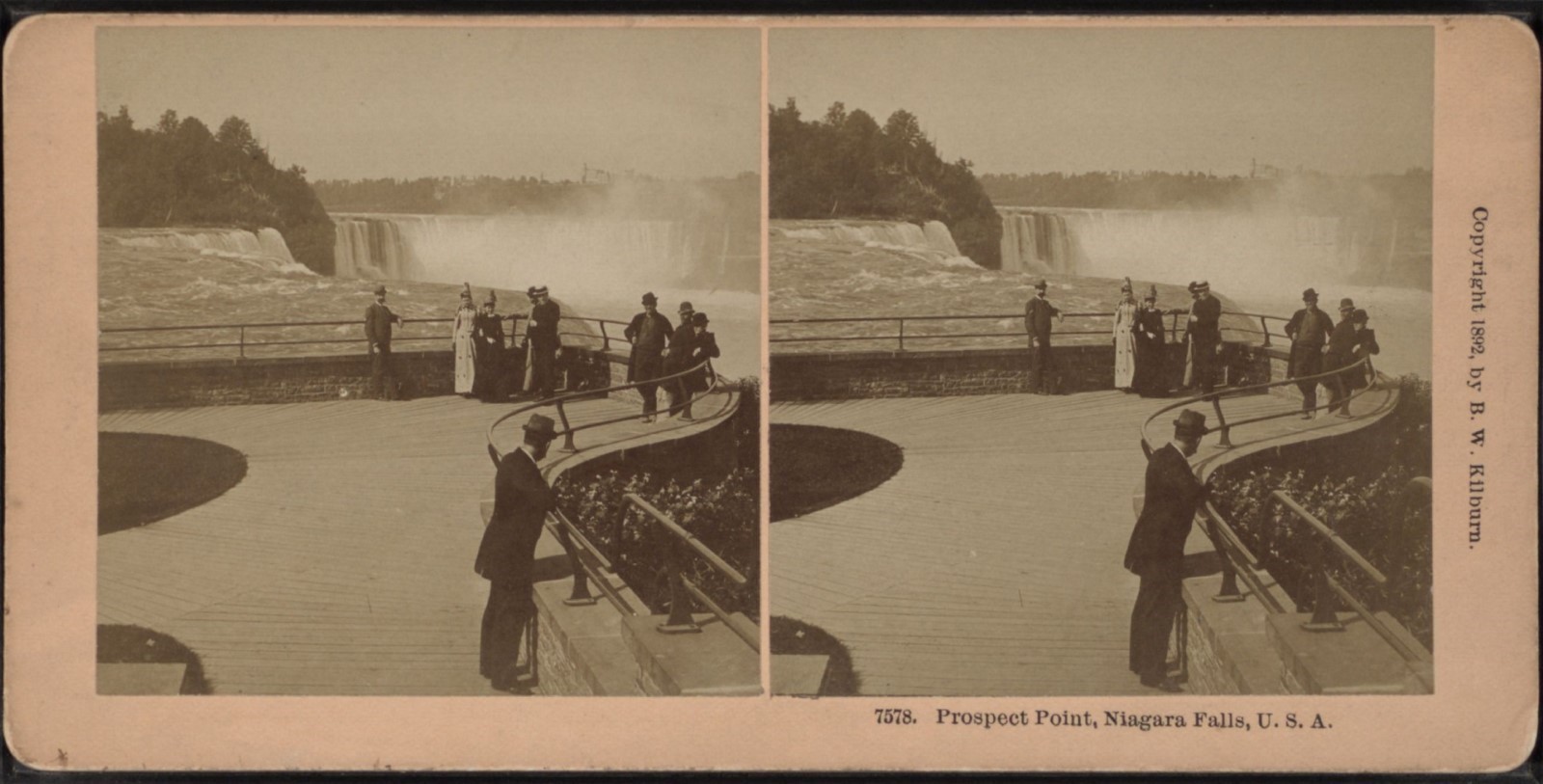
A stereographic photograph taken at the Prospect Point observation area of Niagara Falls. Image courtesy of the New York Public Library.
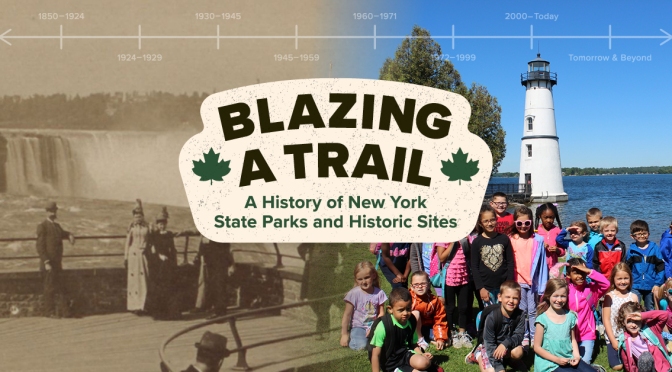
Beginning with the acquisition of Washington’s Headquarters in 1850, Blazing a Trail delves into more than 170 years of stories and milestone moments, divided into eight chronological eras. The timeline experience, showcased in a modern and mobile-friendly way, introduces important figures in the State Parks’ history and examines the social and political context of each era of our park and historic site system’s development. With our Centennial celebration already in full swing, additional eras will be launching throughout 2024, reminding New Yorkers that New York’s state parks are truly made for them.
Hispanic Heritage Month, spanning mid-September to mid-October, is a time for Latinx people in the U.S. to celebrate their roots. Through the vantage of Hispanic / Latinx staff, we reflect on the namesake for Roberto Clemente State Park — the sole park in our system named in honor of a Hispanic icon.
Roberto Clemente State Park first opened in 1973 as the Harlem River Bronx State Park. In that same year, the New York State Commission met to rename the park after the famous Puerto Rican Hall of Fame Baseball player, Roberto Clemente, who tragically died in a plane crash off the coast of Puerto Rico taking aid to Nicaragua.
The decision to rename the park after Clemente was not because he was a famous baseball player, but because he believed in helping people and doing good. He was truly a humanitarian. “Anytime you have an opportunity to make a difference in this world and you don’t, then you are wasting your time on Earth,” he once said.
I am joyful to be a Latina “Boricua” and oversee the first State Park built in New York City, and especially proud that it holds the name of Roberto Clemente. When I was a young child, I remember my mother speaking about how, although we came from a town next to his, our cousins lived in the town Roberto Clemente came from. I often remember him and think of my baseball card collection.
In 2024, New York State Parks and Historic Sites will celebrate our Centennial, commemorating the 100th anniversary of the founding of our parks and sites system. While we have incredible public properties older than the 100-year-old system, the Centennial celebrates the vital legislation that allowed us to build and expand our network of parks and sites, forging the system we know and love today.
As OPRHP Commissioner, I am reminded every day of the immense pride and enjoyment New Yorkers take in our facilities. To prepare New York State residents and visitors from around the world for the exciting year ahead, I recently embarked on a two-day journey to showcase the breadth of our parks and sites system, highlighting various activities and partnerships that make our system so unique.
The history of European swordsmanship is often presumed to be the story of white, cisgender men. But people of all genders and races have played leading roles in this story.
On April 23rd, 2023, Schuyler Mansion State Historic Site partnered with the Musicians of Ma’alwyck (including Ann-Marie Barker Schwartz , Norman Thibodeau, and André Laurent O’Neil), actor Devin Funnye, and historical fencer Reily Mumpton, to present The Match!, a celebration of the stories of two 18th century individuals who exemplify these contributions: Chevalier de Saint-Georges and Chevalière d’Éon.
Learn more about The Match event from Schuyler Mansion staff and the actors who played Saint-Georges and d’Éon.
Saint-Georges and d’Éon were both considered celebrities in late-18th century London, and were part of the entourage of the Prince of Wales (through which they made the acquaintance of Schuyler Mansion’s very own Angelica Schuyler Church, of Hamilton fame!). On April 9, 1787, when the Prince of Wales hosted a fencing tournament at his personal residence, contemporary accounts hailed the match between Saint-Georges and d’Éon as the capstone of the event.
In addition to being immensely respected fencers, Saint-Georges was a celebrated musician and composer, while d’Éon had a thrilling past as a soldier and spy in secret service to King Louis XV of France. If this were not enough to capture the interest of their contemporaries and modern audiences alike, neither figure fit neatly into societal assumptions about the identities of aristocratic 18th century courtiers and fencers: Chevalière d’Éon was a trans-woman, while Chevalier de Saint-Georges was a biracial Afro-Caribbean man.
Left: Portrait of Angelica Schuyler Church. She and her two sisters were depicted in the musical Hamilton. Right: Flier for The Match at Schuyler Mansion in Albany, NY.
Possibly born intersex, d’Éon had been assigned male at birth and raised as a son of the French nobility. Her espionage career eventually led to exile, forcing d’Éon to protect herself by threatening to publish incriminating documents about the king of France. In 1777, at the age of forty-nine, d’Éon agreed to return to France and turn over the documents on several conditions: that she be legally recognized as a woman, be given a full feminine wardrobe suitable to her status, and be allowed to wear her military honors earned while presenting as a man. Desperate to avoid scandal, the king agreed. From that point forward, d’Éon was able to live publicly as a woman.
Saint-Georges, on the other hand, was born not into nobility, but into slavery on the plantations of Guadeloupe. His life story is featured in Searchlight Pictures film, CHEVALIER, which hit theaters on April 21, 2023. The son of a white French planter and an enslaved African mother, he was sent to France at the age of seven, where he was legally free. There he studied many topics, including music and fencing. The specter of racism still followed him, however, as the Code Noir (“Black Code”) limited his freedoms. He likewise faced personal prejudices from fellow fencers and musicians. He did not back down to his detractors, however, besting many of them with sword or violin, and eventually secured the patronage of Queen Marie Antoinette herself. He later became an important voice in the French abolition movement, and an officer in the French revolutionary forces.
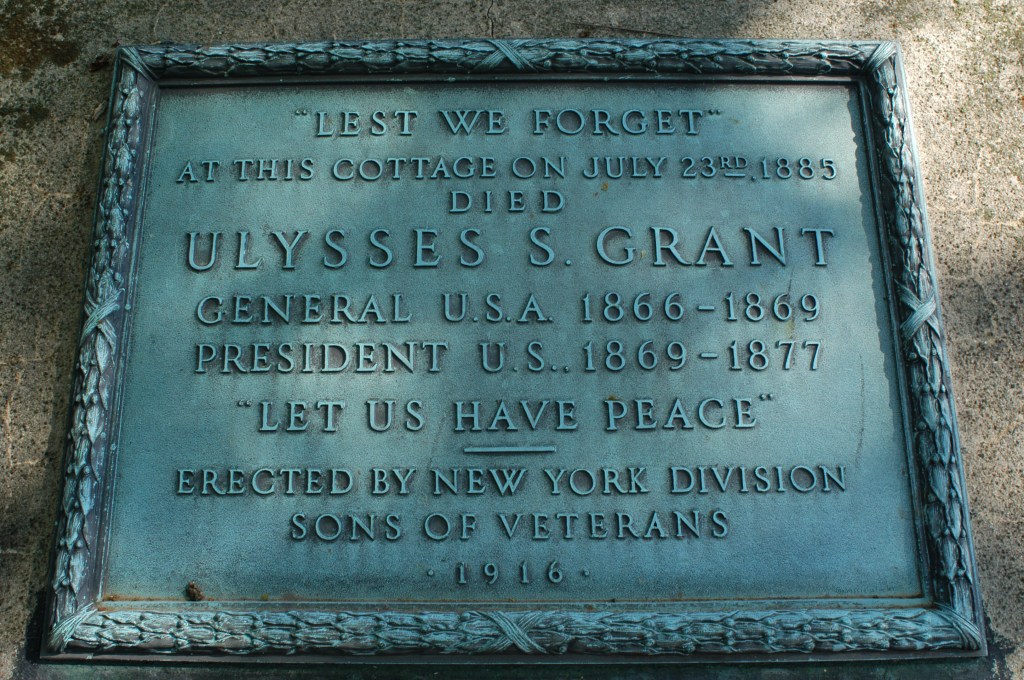
Inside Grant Cottage State Historic Site, where former President Ulysses S. Grant died of cancer on July 23, 1885 after spending his final weeks penning his memoirs, national grief remains frozen in time in the form of flowers.
Now nearly 140 years old, five different Victorian-era funerary floral displays in the parlor draw different reactions from visitors, ranging from “amazing” to “creepy.” But given that relatively few examples from that era survive today, these displays are also a rare look into the past.
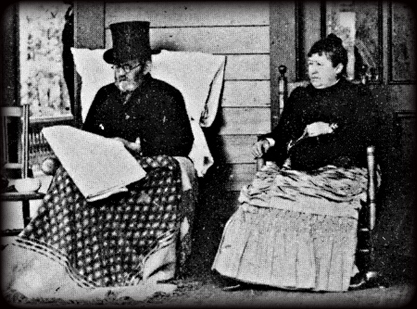
Ulysses S. Grant on the front porch at Grant Cottage, with his wife, Julia, by his side. Grant was racing against his terminal cancer to finish his memoirs as a way to provide for his family.
While flowers have long been part of burial rituals, it was the tragic death toll of the American Civil War that ushered in the golden age of arranged floral tributes, when such displays became common for soldiers’ funerals.
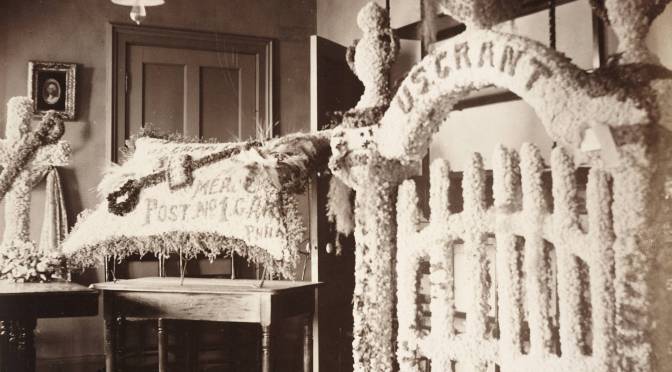
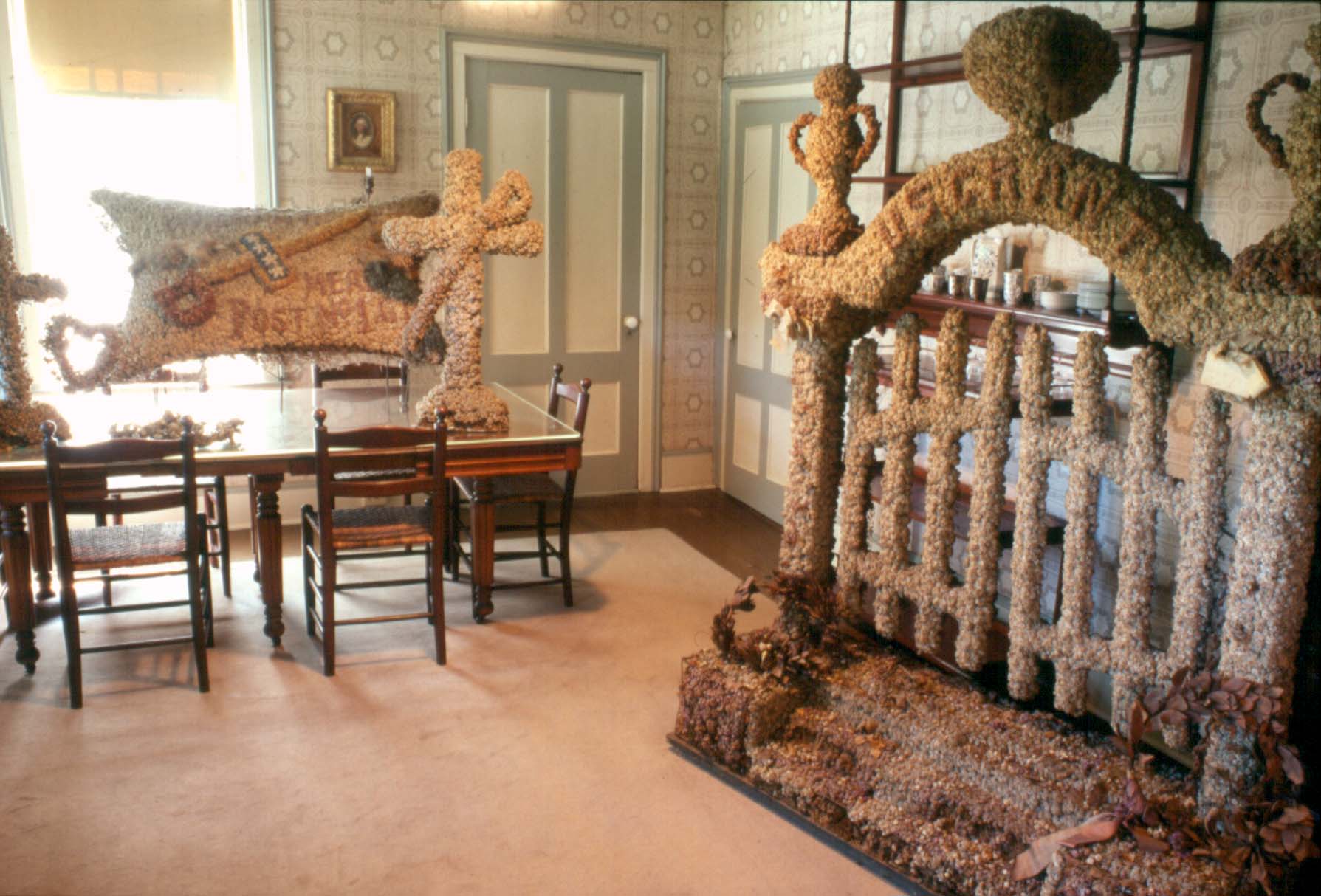
Upon Grant’s death, such expressions of mourning for a leader who meant so much to Union victory began arriving at the cottage, which is located on Mount Macgregor in Saratoga County, about an hour by car north of Albany. One tribute still on display in the parlor was in the form of an oversized pillow, provided by Union veterans in Philadelphia from the Grand Army of the Republic (GAR) that Grant had commanded two decades earlier.
A composite image of the floral pillow arrangement, with its appearance today on the left, and a photograph taken in the late 19th century at the right.
A reporter noted, “Almost every train which arrived at Mt. McGregor has brought beautiful floral mementos from Grand Army Posts and other organizations, and also from personal friends…” making the modest cottage “fragrant with flowers.”
Perhaps the most impressive piece was the enormous six-foot-high “Gates Ajar” tribute which rested in front of the fireplace. Likely custom-built, it was sent by family friend Leland Stanford of California – a native of Watervliet, Albany County who went on to become California Governor and later a U.S. Senator from that state. Its design depicted the gates of heaven, a popular theme of tributes in that era.
The “Gates Ajar” floral arrangement, to the right, with the pillow and cross arrangements on the table to the left. Lighting in the room is normally kept dim to protect the display from potential degradation.
For decades, these displays have remained untouched and undisturbed in the cottage parlor, losing their fragrance and much of their color faded, but otherwise intact, other than being understandably dusty. Last year, these artifacts came to the attention of historical florist expert Robert Treadway (co-author of A Centennial History of the American Florist), who visited in August 2021 to inspect under the supervision of conservators from the New York State Bureau of Historic Sites and site staff.
Treadway immediately cleared up two common misconceptions about the displays _ that they were prepared using fresh flowers which dried over time and had been coated in wax as a preservative, neither of which were the case.
Treadway also found that the most prevalent flowers used were immortelles (Helichrysum), a species in the sunflower family also known as everlastings for their long-lasting nature, which had been dried before use. In the Victorian era, immortelle flowers symbolized remembrance and hope in everlasting life, especially to the families of the deceased.
Historical florist expert Robert Treadway, right, joined by State Parks Conservator Heidi Miksch, examines the floral funerary arrangements at Grant Cottage State Historic Site.
Everlastings were frequently shipped to the United States from Europe and dyed various colors for use by florists. Bunches would be wired to a small stick and inserted into moss which filled a wire framework to create the tributes. It was a painstaking process that involved numerous assistants. Since the displays for Grant were designed only for short-term use, wax coatings on the flowers were deemed unnecessary and not used, according to Treadway’s inspection.
Given that the delicate nature of these artifacts, Treadway and State Parks staff discussed how to best protect and preserve such historic objects for the years to come. Various options were discussed, including coatings, enclosures, and environmental controls, each method with its benefits and drawbacks.
Representing a nation’s mourning over the loss of a war hero and leader, the arrangements reflect a uniquely Victorian outlook on death and the hereafter, each with its own specific meaning.
The “Gates Ajar” symbolized the gates of Heaven, reassuring the grieving that their lost loved one was destined for a better place that, with the gate left ajar so they could follow and be reunited. The pillow set piece represented peace, relief, and eternal rest from the trials of the physical world.
Two floral pieces feature a cross, commonly used as symbols of Christian tenets of grace, forgiveness, and salvation. Two pieces incorporate an anchor, another favorite Christian symbol representing hope amid trial with God being the “anchor of the soul.” One piece features a heart along with the anchor and cross. The heart symbolized the everlasting love of Christ but also the love of those in mourning for the deceased.
The floral cross with sword.
Two pieces – the pillow and one of the crosses – also feature a sword, which reflected General Grant’s military career, as well as the virtues of justice, fortitude, and courage.
Victorian set pieces showcased the artistry and creativity of florists during that period. One of the best-known florists, Adolph Le Moult, operating out of New York City, created one of the largest floral pieces ever made for an event in Grant’s honor during a visit to Philadelphia in 1879. Le Moult also created elaborate floral tributes for Grant’s funeral in New York City in 1885.
The goal of florists in the 19th century was not just making impressive arrangements but also ensuring they would last. Florists boasted in advertisements with statements such as, “I can so perfectly preserve even the most delicate flowers that they will last forever.”
Floral funerary displays line Grant’s Tomb in Upper Manhattan to mark the year after his death.
Preserved funeral mementos from the Victorian era can be found in public and private collections throughout the world. For example, wax-coated and encased floral pieces from the 1881 funeral of James Garfield are displayed at his home in Mentor, Ohio.
What truly makes the tributes at Grant Cottage unique is their sheer scale and survival to the present despite never have been coated in wax, encased or otherwise protected from the onset or in the decades since. Treadway indicated that the two largest pieces are larger than any others known to exist.
Flowers continued to be used in tribute to Grant by his widow, Julia. While staying at the family’s Long Branch, New Jersey cottage, she continued remembering her greatest love through this mourning ritual:
“On an antique cabinet… is a bust in plaster of the brave old soldier… Behind it hangs a wreath of white immortelles -a widow’s first tribute to memory- with a circlet of white ribbon still clinging to it, typical of wedded love. A slender glass filled with geraniums… Every morning this tiny bouquet is gathered… by the lonely wife who kisses the blossoms and tenderly places them before the face of her hero. The faded flowers are dried and, mixed with their own fragrance, go to make those memory-bags so highly prized by the friends on whom they are bestowed.”
For now, these treasures at Grant Cottage will continue to transport visitors to a moment when family, friends, and a nation were in mourning for an American icon. They are tributes not only to a man, but to the character and ideals he lived by. These aging blossoms speak to humanity’s enduring need to grieve and desire to memorialize those they love and respect.
Ulysses S. Grant, and his wife, Julia.
Post by Ben Kemp,Friends of Ulysses S. Grant Cottage Operations Manager
These , our Earth’s perennial flowers—
The fadeless blooms by Poets sung,
Songs, that from Homer’s Age till ours,
Down the aisles of Time have rung—
In many an emblem do we weave
For passionate Remembrance’ sake;
And howe’er we joy, howe’er we grieve,
Sacred pilgrimages make;
For Loss and Grief, the Asphodels
On our graves we mourning lay;
For Memory, the Immortelles—
Our loved ones live for us always.
Death in Life, Life in Death—how we
This, Love’s Faith, keep reverently.

By Laura G. Collins’s from Immortelles and Asphodels (Everlastings) (1898)
More About Grant Cottage
Located immediately below the summit of Mount McGregor in Saratoga County, the cottage and 43-acre site was recently named a National Historic Landmark by the National Park Service.
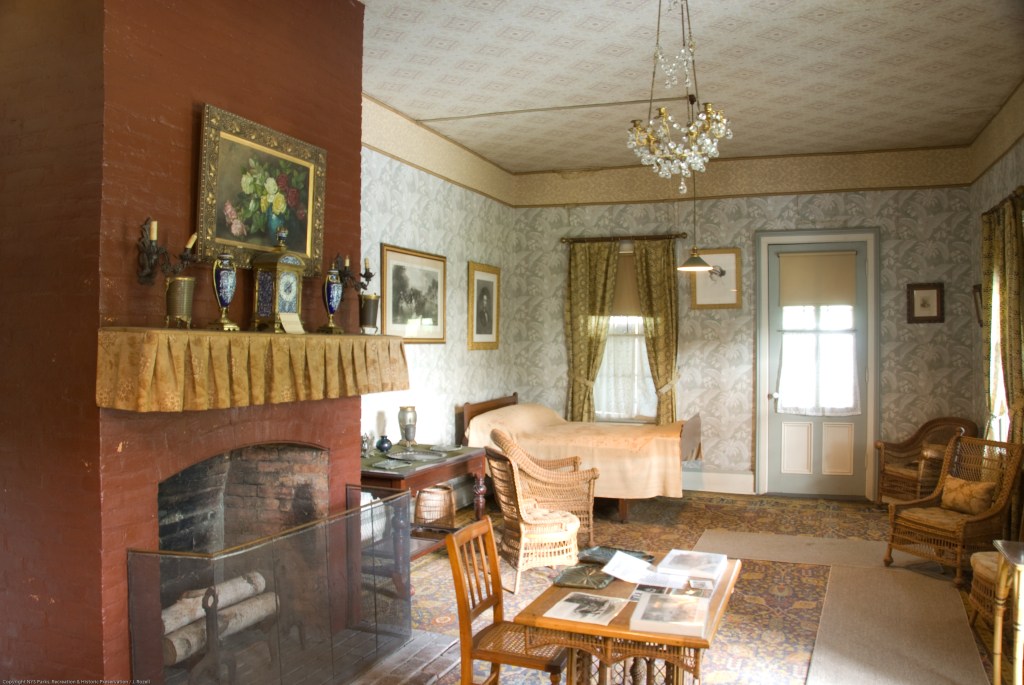
The cottage is kept as it was during the Grant family’s stay. Open to the public seasonally by the Friends of the Ulysses S. Grant Cottage, visitors can tour its first-floor original furnishings, decorations, and personal items belonging to Grant.
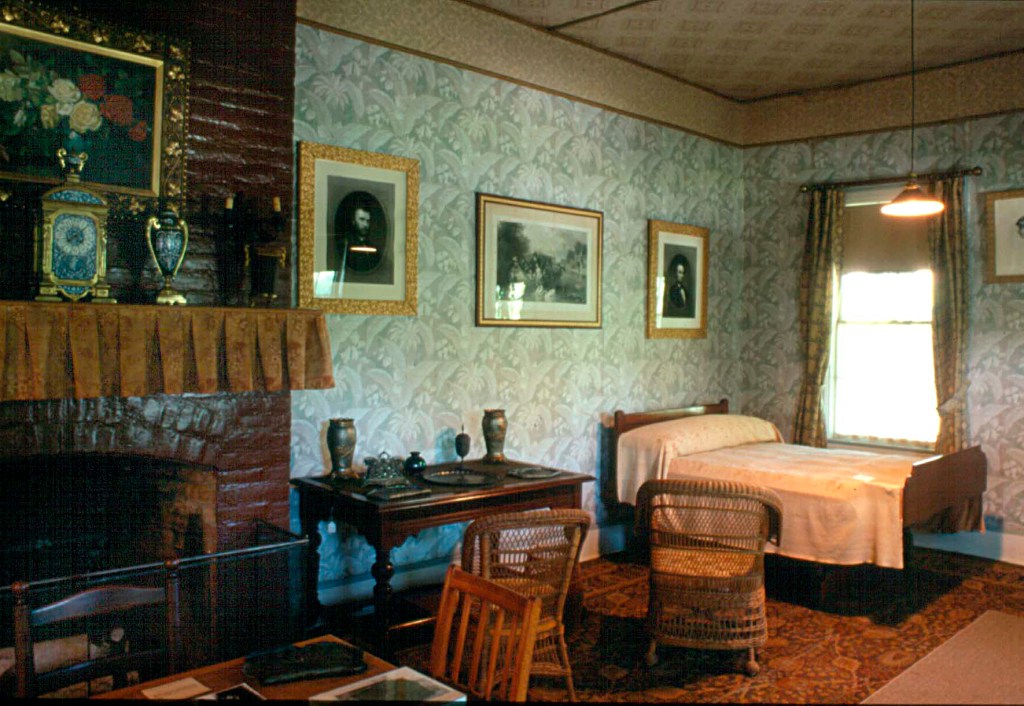
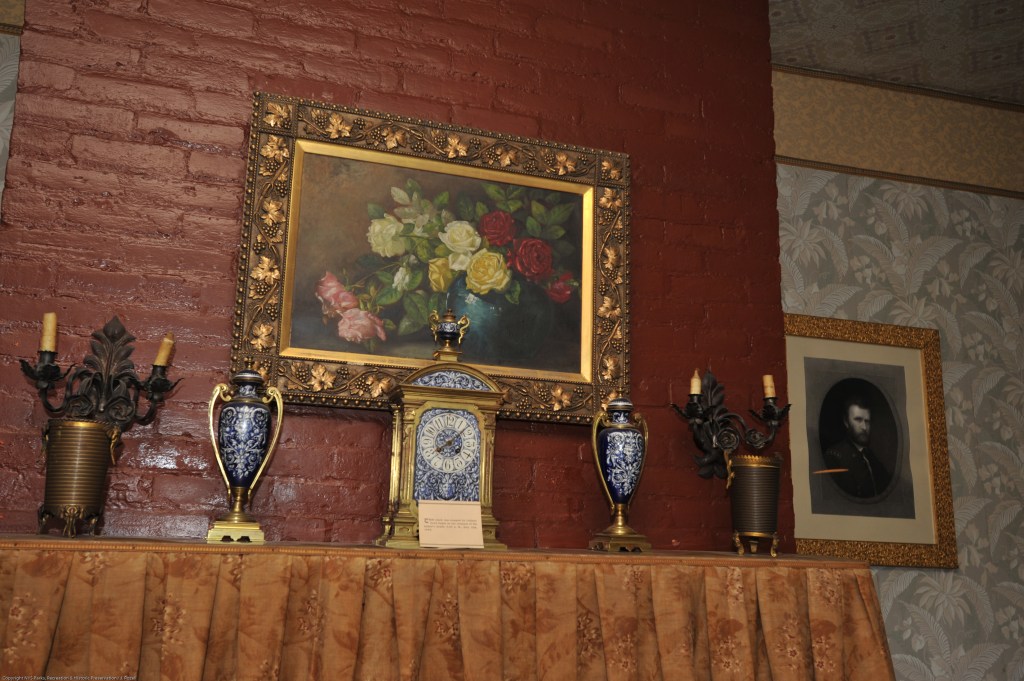
Tours are scheduled to resume for the season on April 30, 2022. Other artifacts on display include the bed where he died on July 23, 1885 and the mantel clock stopped by Grant’s son Fred at the moment of his father’s death.
Grant Cottage first opened as a historic site in 1890 when it was supported by funds raised by veterans of the Grand Army of the Republic.
The grounds surrounding the Cottage served as a tuberculosis sanitarium beginning in 1914, which in 1945 was converted into a veteran rest camp, until 1960 when it was repurposed and annexed as the Rome State School for disabled children until 1976. The Friends of Ulysses S. Grant Cottage was formed in the fall of 1989 to provide programming and tours, and partner with New York State Parks on site stewardship.









 New York State Parks and Historic Sites Blog