Category Archives: State History

A Legacy of Strength

During the 1930s when racial segregation and Jim Crow held sway over much of America, there was a Depression-era federal public works unit where African-Americans, not whites, were in command. And it was here in New York State Parks.

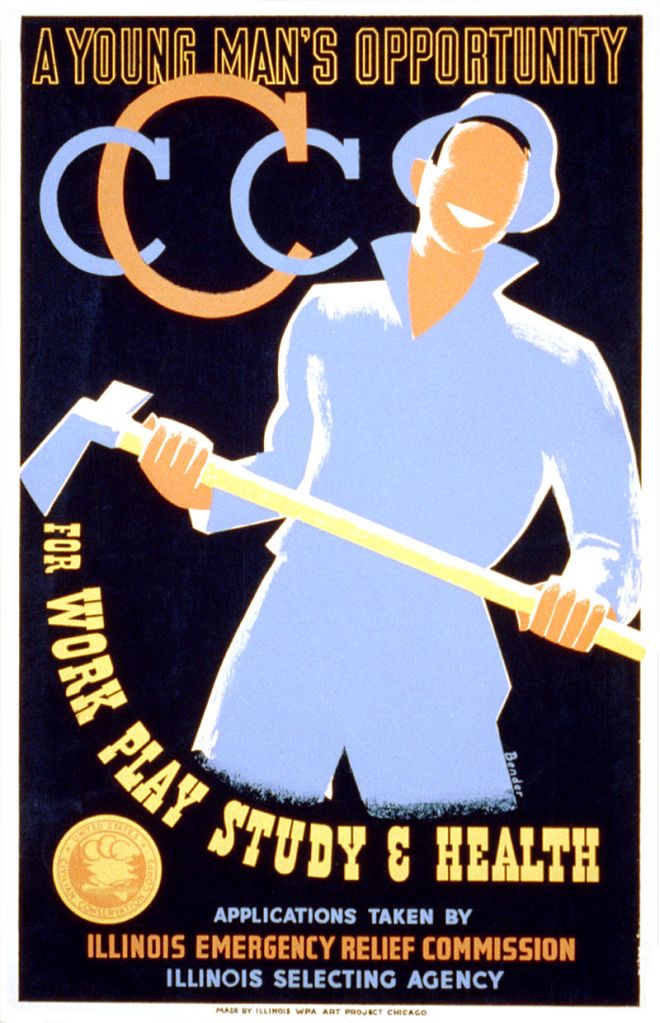
To combat rampant unemployment among young men, President Franklin Roosevelt had created the Civilian Conservation Corps (CCC) in 1933 to perform public works projects.  

The struggles of the 1930’s reached beyond the economic depression. Major environmental issues plagued the nation as well.  The impact of poor farming practices, deforestation, and destructive pests were just a few of the things destroying thousands of acres of usable land. Across the nation, the CCC immediately put its companies to work solving these two major crises at once.

While discrimination based on ‘race, color, or creed,’ was against Roosevelt’s founding policy, that was to exist almost only on paper. When the first CCC companies formed, racial segregation was part of the process.  After two years of operation, this practice became official policy in 1935 when CCC Director Robert Fechner insisted on complete segregation of whites and colored enrollees.  The only exception allowed was if a company was formed in an area of the country with a small African American population.

Enrollees from big cities and small towns all over New York found themselves at Camp Dix, New Jersey, with thousands of other men who were desperate for work.  Upon arrival, men were assigned to a 200-man company, although many colored companies numbered less than 100. Each company was given a number, and a lowercase ‘c’ was added for ‘Colored’ where needed. And policy dictated that those in charge of all companies were white Army officers.

Men from New York quickly filled slots in several ‘Colored’ companies forming at Camp Dix. As these companies moved around the country, they were trained on the job by local professionals who were also white.  Pressure from Congress, the National Urban League, and the National Association for the Advancement of Colored People (NAACP) began immediately for African American officers and professionals to work with African American companies, but it would be several years before things changed.


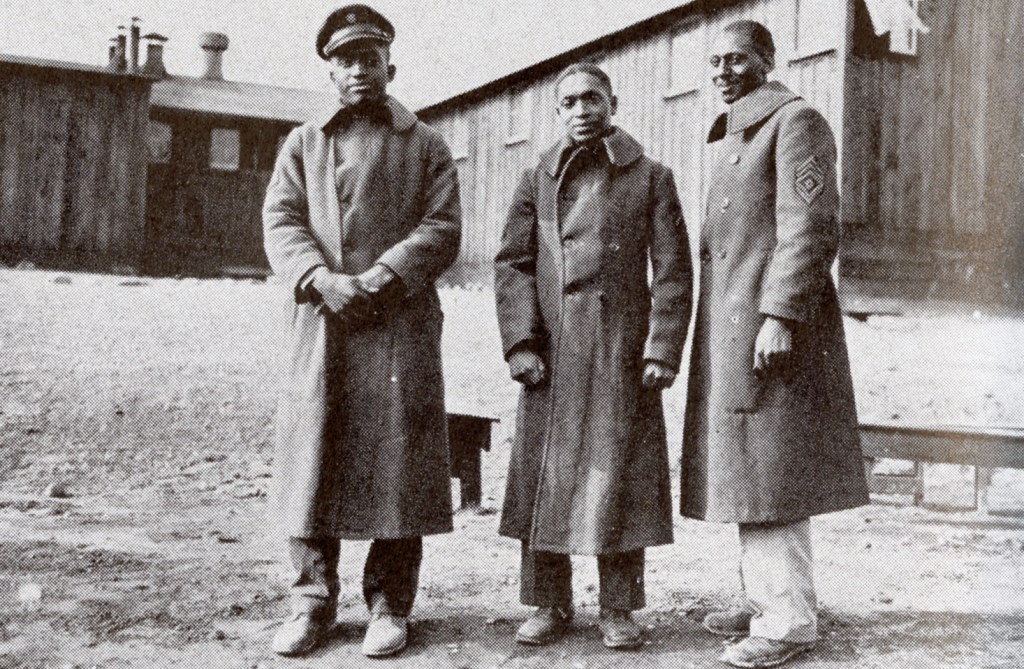
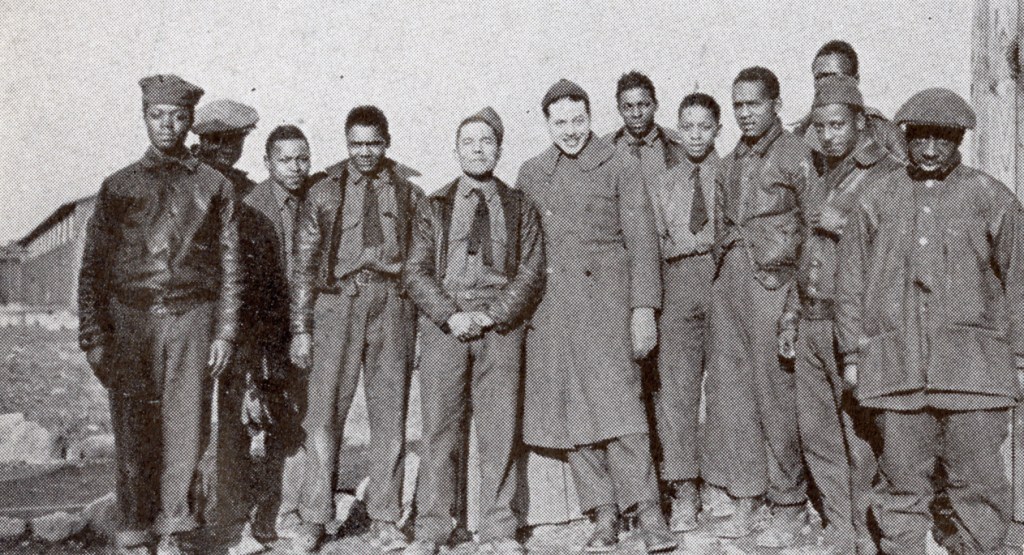
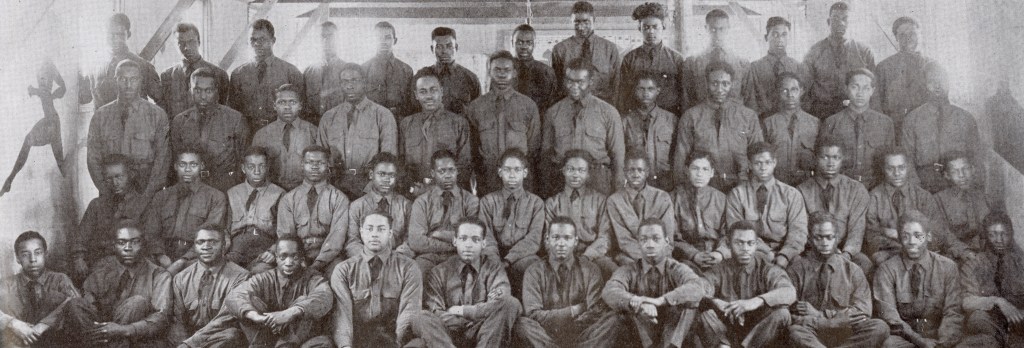
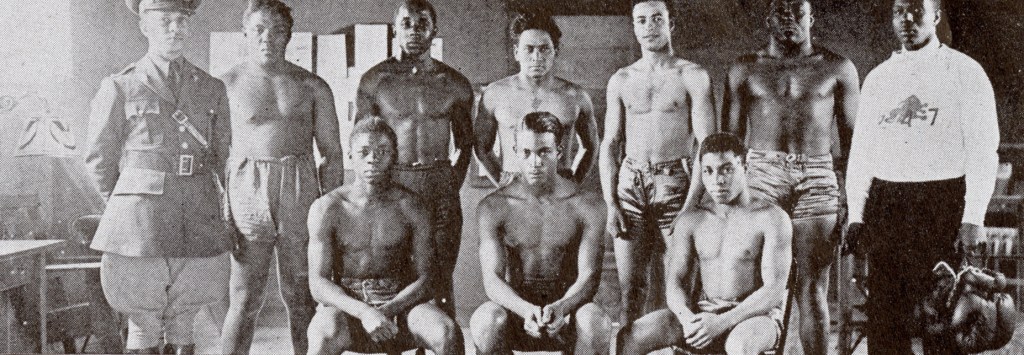
Click on this slideshow of the men of the Civilian Conservation Corps “Colored” companies from New York State.


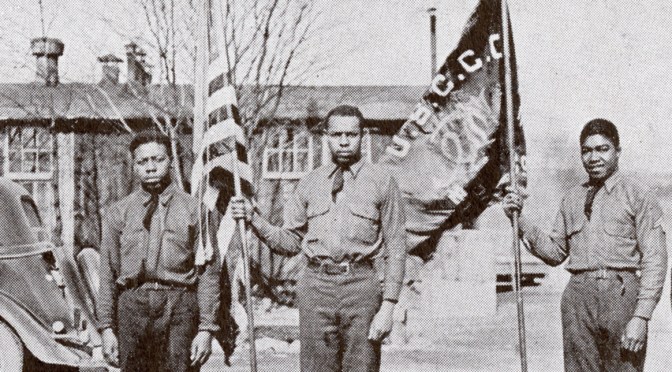
By the fall of 1933, colored companies from Fort Dix including 246-c, 247-c, and 1245-c were formed and immediately sent out.  Company 246-c was shipped by train to Chelan, Washington State, to fight fast-moving forest fires. Their next mission took them across the country to Yorktown, Virginia, to excavate colonial buildings and reconstruct two historic sites — the Moore House and the White Swan Tavern, both of which still stand today.

From Virginia, the men of 246-c headed back to New York to the Orange County town of Wawayanda to begin working on the Wallkill Flood Control Project, a ten-mile-long canal designed to change the direction of the river and stem seasonal flooding.

Company 247-c headed to Idaho to build roads and fire trails and plant hundreds of trees in the Lake Pend Oreille Forest. They later went south to work as archaeologists at the Yorktown Battlefields collecting pottery chards and other bits before returning to New York. Company 1287-c fought forest fires in Idaho, built roads in Virginia, then moved into New York, joining the other companies for the Wallkill project.

Company 1245-c headed out in 1934 to create fire breaks, build truck trails, plant trees and dig wells before heading to the Wallkill. Company 3210-c and 3211-c, formed in 1935, went directly to the Wallkill project, with 3211-c later heading a few miles north to build roads.

Health care and food services were year-round jobs as well with the CCC, and often these were the first positions filled by young African American men. During the early years of the program, African Americans could be found as cooks and health orderlies but rarely as the head chef, doctor, or dentist.

Initially, trained African American officers in the U.S. Reserved Army were totally ignored, then slowly as more pressure from members of Congress and other groups continued, they began filling positions as medical officers, working alongside African American orderlies and chaplains. By 1936, such outside pressure forced Fechner to set-up a “demonstration camp” in Gettysburg, Pennsylvania, where a Colored company would be managed by African American commanding officers. If the experiment worked, other companies could be switched over.

While the Gettysburg effort was successful, only one other CCC company ever saw the change to Colored officers _  1252-c in New York State. Initially stationed at the Newtown Battlefield Reservation outside of Elmira, Chemung County starting in 1935, this company had started with white officers like all the rest. But in June 1939, colored officers were quietly brought in to run the unit.

The work of the men of Company 1251-c is still visible at Newtown Battlefield State Park, where they built the picnic pavilion and concession stand, sports fields, stone tables, and wooden bridges, as well as planted trees and plants, and added or graded topsoil.

A new CCC enrollee arriving at Newtown Battlefield Reservation.
At work at the battlefield.
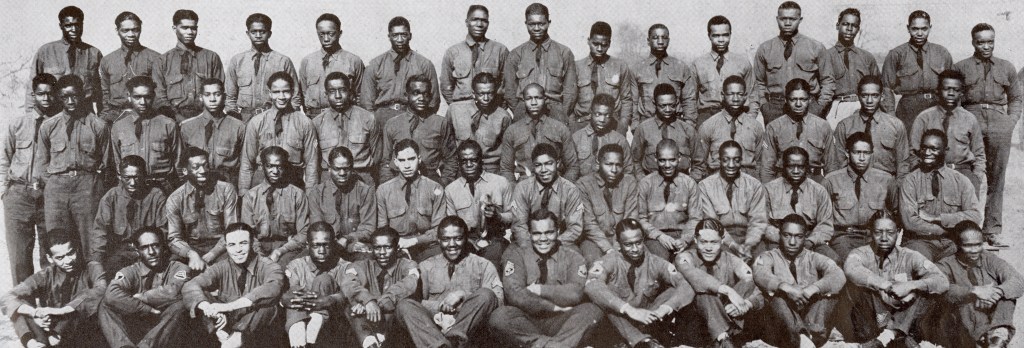
The men of Company 1251-c at Newtown Battlefield Reservation with their officers, seated in the center of the front row.
Pavilion at Newtown Battlefield State Park built by the men of Company 1251-c.

Such work was only part of an average day for company members. Improving the education of enrollees was also part of the CCC’s mission. Civilian Educational Advisors (CEA) were local educators who were stationed at the various sites.

Classes were held regularly and for many of the colored companies stationed in New York the classes were taught by African American men. Reading and writing went hand in hand with Spanish, French, Mathematics, and Negro History. Recreational pursuits included bands, sports teams, and company newsletters.

Although hugely successful, the CCC came to an end in 1942 as the nation joined the Second World War. By then, more than two million men had gone into the program. Read more about New York’s history in the program in the Parks Blog post below…


Civilian Conservation Corps in New York State Parks

When Franklin Delano Roosevelt (FDR) became president in 1933, the entire nation was in a state of turmoil never seen before or since. It was the height of the Great Depression: unemployment was at 25%, croplands were failing, and millions of families were going hungry. As governor of New York State, FDR had implemented the…


Even in the face of economic hardship and ecological stress, racism and segregation had dogged the program each step of the way. CCC Director Robert Fechner’s insistence on racial inequality plagued the CCC in spite of constant pressure from the White House, Congress, and other groups striving to create a more equitable environment in the country.

The work done by the men in New York’s colored companies of the CCC continues to enrich the lives of New Yorkers everyday. Theirs is a legacy of strength we can all draw from.


Cover Shot: Company 246-c. All photographs from state Bureau of Historic Sites

Post by Lavada Nahon, Interpreter of African American History, state Bureau of Historic Sites


At Gilbert Lake State Park,  Otsego County, other companies of the CCC constructed cabins, trails, roads, dams, and erosion control structures between 1933 and 1941. The park is also home to the New York State Civilian Conservation Corps Museum, which displays photographs and artifacts from the days of the CCC.

A 1935 poster for the Civilian Conservation Corps. (Photo Credit- Wikipedia Commons)

State Parks Take Star Turn For Oscars Week

The Oscars were years away when a young Syracuse native came to icy gorges and waterfalls outside Ithaca in the Finger Lakes as a silent movie star in 1917.

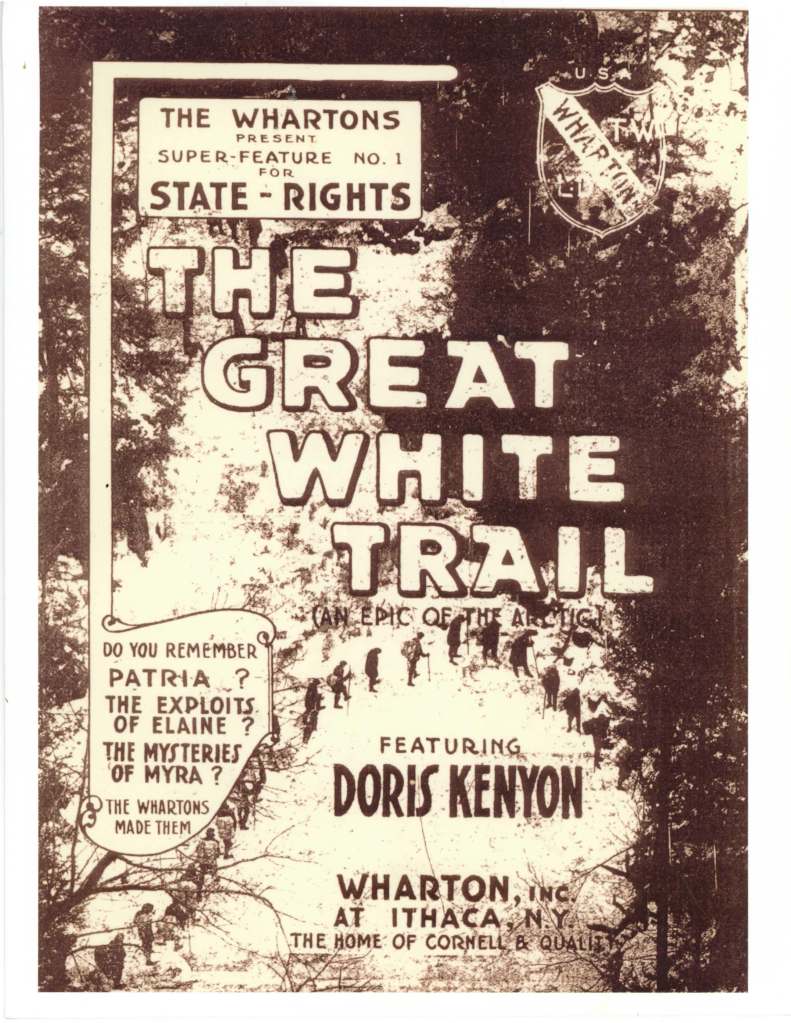
In a film entitled “The Great White Trail,” 20-year-old actress Doris Kenyon played the role of married woman falsely accused of infidelity fleeing to the wilds of Alaska to start a new life.

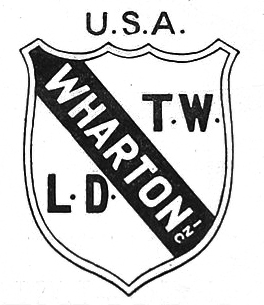
Poster for “The Great White Trail,” which was produced by Ithaca-based Wharton Releasing Corp. (Photo Credit- Wharton Film Museum)

Ithaca-based producers (and brothers) Leopold and Theodore Wharton thought that the area’s rugged winter beauty, highlighted by the frozen 115-foot Lucifer Falls, could stand in for Alaska. A few years later in 1920, this dramatic setting in Tompkins County became the 1,256-acre Robert H. Treman State Park. The first Oscars awards for the burgeoning motion picture industry, now firmly anchored in Los Angeles, finally arrived in 1929.

Ithaca played a critical role in the history of the silent movie industry when the Wharton brothers ran their studio in what is now the city’s Stewart Park from 1914 to 1919, making more than two dozen movies. There were stunts and antics, including when the brothers bought a trolley car from the city to film careening off a bridge, and the time when dozens of skunks from a local farm were rented for a scene, only to escape, spray the actors and crew, and shut down production.

Shooting in their studios and on location in the dramatic gorges around the area, the Whartons brought famous movie stars of that era to Ithaca, making it the unofficial capital of the silent film industry, as reflected in these early newspaper clippings from the Wharton Studio Museum.

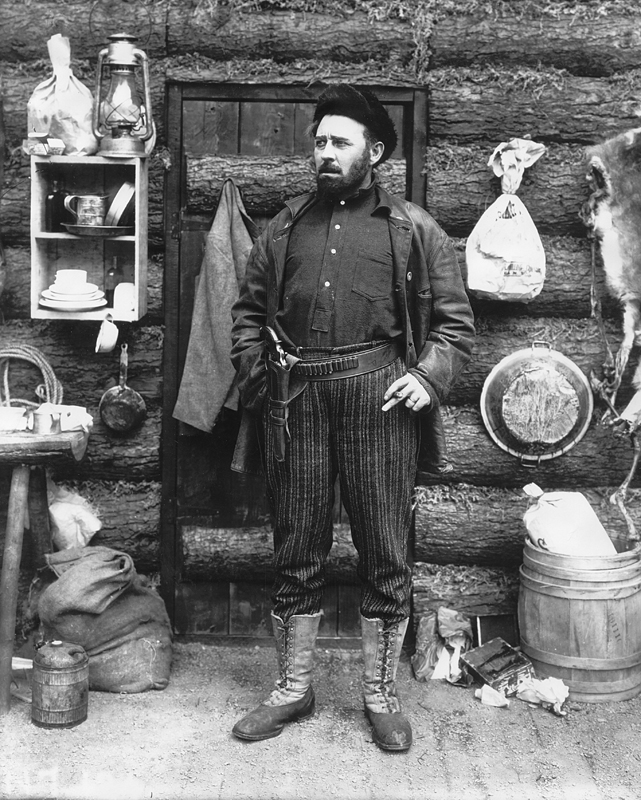
Ithaca stockbroker F.W. Stewart was cast as the villain in The Great White Trail. Afterward, bitten by the acting bug, he became a professional actor and director in the early film industry. (Photo Credit- Wharton Film Museum)

“The Wharton brothers and Ithaca were pioneers in this emerging art form. Some very unique history happened here,” said Diana Riesman, executive director and co-founder of the museum.

One of the Whartons’ silent film stars, Irene Castle, lived in Ithaca after marrying local resident Robert E. Treman, the son of Robert H. Treman, a prominent upstate political and financial leader who later donated the land used for The Great White Trail that became the state park now bearing his name.

Many of the Wharton’s film reels were destroyed in 1929 when the highly-flammable nitrate film caught fire in their lawyer’s garage in Ithaca. However, the original Wharton studio building still exists in the park, and is used by the city public works department for maintenance.

In the years since the freewheeling Wharton brothers, the variety of landscapes found in State Parks have shared the spotlight many times in a wide range of films, television programs and other productions, from the well-known and prestigious to the obscure and unsung.

Some are little nuggets of film history. Did you know, for example, that iconic comedian Henny Youngman’s final film appearance came in 1995 at the former state Kings Park Psychiatric Center in what is now part of Nissequogue River State Park in Suffolk County?
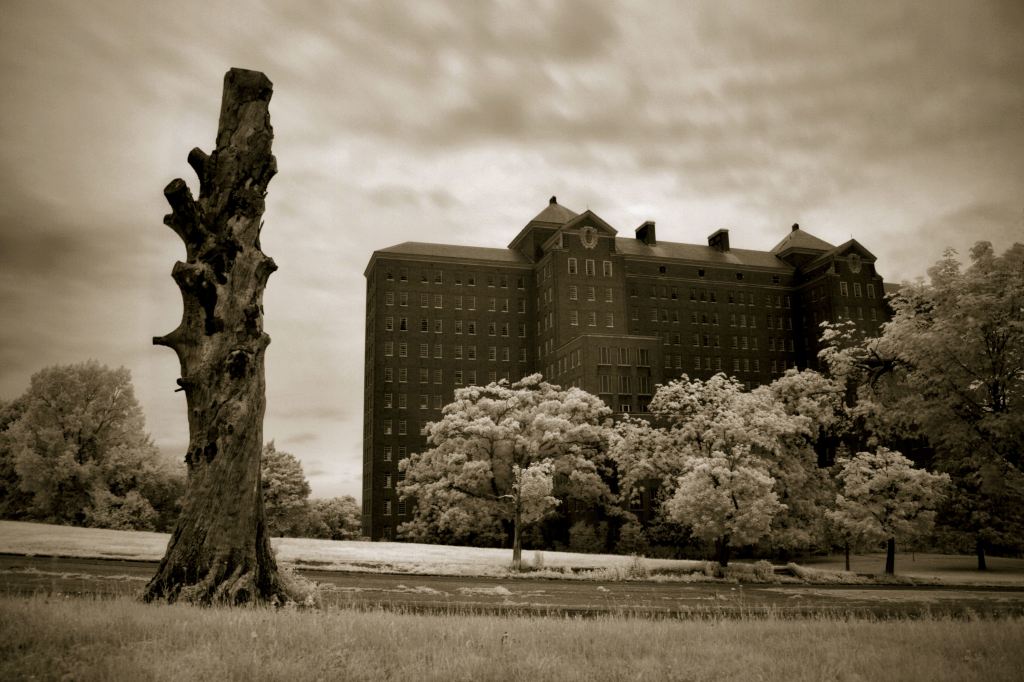
The former Kings Park Psychiatric Center, closed since 1996. Trespassing is forbidden. (Photo Credit- Wikipedia Commons)

In the little-remembered “Eyes Beyond Seeing,” which was the story of a mental patient with religious delusions, the then 89-year-old “King of the One-Liners” played a brief cameo role as another patient who thinks he is … Henny Youngman. He must have cracked himself up. <rimshot>

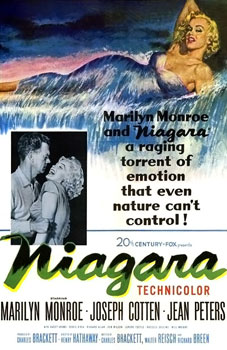
Niagara Falls State Park has one of the most dramatic backdrops available anywhere, within numerous films using the thundering cataracts, including the 1953 film “Niagara.” This film noir thriller helped establish the sensuous image of 27-year-old actress Marilyn Monroe, who received top billing for the first time in her budding career.

Poster for “Niagara,” starring Marilyn Monroe, whose image is incorporated into the waterfalls. (Photo Credit- Wikipedia Commons)

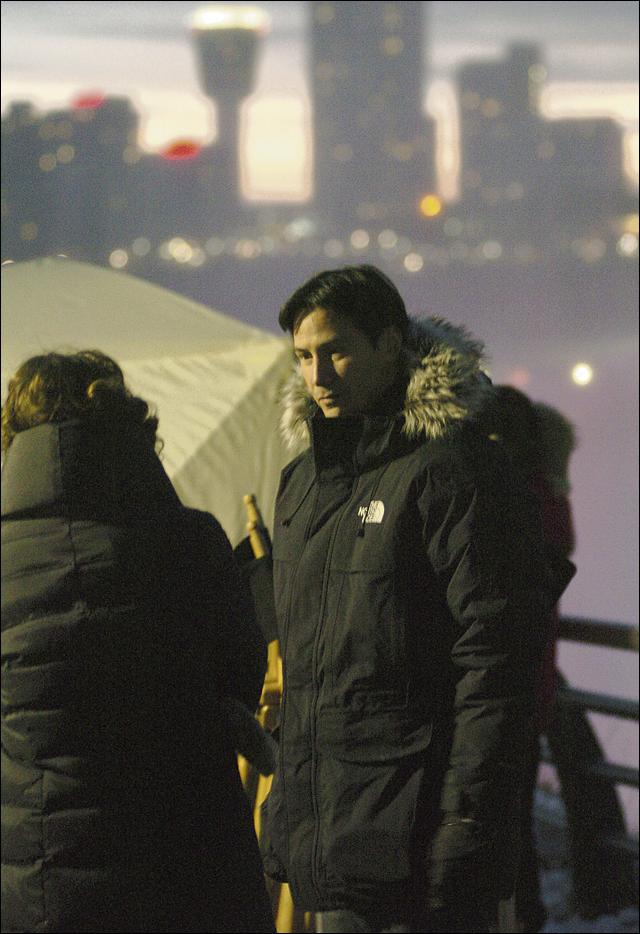
In recent years, other films at the falls have included the comedy “Tammy” in 2014 with Melissa McCarthy, part of which was filmed at the always-torrential “Hurricane Deck” at the Cave of the Winds. The park also was featured in “Henry’s Crime” in 2010 with Keanu Reeves, whose falsely-accused-of-a-crime Buffalo toll taker has a romantic interlude at the falls.

Melissa McCarthy at Niagara Falls.
Keanu Reeves during shooting at Niagara Falls State Park.

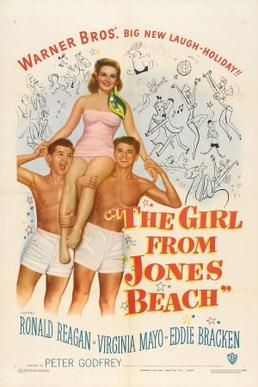
Surf and sun always make for a good movie, with Jones Beach State Park and other shoreline parks in Long Island long popular as shooting sites. In 1949, middle-aged actor and future President Ronald Reagan filmed a romantic comedy at Jones Beach, aptly titled “The Girl From Jones Beach.”

“The Girl From Jones Beach” post, featuring future President Ronald Reagan, as well as Virginia Mayo and Eddie Bracken. (Photo Credit-Wikipedia Commons)

Other films of more recent vintage that have shot at this iconic oceanside park have included “Men in Black 3 (2012), “Teenage Mutant Ninja Turtles 2” (2016), and “Mildred Pierce” (2011).

The 2004 romantic film “Eternal Sunshine of the Spotless Mind,” filmed in part at Camp Hero State Park on Long Island at Montauk Point, had one of the characters uttering the phrase “Meet me at Montauk,” which can still be found on t-shirts and promotional items for the area.

The lighthouse at Montauk Point State Park.
This scene on a frozen river with Kate Winslet and Jim Carey from “Eternal Sunshine of the Spotless Mind” was shot in Franklin D. Roosevelt State Park about 40 miles north of New York City in Westchester County.

If skyline is what a filmmaker needs, the Big Apple has that in spades. Numerous films have been shot at State Parks in the city, including “The Secret Life of Walter Mitty” (2012 at Bayswater Point State Park), the senior citizen heist comedy  “Going in Style” (2017 at East River State Park), and “Still Alice,” a 2014 film in which Julianne Moore plays a woman coping with an Alzheimer’s Disease diagnosis that was shot in Denny Farrell Riverbank State Park.

The 2015 short film “The Bench,” is set at a bench in Gantry Plaza State Park, with its spectacular views of the midtown Manhattan, where a suicidal man has a conversation with a passerby that changes his life.

This dramatic cityscape park has been used in many feature, foreign and student films, including the 2016 Ricky Gervais comedy “Special Correspondents,” the 2019 comedy “Holiday Rush” about a DJ dealing with losing his job, and “Here Today,” a 2019 May-September comedy with Billy Crystal.

Some thirty miles north of the city, the former estate of philanthropist John D. Rockefeller – now the Rockefeller State Park Preserve – has been used for many films and television shows, most recently the 2019 gangster epic “The Irishman” by director Martin Scorsese, who shot from the 13 Bridges Trail to film driving scenes on Route 117 below.

The office at the preserve stood in for the police station in the 2001 prankster cop comedy “Super Troopers.” A scene where a police car goes screeching into reverse down a highway was filmed on Route 117 in the park.

Scene from opening of comedy film Super Troopers, shot on Route 117 inside Rockefeller State Park Preserve.

Further up the Hudson Valley, the great lawn for the estate at the Staatsburgh State Historic Site along the banks of the river was used as a backdrop for the 2019 superhero movie “Avengers Endgame.”

The digitally-enhanced great lawn at Staatsburgh in “Avengers Endgame.”

In the Capital Region, Ang Lee’s “Taking Woodstock” (2009), a story of how the Woodstock music festival of 1969 came about, was filmed at Cherry Plain State Park in the rugged eastern hills of Rensselaer County. And parts of the 1998 film “The Horse Whisperer” were shot in Saratoga Spa State Park.

Out in western New York, the base-jumping scene in “Get Him to The Greek” (2010) was filmed in the spectacular gorge setting of Letchworth State Park, often called the “Grand Canyon of The East.”

The base-jumping scene at Letchworth State Park from “Get Him to The Greek.” (Photo credit- Parks & Trails New York)

And sometimes, an even more primeval look is what’s called for. That’s what producers of the low-budget 1983 caveman comedy film “Luggage of the Gods!” found in the rocky trails and mountains at Harriman State Park. Filming centered around the Claudius Smith Den, a rock shelter dating back to Native American times and used during the Revolutionary War by a notorious gang of Tories.

Finally, something altogether darker might be needed, and State Parks has places for that, too. The grounds of Glimmerglass State Park and the nearby 50-room, 18th century estate at Hyde Hall State Historic Site were the setting for a short horror film “A Nightmare Awakes.” The film tells a story of Mary Shelley, the young author of the book Frankenstein, as she begins to experience vivid hallucinations.

So, State Parks can offer aspiring filmmakers a setting for every story. Such films are part of the state’s efforts to attract such activity through the Governor’s Office of Motion Picture & Television Development, which has drawn productions that have contributed billions of dollars to the state’s economy.

And should you ever wish to see The Great White Trail, the silent film set at Robert H. Treman State Park, or another classic silent film, check the event page for the Wharton Studio Museum or Taughhannock Falls State Park . The film has been shown during summers at the park in recent years and is still drawing an audience. A silent movie screening is planned there for summer 2020.


Brian Nearing, Deputy Public Information Officer for NYS Parks.


Learn more about the silent film era in Ithaca in the Finger Lakes at the Wharton Studio Museum.

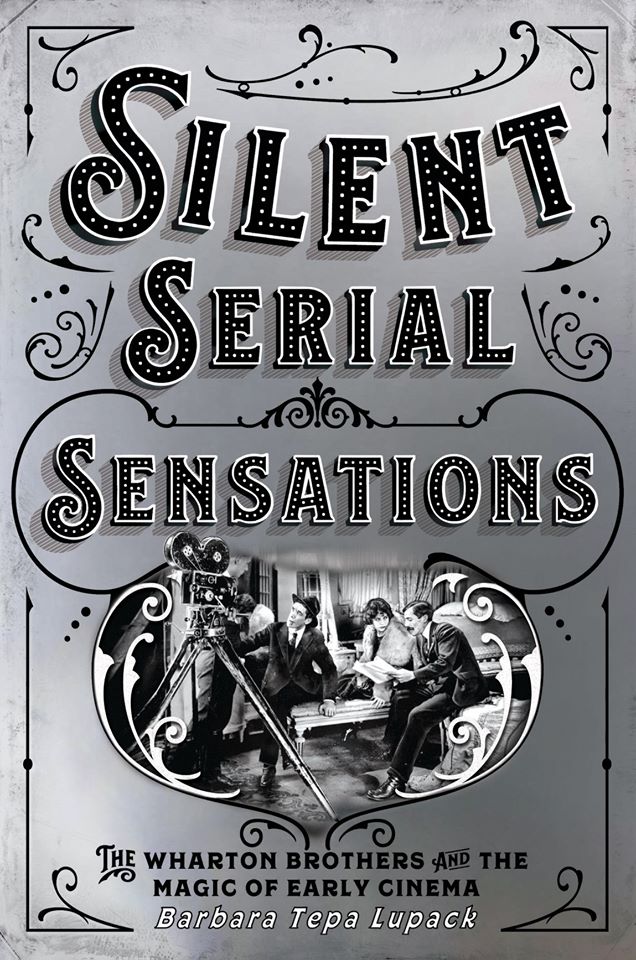
Cornell University Press is releasing a book in April on the history of Wharton films in Ithaca entitled Silent Serial Sensations by Barbara Tepa Lupack.

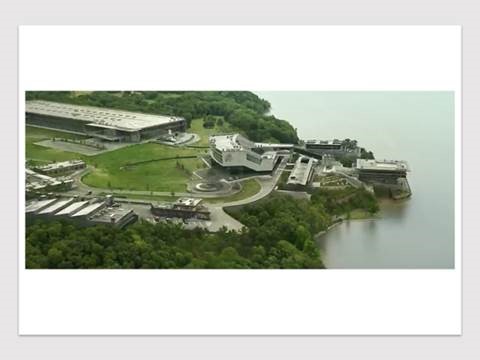
The Wharton Studio Museum is part of the newly-created Finger Lakes Film Trail, which also includes the George Eastman Museum in Rochester, and the Case Research Laboratory in Auburn. The sites host film events, lectures, and screenings.

State Parkland Expansion Touches Colonial, Native American History

Before State Parks could purchase 131 acres of Saratoga County forest to add to Moreau Lake State Park in 2018, staffers first had to find out about all past owners of that land – back to the beginning of written records.

As anyone who has ever purchased a home knows, information on past ownership is addressed in a process called a title search. Property records uncovered in such searches are normally covered by a special kind of insurance meant to protect the buyer of a property against claims over disputed ownership that might arise after the sale.

However, since New York State cannot purchase title insurance on land, it had to ensure that there were absolutely no hidden claims lurking from the past in the potential Moreau purchase. For State Parks, the only way to do that was to follow property records as far back as possible.

This historical detective work stretched back more than three centuries, to a controversial royal land grant during New York’s colonial period that covered Native American lands in what is now much of Saratoga County, as well as parts of Montgomery, Schenectady and Fulton counties.

Called the Kayaderosseras Patent, this land transfer was issued in 1708 by a Royal Governor of some ill repute named Lord Cornbury, who under dubious circumstances bestowed up to 800,000 acres north of the Mohawk River and west of the Hudson River.

Ownership of that land was a disputed tale riddled by claims of fraud and missing records, with Native Americans saying that the Colonial patent holders grossly overstated what originally was intended to be a very modest land sale. And the entire affair took six decades to untangle…

Based on a shadowy alleged sale agreement dated several years earlier from native Mohawk tribal leaders, Cornbury awarded this massive tract of land to 13 prominent Colonial citizens of the time _ all in exchange for official fees, of course. The group included such well-connected players as the colony’s Attorney General, several prominent Albany residents, and some Manhattan businessman of Dutch ancestry, with one of them named Joris Hooglandt.

The land patent in colonial New York was an important unit of settlement, along with the large manors of the Hudson Valley—preeminent among them the Van Rensselaer Manor, or Rensselaerwyck, which covered much of present-day Albany and Rensselear counties, as well as parts of Columbia and Greene counties, and Livingston Manor further to the south in Columbia and Dutchess counties. These areas were governed by powerful and wealthy patroons who enjoyed sweeping authority over land usage.

Prior to the American Revolution, land patents were issued by the English Crown or colonial authorities to individuals or groups as a means of encouraging settlement of the sparsely populated frontier.  To those who were granted patents fell the responsibility of surveying, subdividing and conveying parcels to new settlers, which were offered either as freehold land or otherwise as land occupied under lease agreement, as was the case of the quasi-feudal manor system.

The Kayaderosseras episode can be seen as an early example of the dispossession of Native American lands that was to occur repeatedly throughout American history in the years that followed it. Here in the 21st century, the story of this land can be updated to reflect a more nuanced point of view on past decisions and actions that might not now be seen as just or exemplary.


The shadowy origins of this patent were described in an 1878 history of Saratoga County by Nathaniel Bartlett Sylvester:

“By far the largest and most important land-grant made in colonial times, any part of which lay within the bounds of Saratoga County, was the patent founded on the old Indian hunting-ground of Kay-ad-ros-se-ra. This large tract includes the greater part of Saratoga County, and runs also on the north into Warren county, and on the west into Montgomery and Fulton.

Kay-ad-ros-se-ra, “the country of the lake of the crooked stream,” as has already been seen in these pages, was the favorite hunting-ground of the Mohawk branch of the Iroquois or Five Nations of central New York. The Indian deed was obtained of the Mohawk chief in the year 1703, but the patent was not granted till the year 1708, and the Indians did not ratify the purchase till the year 1768. This patent was, therefore, disputed ground for more than sixty years.

According to the online description by the New York State Museum, the alleged size of the Kayaderosseras patent later was reduced by Colonial officials, but still was claimed to encompass more than 250,000 acres.

However, these supposed new owners took no action on their land patent for decades, with property interests changing hands during the years before steps to conduct land surveys finally started in the aftermath of the French and Indian War in the 1760s, which settled that the British, and not the French, would control North America. By that time, due to subsequent sales, deaths and inheritances, interests in the land patent had spread out to among some 130 colonists.

Sylvester’s story continues:

“At length, in 1763, the French and Indian war being over, the patentees of Kayadrossera began to look, with longing eyes, after their lands. In the year 1764, some one of them began to issue permits to settlers to enter upon and occupy portions of the patent.

In pursuance of these permits, several families moved upon the patent in the vicinity of Saratoga lake, at the mouth of the Kayadrossera river.

In the fall of that year the Mohawks, upon their hunting excursion, fell upon these settlers and drove them away.

Learning from the settlers that they claimed it by purchase, the Mohawks became alarmed, as they said they had never heard of such purchase.

The Mohawks at once appealed to Sir William Johnson, and were surprised to learn that the whole of their favorite hunting-ground had been deeded away by their fathers more than two generations before.

It is telling who the Mohawks turned to as their advocate. Johnson, whose home in Johnstown, Montgomery County, is now a state historic site, was the largest single landowner and most influential individual in the colonial Mohawk Valley. His success and fairness in dealing with the Mohawks, as part of the Six Nations of the Iroquois, greatly influenced England’s victory over France for control of North America.

For his service, the British Crown bestowed upon Johnson the title of Baronet, and appointed him Superintendent of Indian Affairs, a position to which he devoted himself and held throughout his life.

It is important to note that Sylvester was writing as a resident of the mid-19th century, a time when the U.S. was fighting a series of violent wars against the Native Americans of the Great Plains. His viewpoint was likely informed by the predominant viewpoint that Native lands had to be taken, by force if necessary, for the United States to grow.

As Sylvester returns to the saga where the Mohawks turned to Johnson for help with the alleged decades-old sale of their lands:

Sir William took up the matter warmly in favor of the Mohawks, and made every effort in his power to have the patent set aside.

In the first place, Sir William wrote to Lieutenant-Governor Colden, stating the case as he understood it, and urging relief. That very autumn, Sir William introduced a bill into the Colonial Assembly to vacate the patent on the ground of fraud.

These measures failing, in the year 1765 Sir William appealed to the council in person in behalf of his dusky brethren, but the members of the council put him off with, among other things, the plea that to vacate the patent in council would be disrespectful to the council who granted it. By this time the controversy had been taken up warmly by all the tribes of the confederacy of the Six Nations, and Sir William in their behalf petitioned to have the patent vacated on the ground of fraud by act of Parliament.

At length the proprietors themselves became alarmed for the safety of their patent, and offered to compromise with the Indians by paying them a certain sum of money to satisfy their claim. The Mohawks thought the sum offered too small, and the effort failed.

Thus the matter went on till the year 1768, when the proprietors of Kayadrossera gave to the governor, Sir Henry Moore, full power to settle with the Indians. In pursuance of this authority, Sir Henry proceeded to the Mohawk country in the early summer of 1768, and called a council of the Indians to deliberate upon the matter. But it was found that the proprietors had no copy of the Indian deed to produce in evidence on the occasion, and that, as no survey had ever been made, no proper understanding of the subject could be arrived at, and the council was dissolved.

Upon his return to New York, the governor ordered a survey of the patent to be made. The outlines of this great patent were accordingly given by the surveyor-general, and, the boundaries being ascertained, a compromise was arrived at. The proprietors relinquished a large tract on the northwestern quarter of what they had claimed to be their land, and fixed the northern and western boundaries as they now run. They likewise paid the Indians the sum of five thousand dollars in full of all their claims and the Mohawks thereupon ratified the patent and forever relinquished their claims to their old favorite hunting-ground.”

Ultimately, with Johnson’s intervention, the once-gigantic Kayaderosseras land grant was reduced to about 23,000 acres as part of a compromise that eventually concluded the sale in 1768, according to State Museum records.

And this brings our story full circle at last…

The new portion of Moreau Lake State Park so recently added was among the patent lands awarded in 1708 to Joris Hooglandt, the Dutch merchant who lived in Colonial Manhattan. He died in 1712, and there is no record that he ever saw or did anything with the disputed land that he allegedly owned.

In 1723, his children sold their claim to the widow of Hooghlandt’s brother. And in 1770, with the dispute finally settled, descendants of that family ended up with two of the original 13 patent shares, making it the largest single largest land distribution that could be traced back to an original party.

Over the years, this land was sold many times privately before finally becoming part of Moreau Lake State Park in 2018.

This new parcel at Moreau Lake State Park encompasses multiple summits, including portions of the Palmertown Range, and affords dramatic views of the Hudson Valley and southern Adirondack Mountains. The park was 700 acres when established in 1968, and has since grown to about 6,100 acres.

And this land, like all land, has a story to tell, which in this instance may help state residents further examine and appreciate some lesser-known aspects of our shared history.

Post by Brian Nearing, Deputy Public Information Officer; Travis Bowman, Senior Curator, Bureau of Historic Sites, and William Krattinger, Parks Survey Project Director.


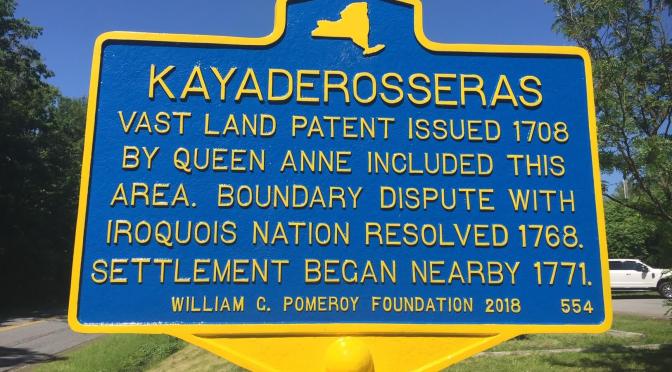
Cover Photo: Historical maker on the Kayaderosseras Patent in Ballston Lake, Saratoga County. (Courtesy of Saratoga County Historian and William G. Pomeroy Foundation)

Sources:

New York State Museum link of the Kayaderosseras Patent.

History of Saratoga County, New York (1878), by Nathaniel Bartlett Sylvester

Read a Daily Gazette account of an 1812 copy of the Kayaderosseras Patent map being restored and put on display at the Saratoga County Clerk’s Office in the village of Ballston Spa, which was first settled in 1771, the year after the disputed land patent was resolved..

Follow this link to an 1866 map of Saratoga County, showing the outlines of the patent, maintained by Clark University.

War On the Middleline: The Founding of a Community in the Kayaderosseras, By James E. Richmond

Snakes in Snow at Native American Winter Games

One of the oldest outdoor winter games in North America is again coming to the Ganondagan State Historic Site in Ontario County.

Already centuries old when Europeans first arrived in this country, the game of “snow snake” will be featured at our family-friendly annual Native American Winter Games on February 22.

Earlier that week from February 18 to 21, there also will be a variety of wintertime activities for visitors at Ganondagan, the state’s only historic site dedicated to Native American history and the only representation of a Seneca town in the United States.

Our winter activities will include making a miniature wooden bow from ash, as well as Native American storytelling, Iroquois social dancing, and a variety of outdoor activities including snow shoeing, dog sled demonstrations, and the snow snake. All events are weather permitting, of course.

And not to worry, any first-timers. The game does not involve an actual snake…

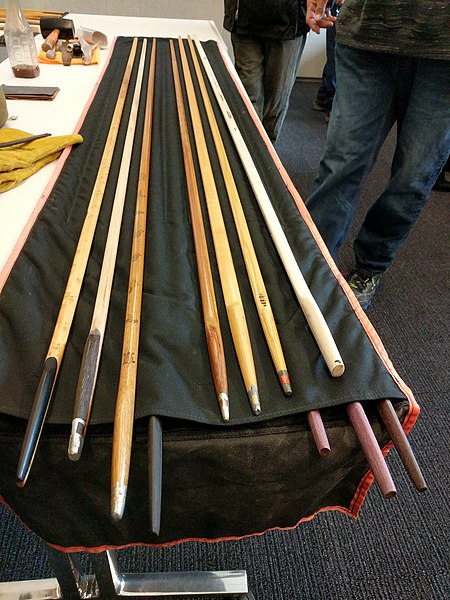
Rather, this traditional game once widely played by the Iroquois and many other Native American tribes across North America uses a long smooth stick – known as a gawasa – that is thrown down a trough cut into the snow. The hardwood stick has a tapered head to help it clear potential obstructions, giving it a snakelike appearance as it slides and shimmies down the track.

Snow snakes can be six feet long or more. Smaller versions called “mud cats” are about half that long.

Examples of snow snakes at Ganondagan State Historic Site (Photo Credit: Wikipedia Commons)

Historically, the track was made by dragging a log through the snow, sometimes a half a mile or more. Called a gawan’go, the U-shaped trough could be level or on gently downward sloping terrain, and different types of sticks were used, depending on whether the condition of the snow was wet, dry, icy, powdery or something else.

Players also used mixtures of special waxes, tallows and oils on their snakes to get them to slide easier, and those mixes were closely-guarded secrets, as a well-tossed snake could travel a great distance. If it is fresh snow, wet snow, or icy conditions the snow snake will slide faster when it is properly waxed for the conditions. Today, ski wax might be part of the mix.

This 1909 published account by New York State Museum official Arthur C. Parker who witnessed the contests described the action as a player “grasps his snake by the tail, his thumb and middle-finger grasping the sides two or three inches from the end, and his index-finger bent and tightly pressed against the grooved end. The palm of the hand of course is turned upward. Dashing forward with every trained muscle in play, he hurls the snake into the trough, using all his skill to throw accurately and steadily.”

Illustration in the 1909 report by New York State Museum official Arthur C. Parker, “Snow Snake as Played by the Seneca-Iroquois.” American Anthropologist, vol. 11, no. 2, 1909, pp. 250-256. JSTOR, www.jstore.org/stable/659466

Competitors tended to be boisterous, and could use what now is called “trash talk,” shouting derision and discouragement as a player drew back for throw, according to this account. If a throw was successful, the snake would move rapidly down the track, with Parker writing, “In its swift passage through the trough, the flexible stick twists and bends in truly snake-like fashion, its upturned head adding greatly to the resemblance.”

Teams could compete for points, and often times, wagers were made on the outcome, so players kept their own special materials and techniques as closely-guarded secrets. Prized snakes were carefully preserved and stored for use year after year.

Per Parker:

“Snow snakes are made of various kinds of hardwood, such as maple and walnut, it being believed that some woods are better adapted to certain kinds of snow. This special knowledge is kept secret by the various experts in the art of snow-snakery.”

During the traditional midwinter festival, Ganayusta, two rival brotherhoods or clans seek to outdo each other in the game, he wrote. Assistants for each team would select the snow snakes to be used, and rub them with various substances “to overcome the peculiar kind of friction exerted by various kinds of snow.”

Once the snake came to a stop, it could either be left in place to be possibly pushed aside or even cracked by a rival’s oncoming snake, or removed after its location has been marked. A good player could throw a snake on a level track from 300 to 400 yards, or even further if the track sloped downward enough, Parker wrote.

But woe to the player who made a poor throw, as they came in for some serious ribbing from other players and onlookers, according to Parker.

“If the (snake) is not thrown at the proper angle, its head may run into the snow when it strikes the track, that is, “spear the track.” This accident brings forth many sarcastic jests, such as, “Are you afraid the trough will get away?” “What’s the matter? Trying to nail down the snow?” or “Thinks he is spearing fish!”

At our winter festival, people are going to be a lot more encouraging to those who will throw the snake, whether they are experienced or first-timers who can start out by throwing the smaller mud cat. So, come to Ganondagan and try your hand at a very ancient way of wintertime fun!

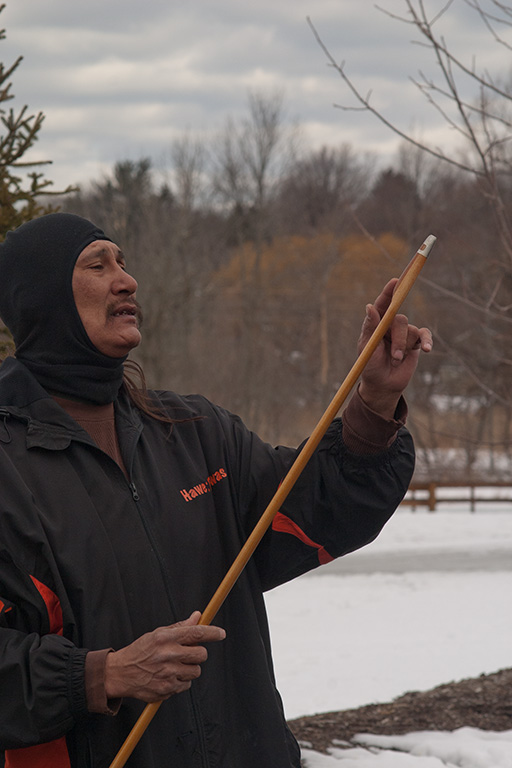
Snow Snake teacher Snooky Brooks describes throwing technique. (Photo Credit- David Mitchell)
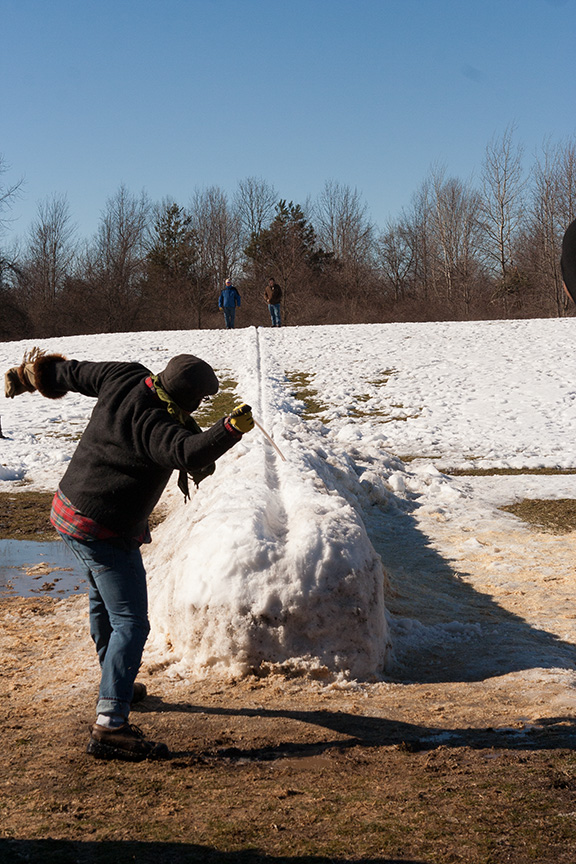
A player at Ganondagan throws the snow snake at the head of the track. (Photo Credit- David Mitchell)

Post by Peter Jemison, park manager of Ganondagan State Historic Site, and Brian Nearing, Deputy Public Information Officer


Cover Photo: Snow Snake teacher Snooky Brooks speaks at a demonstration at Ganondagan. Photo Credit- David Mitchell

Sources:

Parker, Arthur C. “Snow-Snake as Played by the Seneca-Iroquois.” American Anthropologist, vol. 11, no. 2, 1909, pp. 250–256. JSTOR, www.jstor.org/stable/659466.

Read a 2016 article in the Rochester Democrat and Chronicle about the snow snake demonstration at Ganondagan.

This account in the Syracuse Post Standard describes a demonstration at the Onondaga Nation School in 2014.

Read an account of the snow snake competition at the 2016 Ojibwe Winter Games (Ojibweg Bibooni-Ataadiiwin) in Lac du Flambeau, Wisconsin.

Watch this Youtube video of a snow snake contest at the Oneida Nation in Wisconsin. The Onedia were once residents of New York State.

Belsnickel’s Christmas: Furry Palatine Giftgiver

Today at Christmas, we have Santa Claus, the jolly old elf who brings joy to children, and asks only milk and cookies in return.

In other traditions, the English had St. Nicholas and the Dutch had Sinterklaas. But what did the Palatine children  of the Hudson Valley believe in during the 18th and 19th century?

The answer in a word, Belsnickel. The answer in a photo:

Belsnickel with his sack of gifts.

Rather than a jolly old elf, Belsnickel is a crotchety old man dressed in dirty clothes and furs, usually with his face disguised, who was both gift bringer and child punisher in the Palatine region of southwestern Germany.

There are several variations of the spelling including Pelznickel, which would seem the most likely as “Pelz” in German means fur and Nickel is related to Nicholas. Sometimes, his fur hat has deer antlers which allude to a pagan origin of the character.

In New York State, Palatine immigrants initially settled in the Hudson Valley, bringing the legend of Belsnickel with them.

In 1710, the largest eighteenth century migrations of Europeans to America took place when three hundred families from the Palatine region sailed 110 miles north up the Hudson from Manhattan. There, they established camps on both sides of the river, with the West Camp later becoming the Town of Saugerties and the East Camp becoming Germantown.

Later in the 18th century, Palatine families also spread into the Mohawk Valley and founded such communities as Herkimer, Palatine Bridge and German Flats.

Belsnickel is different from other variations of Christmas characters in that he combines both threatening and generous aspects of a Christmas spirit.

The basic tradition is thus; sometime between St. Nicholas Day and Christmas Eve, Palatine children would hear a tapping at their window at night and suddenly Belsnickel would burst through the door. He would be carrying a sack of presents and a switch. (Belsnickel was the first of the Christmas characters to distinguish between good and bad children. And unlike Santa Claus, who is never to be seen by children, Belsnickel and his message are meant to be seen and heeded…)

The children of the house would be lined up and asked if they were good that year. In some cases they would be asked to recite something from school or a passage from the Bible. If they succeeded they got a present from the sack. If they lied about being good or couldn’t do their recitation, they got a whack from the switch.  In some versions of the tale, Belsnickel might merely leave the switch in the stockings of naughty children, similar to the practice by Santa Claus of leaving coal for those who had misbehaved.

In another variation, Belsnickel would scatter treats or gifts on the floor during his visit. If the children waited for permission, they could have the presents. If they dove in greedily without waiting, then Belsnickel walloped them all with his switch.

It has been difficult to find traces of Belsnickel in the Hudson Valley but his legend has lived on, particularly in the Pennsylvania Dutch, whose roots are actually Palatine German, not Dutch. Perhaps in the Hudson Valley, the Dutch and English influence drove him out earlier.

Belsnickel all but disappeared in the first half of the 20th century thanks to two world wars where Germany and all things German were the enemy. Suddenly many people of Deutsche (German in that language) descent became Dutch and many German traditions were quietly swept under the rug. 


However, Belsnickel has seen a bit of a resurgence in recent years. He now features in several holiday festivals in Pennsylvania and even appeared in a holiday episode of “The Office” a few years ago. 

Dwight Schrute from the television comedy “The Office” channels his inner Belsnickel in a 2012 holiday episode.

So perhaps this year as children in the Hudson Valley prepare for the arrival of Santa Claus, they should listen carefully for a tapping on their window. It just may be Belsnickel checking to see if they have been naughty or nice!

Happy Holidays, Merry Christmas, Fröhliche Weihnachten and to all a good night!


Post by Geoff Benton, Curator of Education and Collections, Clermont State Historic Site.


Check out the Clermont blog for interesting historical items on the history of the Hudson Valley and the former home of New York’s politically and socially prominent Livingston Family. Seven successive generations of the family left their imprint on the site’s architecture, room interiors and landscape. Robert R. Livingston, Jr. was Clermont’s most notable resident. His accomplishments include: drafting the Declaration of Independence, serving as first U.S. Minister of Foreign Affairs, administering the oath of office to George Washington, negotiating the Louisiana Purchase and developing steamboat technology with Robert Fulton.


Read these contemporary accounts of the Belsnickel legend in the Pittsburgh Post-Gazette and the Allentown Morning Call.

Find another version of the tale in the Indiana German Heritage Society newsletter.