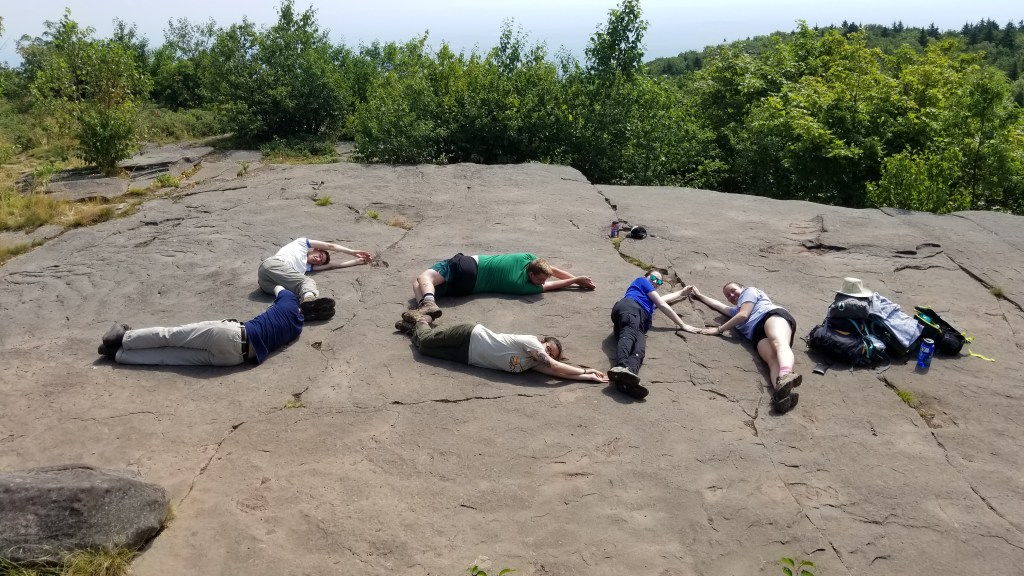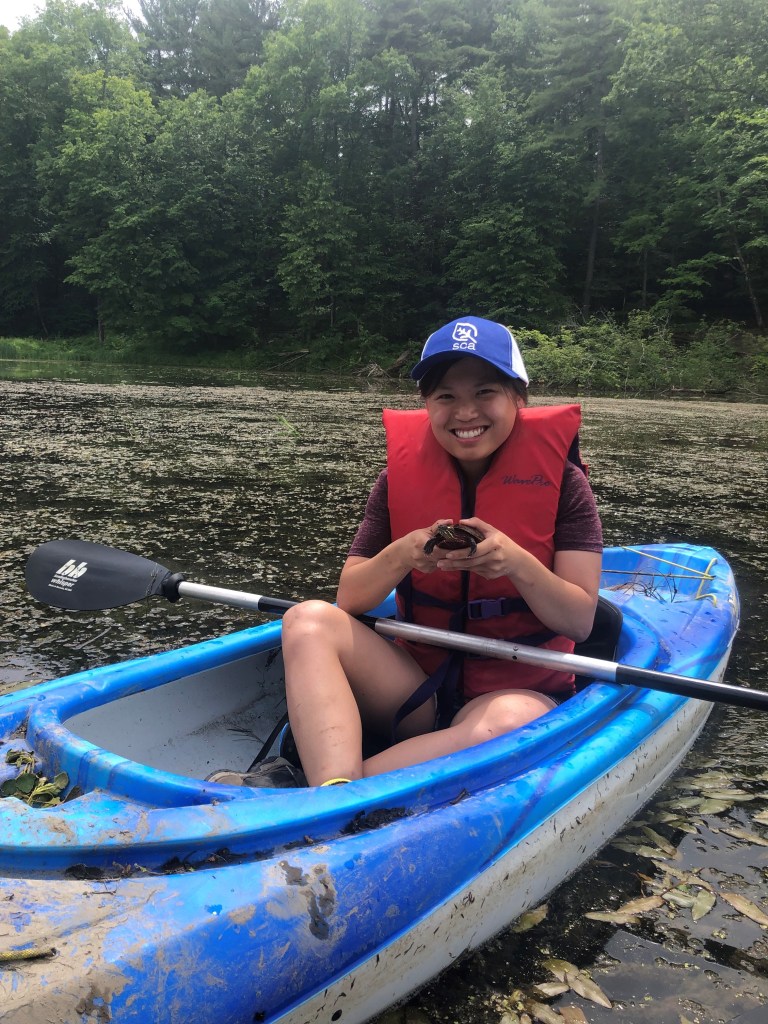
Category Archives: Stewardship

You Gotta Have Friends (Groups) … And Parks Does!

There are 90 years of history separating Bob Emerson and Dave DeMarco, but a common cause uniting them.

Emerson is the executive director at Old Fort Niagara State Historic Site on Lake Erie, where a not-for-profit association was formed in 1927 to protect the then-decaying 18th century fort, making the organization the oldest “friends” group in the state Office of Parks, Recreation and Historic Preservation.

DeMarco is the president of Parks’ newest volunteer group – The Friends of Peebles Island State Park – that just formed in 2017 to help at a park in the Capital Region with its own Colonial-era military history.

Their groups bookend a statewide array of 76 such local organizations filled by everyday people who provide critical support and stewardship in partnership with State Parks. More people are deciding to help out at their favorite park, as more than 20 such groups have formed during the last two decades.


Use this map to find a Friends Group at a State Park near you…


Understanding the value of Friends groups, the state helps by offering up grants for key projects. Last year, the budget for such grants could be doubled to $1 million..

While such groups are mostly volunteers, like Peebles, there are some organizations with paid staff that raise funds and manage budgets for operations and renovations, like the Old Fort Niagara Association.

No matter the size, these volunteer groups have a large impact, accounting for more than $17 million in fundraising to benefit their respective parks in 2018, according to a recent report released by the advocacy group Parks & Trails New York. That was on top of nearly 132,000 hours of work by more than 5,100 volunteers that was valued at more than $3 million.

It doesn’t take a big checkbook to make a big difference. The majority of such groups do it all on $10,000 a year or less, according to the Parks & Trails report. The Old Fort Niagara Association, which has a full-time paid staff of more than a dozen people to run the historic fortress, also has historically had one of the largest budgets at more than $5 million annually.

“We are kind of unique here at Old Fort Niagara, in that we came into existence when this was still an Army base, before State Parks took it over. So, we were used to running this site,” said Emerson, who has overseen the historic site and its French-era fortresses as the facility’s executive director for 22 years.

DeMarco, a Waterford resident and retired administrator for SUNY Central, had been visiting Peebles Island State Park for years, bringing his kids there when they were young.

“Some years ago, I started leading an informal group of volunteers, who helped with trails and cleanups,” he said. “About four years ago, I was asked by the park manager to consider forming an official friends group. So that is what we did.”

DeMarco started with about a dozen members, and now that is up to about 45 people who volunteer their time to help maintain some five miles of trails in the 190-acre park, located on an island in the Hudson River that has a historic former bleach works.

During the Revolutionary War, the Continental army encamped at Van Schaick and Peebles Islands with the intent to engage the British army heading south from Montreal. Colonel Thaddeus Kosciuszko designed earthwork fortifications on Peebles Island that still exist.

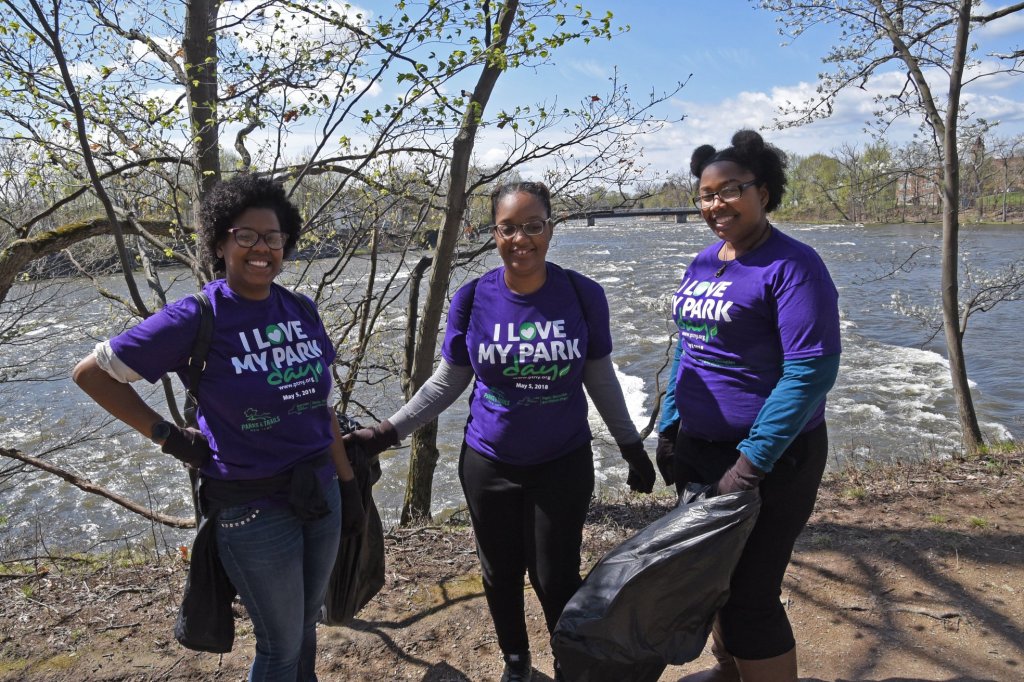
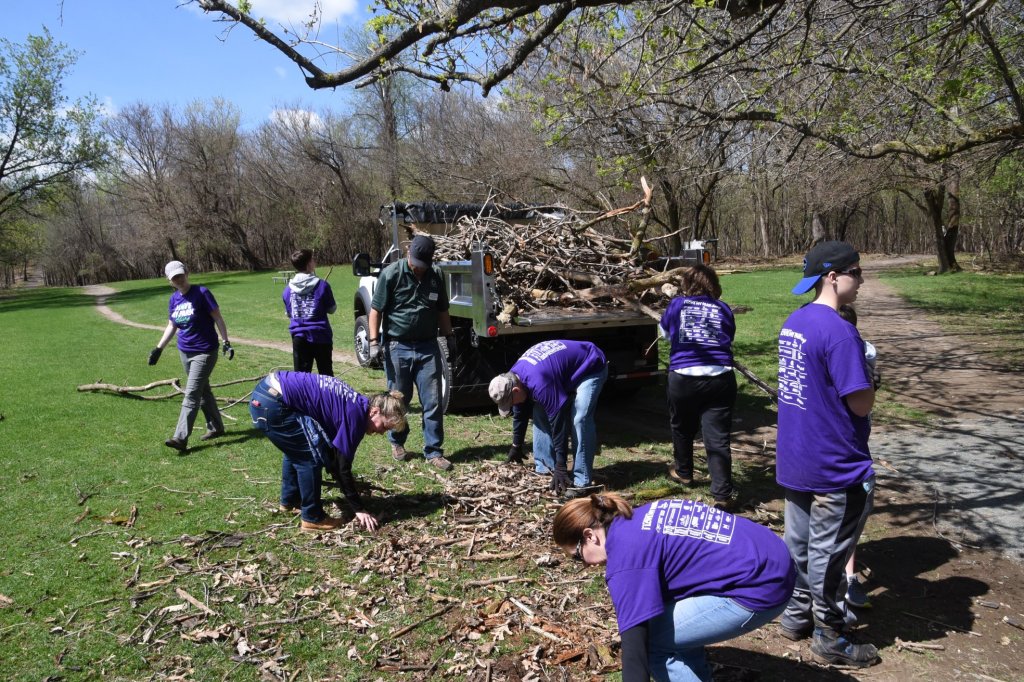
“Our members can also function as ambassadors to the parks, for when people come in. We can greet them, and tell them a bit about the park and its history,” said DeMarco. Members also help out on First Day Hikes on Jan. 1 and “I Love My Park Day” in the spring, and sponsor wildlife and naturalist programs at the park’s visitors center.

“I think our location here at Peebles is one of our advantages. We are easy to reach for a lot of people,” he said.

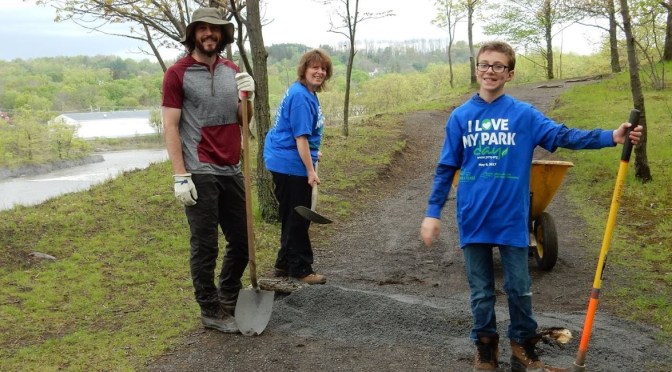
See Friends Group members at Peebles Island State Park involved with activities like First Day Hikes and trail maintenance.

At Old Fort Niagara, the not-for-profit association has more than 700 members, making it the largest such friends group in State Parks. Members were part of more than 32,000 hours of volunteer labor at the site last year, said Emerson.

The group is responsible for running programs at the fort, as well as overseeing research efforts and a collection of historic objects related to the site. It handles a food concession, a gift shop, and the hiring of up to 60 seasonal workers to run the operation during the primary tourist season.
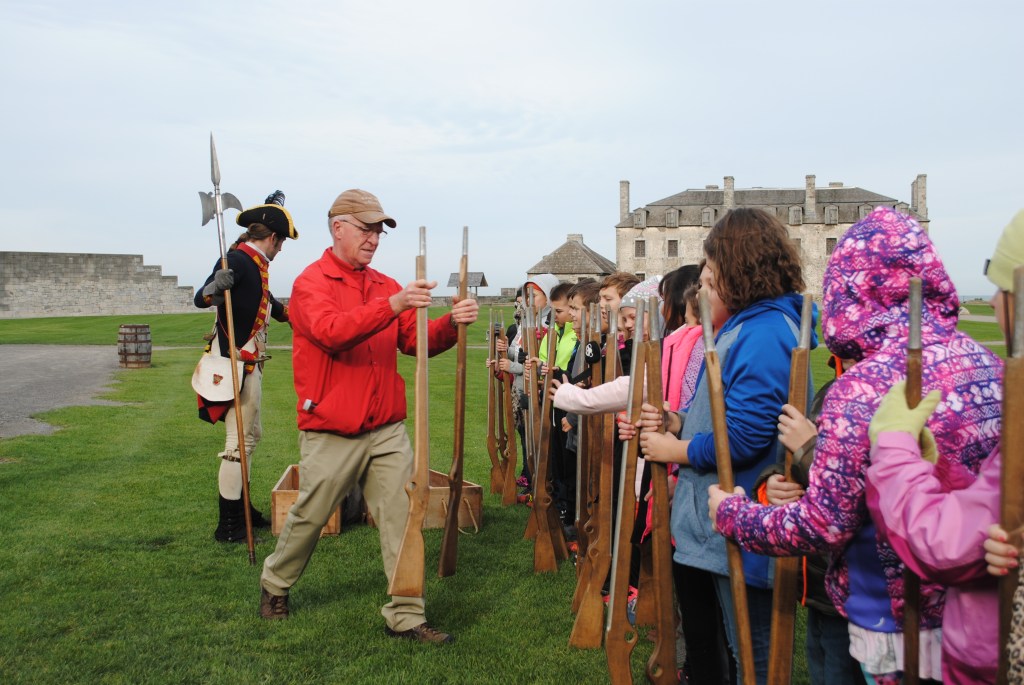
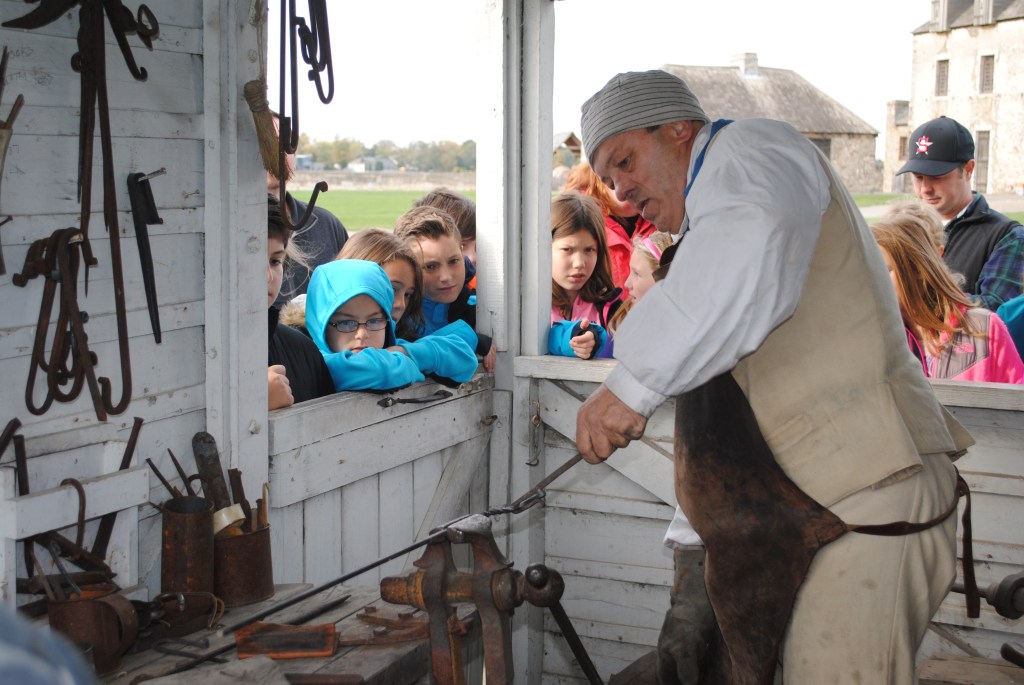
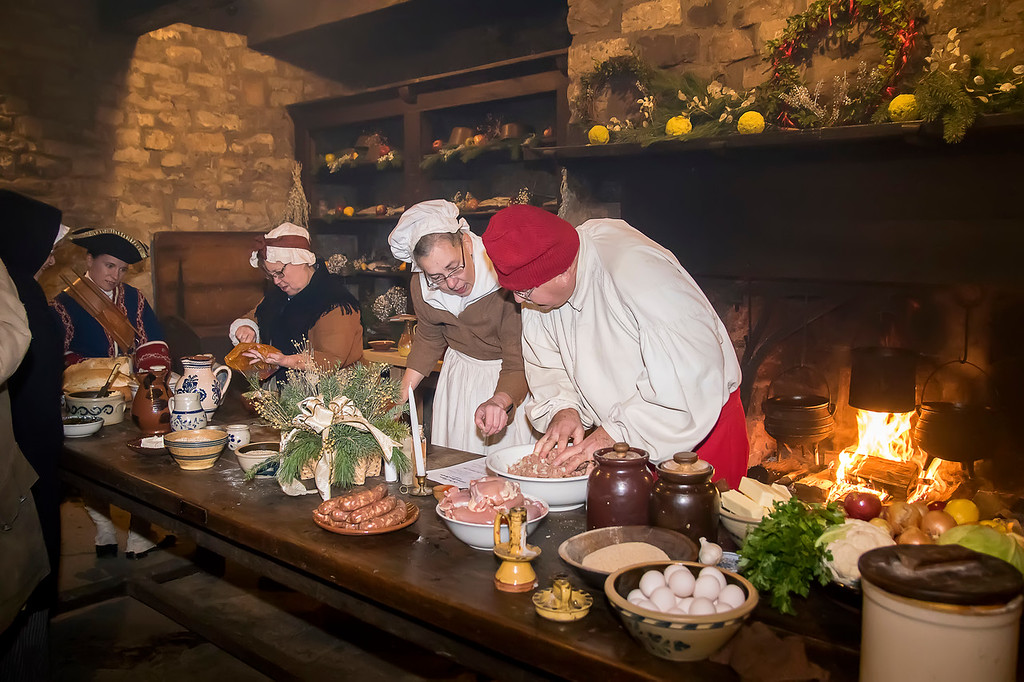
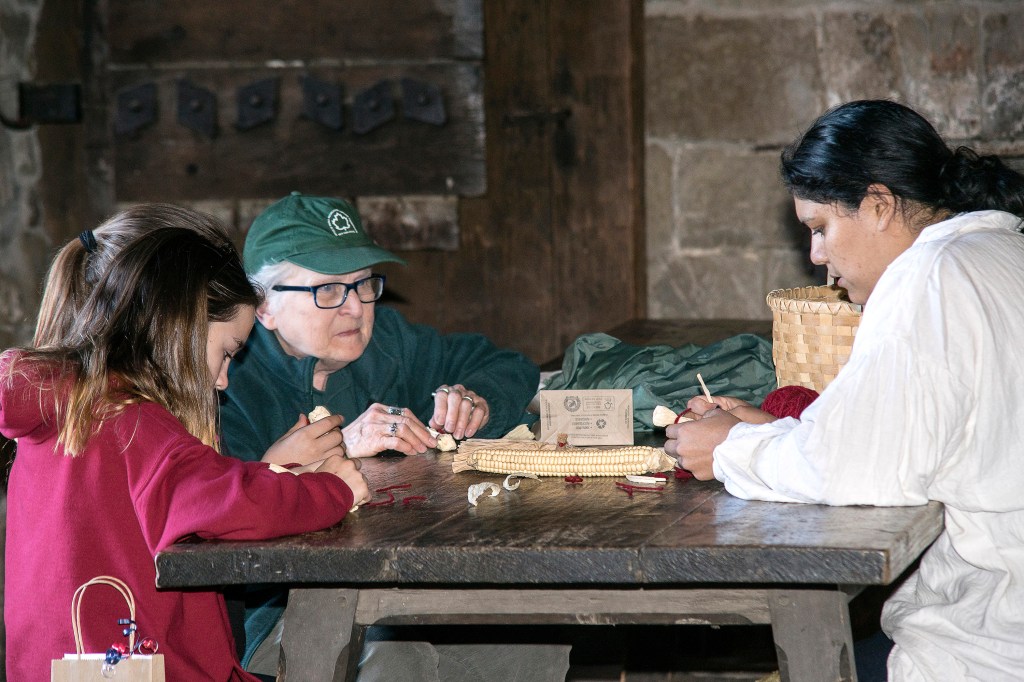
Volunteers perform a range of roles at Old Fort Niagara State Historic Site.


Emerson has advice for those thinking about forming a friends group for their park. “First, have a relationship with your park manager and the regional manager,” he said. “Keep it up. Reach out to your local tourism promotion agency, too.”

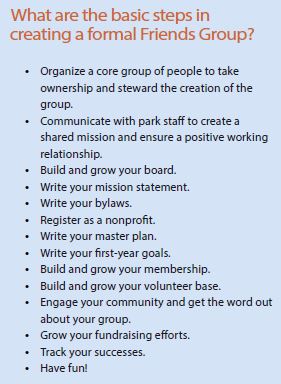
DeMarco said he learned the “identifying your active core” of volunteers is a key step to setting up a friends group. Parks staff helped in the paperwork requirements, which include incorporation as a not-for-profit organization, and filing of appropriate paperwork with the state Attorney General’s Office and the U.S. Internal Revenue Service

“You then need to identify your purpose,” Demarco said. “Finally, collaborate with Parks & Trails New York. They have all the resources that you will need to help get you started.”

Cover Shot- Members of The Friends of Peebles Island State Park roll up their sleeves during some trail maintenance there. (Photo Credit- Dave DeMarco)

All photos courtesy of The Friends of Peebles Island State Park and Old Fort Niagara Association.


By Brian Nearing, Deputy Public Information Officer, New York State Office of Parks, Recreation and Historic Preservation.

Learn more about how to start your own Friends Group.

Read about what Friends Groups have done in other parks across the U.S.

Explore the Parks & Trails New York webpage on Friends groups.
A Legacy of Strength

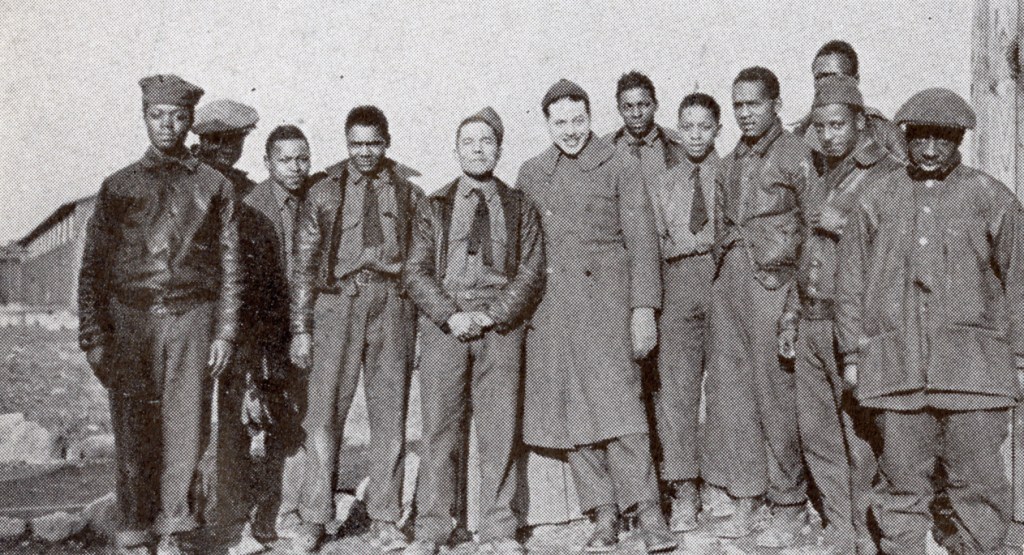
During the 1930s when racial segregation and Jim Crow held sway over much of America, there was a Depression-era federal public works unit where African-Americans, not whites, were in command. And it was here in New York State Parks.

To combat rampant unemployment among young men, President Franklin Roosevelt had created the Civilian Conservation Corps (CCC) in 1933 to perform public works projects.  

The struggles of the 1930’s reached beyond the economic depression. Major environmental issues plagued the nation as well.  The impact of poor farming practices, deforestation, and destructive pests were just a few of the things destroying thousands of acres of usable land. Across the nation, the CCC immediately put its companies to work solving these two major crises at once.

While discrimination based on ‘race, color, or creed,’ was against Roosevelt’s founding policy, that was to exist almost only on paper. When the first CCC companies formed, racial segregation was part of the process.  After two years of operation, this practice became official policy in 1935 when CCC Director Robert Fechner insisted on complete segregation of whites and colored enrollees.  The only exception allowed was if a company was formed in an area of the country with a small African American population.

Enrollees from big cities and small towns all over New York found themselves at Camp Dix, New Jersey, with thousands of other men who were desperate for work.  Upon arrival, men were assigned to a 200-man company, although many colored companies numbered less than 100. Each company was given a number, and a lowercase ‘c’ was added for ‘Colored’ where needed. And policy dictated that those in charge of all companies were white Army officers.

Men from New York quickly filled slots in several ‘Colored’ companies forming at Camp Dix. As these companies moved around the country, they were trained on the job by local professionals who were also white.  Pressure from Congress, the National Urban League, and the National Association for the Advancement of Colored People (NAACP) began immediately for African American officers and professionals to work with African American companies, but it would be several years before things changed.


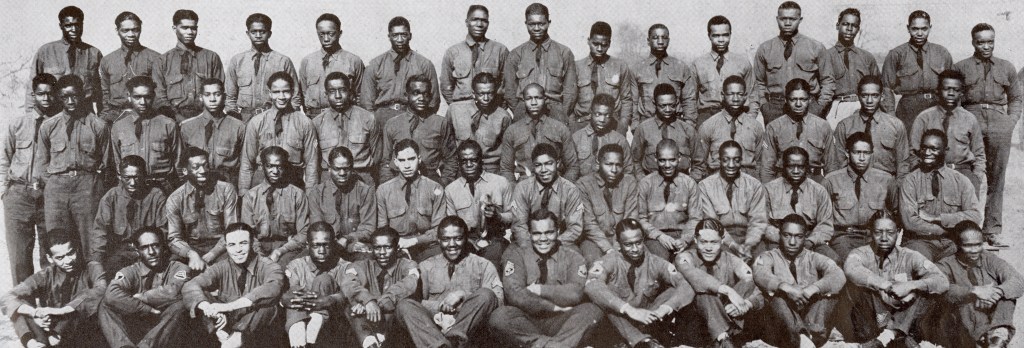
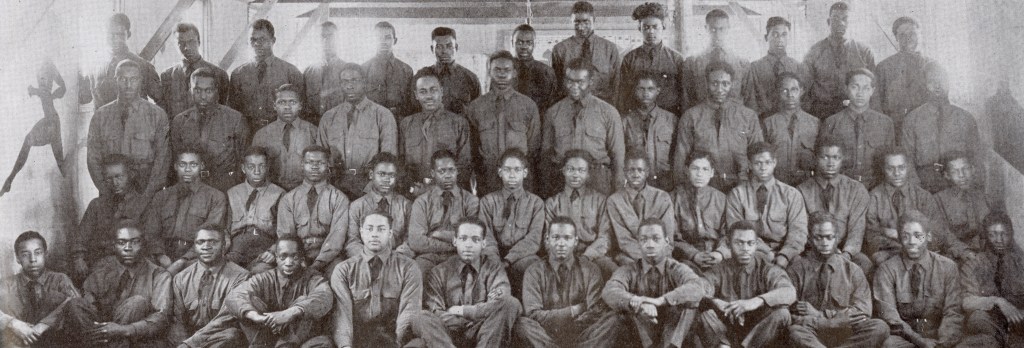
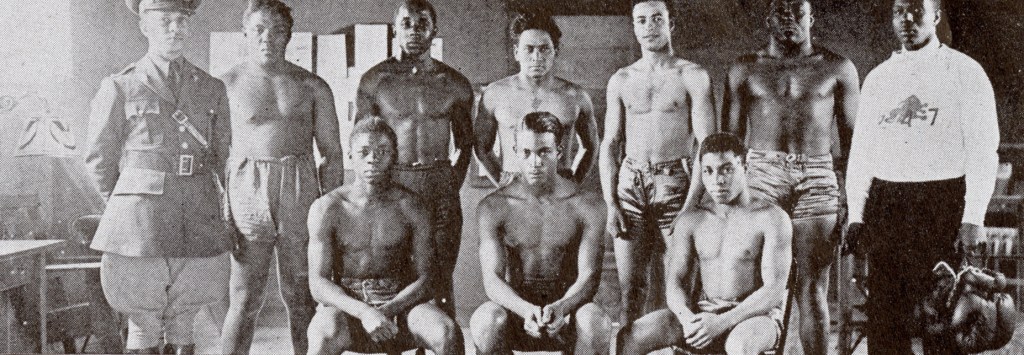
Click on this slideshow of the men of the Civilian Conservation Corps “Colored” companies from New York State.


By the fall of 1933, colored companies from Fort Dix including 246-c, 247-c, and 1245-c were formed and immediately sent out.  Company 246-c was shipped by train to Chelan, Washington State, to fight fast-moving forest fires. Their next mission took them across the country to Yorktown, Virginia, to excavate colonial buildings and reconstruct two historic sites — the Moore House and the White Swan Tavern, both of which still stand today.

From Virginia, the men of 246-c headed back to New York to the Orange County town of Wawayanda to begin working on the Wallkill Flood Control Project, a ten-mile-long canal designed to change the direction of the river and stem seasonal flooding.

Company 247-c headed to Idaho to build roads and fire trails and plant hundreds of trees in the Lake Pend Oreille Forest. They later went south to work as archaeologists at the Yorktown Battlefields collecting pottery chards and other bits before returning to New York. Company 1287-c fought forest fires in Idaho, built roads in Virginia, then moved into New York, joining the other companies for the Wallkill project.

Company 1245-c headed out in 1934 to create fire breaks, build truck trails, plant trees and dig wells before heading to the Wallkill. Company 3210-c and 3211-c, formed in 1935, went directly to the Wallkill project, with 3211-c later heading a few miles north to build roads.

Health care and food services were year-round jobs as well with the CCC, and often these were the first positions filled by young African American men. During the early years of the program, African Americans could be found as cooks and health orderlies but rarely as the head chef, doctor, or dentist.

Initially, trained African American officers in the U.S. Reserved Army were totally ignored, then slowly as more pressure from members of Congress and other groups continued, they began filling positions as medical officers, working alongside African American orderlies and chaplains. By 1936, such outside pressure forced Fechner to set-up a “demonstration camp” in Gettysburg, Pennsylvania, where a Colored company would be managed by African American commanding officers. If the experiment worked, other companies could be switched over.

While the Gettysburg effort was successful, only one other CCC company ever saw the change to Colored officers _  1252-c in New York State. Initially stationed at the Newtown Battlefield Reservation outside of Elmira, Chemung County starting in 1935, this company had started with white officers like all the rest. But in June 1939, colored officers were quietly brought in to run the unit.

The work of the men of Company 1251-c is still visible at Newtown Battlefield State Park, where they built the picnic pavilion and concession stand, sports fields, stone tables, and wooden bridges, as well as planted trees and plants, and added or graded topsoil.

A new CCC enrollee arriving at Newtown Battlefield Reservation.
At work at the battlefield.
The men of Company 1251-c at Newtown Battlefield Reservation with their officers, seated in the center of the front row.
Pavilion at Newtown Battlefield State Park built by the men of Company 1251-c.

Such work was only part of an average day for company members. Improving the education of enrollees was also part of the CCC’s mission. Civilian Educational Advisors (CEA) were local educators who were stationed at the various sites.

Classes were held regularly and for many of the colored companies stationed in New York the classes were taught by African American men. Reading and writing went hand in hand with Spanish, French, Mathematics, and Negro History. Recreational pursuits included bands, sports teams, and company newsletters.

Although hugely successful, the CCC came to an end in 1942 as the nation joined the Second World War. By then, more than two million men had gone into the program. Read more about New York’s history in the program in the Parks Blog post below…


Civilian Conservation Corps in New York State Parks

When Franklin Delano Roosevelt (FDR) became president in 1933, the entire nation was in a state of turmoil never seen before or since. It was the height of the Great Depression: unemployment was at 25%, croplands were failing, and millions of families were going hungry. As governor of New York State, FDR had implemented the…


Even in the face of economic hardship and ecological stress, racism and segregation had dogged the program each step of the way. CCC Director Robert Fechner’s insistence on racial inequality plagued the CCC in spite of constant pressure from the White House, Congress, and other groups striving to create a more equitable environment in the country.

The work done by the men in New York’s colored companies of the CCC continues to enrich the lives of New Yorkers everyday. Theirs is a legacy of strength we can all draw from.


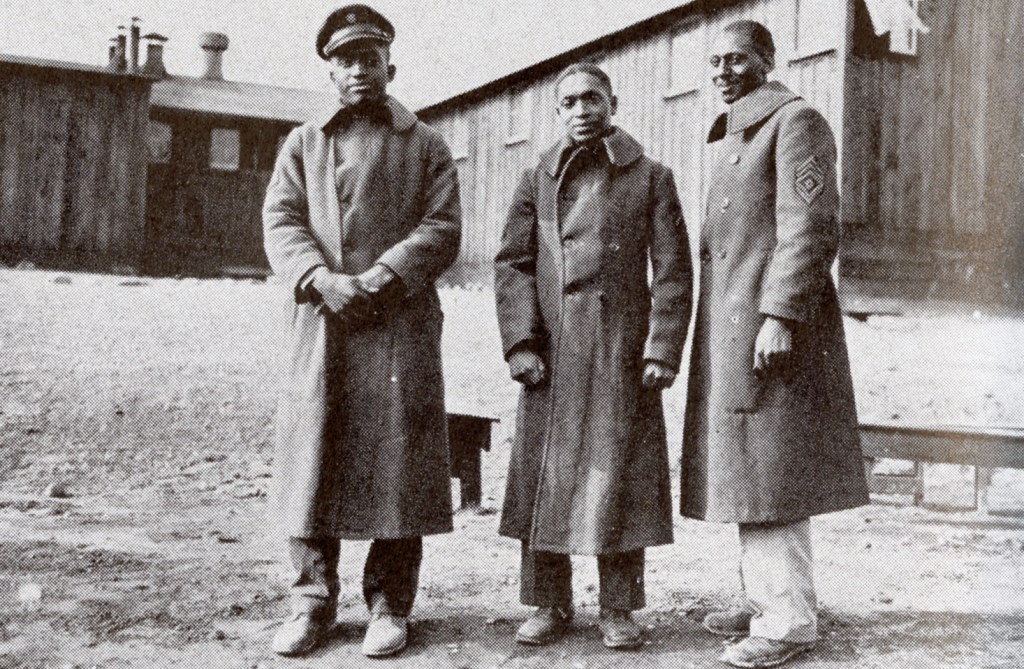
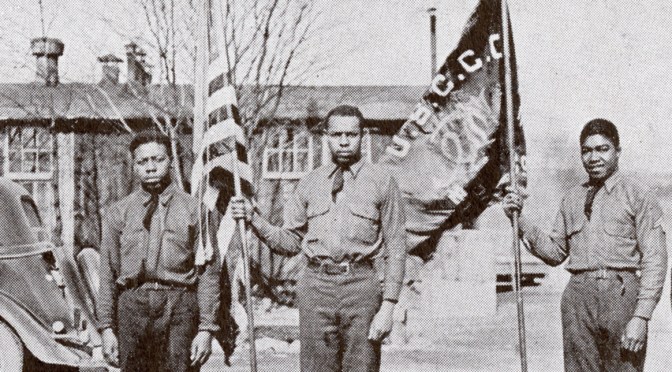
Cover Shot: Company 246-c. All photographs from state Bureau of Historic Sites

Post by Lavada Nahon, Interpreter of African American History, state Bureau of Historic Sites


At Gilbert Lake State Park,  Otsego County, other companies of the CCC constructed cabins, trails, roads, dams, and erosion control structures between 1933 and 1941. The park is also home to the New York State Civilian Conservation Corps Museum, which displays photographs and artifacts from the days of the CCC.

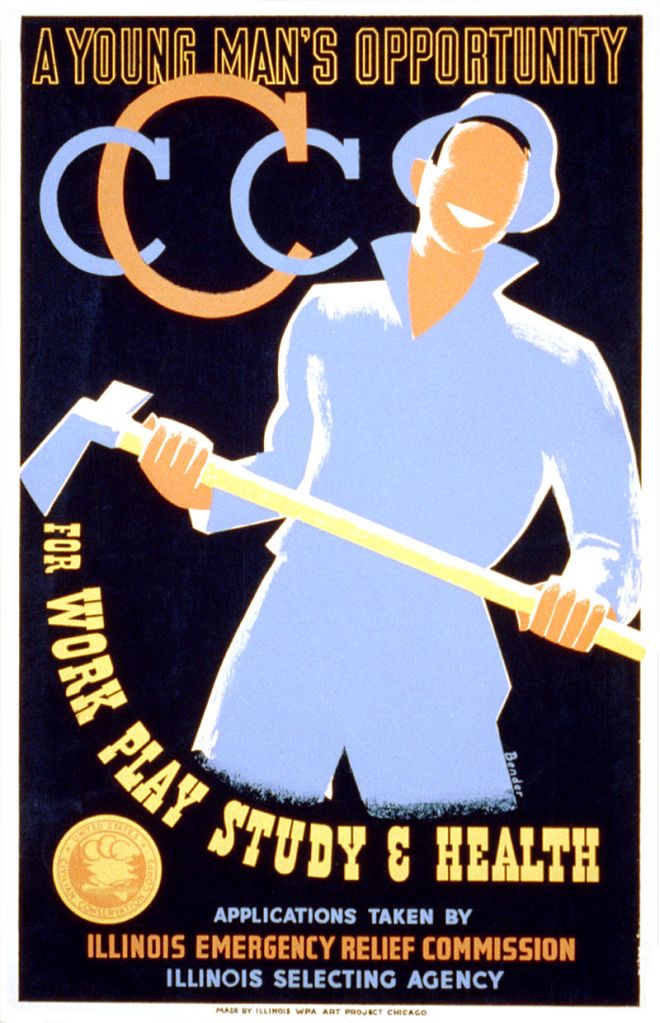
A 1935 poster for the Civilian Conservation Corps. (Photo Credit- Wikipedia Commons)

Mushroom Tech Cleans Up at Lake Erie State Park

For many people, mushrooms can be a healthy, tasty addition at mealtime. But along the Lake Erie shoreline south of Buffalo, the science of mushrooms is being used in an innovative way – as an environmentally-safe method to reduce harmful bacteria in a stream near the beach at Lake Erie State Park.

At the beginning of this decade, tests of the stream and water at the beach by the State Parks Water Quality Unit were showing consistently high levels of e. coli, a bacteria found in fecal matter which can severely sicken those who have been exposed.

The sand and cobble beach in Chautauqua County had been closed to swimming for several years due to a combination of high bacterial levels and fiscal constraints. Testing indicated that the problem likely was being caused by faulty septic systems or unsewered properties upstream, although additional contamination from animals could not be ruled out as another potential source.
While there are mechanical and chemical techniques  to filter such harmful bacteria from water, in 2014 Water Quality staff decided  to test an innovative mushroom-based system developed by Fungi Perfecti, a Washington-state based company with a long research history into fungus and mushrooms, a scientific field known as mycology.

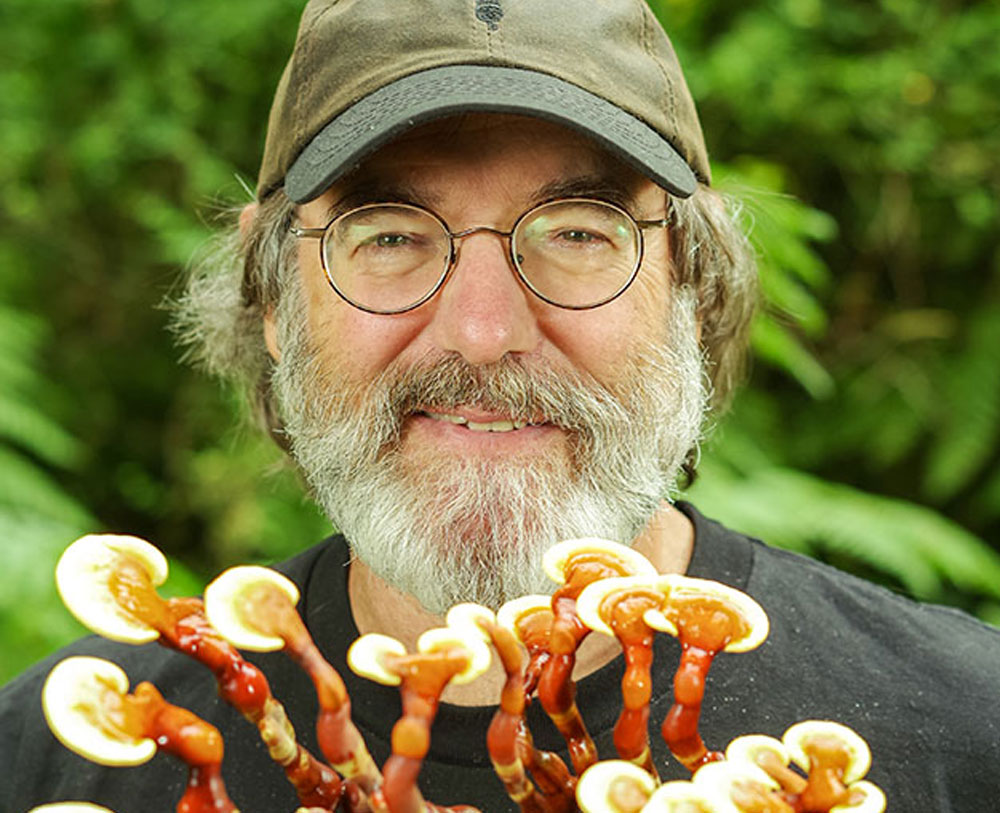
Company founder and owner Paul Stamets is a nationally- and internationally-recognized expert and promotes innovative uses for mushrooms in bioremediation and medical therapies. He even entered the realm of popular culture when creators of the latest Star Trek franchise, which started in 2017 on CBS All Access, named the ship’s science officer after him as part of the use of a a mushroom-based propulsion system for the Starship Enterprise.

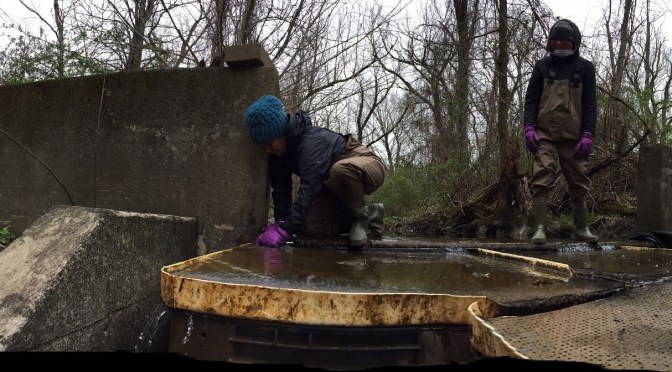
Meanwhile, back here in New York State and with funding support from the federal Great Lake Restoration Initiative, water quality staffers at State Parks installed a Stamets-designed mycofiltration system into this small creek at the Park.

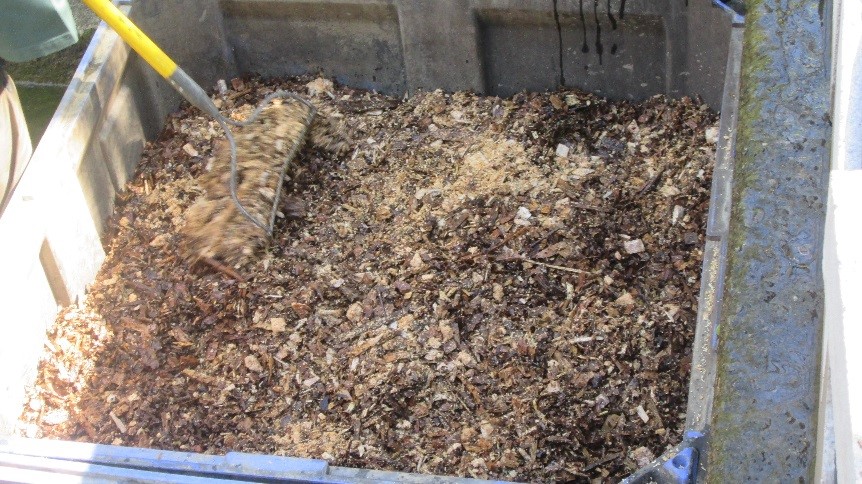
The filtration system uses large plastic containers called totes that contain a mixture of wood chips and mycelium (the tiny threadlike vegetative part of fungi that fruits as mushrooms) that allow water to pass through. This allows the mycelium mixture to absorb bacteria from contaminated water as it flows past.

A crane drops the mycofiltration tote into position within a concrete weir that channels the stream. (Photo Credit- State Parks)
Microscopic image of mycelium (Photo Credit- Fungi Perfecti)

So far, the test results seem promising. E. coli levels downstream of the filtration system have dropped and water quality at the beach has improved, although outside factors, including improvements in the surrounding watershed, may have contributed.

The mycelium in the totes were reinoculated – another way of saying reimplanted and reinvigorated – in 2016 and 2019. Data from this project is being shared with Fungi Perfecti to assist in their research and development of their system.

Said Renee Davis, director of research and development at Fungi Perfecti, “We are proud of the contributions that fungal mycelium has been able to make for Lake Erie State Park and the surrounding ecosystems. Though we still face challenges with scalability of this technology, the applications are promising. We are closely studying the aspects of fungal metabolism that drive these effects, particularly the secretion of specialized compounds from mycelium into the environment.”

She added, “New potential applications have also arisen for bioretention and stormwater. For us, this project is an example of the possibilities that emerge when we look at nature—particularly fungi—in a new, creative, and innovative way. We hope this is the first of many projects to come using mushroom mycelium for water quality.”

Mycelium and wood chips are mixed together in the totes. (Photo Credit- State Parks)
Totes rest within the concrete channel of the stream. (Photo Credit- State Parks)

Currently, this is the only State Park where this chemical-free, ecologically-safe method is being tested, although it could be introduced into the Finger Lakes region if a suitable location can be found.


Cover Shot: NYS Parks crews service the mycofiltration unit in Lake Erie State Park in 2016.

More Resources

See a technical display of the project here

Hear Fungi Perfecti Founder Paul Stamets give a TED lecture on the potential uses of mushrooms.

Fungi Perfecti founder and owner Paul Stamets. (Photo Credit- Fungi Perfecti)

Stamets’ awards include Invention Ambassador (2014-2015) for the American Association for the Advancement of Science (AAAS), the National Mycologist Award (2014) from the North American Mycological Association (NAMA), and the Gordon & Tina Wasson Award (2015) from the Mycological Society of America (MSA).

Currently, Stamets is testing extracts of rare mushroom strains at the NIH (National Institutes of Health/Virology) and with Washington State University/United States Department of Agriculture against a wide panel of viruses pathogenic to humans, animals and bees.

Read what local Capital Region entrepreneur Eben Bayer, owner of Ecovative Design, a mushroom-based packaging and development business based in Green Island, has to say about the scientific potential of mycelium.

Check out the Mushroom Blog at Cornell University.


Post by April Brun and Gabriella Cebada Mora, NYS Parks Water Quality Unit

Mother of the American Youth Conservation Movement

Liz Titus Putnam looked at dozens of people in the dining hall at a Dutchess County summer camp — eating, talking and laughing — and she saw a room full of connections.

Although many people in the Sharpe Reservation hall that October morning were in their early 20s, their ties stretched back to 1953. That was when Putnam, a 20-year-old Long Island native and junior at nearby Vassar College, came up with an idea.

After reading a magazine article on the deplorable state of the national park system, Putnam used her senior thesis to propose a voluntary student service program to work at the parks. Her inspiration came from the Civilian Conservation Corps created two decades earlier by President Franklin Roosevelt to provide work for the unemployed during the Great Depression.

“I knew that I would be interested in doing that work. And I thought other young people would be interested, too,” Putnam said.

Through timely encouragement and helpful connections that seemed to show up just when needed, the new college graduate founded what became the not-for-profit Student Conservation Association (SCA), with its first crews of 53 men and women (Herself included) arriving in 1957 at Grand Teton and Olympic national parks to do trail work. The Peace Corps and Earth Day were still years away.

Six decades later, more than 90,000 young people from every part of the U.S. and many foreign countries have gone through the SCA, with most members later going on to jobs and careers in the field of conservation at a myriad of organizations.

Since the beginning, SCA members have performed about 40 million hours of public works service at parks and other public lands. In today’s dollars, that would be worth about $600 million.

Last month, their ranks grew by another 40 people who graduated from the Hudson Valley SCA 2019 program under Putnam’s appreciative and proud gaze. The ceremony was held at the Fresh Air Fund’s Sharpe Reservation in Fishkill.

“I have so much hope for the future, to see young people getting involved,” said Putnam, now an 86-year-old resident of Vermont where she lives on a farm. She retired from running the organization day-to-day as its president in 1969, but under the title of Founding President remains active and involved.

“You will have many adventures. You have one life, and it goes by very fast,” Putnam told the Hudson Valley SCA graduates. “It is what you do each day. You are part of a team, with the humans all around this earth. Each person counts.”

President Barack Obama presents Liz Titus Putnam with the Presidential Citizens Medal in 2010. The award is the nation’s second-highest civilian honor. (Credit: Student Conservation Association)

Putnam believes that connections helped her all along the way, starting with her faculty advisor at Vassar who encouraged her to pursue her idea. Then through a family connection, she met the daughter of the late Stephen Mather, first director of the National Park Service. She in turn introduced Putnam to his successor, former park director Horace Albright. He was intrigued enough by the idea to urge her to visit four national parks to gauge local interest in a volunteer corps, giving her a letter of introduction to ease the way. After that trip in 1955, the superintendents at Grand Teton and Olympic said yes to accepting her student volunteers.

Liz Titus Putnam (left), near Grand Teton National Park during the first year of the Student Conservation Association in 1957. To the right is fellow Vassar College alumna Martha “Marty” Hayne, who co-founded the SCA and later was a member of its board of directors. (Credit: Student Conservation Association)
Liz Titus Putnam and Martha “Marty” Hayne share a laugh back in the day. (Credit: Student Conservation Association)

“I had no connections at the time, But the connections appeared when they were needed. That is the miracle,” Putnam told a visitor at the Hudson SCA graduation.

Speaking there, Putnam shared her tale of actually joining the group that she helped found. It was after fires had devastated Yellowstone National Park in 1988 and the SCA was lining up people to come help. She was 56 years old.

“I spoke to our staff, asking if anyone could join. And they said yes. And I asked if I could join, and they said yes,” Putnam said. “And I said, no special treatment, treated just like everyone else? And they said yes.”

After filling out an application, she got her SCA acceptance letter (she recalled saying ‘Yippee!” upon opening it), later arriving at Yellowstone under an assumed name to wield hand tools and help other members repair burned out bridges and cut downed trees. One day, a college student from Texas said he knew who she was, because she had spoken at his school about the SCA. “I asked him to keep it to himself, and we would be fine. And he did,” said Putnam.

Liz Titus Putnam plans a tree at Vassar College during a ceremony in her honor in 2018. (Credit: Vassar College)

“Liz is very inspiring,” said Dana Reinstein, a 23-year-old Queens resident who is finishing her second SCA stint. “I got to meet her when she was at Vassar last year, when she was helping plant a tree there.”

Now serving as an environmental educator in New York City schools, Reinstein said working at the SCA was about “a lot of new connections and experiences,” starting with lessons on how to use hand and power tools. “This is not something that I ever thought I would do. When I started, I did not even know how to use a hammer properly.”

A graduate of SUNY Fredonia with a degree in geology, Reinstein became part of an SCA team that provided more than 71,000 hours of service, valued at $1.7 million, working this year on trails, waterways, and recreational habitat.

Marking its 20th anniversary, the Hudson Valley SCA works with New York State Office of Parks, Recreation and Historic Preservation, New York State Department of Environmental Conservation, local Soil & Water Conservation Districts, Scenic Hudson, Audubon New York, and Vassar College. The Hudson Valley SCA Corps is an AmeriCorps program.

Some 900 young adults have gone through the Hudson Valley SCA since it started, logging some 1.7 million hours of service that would have cost $30 million if workers had to be hired.


Check out this slideshow of some of the members of the Hudson SCA 2019 session. (Credit: Hudson SCA)


‘Once an SCA member, always an SCA member’ seems to be a cardinal rule of the organization. When Putnam asked how many people attending the graduation had been in SCA, many hands went up.

One belonged to Melissa Miller, park manager for Grafton Lakes State Park, Cherry Plain State Park, and Bennington Battlefield State Historic Site.

Miller did two SCA terms in 2001 and 2002, working on landscape tours at Olana State Historic Site, and then as an environmental educator at Grafton, where she was hired subsequently as a State Parks employee.

“Before that, I had been working in a restaurant. Being in the SCA was such a wonderful experience,” Miller said. “It gave me my career.”

Sarah Davies, an alumna of the original Hudson Valley Corps in 1999, is now Chief Environmental Educator with State Parks after service with DEC. “SCA was the best decision of my professional life. It was the catalyst for my 20 years in government service,” she said.

Liz Titus Putnam, left, with Ann Harrison (center), bureau chief of environmental education at the state Department of Environmental Education, and Sarah Davies (right), chief environmental educator at NYS Parks. (Credit: Student Conservation Association)

Post by Brian Nearing, Deputy Public Information Officer for NYS Parks


Learn about applying to SCA here.

See Liz Titus Putnam interviewed on the 2009 Ken Burns film “The National Parks: America’s Best Idea”

Read the 1953 Harper’s Magazine article that inspired Liz Titus Putnam — then a 20-year-old college student — to create the Student Conservation Association. She described the article as “hitting me like a bolt.”

Read this in-depth interview with Liz Titus Putnam

Watch a short history of the SCA

Parks Won’t Let Invasive Species Get Its Goat

Invasive plant species are a huge problem in modern conservation at our State Parks. These plants can overrun areas and if left unchecked, push out our native species, disrupt natural systems, and negatively impact human activities.

Controlling large infestations is challenging, and sometimes requires using chemical herbicides, which can come with unforeseen costs and undesirable consequences.

But there can be another way that is easier on the environment. To deal with invasive plants at Heckscher State Park on Long Island, we are experimenting with a greener and much cuter alternative – a small army of hungry and quite friendly invasive plant-eating goats.

A little goat can be a big eater of invasive plants. Goats can eat up to a quarter of their body weight each day.

The goats came from Green Goats, a company from Rhinebeck in Dutchess County that for more than a decade has hired out its goats to combat these invaders at various public parks. Their herd has traveled to seven states, as far away as West Virginia and as close by as Riverside Park and Fort Wadsworth in New York City.

Last year at Heckscher, we released goats into a fenced-in, five-acre site overtaken by an invasive plant called Chinese Silvergrass (Miscanthus sinensis). The goal is for the goats to eat the silvergrass so there will be room for our native plants to again take hold. The goats also have been eating other invasives, including Japanese honeysuckle (Lonicera japonica), common reed (Phragmites australis), and Japanese angelica tree (Aralia elata).

Chinese Silvergrass (Photo credit Western New York PRISM)
The hungry herd takes on the Chinese Silvergrass.

However, since goats will eat pretty much everything, we did not want them to eat the handful of native shrubs left in the enclosure, including eastern baccharis (Baccharis halimifolia), highbush blueberry (Vaccinium corymbosum), and common elder (Sambucus canadensis). So, we put up fences around these native plants to protect them so that when the goats leave, these shrubs will be able to spread into cleared areas.

Last year, we had a bit of a late start and only received the goats in September, but by the end of the growing season in October, we had 70 goats moving and eating through the area. When the goats left for the season, there was significant thinning of the silvergrass and quite a few individual plants were eaten down to the ground. The goats also ate a lot of the Japanese honeysuckle and, surprisingly, killed several angelica trees by eating their bark. The bark and leaves of the angelica tree are covered in many sharp thorns and spines to dissuade herbivores from eating it, but that didn’t stop the goats, who happily stripped the bark right off the invasive trees!

This year, our goats arrived in June and as of this month, we have 61 goats working in the area with more on the way. We have used a drone to fly over the site to track their progress, and expect to do another flight shortly.

A goat stretches for its meal of Silvergrass.

A hungry goat can eat up to 25 percent of its body weight each day, said Larry Cihanek, owner of Green Goats with his wife, Ann. An adult goat can weigh between 140 to 180 pounds, so that works out to up to 45 pounds of invasive plants a day. For our herd at Heckscher, that is up to 2,700 pounds of plant invaders being eaten every day!

And the goat “droppings” are a good source of nutrients for the soil as well.

“Using goats like this is like mowing your lawn over and over,” said Cihanek. “You keep the goats on site for a season, and they keep eating as the plants continue trying to regrow. But the goats keep eating the new growth and eventually they starve the roots bit by bit, and the plants will die.”

Ann and Larry Cihanek, owners of Green Goats in Rhinebeck, Dutchess County. They have about 200 goats in their herd. (Photo courtesy of Green Goats)

The Cihaneks now have about 200 goats in their herd, with nearly all the animals being donated by former owners who had been using them for milking, for show purposes, or as pets.

“Eight years is about the maximum for milking, but goats can live for 12 to 14 years. So, this is their second career with us,” he said. “Our goats are living the American Dream: They eat for a living.”

In addition to helping project the environment, the goats are also a good way to draw more people into the park. “In some of our past projects, we have seen that attendance at a park can go up by about 20 percent after the goats come in,” said Cihanek.

Officials at Riverside Park in New York City even held a celebration after the goats finished working there this summer, making the goats the stars of a $1,000-a-ticket fundraiser at a lawn party in August. More than 800 people showed up and there was a contest to vote for the most popular goat, with the winner being Massey, who was presented with a medal and an elaborate bouquet of weeds.

Riverside Park President & CEO Dan Garodnick honors Massey at the winner of the public “Vote the G.O.A.T” contest in August. (Photo by Riverside Park Conservancy)

If you would like to see the goats in action, they are staying through October in the eastern section of Heckscher State Park, to the north of the cottages. The Long Island Greenbelt Trail briefly passes a section of the enclosure when it turns westward.

If you see goats with numbered collars, these are the goats that were honored at Riverside Park.

The goats are quite friendly and like being petted. But please, stay outside the fence and do not feed the goats. They are already surrounded by all the food they need!

A Parks visitor encounter with one of the Green Goats.

All photographs by New York State Parks unless otherwise credited.


Post by Yuriy Litvinenko, New York State Parks Regional Biologist for Long Island