Celebrating Get Outdoors & Get Together Day

On Saturday, June 8, New York State Parks and New York State Department of Environmental Conservation celebrated Get Outdoors & Get Together Day at 22 locations across the state. This annual event coincides with National Get Outdoors Day and encourages people of all abilities to connect with public lands through outdoor recreation activities such as fishing, nature walks and hikes, birding, archery, camping, and paddling.

Get Outdoors & Get Together day is a partnership with host sites, the Office for People with Developmental Disabilities and the New York State Department of Veterans’ Services to promote inclusivity of access to recreational spaces by bringing people of all abilities, ages, identities, and backgrounds together for a day of fun, healthy activities.  

This year, more than 2,000 participants enjoyed the day at a New York State park or historic site! Activities included a magic show, a raptors and reptiles show, dancing, singing, spin art, yard games, and more! Let’s take a look at some of the action. 

Continue reading Celebrating Get Outdoors & Get Together Day

Landscape Architecture In Full Flower

Is there a greater source of inspiration than nature? The natural world has inspired great works of art in every genre and style from cave paintings to classical sculpture, lyric poetry to hit movies, orchestral works to electronic soundscapes. Landscape architecture takes this process one step further, in which nature becomes the art. A landscape architect studies for years to learn the art, science and craft of working with plants and trees to make an artistic statement that complements both the natural surroundings and the architecture and meets the needs of their client.

New York State Parks and Historic Sites preserves many remarkable landscapes. As National Garden Week draws to a close, discover iconic landscapes at our historic sites and the fascinating stories behind them.

Continue reading Landscape Architecture In Full Flower

From A to T: A Look at Rustic Park Architecture in New York State

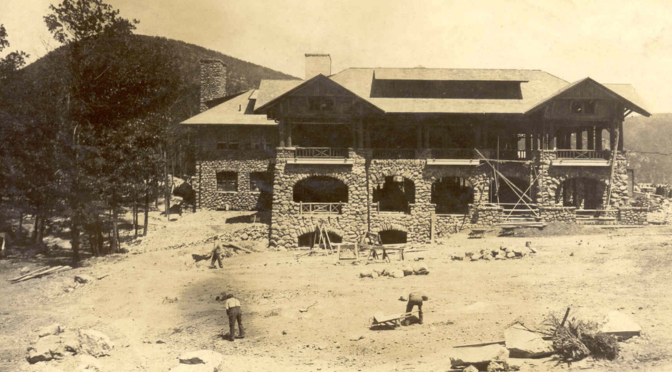
On a trip to a New York State park, you are likely to encounter distinct—and historic—architecture that feels, well, like it belongs in a park. And that’s because many of the historic buildings and structures in our system were originally part of a movement to create a distinct architectural style for park infrastructure. How did that develop? Read on to learn more about park architecture from the 1920s and 1930s…from administration buildings to trail shelters!

Planning and Building for Public Use

The development of the state park system, which began with the adoption of a unified state park plan in 1924, necessitated the construction of buildings and structures that could accommodate increased public usage in the pre-World War II era. These included bathhouses, erected for the use of patrons at parks with swimming facilities; picnic pavilions and smaller trail shelters, which provided shelter to park visitors during inclement weather or for special events; cabins, built to accommodate overnight visitors that did not wish to camp; and other specialized buildings, including park offices, golf clubhouses, and public restrooms.

Rustic Design

The architectural program of the New York State Park system between the late 1920s and early 1940s was decidedly rustic. This meant that projects usually used locally available natural materials, had a natural color palette, exhibited straightforward but skilled craftsmanship, and were designed to be integrated with their natural surroundings.

READ MORE

Happy Trails: Empire State Trail Itineraries for Spring / Summer

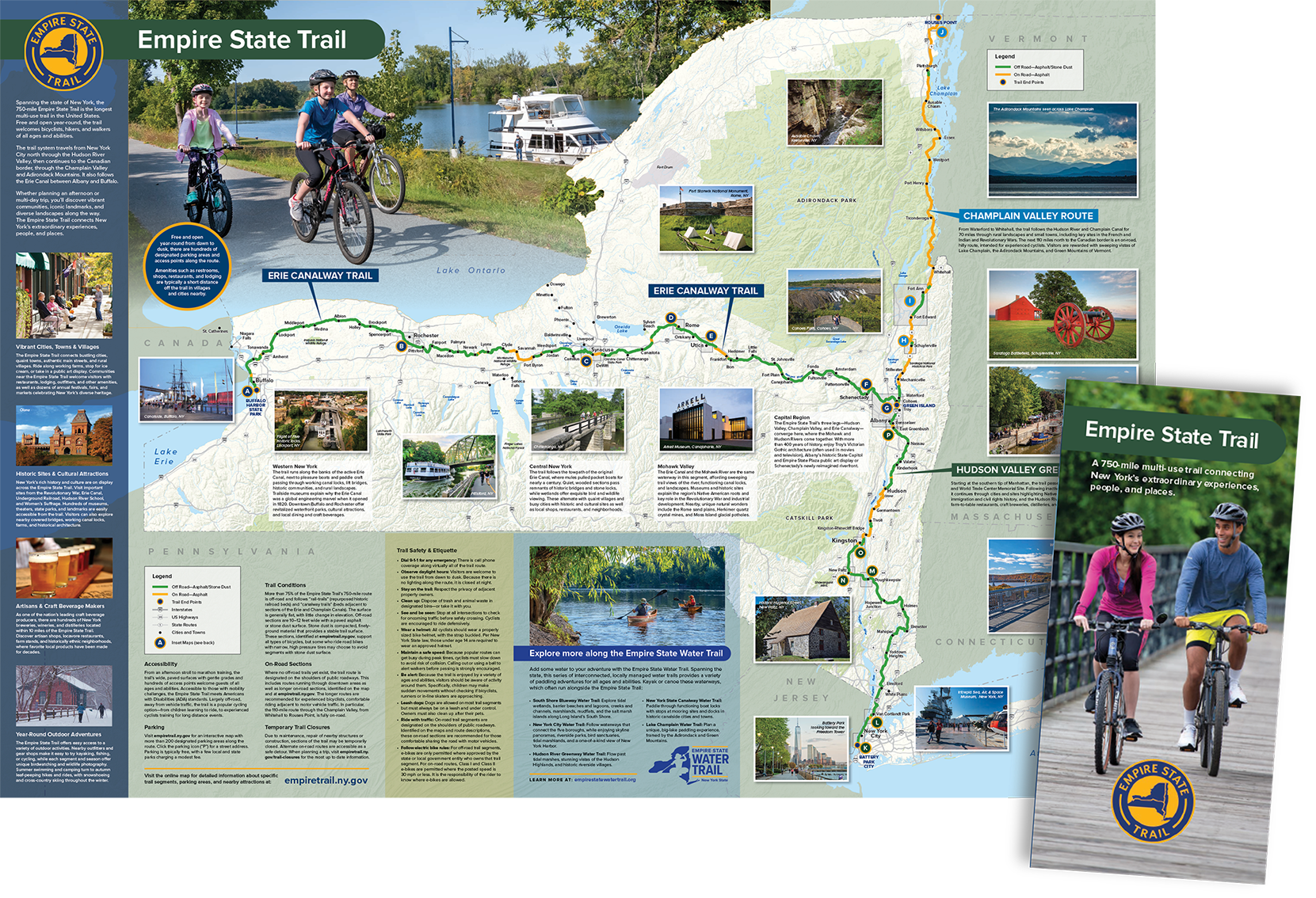
From New York City through the Hudson River and Champlain Valley up to Canada, and from Albany to Buffalo along the Erie Canal, New York State’s 750-mile Empire State Trail is the longest single-state multi-use trail in the United States. Weaving in and out of village main streets, urban centers, and rural communities across the state, the Empire State Trail provides a safe and scenic pathway for residents and tourists to experience New York’s varied iconic landscapes, rich history and diverse recreational offerings one mile at a time.

The Empire State Trail is also open year-round, including winter, welcoming bicyclists, walkers, cross-county skiers and snow-shoers of all ages and abilities. This National Trails Day, we celebrate this jewel of the New York State Parks system, which connects 20 regional trails to create a continuous statewide signed route –75 percent of which is off-road on a mix of gravel and paved paths.

In this first installment of our Empire State Trail itineraries series, we invite you to explore the Capital Region, Central New York, Mid-Hudson Valley, and Western New York.  We’ll see you out there!

Printed Empire State Trail maps are available by request on the EST website.
Continue reading Happy Trails: Empire State Trail Itineraries for Spring / Summer

Black Birders Fly in New York City

Each year, New York State Parks’ New York City region collaborates with partners BlackAFinSTEM, NYC Audubon, Latino Outdoors, Feminist Bird Club, and Outdoor Afro to convene Black Birders Week events. Together, these local organizations have created a network of support for historically marginalized people in communities that call this diverse and populated metropolis home, and our state parks are proud to serve as venues for some of the week’s activities.

Black Birders Week is just one example of how an injustice can inspire a community of people to come together to advocate and inspire change. On May 25, 2020, Christian Cooper – a Black man – was birding in Central Park when he encountered a white woman with her dog in the Ramble and politely asked her to put her dog on a leash so as not to disturb nesting birds. In response, the woman called 911 and asserted that a Black man was threatening her and her dog.

The video of this encounter went viral, making national news and demonstrating the challenges Black people face when engaging in outdoor activities. The incident, and others like it, led to the creation of Black Birders Week, now in its fourth year. The week itself aims to celebrate and uplift budding Black birders, expert Black birders, and all birders in between.

Join us in celebrating Black Birders Week with a full slate of events at three New York City parks named after historic Black and Afro-Caribbean leaders: Marsha P. Johnson State Park, Shirley Chisholm State Park and Roberto Clemente State Park.

Continue reading Black Birders Fly in New York City

The official blog for the New York State Office of Parks, Recreation & Historic Preservation