A New Light on Old Flowers

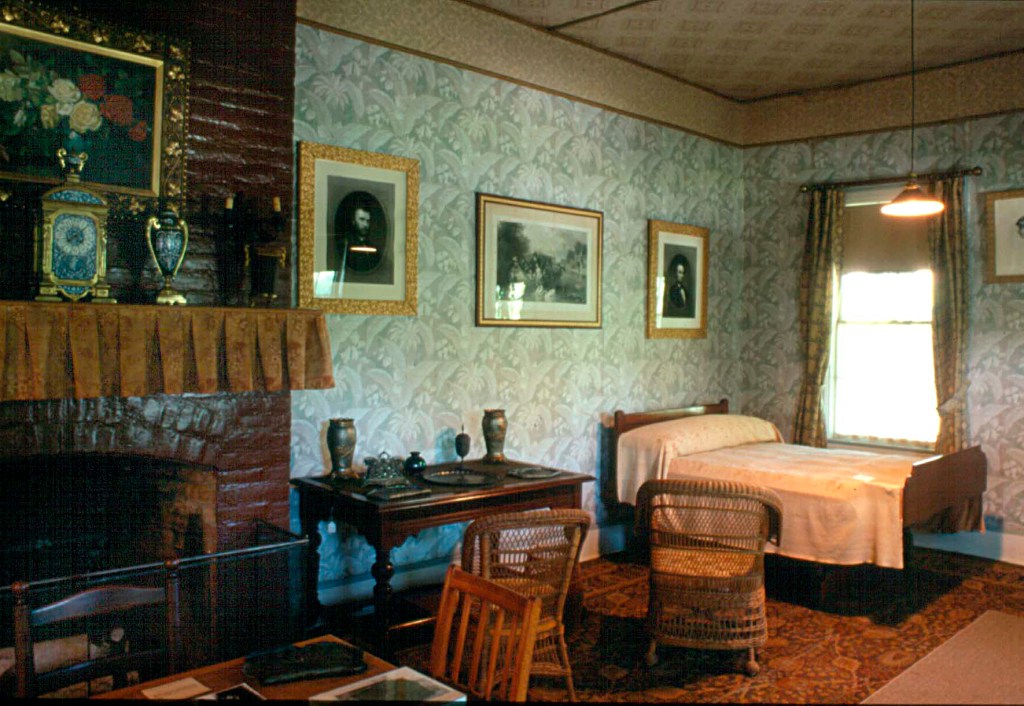
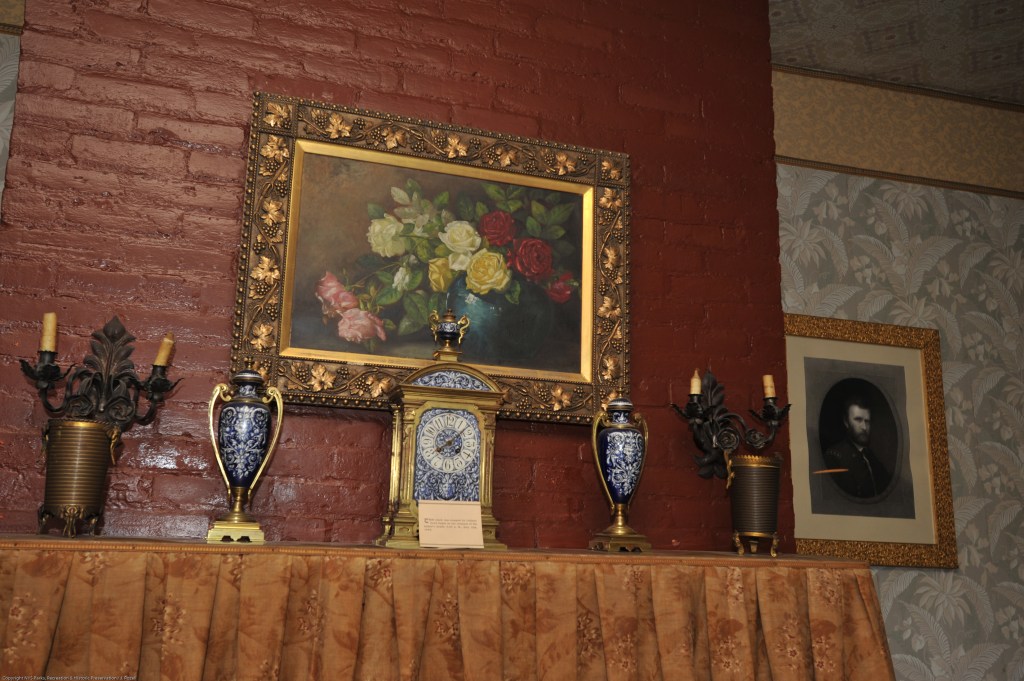
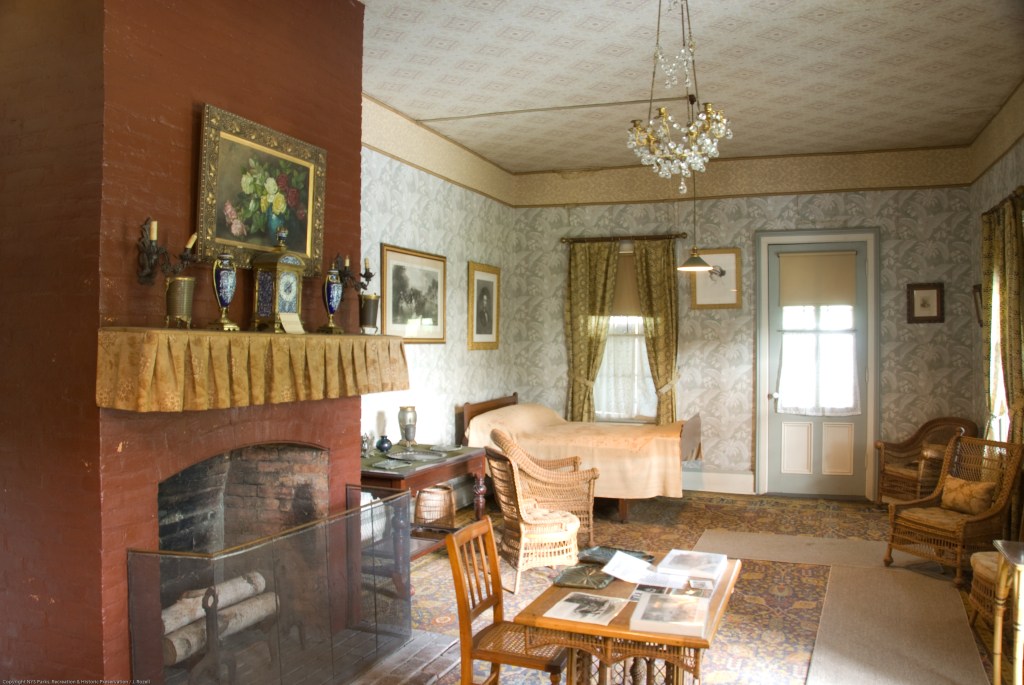
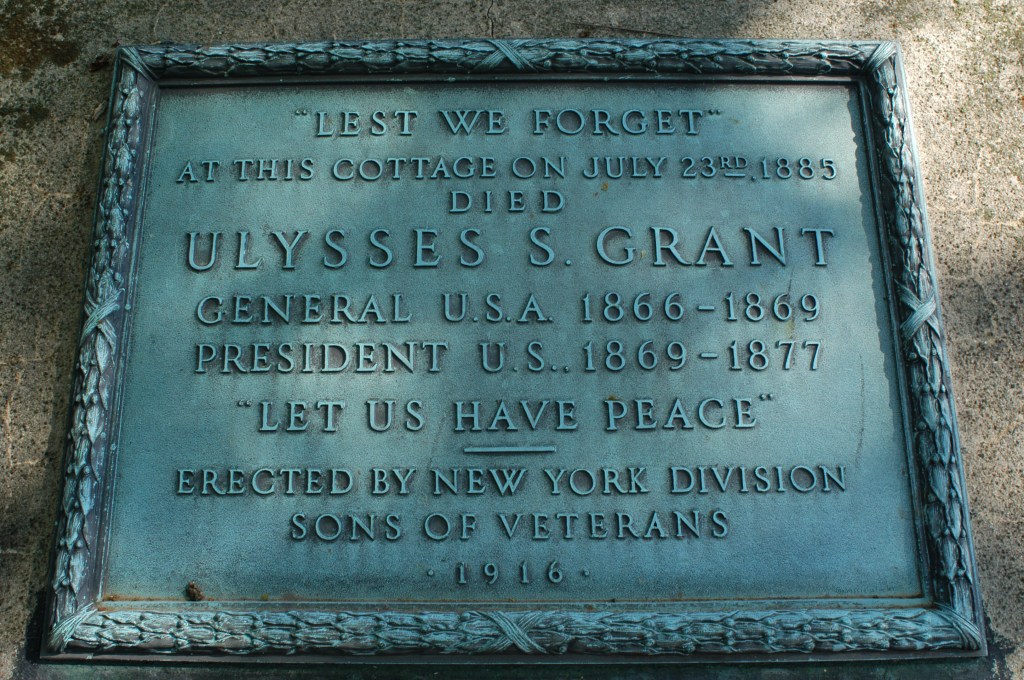
Inside Grant Cottage State Historic Site, where former President Ulysses S. Grant died of cancer on July 23, 1885 after spending his final weeks penning his memoirs, national grief remains frozen in time in the form of flowers.

Now nearly 140 years old, five different Victorian-era funerary floral displays in the parlor draw different reactions from visitors, ranging from “amazing” to “creepy.” But given that relatively few examples from that era survive today, these displays are also a rare look into the past.
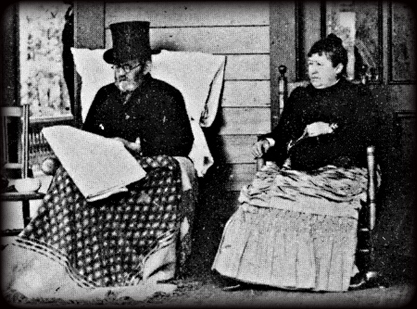
Ulysses S. Grant on the front porch at Grant Cottage, with his wife, Julia, by his side. Grant was racing against his terminal cancer to finish his memoirs as a way to provide for his family.

While flowers have long been part of burial rituals, it was the tragic death toll of the American Civil War that ushered in the golden age of arranged floral tributes, when such displays became common for soldiers’ funerals.

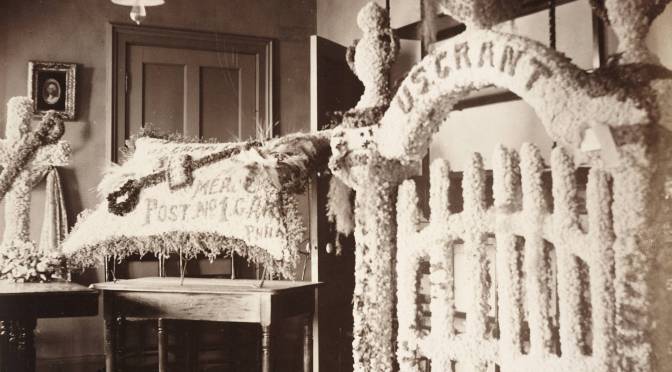
Upon Grant’s death, such expressions of mourning for a leader who meant so much to Union victory began arriving at the cottage, which is located on Mount Macgregor in Saratoga County, about an hour by car north of Albany. One tribute still on display in the parlor was in the form of an oversized pillow, provided by Union veterans in Philadelphia from the Grand Army of the Republic (GAR) that Grant had commanded two decades earlier.

A composite image of the floral pillow arrangement, with its appearance today on the left, and a photograph taken in the late 19th century at the right.

A reporter noted, “Almost every train which arrived at Mt. McGregor has brought beautiful floral mementos from Grand Army Posts and other organizations, and also from personal friends…” making the modest cottage “fragrant with flowers.”

Perhaps the most impressive piece was the enormous six-foot-high “Gates Ajar” tribute which rested in front of the fireplace. Likely custom-built, it was sent by family friend Leland Stanford of California – a native of Watervliet, Albany County who went on to become California Governor and later a U.S. Senator from that state. Its design depicted the gates of heaven, a popular theme of tributes in that era.   
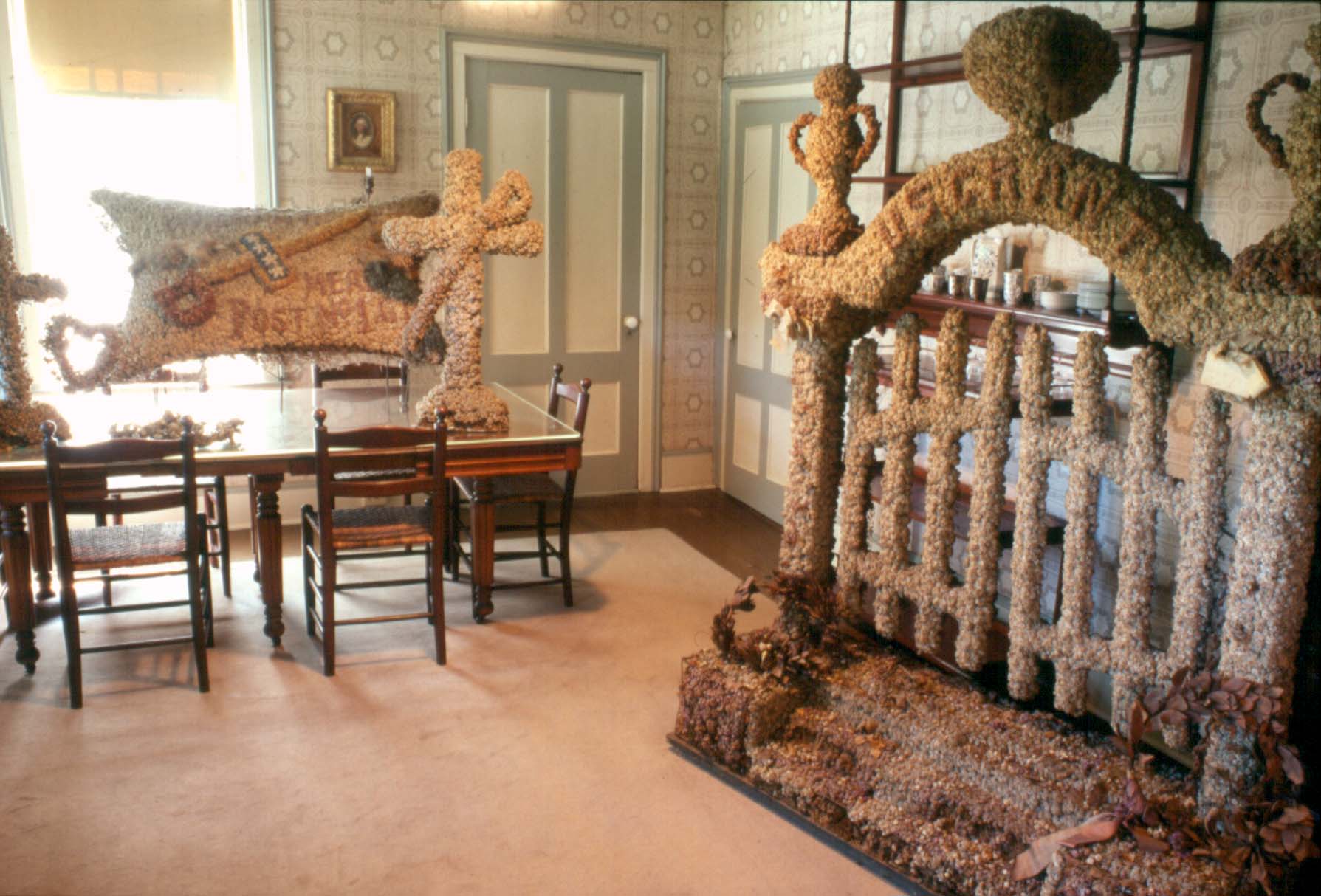
The “Gates Ajar” floral arrangement, to the right, with the pillow and cross arrangements on the table to the left. Lighting in the room is normally kept dim to protect the display from potential degradation.

For decades, these displays have remained untouched and undisturbed in the cottage parlor, losing their fragrance and much of their color faded, but otherwise intact, other than being understandably dusty. Last year, these artifacts came to the attention of historical florist expert Robert Treadway (co-author of A Centennial History of the American Florist), who visited in August 2021  to inspect  under the supervision of conservators from the New York State Bureau of Historic Sites and site staff.

Treadway immediately cleared up two common misconceptions about the displays _  that they were prepared using fresh flowers which dried over time and  had been coated in wax as a preservative, neither of which were the case.

Treadway also found that the most prevalent flowers used were immortelles (Helichrysum), a species in the sunflower family also known as everlastings for their long-lasting nature, which had been dried before use.  In the Victorian era, immortelle flowers symbolized remembrance and hope in everlasting life, especially to the families of the deceased.

Historical florist expert Robert Treadway, right, joined by State Parks Conservator Heidi Miksch, examines the floral funerary arrangements at Grant Cottage State Historic Site.

Everlastings were frequently shipped to the United States from Europe and dyed various colors for use by florists. Bunches would be wired to a small stick and inserted into moss which filled a wire framework to create the tributes. It was a painstaking process that involved numerous assistants. Since the displays for Grant were designed only for short-term use, wax coatings on the flowers were deemed unnecessary and not used, according to Treadway’s inspection.     

Given that the delicate nature of these artifacts, Treadway and State Parks staff discussed how to best protect and preserve such historic objects for the years to come. Various options were discussed, including coatings, enclosures, and environmental controls, each method with its benefits and drawbacks.

Representing a nation’s mourning over the loss of a war hero and leader, the arrangements reflect a uniquely Victorian outlook on death and the hereafter, each with its own specific meaning.

The “Gates Ajar” symbolized the gates of Heaven, reassuring the grieving that their lost loved one was destined for a better place that, with the gate left ajar so they could follow and be reunited. The pillow set piece represented peace, relief, and eternal rest from the trials of the physical world.

Two floral pieces feature a cross, commonly used as symbols of  Christian tenets of grace, forgiveness, and salvation. Two pieces incorporate an anchor, another favorite Christian symbol representing hope amid trial with God being the “anchor of the soul.” One piece features a heart along with the anchor and cross. The heart symbolized the everlasting love of Christ but also the love of those in mourning for the deceased.

The floral cross with sword.

Two pieces – the pillow and one of the crosses – also feature a sword, which reflected General Grant’s military career, as well as the virtues of justice, fortitude, and courage.  

Victorian set pieces showcased the artistry and creativity of florists during that period. One of the best-known florists, Adolph Le Moult, operating out of New York City, created one of the largest floral pieces ever made for an event in Grant’s honor during a visit to Philadelphia in 1879. Le Moult also created elaborate floral tributes for Grant’s funeral in New York City in 1885.

The goal of florists in the 19th century was not just making impressive arrangements but also ensuring they would last. Florists boasted in advertisements with statements such as, “I can so perfectly preserve even the most delicate flowers that they will last forever.”

Floral funerary displays line Grant’s Tomb in Upper Manhattan to mark the year after his death.

Preserved funeral mementos from the Victorian era can be found in public and private collections throughout the world. For example, wax-coated and encased floral pieces from the 1881 funeral of James Garfield are displayed at his home in Mentor, Ohio.

What truly makes the tributes at Grant Cottage unique is their sheer scale and survival to the present despite never have been coated in wax, encased or otherwise protected from the onset or in the decades since. Treadway indicated that the two largest pieces are larger than any others known to exist.

Flowers continued to be used in tribute to Grant by his widow, Julia. While staying at the family’s Long Branch, New Jersey cottage, she continued remembering her greatest love through this mourning ritual:

“On an antique cabinet… is a bust in plaster of the brave old soldier… Behind it hangs a wreath of white immortelles -a widow’s first tribute to memory- with a circlet of white ribbon still clinging to it, typical of wedded love. A slender glass filled with geraniums… Every morning this tiny bouquet is gathered… by the lonely wife who kisses the blossoms and tenderly places them before the face of her hero. The faded flowers are dried and, mixed with their own fragrance, go to make those memory-bags so highly prized by the friends on whom they are bestowed.”

For now, these  treasures at Grant Cottage will continue to transport visitors to a moment when family, friends, and a nation were in mourning for an American icon. They are tributes not only to a man,  but to the character and ideals he lived by. These aging blossoms speak to humanity’s enduring need to grieve and desire to memorialize those they love and respect.

Ulysses S. Grant, and his wife, Julia.

Post by Ben Kemp, Friends of Ulysses S. Grant Cottage Operations Manager

These , our Earth’s perennial flowers—
The fadeless blooms by Poets sung,
Songs, that from Homer’s Age till ours,
Down the aisles of Time have rung—
In many an emblem do we weave
For passionate Remembrance’ sake;
And howe’er we joy, howe’er we grieve,
Sacred pilgrimages make;
For Loss and Grief, the Asphodels
On our graves we mourning lay;
For Memory, the Immortelles—
Our loved ones live for us always.
Death in Life, Life in Death—how we
This, Love’s Faith, keep reverently.

By Laura G. Collins’s from Immortelles and Asphodels (Everlastings) (1898)

More About Grant Cottage


Located immediately below the summit of Mount McGregor in Saratoga County, the cottage and 43-acre site was recently named a National Historic Landmark by the National Park Service.

The cottage is kept as it was during the Grant family’s stay. Open to the public seasonally by the Friends of the Ulysses S. Grant Cottage, visitors can tour its first-floor original furnishings, decorations, and personal items belonging to Grant.

Tours are scheduled to resume for the season on April 30, 2022. Other artifacts on display include the bed where he died on July 23, 1885 and the mantel clock stopped by Grant’s son Fred at the moment of his father’s death.

Grant Cottage first opened as a historic site in 1890 when it was supported by funds raised by veterans of the Grand Army of the Republic.

The grounds surrounding the Cottage served as a tuberculosis sanitarium beginning in 1914, which in 1945 was converted into a veteran rest camp, until 1960 when it was repurposed and annexed as the Rome State School for disabled children until 1976. The Friends of Ulysses S. Grant Cottage was formed in the fall of 1989 to provide programming and tours, and partner with New York State Parks on site stewardship.

Take this slideshow tour through the house…

Family History Guides Lighthouse at Golden Hill State Park

When Ann Rutland Schulze goes to the historic 30 Mile Point Lighthouse at Golden Hill State Park on Lake Ontario, she feels at home.

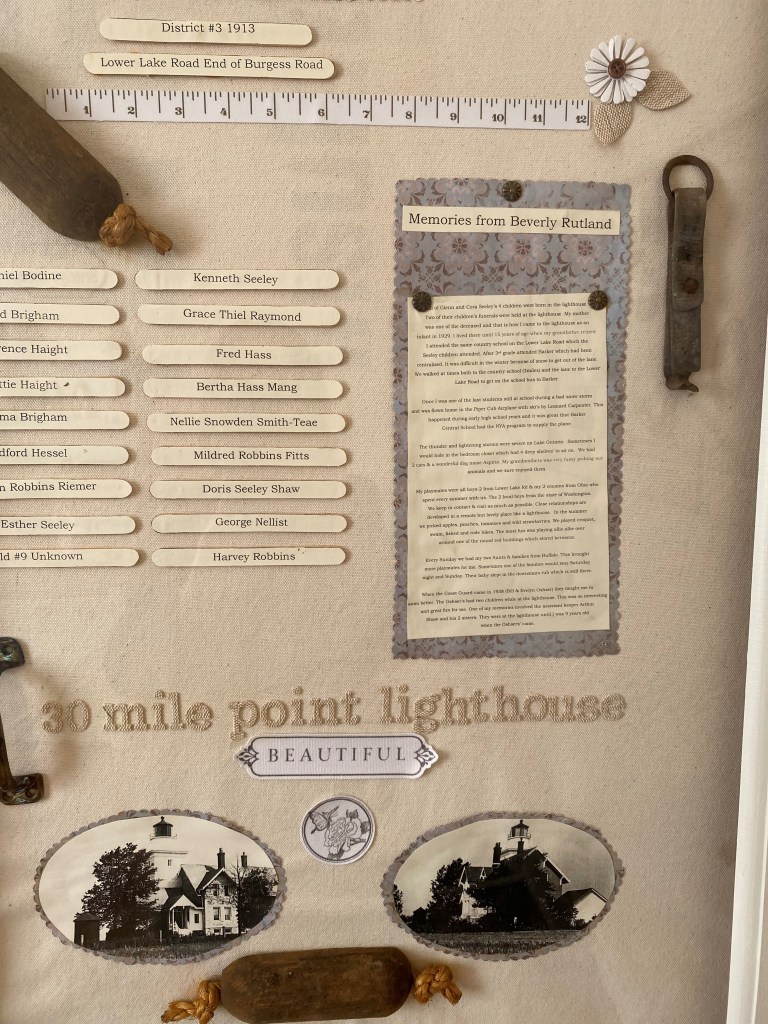
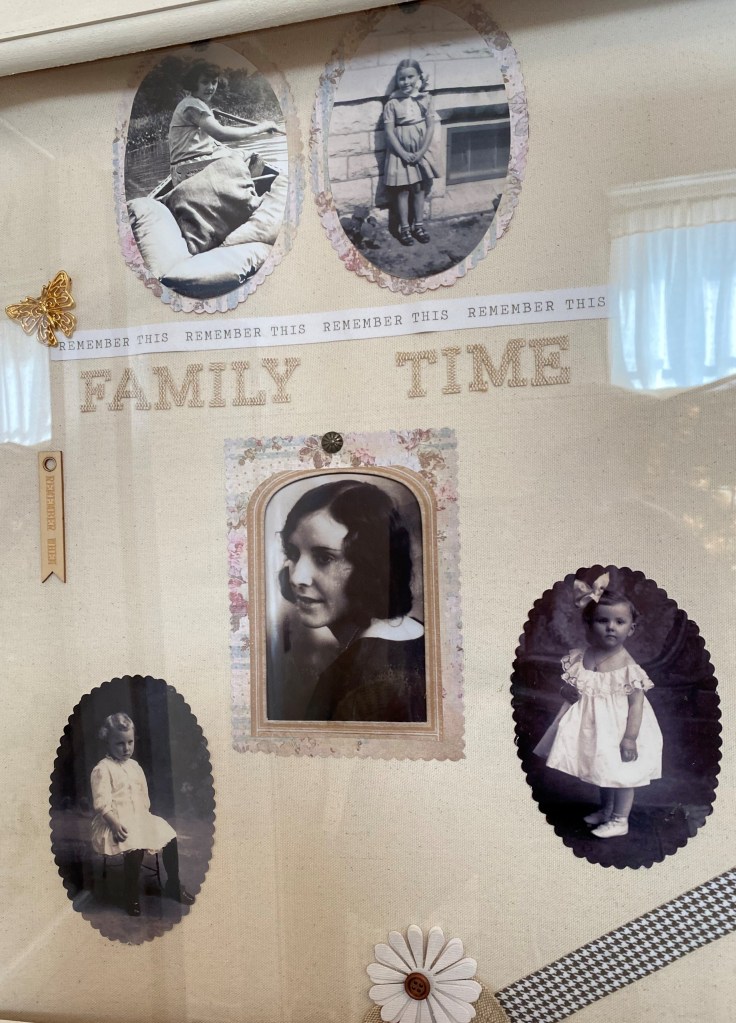
Inside one of the rooms are black-and-white pictures of a former lighthouse keeper and his family who once lived there. Some show their granddaughter, a little girl named Beverly who grew up to become Ann’s mother.

Not too far away, along the banks of a creek, a teenage boy who was fishing got teased by a friend about that girl who lived in the lighthouse with her grandparents. The boy’s name was Richard Rutland, and he later married Beverly. They had Ann and two other children, Julie and Richard.

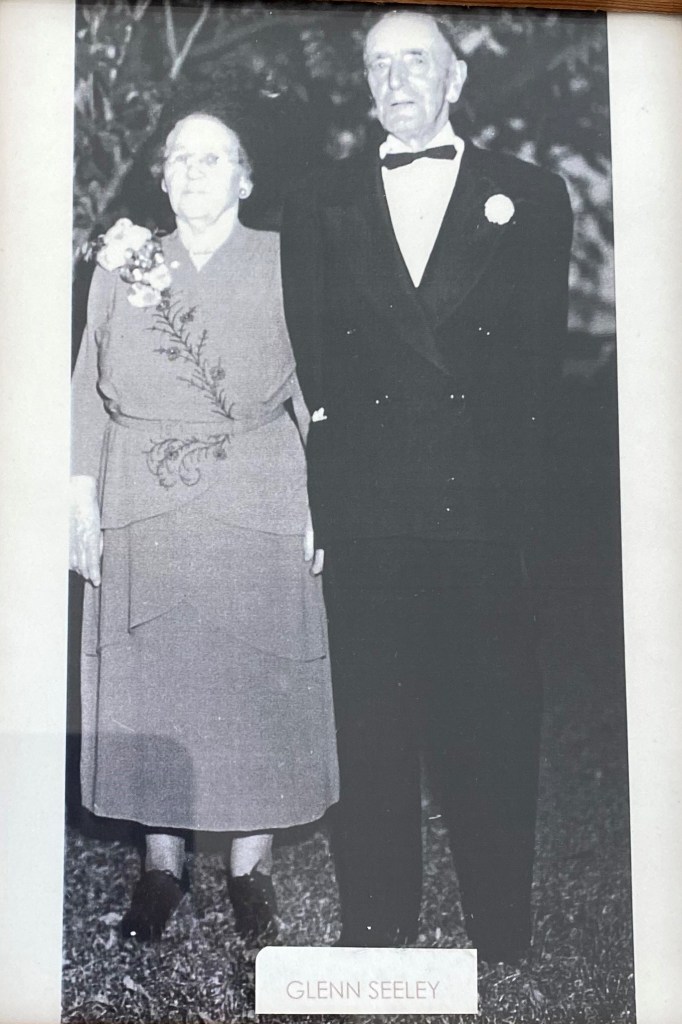
The picture to the left shows young Beverly with her grandparents, Glenn and Cora Seeley. Shown right is Beverly with her husband, Richard.

Now, Schulze , her husband Martin, and their sons Tyler and Shaun, run a family-owned vineyard and winery about a half-hour away from the lighthouse in the Niagara County town of Burt, where visitors can hear stories of a time when a family of six lived in isolation and simplicity in the lighthouse on a bluff overlooking the lake.

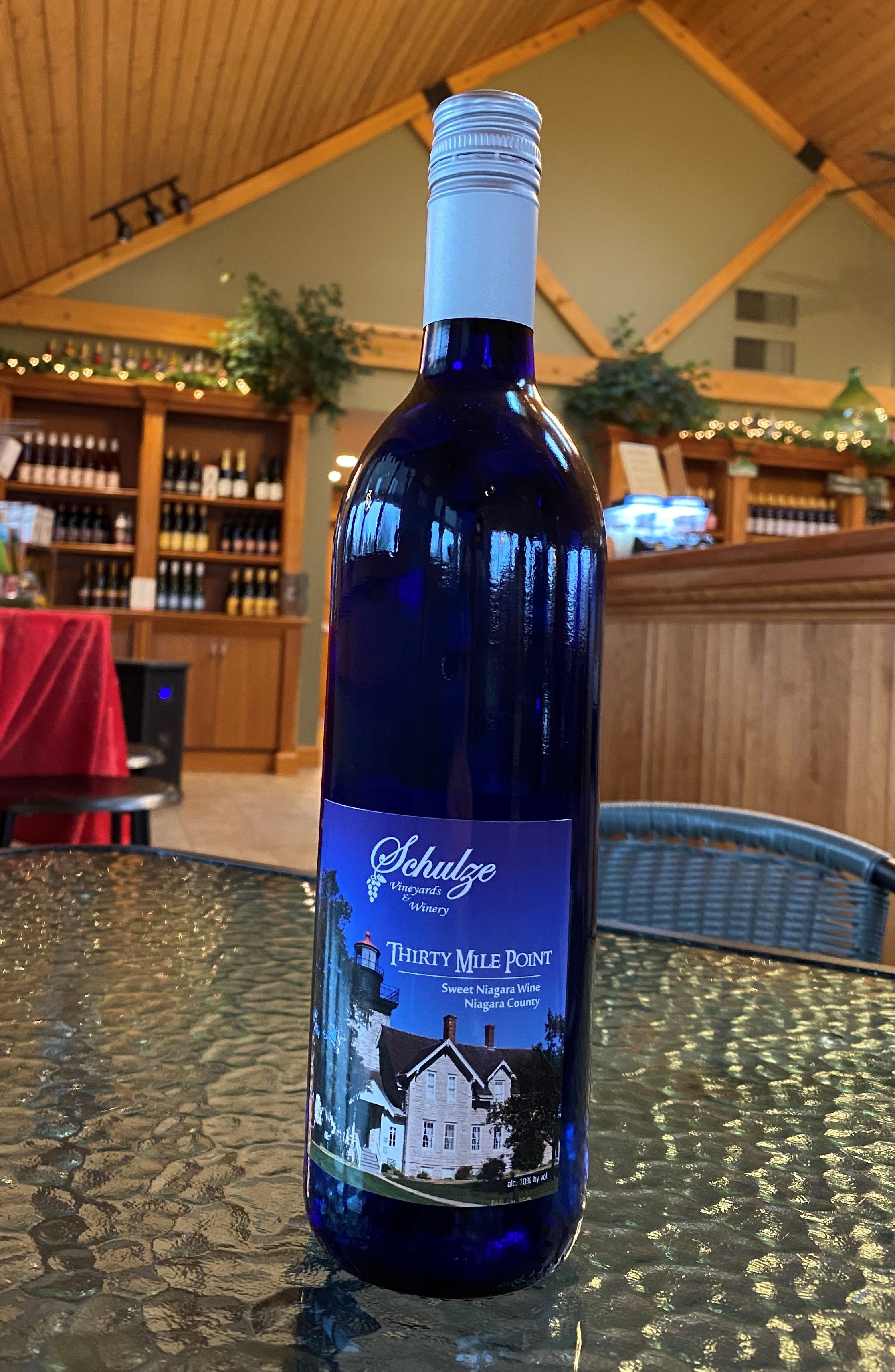
One of their wines even features a picture of the lighthouse.

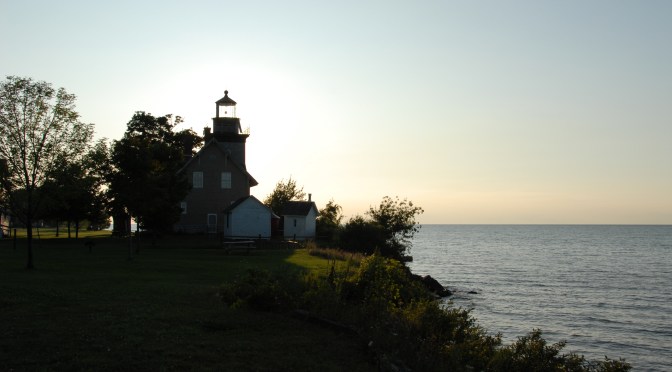
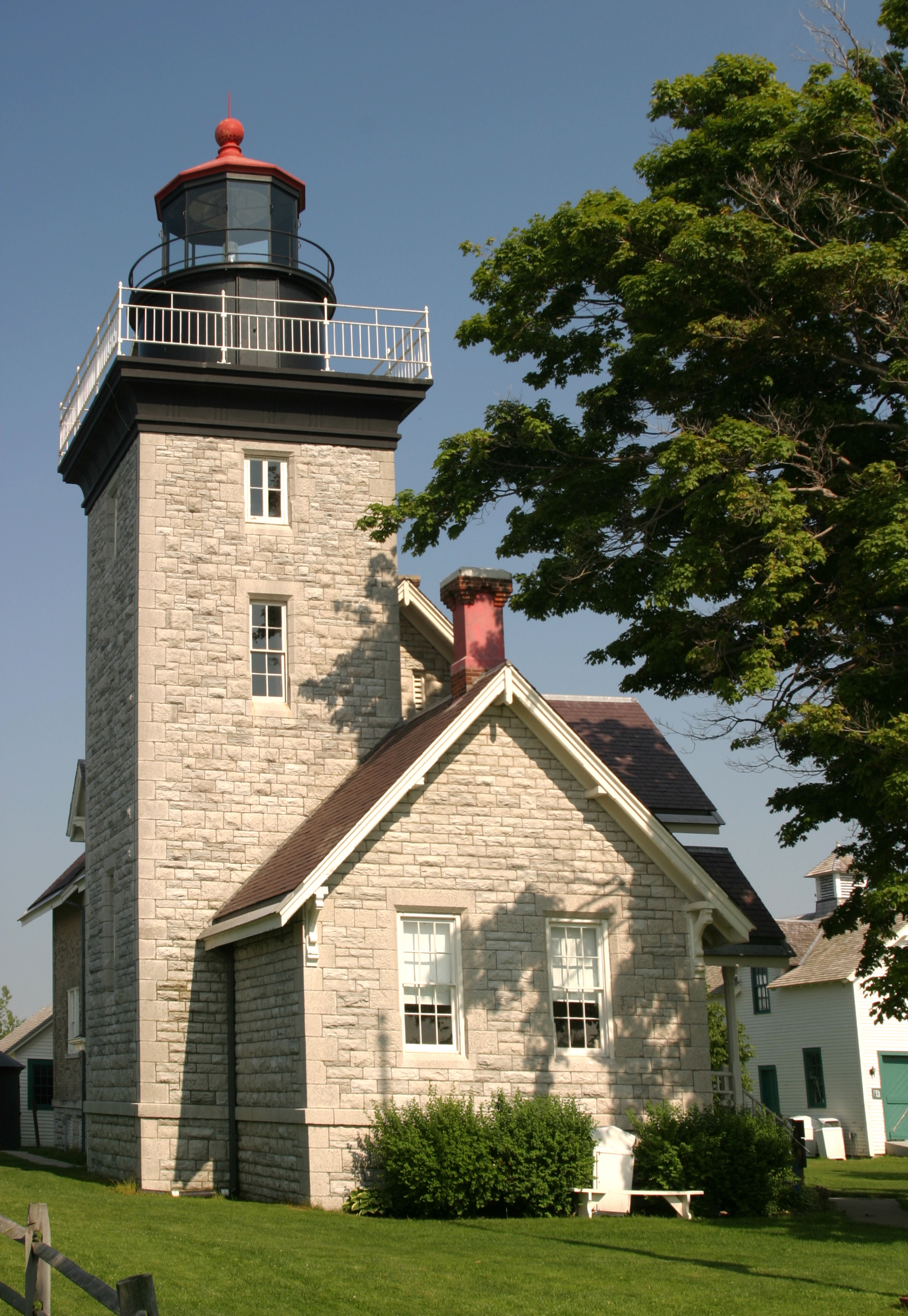
Use the slider bar to see on the left, the Schulzes’ wine featuring the 30 Mile Point Lighthouse, and on the right, the lighthouse itself on a bluff at Golden Hill State Park.

“My mother certainly enjoyed growing up here, and she was so pleased that this place wasn’t just let go after it was closed,” said Schulze. “This lighthouse has been so beautifully preserved as an emblem of the history of this region. It is the official town seal of Somerset. The downstairs of the lighthouse is the way it was when they lived here. It has what the park has named the “Beverly Room,” which has a wicker crib, a rocking chair, and pictures of Beverly and my great-grandparents.”

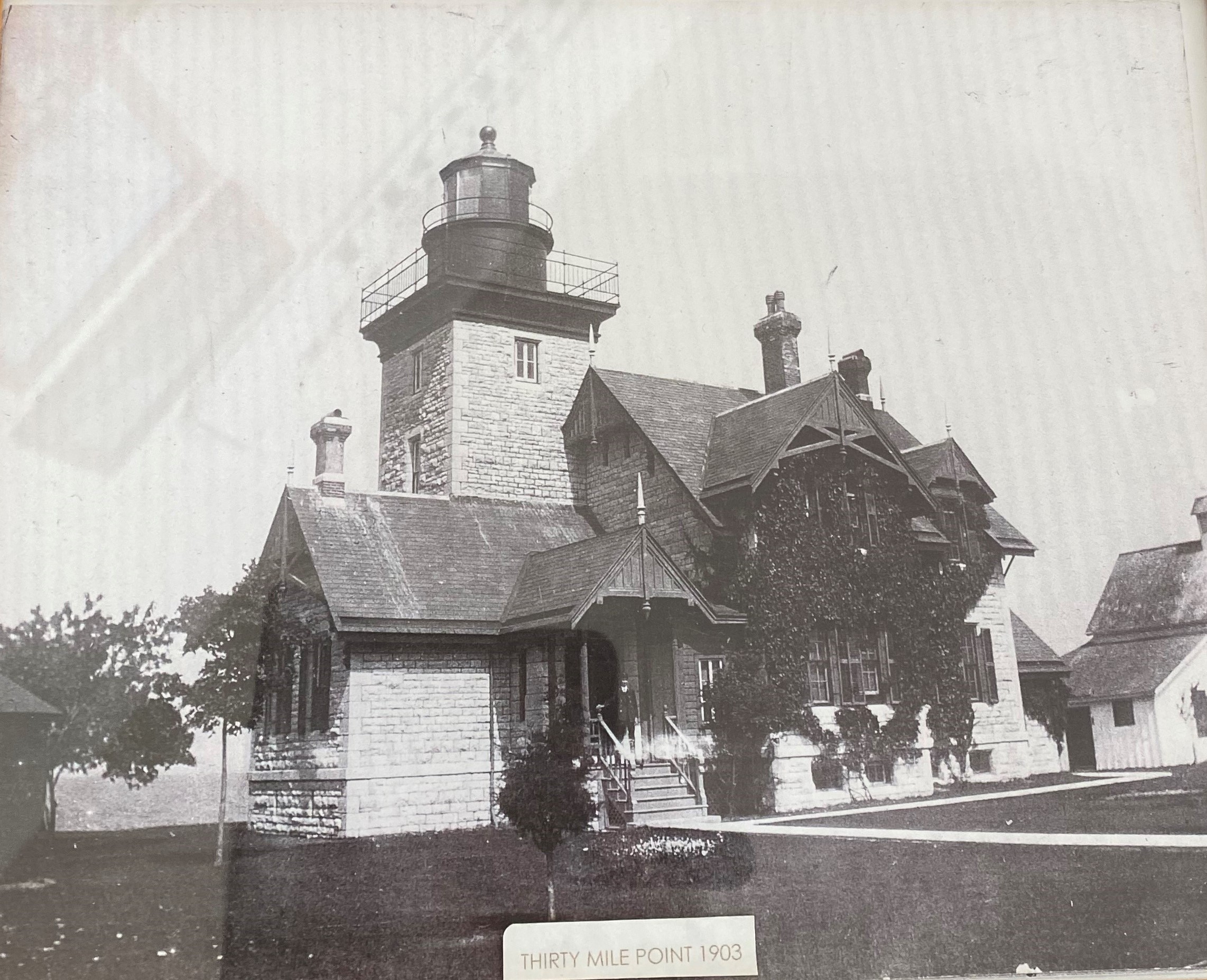
The 30 Mile Point Lighthouse, so named because it is 30 miles east of the Niagara River, was built in 1875 to help warn passing ships of dangerous shoals in the lake. It was decommissioned by the federal government in 1958 and its light removed, and in 1984 the U.S. Coast Guard transferred the lighthouse to Golden Hills State Park. The limestone structure is now on the Federal and State Registers of Historic Places.

During the decades that passed in between, the lighthouse was a residence for 13 different keepers and their assorted families whose job it was to keep the light lit. The longest tenured of those, Glenn R. Seeley served from 1903 to 1945 with support from his wife, Cora. The couple had four children and also raised Beverly, their granddaughter, after their daughter passed away in childbirth.

Glenn Seeley on the front porch of the lighthouse.

“My mother said it was wonderful place to grow up. She remembered her grandfather whitewashing the lighthouse once a year so it could be better spotted by passing ships and making her a concrete pond so she could have goldfish. Her grandfather would walk her to the nearby one-room schoolhouse. And she remembered that the lighthouse got the first telephone in the area,” said Schulze.

Beverly lived there until age 15, when her grandfather retired and moved the family to the nearby village of Olcott. She later went to college, became a public health nurse, and had a family of her own.

All through her life, Beverly remained connected to the lighthouse, coming there with her family for picnics or other events. “My three boys were in the Boy Scouts, and the troop came to the lighthouse when the U.S. Post Office issued a stamp for it in 1995. She was at the ceremony for that,” Schulze said.

The U.S. Postal Service issued a stamp featuring 30 Mile Point Lighthouse in 1995.

A year later, the not-for-profit Friends of the Thirty Mile Point Lighthouse group was formed, to support the preservation of the lighthouse. And in 1998, the light, which had been removed four decades earlier, was restored.

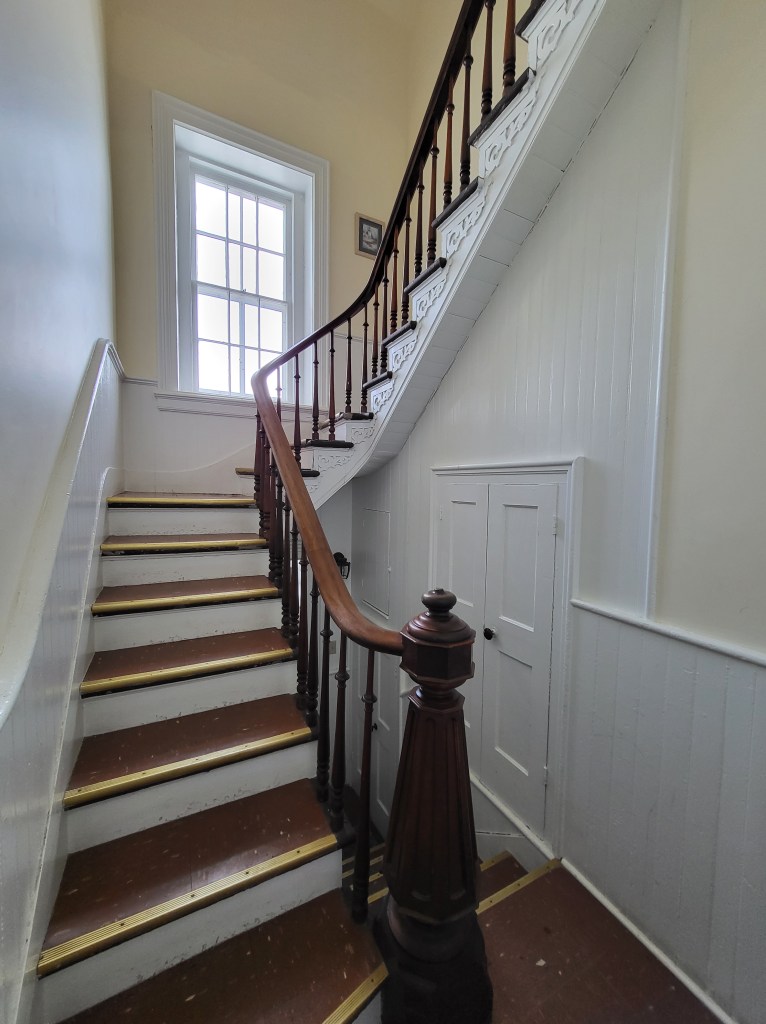
In her handwritten note cards, Beverly recalled the family doing its laundry in a washtub that was originally a copper boiler, and initially having no inside bathroom, only a privy that was cold in the winter. They later got the first inside toilet and telephone in town. She wrote how the children of the assistant keeper, who lived there in a separate residence with his family, taught her how to “swim and fish and play cards.” And that she was so afraid of the massive lightning storms that would cross the lake that she would hide in a closet under the stairs until the crashing passed.

Eventually, Beverly’s health began to fail, and such nostalgic trips to the lighthouse became impossible. Beverly passed away in 2010 at age 80.

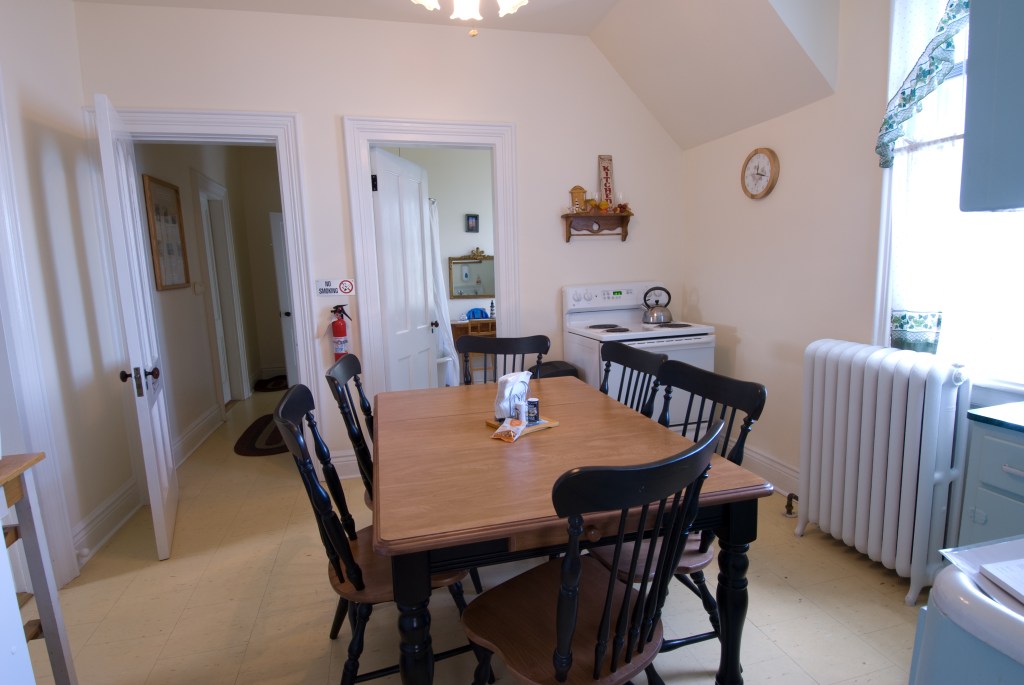
Visitors who want to get a taste of lighthouse life can rent the second floor “cottage” of the facility for overnight stays. The former assistant keeper’s quarters, the cottage has a living room with an electric fireplace, bath with an old-fashioned tub, three bedrooms, and an awesome view of Lake Ontario.

Guests will notice the craftsmanship of the building, especially the original wooden double doors, with ornate knobs and lock set. All rentals are made through the website https://newyorkstateparks.reserveamerica.com/ or by calling 1-800-456-2267.

Click through the slideshow below to get a look inside…

Renters are provided with a private picnic area with a barbecue grill and picnic table. This vacation rental offers a private entrance, kitchen with refrigerator, electric stove, microwave, coffee maker, cooking utensils, silverware and dishes, living room with electric fireplace, couch, two chairs and a writing desk, full bath with an old-fashioned bathtub, three bedrooms with queen size beds and pillows and a view of Lake Ontario that is stunning.

Visitors looking at the lighthouse’s “memory book” will see some entries written by Beverly herself. The lighthouse cottage is more than just a place to stay. It is place of beauty, reflecting lives filled with long nights, hard work, rough waters, violent storms, joy, heartbreak, and family bonds that don’t break.


Post by Brian Nearing, Deputy Public Information Officer, NYS Parks

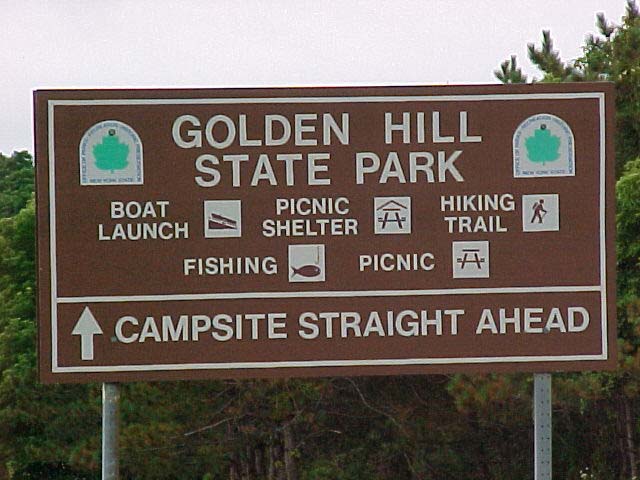
About Golden Hill State Park


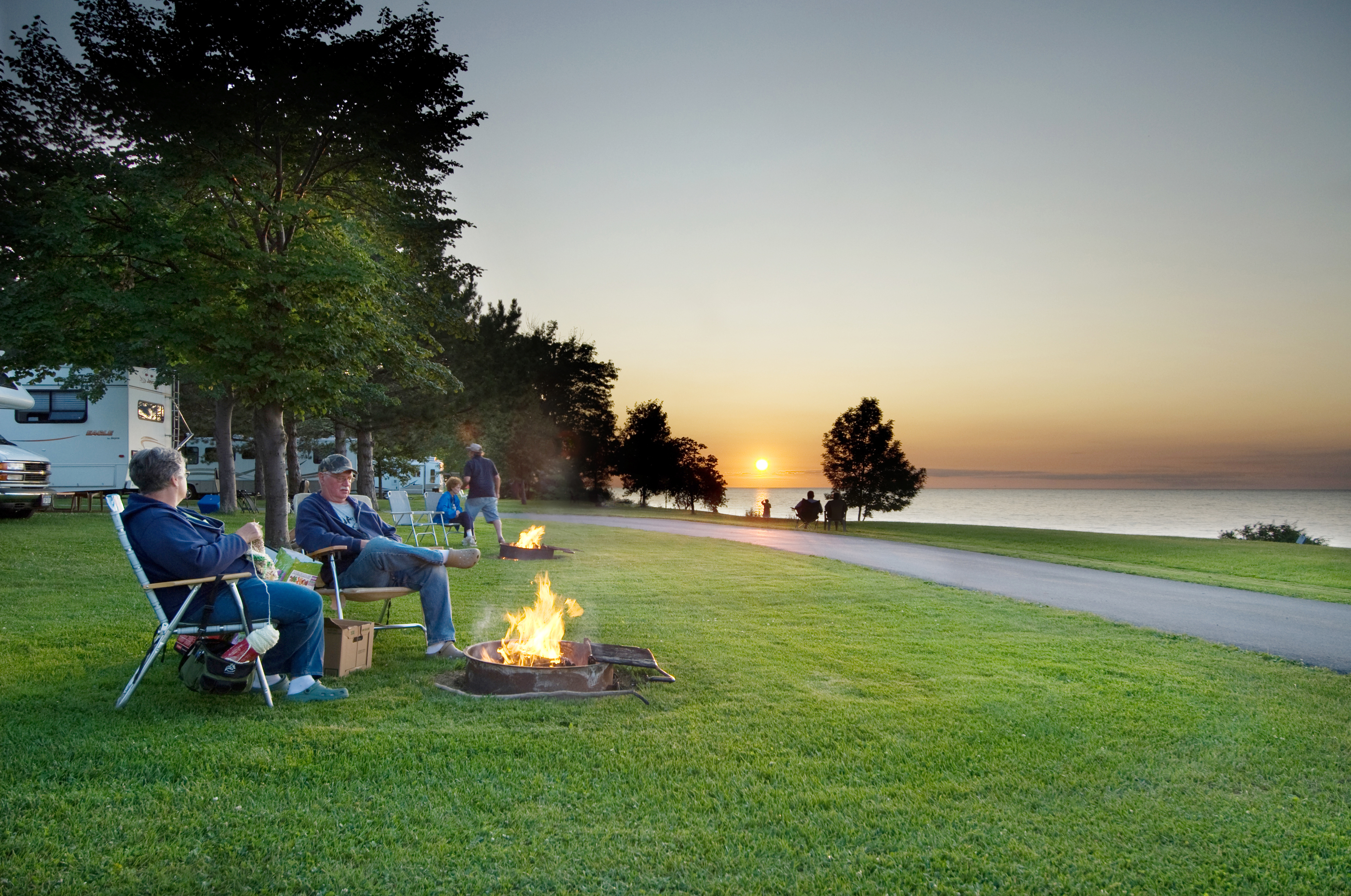
Located in Niagara County, this park along the Lake Ontario shoreline covers 510 acres. Created in 1962, the park has 59 campsites, six yurts, two pavilions, a new playground, a volleyball court, softball field, two picnic areas, hiking trails, a disc golf course, and a boat launch.

Niagara Falls State Park, Fort Niagara State Park,  and Old Fort Niagara State Historic Site are less than an hour away by vehicle.

Climb a Ladder to the Outdoors

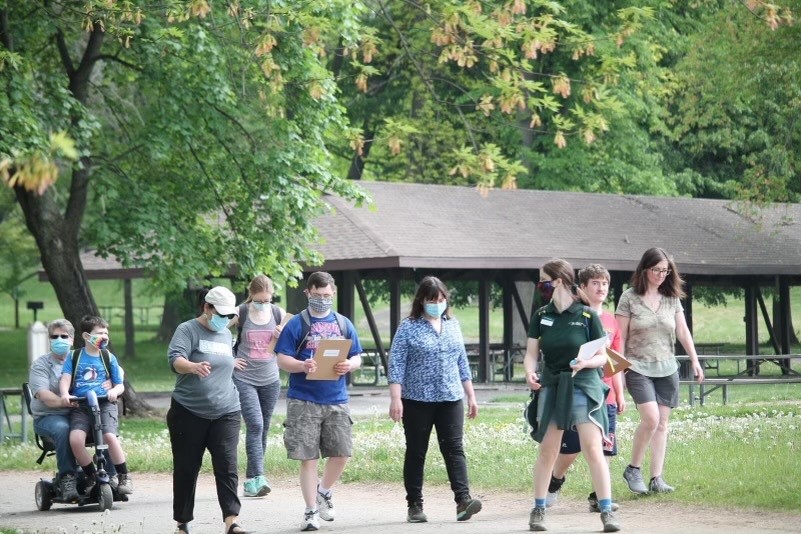
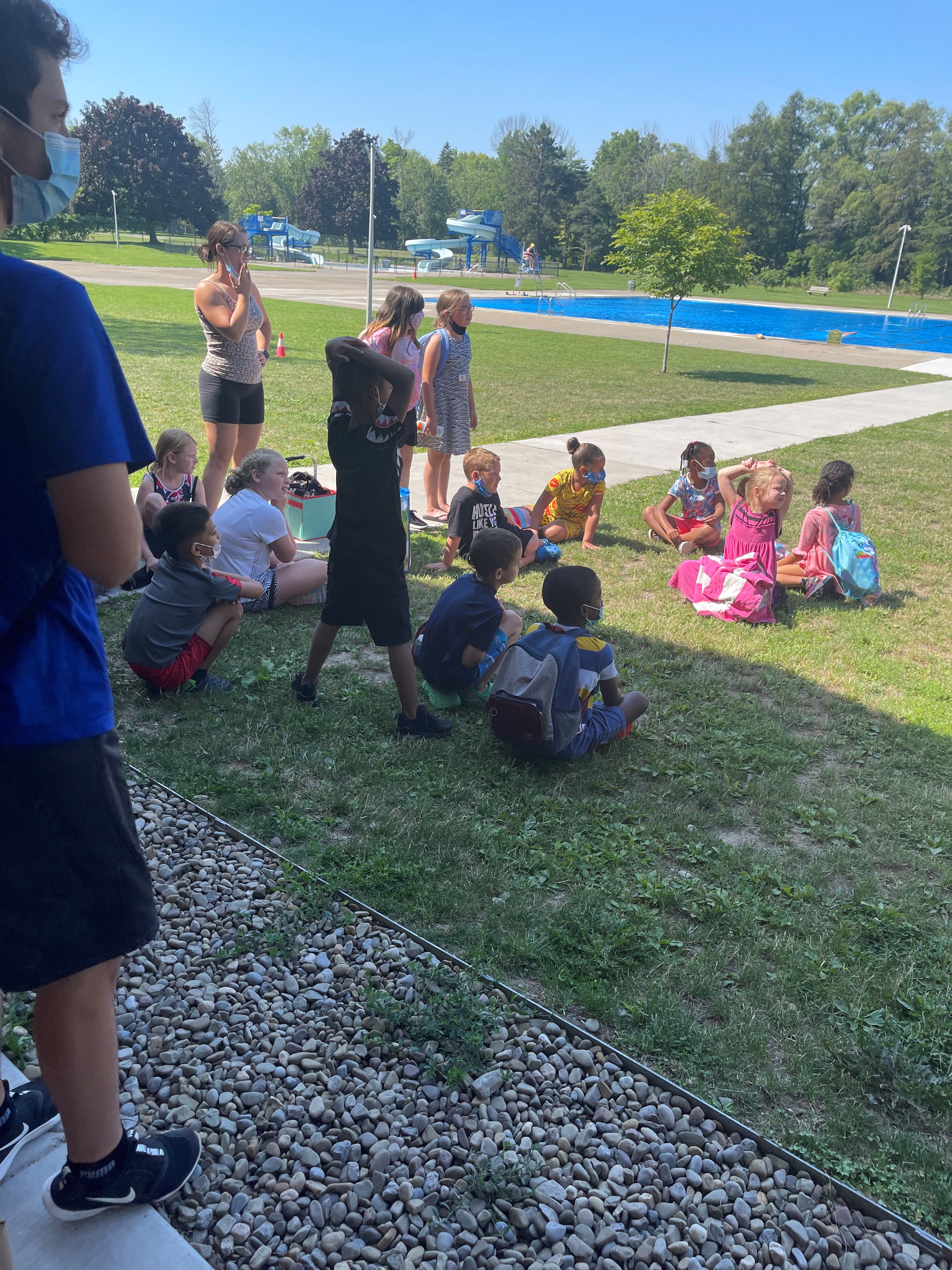
A ladder is used to get to a place otherwise beyond reach. That kind of help is the idea behind the State Parks’ Ladders to the Outdoors program, which provides free recreational programs for youth in underserved communities in Niagara and Erie counties.

The goal of State Parks’ Ladders to the Outdoors program is to remove financial barriers to getting children to play outdoors, try new sports, take a hike or camp in State Parks that they might not have a chance to visit. Since this program started in the summer of 2021, more than 2,000 kids from a variety of school districts, community, church, and youth groups have attended more than 50 different sporting and recreational events, completely free of charge.

Examples of programs that have been provided include guided hikes in the Niagara Gorge, sledding at Buffalo Harbor State Park, snowshoeing at Knox Farm State Park and a hike at Niagara Falls State Park. The offerings are endless and be tailored to any group or season.

When a group attends a Ladders program, activities will be tailored to the park they wish to go to and they will have access to a complete inventory of gear, from soccer balls, baseballs, bats and gloves, and footballs, to snowshoes and sleds. Want to learn disc golf? To bike? Fish? Swim? Kayak? Hike? We have all that equipment and people to help show the way, and it is always free!

It doesn’t stop at providing just the gear.  To date, $300,000 has been invested to improve playgrounds and sporting fields, such as the baseball diamond and playground accessibility at DeVeaux Woods State Park in Niagara Falls, and Beaver Island State Park in Grand Island.

A safe and sturdy ladder costs money and Parks is making this program work with the support of a $860,000 grant made to the Natural Heritage Trust by the Ralph C. Wilson Jr. Foundation. Wilson was the former owner of the Buffalo Bills football team and a founding owner of the American Football League, who prior to his death in 2014, created one of the nation’s largest charitable foundations to benefit the people of the Western New York, Buffalo and Detroit areas.

Ladders to the Outdoors is looking to grow this summer, with programs available at the following State Parks: Buffalo Harbor, Beaver Island, DeVeaux Woods, Reservoir, Whirlpool, Fort Niagara, and Wilson-Tuscarora.

If your youth group would like to join in or has an idea for a program, please apply or contact us. An online form can be found here. More information is available through KeJuan.Harmon@parks.ny.gov

Start climbing your ladder and see what’s happening at State Parks in western New York!


Post by KeJuan Harmon, Coordinator, Ladders to the Outdoors Program

More About the WNY State Parks in Ladders to the Outdoors


  • Buffalo Harbor State Park is the first state park in the city of Buffalo. Boasting beautiful views of Lake Erie, the park is home to a 1,100-slip marina, a restaurant, boat launches, personal watercraft launches, fish cleaning station, restrooms, and a beach for strolling and sunbathing, and a nautical themed playground great for kids of all ages.
  • Beaver Island State Park is located at the south end of Grand Island in the upper Niagara River. The 950-acre park has a half-mile sandy beach for swimming, adjacent 80 slip marina with both seasonal and transient boat slips, fishing access, car-top boat launch, multiple canoe/kayak launches, bike and nature trails, nature center, playgrounds, picnic areas, athletic fields, horseshoe pits, an 18-hole championship disc golf course, an 18-hole championship golf course.
  • DeVeaux Woods State Park has a baseball diamond, a signature playground, picnic facilities, nature trails through a meadow and Old Growth Woods, and a path that leads across the Niagara Scenic Parkway to Whirlpool State Park with access to the Niagara Gorge trail system. 
  • Whirlpool State Park has many scenic overlooks with spectacular views of the Whirlpool and rapids. Trailheads lead into the Gorge where challenging trails lead to one of the most spectacular landscapes in the country. There are also picnic facilities and a playground in this park.
  • Reservoir State Park has two tennis courts, seven softball diamonds, four basketball courts, a roller hockey court, and picnic facilities.
  • Fort Niagara State Park has two boat launches providing access to the Lower Niagara River and Lake Ontario, woodland hiking trails, a swimming pool, a view of Lake Ontario, picnic grounds, playgrounds and 18 soccer fields.
  • Wilson-Tuscarora State Park is a well-preserved natural area for many varieties of plants and wildlife, encompassing 476.5 acres of mature woods, open meadows, and marshland. Tuscarora Bay, divided from Lake Ontario by a strip of land called “The Island,” has a boat launch and emergency storm shelter docks. The park’s four-mile nature trail is also used for hiking, snowshoeing and cross-country skiing. Fishing for many varieties of pan fish and game fish, from boats or from shore, is extremely popular.

More About the Natural Heritage Trust

Getting to Know the Natural Heritage Trust

Did you know that New York State’s public lands and waters have had a charitable partner for more than 50 years? The Natural Heritage Trust (NHT) was established in 1968 as a non-profit, public benefit corporation with the mission to support parks, outdoor recreation, historic preservation and land and water conservation throughout state lands. During…

What Makes Jones Beach a Classroom

Jones Beach has always had a special relationship to energy. Located on Long Island’s South Shore just 20 miles from New York City, Jones Beach State Park is on a barrier island shaped over hundreds of thousands of years by the energy of advancing and receding glaciers, and later by the energy of the sun currents of ocean water and wind carrying sand along the coast.

Originally called Short Beach, this barrier island was inaccessible to the public. To create the state park almost a century ago, planners and engineers harnessed the energy of machines and human labor, moving sand and plants to expand the island, and building roads, amenities, and the Art Deco tower and buildings so recognizable today.

Today, energy is everywhere on Jones Beach. It’s in the dramatic dive of a predator like the Common Tern, and in the bright sun that drives photosynthesis of the Seaside Goldenrod, Beach Grass or Beach Pea. It’s in water that brings migratory species and the winds that distribute seeds and carry pollinators from plant to plant. But energy is also present in the engines of the cars that bring visitors to the Park, and in the historical construction of the parkways that they follow to get here.

In an era of climate change, and in the context of New York’s growing commitment to developing renewable energy systems, the Jones Beach Energy & Nature Center aims to help New Yorkers understand the fundamental ways human energy consumption and energy infrastructure continue to shape our natural environment.

To further this mission, the Center recently released Energy & Us, a 300-plus page curriculum for high school students that is available to view or download for teachers and school districts at no cost through jonesbeachenc.org/curriculum.

The goal of the program is to inspire young people to think critically about how energy shapes their landscapes and their lives, as well as their own roles in energy systems and ecosystems that surround them. With the beach itself as a classroom, Jones Beach State Park is the perfect place to learn about energy from sunlight, sand, wind, and water.

NATURAL ENERGY AT JONES BEACH


Let’s start by considering the very essence of Jones Beach – a simple grain of sand. A crystal structure composed of millions of molecules, typically of the compound silicate (SiO2), sand is held together with very strong bonds. By comparison, bonds in a drop of spray from the ocean are much weaker. Much less energy needs to be added to water than to sand to trigger what is known as phase shift: A puddle of water will quickly evaporate in the sun, while a similarly sized patch of sand won’t melt. Sand will melt with enough heat, as in done in glass-making, but does sand melt in nature?

Close-up images of grains of sand. (Photo credit – Wikipedia Commons)

Consider when lightning strikes a beach, it creates melted and recrystallized sand formations called fulgurites, also known as “fossil lightning.” Lightning possesses tremendous energy — the core of a lightning strike can reach 53,500 F — but only makes contact with a relatively small surface. The strike quickly heats the sand to a high enough temperature that its chemical bonds are broken. Fulgurite then forms as the energy transfers out of the melted sand into the surrounding ground and air, and the melted matter becomes solid again, forming this unusual form of fused sand.

Have you ever gone swimming in the late summer or early fall, and found the water to be warmer than the air? Solar energy that is absorbed over the course of the summer dissipates in the fall more easily from land and air than from water. This is because water is a relatively poor conductor; energy moves through it with difficulty, so water is slow to heat and slow to cool.

Air is a good insulator and a poor conductor, which is why fur and down help keep animals warm. It’s not the quantity of hairs or feathers that matters, but rather the layer of air trapped within that stops energy from being conducted out of the body into the surrounding air. Birds fluff up during the winter to trap more insulating air in their feathers.

A snowy owl sits among the sand dunes and beach grass at Jones Beach. (Photo credit – Sean Hanley and G. Anthony Svatek/Kulturfolger Productions)

When sunlight hits the beach, radiant energy transforms into the kinetic energy of excited electrons in the sand, which vibrate, producing what we experience as warmth. Maybe even too much warmth on a sunny day, as anyone who has walked barefoot knows! The excited electrons also release new photons, wave particles that carry energy away from the sand and produce what we perceive as glare.

A Monarch butterfly among the seaside Goldenrod in the maritime dunes at Jones Beach, harvesting the energy found in the flowers’ nectar. (Photo Credit – Julie Lundgren/NY Natural Heritage Program)

ENERGY DRIVES ECOSYSTEM CONDITIONS


At Jones Beach, dominant winds flow from the west and the north, pushing sand dunes gradually towards the sea. Meanwhile, ocean currents flow parallel to the mainland, pushing sand from east to west and moving the shoreline westward. A jetty constructed in the 1950s at the West End interrupts these currents, causing sand to accumulate on the eastern side while the western channel remains open.

Winter and storm-season waves typically contain more energy, pulling more sediment off the beach and into the water in a process called erosion. When large waves wash over dunes during high tides and storms — a phenomenon called “overtopping” — dunes can flatten and shift. In summer, ocean currents, waves, and winds typically bring sands back onto the beach and dunes in a everchanging cycle.

Jones Beach shoreline change map. (Photo credit – Ruth Nervig/JBENC)
Fresh sands are deposited by summer waves, wind and storms creating open habitat for piping plovers, terns and some rare plants like Seabeach Knotweed and Seabeach Amaranth. (Photo credit – Julie Lundgren/NYNatural Heritage Program)

Water and winds can also influence how species move through Jones Beach. Birds, winged insects, fish, phytoplankton, and various other organisms travel on currents in the air and water, and currents also distribute seeds, eggs, and nutrients that organisms need to survive. Local examples of this include plankton that float on ocean currents, providing food for larger marine animals; shorebirds that depend on the strong sea breeze; and grass seeds spread by water and wind. Although major storms can decimate local populations of some species, most of the plants and animals of this ecosystem are adapted to these natural processes.

Seabeach knotweed (Polygonum glaucum) is a plant that needs open and untrampled beach and dune areas. (Photo credit – Julie Lundgren/NY Natural Heritage Program)
In the aftermath of a hurricane at Jones Beach, the massive energy of the storm washed up this massive uprooted tree trunk. (Photo credit – Julie Lundgren/NY Natural Heritage Program)

ENERGY SHAPES PUBLIC INFRASTRUCTURE AND PRIVATE LIFE


When planner Robert Moses envisioned Jones Beach State Park in the 1920s, he recognized that the automobile would have an increasing role in daily American life.

The rise of cars was coupled with another innovation by automaker Henry Ford – the assembly line that allowed for costs to be reduced, creating a new class of workers with enough disposable income to purchase the goods they produced, and with more leisure time to allow travel.

Jones Beach State Park was one of the first and most prominent parks to connect this growing urban middle class to the environment.

Automobiles entering Jones Beach on its opening day on Aug. 24, 1929. (Photo credit – New York State Archives)

A map showing the Parks and Parkway envisioned by Robert Moses. (Photo Credit – Long Island State Parks Commission)

In 1924, as the new chairman of the State Parks Commission and President of the Long Island State Parks Commission, Moses began planning a system of “Parks and Parkways” to connect car-owning city residents to beaches and parklands across Long Island. Moses envisioned parkways as an extension of the parks themselves: green spaces that transported urban dwellers to a beautiful natural landscape.

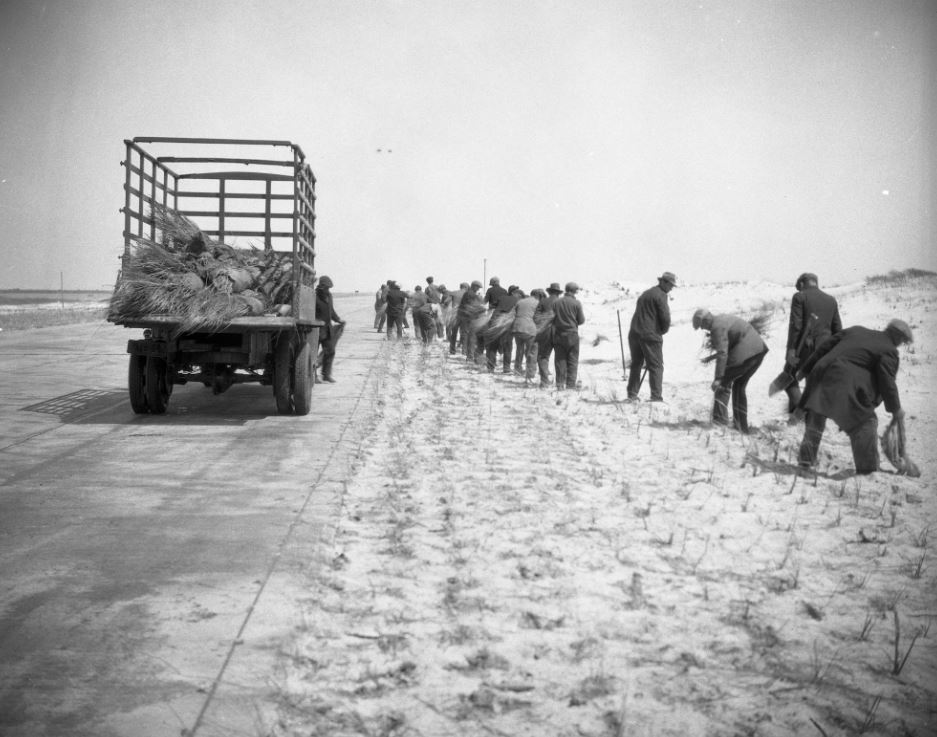
Jones Beach opened in 1929 as a triumph of 20th century engineering. Forty million cubic yards of sand were dredged from the bay to widen the beach and raise its elevation up to 12 feet. Workers hand-planted a million native Beach Grass plants to prevent the taller dunes from blowing away in the wind.

Workers planting Beach Grass during construction at Jones Beach State Park (Photo credit – NYS Parks)
Beach Grass (Ammophila breviligulata), native to Long Island, has long roots which help create and stabilize the maritime dunes at Jones Beach. (Photo credit – Julie Lundgren/NY Natural Heritage Program)

Moses’s plan for parks and roads across Long Island reflected a new approach to “nature,” one of landscapes constructed intentionally for public enjoyment. The parkways also helped spark a new era of Long Island suburbanization, which greatly increased consumption and the demand for energy.

Many different types of energy come together at the Jones Beach Energy & Nature Center. As climate change impacts the globe with rising seas and stronger storms, Jones Beach will model the positive possibilities for access and use of energy. Solar panels that power the Center represent New York’s commitment to expand renewable energy and reduce greenhouse gas emissions that are driving climate change. Resilient design modeled by the building itself will be key as New York’s communities adapt to rising sea levels and changing weather patterns.

There has never been a more important time for New Yorkers to understand the connections between energy, nature, and society. With the Energy & Us curriculum, young people throughout the state can begin to reconsider about how those forces shape their own lives, and how they can engage with them to transform the future.


Cover shot – Jones Beach Energy & Nature Center, Michael Moran/nArchitects


Post by Olivia Schwob, a writer, researcher, and editor interested in human geography, political economy, and public things. Olivia was Developer of the Energy & Us curriculum from 2020-2021, Curatorial Team Writer for the Jones Beach Energy & Nature Center from 2019 – 2020, and Managing Editor of Urban Omnibus, a publication of the Architectural League of New York, from 2016 – 2019. She lives in Brooklyn.

Winter Sowers Bring May Flowers

Native plant gardening is one of the most important ways to take sustainable action, creating habitat for indigenous wildlife while preventing the spread of invasive species. Growing plants from seed has the benefit of higher genetic diversity than planting nursery stock, which is often cloned.

Better yet, locally sourced seeds are part of the local ecotype, or the genetic variety adapted to your area. The more locally your seed was harvested, the better your garden will help preserve your ecosystem in the face of climate change, invasive species, and other threats to our landscape.

That’s why Rockefeller State Park Preserve held a series of gardening workshops this winter. Yes, you read that right—the gardening season starts in winter! Native wildflowers are adapted to the climate of this region, so they’ve evolved to need the cold of winter to break through the outer coating of their seeds. This is called cold stratification. Sowing by mid-February ensures that your seeds have enough time in the cold to germinate by mid-April when the weather warms up.

While the preserve’s Native Wildflower Seed Sowing Workshops are over, here’s a handy guide to follow along at home.

Sourcing native seeds


The best way to get seeds of your local ecotype is through a local seed collecting organization that already has the licenses and permissions to legally and ethically source seed. It’s important not to attempt harvesting seeds yourself without appropriate licensing and training, as this can threaten the natural population of the plant. Healthy Yards is a coalition of public and private landowners in Westchester County working together to provide locally-sourced seed to home gardeners. If you don’t know of such an organization near you, I’ve added some resources at the bottom of this article. Planting the seeds of a New York native plant is better than planting nonnative nursery stock, even if it’s from a different ecotype.

Preparing your materials


You will need a container and soil. Reuse a plastic salad container or milk jug with a lid to maintain humidity, and punch drain holes in the bottom. Label it with the name of the plant, the date sown, and the expected germination date. For soil, sterile seed starting mix can be bought from nurseries and gardening stores. In a shallow plastic container, moisten the soil by mixing it with hot water with your hands. Hot water and steam will penetrate the soil more quickly than cold water, so you won’t need as much to get your soil just slightly moist. Too much water could lead to seed rot.

Scoop the soil into the container until it’s two-thirds full and gently smooth the surface, without compressing it.

Materials needed: soil, a plastic container with a lid and drainage holes, masking tape and marker for labeling, seeds, and spice shaker with sand. (Photo Credit – D. Mishra)

Sow the seeds


Sow seeds at a depth equal to the size of the seed itself. A larger seed should go in a depression in the soil with a light layer of soil on top, while tiny seeds may be sprinkled on the surface. An easy way to surface sow tiny seeds is to mix them with sand in a salt or spice shaker. The sand will show you how much you’ve sown, and is easier for light to penetrate than soil, sometimes a requirement for native seeds.

Seeds sown with sand, with pencil for scale. These seeds have already germinated, but sand helps with visibility before they have emerged. (Photo credit – P. Butter)

Wait


Seal the container and place it outdoors or in an unheated room. Mark your calendar for the expected germination date. Check the moisture level periodically, giving a spritz of water if they’re drying out.

Germination and Beyond


When the weather starts warming and your germination date approaches, check on your seeds every day to see if they sprout. When you see cotyledons, or the first leaves, remove the lids and place them in the sun. These leaves were contained in the embryo and will not look like the representative leaves of the plant.

Now that the lid is off, you’ll have to monitor the moisture more often. You can place a tray under the container to hold some water to prevent drying out. Once the first set of true leaves emerge, transplant each seedling into its own pot with potting soil and compost. At this point, care for each plant according to its individual moisture, soil, and light requirements.

When they’re big enough, plant them in your garden by mid-June and water daily until they begin to put on new growth. If they aren’t ready to be planted by June, then keep them in pots until fall as they are less likely to establish in the heat of summer.  Continue to water and remove any surrounding weeds or competing plants. Don’t worry if all your seedlings don’t survive or if the plants don’t flower the first year. Some plants take a year or two to get established.

Enjoy watching your seedlings grow to attract bees, beetles, butterflies and other interesting insects. In the winter, leave foliage and seed heads to provide shelter and food for overwintering insects and birds. Your native plant garden will help bridge the gap between nature and your neighborhood.

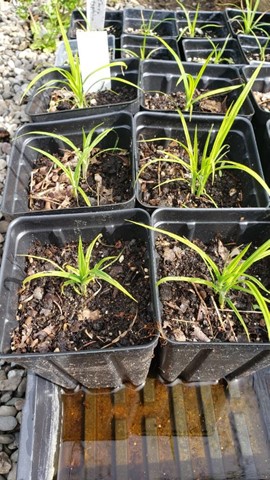
A native sedge showing its true leaves, ready to be potted. (Photo credit – P. Butter)
Native sedge after being potted in 4-inch plug pots, in a tray of water to maintain moisture. (Photo credit – P. Butter)

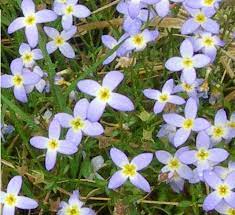
Cover Shot – Bluets (Houstonia caerulea), a native spring wildflower that can form delicate carpets of pale blue on dry sunny sites. A classic rock garden plant and groundcover. Photo Credit – State Department of Environmental Conservation.

Post by Devyani Mishra, Flora Steward, Rockefeller State Park Preserve


Resources


Bringing Nature Home by Doug Tallamy is a call to action for planting native plants in your garden that describes how your yard can help your ecosystem.

This website from the state Department of Environmental Conservation lists native flowers for gardening and landscaping.

The following websites can help you find plants native to your area:

Native Plant Finder (By Zip Code) , Xerces Society Pollinator Conservation Resource Center, Lady Bird Johnson Wildflower Center New York Special Collection

Here are some responsibly sourced seeds that serve the Northeast and the Great Lakes regions. These sources include plants that aren’t native to New York, so be sure to double check with the New York Flora Atlas that the plant you want is native to your area:

Prairie Moon Nursery, Ernst Conservation Seeds, Eco59, WildSeedProject.net, OPN Seeds, Hudson Valley Seed Company

Here are some native plant societies around New York that may know more about locally sourced seed in your area:

Finger Lakes Native Plant Society, Adirondacks Garden Club, Long Island Native Plants Initiative, Torrey Botanical Society, Niagara Frontier Botanical Society


The official blog for the New York State Office of Parks, Recreation & Historic Preservation