Building Bridges: the Excelsior Conservation Corps Lend State Parks a Hand at Mine Kill

Members of the Excelsior Conservation Corps (ECC) (an AmeriCorps program) recently visited Mine Kill State Park to help the State Parks staff with a few projects.  The ECC is a non-profit organization within the Student Conservation Association. The members involved in this program range from ages 18-25 and learn skills and methods on conserving and maintaining the environment. The ECC crewmembers were given the tasks of building a bridge and creating a new trail.

The members started off their workweek by focusing on rerouting the trail. The original trail was on an old tractor road. It was dangerous due to the steep slope, and would also become muddy and slippery when it rains. The ECC members chose to create a new trail that led uphill into a woodsy area.

When making a new trail “from scratch”, there are a few guidelines to follow to identify good areas for foot travel. Prior to the ECC arriving, Park staff confirmed that no sensitive resources like artifacts or rare species were present along the route. Then the ECC crew could move forward on the project.  One of the key factors is to make sure the path is a fairly flat surface with no obstacles in the way. When you’re in the middle of a wooded area, finding a natural path that meets these standards can be difficult, but the crew was able to fix a majority of the problems with the tools they brought. Another factor to keep in mind is to avoid putting a trail at the bottom of a slope, because water can collect and make it muddy and hazardous. If there is no other option than putting a trail in an area where the water pools, trail features can help diminish the impact of the water.

After the team marked off the proposed path with flagging tape on tree branches, they reviewed the route and identified needs. They brought out their tools and began digging up the dirt to make a more obvious trail. Shovels, pick mattocks, loppers and hoes are normally used for digging dirt up, picking out rocks and roots, and cutting down tree branches that are hanging over the path.

In certain areas, the path would hit a steeper slope. In order to even it out, the work crew needed to “bench” it. This required digging out a flat wall in the steep slope and dragging the dirt out to make it flatter for foot travel. This can help reduce erosion of the soil too, to make for a more durable and lasting trail.

ECC Benching
Two members of the ECC “benching” a steep path to make it flatter for hikers, taken by an ECC member.

In the end, the rerouted trail was measured to be a quarter of a mile long!

ECC Chainsaw
An ECC member using the chainsaw to cut notches into the cedar tree, taken by another ECC member.

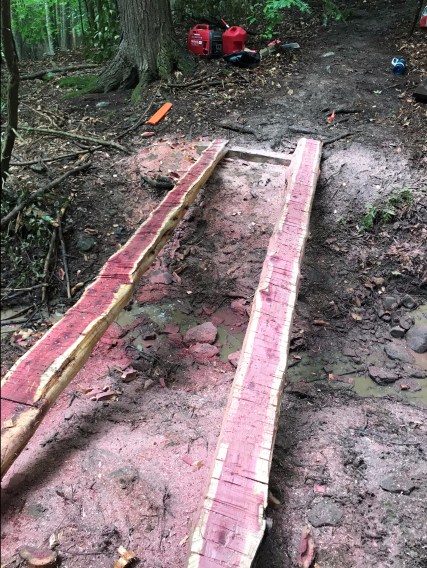
The other project was building a 14-foot long bridge. The ECC team began the task by cutting down two cedar trees in the woods to use as an under support system for the planks. After the trees were cut down, they carried them over to the site where they used knives and axes to “debark” the trees. Cedar is resistant to rot and by peeling off a few outer layers of the cedar trees, it delays decay even further in the future, which would potentially destroy the bridge.
ecc-cedar-logs.jpg
The cedar trees cut flat so they can support the planks And you can see how Red cedar get its name

After they took off the bark, they used chainsaws to split the logs lengthwise to create flat side to lay the planks. Once the trees were flattened out and put into place, the planks were drilled and bolted to lock them onto sturdy blocks of wood on either side of the creek. Finally, they placed each short plank on the cedar rails, spaced them out evenly and drilled the planks in, completing the bridge.

Now, thanks to the work of the Excelsior Conservation Corps, Mine Kill State Park has a new improved trail route and bridge crossing ready for patrons to enjoy.
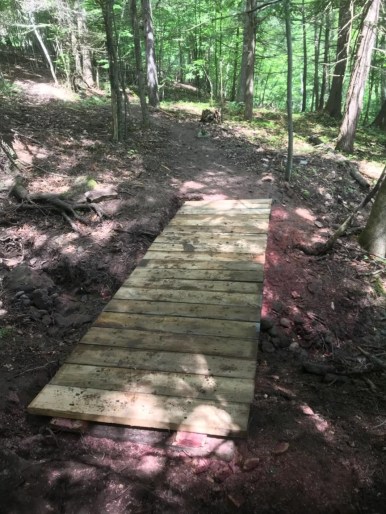
ECC Bridge
The finished 14-foot long Bridge, ready for hikers., photo by ECC members.

Post by Amber Goodman, ECC member

Trails Accessible To All

Early October is such a great time for families to get out and enjoy our parks: October skies are generally clear, colorful fall foliage enhances any scenic vista, and the cool fall days encourages all of us to explore the outdoors. State Parks has accessible trails (trails for people with diverse abilities) that all family members can enjoy autumn’s beauty.   If you are looking for an accessible trail to explore this fall, check out one of these trails!

The newest state park in Western New York (WNY) was created with a focus on providing access to the Buffalo waterfront and recreational opportunities for the whole community. In just four years, Buffalo Harbor State Park has become a popular destination with universally accessible shelters, docks, nautical-themed playground, and accessible van parking. The paved multi-use trail with shaded sitting areas and lighting, connects visitors with a beautiful view of Lake Erie and the path along the newly rehabilitated break wall provides one of the best views of the city. Buffalo Harbor is also a stop on the Shoreline Trail and the gateway to the Empire State Trail, the 750 mile trail that connects WNY to New York City along the Erie Canal.

Sackets121
You never know who you will meet along the trail. At Sackets Harbor Battlefield State Historic Site, visitors chat with a War of 1812 reenactor along the trail.

Sackets Harbor Battlefield History Trail tells the story of Sackets Harbor and the pivotal role it played during the War of 1812 through ten interpretive panels along the three-quarter mile loop trail.  Additional panels highlight other historical aspects of the site including the 1860s Sackets Harbor Navy Yard and the importance of historic preservation. This accessible trail offers views of the 1860s Navy Yard structures, the 1913 War of 1812 Centennial 100-maple tree grove, the 1930s Civilian Conservation Corps decorative stonewall, abundant birdlife, and unsurpassed views of Black River Bay on the eastern end of Lake Ontario. The three-quarter mile trail was listed as a National Recreation Trail in 2015.

NYNJTC_BearMountainHikesMap-Include text at botton

High atop Bear Mountain, along a 0.4-mile section of the Appalachian Trail (AT) is a popular trail enables everyone the opportunity to hike along the AT, that famous trail that runs from Georgia to Maine.  From the trail, visitors can see the Hudson Valley and if it is clear, the Catskill Mountains.

Observation deck sunset
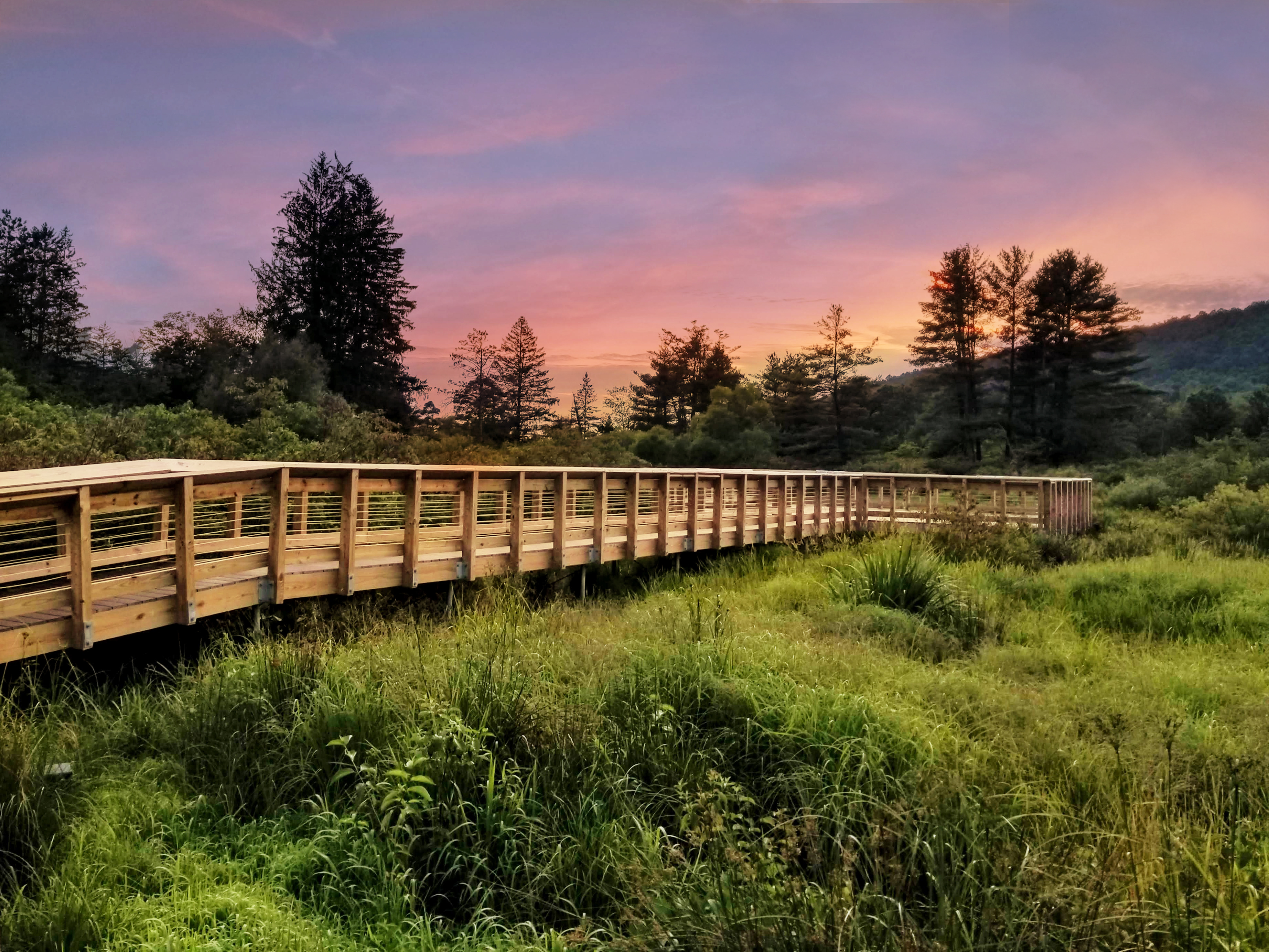
Allegany State Park Red House Wetland Interpretive Trail at sunset.

Allegany State Park’s Red House Wetland interpretive trail, constructed in the fall of 2016, brings visitors right into the heart of a diverse and constantly-changing scrub-shrub wetland located near Red House Lake. With the construction of America Disability Act -compliant boardwalks and crushed stone trails, this overlooked and all but impassable wetland habitat has become a popular destination accessible to all. A large observation deck, wildlife blind, and earthen viewing mound frame beautiful landscape views and offer an up-close look at the plants and animals inhabiting this essential ecosystem. Visitor experience is enhanced by a year-round schedule of educational programs and a collection of interpretive features that emphasize important aspects of wetland biodiversity, ecosystem benefits, stewardship values, and more. Everyone is welcome to visit Red House wetland and experience a landscape that can change practically overnight…you never know what you’ll see!

If you are looking to explore the shore, then check out either the boardwalk and the bike path at Jones Beach State Park.  An entry to the five-mile bike path is on the east side of the park’s East Bathhouse parking lot.  The path travels along Zach Bay, where you can pause to watch the boats in the bay, look for migrating birds, and listen to chirping crickets.  If you are looking for an ocean view, then head over to the Jones Beach Boardwalk, a two-mile boardwalk on the beach.  There are two entrances to the boardwalk one in Field 1, the other in Field 6.

Before you head out, check out our trail tips.

State Park offer safe and enjoyable places to explore and discover New York’s great outdoors throughout the year. venture out and experience the vast network of trails across the state in every season. Don’t miss out on one of the best times to visit. Enjoy State Parks trails this fall.

Additional Resources

Accessibility in New York State Parks

Trails Day 2011 044
Bear Mountain State Park Accessible Trail

Rain Gardens: State Parks Has Them and You Can Have Them Too

What is a rain garden?

A rain garden is a plant-filled shallow depression that collects rainwater (stormwater) runoff. Rain gardens are a great do-it-yourself project for homeowners to manage small amounts of stormwater on their own property.  By directing runoff into the garden, the rain that falls on rooftops, driveways, and other impervious surfaces on your property infiltrates into the ground. The water in the ground recharges local and regional aquifers instead of running off across roads and parking lots eventually polluting local waterways.

Liatris_Swallow Tail_DeBolt
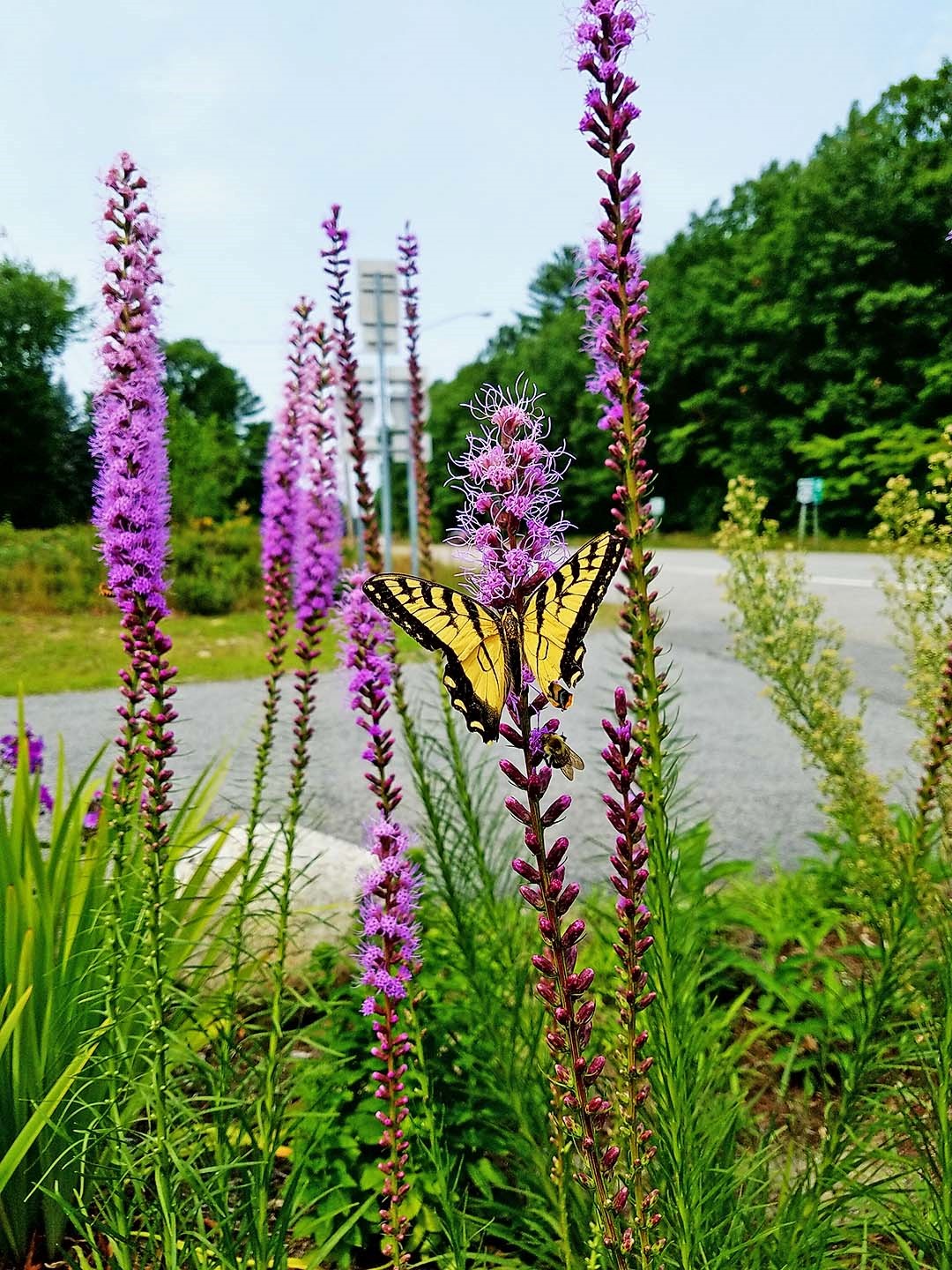
Rain gardens are pollinator gardens too! A tiger swallowtail is nectaring on the blazing star (Liatris spicata) in this rain garden.

Rain gardens are beneficial in many ways

In addition to keeping local waterways clean by filtering stormwater runoff, rain gardens also help to alleviate problems with flooding and drainage. Rain gardens are attractive and functional features that, enhance the beauty of yards and communities. When planted with native plants they provide valuable habitat and food for wildlife. like birds and butterflies and they can reduce the need for expensive stormwater treatment structures in your community.

 Selecting Plants for the Garden

When considering plants for rain gardens, remember that the they are flooded periodically and can go through dry times.  Plants in the middle of the garden, where it is deepest, should be the most adapted to very wet conditions and able to withstand being covered by water for a day or more.  Plants on the edges of the garden should be able to be briefly flooded with water, like a few hours. Be sure to stabilize the raised bank around your garden that holds the water in grass or dry-tolerant native plants as well.

NE Aster_Monarch_DeBolt
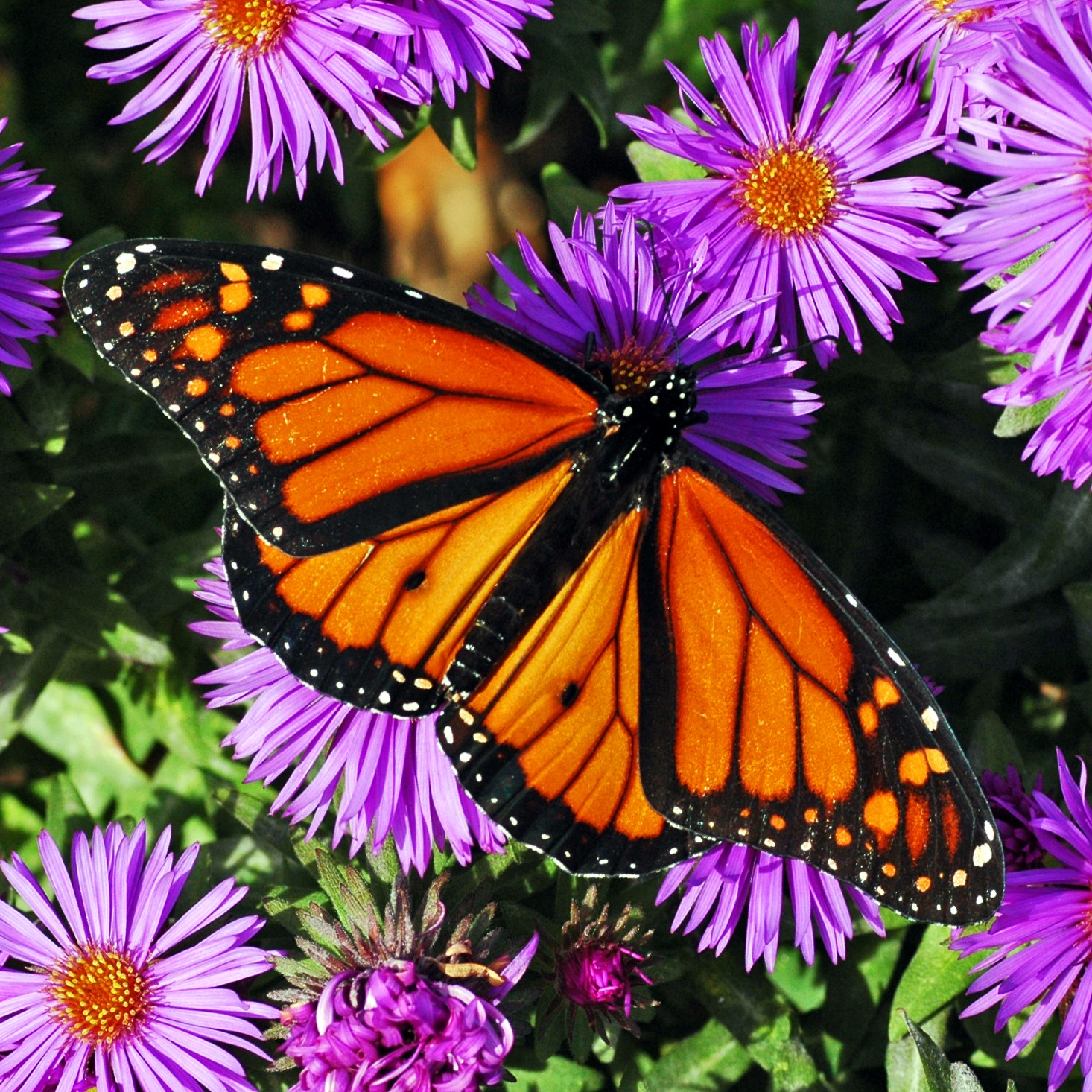
New England Aster is a great rain garden plant for fall color. And migrating monarch butterflies love them too!

Native Plants for Rain Gardens

Native plants are a great choice for rain gardens.  Planting natives helps protect New York’s biodiversity by providing food and habitat for birds, butterflies, and other wildlife. Natives have evolved in our environment over many years and many of our wetland and riparian species are adapted to alternating periods of wet and dry.  The deep roots of natives absorb and filter runoff more effectively than the short roots of many turf grasses and other ornamental plants – making them a perfect fit for rain gardens!

Swamp milkweed, common boneset, cardinal flower, blue flag iris, Joe-pye weed, and white turtlehead are just a few of our native flowers that are happy in rain gardens.  Shrubs including buttonbush, bayberry, ninebark, summersweet, and winterberry can also be added if the garden is large enough.

Swamp Milkweed_DeBolt
Swamp milkweed

Right Plant, Right Place

When constructing the garden you should consider if the site is sunny or shady in order to select the best plants. Remember – you need 6 hours or more or sun to be considered ‘full sun’.  It is easiest to find plants that work well for rain gardens that need sun, so keep this in mind when planning the location of your rain garden.  Just like with any other garden, think about what variety of height, color, and blooming period you would like as well. Mix a variety of flowers, grasses, sedges, for different shapes and textures above, and different root depths below the surface.  Shrubs are great in rain gardens too, if you have the space.  Consider planting flowers in masses of color to attract birds and butterflies.  Follow the tricks the professionals use and group plants in odd-number clumps, using 3, 5, or 7 (or more – just stick to odd numbers) of the same plant all together.  This way your rain garden is not only stopping stormwater runoff but is also providing you with a beautiful landscape to enjoy all summer long.

Get Outside and Get Inspired

Rain gardens aren’t just for homeowners. Here at New York State Parks, we use them to help manage stormwater on our properties too! Many local parks or other public places have rain gardens you can stop by and see.

In the Capital District area, there are rain gardens at Saratoga Spa State Park, Grafton Lakes State Park, Moreau Lake State Park, and Mine Kill State Park. Many of these sites also use other environmentally friendly practices for managing stormwater such as porous pavement as well.

Creekside Classroom entrance, Casey Holzworth.png
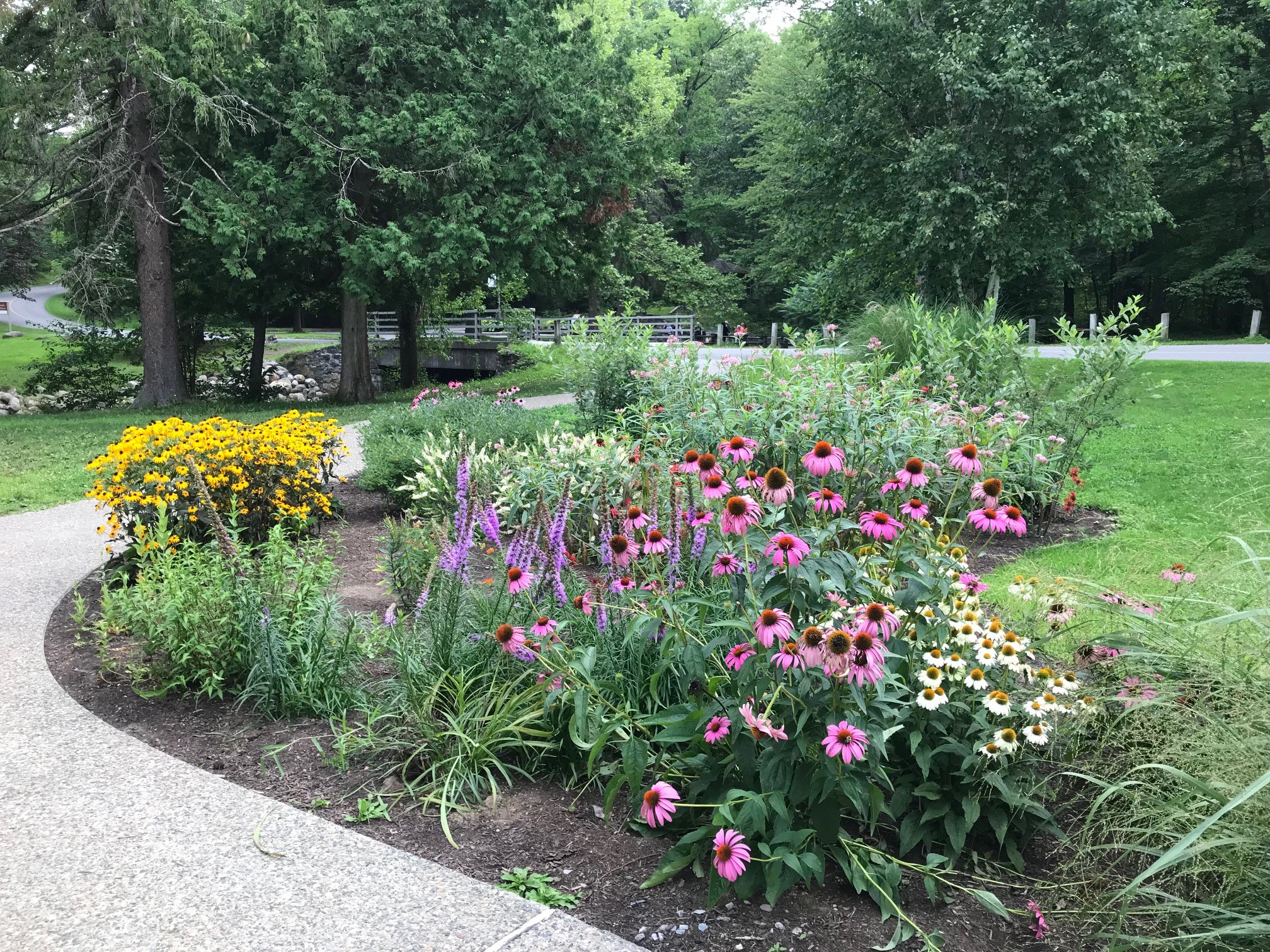
Rain garden at the Creekside Classroom at Saratoga Spa State Park. Coneflowers, blazing star, black eyed Susan’s, swamp milkweed, summersweet, winterberry and more are planted in this rain garden!

If you want to learn more about rain gardens, check out these great step by step how-to manuals that are available for free online

Post by Emily DeBolt, State Parks

Protecting Our Waterways

You may have seen them in a park near you, these super heroes and heroines in disguise. Since 2008, New York State Parks have deployed Invasive Species Strike Teams. These Strike Teams conduct invasive species surveys and manually remove non-native invasive plants in areas of significance. The goal is to protect native plant and animal species and the natural areas in our parks. State Parks are also an important resource for tourism and recreation.  Maintaining the integrity of the natural areas and features in parks helps to support these public interests, including camping, picnicking, fishing, boating, swimming, hiking, wildlife viewing, and other recreational activities.

For the past 10 years, Strike Teams have primarily been involved with removing invasive species on land, but in 2018 State Parks was able to establish an Aquatic Invasive Species (AIS) Strike Team thanks to grant funding received from the Great Lakes Restoration Initiative. The AIS Strike Team isn’t afraid to get a little dirty or wet, as their main charge is to suppress, contain, and work towards the reduction of invasive species found in aquatic habitats within the Great Lakes watershed. The team’s home base is at De Veaux Woods State Park in Niagara Falls, but you’ll be able to find them working in the streams, lakes, and wetlands throughout Western NY and into the Thousand Islands.

Logan West (left) is the AIS Field Lead and oversees Billy Capton (back middle), Patrick Mang (front middle) and Adam Lamancuso. Together they make the 2018 AIS Strike Team.

The AIS Strike Team is made up of seasonal employees who travel through New York State from roughly May to November. A list of priority projects and a schedule is developed by State Park biologists. The AIS team then goes to the sites and camps near the project area for up to a week at a time. This is not luxury living! They use their hands and an assortment of manual hand tools, such as pick mattocks, shovels, machetes, saws, loppers, and sometimes power equipment, to accomplish the goals of the invasive species removal projects they work on. Sometimes the work requires a boat ride or lugging heavy backpacks into a work site. Some of the plants the team has tackled in and near the water include phragmites (common reed), oriental bittersweet, water chestnut, Japanese knotweed, flowering rush, European frogbit, purple loosestrife, and many more.

IMG_0002
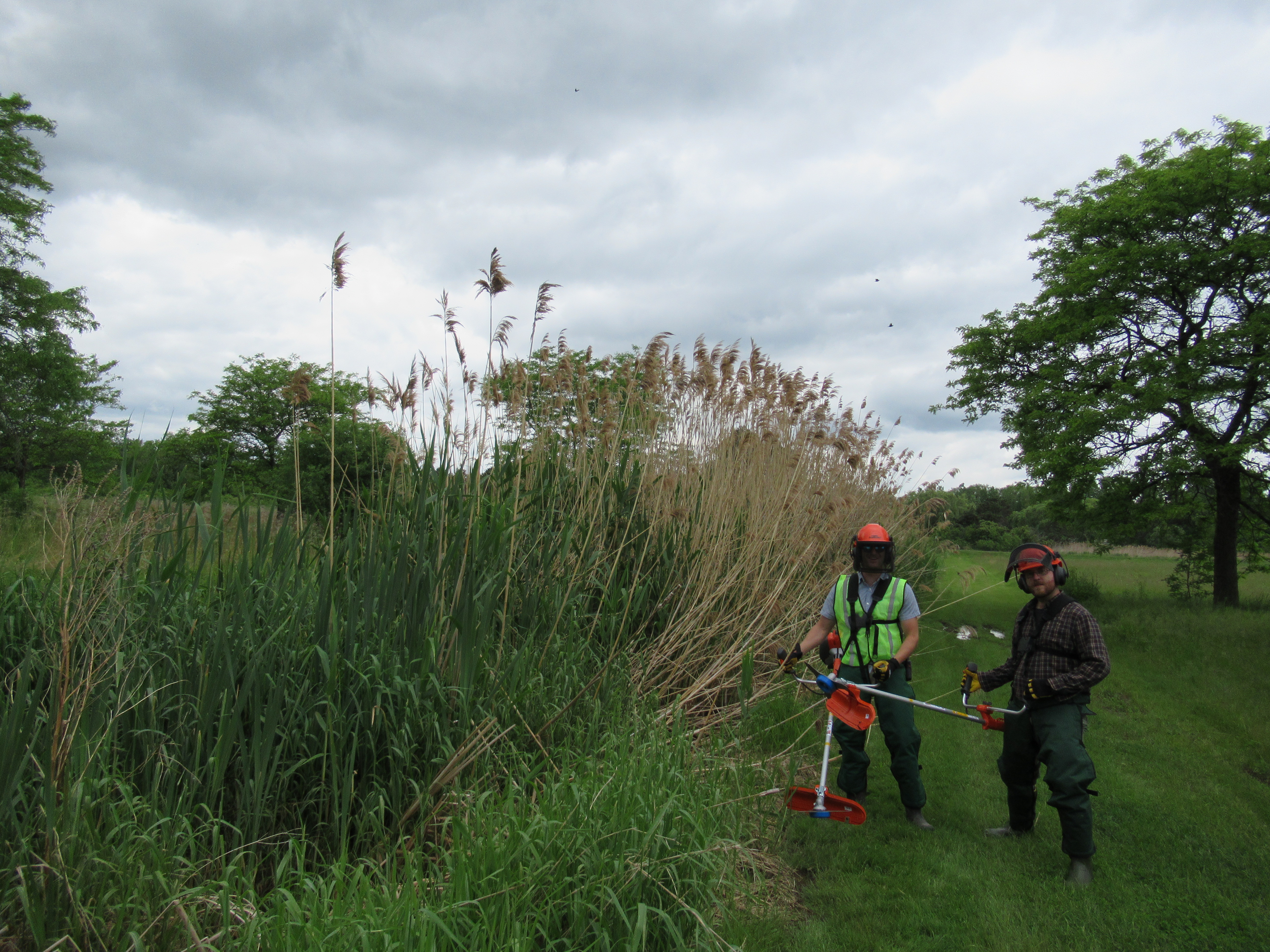
Patrick Mang (left) and Adam Lamancuso (right) prepare to cut down phragmites or common reed– an invasive species that has been encroaching in wetlands and shorelines.

Another component of the AIS Strike Team is to provide experiential learning to K-12 students. In July, the AIS Strike Team partnered with State Parks’ FORCES program and Syracuse University to host a service day for high school students participating in Syracuse University’s Team and Leadership Academy. Students learned about aquatic invasive species and helped remove water chestnut from Sterling Pond at Fair Haven Beach State Park. For some of these students this was their first time learning about invasive species, let alone being on a boat, so the experience and learning opportunity was well received.

Team in Syracuse
AIS Strike Team and Syracuse University’s Team and Leadership Academy students take a break during a water chestnut pull at Fair Haven Beach State Park.

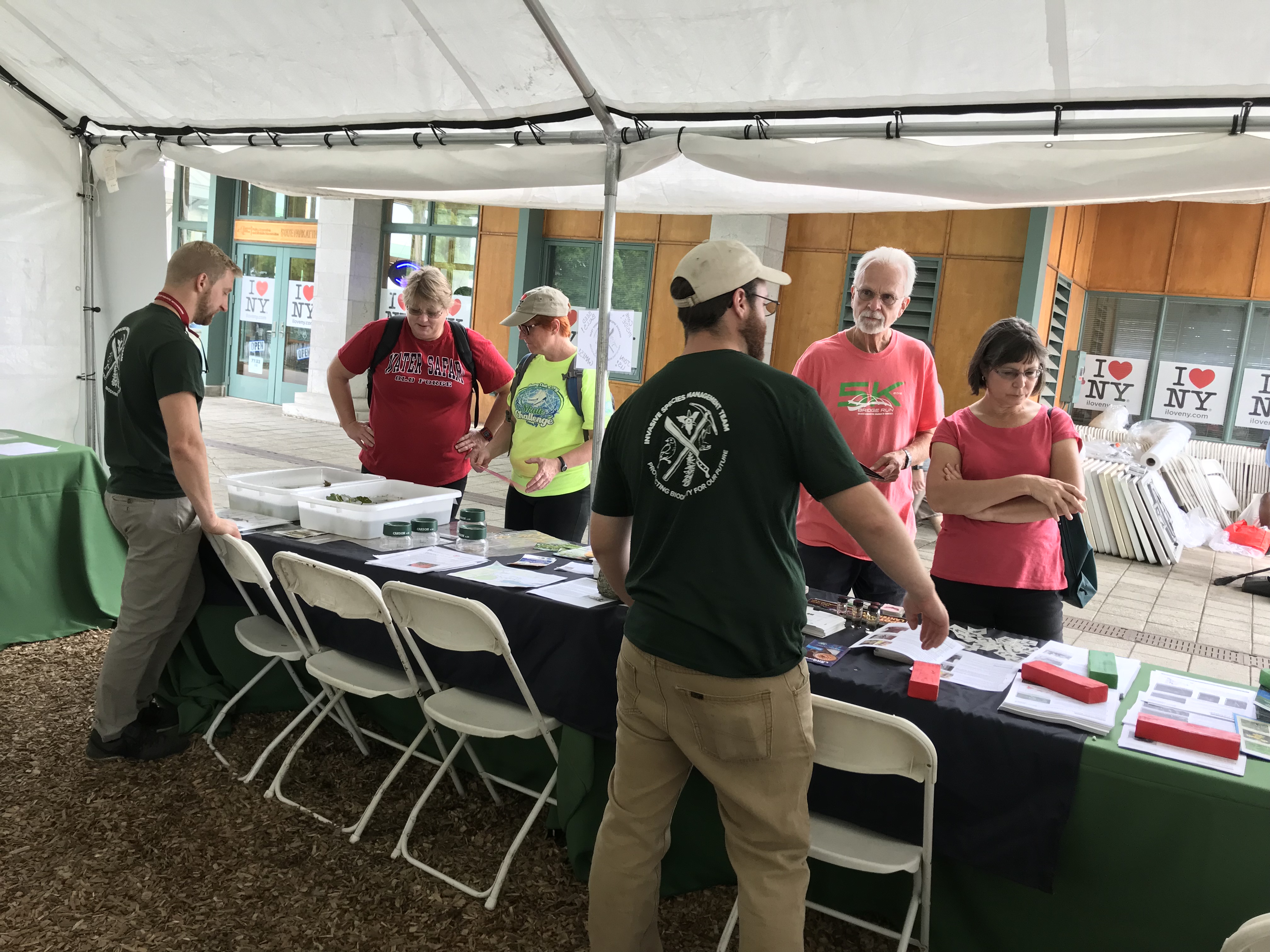
More recently the AIS Strike Team participated at the Great New York State Fair. For three days, the crew worked educational tables focused on invasive species. Families got to learn about invasive species by participating in crafts and games and examining live aquatic invasive species specimens the crew brought with them.

IMG_0411
Patrick Mang and Adam Lamancuso talk with fair visitors about invasive species

The AIS Strike Team was asked to reflect on their experience during the first year of operation. Here are some words from our hard-working weed warriors:

Working with the NYS OPRHP has been an exciting and worthwhile experience. Our ability to explore and improve our State Parks with the Aquatic Invasive Species Strike Team makes me appreciate what is accomplished through the hard work and constant communication that goes into making our parks so enjoyable. I now realize the impact and extent of invasive species across the state, as well as the importance of our commitment to protect the native species throughout the Great Lakes Watershed.

— Adam Lamancuso, Strike Team Member

This opportunity allowed my understanding of native plant life to flourish and opened up an entirely new perspective towards environmental stewardship through invasive species management. The places I’ve been, species I’ve seen, people met, and progress made to mitigate and apprehend the spread of invasive plants was an opportunity like no other. I wish to see the AIS program continue for years to come and inspire more along the way.

— Billy Capton, Strike Team Member

I love that I get to work outdoors every day and get to travel to new Parks in New York State that I’ve never been to. Not only is it work but also an adventure every day. It’s very rewarding to come to work knowing that the work we do is making a positive difference for the ecosystem and the parks themselves.

— Patrick Mang, Strike Team Member

It is clearly a great privilege to be able to work outside nearly every day, striving to protect NYS’s most treasured natural areas.  What must not be overlooked, however, is the progression and determination of our seasonal Strike Team crew members.  They continue to work hard each day, learn from and teach one another while continually finding ways to inspire each other along the way, even when faced with challenges.  As a Crew Lead, this is the most fulfilling part of the position

— Logan West, AIS Field Lead

The crew asks that, in order to make their life a bit easier, please play your part to prevent the spread of invasive species. If you are a boater remember to Clean-Drain-Dry! Inspect your watercraft and trailer for plant and/or animal matter, and remove and dispose of any material that is found. Drain your bilge, ballast tanks, live wells, and any water-holding compartments. Clean your watercraft between uses or allow it to dry before visiting a new water body.

If you are recreating anywhere, not just State Parks, remember to Play-Clean-Go! Remove plants, animals, and mud from boots, gear, pets, and vehicle, including mountain bikes, ATV, etc. Clean your gear before entering and leaving the recreation site and stay on designated roads and trails.

If you are a gardener one of the best ways of reducing the spread of invasive species is avoid introducing them in the first place! Plant only NY native flowers, shrubs, and trees. Check the NY Flora Atlas to see if a plant is native to NY or not and learn more about New York’s invasive species on the NYS DECs Prohibited and Regulated Invasive Species List.

Post by Matt Brincka, State Parks

Excelsior Conservation Corps Works Alongside Parks to Conserve Historical Site

The New York State Office of Parks, Recreation and Historic Preservation (State Parks) staff members at Ganondagan State Historic Site recently worked with members of the Excelsior Conservation Corps (ECC). The ECC is a non-profit organization within the Student Conservation Association (SCA). The members involved in this program range from ages 18-25 and learn skills and methods to help restore, protect and enhance New York’s natural resources and recreational opportunities.

Ten members of the ECC were tasked with invasive plant species removal from various locations and GPS monitoring of certain invasive plant species within the Ganondagan State Historic Site located in Victor, NY. Invasive plant species are non-native species that can cause harm to the environment, the economy, or to human health. Because these plants are not native in these habitats, they can cause or contribute to habitat degradation and loss of native species.

Wild Parsnip
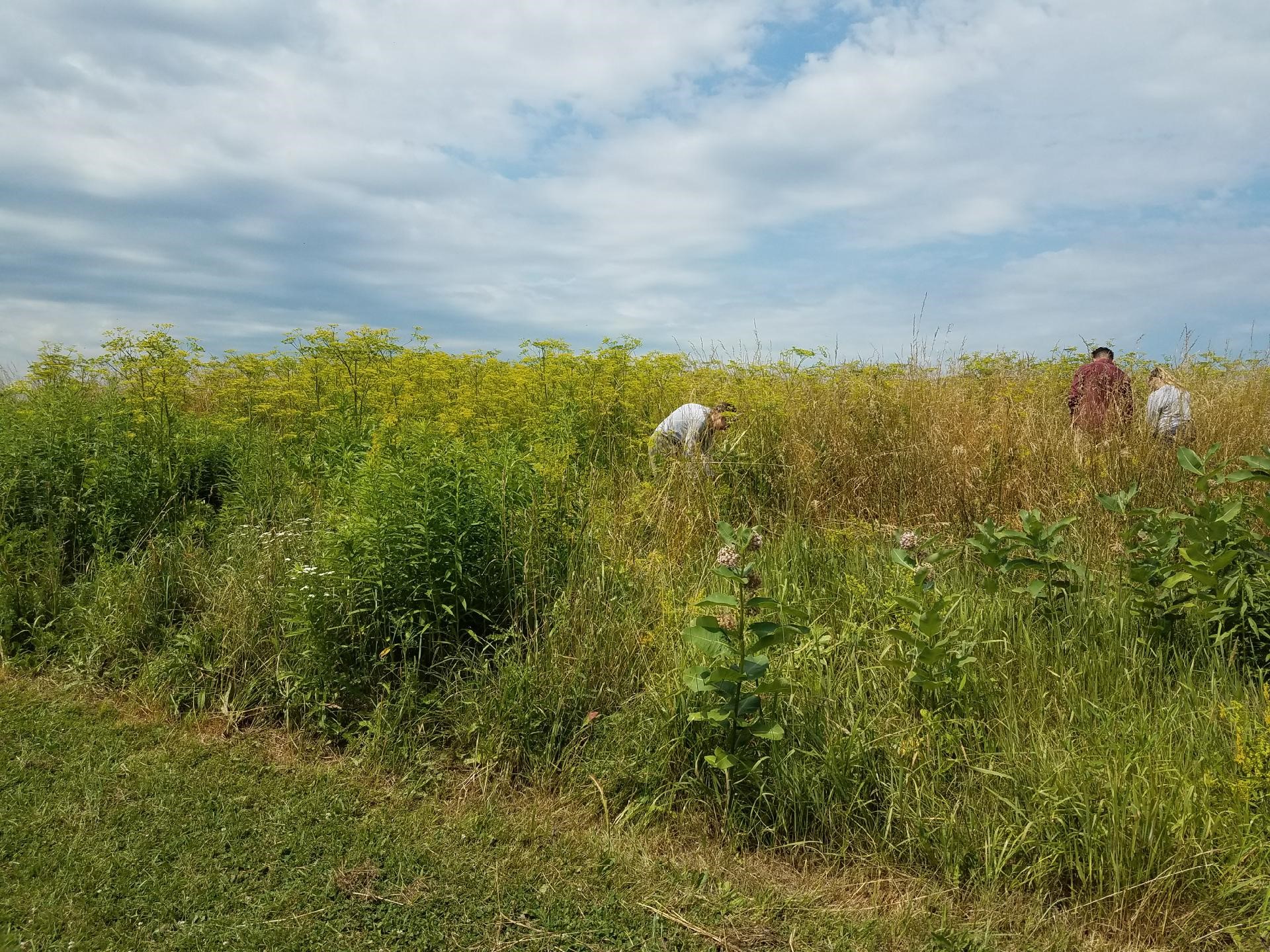
Wild parsnip in full bloom, notice the yellow-green flowers that look like Queen Ann’s lace and dill.. Photo by ECC

Giant hogweed (Heracleum mantegazzianum), which is a tall flowering invasive plant that is infamous in many areas of New York, not only disrupts the environment in which it grows but can also be very harmful to humans. If the sap from the stem comes into contact with the skin, it can cause severe burns and make skin more sensitive to ultraviolet radiation provided from the sun.  Fortunately, no giant hogweed has been found at Ganondagan State Historic Site, but the site has become a host to a closely related and invasive plant called wild parsnip. Wild parsnip (Pastinaca sativa), has similar effects to giant hogweed when it comes into contact with unprotected skin.

When the members of the ECC arrived, they were informed they would be participating in the Parks’ annual wild parsnip picking day. Each year the staff members from the Environmental Field Office dedicate one day to pick as many wild parsnip plants as they can in hopes of clearing out fields and minimizing the possibility of more growing in the future. Everyone was instructed to wear long sleeve shirts, pants and gloves in order to protect their skin. Starting early in the morning, the group of 10 ECC members joined forces with six State Parks’ staff to venture out into the fields of wild parsnip. Throughout the day everyone hiked through trails and sections of the property, pulling the plants out and piling them up they could be removed from the area. The members were instructed to get as close to the ground as possible to pull the roots up by hand. After walking through 30 acres of fields, the total tally of plants removed came out to be 13,439!

Wild Parsnip field
ECC and State Parks crew in one of the many fields. Note the tall yellow plants that are all wild parsnip. Photo by ECC.

After the wild parsnip adventure, there was still more for the ECC members to do at Ganandogan. State Parks has been closely monitoring a field full of invasive plants for the past few years with GPS devices.  These devices enable the staff to map the location and the amount of invasive plants within the area. The ECC team helped record data on six different plants while walking across a 70-acre field. To cover the area efficiently, the ECC members were required to stand in a line about 14 paces apart and walk due North across the field in a straight line, using compasses as their guide. Staying straight was not easy while walking over hills and through tall grass, stepping over and through every obstacle in their path.

gps.jpg
GPS monitoring device used to mark invasive species in the area. Photo by ECC

The plants they were looking out for were Canada thistle, bull thistle, multiflora rose, autumn olive, swallowwort and non-native honeysuckles. Each observer would stop at every 15 paces to observe the area they were in and mark each location for any of these six invasive plans within a five-foot radius. In total, the team collected over 20,000 points that will be used to create maps in ARC GIS to show the extent of the invasives and to help guide management plans.


Post by Amber Goodman, ECC member

The official blog for the New York State Office of Parks, Recreation & Historic Preservation