Their Blood Runs With Antifreeze

Here in mid-autumn, most of State Park’s summer resident birds and some insects have flown off to warmer climates, but many other animals remain through the winter. Some of the year-round residents are either scurrying around looking for extra food to help to get them through the winter while others are looking for a safe place to sleep away the winter, protected from the cold and snow.

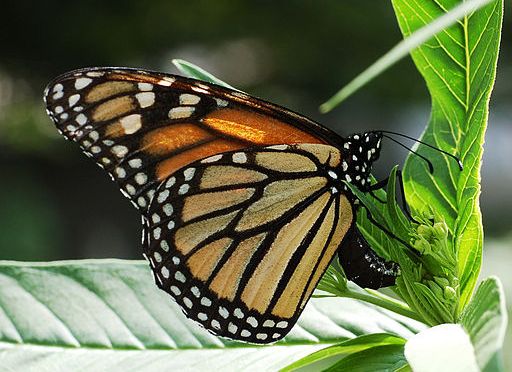
For a handful of animals in the park, finding a place away from the cold and snow can be a challenge due to their inability to dig deep into the ground to escape the cold. Instead, they burrow under the leaves, rocks, rotting logs, or tree bark to escape the worst that winter offers. So a few animals like wood frogs, common box turtles, red efts, and mourning cloak butterflies have a different strategy – the ability to tolerate freezing!

These close to the surface locations protect the animals from snow, ice, wind but not cold winter temperatures. When the temperature in the hibernation spot drops below 32o F, these hibernators freeze, solid.

jm-storey-carleton-university
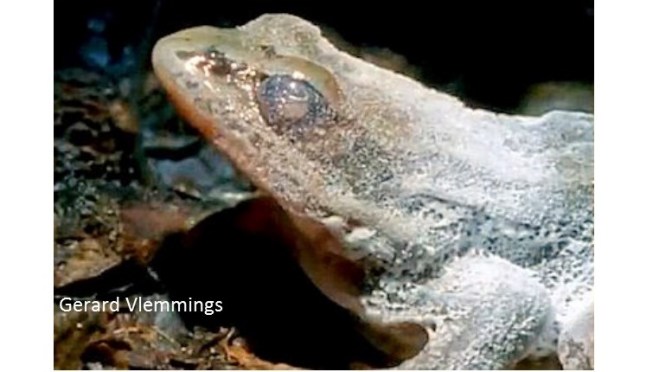
Frozen wood frog in Ken Story’s Lab, Carleton University, photo by JM Storey , Carleton University

And there they can remain until the warming days of spring when they thaw, have a snack, and head off to breed.

Some of the animals that tolerate freezing include:

This slideshow requires JavaScript.

How are they able to freeze solid then defrost and still be alive?  Natural chemicals and processes in the animal’s blood prevent them from freezing.  The animal’s body produces an “anti-freeze” as the temperature begins to drop; the animal’s body concentrates sugars and other compounds that prevents the animal’s organs from freezing.  The antifreeze prevents the animal’s organs from freezing.  A frozen animal will stop breathing and the heart will stop beating. Most of the fluid in the blood pools in the animal’s body cavity.

In spring, as the weather warms, the animal starts to defrost, and its lungs and heart resume working.  They defrost from the inside out, with the legs and feet being the last to defrost.

Surviving by freezing is just one of the amazing adaptations animals have developed to survive northern winters.

Resources

Cold-blooded in the cold: hibernation Conservationist for Kids, NYS Dept. Conservationist

Emmer, Rick. How do frogs survive winter? Why don’t  they freeze to death? Scientific American

Ken Storey Lab

Rosen, Meghan. Natural antifreeze prevents frogsicles, Science News

Videos

NOVA scienceNOW (2012, July 23). Frozen Frogs.

Smithsonian Channel. (2015, June 18). Frogsicles: Frozen But Still Alive.

Snow Geese at Point au Roche State Park

snow-geese-at-point-au-roche-photograph-by-larry-master
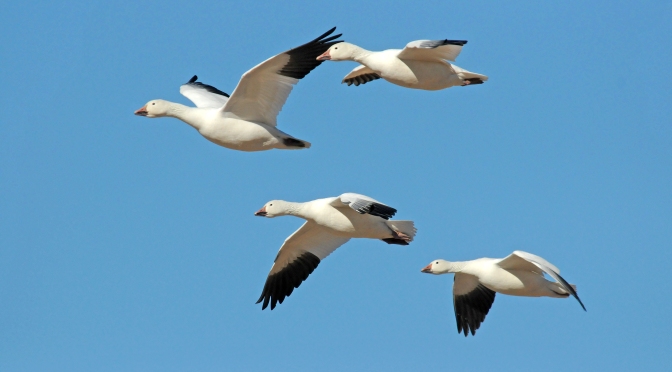
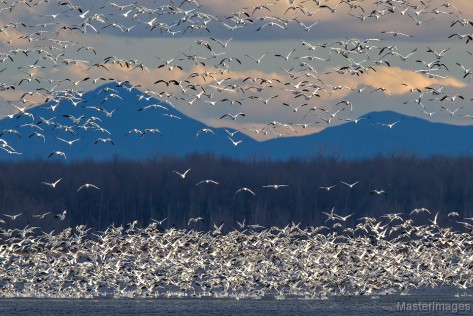
Snow Geese at Point au Roche, photograph by Larry Master

The most abundant species of waterfowl in the world, snow geese or snows (Chen caerulescens), breed in the high arctic and spend winters in the eastern U.S., primarily along the Mississippi river and Atlantic coastal states. In our area, during both their fall and spring migration, snow geese tend to linger in the Adirondacks for a month or more, often times in huge flocks of thousands of birds. You are apt to hear them before sighting them. They sound like a huge throng of baying hounds moving slowly but steadily into your range of hearing, and then you may spot them flying way overhead. If they are close enough, you immediately recognize their snow white bodies and jet black wingtips. You can see them on Lake Champlain, the St. Lawrence River, and the large lakes and marshes in the Finger Lakes region. Point au Roche State Park is a great place to see them up close in the fall as the birds linger on Lake Champlain.

Strong, graceful fliers, snows come down to land by performing a falling leaf maneuver—all of a sudden they seem to lose their balance and start tumbling out of the sky. To watch a large flock of them tumble out of the blue can be pretty amusing. They rank as one of the noisiest birds, barking continually as they fly and vocalizing even as they feed.

You might notice a dark goose or two. Snow geese occur in white or blue colormorphs or forms which ornithologists considered different species until DNA evidence in 1983 confirmed them as one.  They tend to mate with their respective colormorphs and they also segregate somewhat geographically, with most blues breeding and wintering in the middle of the continent and most whites in the east.

Snows feed almost exclusively on plants, preferably in wet areas such as marshes, lakes, impoundments, and waterlogged soil.  They eat everything from stems to leaves to rhizomes and tubers, and have a decided weakness for agricultural fields, which they work for waste grains and seeds.  Their primary method of feeding involves grubbing for rhizomes, tubers and roots by pulling the entire stem of the plant from the soil, with the result that a large flocks can entirely denude an area of vegetation.

Snow geese mate for life and develop strong family bonds, with young birds staying with their parents until their second or third year. Snow geese populations in North America have increased exponentially and in some regions by as much as nine percent a year, which most ornithologists and wildlife managers consider unsustainable.  Essentially victims of their own success, snow geese degrade the habitat in their nesting colonies by eliminating most plant matter and leaving only exposed peat or bare mineral soil, a situation that not only puts pressures on them but also on other species, such as semi-palmated sandpipers and red-necked phalaropes.  But for now, this boom in the population makes for good chances to see snow geese. So get out and enjoy these beautiful birds.  Enjoy the show.

Post by John Thaxton, Northern New York Audubon

Follow these links to learn more about snow geese, snow geese sounds, and a PBS special on snow geese at Point au Roche State Park.

Monarchs Migrate to State Parks

Between the months of April to September, monarch butterflies will travel up north from Mexico to New York as part of their annual migration and breeding season. During this time, multiple generations of monarch butterflies will breed and disperse across the Northeast region. With so many generations occurring in a short time period, it is vital that there are enough breeding areas, or waystations, for the monarchs to rely on for food and shelter. Over the past decade, the Eastern Monarch butterfly population has been on the decline due to logging of trees in overwintering areas, climate change, the possibility of disease and parasites, and the destruction of milkweed, which is the food source for the caterpillars.  It is imperative that we prevent any further decline of their population for this massive migration results in pollination of many flowers throughout the monarch butterflies journey.

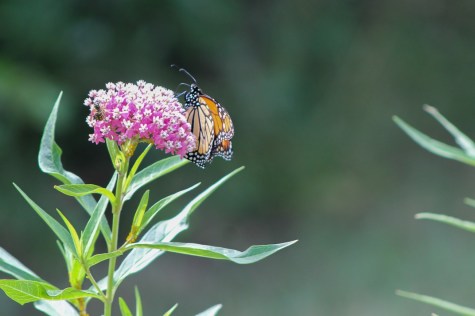
monarch-butterfly-and-a-bee-feeding-on-the-nectar-from-a-swamp-milkweed-in-wilson-tuscarora-state-park-in-august-2016-photo-by-j-harris
Monarch butterfly and a bee feeding on the nectar from a swamp milkweed in Wilson Tuscarora State Park in August 2016. Photo by J. Harris

One of the ways we can support the monarch is to prevent the loss of milkweed and other native flora throughout the migration path. The destruction of milkweed has been caused in part from the over use of herbicides and more extensive and frequent mowing along roadsides. By leaving more edges, meadows and fields unmown milkweed will often come back.  Milkweed is important to every part of the monarch butterfly’s lifecycle because the plant provides the butterfly with a breeding ground to lay eggs on, a food source for the caterpillars after the eggs hatch, and the flowers provide nectar for the adults to feed on after their metamorphosis. Milkweed also helps protect monarch butterflies from predators due to the caterpillars ingesting toxins that the plant produces. After the caterpillars metamorphosis into butterflies, the toxins collected in their bodies makes them poisonous to eat. The nectar from the flowers on the milkweed, as well as other plant species, provides the adults with the energy to travel back down to Mexico and throughout the winter.

budd-termin-and-meg-janis-with-milkweed-plants-at-wilson-tuscarora-state-park-in-may-2016-photo-by-i-love-my-parks-day-volunteer
Budd Termin and Meg Janis with milkweed plants at Wilson-Tuscarora State Park in May 2016 Photo by an I Love My Parks day Volunteer

State Parks is working throughout the state on efforts to reduce mowing, support native milkweeds and other native flora, and to prevent loss of habitat to invasive species like swallowwort. A number of parks have established butterfly gardens or meadows to allow for up-close observation. In Western New York, State Parks has teamed up with Budd Termin from Niagara County Community College to create Monarch Watch gardens in the state parks as refuge for the butterflies during the migration season. Wilson-Tuscarora State Park has a monarch watch garden and plans for a garden are under way for Beaver Island State Park. Already established butterfly gardens at other state parks will eventually get certify under Monarch Watch as monarch waystations. The mission of these gardens is to provide the milkweed and other native plants for the monarchs, as well as other pollinators, in order to reestablish their population size. If anyone is curious on how the project is going, they can follow @Mission_Monarch on Twitter, or if anyone is interested in learning more about monarch conservation efforts and what they can do to contribute, they can visit Monarch Watch.

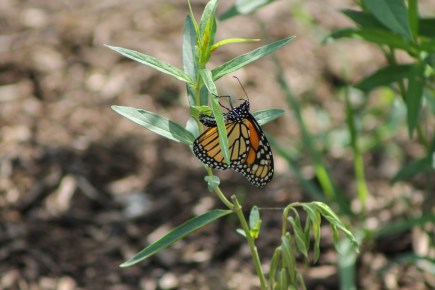
monarch-butterfly-laying-her-eggs-on-a-swamp-milkweed-located-in-the-butterfly-garden-at-wilson-tuscarora-state-park-in-august-2016-photo-by-j-harris
Monarch butterfly laying her eggs on a swamp milkweed located in the butterfly garden at Wilson Tuscarora State Park in August 2016. Photo by J. Harris

Post by Jillian Harris, State Parks


Japanese Barberry: Not an Average Landscape Shrub

leaves
Barberry in fall, photo by Amy McGinnis, State Parks

Japanese barberry (Berberis thunbergii) is an invasive shrub from Asia. Invasives are species not native to our country or state and can cause ecological, economic or human harm. They arrive here as a result of international trade and intentional or accidental release. Outside of their native ranges, they lack predators or other factors that keep them from out-competing, or overcoming native species. Invasive species have been shown to degrade habitats and cause declines in native plant and wildlife populations. They can cause the loss of crops and income, and can also affect recreational opportunities in addition to other species. The United States spends billions of dollars a year in efforts to control invasive species and reduce their impacts.

Japanese barberry was introduced in the 1870’s for landscaping, and was used extensively for hedgerows and prized for its attractive red berries and bright red fall foliage. It is a dense spiny shrub (you might know it as a “pricker bush” that is common in neighborhoods and farms).  They can grow up to 8 feet tall, have zig-zag branches and small oval leaves that range from green to purple in the summer, with white to yellow flowers.

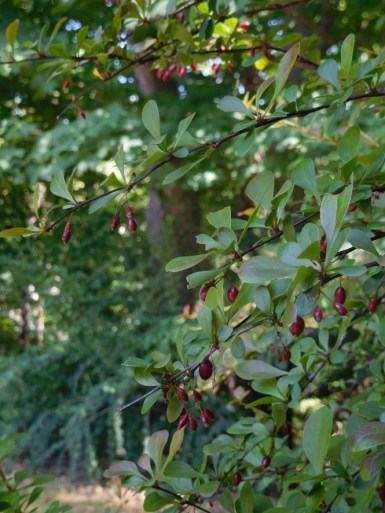
berries
Barberry fruit, photo by Amy McGinnis, State Parks

Barberry can produce large numbers of seeds at a rapid rate and tolerate a variety of conditions –which are typical of invasives. It escapes from gardens and farms and can crowd out native plants, which threatens native biodiversity and normal ecological functions in forest, field and edge habitats. Wildlife help barberry spread by eating the berries and dispersing the seeds in their scat (poop). Studies have shown that these berries have less nutritional value for wildlife than native fruits such as native cherry or viburnums. Barberry grows into dense thickets, crowding and shading out native plants and seedlings, reducing habitat and forage for other species. Additionally, barberry has been found to alter soil pH and the layer of vegetative litter on the ground. This change in soil pH can persist long after the invasive has been removed, further inhibiting native plant growth. It poses a threat to humans as well by creating prime habitat for deer ticks, which can transmit Lyme disease.

thicket
Thicket of Japanese Barberry in a forest community, photo by Amy McGinnis, State Parks

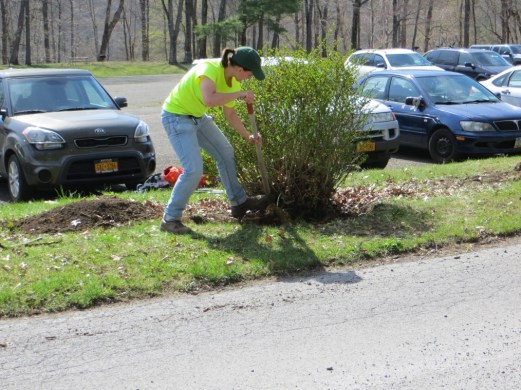
A simple control method for established Japanese Barberry plants is to dig them out.  Barberries are fairly shallow-rooted and typically easy to dig out, but all of the roots must be removed to prevent regrowth. The roots are easily identified by their yellow color when broken. Once dug from the ground, the shrub should be disposed of in a manner that leaves it dead and unviable. This can be done by burning, chipping or leaving the plant in the open sun to desiccate.  Plants may be bagged in thick heavy bags, such as contractor bags, and thrown out, particularly if berries are present to avoid establishment of new plants.

digging
Digging out a barberry, photo by State Parks

For very large shrubs or thickets where manual or mechanical removal may not be feasible, systemic herbicides may be used with a basal bark  (spraying the entire circumference of the lower trunk or stem of the plant) or cut stump application. Chemicals are recommended as a last resort and should be applied by a licensed applicator. It is advised that people carefully follow label instructions to minimize impacts on native species.

Though new regulations prohibit planting of Japanese Barberry in New York State, it is still sought as a landscape shrub because deer do not eat it, it is hardy (further traits of invasive species), and the red phase offers a pleasing color to gardens. Thus, established barberry plants continue to threaten native ecosystems and efforts to control invasives.

There are native deer-resistant shrubs that could be planted in place of this invasive, such as St. John’s Wort, Highbush cranberry, Winterberry, and Shrubby cinquefoil. You can consult native plant nurseries and other sources, but also check the New York Flora Atlas to make sure the shrubs are native to New York State.

The simplest precaution that can be taken to control invasive Japanese barberry is to increase awareness of it and plant only native plants in gardens. This helps to support native plant species and the wildlife and native pollinators that rely on them.  You can also look for volunteer opportunities in your local State Park for invasive species removal workdays in the spring to fall.

Resources:

Going Native: Invasive Species

New York Flora Atlas

New York State Prohibited and Regulated Invasive Species Regulations

Post by Amy McGinnis, State Parks

Summer Stewards of Hudson Highlands

Welcome to the Hudson Highlands, New York City’s backyard!  Just a short train ride or a car ride from NYC, people can regain their sense of summer freedom in the network of trails throughout the Eastern Hudson Highlands.  Patrons come from all over – day-trippers from neighboring states, as well as international hikers staying in NYC – to enjoy a pleasant hike.  The trails are as diverse as the people who visit, and there is a trail for every type of hiking goal.

breakneck-photo-by-penelope-guccione
Breakneck, photo by Penelope Guccione

Breakneck Ridge and the Washburn/Cornish Trailhead are two of the most popular trailheads, which are places where trails begin.  These trailheads are where you are likely to bump into a summer trail steward.  New York-New Jersey Trail Conference (NYNJTC) staff is stationed at Breakneck while State Parks stewards are posted at Washburn on weekends and either location during the weekdays.  Say hello to the trail stewards at either spot; they can help suggest the best route options and point out unique features that can be found along your desired hike.  Trail stewards from State Parks are based out of the Taconic Outdoor Education Center (TOEC): Outdoor Educators, Student Conservation Association (SCA) members, and seasonal staff who all teach about the natural world.  Stewards are happy to answer questions about any animals you have seen or plants you have discovered.  You can even chat to get some information about local history and places to go post-hike.

Trail stewards are here to empower people with information about safety and about protecting the fragile natural area of the state park.  Working as a part if visitor services, trail stewards help hikers make more informed, positive decisions.  Did you know that trail blazes or trail markers indicate which way the trail winds through the forest?  Trail stewards are there to help brief people on how to read the blazes so that hikers stay on the trail.  Wandering off trail has a devastating impact on the mountains’ natural resources, which supports rare species and sensitive natural communities.  Some hikers purposefully stray from the path, thereby creating false or social trails that can easily mislead novice hikers and escalate erosion, a major issue in the state park.  The rocky summit communities along the ridgeline can be destroyed by visitors trampling the low lying vegetation.  So tread lightly and stick to the designated trails and viewpoints marked on the trail maps.  The goal is to allow people to utilize the mountains as a recreational resource without harming or putting too much stress on the ecosystem.  When hikers make informed decisions, the state park stays in better condition for current and future generations.

Breakneck and Washburn trailheads are the last outposts before you begin your journey to the ridgetops and woods, so make sure to prepare ahead of time.  There are many trails that intersect and overlap.  Grab a free detailed, colored map of the Eastern Hudson Highlands as well as valuable advice from the stewards.  Make sure to bring plenty of water: at least one to two liters during the hot, humid summer months.  Water needs vary based on climate, exertion, and individual needs.  Just remember that there are no water fountains or pumps along the trails.  Washburn has complimentary water most weekends in the summer to help unprepared hikers avoid dehydration.  Snacks may also be useful, providing fuel for long and strenuous hikes.  Other helpful items may include sunscreen, sturdy hiking shoes, and bug spray.  Trail stewards will remind you to “Leave No Trace” (LNT).  LNT is a set of seven principles that provide an outline for outdoor ethics, such as, “Plan and Prepare,” “Carry Out Items that you Carry In,” “Leave what you Find,” “Respect Wildlife,” and “Be Considerate of Other Visitors.”  Essentially, you want to leave no trace of your visit so that the mountains look the same as before entering the state park.  The LNT outdoor ethics are critical for patrons to observe in order to preserve the natural splendor of the Hudson Highlands.

hudson-highlands-photo-by-penelope-guccione
Hudson Highlands, photo by Penelope Guccione

State Parks is also planning for improved management of the park by collecting and analyzing data.  Trail stewards keep track of the number of hikers who start their hikes from these trailheads and conduct surveys to get vital feedback from patrons.  Hikers can help influence future planning in the region by taking a moment to complete a brief survey.  You can take the survey by speaking with a summer trail steward or answering the questions online.  You can help by taking surveys for other trails by clicking on “Survey” under “Quick Links” at the bottom of the State Parks’ website.

As the summertime comes to a close, the trail stewards move from their summer post to other duties until the next summer season.  While the trail stewards may be gone, the trails are still eager to be traveled.  Soon there will be a crisp nip in the air signaling the beginning of autumn.  Will you be there when the forest erupts in a sea of rich, fall colors?  Will you help uphold the outdoor ethics to safeguard the natural resources of the Hudson Highlands?

Learn more about the forest and summits on these trails:

Pitch Pine-Oak-Heath Rocky Summit

Chestnut Oak Forest

Appalachian Oak-Hickory Forest

Post by Catherine Francolini, State Parks

breakneck-sunset-photo-by-karoline-nowillo
Breakneck Sunset, photo by Karoline Nowillo

The official blog for the New York State Office of Parks, Recreation & Historic Preservation