From placid lakes and intimate mountain streams to broad rivers and sea-foamed saltwater coast, the state park system offers limitless fishing possibilities and the enticing prospect of “tight lines.” Striped bass, bluefish, salmon, trout, panfish and freshwater bass are but a few of the many popular fish species that can be fished for at state parks, with angling set amidst the backdrop of some of the state’s most compelling and dramatic natural scenery.
For a reel-y good time: fishing is a whole different way to connect with the outdoors. Photo by Susan Lananger, Allegany State Park.
While some anglers may prefer the fall striped bass bonanza at Montauk Point, with its festive atmosphere and challenging rock-strewn shoreline, others may find flyfishing for brook and brown trout on the remote hemlock-lined streams of Allegany more to their liking. State parks additionally offer numerous options for recreational boat fishing. Launches for motorized boats are located strategically throughout the state on prime angling waters, along with smaller docks and launches providing lake and river access for canoes, kayaks and the like.
State parks offer anglers premier opportunities on two great lakes, the Hudson, St. Lawrence, Niagara and other smaller rivers, numerous streams and brooks, countless lakes of varying size and setting, and the saltwater shores of Long Island Sound and Atlantic Ocean. If there’s a fish to be angled for in New York State, be it fresh or saltwater, chances are good that it can be found in a state park.
Through I Fish NY, the New York State Department of Environmental Conservation helps New Yorkers understand the basics of fishing legally and offers opportunities to try the activity. Our parks often hold fishing programs as well. Read on for our guide to angling at state parks!
Are invasive species interrupting your boating and fishing experience? Did you know that if you conduct a quick inspection of your watercraft before and after each use and remove invasive species, you are helping protect and maintain our beautiful waterways? Did you know that many of the invasive species found on boats during inspections out-compete native species, displace waterfowl, decrease the size of sportfish, hinder recreational boating experiences, and damage our environment?
State Parks Boat Stewards work to help reduce aquatic invasive species in New York State waters, photo by Ro Woodard OPRHP
Over the summer, State Parks will have 15 Boat Stewards (Stewards) at many of our boat launches along Lake Erie, Niagara River, Lake Ontario, St. Lawrence River, Lake Champlain, Finger Lakes, and Saratoga Lake. The Stewards will conduct educational boat inspections to provide step-by-step instructions on ways you can effectively inspect your boat and dispose of invasive species. These demonstrations are both free and voluntary.
AIS disposal boxes are great places to put any plant or animal species you find on your boat, photo by Meg Phillips, DEC
The New York State Park’s Boat Steward Program is one of many boat steward programs throughout New York State. These programs provide targeted educational programming to increase awareness about aquatic invasive species and other environmentally significant issues. When you come across a red-shirted Boat Steward please stop and ask us any questions you may have.
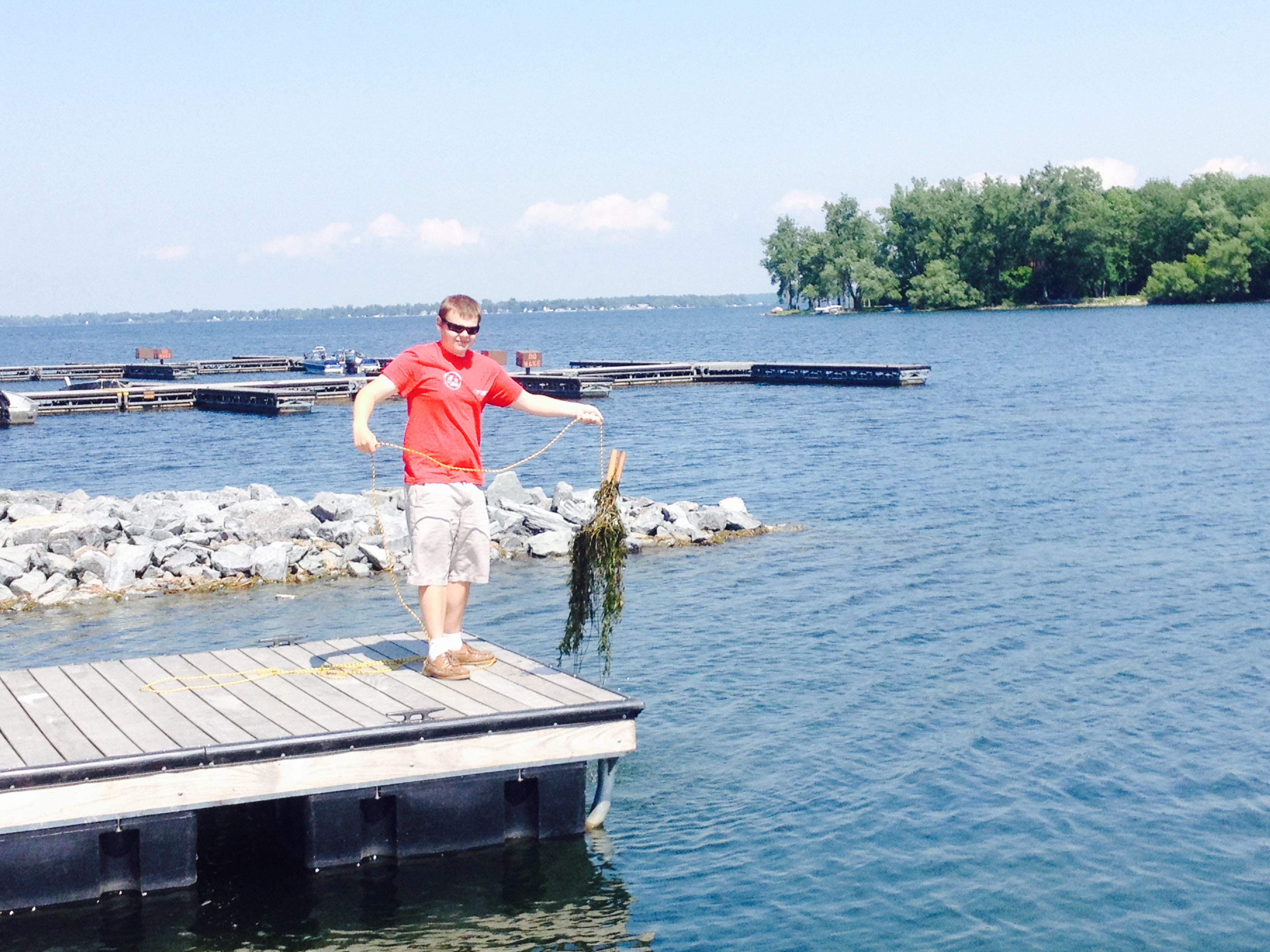
Removing autotroph aquatic invasive plants, photo by Meg Phillips, DEC
Stewards participate in periodic educational events, festivals, and invasive species removal projects, such as water chestnut pulls. Also, feel free to follow us on the Boat Steward Blog. Stewards will be writing about their experiences and findings as the summer goes on.
Happy boating!
Download an Aquatic Plant ID sheet here. To learn more about other invasive species throughout the state, check out the New York Invasive Species Clearinghouse.
For more information on the boat steward program, please contact Matt Brincka, Ocean & Great Lakes Educator, New York State Parks, at 518-402-5587
It’s a summer day on the eastern shores of Lake Ontario. As a visitor walks down the beach they observe the sparkling of the water, the crashing of the waves, and the laughter of people as they enjoy the beach. Parallel to the water runs a series of fencing and signs that mark the perimeter of the remarkable dune ecosystem that lies just behind. This seventeen mile stretch of Lake Ontario is home to the most expansive dune ecosystem in the state of New York. The dunes are large sand hills that are held together by extensive plant root systems. They not only serve as habitat for a variety of species, but as a vital buffer between the power of Lake Ontario and the intricate system of ponds, marshes, and waterways that reside on the other side of the dunes.
The Dune Steward Program was established in the mid 1990’s to help protect this fragile dune system by maintaining the fencing and signs, removing litter, working with wildlife biologists and technicians on a variety of projects, and most importantly interacting and educating the public on the importance of the dunes. The stewards patrol the 17 mile stretch of coastline that includes El Dorado Nature Preserve, Black Pond Wildlife Management Area (WMA), Lakeview WMA, Sandy Pond Beach, Southwick Beach State Park, and Deer Creek WMA. Every summer the Department of Environmental Conservation (DEC) in conjunction with New York State Office of Parks, Recreation and Historic Preservation, The Nature Conservancy, and The Student Conservation Association (SCA), places three interns from across the country to work as dune stewards. Dune stewards are current students or recent graduates who have a background in environmental conservation.
Beach and dunes at Black Pond WMA. Photo by Jennifer Brady.
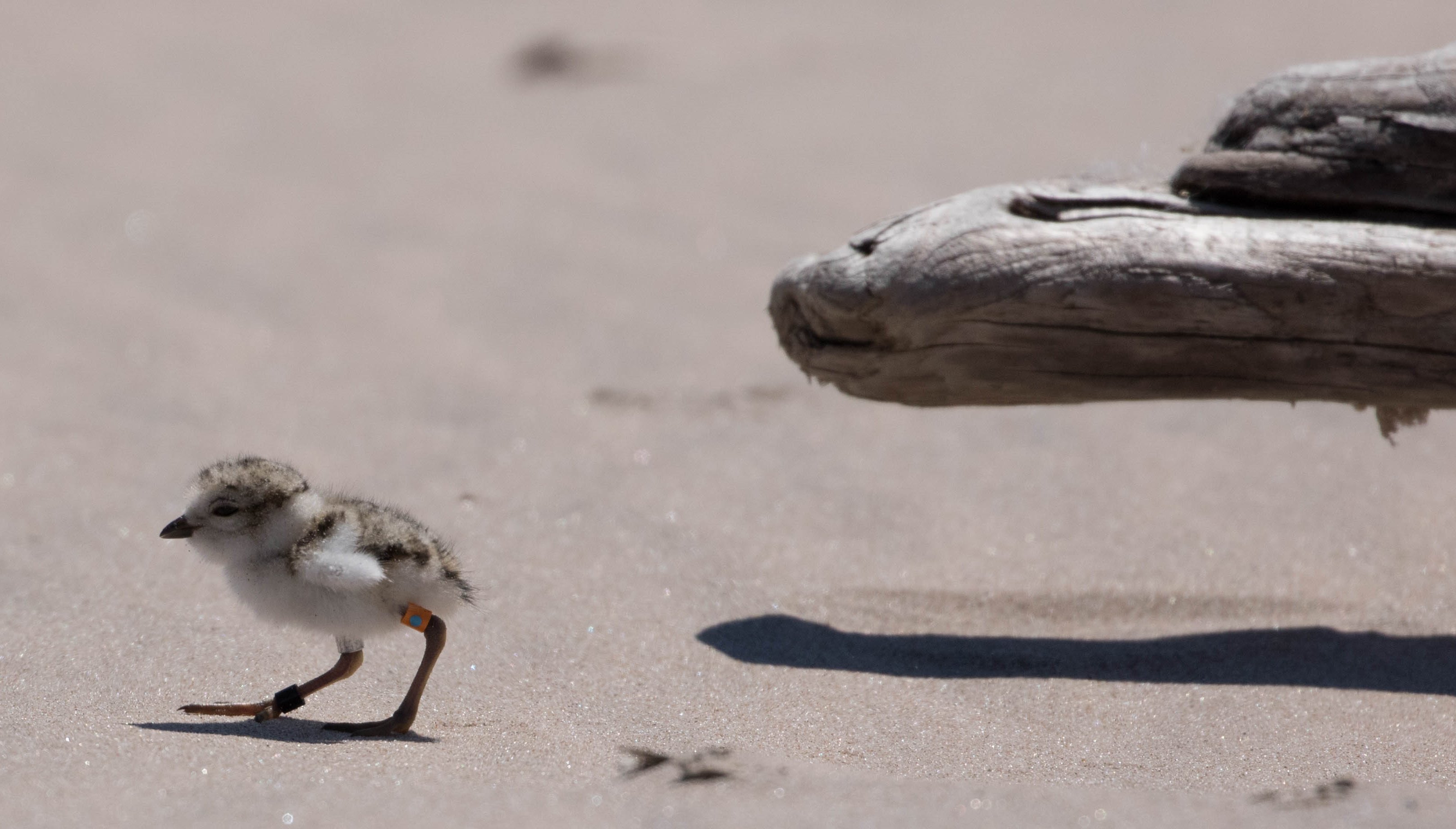
Along with the duties described above, this program allows the stewards the opportunity to be involved in other conservation efforts. Some of these projects include placing identification bands on birds, identifying and monitoring invasive and endangered species, bird surveys, educational events, and a variety of environmental training opportunities. This year the stewards were able to assist in the successful protection of the piping plover, a federally threatened shorebird species. This small bird lays its eggs in shallow scrapes on grassless beaches or dredged soil areas. This summer was the first time in over 30 years that the piping plover has nested on Lake Ontario. Stewards talked to visitors about the plovers and what they can do to assist in the protection of the bird and its chicks. They advised that visitors maintain a respectful distance and keep dogs on a leash when walking through areas where the plovers were nesting.
An adult piping plover and its day old chick. Photo by Elizabeth Truskowski, DEC.
One of the most important aspects of this program was public interaction and education. Each day visitors see the work that the stewards are doing and often approach the stewards to ask questions, express concerns, or even just to thank them for the work they are doing. “It is extremely rewarding to be able to share what we know about the dune environment and its inhabitants to hopefully be able to protect this area for the considerable future,” said Jennifer Brady, DEC dune steward.
Post by Jennifer Brady, DEC Dune Steward, Student Conservation Association (SCA).
Ecosystem-Based Management, sometimes referred to as EBM, is a planning tool. It helps guide decisions on where to place development such as roads, buildings, trails, beaches etc., while also considering the long and short term impacts to the environment. It also looks at how development effects not just the surrounding environment, but also the upstream and downstream environment. EBM helps remind us to take the big picture view when we do work in our State Parks.
New York State Parks’ Environmental Management Bureau has been implementing Ecosystem-Based Management (EBM) in our parks statewide since 2008.
EBM relies on citizen participation, partnerships, science-based approaches, and taking a long-term view to provide an informed and adaptive approach to protecting our ecosystems while providing park patrons with experiences that connect them to the natural world.
There are 6 main components to EBM. These include:
Place-based focus;
Scientific foundations used for decision-making;
Measurable management objectives to direct and evaluate performance;
Adaptive management to respond to new knowledge;
Recognition of interconnections within and among ecosystems; and,
Involvement of stakeholders.
Taking this approach allows us to look at interacting systems, like watersheds, rather than individual components, such as a specific plant or animal or isolated water quality parameters. NYS Parks has used this approach to help better understand, protect and manage our resources, such as swimming beaches, lake water quality, forest health, species richness, and aquatic connectivity.
In addition to helping us look at our natural environment in a more integrated way, EBM provides a means to communicate with multiple stakeholders including citizens, scientists, the private sector and government officials.
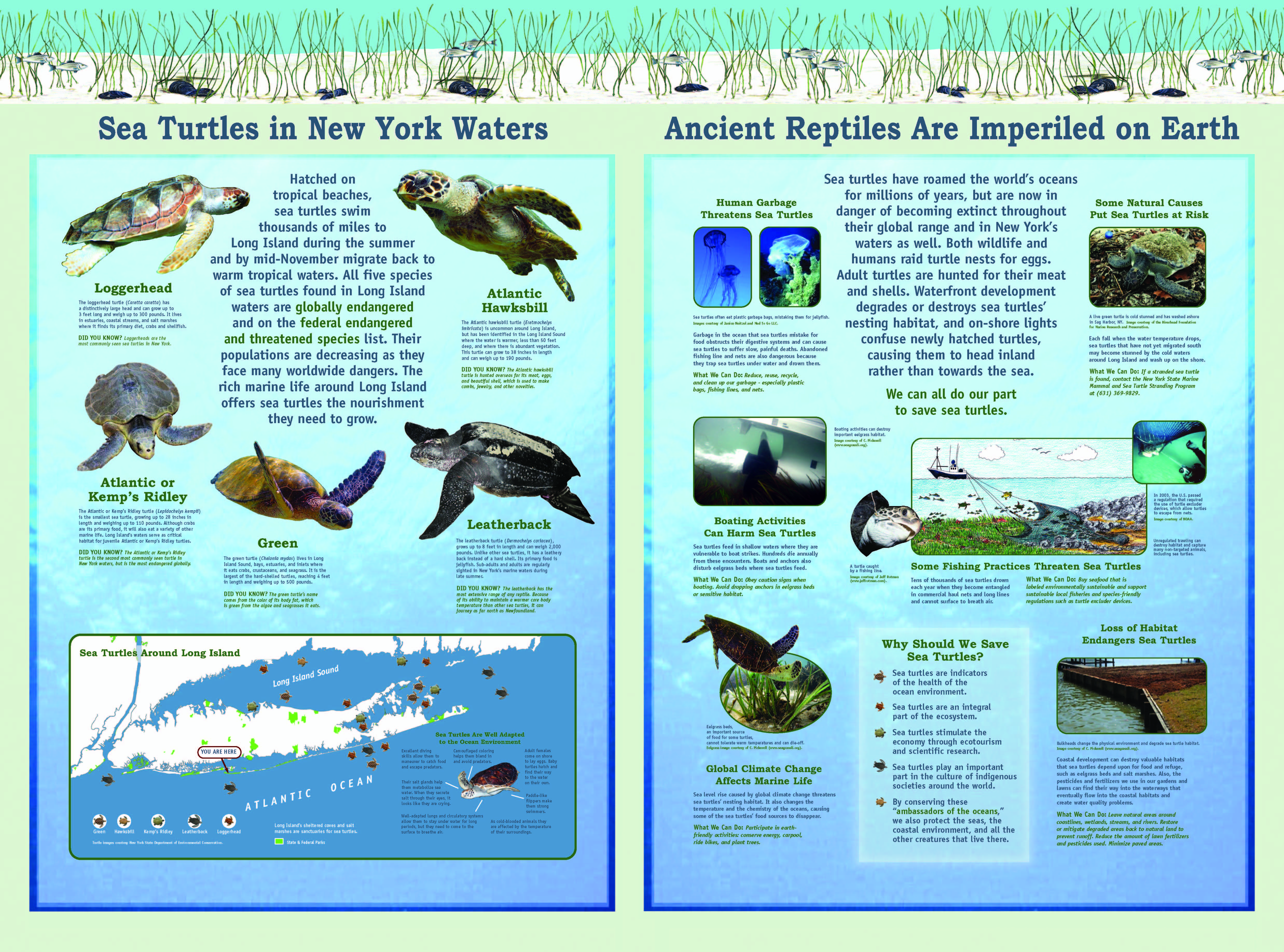
Ecosystem Based Management Panels at Sunken Meadow State Park on Long Island. Click to enlarge images.
NYS Parks will continue to integrate EBM into programs andactivities through training, watershed educational materials and ecosystem research, as well as projects which demonstrate that healthy ecosystems mean healthy communities. Look for these EBM educational panels at Sunken Meadow State Park on Long Island (pictured above)! More educational panels and kiosks showing how our parks are part of the larger landscape are in the works for parks along the St. Lawrence River and Great Lakes. Keep an eye out for them!
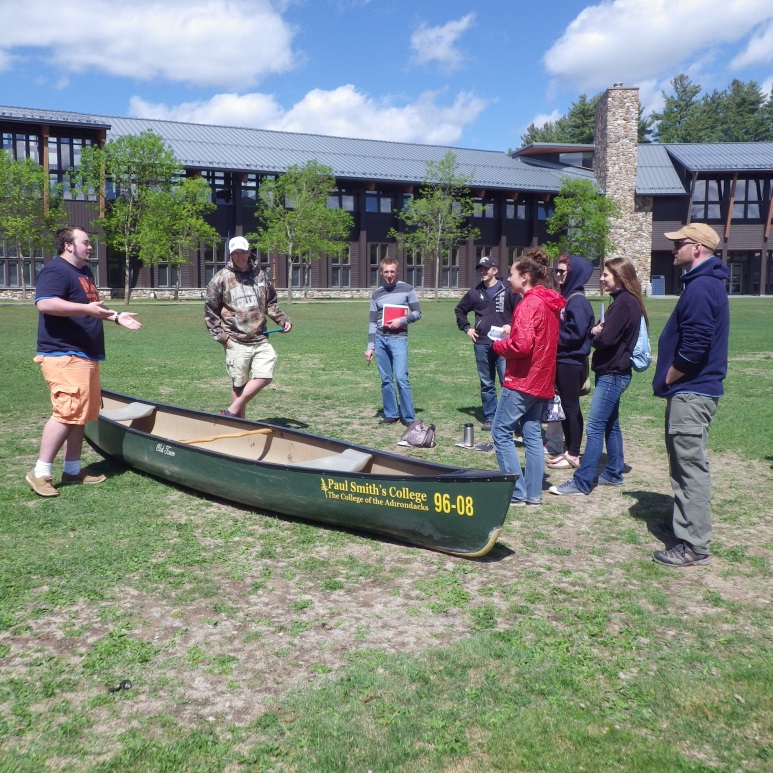
On a Monday in mid-May the 12 members of the 2015 NYS Parks Boat Steward Program piled into two minivans in the parking lot at Hamlin Beach State Park. The vans were packed to the gills with supplies, including snacks for the road, uniforms, plant rakes, 5-gallon buckets, and folding tables. Strict instructions were given to avoid opening the trunk without someone standing by to catch any overnight bags or coolers that may tumble out. To a bystander, our situation likely seemed akin to a scene from the National Lampoon’s Family Vacation film – only we weren’t leaving for a vacation. We were bound for a multi-day training at Paul Smith’s College, where watercraft inspection began in New York State more than 15 years ago.
Watercraft inspection has become an increasingly popular way to prevent the spread of aquatic invasive species (AIS) via overland transport. During the training, Boat Stewards learn how to educate the public on AIS, conduct voluntary watercraft inspections remove and dispose of any plant or animal matter, and collect data about the boaters that they interact with. This data helps us to understand how and where AIS are being transported, which regions of the state require enhanced outreach, and where boat washing stations would be most efficiently utilized.
Stewards conducted mock watercraft inspections for AIS at Paul Smith’s College in the Adirondack Park. Returning stewards from the Paul Smith’s program took on various “boater personalities” to help the new stewards prepare for any type of situation that could arise at the boat launch.
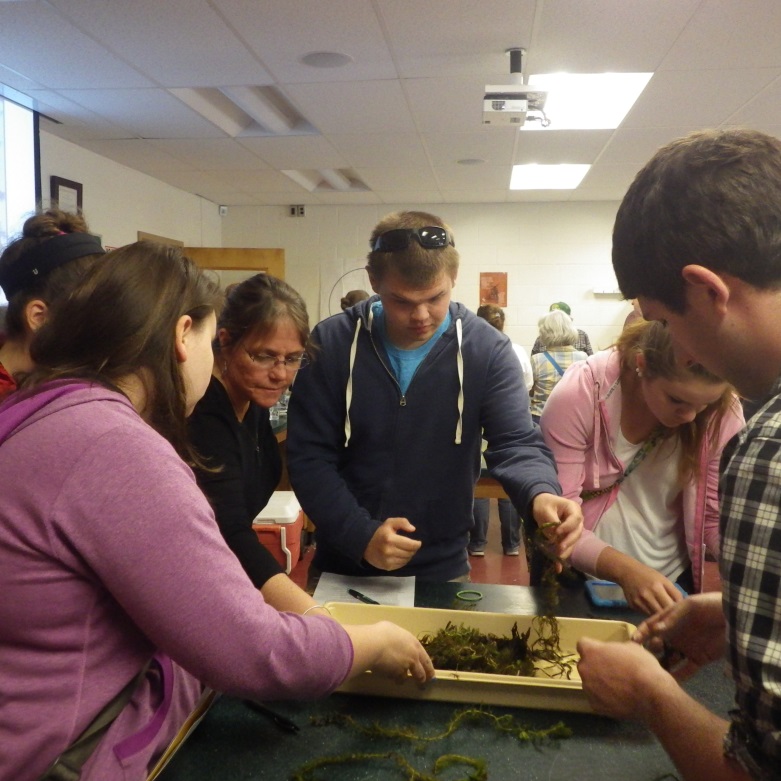
Paul Lord (SUNY Oneonta) held a hands-on invasive plant and animal identification session, which was an invaluable piece of the training for the stewards. After they had time to become familiar with the specimens, stewards were given a quiz!
Fast forward to five weeks later, the stewards are trained and on-site at 21 launches across the Great Lakes and Lake Champlain.
The following images were taken in the field during routine site visits.
Above left: Zebra mussels attached to a stick near the boat launch at Point Au Roche State Park on Lake Champlain. Can you imagine how many of these mussels could cover the bottom of a boat?! Banded mystery snails were also found at this location. Zebra mussels and banded mystery snails are just two of 50 known invasive species in the lake.
Above right: Melyssa Smith (OPRHP Water Quality Unit) and Ariana London (OPRHP Boat Steward) practice throwing the plant rake from a boat launch on the Great Chazy River. It is still a bit early in the season for significant plant growth; however AIS Eurasian watermilfoil and a native Elodea have been collected at this site thus far.
“So far, the two main aquatic invasive species that I have found are curly-leaf pondweed and Eurasian watermilfoil. I keep some samples on my table to show to boaters and park visitors who come by to learn about them. I also throw my rake into the water every morning to gather new specimens. I have been learning to identify many different types of aquatic life!” – Sarah Powers, Salmon River and Lake Ontario steward.
Above left: Tara inspects a motor boat that is preparing to launch. “For me, being a Boat Steward is about patience, passion and perseverance.” –Tara Camp, St. Lawrence River steward.
Above right: A curly-leaf pondweed specimen on the boat launch at Westcott Beach State Park. Notice how the leaves resemble lasagna noodles.
If you encounter a Boat Steward this summer, be sure to ask them how you, a New York State Park visitor, can help halt the spread of aquatic invasive species by adopting a few simple practices when launching or retrieving your watercraft.
And always remember to:
Drain your bilge, ballast tanks, livewells, and any water-holding compartments
Inspect your watercraft and trailer for plant and/or animal matter, and remove and dispose of any material that is found
Clean your watercraft between uses or allow it to dry before visiting a new water body
For more information about the NYS Parks Boat Steward Program, please call (518) 402-5587.
Post and photos by Megan Phillips, OPRHP Water Quality Unit.







 New York State Parks and Historic Sites Blog