In New York, spring means maple! Maple syrup and sugar are key agricultural products in New York and part of the state’s heritage. Many of our state parks and historic sites offer maple programs during the late winter and early spring. The last two weekends of March are Maple Weekends in New York, when producers large and small invite the public to see the process and sample some syrup. In this post, we’ll not only tell you how maple syrup is made, but uncover its past as a symbol of American independence and of the anti-slavery movement.
From Sap To Syrup
Making maple syrup has a lengthy tradition in Northeastern North America. Long before anyone wrote about it, Native Americans gathered sap from cuts made in maple trees that they boiled to concentrate the sugar. Once Europeans arrived in North America, they too began collecting sap and boiling it in large pots, evaporating the water to make syrup and sugar.
Any settlement story of the state parks along the Genesee River in the western part of New York State begins with the Onöndowa’ga:’, the People of the Great Hill.
The Genesee River’s sweeping valley, with naturally re-nourishing floodplains, hills, and well-draining glacial moraines ideal for farm towns, is the dominant land feature of the region. Flowing to Lake Ontario in Rochester, the Genesee River’s tributaries branch through Monroe, Livingston, Wyoming, Genesee, Ontario, Allegany, Steuben, and Orleans Counties. The Onöndowa’ga:’ are master agriculturalists who established the first permanent towns on this landscape, known regionally today as the “Genesee Country.”
Longer days. Warmer temperatures. More birdsong. The signs of spring have been growing stronger in New York for weeks, and now the season has arrived. We’re proud to share some of the delights of spring with you at our parks and historic sites — here’s hoping we’ll see you out there.
Springing from the Earth
Getting out on the trail in the springtime is an exhilarating experience, as wildflowers begin to bloom, trees return to leaf, and the smells of nature fully return. If you enjoy identifying the plants, insects and animals you see on the trail, consider joining the global nonprofit iNaturalist project. You can use their app to identify flora and fauna you find, record your sightings, or find out from other users what’s been sighted nearby. Below are a few plants to look out for!
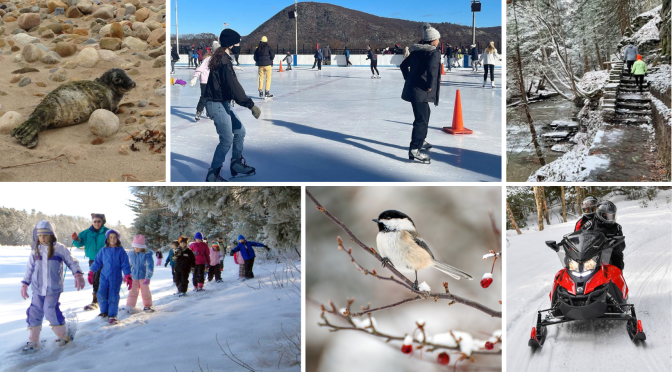
Winter doesn’t have to mean being stuck indoors. There’s year-round fun at our parks to help you beat cabin fever, chase away the winter blues, and experience a familiar spot in an entirely new way. Check out these iconic wintertime activities at our parks and sites, but hurry – spring will be here before you know it.
Ice, Ice, Baby
Ice skating is the classic wintertime activity, and our parks offer a safe way to enjoy the ice. From the urban setting of Riverbank State Park to the serenity of Grafton Lakes to the bustling atmosphere and panoramic views at Bear Mountain State Park, ice skating brings joy wherever you do it. This exhilarating experience gets your heart pumping, and is a fantastic winter bonding experience. Twelve of our parks offer skating, and most of them offer skate rentals as well.
In the northeast, winter days can seem to drag on after the holiday season. Snowstorms seen to occur every three days and a constantly blowing wind chills the air to -10oF. It’s the type of weather that makes you wonder why humans don’t hibernate. While we can’t control the seasons; winter will always bring shorter days, the moon will revolve around the earth and the earth will revolve around the sun, we can change our mindset and that is what maple sugaring is about.
The maple sugaring season is almost a spiritual experience that lifts you through the last doldrums of winter. It ignites every sense. Imagine hearing the taps of sap into a metal bucket hung on a tree, the sweet steam lifting off the evaporator immersing your nose in warmth, the crackling fire fueling the evaporator, and of course the sweet taste of liquid gold. The whole experience does not occur unless the right weather conditions are present.
Hudson Valley Sugar Farm at the Taconic Outdoor Education Center, photo by Marlena Vera-Schockner
The release of sap in the spring is a sign that the trees are finally waking up from their winter rest. The ideal sap running conditions are warm days and cold nights. This temperature fluctuation causes the sap to run up and down the tree each day. The maple season may only last for as little as ten days, but they are an intense ten days. Intense because of the time needed to collect and boil down the sap, and it is the boiling down of the sap that takes the most time.
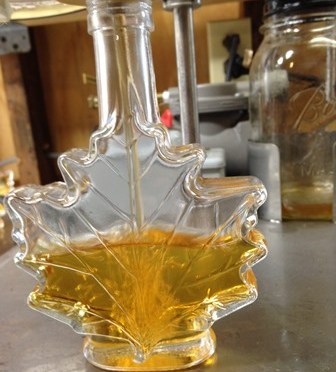
Do you ever wonder why pure maple syrup tends to cost five times more than pancake syrup? It because it takes 40 gallons of sap to make one gallon of pure maple syrup! There is a lot of energy involved to boil down the sap that contains 2% sugar to the sticky syrup containing 66% sugar content. Everyone around helps collect sap, tend to the evaporator, and bottle syrup. Tremendous effort goes into each gallon of syrup and it is all worth it in the end. There is no better feeling than creating something from start to finish and enjoying your success with the ones you cherish.
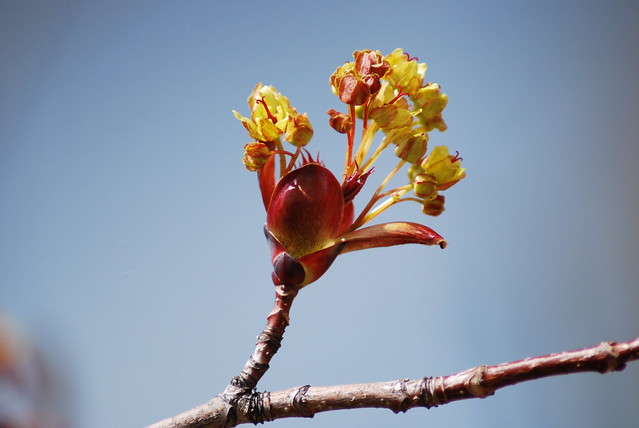
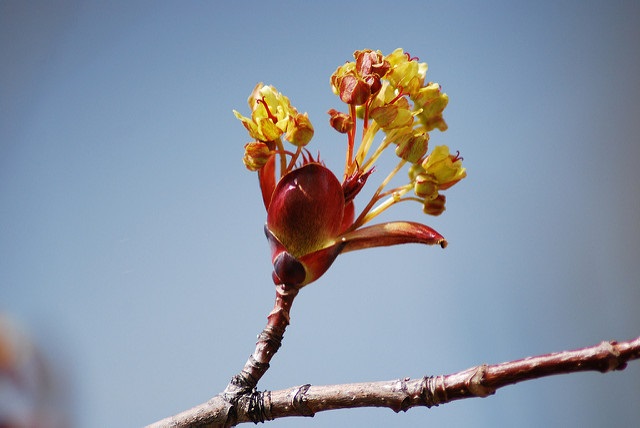
There are signs in nature that tell you when the maple season is over. The temperature stays above freezing during the night ceasing the sap to run up and down the tree. The buds on the trees start to burst open and the sap turns cloudy and is less sweet. A natural siren goes off-spring peepers serenade the woods as they emerge from their winter hibernation. It’s a bittersweet ending for the sugaring season. The transformation of sap to syrup is over for the year, but now the forest has come back to life and it is time for spring.
Learn more about maple sugaring by attending a program at a state park near you!





 New York State Parks and Historic Sites Blog