Companionship with animals ties humans together throughout time. Many of the people who lived and worked at our historic sites had pets who brought them friendship and joy. In our historic collections, we have paintings and photographs of these beloved pets. How do you capture your furry or feathered friends?
Jolly Pets at John Jay Homestead
This portrait of Eleanor Kingsland Field with her pet Italian greyhound was painted in Rome when she was around fourteen years old. Eleanor’s family traveled to Italy frequently during her childhood and this portrait was commissioned during one of her trips. There is a long art history tradition of subjects being painted with their animals. In adulthood, Eleanor married John Jay II, grandson of the famous first Supreme Court Justice, and lived in the family home in Katonah that is now John Jay Homestead State Historic Site.
Eleanor Kingsland Field, Giovanni Battista Canevari, c. 1833, oil on canvas. New York State Office of Parks, Recreation and Historic Preservation. John Jay Homestead State Historic Site. Gift of Westchester County, New York, JJ.1958.295.A
Olana’s Animal Companions
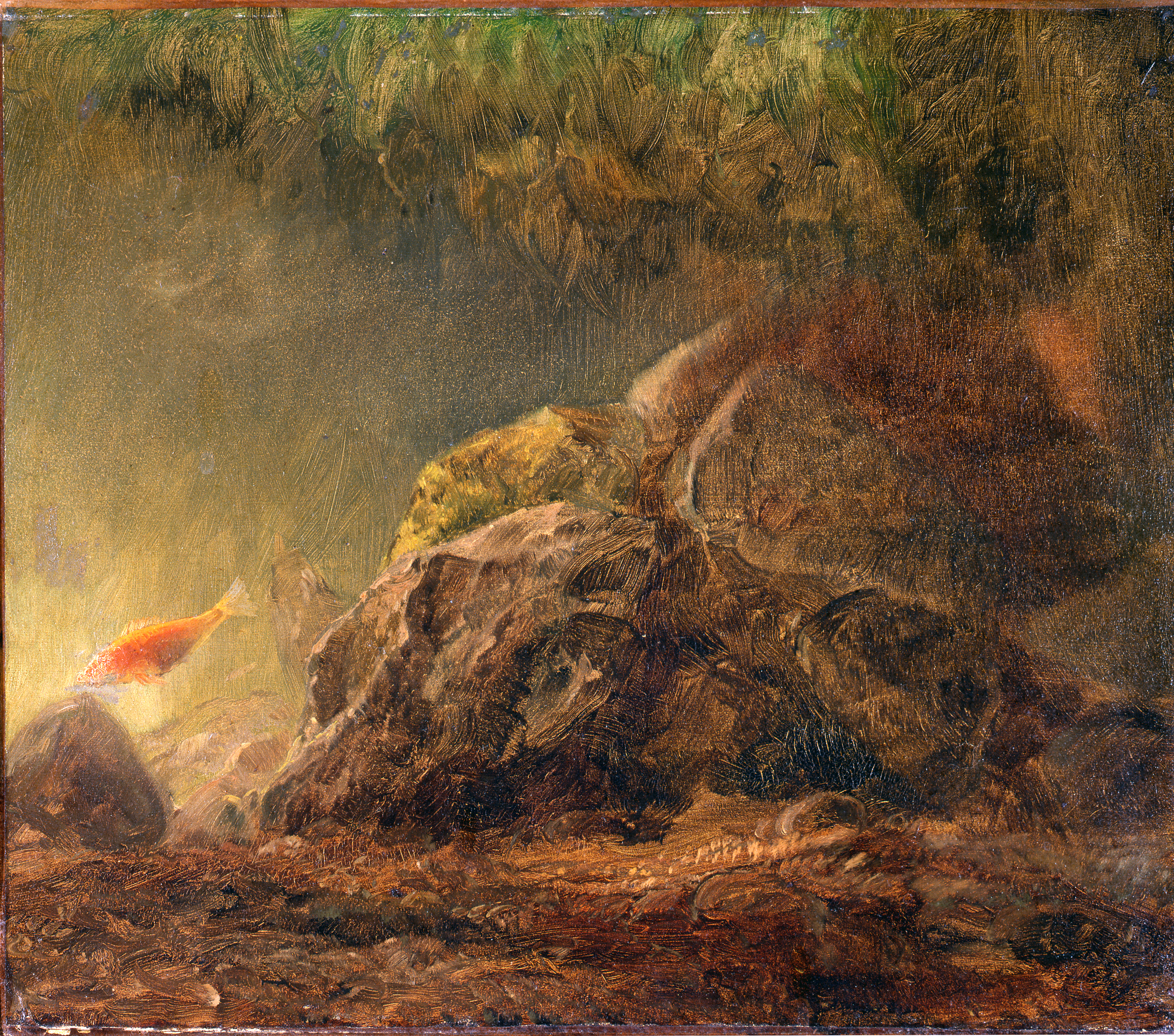
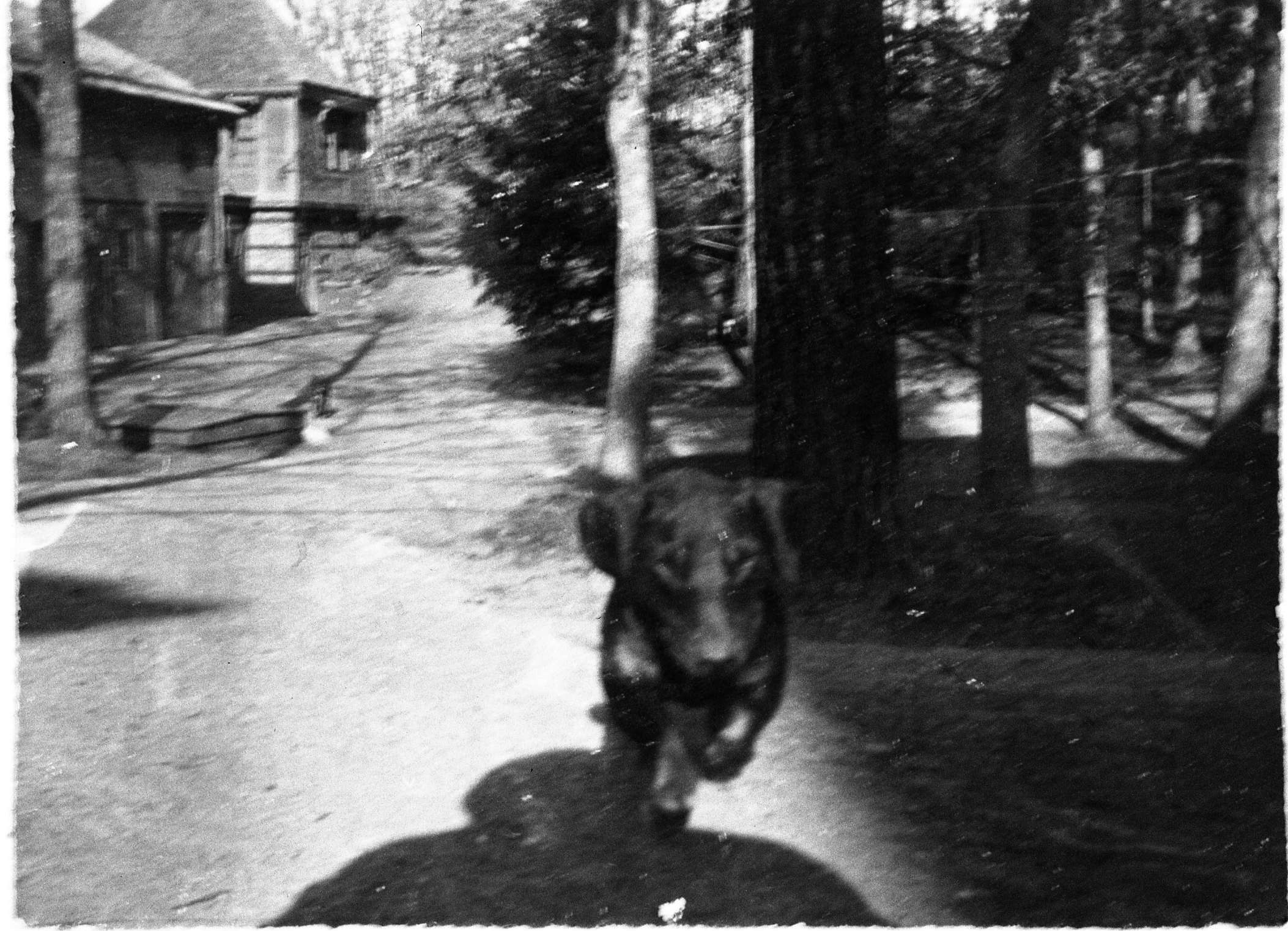
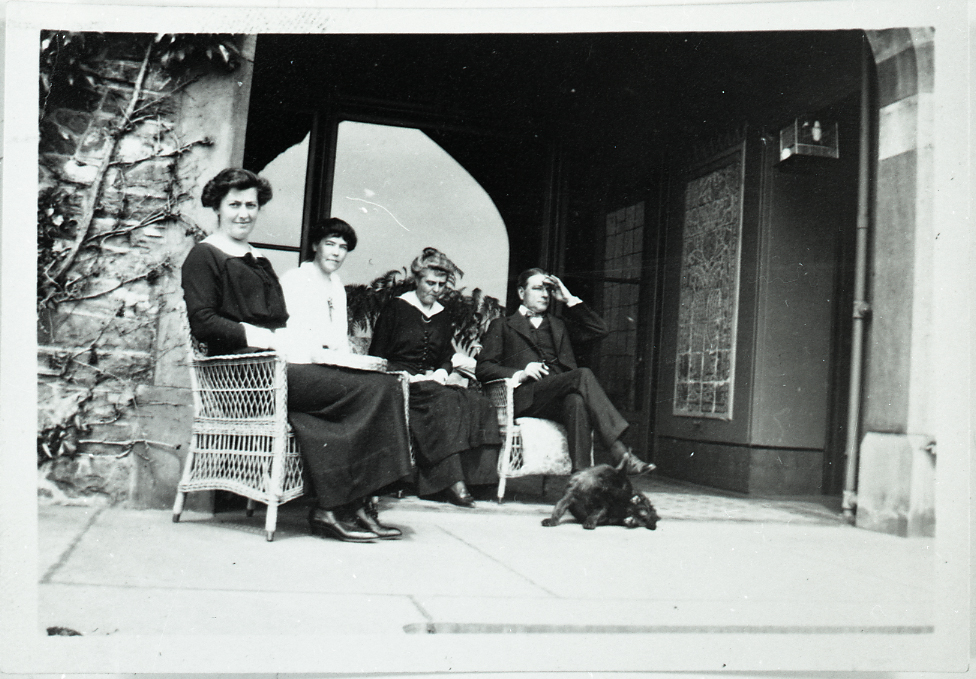
Frederic E. Church and his family lived at Olana State Historic Site outside of Hudson. They had many pets at the family estate, including dogs, a donkey and likely some goldfish. Two large goldfish bowls have survived in the site’s collection. Though this painting is of a goldfish pond, it is believed that Church painted one of the family goldfish from the bowl and created the natural environment around the fish. The painting now hangs in the corridor at Olana’s main house leading to Church’s studio. The family was also pictured with many of their dogs, both inside and outside the house.
Credit: Goldfish Pond, Frederic E. Church, c. 1875-1880, Oil on paper mounted to canvas, New York State Office of Parks, Recreation and Historic Preservation. Olana State Historic Site. Gift of Olana Preservation, Inc. and Museum Purchase. OL.1981.44.A
Credit: Group Seated on Ombra Porch with dog at their feet & Dog Running behind Olana with Carriage House in Background, Photographs, c. 1910-1920. New York State Office of Parks, Recreation and Historic Preservation. Olana State Historic Site. Gift of Olana Preservation, Inc., and Museum Purchase. OL.1987.442 and OL.1987.64
Lorenzo’s Furry Friends
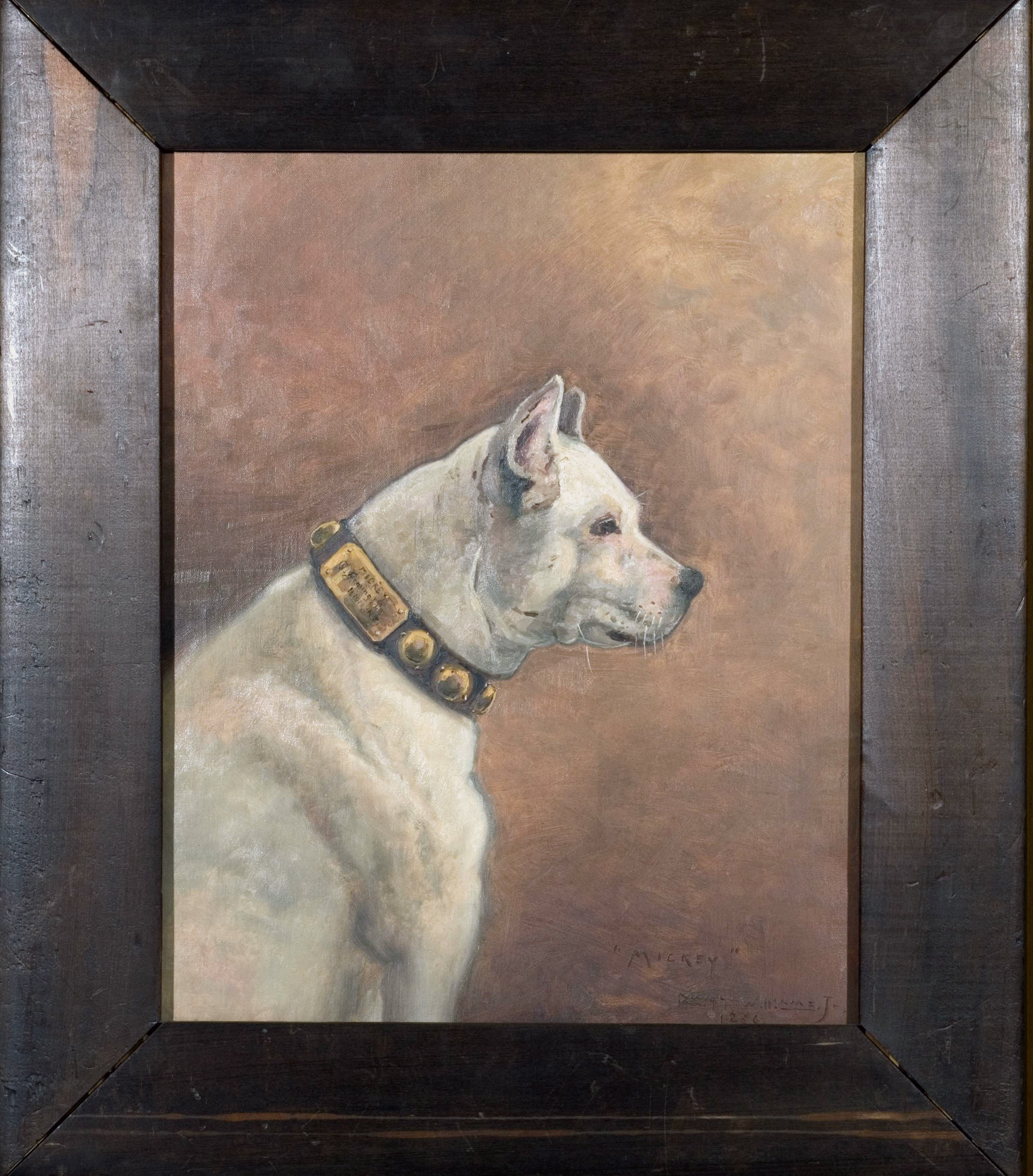
The collection at Lorenzo State Historic Site in Cazenovia also has mementos of cherished pets. Mickey was the dog of Carver Remington, the brother of Eliphelet Remington, one of the owners of Lorenzo in the 20th century. There is a lovely formal portrait of Mickey in profile, painted by central New York artist Dwight Williams.
Credit: Mickey, Dwight Williams, c. 1886, oil on canvas. New York State Office of Parks, Recreation and Historic Preservation. Lorenzo State Historic Site. Museum Purchase, Founding Collection, LO.1974.511.AB
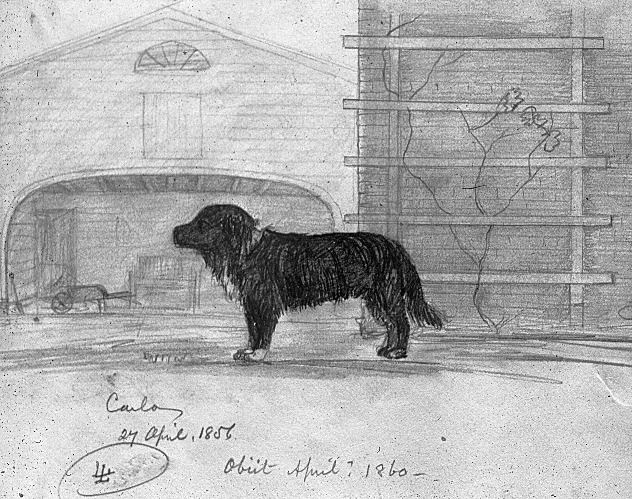
There are also informal renderings of family pets, like this drawing of Carlo. He was the pet of Ledyard Lincklaen, owner of Lorenzo from 1847 until his death in 1864. Carlo is a Newfoundland and shepherd mix. This rendering was done on April 27, 1856. We know Carlo’s breed because he was lost and Lincklaen placed an ad in the Cazenovia Republican offering “a suitable reward paid for his recover.” Thankfully, Carlo was recovered since the drawing adds “Obit April ? 1860,” marking the date of Carlo’s death.
Credit: Carlo, Ledyard Licklaen, c. April 27, 1856, graphite on paper. New York State Office of Parks, Recreation and Historic Preservation. Lorenzo State Historic Site. Museum Purchase, Founding Collection, LO.1976.643.30.B
Clermont’s Cherished Childhood Pets
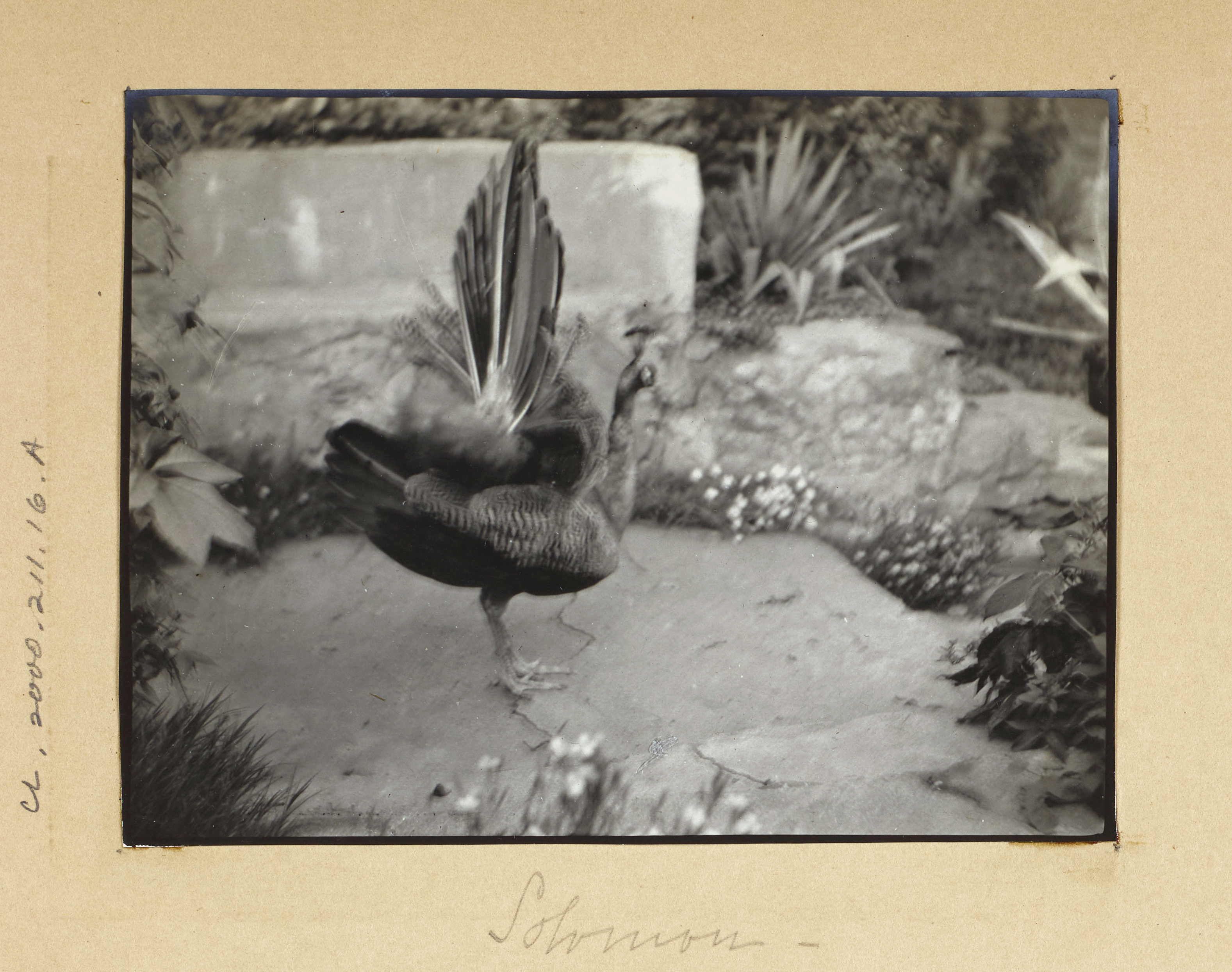
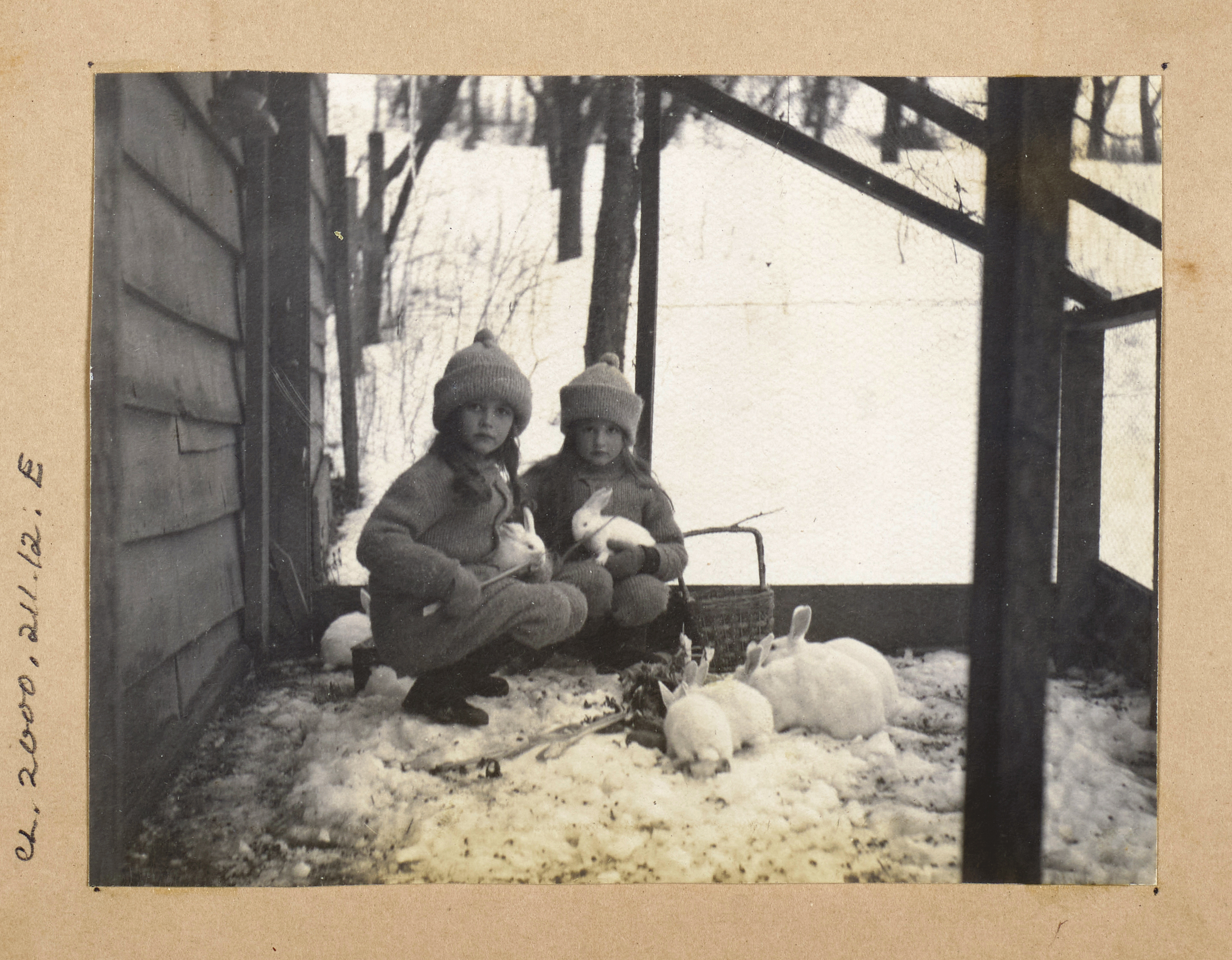
Janet and Honoria Livingston grew up at Clermont State Historic Site in Germantown, one of the Livingston ancestral homes. Their early 20th century childhood was captured in many family photo albums (as seen in a recent blog post on historic costumes). Their pets were frequently included. Their English bloodhound, Rufus, was especially treasured, and features in many photographs. The family also had horses, a pony, rabbits and a peacock named Solomon.
Credit: Solomon the Peacock,Janet and Honoria with Rabbits in Winter, Janet and Honoria Livingston with Rufus, Photographs in Album, c. 1915. New York State Office of Parks, Recreation and Historic Preservation. Clermont State Historic Site. Gift of Honoria Livingston McVitty, CL.2000.211.13.F, .12.E, and .16.A
— Written and developed by Amanda Massie, Senior Curator, Bureau of Historic Sites
If you’re visiting a New York State park or historic site in the Hudson Valley this year, you might have a poetic encounter!
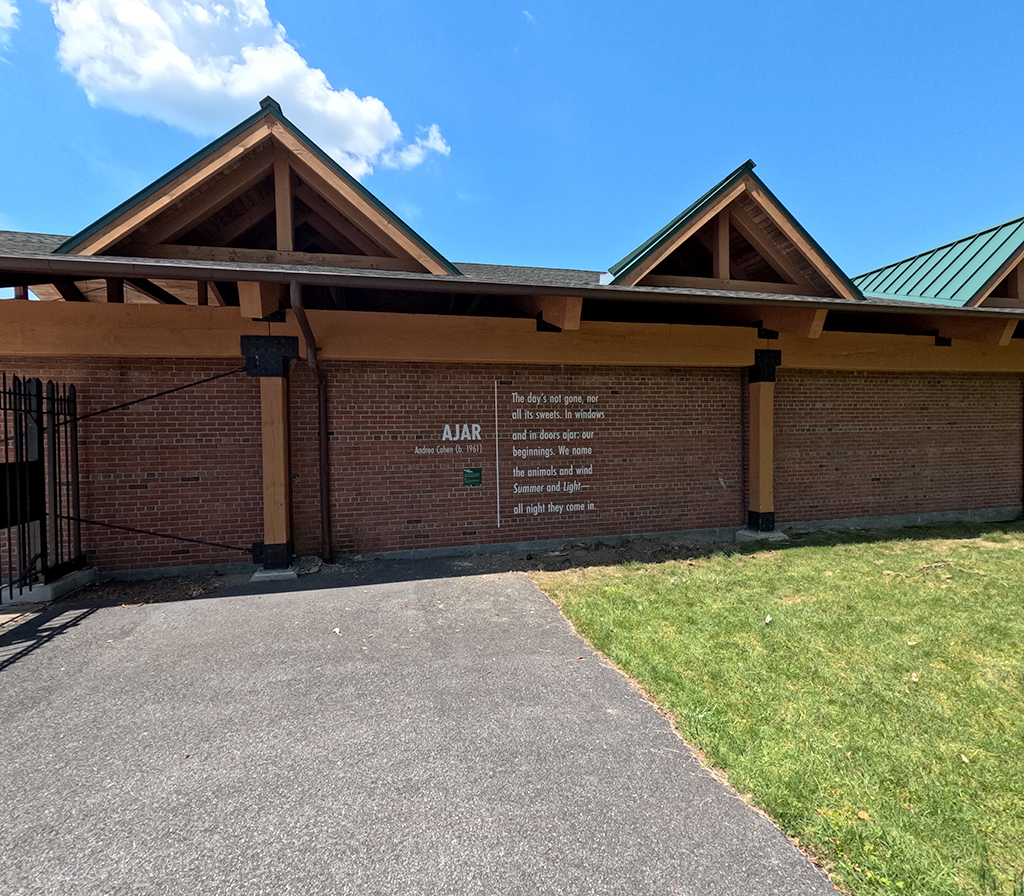
New York State Parks, Recreation and Historic Preservation (OPRHP) is presenting a new temporary public art project, Poetry in the Parks, to celebrate the Parks Centennial. Poems selected by the Poetry Society of America (PSA) and OPRHP are installed in three New York State parks and one historic site stretching from Westchester to Columbia County.
ClermontFDR State ParkLake TaghkanicWalkway Over The HudsonWalkway Over The HudsonThe five poems of the inaugural Poetry in the Parks installation.
This inaugural installation of Poetry in the Parks includes works by Andrea Cohen at FDR State Park in Yorktown Heights; U.S. Poet Laureate Ada Limón and New York Poet Laureate Patricia Spears Jones at Walkway Over the Hudson State Park in Highland and Poughkeepsie; Robert Hass at Lake Taghkanic State Park in Ancram; and Ishion Hutchinson at Clermont State Historic Site in Germantown. Integrated with the architecture found in the parks, the selected poems are meant to be discovered by visitors to help them reflect on the beauty of their natural surroundings.
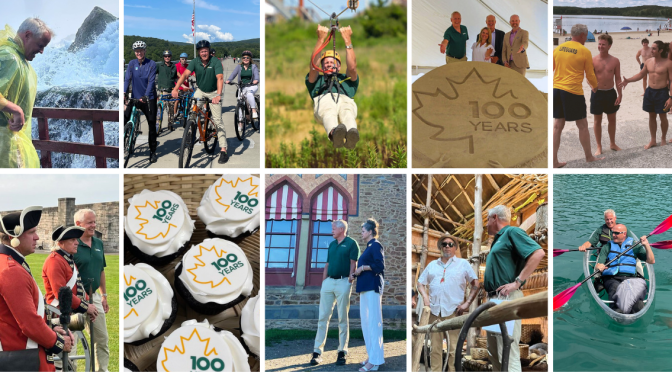
In 2024, New York State Parks and Historic Sites will celebrate our Centennial, commemorating the 100th anniversary of the founding of our parks and sites system. While we have incredible public properties older than the 100-year-old system, the Centennial celebrates the vital legislation that allowed us to build and expand our network of parks and sites, forging the system we know and love today.
As OPRHP Commissioner, I am reminded every day of the immense pride and enjoyment New Yorkers take in our facilities. To prepare New York State residents and visitors from around the world for the exciting year ahead, I recently embarked on a two-day journey to showcase the breadth of our parks and sites system, highlighting various activities and partnerships that make our system so unique.
How do you clean an egg more than a century old? Very, very carefully…
That was the challenge facing conservator Heidi Miksch at the State Park’s Historic Preservation Division at Peebles Island State Park. She had just gotten a case of bird eggs that had been collected in the late 19th century by the children of famous Hudson River School landscape painter Frederic Church.
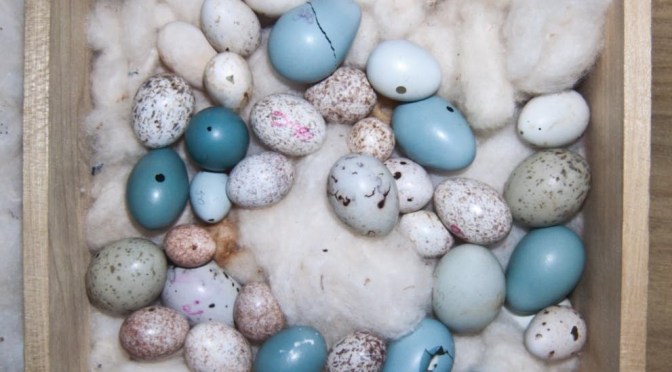
While growing up in the family home at Olana in Columbia County, Church’s four children were part of the then-popular hobby of bird egg collecting, also known as oology or “birdnesting.” The children managed to collect and fill a large case with hundreds of specimens in wooden trays, each in a small labeled box lined with cotton.
The case had been stored ever since at what is now the Olana State Historic Site, where staffers intend to display part of the collection for the first time ever this spring in an exhibit on connections between art and the environment.
*** UPDATE***
Due to the COVID-19 pandemic, this display was cancelled last year. It is now scheduled for June 12, 2021 through October 31, 2021.
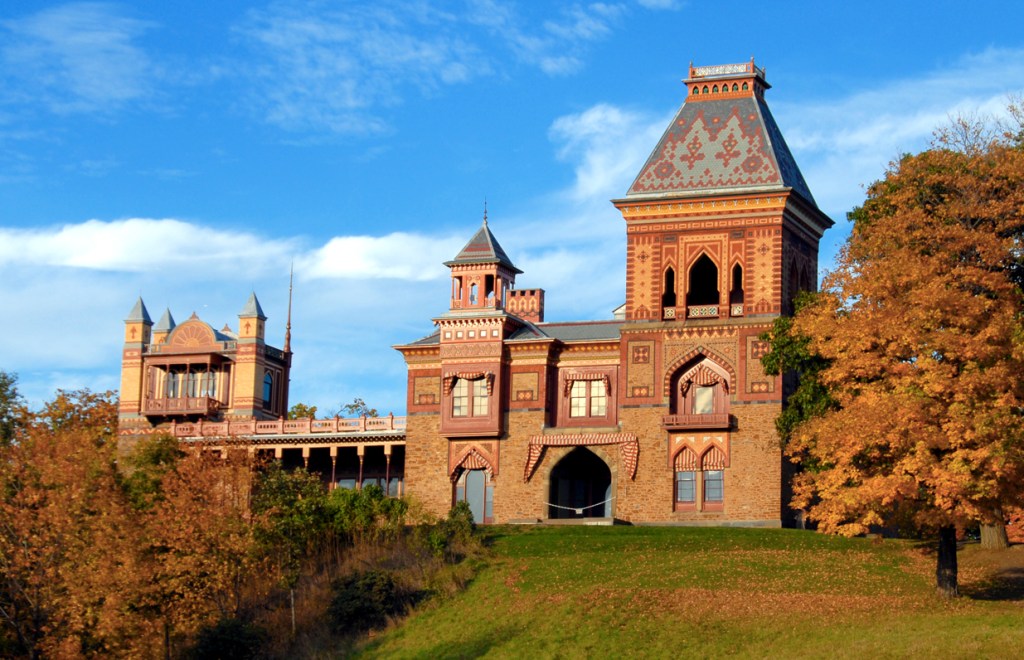
The mansion at Olana State Historic Site, where landscape painter Frederic Church and his wife, Isabel, , raised their four children who took up the popular Victorian-era hobby of egg collecting.
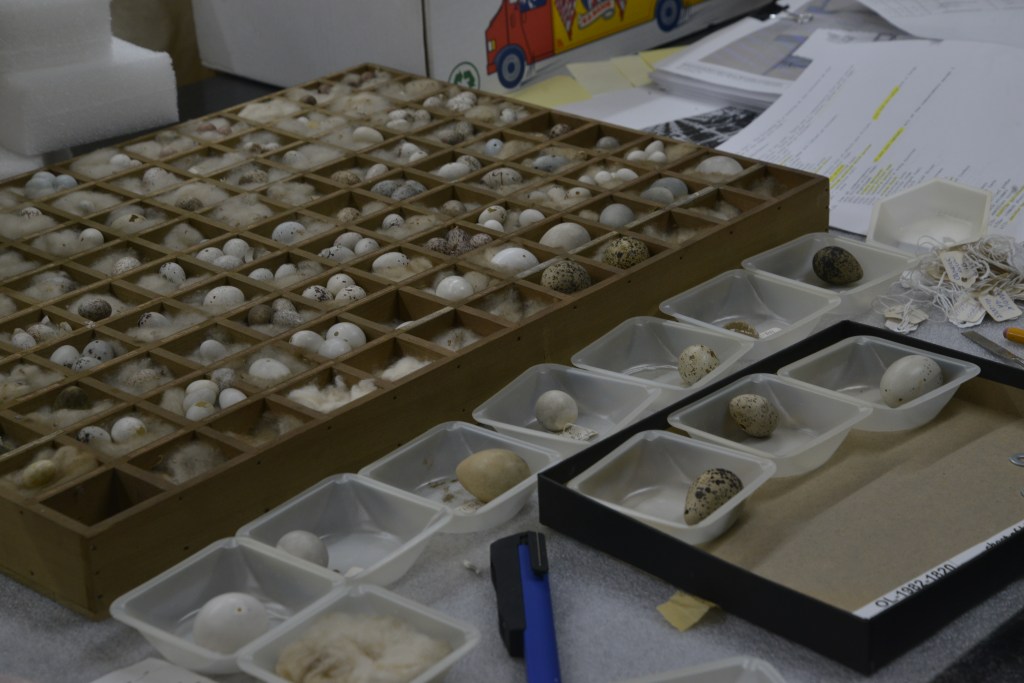
But many of the eggs were blackened with decades of dust and grime, and had to be cleaned before being displayed. So Miksch, who has conserved objects from a stuffed black bear to a piece of the Parthenon, researched a bit, and came up with her technique _ using conservation-grade cotton swabs, a dab of water, and gently rubbing. An average-sized egg takes about 20 minutes to clean, and the case contains eight trays, each with 36 boxes with most boxes containing one or more eggs. Miksch uses water, and not a cleaning solution, for fear of degrading the delicate eggshells.
Curator Heidi Miksch shows how she cleans bird eggs more than 100 years old.
Click through the slideshow as conservator Heidi Miksch (wearing the blue sweater) shows the Church childrens’ egg collection.
“The Church children collected many different kinds of eggs,” said Miksch. “I have even found a flamingo egg in there.” (For the record, a flamingo egg is white and oval in shape, appearing much like an oversized chicken egg.)
In the early 20th century, conservation concerns over the impact of bird egg collecting began to mount, and the practice later was limited in the U.S. under the Migratory Bird Treaty Act of 1918
But when Church’s children – Frederic, Theodore, Louis, and Isabel – were growing up in the Hudson Valley during the 1870s and 1880s, egg collecting was seen as a good way for children to learn about nature while also engaging in healthy outdoor exercise.
To preserve a collected egg, a tiny hole would be drilled into it, and the contents would be aspirated out of the hole, and then the egg would be rinsed out to prevent rot and decay. Or two holes could be drilled and then the contents would be blown out. The empty egg was then carefully stored.
Egg collecting was not just a hobby for children. Cultured gentlemen of the era, particularly in England, amassed large collections and ranged over many nations in pursuit of rare or unusual eggs. One of the world’s richest men at the time, English financier Baron Rothschild, had a collection of nearly 12,000 bird eggs, which now resides in the British Museum of Natural History.
Egg collecting was at its zenith from about 1885 through the 1920s, with children being the vast majority of collectors, according to a 2005 research paper by Lloyd Kiff, past director and curator with the California-based Western Foundation of Vertebrate Zoology.
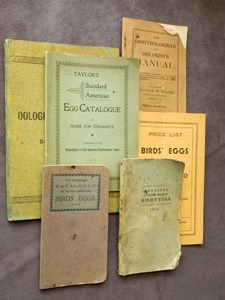
Collectors of the day would trade eggs among themselves. There also were commercial egg sellers, who would offer eggs for sale in catalogs, just like dealers in stamps or coins.
Examples of egg collector catalogs. (Photo Credit- The Western Foundation of Vertebrate Zoology)
An American collector, William Brewster, who in the 1880s was the chair of the American Ornithologists’ Union Committee on Bird Protection, collected thousands of eggs that are now held in the Museum of Comparative Zoology at Harvard University in Massachusetts.
But the hobby began dying out as conservation principles and legal restrictions took hold, and by the 1940s the practice was all but gone. Today, it is illegal to collect bird eggs in the U.S. without a permit issued for research purposes.
The practice is also outlawed in England, although a few fanatical collectors persist despite legal sanctions.
Kiff’s study estimates that there about 80 major egg collections in the U.S., composed of about a half million egg sets, representing some two million individual eggs. These collections have demonstrated significant scientific value in subsequent years, supporting the discovery that exposure to the pesticide DDT was causing eggshell thinning in birds like bald eagles, Peregrine falcons, and pelicans.
This evidence formed the basis of a $140 million federal government settlement with DDT manufacturers in 2001, which Kiff described as the most important ecological use of any bird-related specimens.
“By now, hundreds of eggshell-based studies of (DDT) have appeared in all major regions of the world, and the present ban on DDT use in all but a handful of countries is a direct result of this research.” – Lloyd Kiff
History, Present Status, and Future Prospects of Avian Eggshell Collections in North America, The American Ornithologists’ Union (2005)
He suggests that eggshell collections may also be useful in the future for the study of ongoing climate change and its impacts on birds.
This comes as expertise in this field is fading away, Kiff wrote, adding “The body of traditional oological knowledge may vanish, except on the browned pages of extinct journals, and existing egg collections may gradually become objects of greater interests to historians than to biologists.”
If you would like to see the eggs collected by the Church children displayed in the home where they grew up, visit Olana between May 9 and Nov. 1 for the exhibition entitled “Cross Pollination: Heade, Cole, Church, and Our Contemporary Moment.”
This exhibition features Martin Johnson Heade’s 19th-century series of hummingbird and habitat paintings – The Gems of Brazil – and their relationship to Hudson River School landscape painters Thomas Cole and Frederic Church.
Co-organized by the Olana State Historic Site, The Olana Partnership, and the Thomas Cole National Historic Site, as well as the Crystal Bridges Museum of American Art in Arkansas, this exhibition will also feature work by contemporary artists including Nick Cave, Mark Dion, Jeffrey Gibson, Paula Hayes, Patrick Jacobs, Maya Lin, Dana Sherwood, Rachel Sussman, and Vik Muniz.
And finally … here is a look at that flamingo egg.
Cover Shot- Close-up of part of the Church children’s egg collection. (All photos and videos by NYS Parks unless otherwise noted)
Brian Nearing, Deputy Public Information Officer, NYS Parks








 New York State Parks and Historic Sites Blog