This week marks New York Invasive Species Awareness week!
July 10th – 16th, 2016 the State of New York is celebrating their third annual Invasive Species Awareness Week (ISAW). The purpose of this week is to bring awareness to the public regarding the harmful effects of invasive species around our state. Invasive species are non-native species that inhabit a new environment, causing harm to that new environment. Not all non-native species are considered invasive. In order to classify a species as invasive, it can cause ecological, social, human health, and or economic damage. Invasive species often spread unintentionally through human activity. The trade of goods around the world is one of the primary sources of invasive species transfer. Cargo ships for instance can carry aquatic invasive species in their ballast tanks or insects in their shipping containers. Once established in these new environments invasive species can spread quickly because these ecosystems often have no natural predators or control. The presence of these hitchhikers is one of the leading threats to our native species and ecosystems. By out-competing, preying upon native species or carrying disease, invasive species can be detrimental to native species and the biodiversity of natural habitats.
Water chestnut (Trapa natans) is a submerged rooted plant that can densely cover shallow areas. This not only deprives the water from dissolved oxygen and other essential nutrients, but can also get tangled in boats, swimmers, and fishing line. On an economic stand point, aquatic invasive species like water chestnut, if not treated, can lower shoreline property values. Photo by: By Krzysztof Ziarnek, Kenraiz (Own work) [CC BY-SA 3.0 (http://creativecommons.org/licenses/by-sa/3.0)%5D, via Wikimedia Commons
Japanese knotweed (Fallopia japonica) forms a dense cover that can crowd out native vegetation. This species can greatly affect the biodiversity in habitats. Photo by: By H. Zell (Own work) [GFDL (http://www.gnu.org/copyleft/fdl.html) or CC BY-SA 3.0 (http://creativecommons.org/licenses/by-sa/3.0)%5D, via Wikimedia Commons
Invasive species come from near and far and affect all types of habitats found throughout New York State. Since many of our commercial, agricultural, and recreational activities are dependent on a healthy native ecosystem the presence of invasive species can impact all people and the natural world. Aquatic invasive species such as hydrilla (Hydrilla verticillata), water chestnut (Trapa natans) or zebra mussels (Dreissena polymorpha) have inhabited many of New York’s water ways. On land, species such as Japanese knotweed (Fallopia japonica), can overcrowd native environments.
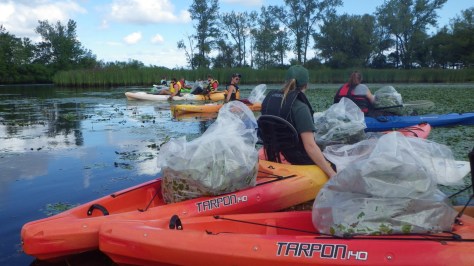
Over the years, NYS Parks has organized invasive species pulls to help lower the effects of invasive species in our park lands. Pictured above are State Parks Boat Stewards pulling Water Chestnut from Selkirk Shores State Park. Photo by Meg Phillips OPRHP
How you can help!
Boaters/Anglers Wash and dry your boat properly. Be sure to remove all plant matter from boat, ballast, prop, trailer and all equipment. Dispose debris correctly. Use aquatic invasive species disposal station if available.
Campers/Hikers/Bikers Check clothing, boots, pets, and camping gear for seeds, plant matter and insects. Clean gear and dispose of debris properly. Use local firewood.
Gardeners Plant only native plants. Educate yourself and others about the importance of using native species. There are many native look-alikes that are just as beautiful.
Whether you are a boater, fisherman, hiker, gardener or simply a concerned citizen, it is important to educate yourself and others on the different species found in your home state. You can make a difference in stopping the spread of invasives! Here you can find information on invasive species found in the State of New York.
Many State Parks have events during New York Invasive Species Awareness Week to involve the public in preventing the spread of invasive species.
Learn more by contacting your local PRISM! Partnership for Regional Invasive Species Management for more information on Invasive Species.
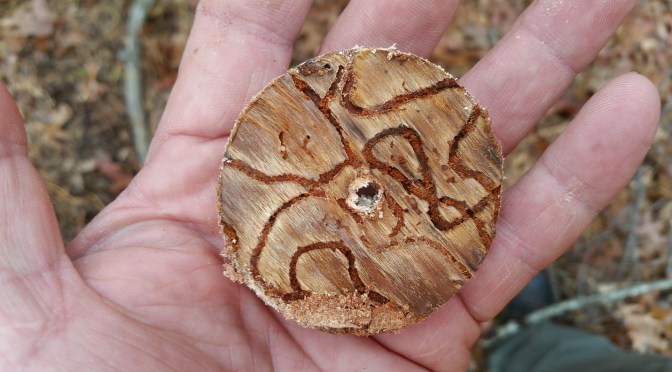
Southern pine beetle has killed thousands of pine trees since it was first found in New York State in 2014. This bark beetle is native to the southern United States, but arrived in New York after working its way northward for many years. Although the beetles are small (2-4 mm; less than 1/8th inch), they are able to kill trees in 2 to 4 months by attacking in large numbers. Once beneath the bark, the thousands of beetles create S-shaped tunnels as they feed on the inner bark, which soon cuts off the nutrients the tree needs to survive and grow.
Southern pine beetle adults somewhat resemble a chocolate sprinkle. These magnified adults are shown over a 1mm ruler. Photo credit: Molly Hassett, NYS DEC
S-shaped tunnels created by southern pine beetle are visible in this round “cookie” or slice of wood from beneath the bark of a pitch pine tree. Photo credit: NYS DEC
In New York, pitch pine trees have been attacked by southern pine beetle more than any other species. Pitch pine trees are often a part of unique, globally and statewide rare ecosystems such as Pitch Pine-Scrub Oak Barrens, Pitch pine-oak heath woodlands, Pitch pine-heath barrens, Pitch pine-oak-heath rocky summits, Dwarf pine plains, and Dwarf pine ridges. In New York, southern pine beetle has been found in trees across Long Island and in traps as far north as Minnewaska State Park Preserve in the Shawangunk Ridge. Large forested and unique areas such as the Long Island Central Pine Barrens Preserve and the Shawangunk Ridge are of the highest priority to protect. Maps of the pitch pine communities of statewide significance created by NY Natural Heritage Program provide further guidance on priorities. Although there are no known means to eradicate southern pine beetle, there are measures to reduce the beetles’ impacts and save some of the susceptible pines.
Map of confirmed southern pine beetle infestations from ground surveys and traps as well as suspected infestations from aerial surveys. Photo credit: Scott McDonnell, NYS DEC
To help fight against southern pine beetle, the NY State Department of Environmental Conservation’s (DEC) Forest Health team has conducted trapping, aerial surveys, and ground surveys to monitor for the beetle and cut infested trees (suppression) to manage the beetle. Currently, suppression efforts are focused in the Central Pine Barrens of Long Island. In some cases, pines are replanted along trails or in areas where impacts have been high. The beetles do not attack small, young trees, so the hope is that some trees will survive and produce seed to maintain pine in these ecosystems.
A southern pine beetle trap hanging from a tree in pitch pine community. The traps are used to detect if beetles are in an area. Photo credit: Tom Schmeelk, NYS DEC
Infested pitch pine trees marked with flagging for suppression (cutting). Photo credit: Molly Hassett, NYS DEC
Southern pine beetle is expected to work its way up the Hudson River corridor. The pitch pine-oak-heath rocky summit community occurs scattered along the eastern NY ridges from the Hudson Valley to the Thousand Islands. DEC monitors sites across the region so that teams can act quickly to contain SPB outbreaks and slow the spread. Photo credit: J. Lundgren, NYNHP
In areas that the beetles were captured in traps, but were not found in trees, such as at Bear Mountain and Minnewaska State Parks, the focus continues to be on early detection and surveying for infested trees. DEC conducts aerial surveys over Bear Mountain and Minnewaska State Parks to map out areas potentially infested with the beetle. These aerial surveys are quickly followed up by ground surveys by DEC, State Parks, NYNJ Trail Conference, and others to verify if the trees are infested. So far, no ground surveys have found infested trees in either of these parks.
Efforts at Connetquot River State Park Preserve on Long Island, one of the hardest-hit areas, are focused on removal of dead trees. State Parks, with help from the Excelsior Conservation Corps (an AmeriCorps program) has been cutting down dead trees killed by southern pine beetle along trails to keep the trails safe and open to visitors. State Parks is also chipping up some of these dead trees to help speed up decomposition.
On the trunk of infested trees, the main symptom of southern pine beetle attack is an abundance of pitch tubes which are usually about the same size and color of popcorn. Photo credit: NYS DEC
Volunteers plant pitch pine trees in white protective netting along a trail at Connetquot River State Park. Hazard trees were cut (piled in the left of the picture) while some non-hazard dead pitch pines were left standing (visible in the background) to provide seeds (cones still present on trees), wildlife habitat, and forest structure. Photo credit: Molly Hassett, NYS DEC
Eastern towhees are common in pitch pine-oak communities and scrub oak shrublands. Photo credit: R. Marshall.
DEC, Parks and Trails New York, and State Parks co-sponsored tree planting as part of I Love My Park Day in Connetquot River State Park Preserve on May 7th, 2016. DEC’s Tree for Tributaries trained volunteers to plant the 600 pitch pine that were donated from New York State’s Saratoga Tree Nursery. The pitch pine trees were raised from seed originating from Long Island and will help maintain the local pitch pine genetics that is adapted to the conditions of Long Island. Through hazard tree mitigation, chipping, suppression, and re-planting pine trees in areas attacked by southern pine beetle such as Connetquot, hopes are that forests will remain safe for public use and maintain their pitch pine components in the wake of southern pine beetle.
Wildfires are nature’s way of thinning the pitch pine forests and woodlands and keeping these ecosystems healthy. Without fire the pines get too dense and are more susceptible to pests like the southern pine beetle. Mechanical thinning (cutting) can mimic some of the ecological processes of fire to benefit the communities of rare species and reduce SPB infestations. Photo credit: J. Lundgren, NYNHP.
For other pitch pine community types or to see what occurs in your county, go to guide.nynhp.org and type “pitch pine” into the advanced search box and check off the community category box.
Post by Molly Hassett, NY State Department of Environmental Conservation and Julie Lundgren, NY Natural Heritage Program
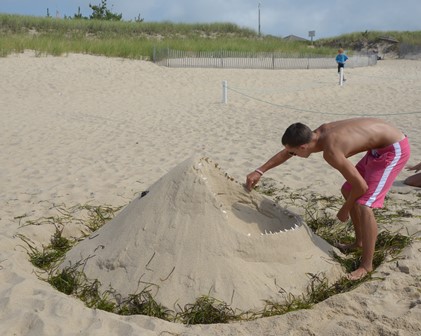
Fourth of July weekend is a great weekend to spend in a State Park or Historic Site. You can build sand castles at Hither Hills State Park to camp on the banks of Lake Erie at Evangola State Park, fish in the St. Lawrence River at Wellesley Island State Park, listen to a reading of the Declaration of Independence at Stony Point Battlefield State Historic Site, take a hike, enjoy the forest and more. Find out all that State Parks has to offer this weekend at nysparks.com.
Take a hike on the Indian Ladder Trail at Thacher State Park, Photo by OPRHPHear the cannons firing at Stony Point Battlefield State Historic Site, photo by OPRHPTry your hand at fishing at Wellesley Island State Park, photo by OPRHPPlay one of George Washington’s favorite games at Schuyler Mansion State Historic Site, photo by Schuyler Mansion State Historic SiteTour the gardens at Lorenzo State Historic House, photo by OPRHPCheck out the Farm Market at John Jay Homestead State Historic Site, photo by OPRHPEnjoy a cool gorge in the Finger Lakes Parks or at Whetstone Gulf State Park – photo by OPRHPBuild a sand castle at Hither Hills State Park, photo by John Williams, OPRHPPicnic by the lake, Glimmerglass State Park, photo by OPRHPGet to know the residents, salamander program at Allegany State Park, photo by Tom LeBlanc OPRHPTry your hand at golfing at Rockland Lake State Park, photo by OPRHPGo biking at Grafton Lakes State Park, photo by OPRHPCamp at Cherry Plain State Park, photo by OPRHPGo boating in the Finger Lakes, Allan H. Treman State Park, photo by OPRHPMarvel at old-growth trees in Allegany State Park along the Conservation or Eastwood Meadows Trails – photo of old-growth ash tree in Allegany State Park by J Lundgren, NYNHPSee the fireworks at many parks across the state, photo by OPRHPOr enjoy a quiet evening sunset, Golden Hill State Park, photo by OPRHP
New York State Parks is abuzz with excitement for pollinators. From June 20-26, we celebrate both National Pollinator Week and New York State Pollinator Awareness Week. Our local bees, butterflies, moths, birds and other pollinators are to thank for most of the food we eat, as well as for many of the trees and flowers we enjoy every day. As these animals go from flower to flower to drink nectar, they accidentally carry sticky pollen from the anthers to the stigma, the male and female parts of flowers. This fertilizes the eggs, which grow into seeds and fruits that we enjoy.
One of the ways you can show appreciation for these fantastic pollinators is to get out to natural areas in State Parks and enjoy the native flora. You can also explore native plant gardens and learn more about using native plant species in your own backyard to attract pollinators. Last year we paid homage to a few of our favorite New York pollinators. This year, let’s have a closer look at some of the plants and the pollinators that visit them.
Just as pollinators come in all shapes and sizes, so too do the native plants that they enjoy. Different plants attract different types of pollinators. Look for all kinds of flowers in the woods, wetlands, meadows, gardens or orchards and you are apt to see some pollinators at work. Below are some of the native pollinators and flora found in State Parks, with photos from the NY Natural Heritage Program. NYNHP works in partnership with State Parks (OPRHP) to assess and conduct inventories of natural areas in state parks and helps to protect habitats that support common and rare species alike, including these important pollinators.
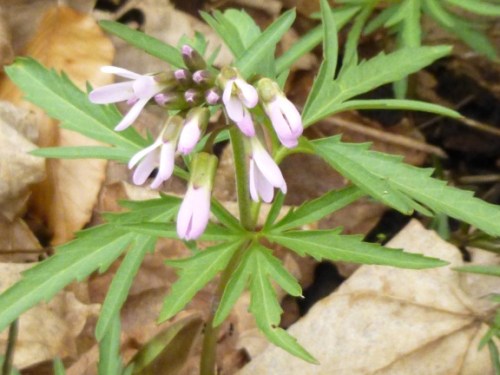
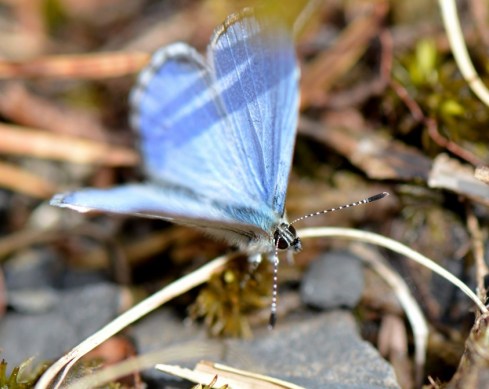
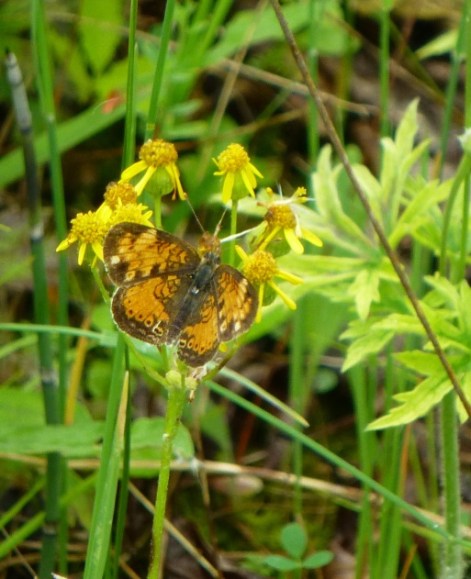
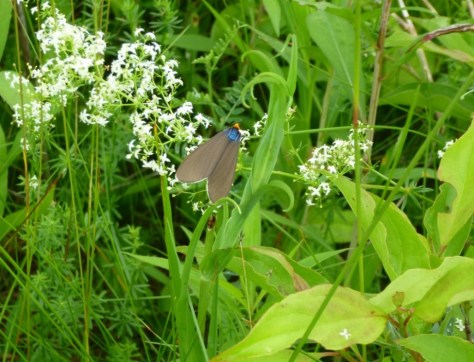
Pollinators emerge as soon as there is nectar available for them to feed on. This native wildflower, cutleaf toothwort (Cardamine concatenata), was blooming the first week of April. Photo by J. Lundgren, NYNHP.Pink lady’s slippers (Cypripedium acaule) bloom in June and are pollinated by various kinds of bees. Photo by T. Howard, NYNHP.A Juvenal’s duskywing (Erynnis juvenalis) feeds on wild geranium (Geranium maculatum), a common native wildflower of woods and openings. Photo by K. Perkins, NYNHP.The more showy spring azure butterfly emerges early in the spring and can be seen flitting about sunny trails and open areas. Photo by M. Adamovic for NYNHP.Bumblebees (Bombus spp.) are one of the most effective pollinators. You can see how the pollen sticks to its fuzzy body as this bee feeds on the nectar of this native goldenrod. Photo by J. Lundgren, NYNHP.A Pearl crescent butterfly (Phyciodes tharos) feeds on ragwort (Packera aurea) that grows along river shores and wet areas. Photo by J. Lundgren, NYNHP.Moths help pollinate too. Though most moths prefer night, this one is a daytime moth, seen here feeding on bedstraw (this one is non-native, but we have some native bedstraws too) and moving the pollen around in the process. Look for this native moth, the Virginia Ctenucha (Ctenucha virginica) in meadows with flowers from May to July. The caterpillars feed on grasses, so unmown meadows can provide everything this moth species needs year-round. Photo by J. Lundgren, NYNHP.In late summer and fall, the bright colors of asters and goldenrods are especially attractive to bees and many other insects. The native New England Aster (Symphyotrichum novae-angliae) blooms from August to September. This one is being visited by the Common Eastern Bumble Bee (Bombus impatiens). There are many species of bumblebees, but this one is by far the most common in the state, so the one you are most likely to see. Photo by J. Lundgren, NYNHP
Whether you are a hiker, gardener, farmer, or food-lover you can enjoy and support our local pollinators! Maintaining natural areas, meadows or gardens with a variety of plants can help to sustain all the life stages of a wide range of insects from bees to butterflies.
If you are interested in creating a backyard oasis for native pollinators, look for plants that are native to your area of the state and, if possible, grown near where you live. Consider planting different types of flowers; gardens with an array of flowers blooming at different times provide food for a variety of pollinators throughout the season. Look for white, yellow or blue flowers to attract bees. Red tubular flowers attract hummingbirds (bees don’t even see red). Butterflies prefer bright flowers, particularly reds, oranges, and purple (like fall asters). Moths are attracted to white, purple, or pink flowers with strong, sweet scents, especially those emitting a scent at night. See resources below on pollinators and native plants in your area.
State Parks is celebrating pollinators at these events across the state:
Clay Pit Ponds State Park – Time Tuesdays, June 21 @ 10am
Learn about our native pollinators by making crafts, playing games, and socializing with other toddlers! Parent or care giver is required to stay. Ages 1-3 (flexible). Please call (718) 605-3970 ext 201 for more information.
Saratoga Spa State Park – Butterfly Walk Friday, June 24 @2:00pm
Did you know restoring a habitat is like building a neighborhood? Come enjoy a light hike at the Karner Blue site and learn what butterflies live in the same neighborhood as the Karner Blue butterfly. Please wear hats and sunscreen. You may want to bring binoculars or a magnifying glass to see butterflies up close. This program is appropriate for ages 7 and up. Registration is required. Please call 518-584-2000 ext. 122. This program is free.
Thacher Nature Center – Honeybees Are Buzzin’, June 25 @ 2pm
Summertime brings flowers and a hive packed with activity! Come and learn all about honeybees as you view the colony in our indoor observation hive. See the busy workers, the specialized drones and the ever-important queen bee in action! Learn how to dance like a bee, and view the world from a bee’s perspective. Afterwards, take a walk to observe our honeybees at work in the gardens. Please register by calling 518-872-0800.
Letchworth State Park – Butterfly Beauties, June 26 @ 2pm
Study the beauty and composition of hundreds of dried butterfly specimens representing most of the world’s butterfly families. Dozens of local and New York species, as well as those found in the Niagara Parks Butterfly Conservatory, are specially noted. Butterfly structure and local natural history will be featured in two new butterfly videos. This is an excellent primer for the Butterfly Walk on July 9th. (Look for details in the upcoming summer issue of The Genesee Naturalist.) All workshops meet in the Conference Room in the Visitor Center and Regional Administration Building located in Letchworth State Park. Please call (585) 493-3680 for more information.
Ganondagan State Historic Site – Planting for Ethnobotany Workshop Saturday, August 6, 2016 @9:00am-11:00am
Participants will help plant native plants in the Green Plants Trail and the Pollinator Grassland at Ganondagan. Ages 8 and up. Registration Required. Please call (585) 924-5848 for more information.
Please note, some of the plants listed in this resource are native to the ecoregion but not to NY state. Please check the NY Flora Atlas to confirm which are native to New York before choosing your planting list.
— NY Flora Atlas – list of plants known in NY and which are native or not
On June 1st in Allegany State Park, the first fireflies of the season were spotted, bringing great excitement. Why? Lots of parks have fireflies, but not the Synchronous Firefly – once thought to exist in only a handful of places in the world, but now known in scattered locations from Georgia to southwestern New York. The (Photinus carolinus), flashes only from late June to mid-July and prefers dark mature forests, over 1200 feet with low vegetation and a water source. Fireflies or lightening bugs are actually a beetle that can produce its own luminescent light. Each species of firefly (there are over 170 species in the US) has its own unique flash pattern. Colors differ too. The male Synchronous Fireflies flash 8 to 10 times all in unison, then they stop for 10-15 seconds depending on the temperature. They wait for the female to flash back, then they repeat the display again and again into the wee hours of the morning. The best time to see this phenomenon is between 10 pm to 2 am.
Once they find each other, they mate, the females lay eggs, and then the adults die. The larvae hatch in a 3-4 weeks and devour worms and slugs. These small, blackish caterpillar-like predators inject their prey with a fluid which causes numbness, then they suck out the gooey innards. The larvae hibernate in small burrows in the soil and emerge as adults in a few months.
Some people ask, “Why don’t we see as many fireflies as we did as children?” Are we just not noticing? Or not outside as much? Unfortunately, firefly populations have declined, mainly due to light pollution, habitat destruction, and pesticides. How can you help? Check out www.firefly.org to find to more information or take part in a Firefly Watch though the Boston Museum of Science. To see what the firefly display looks like, check out Radim Schreiber’s website.
Catching fireflies is a fun summer activity, you can put them in a jar to get a close-up look. But then let them go so they can find their mates and contribute to the next generation for us to enjoy next year.
Allegany State Park will be offering special programs to provide visitors with the opportunity to view the Synchronous Fireflies this June. Please check our Facebook page in mid-June for more information. In the event of severe thunderstorms, the event will be cancelled. However, the fireflies do display in rain and you may still observe them on your own if you wish. Displays of the Synchronous firefly are best observed in a dark mature forest in order to experience the full effect. And if you miss these, you can watch for other more common species of fireflies in your back yard, campsite, or parks across the state from June to August. For information on this and other programs, please check Allegany State Park’s activity schedule on Facebook or call 716-354-9101 ext. 232.
Post by Adele Wellman, OPRHP, Allegany State Park, Lead Naturalist


![Water chestnut (Trapa natans) is a submerged rooted plant that can densely cover shallow areas. This not only deprives the water from dissolved oxygen and other essential nutrients, but can also get tangled in boats, swimmers, and fishing line. On an economic stand point, aquatic invasive species like water chestnut, if not treated, can lower shoreline property values. Photo by: By Krzysztof Ziarnek, Kenraiz (Own work) [CC BY-SA 3.0 (http://creativecommons.org/licenses/by-sa/3.0)], via Wikimedia Commons](https://i0.wp.com/nystateparks.blog/wp-content/uploads/2016/07/water-chestnut.jpg?w=247&h=164&ssl=1 "Water Chestnut")
![Japanese knotweed (Fallopia japonica) forms a dense cover that can crowd out native vegetation. This species can greatly affect the biodiversity in habitats. Photo by: By H. Zell (Own work) [GFDL (http://www.gnu.org/copyleft/fdl.html) or CC BY-SA 3.0 (http://creativecommons.org/licenses/by-sa/3.0)], via Wikimedia Commons](https://i0.wp.com/nystateparks.blog/wp-content/uploads/2016/07/japanese-knot-weed.jpg?w=219&h=164&ssl=1 "Japanese Knot Weed")










 New York State Parks and Historic Sites Blog
