The Force was with our intrepid volunteers and friends on Saturday, May 4, 2024, as the 13th I Love My Park Day took place across New York. More than 150 state parks, historic sites, and public lands welcomed thousands of volunteers to help rake and plant flower beds, clear trails, paint benches, build birdhouses, clean up beaches and public spaces, clear away invasive species, and get the parks looking fantastic for the busy season ahead.
Environmental conservation was a driving force in creating New York’s state parks system that you know and love today. From protecting Niagara Falls from industrial development to preserving the views outside of Albany at Thacher State Park, our agency has been working to preserve our lands and make them available for public enjoyment since its founding. This simple mission has taken on a different meaning in the face of climate change and the shift to clean energy. Here are some ways we’re meeting the challenges of environmental conservation in the 21st century.
Shifting to Renewable Energy
New York State Parks is charged with shifting all operations to renewable energy by 2030, either through the purchase of renewable energy or through generating our own.
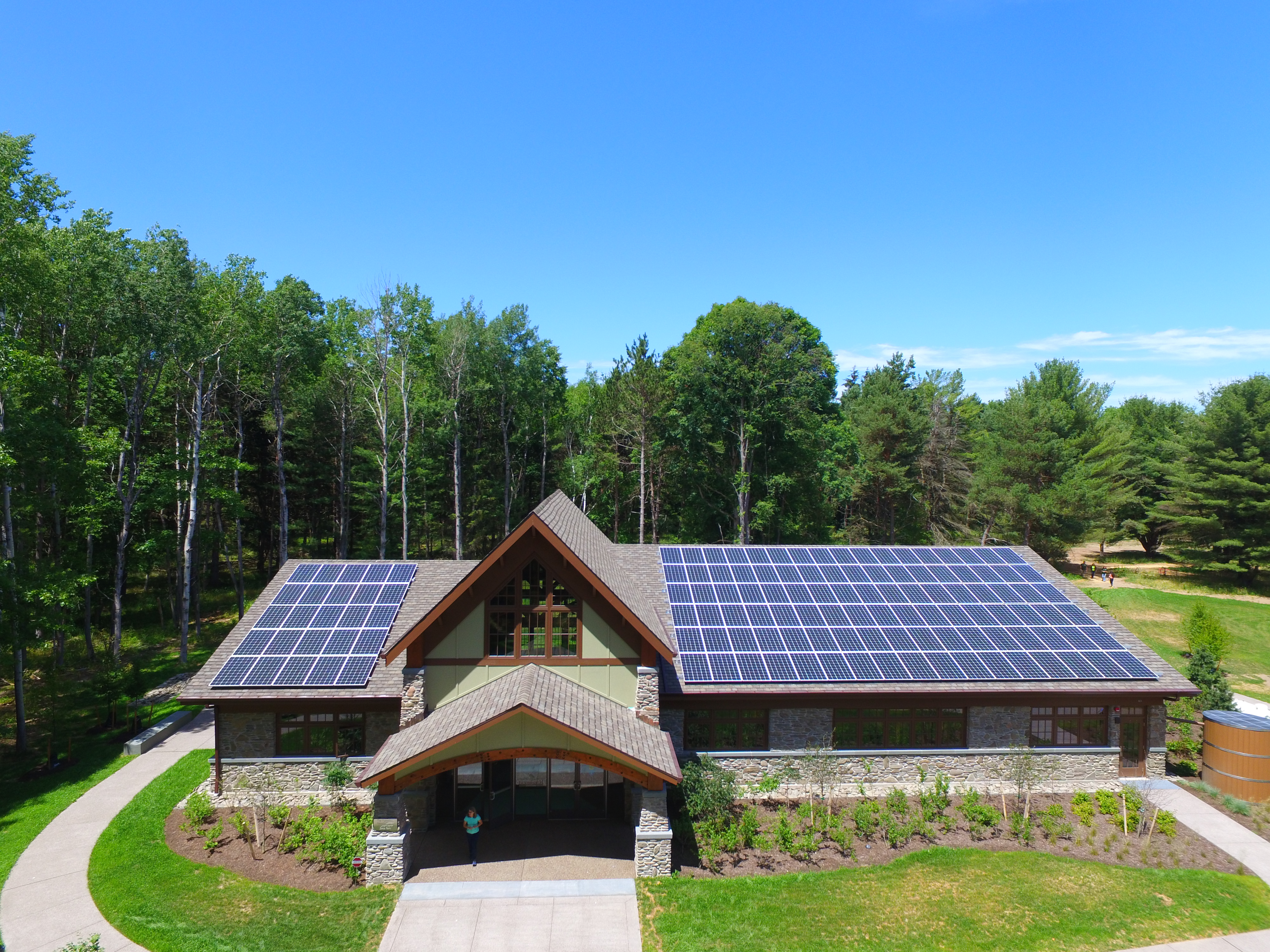
The solar array on the visitor center at Letchworth State Park in Livingston and Wyoming Counties.
Statewide, Parks operations consume around 45 million kilowatt hours of electricity (the same annual usage as about 4,000 homes). The agency currently has 50 solar arrays around the state generating more than 6MW, which help reduce carbon emissions and save money. This includes everything from roof-mount arrays to large ground-mounts built in pre-disturbed areas like the back of parking lots.
The days are getting longer, and it won’t be long before the swim season is here! 2024 kicked off with the exciting announcement of NY SWIMS: the largest investment in public swimming in nearly a century.
This multifaceted program seeks to provide all New Yorkers with access to safe swimming opportunities, particularly in underserved and heat-prone communities. It calls for new or revitalized swim areas at Sojourner Truth, the East Bathhouse at Jones Beach, and Lake Sebago at Harriman State Park. It expands our existing learn-to-swim program, supports lifeguard recruitment and retention, provides transportation to people who can’t otherwise access swimming, and includes grant funding for communities to build or renovate swimming facilities.
The NY SWIMS program also has a serious goal: to reduce childhood drowning. On average, 11 people drown every day in the United States during the summer. Drowning is the leading cause of death among children aged one to four years old in the United States, and the second-leading cause of death for children aged 5 to 14. Children with autism are 160 percent more likely to die from drowning. Other medical conditions also increase drowning risk. As you begin to plan your summertime swimming adventures, here are some tips to keep it safe.
Happy birthday to us! The New York State parks and historic sites system is now 100 years old, and we celebrated our founding and lit up almost two dozen landmarks around the state in Parks green and Centennial gold to mark the day last week.
Although several of our parks and historic sites have existed for more than 100 years—Washington’s Headquarters State Historic Site and Niagara Falls State Park, for example—it was on April 18, 1924, that the State Council of Parks (SCOP) was formed, creating our modern parks system.
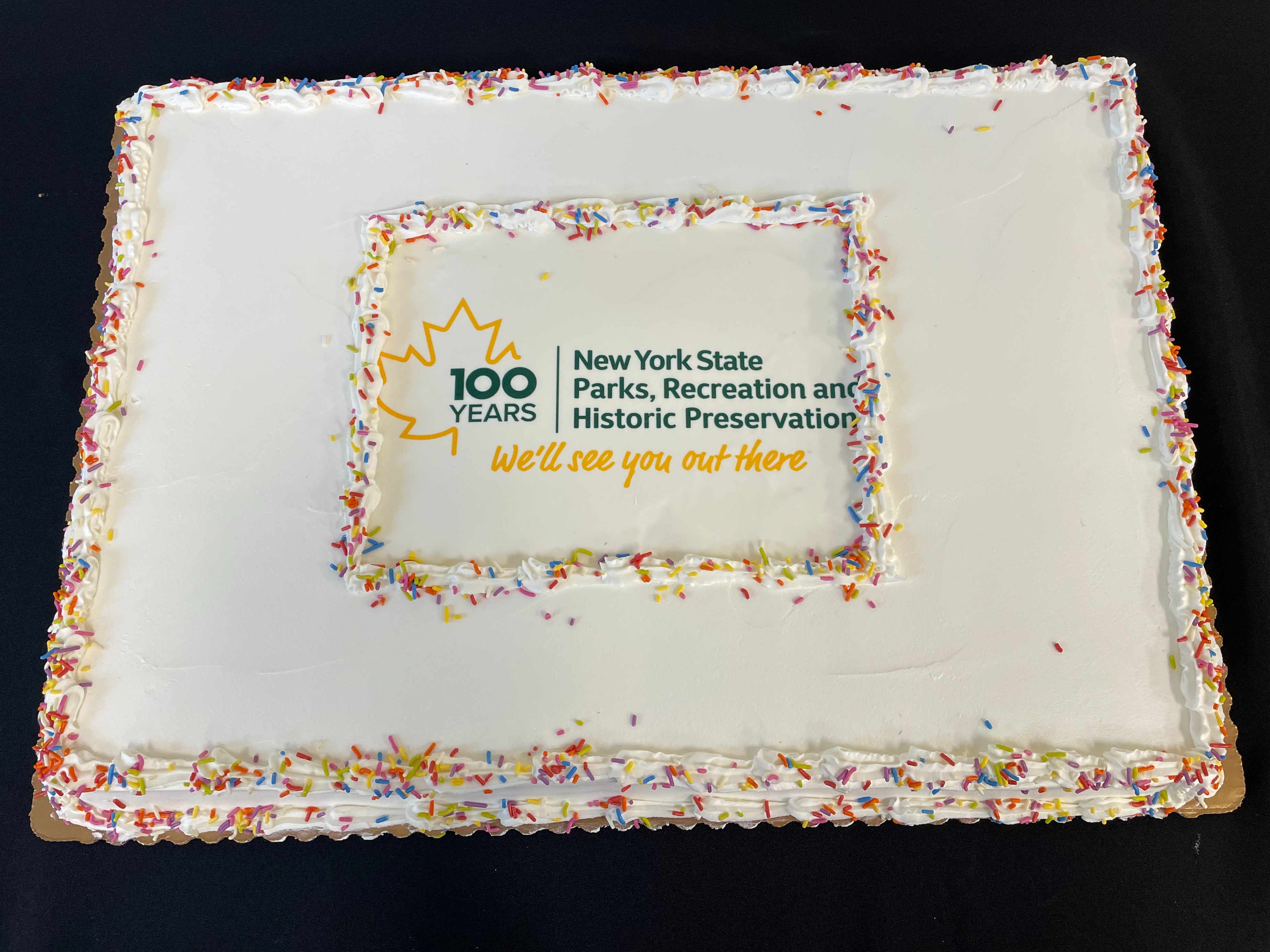
A Centennial birthday cake at the newly opened Robert H. Treman exhibit reception in Ithaca.
Established by Governor Alfred E. Smith and the New York State Legislature in 1924, SCOP and subsequent voter support for a $15 million Bond Act placed the future of many of New York’s public lands in our hands. Alongside great partners, staff at our agency have served as stewards since then, preserving New York’s most treasured lands and historically significant places. Today our system spans over 250 properties in every part of the state, improving the lives of millions of New Yorkers and connecting communities to the outdoors.
Missed our birthday? No problem. We created a video recap documenting the events of the day. You can find this video, along with other Centennial content, on our YouTube channel. Be sure to subscribe if you haven’t already, as we’ll be adding even more announcement videos into this digital goody bag as the year goes on!
A couple of days before a certain round celestial body passed in front of another certain round celestial body, the New York State Park Police added a nice “round” number – 20 new graduates – to its ranks. Some of these new officers were put right to work – sent to the path of eclipse totality to help with an influx of visitation. Nearly one million people visited New York’s state parks and historic sites between April 6 and 9 to witness the eclipse.
After the eclipse, the new officers will spend the next couple of months in field training. They are assigned regionally to learn and prepare to serve State Parks’ 250 properties. Last year, our agency saw record attendance of 84 million, so the need for personnel has not slowed. The new officers will receive supervised training from senior officers, followed by assignment to patrol responsibilities.





 New York State Parks and Historic Sites Blog