The fuzzy, stout body is typical of moths. This black-waved flannel moth (Lagoa crispata) is uncommon in New York. Photo: M. Schlesinger, NYNHP
It’s National Moth Week! So let’s learn a little more about them.
Moth or butterfly?
Moths and butterflies are members of the order Lepidoptera (Greek for scale and wing). Most butterflies have club-shaped antennae – a thin stem with a ball at the end – whereas moths usually (but not always) have feathery antennae like the luna moth above. Moths often have fuzzy, short bodies compared to the more slender, smoother body of butterflies.
The Luna moth (Actias luna) is one of our largest moths. Photo: K. Smith, NYNHP
Are all moths small and brown?
Many moths are small and brown, tan or white. But many are much fancier; in fact you may have mistaken some colorful ones for butterflies. Sometimes the colors are hidden while the moth is at rest, but revealed when in flight, like the tiger moth. The silk moths are spectacular in size and color – such as the Luna moth above.
A bird dropping moth (Eudryas sp.) Photo by T. Weldy, NYNHP
Virginia Ctenucha (Ctenucha virginana). photo by J. Lundgren, NYNHP
How many different kinds of moths are in NY State?
There are over 1,000 moth species in the state. A single State Park can harbor dozens to hundreds of different species of moths. Larger parks and those with rare habitats are great examples of places that support a diversity of different species of moths. To date, scientists have identified about 90 species in Watkins Glen and Taughannock State Parks, over 300 species in Minnewaska State Park Preserve, and nearly 500 species of moths each at Hither Hills and Napeague State Parks!
The sphinx moth – or hawk moth – can be mistaken for a hummingbird. Look for them hovering over flowers. There are many species in this group of moths. Photo by T. Weldy, NYNHP
Where and how do you find moths?
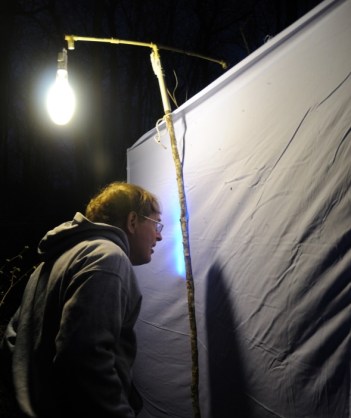
Most moths fly at night. The easiest place to see moths is at a porch light or around the lights of campground buildings. For better viewing hang a sheet or light colored cloth up with a light next to it. The moths will land on the sheet (see below) so you can get a close up look without even touching them. Other moths prefer daytime or can be seen resting during the day.
Moth expert Tim McCabe from the NY State Museum examines moths that were attracted to the light during a survey in Taconic State Park. Photo by George Heitzman
Why are those moths in boxes?
A lot of moths are difficult to identify. So scientists collect and preserve specimens in order to look at them closely to identify them. Collections are also important as a permanent record of what species were found at a site. Each specimen is labeled with location, date, and species name. Then the specimens are placed in ‘safe storage’ in a museum such as the New York State Museum or a university collection where they can be used for other research or study.
These are some of the moths found in hemlock forests in the Finger Lakes State Parks. The top row shows some of the ornately patterned tiger moths. Photo by J. Lundgren, NYNHP
NY Natural Heritage Program zoologists prepare and preserve moth specimens from surveys in State Parks (OPRHP). Experts identify these specimens and each specimen is labeled with the name, date, and location. Photos by J. Lundgren, NYNHP
Experts identify these specimens and each specimen is labeled with the name, date, and location. Photos by J. Lundgren, NYNHP
Are there rare moths in State Parks?
Yes! For example, four rare moth species have been found in Minnewaska State Park Preserve and over 30 rare moth species have been documented in Napeague and Hither Hills State Parks on Long Island. Some have fun names like fawn brown dart (Euxoa pleuritica), pink star moth (Derrima stellate), chocolate renia (Renia nemorali) and black-bordered lemon moth (Marimatha nigrofimbria). Most areas of the state have not even been surveyed for moths, so there is much more to learn. Currently, over 100 species of moths have been identified as rare in the state. See the NYNHP Rare animal list for the listing of New York’s rare moths.
A rare noctuid moth (Apamea burgessi) Photo by H. McGuiness
The pink star moth (Derrima stellata) is rare in the state. Photo: Tom Murray, 2011, accessed from BugGuide, http://bugguide.net/node/view/549324
Quiz: What moth does this caterpillar become?
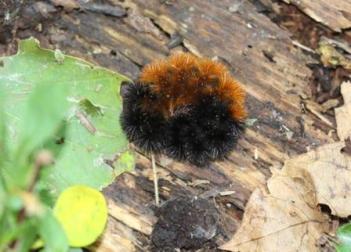
The woolly bear caterpillar is the young phase of what moth? Answer at bottom of page. Photo by M. Schlesinger, NYNHP
Quiz answer: The woolly bear caterpillar (Pyrrharctia isabella) becomes the Isabella tiger moth (Pyrrharctia isabella). Moths are one of the few groups that have different names for different life stages of the same animal. This is one reason why scientific names are important; from the common names we might think this caterpillar and moth were not related.
This week marks New York Invasive Species Awareness week!
July 10th – 16th, 2016 the State of New York is celebrating their third annual Invasive Species Awareness Week (ISAW). The purpose of this week is to bring awareness to the public regarding the harmful effects of invasive species around our state. Invasive species are non-native species that inhabit a new environment, causing harm to that new environment. Not all non-native species are considered invasive. In order to classify a species as invasive, it can cause ecological, social, human health, and or economic damage. Invasive species often spread unintentionally through human activity. The trade of goods around the world is one of the primary sources of invasive species transfer. Cargo ships for instance can carry aquatic invasive species in their ballast tanks or insects in their shipping containers. Once established in these new environments invasive species can spread quickly because these ecosystems often have no natural predators or control. The presence of these hitchhikers is one of the leading threats to our native species and ecosystems. By out-competing, preying upon native species or carrying disease, invasive species can be detrimental to native species and the biodiversity of natural habitats.
Water chestnut (Trapa natans) is a submerged rooted plant that can densely cover shallow areas. This not only deprives the water from dissolved oxygen and other essential nutrients, but can also get tangled in boats, swimmers, and fishing line. On an economic stand point, aquatic invasive species like water chestnut, if not treated, can lower shoreline property values. Photo by: By Krzysztof Ziarnek, Kenraiz (Own work) [CC BY-SA 3.0 (http://creativecommons.org/licenses/by-sa/3.0)%5D, via Wikimedia Commons
Japanese knotweed (Fallopia japonica) forms a dense cover that can crowd out native vegetation. This species can greatly affect the biodiversity in habitats. Photo by: By H. Zell (Own work) [GFDL (http://www.gnu.org/copyleft/fdl.html) or CC BY-SA 3.0 (http://creativecommons.org/licenses/by-sa/3.0)%5D, via Wikimedia Commons
Invasive species come from near and far and affect all types of habitats found throughout New York State. Since many of our commercial, agricultural, and recreational activities are dependent on a healthy native ecosystem the presence of invasive species can impact all people and the natural world. Aquatic invasive species such as hydrilla (Hydrilla verticillata), water chestnut (Trapa natans) or zebra mussels (Dreissena polymorpha) have inhabited many of New York’s water ways. On land, species such as Japanese knotweed (Fallopia japonica), can overcrowd native environments.
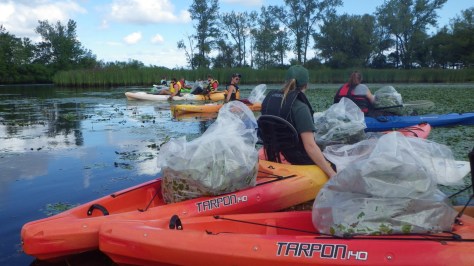
Over the years, NYS Parks has organized invasive species pulls to help lower the effects of invasive species in our park lands. Pictured above are State Parks Boat Stewards pulling Water Chestnut from Selkirk Shores State Park. Photo by Meg Phillips OPRHP
How you can help!
Boaters/Anglers Wash and dry your boat properly. Be sure to remove all plant matter from boat, ballast, prop, trailer and all equipment. Dispose debris correctly. Use aquatic invasive species disposal station if available.
Campers/Hikers/Bikers Check clothing, boots, pets, and camping gear for seeds, plant matter and insects. Clean gear and dispose of debris properly. Use local firewood.
Gardeners Plant only native plants. Educate yourself and others about the importance of using native species. There are many native look-alikes that are just as beautiful.
Whether you are a boater, fisherman, hiker, gardener or simply a concerned citizen, it is important to educate yourself and others on the different species found in your home state. You can make a difference in stopping the spread of invasives! Here you can find information on invasive species found in the State of New York.
Many State Parks have events during New York Invasive Species Awareness Week to involve the public in preventing the spread of invasive species.
Learn more by contacting your local PRISM! Partnership for Regional Invasive Species Management for more information on Invasive Species.
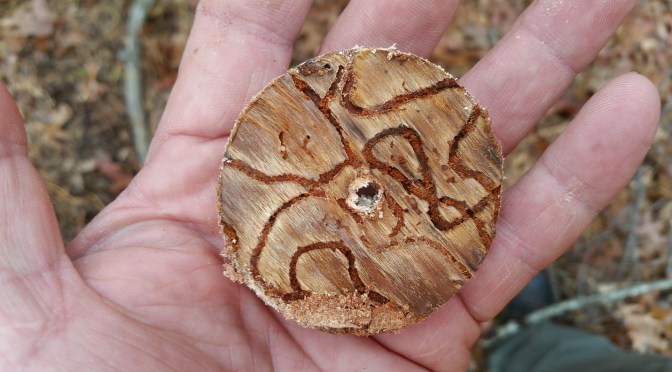
Southern pine beetle has killed thousands of pine trees since it was first found in New York State in 2014. This bark beetle is native to the southern United States, but arrived in New York after working its way northward for many years. Although the beetles are small (2-4 mm; less than 1/8th inch), they are able to kill trees in 2 to 4 months by attacking in large numbers. Once beneath the bark, the thousands of beetles create S-shaped tunnels as they feed on the inner bark, which soon cuts off the nutrients the tree needs to survive and grow.
Southern pine beetle adults somewhat resemble a chocolate sprinkle. These magnified adults are shown over a 1mm ruler. Photo credit: Molly Hassett, NYS DEC
S-shaped tunnels created by southern pine beetle are visible in this round “cookie” or slice of wood from beneath the bark of a pitch pine tree. Photo credit: NYS DEC
In New York, pitch pine trees have been attacked by southern pine beetle more than any other species. Pitch pine trees are often a part of unique, globally and statewide rare ecosystems such as Pitch Pine-Scrub Oak Barrens, Pitch pine-oak heath woodlands, Pitch pine-heath barrens, Pitch pine-oak-heath rocky summits, Dwarf pine plains, and Dwarf pine ridges. In New York, southern pine beetle has been found in trees across Long Island and in traps as far north as Minnewaska State Park Preserve in the Shawangunk Ridge. Large forested and unique areas such as the Long Island Central Pine Barrens Preserve and the Shawangunk Ridge are of the highest priority to protect. Maps of the pitch pine communities of statewide significance created by NY Natural Heritage Program provide further guidance on priorities. Although there are no known means to eradicate southern pine beetle, there are measures to reduce the beetles’ impacts and save some of the susceptible pines.
Map of confirmed southern pine beetle infestations from ground surveys and traps as well as suspected infestations from aerial surveys. Photo credit: Scott McDonnell, NYS DEC
To help fight against southern pine beetle, the NY State Department of Environmental Conservation’s (DEC) Forest Health team has conducted trapping, aerial surveys, and ground surveys to monitor for the beetle and cut infested trees (suppression) to manage the beetle. Currently, suppression efforts are focused in the Central Pine Barrens of Long Island. In some cases, pines are replanted along trails or in areas where impacts have been high. The beetles do not attack small, young trees, so the hope is that some trees will survive and produce seed to maintain pine in these ecosystems.
A southern pine beetle trap hanging from a tree in pitch pine community. The traps are used to detect if beetles are in an area. Photo credit: Tom Schmeelk, NYS DEC
Infested pitch pine trees marked with flagging for suppression (cutting). Photo credit: Molly Hassett, NYS DEC
Southern pine beetle is expected to work its way up the Hudson River corridor. The pitch pine-oak-heath rocky summit community occurs scattered along the eastern NY ridges from the Hudson Valley to the Thousand Islands. DEC monitors sites across the region so that teams can act quickly to contain SPB outbreaks and slow the spread. Photo credit: J. Lundgren, NYNHP
In areas that the beetles were captured in traps, but were not found in trees, such as at Bear Mountain and Minnewaska State Parks, the focus continues to be on early detection and surveying for infested trees. DEC conducts aerial surveys over Bear Mountain and Minnewaska State Parks to map out areas potentially infested with the beetle. These aerial surveys are quickly followed up by ground surveys by DEC, State Parks, NYNJ Trail Conference, and others to verify if the trees are infested. So far, no ground surveys have found infested trees in either of these parks.
Efforts at Connetquot River State Park Preserve on Long Island, one of the hardest-hit areas, are focused on removal of dead trees. State Parks, with help from the Excelsior Conservation Corps (an AmeriCorps program) has been cutting down dead trees killed by southern pine beetle along trails to keep the trails safe and open to visitors. State Parks is also chipping up some of these dead trees to help speed up decomposition.
On the trunk of infested trees, the main symptom of southern pine beetle attack is an abundance of pitch tubes which are usually about the same size and color of popcorn. Photo credit: NYS DEC
Volunteers plant pitch pine trees in white protective netting along a trail at Connetquot River State Park. Hazard trees were cut (piled in the left of the picture) while some non-hazard dead pitch pines were left standing (visible in the background) to provide seeds (cones still present on trees), wildlife habitat, and forest structure. Photo credit: Molly Hassett, NYS DEC
Eastern towhees are common in pitch pine-oak communities and scrub oak shrublands. Photo credit: R. Marshall.
DEC, Parks and Trails New York, and State Parks co-sponsored tree planting as part of I Love My Park Day in Connetquot River State Park Preserve on May 7th, 2016. DEC’s Tree for Tributaries trained volunteers to plant the 600 pitch pine that were donated from New York State’s Saratoga Tree Nursery. The pitch pine trees were raised from seed originating from Long Island and will help maintain the local pitch pine genetics that is adapted to the conditions of Long Island. Through hazard tree mitigation, chipping, suppression, and re-planting pine trees in areas attacked by southern pine beetle such as Connetquot, hopes are that forests will remain safe for public use and maintain their pitch pine components in the wake of southern pine beetle.
Wildfires are nature’s way of thinning the pitch pine forests and woodlands and keeping these ecosystems healthy. Without fire the pines get too dense and are more susceptible to pests like the southern pine beetle. Mechanical thinning (cutting) can mimic some of the ecological processes of fire to benefit the communities of rare species and reduce SPB infestations. Photo credit: J. Lundgren, NYNHP.
For other pitch pine community types or to see what occurs in your county, go to guide.nynhp.org and type “pitch pine” into the advanced search box and check off the community category box.
Post by Molly Hassett, NY State Department of Environmental Conservation and Julie Lundgren, NY Natural Heritage Program
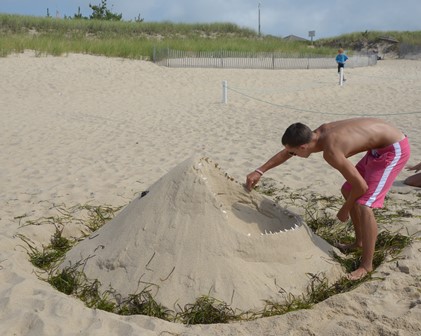
Fourth of July weekend is a great weekend to spend in a State Park or Historic Site. You can build sand castles at Hither Hills State Park to camp on the banks of Lake Erie at Evangola State Park, fish in the St. Lawrence River at Wellesley Island State Park, listen to a reading of the Declaration of Independence at Stony Point Battlefield State Historic Site, take a hike, enjoy the forest and more. Find out all that State Parks has to offer this weekend at nysparks.com.
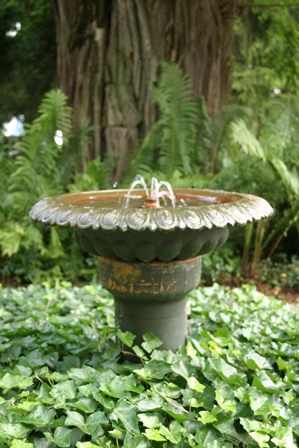
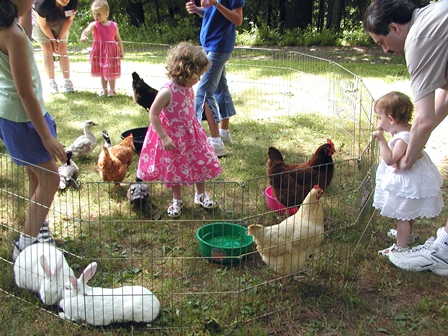
Take a hike on the Indian Ladder Trail at Thacher State Park, Photo by OPRHPHear the cannons firing at Stony Point Battlefield State Historic Site, photo by OPRHPTry your hand at fishing at Wellesley Island State Park, photo by OPRHPPlay one of George Washington’s favorite games at Schuyler Mansion State Historic Site, photo by Schuyler Mansion State Historic SiteTour the gardens at Lorenzo State Historic House, photo by OPRHPCheck out the Farm Market at John Jay Homestead State Historic Site, photo by OPRHPEnjoy a cool gorge in the Finger Lakes Parks or at Whetstone Gulf State Park – photo by OPRHPBuild a sand castle at Hither Hills State Park, photo by John Williams, OPRHPPicnic by the lake, Glimmerglass State Park, photo by OPRHPGet to know the residents, salamander program at Allegany State Park, photo by Tom LeBlanc OPRHPTry your hand at golfing at Rockland Lake State Park, photo by OPRHPGo biking at Grafton Lakes State Park, photo by OPRHPCamp at Cherry Plain State Park, photo by OPRHPGo boating in the Finger Lakes, Allan H. Treman State Park, photo by OPRHPMarvel at old-growth trees in Allegany State Park along the Conservation or Eastwood Meadows Trails – photo of old-growth ash tree in Allegany State Park by J Lundgren, NYNHPSee the fireworks at many parks across the state, photo by OPRHPOr enjoy a quiet evening sunset, Golden Hill State Park, photo by OPRHP






![Water chestnut (Trapa natans) is a submerged rooted plant that can densely cover shallow areas. This not only deprives the water from dissolved oxygen and other essential nutrients, but can also get tangled in boats, swimmers, and fishing line. On an economic stand point, aquatic invasive species like water chestnut, if not treated, can lower shoreline property values. Photo by: By Krzysztof Ziarnek, Kenraiz (Own work) [CC BY-SA 3.0 (http://creativecommons.org/licenses/by-sa/3.0)], via Wikimedia Commons](https://i0.wp.com/nystateparks.blog/wp-content/uploads/2016/07/water-chestnut.jpg?w=247&h=164&ssl=1 "Water Chestnut")
![Japanese knotweed (Fallopia japonica) forms a dense cover that can crowd out native vegetation. This species can greatly affect the biodiversity in habitats. Photo by: By H. Zell (Own work) [GFDL (http://www.gnu.org/copyleft/fdl.html) or CC BY-SA 3.0 (http://creativecommons.org/licenses/by-sa/3.0)], via Wikimedia Commons](https://i0.wp.com/nystateparks.blog/wp-content/uploads/2016/07/japanese-knot-weed.jpg?w=219&h=164&ssl=1 "Japanese Knot Weed")





 New York State Parks and Historic Sites Blog