Niagara Rocks!

photo by Michael Drahms

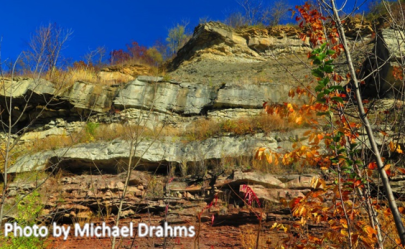
Extending over 7 miles from Lewiston, NY to Niagara Falls, NY, the Niagara Gorge offers many recreational opportunities to explore nature. You can experience the gorge at Earl W. Brydges  Artpark State Park, Devil’s Hole State Park, Whirlpool State Park, and Niagara Falls State Park. While there, stop to see the amazing rocks that make Niagara the wonder that it is today!

Visible downstream at the lowest level of the gorge, is the oldest visible rock layer within the gorge wall. This layer was deposited along a coastal area of a warm shallow sea in the late Ordovician Period, alternating between below and above sea level. The periodic exposure of the iron rich sediments resulted in the coloration visible in the sedimentary rock of the Queenston Shale. As you travel upstream the tilt of this layer causes it to disappear below visible levels.

Niagara Escarpment

The rocks seen in the walls of the Niagara Gorge are sedimentary; they are made from sediments deposited in a shallow sea that covered much of the eastern U.S. and adjacent Canada around 440 to 410 million years ago (middle part of the Silurian Period). Rocks, such as limestone, shale, sandstone and dolostone, are seen as distinct layers. Some of these layers, for instance the soft, easily eroded Rochester Shale below the caprock of Niagara Falls, contain a great diversity of marine fossils, such as brachiopods, trilobites, corals and crinoids.

These rocks are layered, from oldest at the bottom to youngest at the top along a long ridge known as the Niagara Escarpment. The Niagara Escarpment is a prominent cliff-forming cuesta that extends from western New York into southern Ontario, northward to the upper peninsula of Michigan, and then bends downward into eastern Wisconsin and Illinois. The escarpment is capped by relatively hard, resistant rocks of the Silurian-age Lockport Group (chiefly dolostones and limestones), which are underlain by less resistant rocks (shales and sandstones, such as the Rochester Shale).
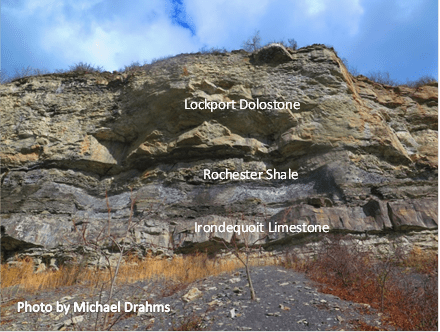
Layered Rocks

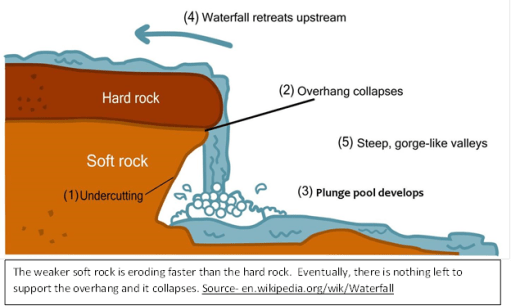
Near the end of the last ice age, around 12,300 years ago, the Niagara River began to flow over the Niagara Escarpment, located at what is now Lewiston, New York. Through the process of erosion the falls have receded to their present location.  In the past, the falls receded on average 3-6 feet per year. However, the rate has been greatly reduced due to flow control and diversion for hydropower generation, to a mere 3-6 inches per year. 50,000 years from now, at the present rate of erosion, the remaining 20 miles south to Lake Erie will have been undermined. There won’t be a falls anymore, but rather a series of steep rapids!
New Picture

While visiting Niagara Falls, or hiking in the Niagara Gorge, take some time to marvel in the events and processes that took place over time. From continental collisions to ice-age glaciers and the present day Great Lakes drainage basin, we are fortunate enough to witness the interactions of nature.

Last Photo

Links to additional information about the formation and geology of the Niagara gorge and the Niagara Falls geological area.

Post and Niagara Gorge photos by Mike Drahm, State Parks, Niagara Region

Bird Banding at Crown Point State Historic Site

The small girl skipped ahead of her family on the grassy path toward the bird banding station, a couple of picnic tables covered with a canopy, with two tents pitched nearby.   Five rows of mist netting were strung along alleys in the dense brush, with hopes that birds would fly into them and get caught so that they could be studied, banded, and released.  Master bird bander Gordon Howard sat at one of the tables with a tiny bird in his hand, a book open in front of him.   He gently stretched the wing feathers to look for different color patterns and signs of wear to help him determine the age of the bird.

The girl and her family walked up to Gordon, and he smiled and explained what he was doing.   When he was finished, he asked if she would like to hold and release the brightly colored male yellow-rumped warbler.  She nodded her head, and Gordon showed her how to gently wrap her small fingers around the bird’s neck and body so that it would not be injured.  A broad smile spread across her face as she felt the soft, warm feathers and the rapidly beating heart of the bird.  Her parents took pictures, and then Gordon told her to gently toss the bird into the sky and let go.  The warbler flew from her hand right back into the hawthorn shrubs and began feeding, preparing for its migration further north.   Although the bird had left her hand, the memory never left the child.

Bird banding began at the Crown Point State Historic Site 41 years ago by J.M.C. “Mike” Peterson.  Spring migrant birds have been monitored here every year since for two weeks in early to mid-May.   Over 17,000 individual birds of 106 different species have been banded here, with each bird receiving a small metal band with a unique identifying number that is placed around its leg like a bracelet.  Information on each bird that is banded, such as species, sex, age, and condition, is forwarded to the U.S. Fish and Wildlife Service, which oversees all bird banding in the United States.  If the bird is ever found again, the band number can be reported to the USFWS and much can be learned about the bird’s movements.  The current main banders are Gordon Howard, Gary Lee, and Tom Barber, with help from several other banders and a number of volunteers.  Visitors are welcome from 7 AM to 5 PM every day of the season, which runs this year from the afternoon of May 6 to the morning of May 22.  Educational programs about birds and bird banding are offered to school groups, birding clubs, and civic organizations.  Reservations for these are arranged by contacting Gordon by email at ghoward@clemson.edu.

Bird banding has several values, including education, determining bird longevity, and figuring out migration routes.   The Crown Point peninsula that juts north into Lake Champlain is an excellent place to capture and study migrating birds, because birds concentrate here to feed and rest on their journey northward each spring.  Many of these songbirds wintered in South or Central America, and are migrating to their summer breeding ranges in New York, New England, and Canada.

If you go to visit, the best time of day is early to mid-morning.  Calm, dry days are usually better than windy, wet days.  Park in the lot by the museum, and walk up the blacktop road toward the barns.   Then follow the signs that direct you onto the grassy path to the banding center which is tucked in by the brushy edge.  Wear casual clothes and boots or shoes that can handle mud.  Bring your family, a camera, binoculars, and your sense of wonder.

Post by Ellie George, volunteer with the Crown Point Bird Banding Association

Photos were supplied with one time use permission from the photographers Ellie (Eleanor) George and Thomas Barber.
.

I Love My Park Day – 2016

This slideshow requires JavaScript.

I Love My Park Day (ILMPD) started in 2012 when 49 New York state parks and historic sites were helped by thousands of volunteers, including Governor Andrew Cuomo.  These volunteers worked on a variety of projects including cleaning up park lands and beaches, planting trees and gardens, restoring trails and wildlife habitat, removing invasive species, and working on various site-improvement projects.  In 2015 ILMPD grew to 6,500 volunteers who helped with 200 projects in 95 state parks and historic sites across the state.

In 2016, I Love My Park Day is Saturday May 7 with events planned at 110 parks and historic sites across the state.  Find a place to help here (or at nysparks.com/events).  From Hither Hills State Park in eastern Long Island, to Point au Roche State Park on Lake Champlain, Sonnenberg Gardens & Mansion State Historic Site in the Finger Lakes, Mine Kill State Park in the Catskills, Two Rivers State Park Recreation Area in the southern tier, Walkway Over The Hudson State Historic Park in the Hudson Valley, and more – there is something for everyone.  ILMPD also expanded this year to include DEC properties in the Adirondacks and Catskills as well as local and federal parks in New York. ILMPD is a great opportunity to get outside, enjoy the camaraderie of old and new friends, and give back to your favorite park.

I Love My Park Day is a joint program organized by Parks and Trails NY (PTNY) in partnership with State Parks, and local park Friends groups.

We hope to see you on May 7 for a day of fun and stewardship in New York’s backyard that is open to everyone – State Parks!

#ilovemyparkday

Valley Stream
Bring your friends to ILMPD! Taking a break at Valley Stream, photo by OPRHP

Hailing More Snails

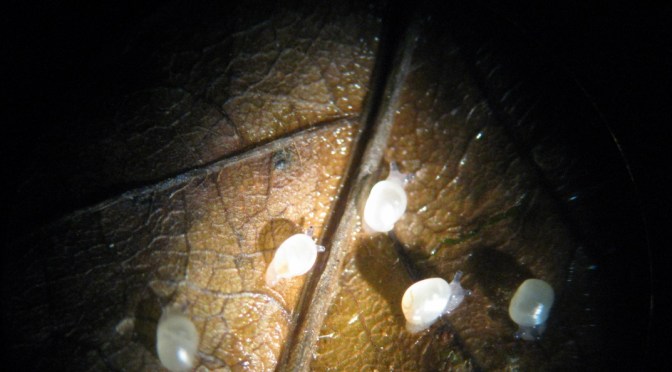
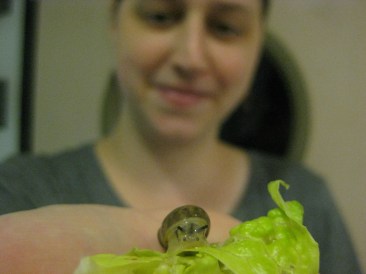
When ten endangered Chittenango Ovate Amber snails (COAS), located in only one known location in the world: Chittenango Falls State Park, were brought into an SUNY College of Environmental Science and Forestry (ESF) lab for captive breeding and did not reproduce over the summer of 2014, graduate student Cody Gilbertson and advisor Rebecca Rundell knew they had to adjust something. Eventually the ten COAS were released, but as luck would have it, during the trial, a stowaway baby COAS came in on vegetation that was offered to COAS adults.  The tiny snail on the plant was placed in an enclosure to monitor closely. This was the beginning of a rapid learning curve for Gilbertson on the food preferences of COAS. New York State Department of Environmental Conservation (in charge of endangered species permitting) granted permission for them to keep the one snail over winter and raise it alone in the lab. From this blessing in disguise, Gilbertson was able to figure out the specific species of leaves this one snail she named “Hatch” preferred to eat – dead cherry leaves! Cherry leaves collected in the spring were consumed regularly and “Hatch” began to grow rapidly. Gilbertson knew it was risky keeping a small hatchling snail because in the past, 80% of hatchlings would die within the first two weeks of life in captivity. She thought it was unlikely “Hatch” would live, but this one snail persisted and survived in the lab showing her what it most preferred to eat, and she watched closely. It turns out this was a very practical way of finding out what COAS needs without harming individuals.

When Gilbertson brought two more COAS in from the wild during summer 2015, adults flourished on the improved diet and reproduction occurred resulting in over 600 baby COAS in just two months! The two snails mated with each other and about seven days after mating, egg masses were laid.  A total of about six egg masses were laid by each snail with about 33 eggs in each egg mass. About 270 of these snails were released back to their wild habitat to help expand the wild population of COAS. The other 300+ snails are still in our lab and are thriving. Over 130 snails have reached maturity (over 14mm in shell length) and over 30 egg masses from the captive born snails have been produced so far.

This research, supported by United States Fish and Wildlife Service, has pushed the recovery of COAS species forward with some very large steps:

1) Researchers have performed a first ever release of captive snails back to the wild

2) Scientists now have information about what COAS eat and what they may need to survive in the wild and in captivity

3) Over 300 snails remain in captivity for assisting in securing this species existence.

However, there is still much to learn about this unique and rare species in our upstate NY backyard. Scientists will need to monitor and care for both the wild and captive populations over time for us to tell if this work is successful long term. But they have certainly put their best foot forward!

Gilbertson with 'Hatch'
Gilbertson with “Hatch,” photo by Cody Gilbertson

Post and photos by Cody Gilbertson, graduate student SUNY College of Environmental Science and Forestry

Happy Second Birthday Nature Times!


This slideshow requires JavaScript.

In this second year of Nature Times we have gotten to know snapping turtles, carnivorous plants, black squirrels, and Sammi, Trailside Museums’ 36 year old bald eagle.  We’ve learned how trails are mapped, how a flock of sheep and goats have become one of State Parks’ 21st century mowing crews, and ways to explore State Parks on foot, in kayaks, on snowmobiles, and on frozen lakes. The stories have featured all kinds of work that State Parks staff and volunteers do throughout the year to help preserve and protect some of New York’s unique and exceptional places. These range from protecting sand dunes on Lake Ontario and old-growth forest at Allegany, to creating native grasslands at Ganondagan State Historic Site, and monitoring invasive species infestations and removing invasive species both on land and water.

This slideshow requires JavaScript.

We mark this second birthday with 61 new followers and over 24,000 page hits!  And we thank the 32 staff, interns, and partner organizations who have shared their passion for State Parks through the blogs that they have written. We also want to recognize our partnership with the New York Natural Heritage Program who helped in initiating this feature and continues to provide support.

We look forward to continuing our celebration of State Parks in the months to come in Nature Times.  Hope to see you soon at one of our Parks or Historic Sites!

The official blog for the New York State Office of Parks, Recreation & Historic Preservation