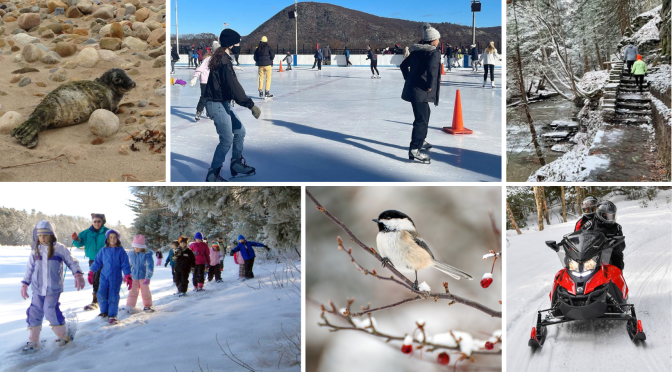
Centuries of holiday traditions to experience. A park that’s only open one season a year. Meteor showers overhead, tracks through the snow, and miles of trails to enjoy in a whole different way.
Winter fun is everywhere at state parks and historic sites! Below are ten activities we suggest you experience this season.
The heart of winter: the ski lodge at Fahnestock Winter Park in the Hudson Valley.
1. Visit Fahnestock Winter Park.Celebrate the spirit of winter at the only park in our system devoted exclusively to the season. At Fahnestock, you’ll discover 20 kilometers of machine-groomed cross-country ski trails, an extensive network of blazed snowshoeing trails, and sledding and tubing. Fuel up at the concession stand and unwind by the fire pit with your fellow winter lovers for the full seasonal experience! No gear? No problem! You can rent equipment for skate and classic skiing, as well as snowshoes, sledding tubes, and tow-behind baby pulks. Check conditions before you go.
Winter doesn’t have to mean being stuck indoors. There’s year-round fun at our parks to help you beat cabin fever, chase away the winter blues, and experience a familiar spot in an entirely new way. Check out these iconic wintertime activities at our parks and sites, but hurry – spring will be here before you know it.
Ice, Ice, Baby
Ice skating is the classic wintertime activity, and our parks offer a safe way to enjoy the ice. From the urban setting of Riverbank State Park to the serenity of Grafton Lakes to the bustling atmosphere and panoramic views at Bear Mountain State Park, ice skating brings joy wherever you do it. This exhilarating experience gets your heart pumping, and is a fantastic winter bonding experience. Twelve of our parks offer skating, and most of them offer skate rentals as well.
New York State is full of incredible trails and activities, and winter is an exciting time to get outside and explore. New views appear when the leaves fall from the trees. The comings and goings of animals are revealed in the snow and mud. Nothing compares to hiking after a snowfall. And the Centennial Challenge winter missions will whet your appetite for an adventure at our parks.
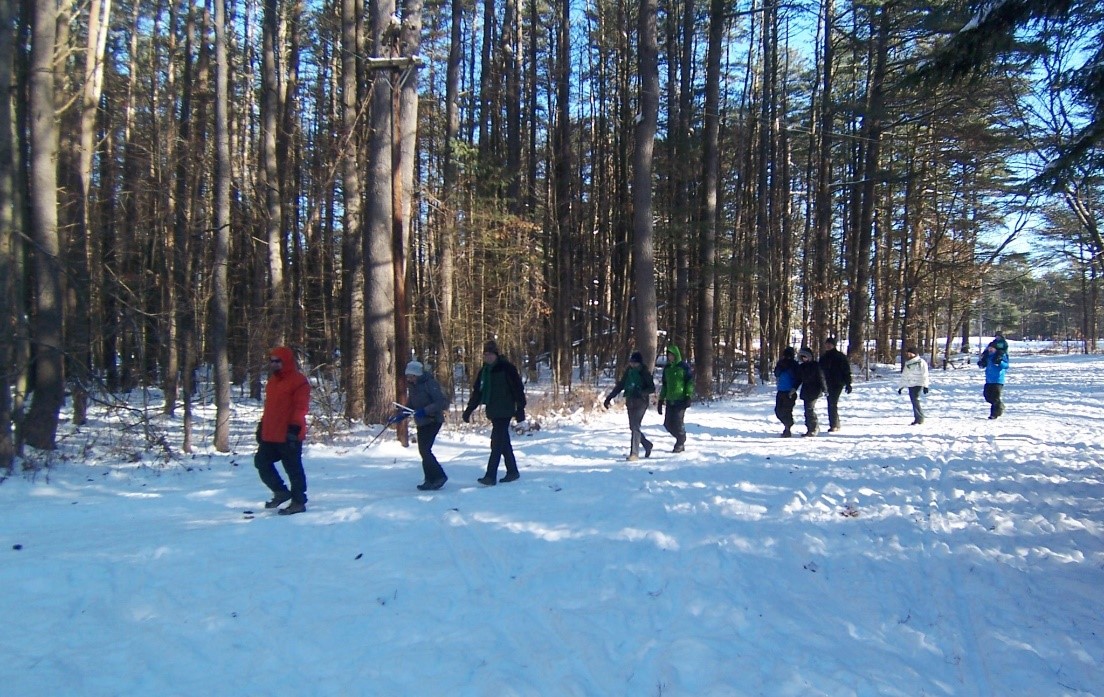
A winter group hike at Saratoga Spa State Park.
Before you discover winter’s grandeur, it’s always important to go out prepared for the season’s conditions. Follow the following tips for a safe time on the trails this winter.
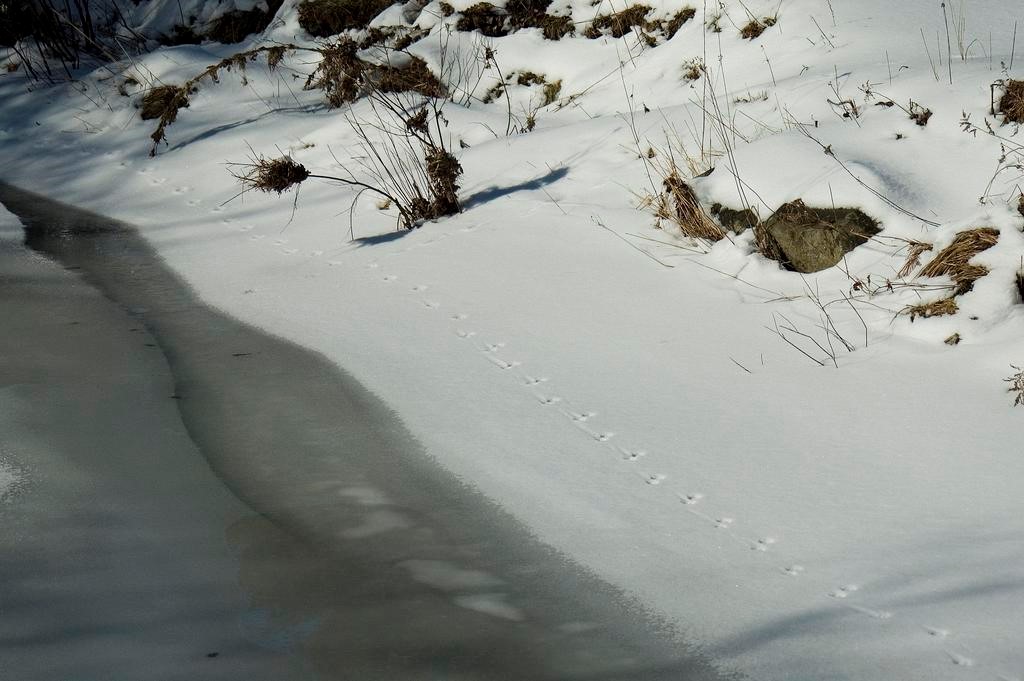
Winter is a wonderful time of the year, there’s snow and ice everywhere in our State Parks. Within that snow and ice, you can see traces of what animals have been there – maybe even just moments before you arrive! One of the traces that can help you identify which animal it came from is their tracks.
To determine what animal the track came from, you should look at several different factors. First, the condition of the snow the track is in makes a big difference in how a track looks (wet snow leads to more clear tracks and drier, powdery snow has less clearly defined tracks). Second, you should think about the gait of the animal (how it moves). There’s four different types of gaits that most animals use in their daily activities: the walk, the trot, the gallop and the jump. And lastly, you must look at the shape of the track including the number of toes present, which can vary in size depending on the animal that made it. For more information on identification of winter tracks, please see this blog.
Let’s look at some tracks that have been seen throughout our State Parks:
Here’s evidence of a mink on the ice of one of the streams within Allegany State Park, photo by T. LeBlanc
This is the track of a long-tailed weasel also seen within Allegany State Park. Fun fact: long-tailed weasels have a very high rate of metabolism and they eat about 40% of their body weight per day! photo by Thomas LeBlanc
Above you can see track of a turkey. To learn more about Allegany State Park’s role in wild turkey restoration, please see this blog. photo by Thomas LeBlanc)
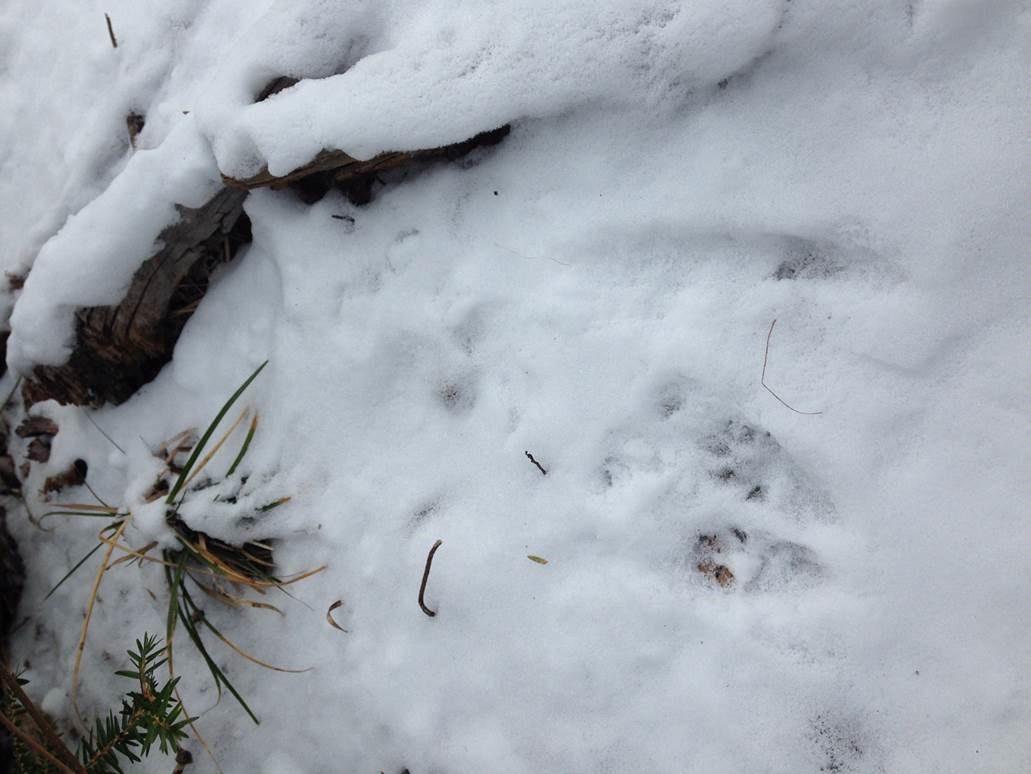
And a coyote track was spotted within Allegany State Park. As you can see, there is a bit of fur and a splotch of blood so perhaps this coyote just finished his lunch! Photo by Randall Abbott.
Within the Finger Lakes Region, park staff noticed this track of a fisher at Keuka Lake State Park. Photo by Becky Sibner
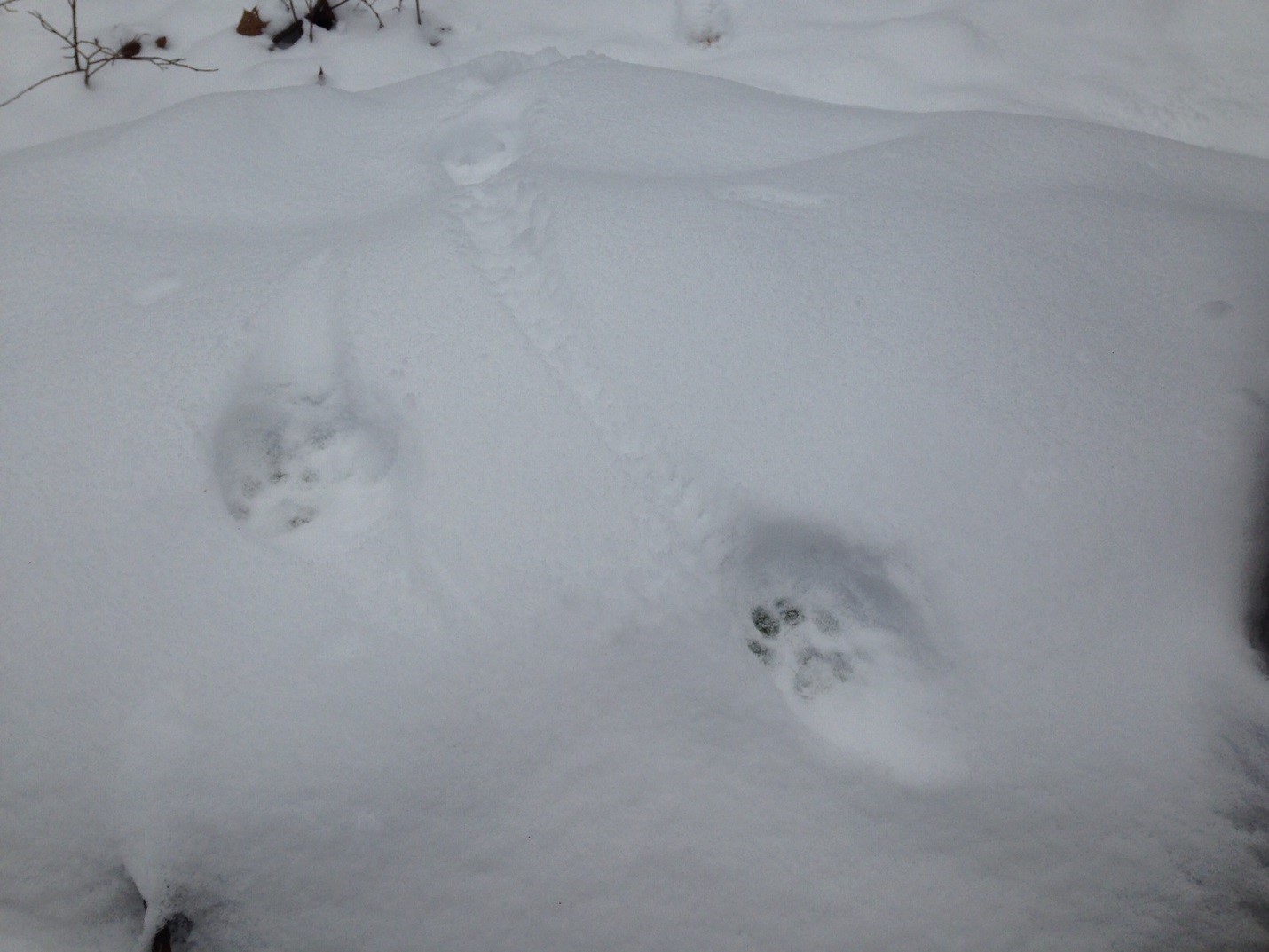
The tracks above, found at Harriet Hollister Spencer State Recreation Area, are from a deer. The large spot is where the deer had stopped to browse. Photo by Whitney Carleton
This is the footprint of a black bear, found at Mark Twain State Park. For more information on female black bears in the wintertime, please look at this blog. Photo by Kira Broz
Also, seen at Mark Twain State Park, is a raccoon. The most important sense of the raccoon is their sense of touch – they have hyper-sensitive front paws adorned with vibrissae (a type of hair that aids in tactile sensing) that allows them to identify objects before fully touching them! Photo by Kira Broz
At Letchworth State Park, you can see the tracks of a squirrel as compared to a human footprint for a scale reference. Photo by Gary Lamitina
Above is the tracks and wing impressions of a Northern Bobwhite, a small quail, seen at Connetquot River State Park Preserve on Long Island. Photo by Annie McIntyre
At Fort Montgomery State Historic Site, you can see the tracks of a squirrel and some mystery tracks as well…which turns out to be from a pine cone as seen in the insert! Photo by Peter Cutul
At Harriman State Park, you can find the tracks of a bobcat as seen here. For more information on bobcats and other wild cats of the Northeast, please check the blog again in a few weeks for the upcoming post on that subject! Photo by Peter Cutul
Also at Harriman State Park, the tracks of what is believed to be a short tailed weasel can also be found! Photo by Peter Cutul
Looking around Grafton Lakes State Park, river otter tracks can be seen in the snow. Photo by Elizabeth Wagner
As you can see, there is still a great diversity of animals to be found within our State Parks – even in the cold of winter! So, the next time you’re hiking the trails at a State Park, look around you and see what tracks you can see!
Scat is another trace that animals leave behind. If you are interested in learning more about winter scat ID, check out this blog.
Post by April Brun, State Parks
Disclaimer: All identifications are just suspected, none are confirmed by a wildlife biologist.
Water is a natural substance that all of us encounter on a daily basis. We rinse with it to clean ourselves and we drink it to stay healthy. In addition, more than 60% of the human body is comprised of water. But have you ever stopped to consider the uniqueness of this molecule that plays an intricate part of our lives and bodies?
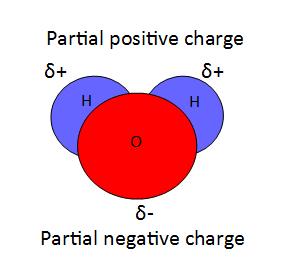
Diagram of a water molecule. Figure by Melyssa Smith
Perhaps the beauty of water begins with the simplicity of its molecule, H2O. It is made-up of only two elements: two hydrogen atoms (H2) and one oxygen atom (O). The H atoms create a slight positive electrical charge on one end of the molecule (a positive pole), while the O atom creates a slight negative charge (a negative pole). This polarity helps liquid water attract to, surround and break apart more substances than any other known liquid. Thus, scientists call water a “universal solvent” – something that many other substances (e.g. salt, sugar, powdered hot cocoa) can dissolve into. This attractive quality is how water is able to transport many vital minerals and nutrients throughout our soils, plants and environment.
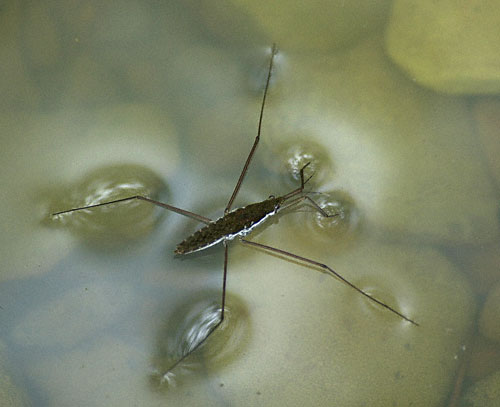
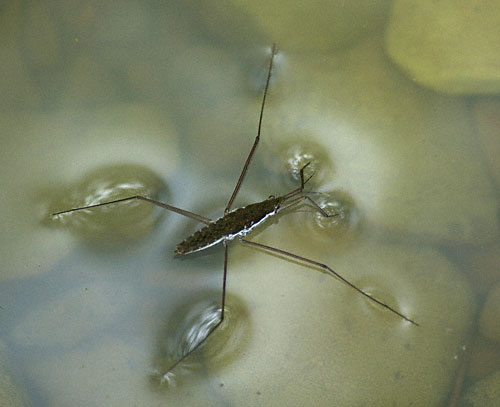
Not only does water bind easily to other substances (adhesion), but it also sticks well to itself (cohesion). The positive and negative ends of water molecules attract to each other and form water droplets. These dual properties help explain how water can ascent up the trunks of trees – water clings to the inner walls of the xylem in tree trunks and pulls other water molecules along, travelling up against the forces of gravity. You can observe water’s cohesive forces by filling up a glass of water slightly over the rim; water will hold onto itself and not spill over the sides. Similarly, surface tension enables spiders and insects, such as the water strider, to walk on the surface of the water. And so this seemingly simple molecule is capable of amazing feats.
Surface tension in a glass of water: Left glass is filled over the rim with water, right glass is empty for comparison. Photo by Lilly Schelling, OPRHP
Close-up of water being held together by surface tension. Photo by Lilly Schelling, OPRHP
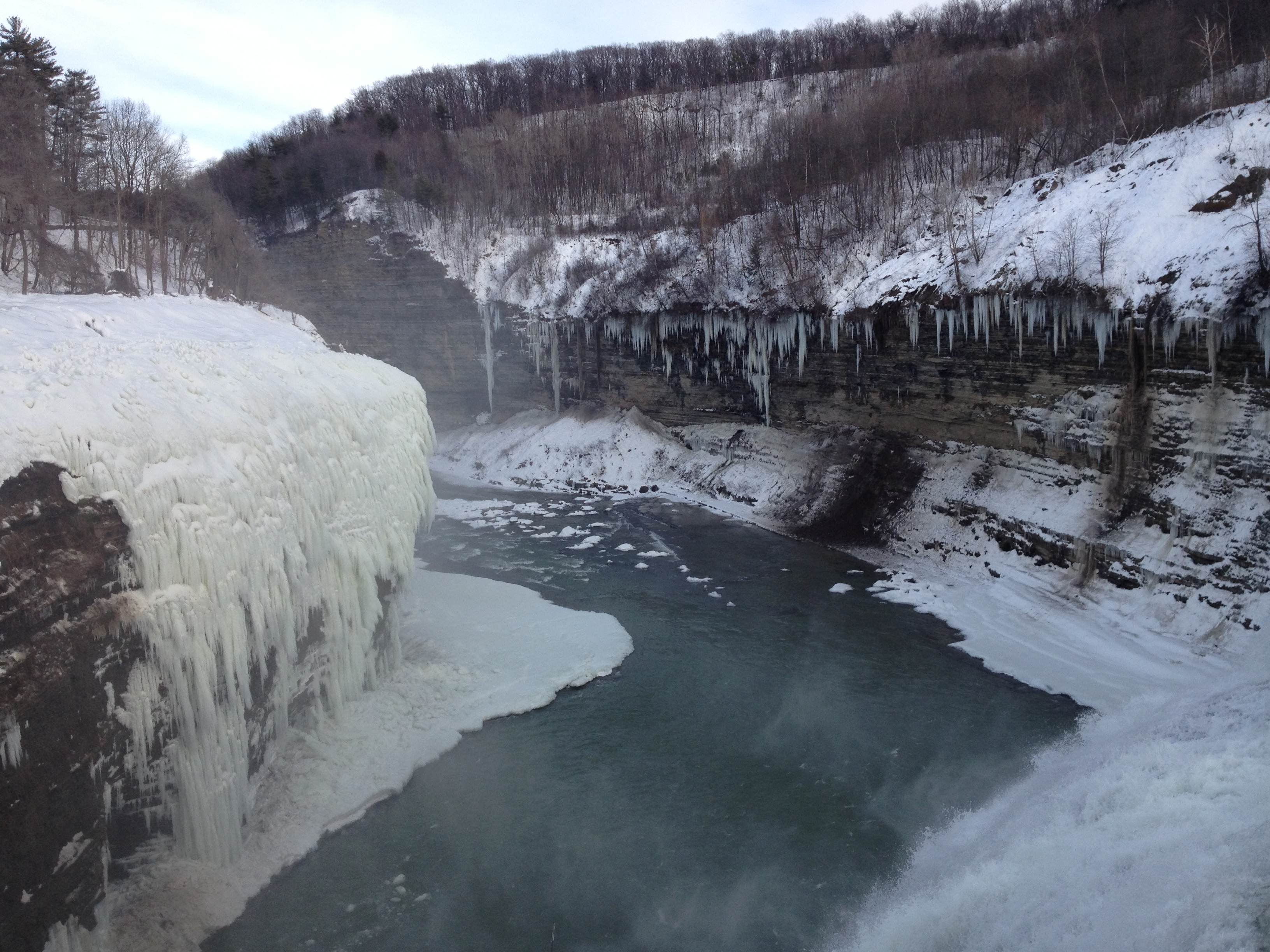
Water has special physical qualities as well. Unlike any other material on Earth, water can exist in solid, liquid and gaseous forms naturally. The gas form floats freely in the air we breathe, with many molecules moving haphazardly far away from each other. This vapor can condense into clouds and return water to the earth as either rain or snow. When we hear the word “water” we usually think of the liquid form, and that’s probably because ~70% of our planet is covered in oceans. Snow and ice are examples of water’s solid phase, with molecules tightly packed and organized into crystalline structures. Unlike most other materials, the solid phase of water is less dense than its liquid form, which means ice can float atop liquid water. This property is useful in lakes during the wintertime, as surface ice acts as an insulating layer for the water below, shielding aquatic life from extremely cold temperatures. Clearly, water is a necessary ingredient for survival.
A frozen Letchworth Falls, Letchworth State Park, Castile, NY. All three physical states of water are present: solid (ice and snow), gas (air) and liquid (stream below). Photo by OPRHP
New York State has more than 70,000 miles of rivers and streams and around 7,600 lakes, ponds and reservoirs. Additionally, we are fortunate to share our borders with two Great Lakes, Lake Erie and Lake Ontario. Whether flowing, still, above or below ground, water is a ubiquitous feature in New York State Parks. It supports life and creates habitats for aquatic plants and animals. At the same time, water provides endless opportunities for recreation.
Many of our State Parks offer outdoor activities which involve water. Check out the 2016 Empire Passport to learn more about how you can access our state parks in any season. From swimming, boating and water skiing in the summer, to snowshoeing, sledding and cross-country skiing in the winter, to fishing (ice, fly or reel) year round — there is water-filled fun for every age all year long. The unusual chemical and physical properties that make water so valuable are also what make water so unique and enjoyable.
Post by Melyssa Smith and Erin Lennon (OPRHP Water Quality team)












 New York State Parks and Historic Sites Blog