

There’s more to nature in New York City than rats and pigeons! From wriggly eels to soaring falcons, there are plenty of species that thrive in and around the concrete jungle. Prehistoric creatures roam our shorelines. Ancient trees line our streets. Read on to learn more about some of the species that make up the hidden nature of NYC.
Continue reading The Hidden Nature of New York CityTag Archives: student conservation association

Your Unforgettable Moments At State Parks
Memories need a sense of place, and for a century, New Yorkers have discovered it at a New York State park or historic site. With more than 250 parks, each as diverse and beautiful as the memories they host, it’s no wonder so many people hold moments at a state park dear. Whether they’re milestones like a wedding or graduation, or a simple annual family tradition, the parks have been backdrops to the scenes of the lives of millions for 100 years.
There are more memories in our parks than pine needles on trees in Moreau Lake State Park and grains of sand on Jones Beach. It’s our privilege to share with you three of these precious memories.
Continue reading Your Unforgettable Moments At State Parks
Mother of the American Youth Conservation Movement
Liz Titus Putnam looked at dozens of people in the dining hall at a Dutchess County summer camp — eating, talking and laughing — and she saw a room full of connections.
Although many people in the Sharpe Reservation hall that October morning were in their early 20s, their ties stretched back to 1953. That was when Putnam, a 20-year-old Long Island native and junior at nearby Vassar College, came up with an idea.
After reading a magazine article on the deplorable state of the national park system, Putnam used her senior thesis to propose a voluntary student service program to work at the parks. Her inspiration came from the Civilian Conservation Corps created two decades earlier by President Franklin Roosevelt to provide work for the unemployed during the Great Depression.
“I knew that I would be interested in doing that work. And I thought other young people would be interested, too,” Putnam said.
Through timely encouragement and helpful connections that seemed to show up just when needed, the new college graduate founded what became the not-for-profit Student Conservation Association (SCA), with its first crews of 53 men and women (Herself included) arriving in 1957 at Grand Teton and Olympic national parks to do trail work. The Peace Corps and Earth Day were still years away.
Six decades later, more than 90,000 young people from every part of the U.S. and many foreign countries have gone through the SCA, with most members later going on to jobs and careers in the field of conservation at a myriad of organizations.
Since the beginning, SCA members have performed about 40 million hours of public works service at parks and other public lands. In today’s dollars, that would be worth about $600 million.
Last month, their ranks grew by another 40 people who graduated from the Hudson Valley SCA 2019 program under Putnam’s appreciative and proud gaze. The ceremony was held at the Fresh Air Fund’s Sharpe Reservation in Fishkill.
“I have so much hope for the future, to see young people getting involved,” said Putnam, now an 86-year-old resident of Vermont where she lives on a farm. She retired from running the organization day-to-day as its president in 1969, but under the title of Founding President remains active and involved.
“You will have many adventures. You have one life, and it goes by very fast,” Putnam told the Hudson Valley SCA graduates. “It is what you do each day. You are part of a team, with the humans all around this earth. Each person counts.”

Putnam believes that connections helped her all along the way, starting with her faculty advisor at Vassar who encouraged her to pursue her idea. Then through a family connection, she met the daughter of the late Stephen Mather, first director of the National Park Service. She in turn introduced Putnam to his successor, former park director Horace Albright. He was intrigued enough by the idea to urge her to visit four national parks to gauge local interest in a volunteer corps, giving her a letter of introduction to ease the way. After that trip in 1955, the superintendents at Grand Teton and Olympic said yes to accepting her student volunteers.

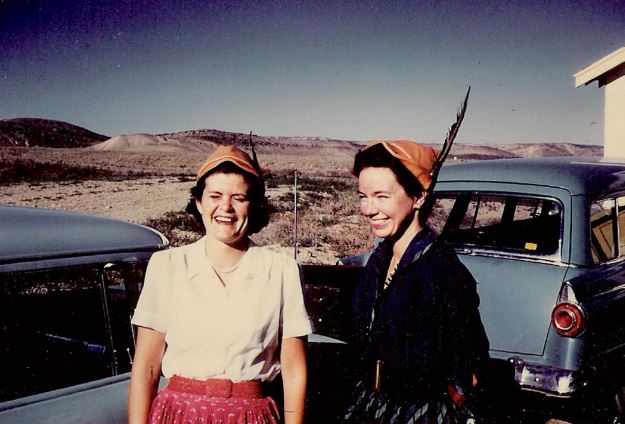
“I had no connections at the time, But the connections appeared when they were needed. That is the miracle,” Putnam told a visitor at the Hudson SCA graduation.
Speaking there, Putnam shared her tale of actually joining the group that she helped found. It was after fires had devastated Yellowstone National Park in 1988 and the SCA was lining up people to come help. She was 56 years old.
“I spoke to our staff, asking if anyone could join. And they said yes. And I asked if I could join, and they said yes,” Putnam said. “And I said, no special treatment, treated just like everyone else? And they said yes.”
After filling out an application, she got her SCA acceptance letter (she recalled saying ‘Yippee!” upon opening it), later arriving at Yellowstone under an assumed name to wield hand tools and help other members repair burned out bridges and cut downed trees. One day, a college student from Texas said he knew who she was, because she had spoken at his school about the SCA. “I asked him to keep it to himself, and we would be fine. And he did,” said Putnam.

“Liz is very inspiring,” said Dana Reinstein, a 23-year-old Queens resident who is finishing her second SCA stint. “I got to meet her when she was at Vassar last year, when she was helping plant a tree there.”
Now serving as an environmental educator in New York City schools, Reinstein said working at the SCA was about “a lot of new connections and experiences,” starting with lessons on how to use hand and power tools. “This is not something that I ever thought I would do. When I started, I did not even know how to use a hammer properly.”
A graduate of SUNY Fredonia with a degree in geology, Reinstein became part of an SCA team that provided more than 71,000 hours of service, valued at $1.7 million, working this year on trails, waterways, and recreational habitat.
Marking its 20th anniversary, the Hudson Valley SCA works with New York State Office of Parks, Recreation and Historic Preservation, New York State Department of Environmental Conservation, local Soil & Water Conservation Districts, Scenic Hudson, Audubon New York, and Vassar College. The Hudson Valley SCA Corps is an AmeriCorps program.
Some 900 young adults have gone through the Hudson Valley SCA since it started, logging some 1.7 million hours of service that would have cost $30 million if workers had to be hired.
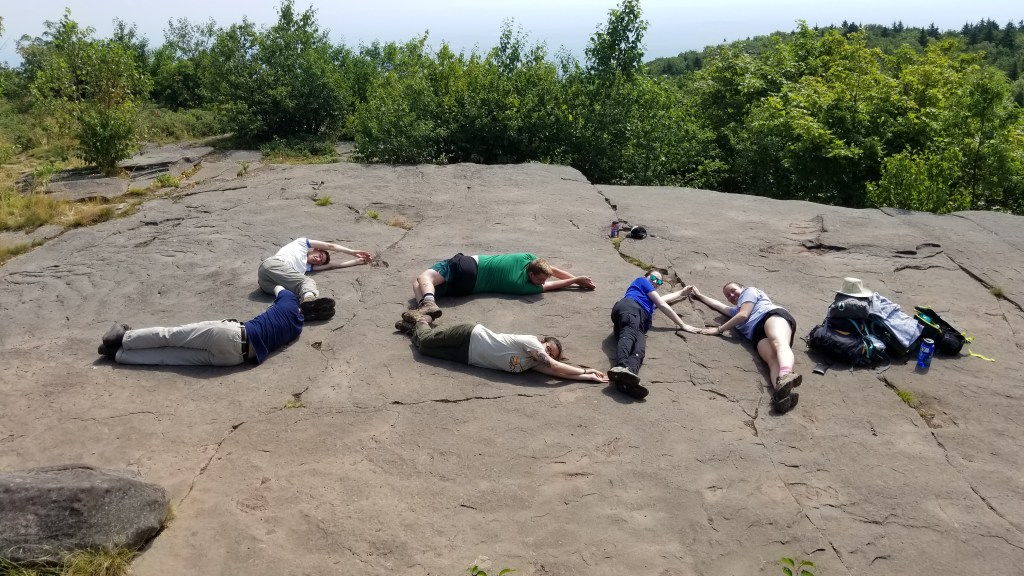

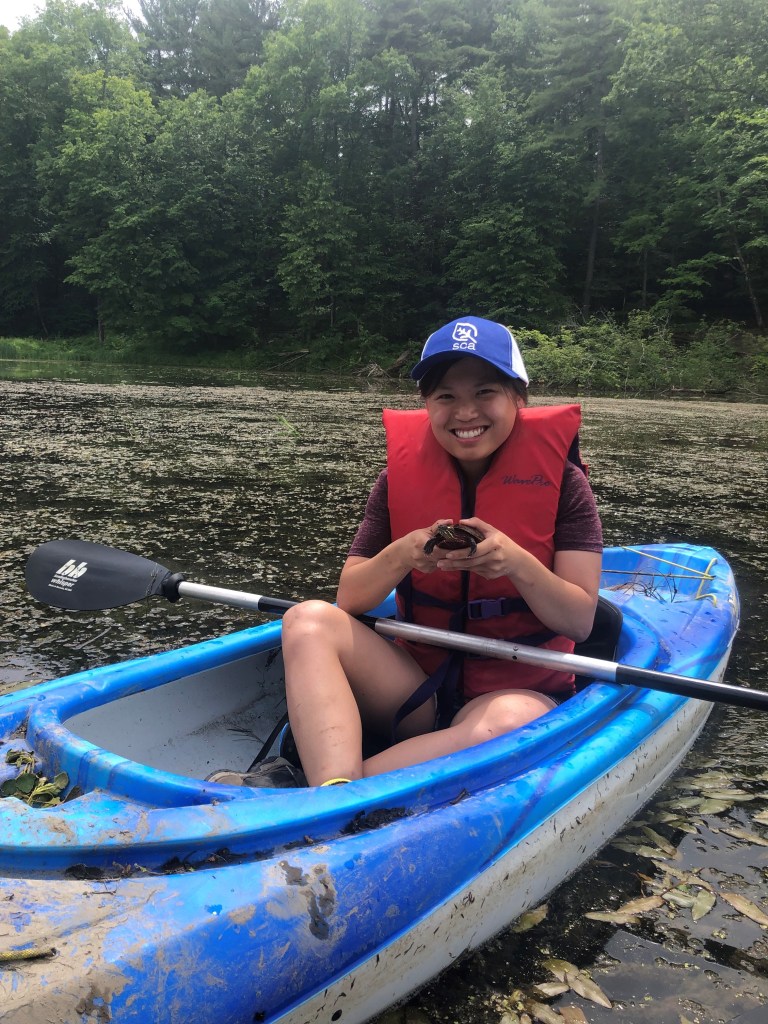


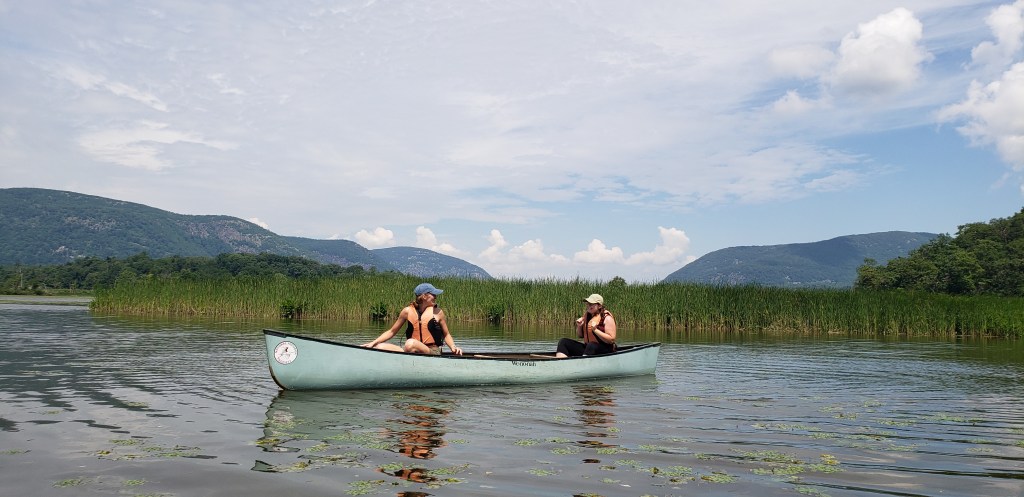

Check out this slideshow of some of the members of the Hudson SCA 2019 session. (Credit: Hudson SCA)
‘Once an SCA member, always an SCA member’ seems to be a cardinal rule of the organization. When Putnam asked how many people attending the graduation had been in SCA, many hands went up.
One belonged to Melissa Miller, park manager for Grafton Lakes State Park, Cherry Plain State Park, and Bennington Battlefield State Historic Site.
Miller did two SCA terms in 2001 and 2002, working on landscape tours at Olana State Historic Site, and then as an environmental educator at Grafton, where she was hired subsequently as a State Parks employee.
“Before that, I had been working in a restaurant. Being in the SCA was such a wonderful experience,” Miller said. “It gave me my career.”
Sarah Davies, an alumna of the original Hudson Valley Corps in 1999, is now Chief Environmental Educator with State Parks after service with DEC. “SCA was the best decision of my professional life. It was the catalyst for my 20 years in government service,” she said.

Post by Brian Nearing, Deputy Public Information Officer for NYS Parks
Learn about applying to SCA here.
See Liz Titus Putnam interviewed on the 2009 Ken Burns film “The National Parks: America’s Best Idea”
Read the 1953 Harper’s Magazine article that inspired Liz Titus Putnam — then a 20-year-old college student — to create the Student Conservation Association. She described the article as “hitting me like a bolt.”
Read this in-depth interview with Liz Titus Putnam
Watch a short history of the SCA

Locals Show Some Love
On May 5, 2018, the first Saturday of May, over 8,000 volunteers helped New York State Parks celebrate its sixth annual ‘I Love My Parks Day’ at 250 projects and 125 parks across the state.
Saturday morning was met with the fresh smell of a well overdue Spring. Birds were singing and bees were buzzing. The weather could not have been nicer with blue skies and a sun to warm your skin. In Horseheads, NY, volunteers came out to the Catharine Valley trailhead to help create a pollinator garden and clear brush and invasive plants to promote native species beneficial to birds. (About 50 small pollinator plants were purchased by the Audubon Society to create a pollinator garden.
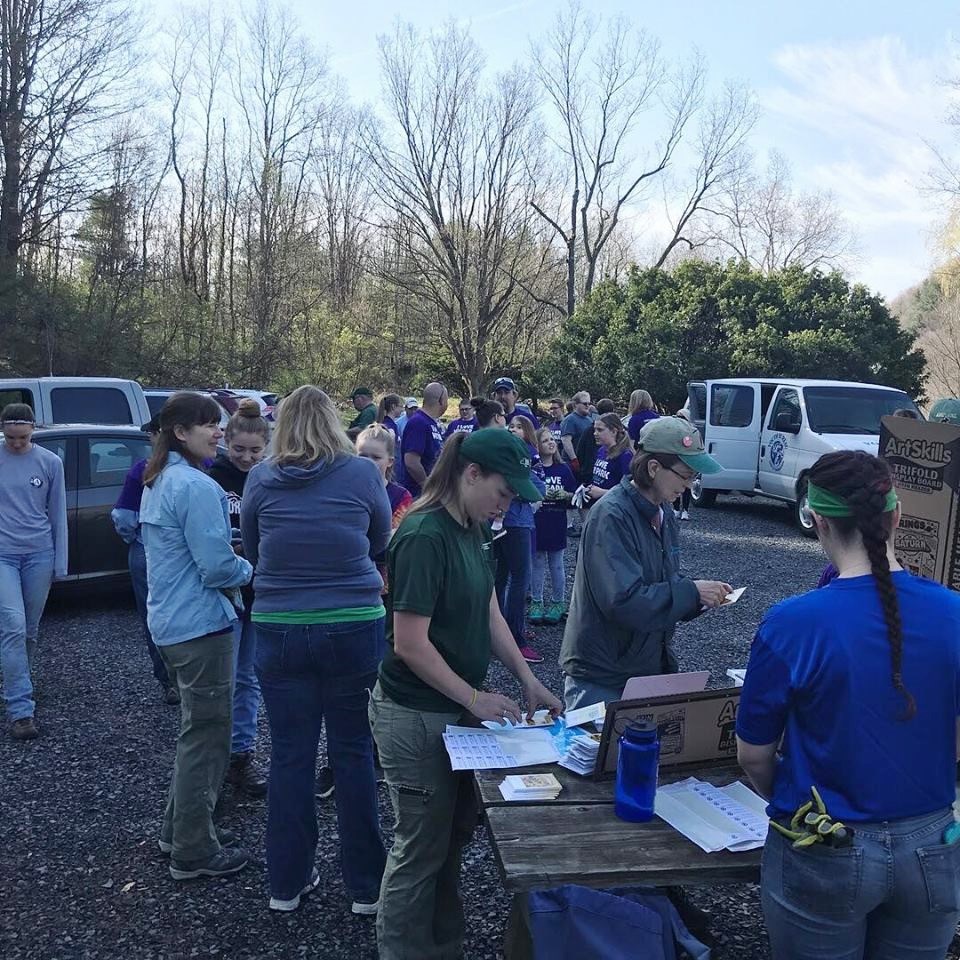
About 50 volunteers showed up to do their part – from energetic toddlers, to a girl scout troop, to seasoned gardeners and everyone in-between. Three NYS parks Environmental Educators and SCA Parks Corps members – Tamara Beal, Lizzy Hawk, and Kyle Gallaher – also stepped in as volunteers and environmental educators.
Over 400 different species of bees call NY home. The role they play in pollinating plants is irreplaceable. It is estimated that 1 in every 3 bites of food deserves thanks in part to pollinators. In other words, if you like to eat, you have to like your pollinators! With so many helping hands, this seemingly large task was completed in no time. Holes were dug with shovels or towels, or even by hand and what started as a barren landscape was quickly transformed to a vibrant garden, ripe for pollinating.

Planting the pollinator garden., photo by Lizzie Hawk, Audubon NY.

I Love My Park Day is a great family day.

Finished pollinator garden, ready to grow.
Besides the pollinator garden, different parts of the birding trails were also attended to. Dead brush was raked, honey suckle was pulled, and sticks and branches were piled high. The birding trails at the head of the Catharine Valley Trail, on Huck Finn Road, are a well kept secret. A birding lover’s delight, these trails attract birds by providing an irresistible combination of shelter, food, and peaceful atmosphere. If you are able to walk quietly enough to become a part of nature, all sorts of creatures become noticeable on these trails. Volunteers were spread out in every direction creating a green space more attractive and enticing to our feathered friends.


In the last part of the event, some time was taken to appreciate and get up close with some of the wildlife in the area. Environmental educators Kyle, Lizzy, and Tamara took about 30 of the volunteers on a short walk to a nearby turtle nesting ground. The sandy soil of these manmade nesting gardens allows the turtles to easily bury their eggs for safe keeping. SCA members helped to clean up these nesting areas earlier in the year.

A young garter snake, reminder: it is best to watch wildlife from a distance.

SCA members after clearing the turtle nesting gardens.
A mini program about snakes was also made possible when environmental educator Tamara Beal came across a garter snake in the grass (see featured photo).
This event was just one of the number of events that were hosted this “I Love my Park Day” throughout the state. Thank you to the thousands of volunteers who came out on May 5th to support their local parks! It is inspiring to see the number of people that show up for these kinds of events.
Join us for the eighth annual ‘I Love My Park Day’ on May 4.

Post by Tamara Beal, 2018 SCA Finger Lakes Region intern
The Untold Origin Story of the Falls

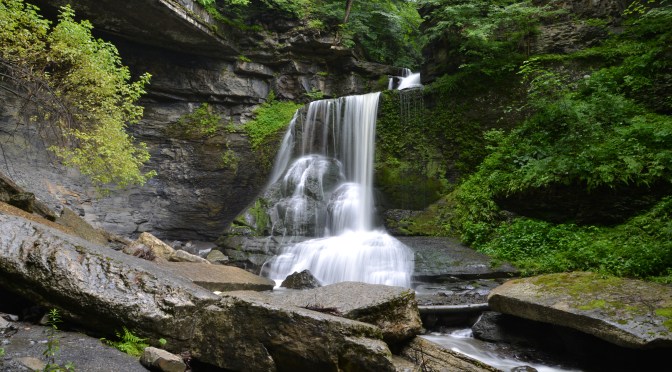
Over the last 12,000 years, the landscape of the Finger Lakes region has undergone colossal change. Hidden in cracks and valleys throughout the region are wondrous geologic remnants of that change. So abundant is the splendor of these wonders that many locals have become numb to the consistent gurgling of waterfalls on their daily commute through, for example, the Village of Montour Falls, just south of Watkins Glen State Park, where residents often pass Aunt Sarah’s Falls on Route 14. Yet no two of the over 2,000 gorges that call the Finger Lakes home are the same; each has a different fingerprint with a different number of curves, caverns, and cascades.
The Finger Lakes themselves are a unique natural phenomenon. There are no other lakes quite like them in the world. Eleven north flowing lakes, varying in length and depth, span over 120 miles of the western section of New York. They range from Canadice Lake, at a mere 3 miles long, to Cayuga Lake, which stretches for 38.2 miles; and from the relatively shallow Honeoye Lake, at 30 feet deep to Seneca Lake, which plunges steeply for 634 feet.

About 2.5 million years ago dawned the age of ice. In this region, glaciers are thought to have been over 3,000 feet high, or about the size of two Empire State buildings stacked on top of each other! It is a result of these glaciers growing that we now have “finger lakes”; before we had “finger rivers.” All our U shaped lake basins were originally V shaped river valleys. As the glaciers bulldozed their way through the valleys, the unrelenting force gouged out the walls. About 12,000 years ago, a change in climate warmed the earth, ending the reign of the Ice Age.

As the glaciers started to recede, their melting ice filled the lakes and exposed steep U shaped valley walls. All around would have been hanging valleys comprised of massive waterfalls dropping straight into the lakes. Today, every gorge near the lakes, including those south of the lakes, began its story as one of those waterfalls and has since eroded back into the rock.
“Ithaca is Gorges” is an iconic phrase in Ithaca, referring to the numerous gorgeous gorges around this city at the base of Cayuga Lake. This clever pun, however, has a forgotten key third part. As the massive waterfalls started to erode back into the rock, the eroded sediment built up at the base of the lake. This erosion was so rapid that our lakes are miles shorter than they were originally. “Ithaca is Gorges” because it was formed by the gorges and would not exist without them!

The extremely fast rate of erosion in our gorges alludes to its rich ancient natural history dating back long before the Ice Age. The 380-million-year-old layers of rock in the gorge were each once the bottom of an expansive inland ocean that covered much of the eastern states. The earth, as we know it, was unrecognizable; life was just beginning to take a foothold on land. In the little town of Gilboa, NY, proof of this timeframe can be found in the oldest fossilized trees worldwide. The early roots of these Gilboa trees were pioneering the rocky, unforgiving earth on the edge of the Devonian sea.
This tropical inland sea – which was at that time located below the equator – was the result of a collision between the North American and European continents. When they collided, North America subducted, or went under Europe, and Europe crinkled up creating the Acadian Mountain range just off the coast of New York. These impressive mountains were estimated to have been as big, if not bigger, than the Himalayas are today!

Much of the sediment found in the inland sea would have come from the erosion of these mountains, but the depth of this water would have, over time, also affected the type of sediment found on this ocean bottom. Gradually, the buildup of layers would have caused enough pressure to solidify the underlying sediment into rock. This is known as compaction. This means that every layer of rock in our gorges, be it the more brittle rocks, such as shale, or the denser rocks, such as sandstone and limestone, were once at the bottom of an ocean!

The layers however are only half of the puzzle influencing the speed of erosion in the gorge. Breaking up the layers, in a stunning display of natural masonry, are countless straight line fractures. There are fractures or joints that follow the gorges east to west and those that span across the gorge north to south, intersecting at almost perfect right angles. Notice the unnatural looking straight lines and right angles in the photo of Robert H. Treman State Park.

These joints date back about 300 million years. At this time, all the continents were joining together to form one enormous supercontinent. Pangea, which translates directly to “all earth,” stretched from pole to pole. If you study a map of the world’s continents, you may notice that the western edge of Africa matches up with the eastern edge of the United States like a jig saw puzzle. The stress of this collision alone, however, was not the force required to create the fractures.
Instead, it caused straight line weak points in the rock perpendicular to the pressure. Meanwhile, a batch of methane gas had matured under pressure and heat and took advantage of the weak points to escape from the depths of earth. After this event, 30 million years quietly passed while Africa unassumingly rotated around North America. This quiet rotation was disturbed 270 million years ago when another batch of methane gas matured under heat and pressure, again utilizing the weakened rock to escape. The timing of this second release just so happened to occur when Africa was at about a 90 degree angle from where the first batch of methane gas escaped, forming joints that meet up at almost perfect right angles. Next time you find yourself in the Finger Lakes, keep an eye out for these natural right angles, they’re everywhere!

The top of the falls has two joints intersecting at a right angle.
Considering all 380 million years of the gorges’ rich natural history;
- the glaciers that created the U-shaped lakes and the hanging valleys
- the joints that resulted from the release of methane gas through the weakened rock
- and the layers of rock – shale, sandstone, and limestone, remnants of an ancient inland sea
- an ingenious combination of forces all working together to form the gorges in only 12,000 years comes to light. In short, as the water easily erodes away the brittle shale and undercuts itself, the joints or fractures that break up the creek bed speed up the erosion process by causing chunks of the denser rocks – sandstone and limestone to fall at a time. The water, therefore, never has to take the time to erode away the denser types of rock. In consequence, we can affectionately say that “Although our gorges are 12,000 years old, their story can be told in no less than 380 million years.”
Post by Tamara Beal, Finger Lakes 2018 Student Conservation Association Intern
 New York State Parks and Historic Sites Blog