Help Brewing For Rare “Chitt” Snail at State Parks

Since Ice Age glaciers retreated from New York nearly 12,000 years ago, a snail slightly larger than a dime has lived in damp, shaded and rocky terrain at the base of a towering waterfall in Madison County.

A moist and mild micro-habitat, the “splash zone” around the namesake 167-foot cascade at Chittenango Falls State Park is the last wild place on earth where the Chittenango Ovate Amber snail is known to exist.  The species is named for its home; its ovate, egg-shaped shell; and its amber coloring.

A close-up of the Chittenango Ovate Amber Snail. There are currently about 100 of the tiny mollusks known to exist in Chittenango Falls State Park, the only wild place on earth with a known population. (Photo credit – SUNY-ESF)
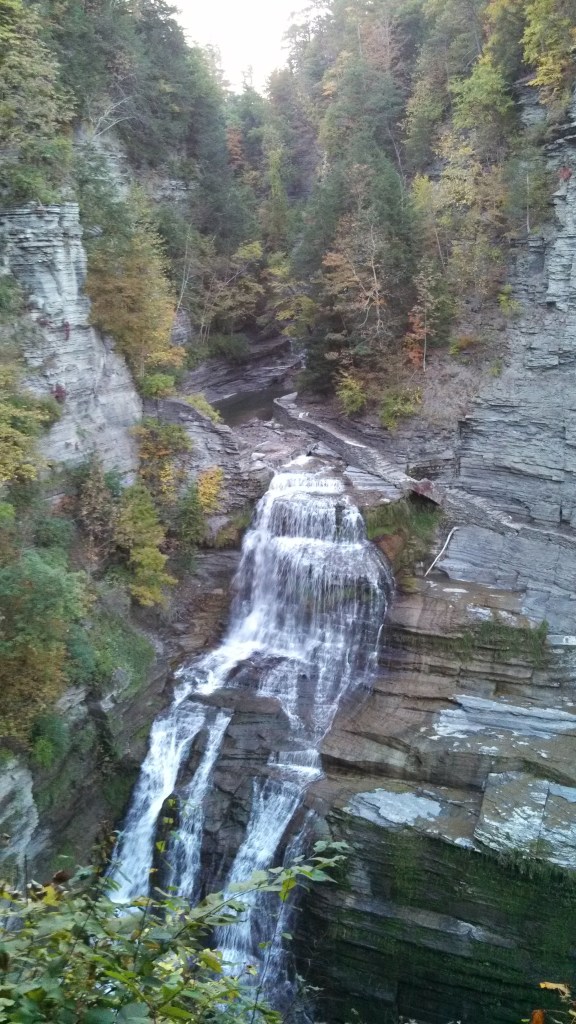
The spray from the waterfall at Chittenango Falls State Park creates the moist and mild micro-habitat needed by the snail, which has occupied this place in Madison County since the last Ice Age. (Photo Credit – New York State Parks)

This delicate mollusk leads a precarious existence, as a population now estimated at less than a hundred faces threats from floods, droughts, rockslides, another species of snail, climate change, and even the feet of irresponsible hikers.

The snail was abundant when it was first discovered at the falls in 1905. By the early 1980s, the population was estimated at less than 500 individuals, and the population continued to plummet in the 1990s. The snail is listed as an endangered species by New York State and a threatened species by the federal government. Historically, the species was found in a handful of sites from Tennessee to Ontario, Canada, but now is known to only exist in New York.

To fend off potential extinction of what is affectionately known as the “chitt,” a captive breeding program started five years ago, supported by State Parks, SUNY College of Environmental Science and Forestry (SUNY-ESF), U.S. Fish and Wildlife Service, state Department of Environmental Conservation, and the Rosamond Gifford Zoo in Syracuse. Federal funding to support the program has come from the Great Lake Restoration Initiative.

Banding together on Facebook as the “Snailblazers,” these partners recently added another friend of the chitt – the Critz Farms brewery in Madison County, which has crafted an IPA dedicated to raise funds for the breeding program.


With each leisurely sip of the Endangered Species IPA, described as a “delightfully citrusy, medium-bodied beer,” funds go toward supporting a snail incubator program at SUNY-ESF in Syracuse and the hand collection of a mix of native plant leaves that form the diet of the finicky snail.

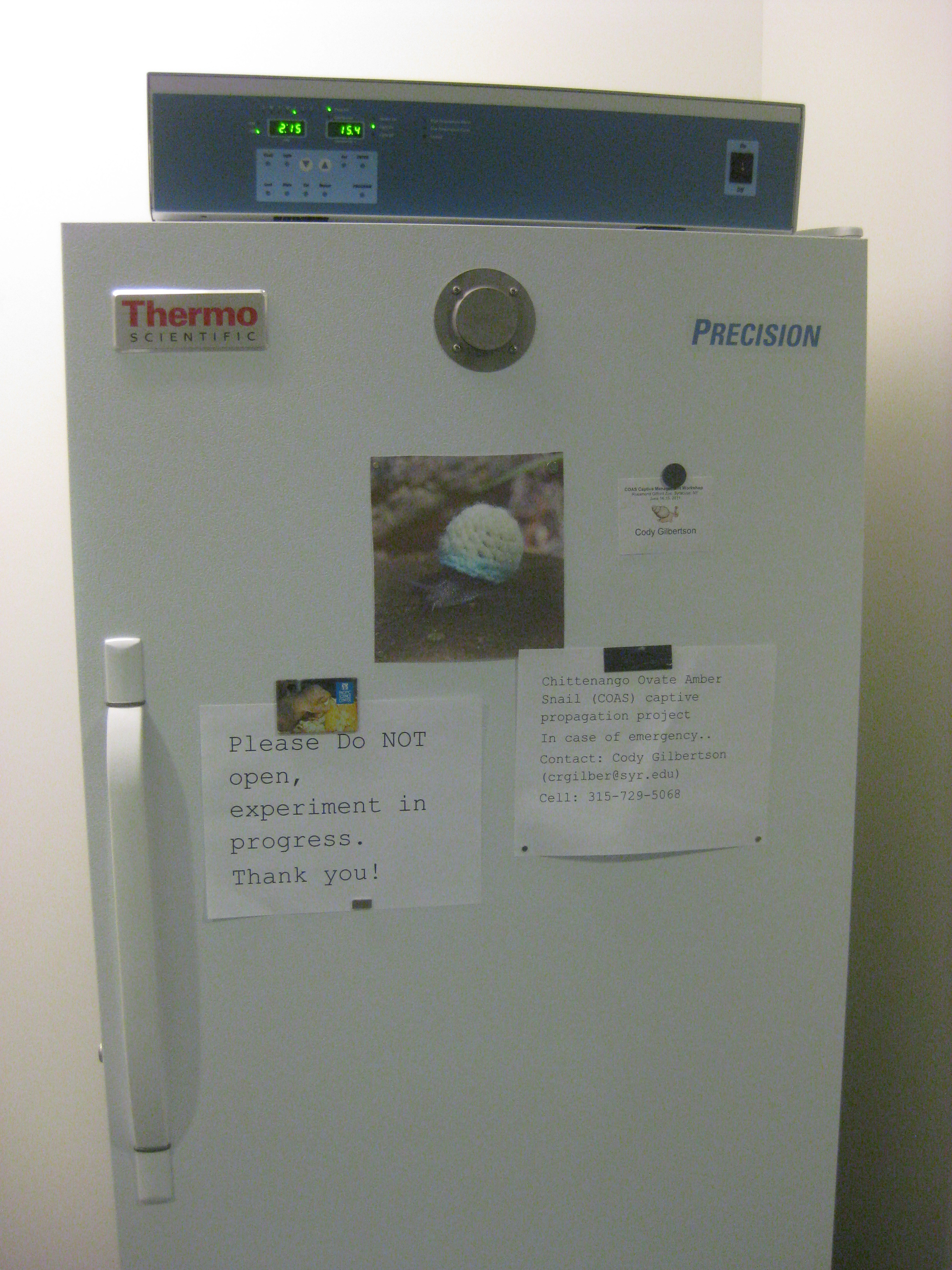
Since the program started, nearly 2,000 snails have been propagated in climate-controlled incubators at both SUNY-ESF and the Rosamond Gifford Zoo in Syracuse, said Cody Gilbertson, senior research support specialist at SUNY-ESF. Due to COVID restrictions this year, the zoo incubator program was consolidated into SUNY-ESF.

During field research at Chittenango Falls, SUNY-ESF researcher Cody Gilbertson holds an Ovate Amber snail (below). The captive-bred snails reside in a climate controlled unit back at SUNY-ESF in Syracuse. (Photo Credit – SUNY-ESF)

Of the captive-bred chitts, slightly more than 400 have been released into the park during this time, some as hatchlings and the rest as adults capable of reproduction. Even with these efforts, the snails are barely hanging onto their foothold.


About 500 snails reside in the incubators currently, protected as a “backup” population should some dire circumstances extinguish the Chittenango snails. Hundreds of snails have already lived their entire natural life spans – about two years – in the incubators.

When breeding started, there was an estimated population at the falls of about 350 snails, said Gilbertson. The most recent counts are now at about 100.

The habitat zone, a mix of boulders that have fallen from the limestone cliffs, is consistently moist from the mist of the falls. That nurtures water-loving plants, including a number of native wildflowers, including the snail’s favorite, Joe-Pye weed (Eutrochium purpureum), said Delaney Kalsman, project coordinator at State Parks.

Joe Pye weed, a favorite food of the snail. (Photo credit – State Department of Environmental Conservation)


Located along the park’s Gorge Trail, this area is fenced off and marked against trespassing. Anyone entering the area without authorization can be prosecuted under New York State Environmental Conservation Law and the federal Endangered Species Act.

Another count of the snail population is set for the summer of 2021, said Kalsman. The number of snails has been declining in recent years, with possible explanations including competition from a species of invasive snail and climate change.

“The environment is experiencing longer drought periods, reducing the flow and spray of the falls which the snail relies on,” she said. “When it does rain, large flooding events are happening at greater frequencies. In 2017, a major flood washed away large portions of Joe-Pye weed.”

Within such a small home, a potential extinction-level event can show up quickly. Such events like the 2017 flood, along with the other threats, put the chitt as “severe threat of extinction,” Gilbertson said. “This threat is further amplified because the entire wild population exists only at Chittenango Falls State Park.”

To propagate more snails, Gilbertson needed to understand what they ate from the flora and fauna around the falls. She learned the snails preferred the fallen leaves of black cherry trees collected in early spring, as well as leaves from pignut hickory, sugar maple and ash. And snails needed certain species of leaves at certain times, and at certain stages of decomposition. So, SUNY-ESF and Parks staff needed to collect leaves regularly and maintain a kind of “compost” menu for the snails. The leaves are stored dry and then rehydrated as needed.

“This diet for our snails is more natural than a synthetic paste or vegetables that is used in many other captive invertebrate programs. Survival was boosted by this natural diet,” she said.
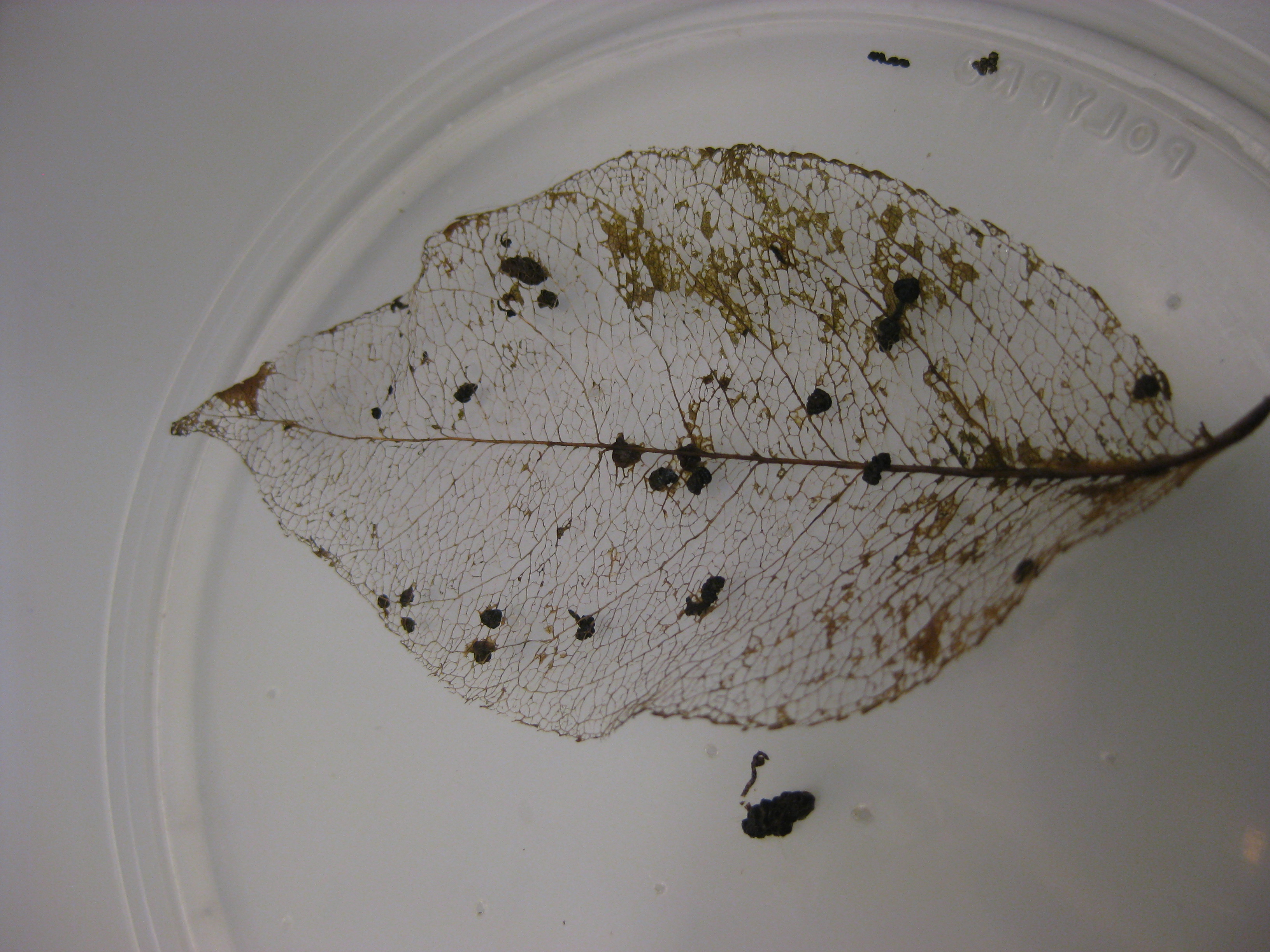
A black cherry leave after being consumed by numerous snails. (Photo credit – SUNY-ESF)


State Parks staff is now designing a “garden” of native trees and plants in the park to supply the optimal forage that can be brought to the snails, as part of the efforts spearheaded by Kalsman, park Operations Manager  Shawn Jenkins, and SUNY-ESF FORCES (Friends of Recreation, Conservation and Environmental Stewardship) stewards Jordan Stransky, Sarah Petty, and David Rojek.

(And for the curious: Snails have a form of teeth, called “radula,” which is Latin for “little scraper.” The radula is a tongue-like ribbon with raised rasps, which the snail uses to scrape and tear away at whatever plant they are eating.)

Another issue to consider is that of a potential lack of genetic diversity, which could make the snails vulnerable to disease. To avoid having the captive offspring breeding only with other captive offspring, researchers periodically gather snails from the falls to be brought into the captive program.

Called “pulsing,” this method “brings new founders from the wild to breed and introduce hypothetically new genetic lines into our captive population,” Gilbertson said.

Snails mate between May and July, resulting in the female laying about a dozen tiny eggs. Each summer, about 200 to 300 snails are reared from those eggs. The hatchlings are so tiny that the safest way for researchers to move them around is by using paintbrushes, she said. The tiny creatures use their “foot,” a muscle that contracts to allow the snail to move, to grasp the bristles on the brush.

Each year, researchers bring more captive-bred snails to the falls to live and breed with the snails there. And this tiny population continues for another day, aided by the work of dedicated people at State Parks, other partners and now brewers and patrons of a farm-brewed IPA.
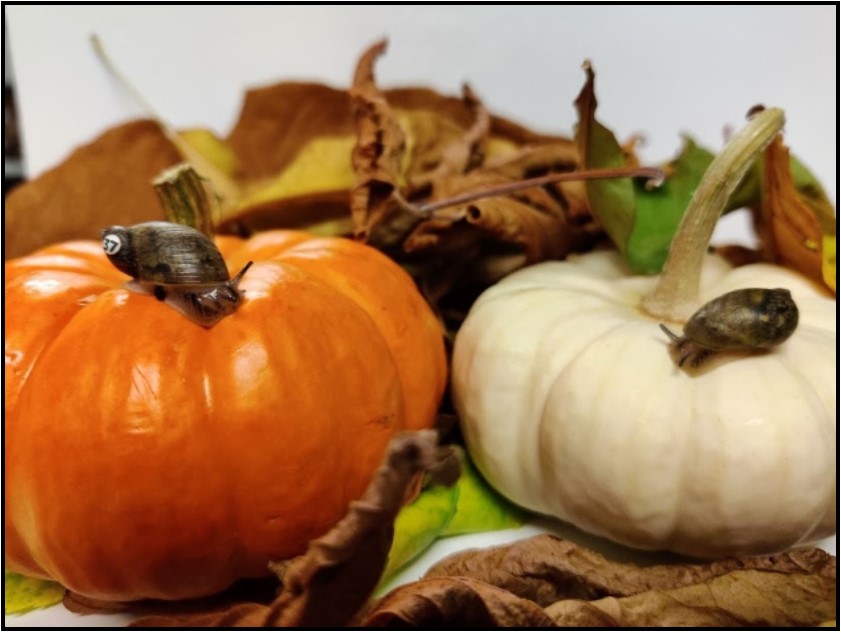
Happy Thanksgiving from the Chittenango Ovate Amber snail and New York State Parks! (Photo credit – NYS Parks)


(Cover Photo- Chittenango Ovate Amber Snail. Photo Credit- Cody Gilbertson, SUNY – ESF)

Post by Brian Nearing, Deputy Public Information Officer, NYS Parks


Resources

Read a five-year scientific review of the status of the Chittenango Ovate Amber snail by the U.S. Fish and Wildlife Service (USFW).

Discover more about the snail from USFW.

Learn more about the snail in a online book for children created by staffers at the Rosamond Gifford Zoo.

Donate to the zoo’s snail conservation program.
Curated Cemeteries Tell Tales at State Parks

With Halloween coming up, the setting of an old cemetery might come to mind. Cemeteries are beautiful, poignant, old and sometimes just creepy, but these places are also a powerful reminder of the past and a record of the people who came before.

As part of its mission to preserve the state’s heritage, New York State Parks is responsible for the care of numerous cemeteries – from dozens and dozens of small old homestead cemeteries and large military cemeteries to burial vaults and even pet cemeteries. And cemeteries, just like any other historic item, do require maintenance and repair from time to time.

It is the job of the Historic Site and Parks Services (BHSPS) to preserve these cemeteries and the individual gravestones. That means tackling the challenges posed by time and weather, but also repairing the damage done by vandals, who break or damage stones.

Intact stones can be cleaned and inventoried in place, but fractured stones in need of repair are brought to our historic preservation labs Peebles Island State Park, where conservators perform the needed repairs. That work has been assisted by members of the New York State Excelsior Conservation Corps, who learn how to document, map, clean and reset gravestones.

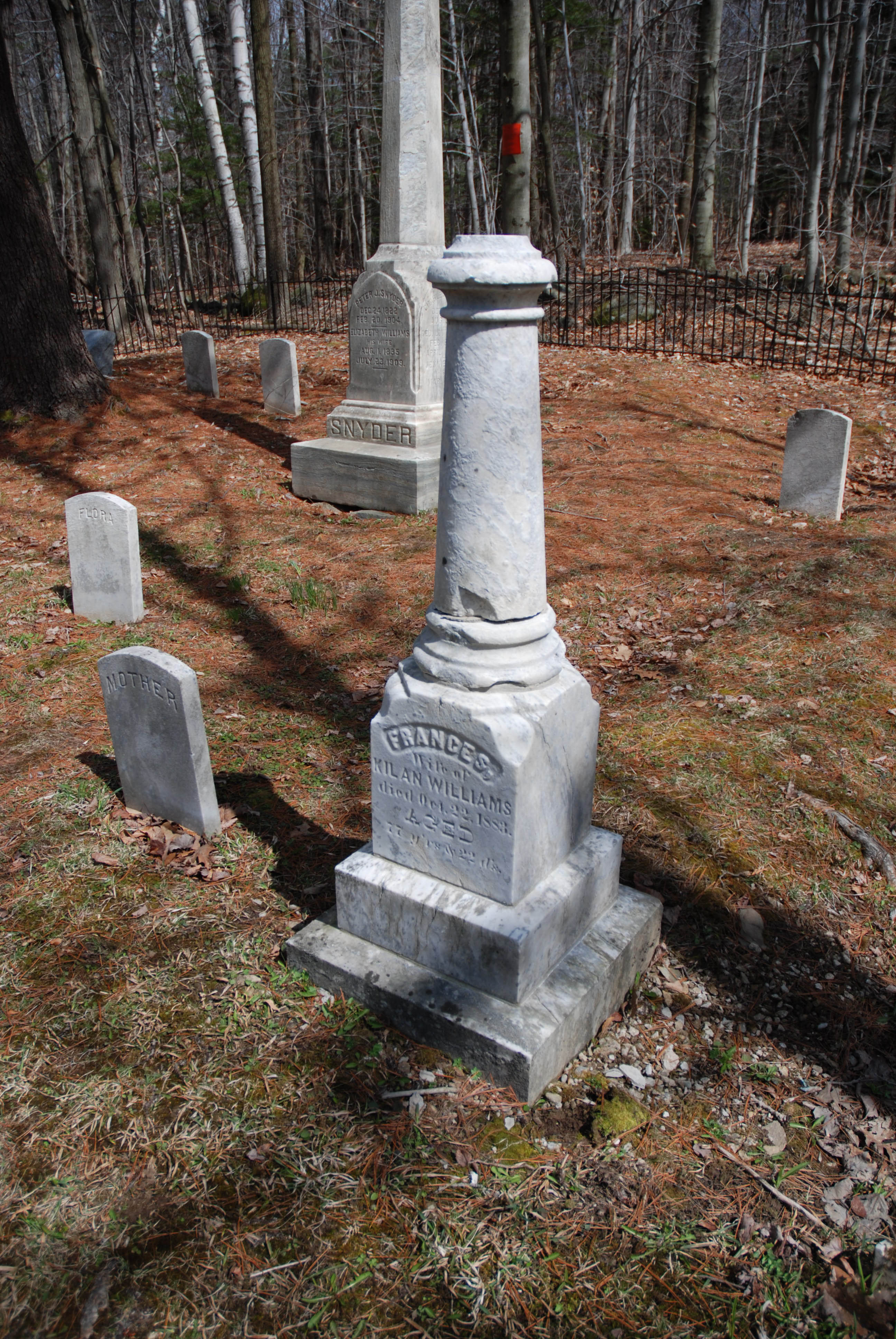
A visit to a historic cemetery can be a time of contemplation in a quiet natural setting. For example, Grafton Lakes State Park in the forests of the Rensselaer Plateau in the Saratoga/Capital Region, has four historic family cemeteries.  The Old Snyder Cemetery is just above the Mill Pond and shadowed by the forest.  The small cemetery, dating to the 19th century is surrounded by a decorative iron fence and features obelisks, and marble and bluestone gravestones.

At the historic preservation labs at Peebles Island State Park, a fractured gravestone from a historic family cemetery within Grafton Lakes State Park is reset.
Gravestones freshly cleaned by State Parks staffers shine at Grafton Lakes State Park.

The gravestones tell the story of life in 18th and 19th century New York. Some stones simply feature a name while others feature beautifully carved weeping willows or crosses.  The Thomas West, Frances West and Hicks cemeteries are smaller and buried deeper in the Park.  The cemeteries are marked by fieldstone walls or split rail fence.  

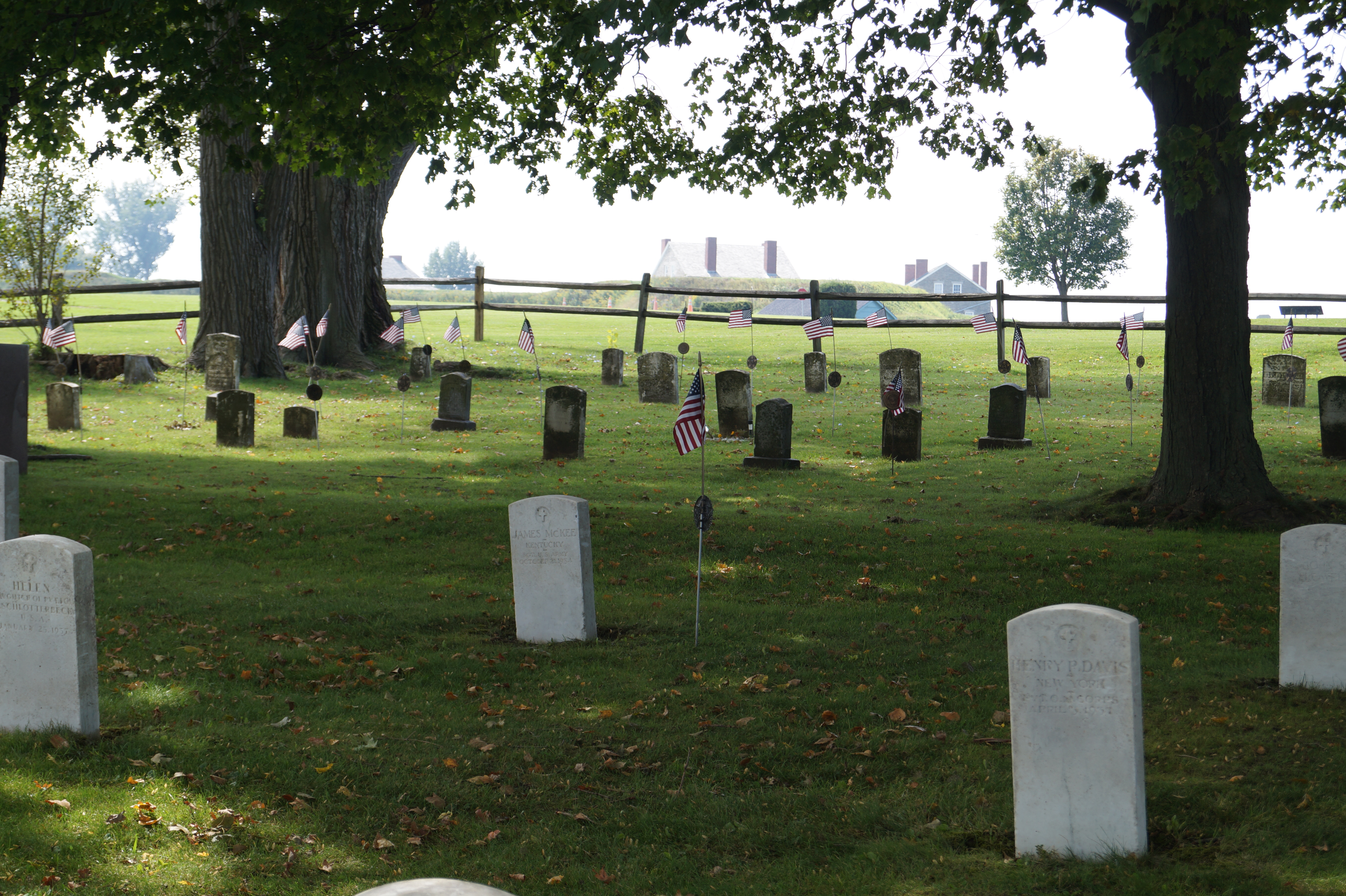
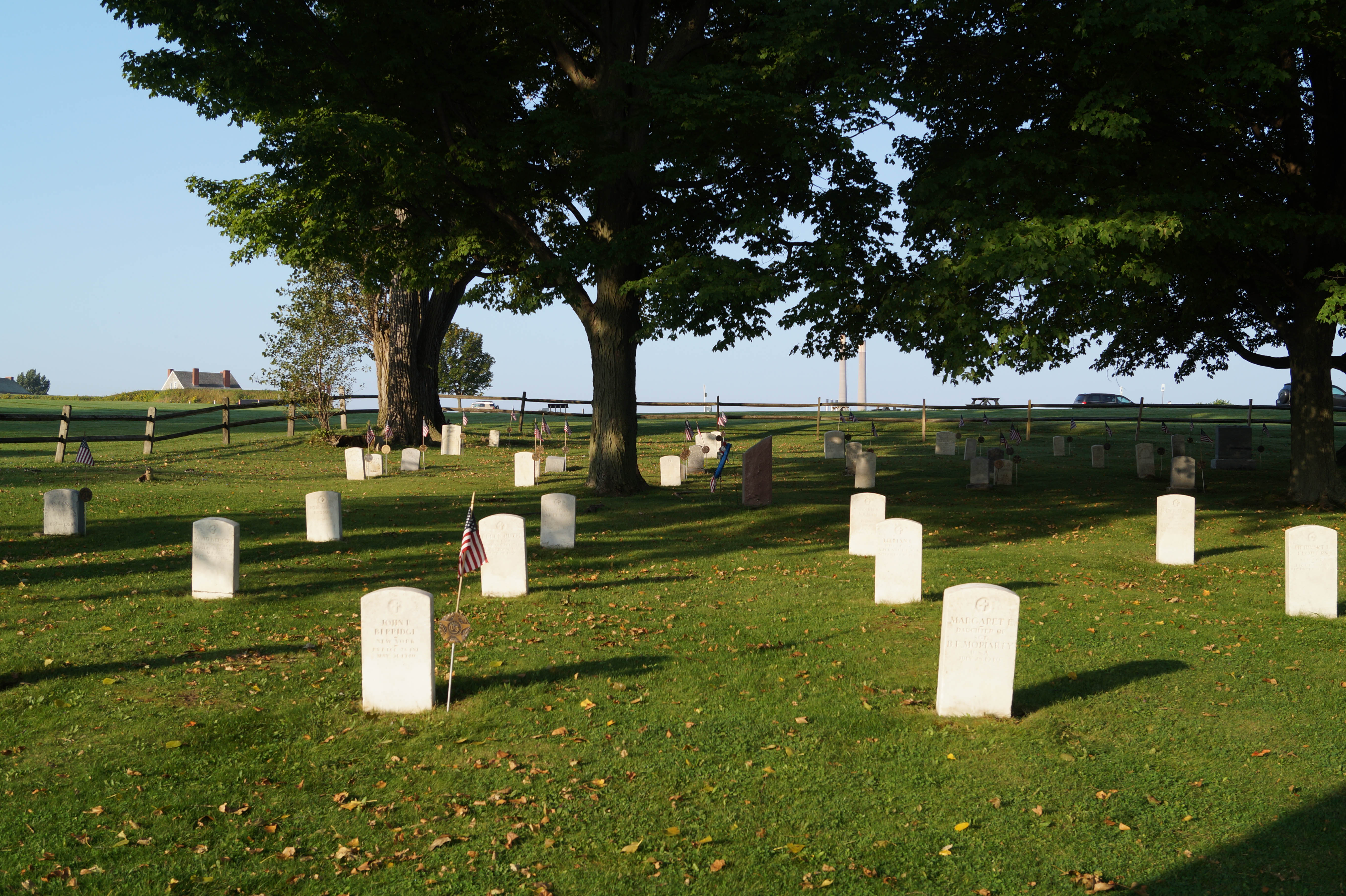
At the other end of the state, the 1812 Cemetery at the Old Fort Niagara State Historic Site, is the resting place of the fort’s soldiers and their families from the War of 1812 through the 1930s. This cemetery is shaded by mature oaks, pines and maple trees and overlooks the Niagara River.  Traditional military tombstones are intermixed with large granite and marble memorials to the Unknown Soldiers who died during the campaigns of Western Expansion, the Revolutionary War and the war of 1812. The Victorian and Gothic gravestones feature finely detailed cannons, urns, flowers, shields and crosses.   

State Parks conservator Heidi Miksch gently cleans the bronze plaque on a tombstone at Old Fort Ontario State Historic Site.
Gravestones at Old Fort Ontario during and after a cleaning session. Use the slider bar to compare pictures.

The Herkimer Home State Historic Site and Fort Ontario State Historic Site in central New York also feature military and local cemeteries. The Herkimer Home cemetery has large memorials flanked by cannons intermixed with delicate 18th-century marble gravestones and 19th-century zinc memorials, and includes the resting place of Revolutionary War General Nicholas Herkimer, who died of wounds after the Battle of Oriskany.

A member of the Excelsior Conservation Corps (ECC) cleans a gravestone at the Herkimer Home State Historic Site.

Back at the historic preservation labs at Peebles Island, an ECC member repairs a broken gravestone from Herkimer Home State Historic Site.
A map of the Herkimer Home cemetery created by Excelsior Conservation Corps members.

In Oswego at Fort Ontario, a small cemetery features 77 marble military tombstones of veterans from the French and Indian War to World War II. Inside the fort are fragile and rare gravestone from the 1700s.

Sonnenberg Gardens & Mansion State Historic Park in Canandaigua has a small pet cemetery under an old oak tree near the 19th century Victorian mansion. The cemetery is surrounded by a low iron fence and features large boulders carved with the names of family pets owned by Frederick and Mary Thompson, the estate’s former owners.  A marble statue of a resting dog guards the small resting place.

Pet cemetery at Sonnenberg Gardens, where a statue of a reclining dog stands watch.

At Katonah’s John Jay Homestead State Historic Site, in the historic house’s Terrace Garden, there is a simple marker in the memory of Old Fred, a horse that served in the Civil War with Colonel William Jay II, with both rider and steed coming home safely at war’s end.

Its inscription reads: “In memory of Old Fred, who carried Colonel Jay through the Battles of Chancellorsville, Gettysburg, Peeble’s Farm & Appomattox, and who died at Bedford in May 1883, aged 28 years.”

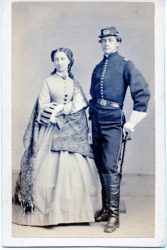
The grave and historical marker for Old Fred, the faithful warhorse of Colonel William Jay II. At bottom, Colonel Jay is shown in uniform with his sister, Eleanor Jay Chapman.

So, a quiet October afternoon could be a perfect time to appreciate the hand carved stonework, and imagine the lives marked by the gravestones, which are another aspect our shared history being protected by New York State Parks.


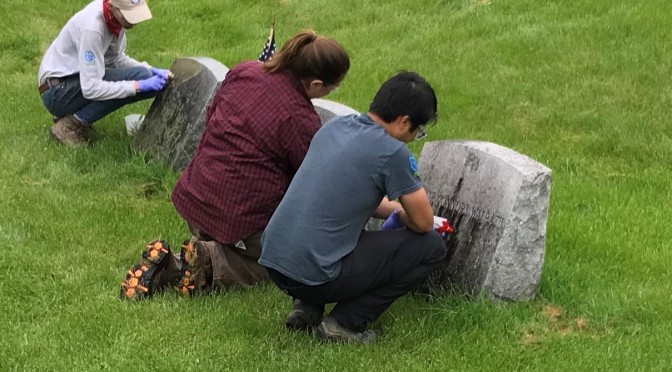
Cover Shot: Members of the Excelsior Conservation Corps cleaning gravestones at the Herkimer Home State Historic Site. (All photos by NYS Parks)

Post by Erin E. Moroney,  architectural conservator, Bureau of Historic Site & Park Services

Get Out and Explore… The Finger Lakes Region of New York State Parks

Home of the world-famous Finger Lakes, this region stretches from sandy shores and dramatic bluffs on Lake Ontario to the forests along the Pennsylvania border.

Covering Tioga, Chemung, Steuben, Schuyler, Tompkins Yates Seneca, Cayuga, Ontario, and Wayne counties, this diverse region includes 25 parks and other facilities, two historic sites and four golf courses that span terrain featuring deep clear lakes, spectacular gorges, abundant waterfalls, and fishing and boating opportunities galore.

With fall colors well under way, check out this map to see its progress in this region, as well as across New York State.

Maps for hiking trails and a variety of other useful information on State Parks, including those in the Finger Lakes, are now available on the NYS Parks Explorer app.  The free app, which is available for use on Android and iOS devices, is easy to download, user friendly and allows patrons to have park information readily available.

As with all hikes, there are a few things to remember beyond carrying a mobile phone. Check the weather forecast before you go, and dress appropriately. Wear sturdy, yet comfortable shoes or boots, bring water and snacks, and perhaps carry a camera to capture what you see. Be aware of your surroundings and mindful of hikes on steep terrain or those that go near cliff tops. Having a small first-aid kit available in case of an emergency is never a bad idea.

Hiking poles are also useful and can transfer some of the stress of hiking from your knees and legs to your arms and back.

Trail maps are also available on each individual park website page at parks.ny.gov and at the main office of each park. Be sure to download maps ahead of time or carry a paper copy as a back up

In addition to the name and distance of each designated trail in a park, the maps include facilities such as parking, comfort stations, park offices, nature centers, campsites, and boat launches. To learn more about NYS Parks trails CLICK HERE.  

Hikers should plan their route in advance, know how long a trail is and how long it ought to take to finish. Since daylight is not an unlimited resource, especially in the fall as days grow shorter, tossing a flashlight or headlamp into your backpack is a good form of insurance, should you unexpectedly find yourself on the trail as dusk approaches.

Parks facilities are carry-in, carry-out, so don’t leave trash behind. Follow Leave No Trace principles to keep trails clean for everyone.

Additionally, as incidents of tick-borne diseases surge in the state, it is always important to check yourself for ticks after being outside, even if it is only time spent in your own backyard.

Lastly, as the COVID-19 pandemic continues, remember to practice safe social distancing, particularly in parking lots and at trailheads, and use face coverings when a distance of six feet cannot be maintained.  To learn more about important COVID safety guidelines, CLICK HERE.

Chemung County


Newtown Battlefield State Park, 2346 County Route 60, Elmira (607) 732-6067: This gem of a facility is worth a visit anytime of the year, but a view of the fall foliage from the overlook might just become a new annual tradition.  Crisscrossed with 19 trails, nearly all well under a mile mile, this park offers a hiker a variety of routes without steep inclines. The park is named for the battle that took place in 1779 that was part of the American Revolution and contains a replica Native American village and large granite monument. The park also has a unique Civilian Conservation Corps history with many buildings that were constructed during their 1930’s tenure, still in use and looking great! This is the perfect park for those who want to hike through history.

Find a trail map here…

An informational kiosk gives visitors insight to the Battle of Newtown.

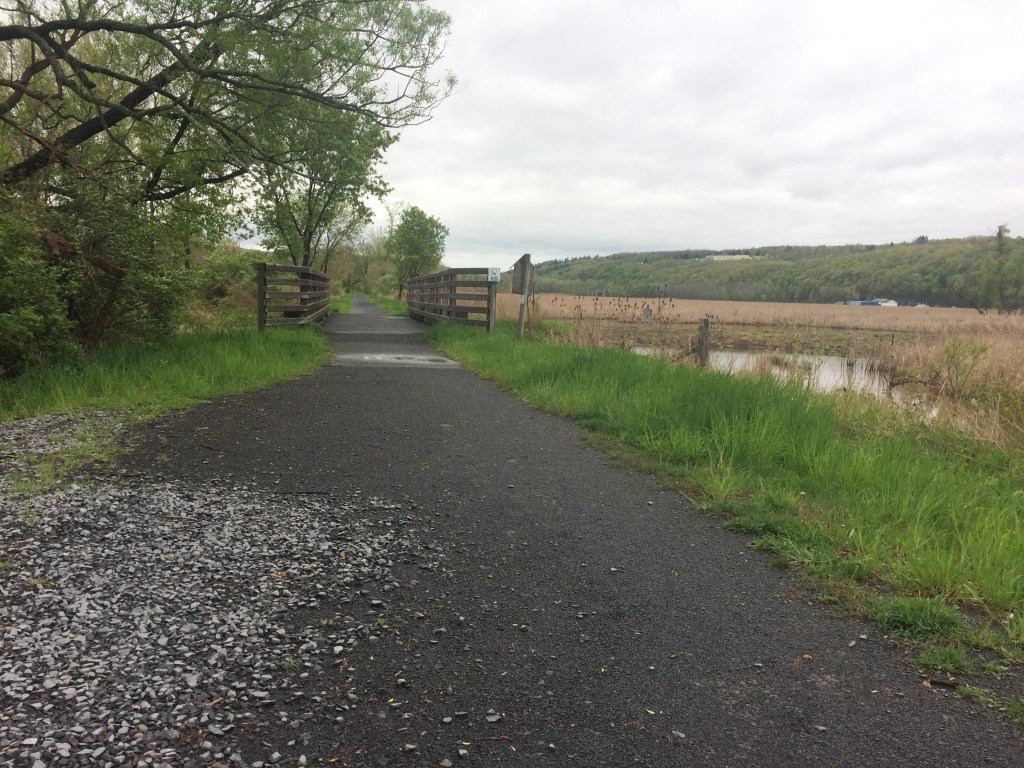
The Catherine Valley Trail, c/o Watkins Glen State Park, P.O. Box 304, Watkins Glen (607) 535-4511: Stretching from the village of Watkins Glen on Seneca Lake to the village of Horseheads, this 12-mile compact stone-dust trail follows the course of Catherine Creek and utilizes abandoned railroad and canal towpath corridors. The gentle grades make it a perfect trail at any time of the year for walking, running, cycling, cross-country skiing or snowshoeing. The trail passes a mix of wetlands and woods in a glacially-carved valley.

Find a trail map here…

The Catherine Valley Trail is a wide, gentle path for hikers and cyclists.

Ontario County


Ganondagan State Historic Site, 7000 County Road 41, Victor (585) 924-5848: The only New York State Historic Site dedicated to a Native American theme and the only Seneca town developed and interpreted in the United States, this woodland and meadow park features eight miles of hiking trails. Part of the site is a Bird Conservation Area, so binoculars and a field guide will help visitors identify the many species of birds found here. Formerly the site of 17th century Seneca town, the site now hosts the 17,300 square-foot Seneca Arts Culture Center and a full-sized Seneca bark longhouse, which tell the stories of the Haudenosaunee (Iroquois) contributions to art, culture and society. There are two signed interpretive trails that educate visitors about the significance of plant life, Haudenosaunee culture and history. A third trail just a mile away from the center, interprets the history and the importance of Fort Hill, a large palisaded granary.

Find a trail map here…

Click on the slideshow above for images from Ganondagan State Historic Site, starting with the Earth is Our Mother Trail (1), the Trail of Peace (2), the Seneca Trail south of Boughton Hill Road (3), and the Trout Brook Trail Bridge (4).

Tompkins County


Black Diamond Trail, 1740 Taughannock Boulevard, Trumansburg (607) 387-6739: A former railroad bed, the 8.4-mile Black Diamond Trail (or BDT) is a year-round, multi-use stone-dust trail on the western shore of Cayuga Lake that stretches from Taughannock Falls State Park to the City of Ithaca.  The former railroad track descends 400 feet from its northern trailhead at the State Park to its southern end at the Ithaca Children’s Garden where it seamlessly links up with the city’s Cayuga Waterfront Trail along the lake.  Its gentle grades make it ideal for hiking, jogging, biking, snowshoeing and cross-country skiing. The trail is named after the rail line that operated on the site from 1896 to 1959, and is thought by some to have been one of the most lavish trains in the world.

Find a trail map here…

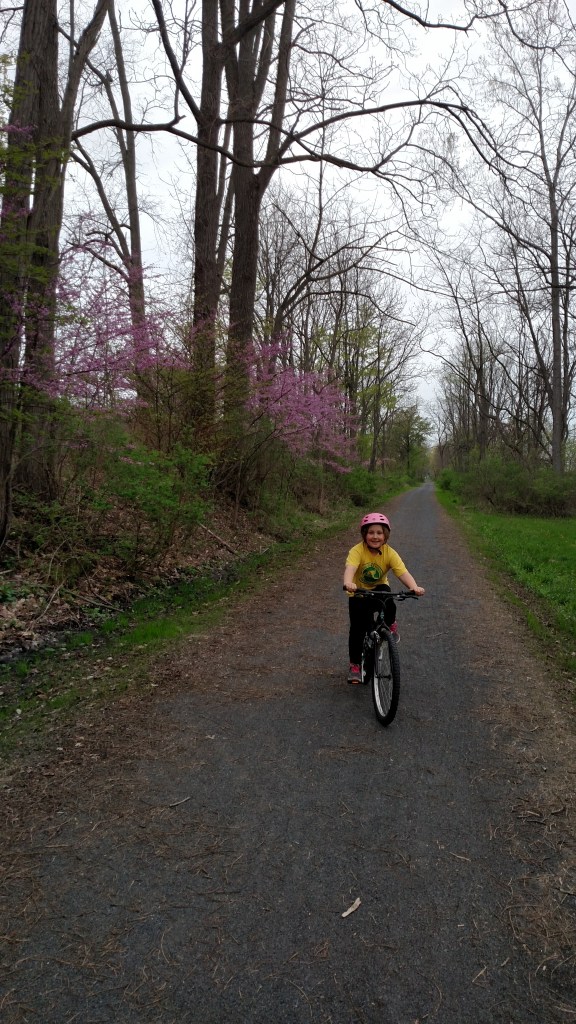
A young cyclist enjoys the Black Diamond Trail.

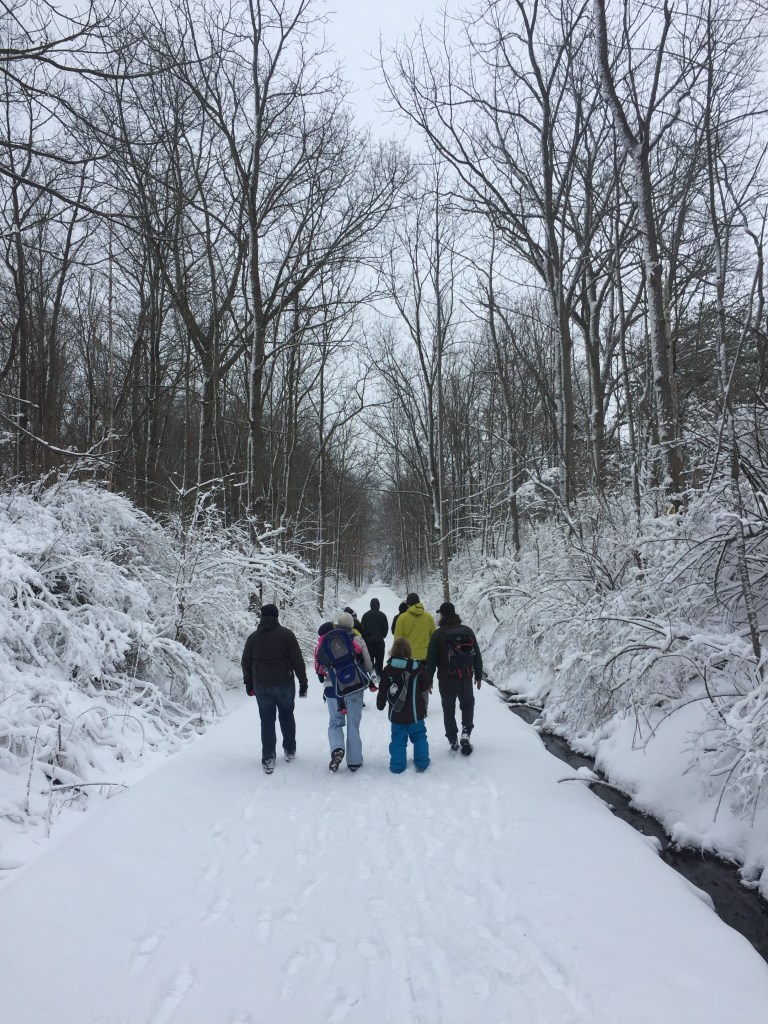
The trail is also popular in winter for hiking, snowshoeing and cross-country skiing.

Robert H. Treman State Park, Upper Park Road, Newfield (607) 273-3440: With more more than ten miles of trails to experience, the one-mile upper loop along the rugged Enfield Gorge is spectacular any time of the year, but particularly when its foliage is ablaze. The ascents and descents here can be steep. Start in the parking lot by the Old Mill to begin a half-mile hike down the gorge trail to the 115-foot Lucifer Falls. After taking in the view near the lip of the falls, then descend a staircase along a sheer wall of stone hundreds of feet high that allows a full view of the falls before descending again through the woods to the crossover bridge to the cliff staircase/Rim Trail.  Then climb the 222 beautiful stone steps of the Rim Trail for stunning views of the valley below _ and maybe to catch a breather. Continuing on the Rim Trail back to the Old Mill will complete the loop.

Find a trail map here…  

The dramatic Lucifer Falls plunges 115 feet at Robert H. Tremain State Park.

Tioga County


Two Rivers State Park Recreation Area, Banzhoff Road, Waverly (607) 732-6287: A five-minute drive from the village of Waverly near the Pennsylvania border, this park offers a beautiful hilltop vista of the Chemung and Susquehanna River valleys below to the small babbling brooks beginning their journey to the Chesapeake Bay. It contains 4.7 miles of hiking trails that descend from the forested hills to streams that feed the Waverly reservoir system. Mountain biking is also allowed on these trails, so cyclists and hikers need to stay alert to each other. Trails here connect to the village park of Waverly Glen.

Find a trail map here…

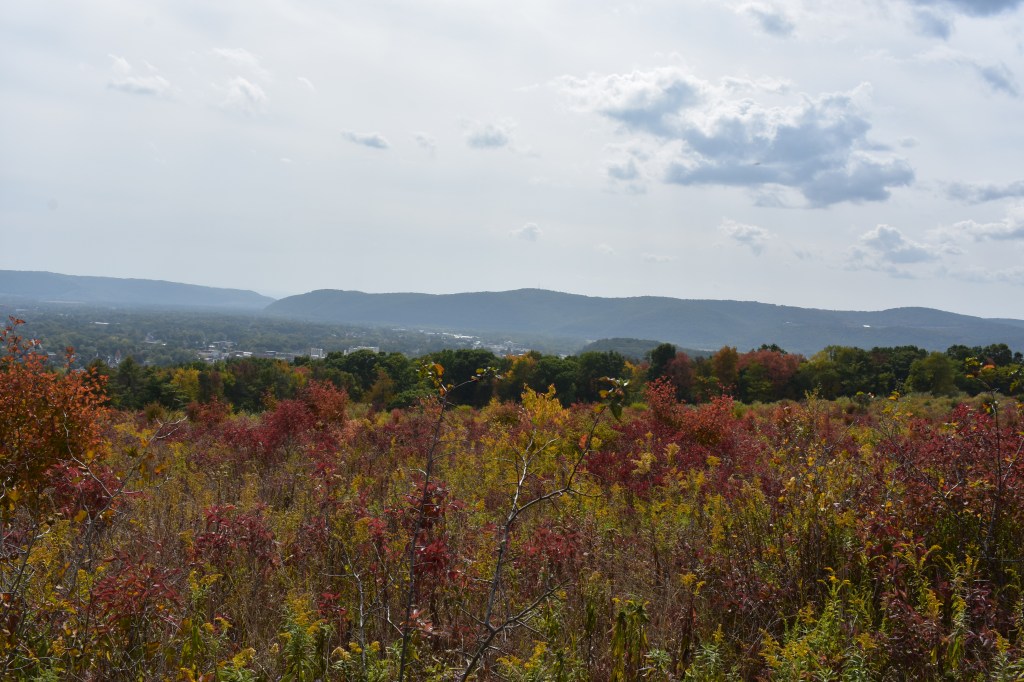
Fall colors begin to show through the valley at Two Rivers State Park Recreation Area.

Cover Shot- Lucifer Falls at Robert H. Treman State Park. All photos by NYS Parks.


And learn about great hikes in other State Parks regions in previous posts from the “Get Out and Explore…” series. See you out there!

Get out And Explore … The Thousand Islands Region of New York State Parks

While it may be best known for world-class boating and fishing, the Thousand Islands region of State Parks also offers miles of hiking trails along shorelines and through forests, stretching from Lake Ontario north along the St. Lawrence River and finally to the shores of Lake Champlain. Covering Lewis, Jefferson, St. Lawrence, Franklin, and Clinton…

Get out And Explore … The Saratoga/Capital Region of New York State Parks

Centered on the confluence of the Hudson and Mohawk Rivers, between the Adirondacks and the Catskills, the Saratoga/Capital Region of New York State Parks offers opportunities for both hikers and paddlers. Covering Albany, Schenectady, Rensselaer, Saratoga Washington, Schoharie, Montgomery and Fulton counties, the region includes a dozen state parks, as well as eight historic sites…

Get Out And Explore … The Central Region of New York State Parks

With summer now in full swing, hiking trails are calling from the Central Region of State Parks, which stretches from Lake Ontario to the Southern Tier and Pennsylvania border. The region includes glacial lakes, sandy beaches, segments of the historic Erie Canal, and dramatic waterfalls. Covering Broome, Chenango, Cortland, Delaware, Herkimer, Madison, Oneida, Onondaga, Oswego…

Get Out and Explore … The Palisades Region

With autumn leaves now turned, hiking in the Palisades region of State Parks offers spectacular views of the Hudson Valley and the Catskills to go with a fascinating history that includes an outlaw’s lair, the state’s early iron industry, and a traitor’s secret meeting place. Located on the west side of the Hudson River, this…

Get out and explore … the Taconic Region of State parks

With more than 2,000 miles of marked trails across New York, the State Parks have something for hikers of every ability. That includes the beautiful Taconic Region, located on the east side of the Hudson River and stretching through Columbia, Dutchess, Putnam and Westchester counties. Palatial estates, highland trails, Hudson River vistas and woodland campgrounds…