

Camping at our 100-plus campgrounds is the ultimate affordable getaway option, but it’s so much more than just a money saver. Camping connects you to nature and allows you to unplug in ways you just can’t replicate on a day trip. While some of our campgrounds are well-known statewide, others are unsung outside their immediate area, their natural beauty and ecological significance waiting to be discovered. As you plan your summer, get up to speed on camping guidance and consider these seven often-overlooked New York State Parks campgrounds for your next great stay.
Continue reading New York State Parks’ Best-Kept Secrets: Seven Campgrounds Worthy of Your SummerCategory Archives: Nature Centers

The Women Of New York State Parks
If you’ve ever drifted off to sleep at Betty and Wilbur Davis State Park or gone to a nature program at Minna Anthony Common Nature Center and wondered about their namesakes, this post is for you! During Women’s History Month, let’s explore the stories of writers, activists, politicians, and ordinary women who have lent their names to state parks and nature centers.
Continue reading The Women Of New York State Parks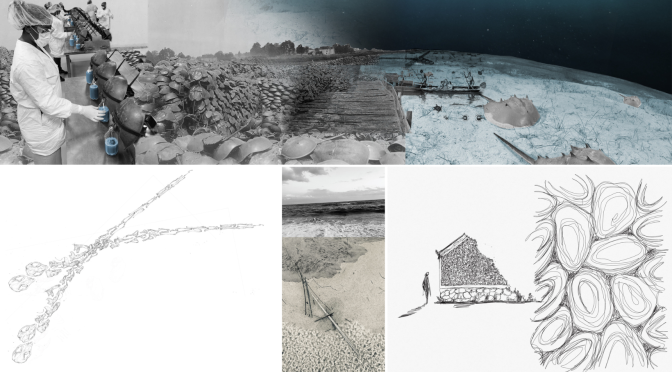
Princeton Students Interpret Jones Beach Through Environmental Poetry and Art
Poetry and literature have long been used to explore the natural world in ways that can circumvent the pitfalls of scientific and technological determinism. Similarly, in the history of architecture and landscape architecture, new modes of drawing and rendering can add contour and depth to insights from the environmental and biological sciences.
In Spring 2023, Jeanne Haffner, Special Assistant and Director/Chief Curator of the Jones Beach Energy & Nature Center and S.E. Eisterer, Assistant Professor for Architectural History and Theory at Princeton University, collaborated on a seminar for Masters and Ph.D. students called “Histories of Embodied Energy: From Turtles to the Grid.” The course followed the mission of the Jones Beach Energy & Nature Center, investigating “the relationships between human beings, energy systems, and environmental stewardship.” Students toured the Center and surrounding site, and then chose an artifact from Jones Beach to work with for the semester.
Having chosen an artifact, students wrote poems and created a drawing about it. But instead of producing abstract scientific diagrams or architectural renderings, they instead reflected upon alternative ways of representing the environment—ways that prioritize artistic, rather than strictly scientific, approaches. Maryam Popoola, for instance, sees an owl pellet not simply as an object for dissection but as a metaphor for the ever-changing nature of form. Valen Zhang’s poem and drawing considers oysters’ dynamic interactions with the ocean, beach, and built environment. For Marcos Garcia, beach grass on a sandy dune becomes a nexus between humans, lifestyles, and ecological impact. Masa Crilley depicts a horseshoe crab not in isolation, but in a long history that connects underwater worlds, Native American fishing practices, and industrialization.
This selection of poems and visuals reminds us of the continuing connection between art and environmental science, as well as the complex entanglements between environmental, social, and technical systems.
–Introduction written by Jeanne Haffner, Ph.D., Special Assistant and Director/Chief Curator, Jones Beach Energy & Nature Center (NYS Parks) and S.E. Eisterer, Assistant Professor of Architectural History and Theory, Princeton University
–Poems and visuals below created by Maryam Popoola, Valen Zhang, Marcos Garcia, and Masa Crilley
Continue reading Princeton Students Interpret Jones Beach Through Environmental Poetry and Art
Celebrate Earth Day with State Parks!
This week we celebrate Earth Day! The first Earth Day was held in 1970 to draw attention to ongoing environmental issues in the United States, such as water and air pollution. Since then, Earth Day has become a global event held every April 22nd in honor of protecting the environment. With over 350,000 acres of park land and waters, NY State Parks play an important role in the protection and stewardship of New York’s natural ecosystems. If you would like to join in the celebration and participate in hands-on Earth Day activities, check out the list below for a sampling of Earth Day events held in State Parks across the state! If you can’t make any of this week’s Earth Day events, join us for Arbor Day programs next week and I Love My Park Day on Saturday, May 7th!


Long Island
Brookhaven National Lab Climate Van
Jones Beach Energy & Nature Center
Friday, April 22, 2022 09:00 AM – 04:30 PM
This pioneering mobile laboratory consists instruments used in their climate research to measure atmospheric variables. Come explore and get a glimpse into the science of forecasting atmospheric conditions. The talks will be on Zoom as well as in person.
Protect the Pollinators Event
Jones Beach Energy & Nature Center
Saturday, April 23, 2022 12:00 PM
Build your own bee or insect house; Guided tour of our Pollinator Garden; Springtime Storytime; and Pollinator Relay Races
Earth Day Celebration Project
Connetquot River State Park Preserve
Saturday, April 23, 2022 09:00 AM
In celebration of Earth Day, please join Friends of Connetquot to plant native plants and ferns along the main road to the Clubhouse. Meet up by the Kiosk in the main parking lot starting at 9 am. Please dress appropriately and bring gloves. To register, please visit www.friendsofconnetquot.org.
Earth Day Hike
Hallock State Park Preserve
Saturday, April 23, 2022 09:00 AM – 11:00 AM
Celebrate our earth home by taking a 3 mile hike through the trails of the Preserve observing all that nature can share with us! All programs meet in the upper parking lot unless noted. Programs led by MaryLaura Lamont. Call for details, reservations at (631)315-5475. Snow/rain cancels programs!!!
Earth Day Festival
Hempstead Lake State Park
Saturday, April 23, 2022 11:00 AM – 3:00 PM
The event will include alternative energy activities, up-cycling t-shirt into aprons, make native pollinator seed bombs, and more!

Niagara
Earth Day Walk
Buckhorn Island State Park
Friday, April 22, 2022 10:00 AM – 11:30 AM
Happy Earth Day everyone! Joins us for a relaxing walk through the woods and along with Niagara River. For information and registration call (716) 282-5154
Arbor Day Walk
DeVeaux Woods State Park
Friday, April 29, 2022 01:00 PM – 02:30 PM
Happy Arbor Day! Enjoy a walk through old growth trees. Registration required, please call (716) 282-5154.

Thousand Islands
Celebrate Earth Day!
Point Au Roche State Park
Saturday, April 30, 2022 10:00 AM – 12:00 PM
Celebrate Earth Day with us! Go on a Scavenger Hunt! Play some Earth Day themed games! Plant a seed to take home! Help clean up the Park! Activities available 10am-12pm. All ages welcome!
Earth Day at Zoo New York
Minna Anthony Common Nature Center
Saturday, April 23, 2022 10:00 AM – 03:00 PM
Come join the Earth Day celebration at the Thompson Park Zoo! Learn about the natural world around you and the importance of protecting our natural resources. Discover new places and ways to enjoy the outdoors. There will be numerous family friendly activities and many different organizations at the event, including the Nature Center! For additional information, please call the Thompson Park Zoo at (315) 782-6180. Preregistration recommended. Please call (315) 482-2479 to register. Face covering encouraged when indoors.
Arbor Day at TILT’s Sissy Danforth Rivergate Trail
Wellesley Island State Park
Saturday, April 30, 2022 10:00 AM – 02:00 PM
Celebrate Arbor Day and the Thousand Islands Land Trust’ (TILT) 9th Annual “For the Trees” Celebration by planting trees at the S. Gerald Ingerson Preserve along the Sissy Danforth Rivergate Trail. Bring the whole family to get their hands dirty! There will be numerous family friendly activities, workshops, games, and exhibits from TILT and many different organizations, including the Nature Center! For more information, please visit tilandtrust.org or call (315) 686-5345. Preregistration recommended. Please call (315) 482-2479 to register. Face covering encouraged when indoors.
Trees and Climate
Point Au Roche State Park
Saturday, April 30, 2022 02:00 PM – 03:00 PM
Join the park naturalist to explore trees, their important role in the ecosystem, and what they do for us. How can trees help with climate change? What can we learn by studying tree rings? What threats do trees face? Also, learn about Wangari Maathai, a very inspiring conservationist and activist, and how we can follow her example to help trees! Please note this will be an indoor program.

Finger Lakes
Beach Cleanup Event
Sampson State Park
Friday, April 22, 12:00 PM – 4:00 PM
Looking for a good way to give back to your community this Earth Day? Come out to Samson State Park from 12:00pm to 4:00pm on Friday, April 22nd and help us clean up trash and debris along the beach front and cobble shoreline of Seneca Lake. Did you know that the beautiful and State Threatened grows right here at Sampson? Twinleaf is just one of the unique and important species that call Sampson State Park home. Come help us protect this important ecological community and learn about conservation efforts around the state! Feel free to bring work gloves, or borrow ours! Meet us near the beach and look for the FORCES table!
Saratoga/Capital Region
Earth Day Clean Up
Saratoga Spa State Park
Friday, April 22nd, 10:30 AM
Celebrate Earth Day at Saratoga Spa State Park with our most recent park partner, the Children’s Museum at Saratoga! We will work together to make the park a little more beautiful. At 10:30AM on April 22nd, we will meet at the Lincoln Bathhouse where the Museum’s new Nature Backpack program will be demonstrated. At 11:00AM everyone will head out to help clean up one of the park’s many pathways. Come share in the reward of making a greener, cleaner world! Gloves and bags will be provided. No registration necessary.
Trout Discovery Day
Grafton Lakes State Park
Thursday April 21, 2022 11:00 AM to 1:30 PM
Grafton Lakes State Park is hosting its annual Trout Discovery Day. As the weather gets warmer it is the perfect time to stock long pond with trout. The DEC will be providing trout and Grafton will be providing activities. Come on your own or bring out the whole family, Trout Discovery Day is the perfect event for all ages. Enjoy trout shaped treats, crafts, and educational booths highlighting the wonders of trout! Learn about their habitats, school programs and micro and macro invertebrates. Come help to stock our ponds. The event will be held on April 21 from 11am-1:30 pm, $2 cash per child, ages 6-15. Ages 5 and under and adults are free to enter. DEC will bring trout at 11:30 am. Park at Rabbit Run.
Earth Day Festival
Grafton Lakes State Park
Friday, April 22, 2022 5:00 PM-8:00 PM
Join Grafton Lakes for a family friendly Earth Day festival. Learn about the migration of monarch butterflies, the importance of pollinators, the impacts of invasive species, and much more. Partake in activities, demos, and crafts. This year’s Earth Day theme is to Invest in Our Planet’s Future. Each one of us can make a positive impact from the small to the tall. No registration required. The Festival will be held Friday, April 22nd from 5-8pm. The charge for the festival is $3/person cash, ages 5 and under free.

Taconic
Earth Day Celebration
Rockefeller State Park Preserve
Saturday, April 23 from 10:00 AM – 4:00PM
Earth Day was first celebrated in 1970 as an act of support for environmental protection. Now, more than 50 years later, Earth Day events are attended by over a billion people worldwide. What better way to celebrate this year than to visit your local Preserve!
Immerse yourself in nature and stop by “education stations” along Brother’s Path from 10 am – 1 pm to learn about topics such as clean water initiatives, sustainability, native plants and pollinators, wildlife conservation, and more!
Start your own native plant garden with our seed planting activity, which will take place every half hour from 10:30 am to 12:30 pm beside Swan Lake. (While supplies last.)
Learn about birds of prey and get up-close and personal with a few of them in a LIVE demonstration from 1 – 2 pm on the Overlook trail. (Please note: no dogs or horses will be allowed on Overlook during this time.)
Participate in a “BioBlitz” to learn more about biodiversity within the Preserve and contribute as a citizen scientist by logging your observations using the iNaturalist app. We’ll meet at the Swan Lake kiosk at 2 pm and venture from there.
Cost: FREE! No registration required. You may want to bring cash for raffles and merchandise. Proceeds support the maintenance of our beautiful carriage roads and landscape. Appropriate for all ages. Rain date: April 24


The Life and Times of Gonzo the Black Vulture
On July 22, 1997, Gonzo the Black Vulture stepped timidly onto northern soil for the first time at the Trailside Museums and Zoo at Bear Mountain State Park in the Hudson Valley. Born five years earlier at the Memphis Zoo, and later transferred to the Nashville Zoo, where he served as and education ambassador, Gonzo had made a northbound journey many members of his species would later take.
Early on in his career, Gonzo had developed a significant droop in his left wing, prompting surgery for a partial amputation to aid in his mobility. During his surgery, veterinarians discovered that Gonzo also suffered an irregular heartbeat. While it would be an early retirement from commercial zoo life, Gonzo would not be arriving alone in New York’s strange and unfamiliar landscape.

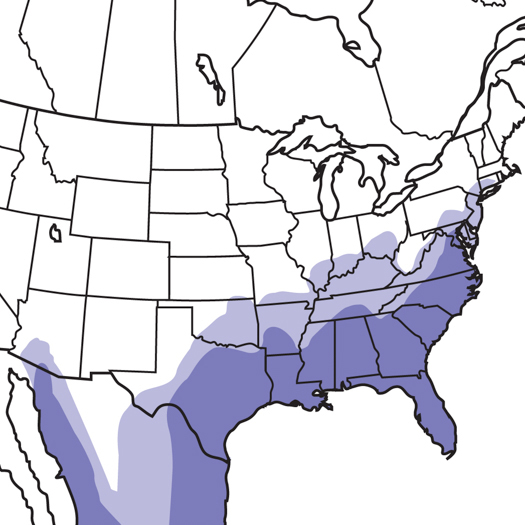
Like Gonzo himself, black vultures are historically southerners. They are a neotropical species ranging from South America to Virginia, which remained the case up to the mid-20th century. However, beginning in the 1980’s and increasingly ever since, black vultures have been engaging in a northward expansion.
Sixteen years prior to Gonzo’s arrival at Trailside, the first ever black vulture was recorded in New York state at Minnewaska State Park Preserve on November 1, 1981 by Dan Smiley, a resident naturalist at the nearby Mohonk Preserve. In 1997, the same year as Gonzo’s arrival, the first black vulture “nest” was recorded nearby on the eastern side of Bonticou Crag in Ulster County by Joe Bridges, a research associate with the Mohonk Preserve. The term “nest” is to be taken lightly, as black vultures aren’t much for creature comforts. Like all new world vulture species, black vultures forego building nests instead opting for hard-to-reach rocky crags and recesses in caves, hollow logs, brush piles, thickets, and abandoned buildings to lay their clutch of eggs.
For Gonzo’s first years at Trailside, his neighbors outside his enclosure would consist primarily of his slightly larger and keen-smelling counterpart, the turkey vulture, which was the dominant vulture species in the Hudson Highlands at the time. Black vultures such as Gonzo lack the turkey vulture’s sense of smell, instead relying their sharp eyesight while coasting thermals to forage for meals. Unable to smell carrion, black vultures have adapted a new strategy, relying instead on turkey vultures to do the work for them. To find food, all black vultures need to do is keep an eye on the lower-soaring turkey vultures. Once the turkey vulture descends, the black vulture follows close behind.
How to tell a black vulture from a turkey vulture

Since his early days at Trailside, Gonzo bore witness to a population boom in New York of his species, a black vulture golden age. The latest large-scale survey of New York birds was performed during 2000 to 2005, splitting the state into 5,000 geographic blocks. It confirmed black vulture nests in five blocks and reported suspected nests in 100; a significant increase since the last survey, performed during 1980 to 1985, which reported no found or suspected nests. Since then, its safe to say that the population has continued to increase as evidenced on local Christmas Bird Counts and the community science site eBird.org.
As to why the black vultures have taken up this avian manifest destiny to spread into New York, we are left only to speculate. Climate change may be a driving factor, turning New York’s colder climate into something milder and more habitable for black vultures. However, the black vulture’s range has shifted northward only along the eastern seaboard from Virginia, and along the Hudson River north to the St. Lawrence, with little change in the Midwest.
Other possible causes include an increase in deer and other mammal populations, and vehicle traffic, leading to increased food availability from roadkill, and greater tolerance of the species and increased protection under the federal Migratory Bird Treaty Act.
Despite being called “vultures”, black vultures and other new world species bear little similarity to old world species. Their common characteristics are a result of convergent evolution, or traits selected for a similar lifestyle. Both share bald featherless heads, perfect for rooting around in carcasses without ruffling any feathers. Both share similar circular flight patterns, utilizing the energy saving tactic of coasting on thermals. And both share the same highly corrosive digestive system; the PH of a black vulture’s stomach acid rests just above 0, akin to car battery acid and nearly 100 times as concentrated as human stomach acid.
Black vultures are instead more closely related to storks with whom they share an interesting, yet effective means of thermoregulation[1]. If a warming climate is the culprit behind the black vulture’s expansion, they will, without a doubt, continue to thrive in warmer climates thanks to urohidrosis; or the habit in some birds of defecating onto the scaly portion of the legs as a cooling method, using evaporative cooling of the fluids.
[1] Thermoregulation is the ability of an organism to keep its body temperature within certain boundaries, even when the surrounding temperatures is very different
Additionally, keeping in mind that a black vulture’s stomach acid is highly acidic, they produce a sterile excrement which cleanses their feet of bacteria and parasites, which may accumulate due to their scavenger lifestyle. Two birds with one stone, if you will
Black vultures will also simultaneously thermoregulate and sanitize through the process of sunbathing. Often observed with wings out and backs to the sun, these birds are warming their bodies while utilizing the UV radiation from sunlight to kill bacteria and parasites on their feathers.
As adults, black vultures experience few predators. Their main threat comes in the form of nest predation either by raccoons or foxes. Despite their relative safety, vultures still maintain a gruesome defense mechanism against predation; defensive vomiting. Utilizing their stomach acid once more, black vultures are able to produce a foul smelling and corrosive vomit that acts as a deterrent and mace for predators.
In addition to clever adaptations, black vultures themselves are undoubtedly intelligent birds, this trait being readily observable in Gonzo and other captive black vultures. Gonzo observed and interacted with the world around him with great curiosity. Behind his soulful brown eyes, there was a spectacular presence, a timid and gentle personality with an almost irrefutable perception and understanding.
The social intelligence hypothesis posits that human “intelligence” has evolved in order to adapt to complex interpersonal relations and is generally accepted in the current theory of evolution. It is believed that as the size of the group increases, it becomes necessary to adapt to more complex social relationships within the group, driving the selective pressures for increased neocortex size. Black vultures are not exempt from this theory, belonging to flocks largely composed of family units and roosting in large masses in the evening.
At Trailside, where the black vultures seemed to have designated the bear exhibit as their daytime roost, their community engagements can be observed through mutual preening, playful chasing, food sharing, and the occasional scuffle. But perhaps the best example of their sociality was seen with Gonzo.
Confined to his exhibit, Gonzo began receiving vulture visitors, and over the years they grew in number to the point which on any given day a sizeable flock of wild black vultures could be seen mingling with Gonzo. Perhaps they were assessing the mystery as to why this member of their species was captive, putting their bald little heads together in a sort of vulture think-tank, or perhaps, lacking his own flock, the wild vultures assimilated him into their own.
Keepers at Trailside have observed on numerous occasions, the passing of food between cage bars to the flock; perhaps, an altruistic sharing of of a captive bird’s bounty. Food sharing in wild vultures is typically only observed within members of the same family. Perhaps Gonzo viewed this flock as a sort of family. Between shared mice and fish, did the vultures swap tales of harsh winters, open skies, and a northbound journey? Voiceless secrets told hushed through throats lacking a syrinx[2]
[2] The syrinx is the lower larynx or voice organ in birds, situated at or near the junction of the trachea and bronchi and well developed in songbirds
Because Black vultures lack the organ responsible for birdsong in many species, their vocal repertoire consists mainly of huffs, grunts, and hisses. Click here to hear a recording of a black vulture from the The Cornell Lab of Ornithology Macaulay Library.
On the black vulture’s sociability, Charles Darwin wrote:
“These vultures certainly may be called gregarious, for they seem to have pleasure in society, and are not solely brought together by the attraction of a common prey. On a fine day a flock may often be observed at a great height, each bird wheeling round and round without closing its wings, in the most graceful evolutions. This is clearly performed for the mere pleasure of the exercise, or perhaps is connected with their matrimonial alliances.”
It certainly does appear that black vultures perform many activities through the sheer pleasure the action brings. Play is widely regarded as a hallmark of intelligence in birds, observable in both crows and ravens. It is an activity which helps an individual gain information regarding its environment; and play in many forms can be observed in the vultures of Bear Mountain. In the bear den and along the zoo trail, black vultures can be seen taking turns chasing each other, tossing about hay, playing with sticks and feathers, ripping apart paper bags, tugging on the mesh of exhibits.

Play is also one of the reasons many Hudson Valley residents are at odds with vultures. In their exploration of this world, it turns out black vultures can be quite destructive. Their favorite pastimes including tearing rubber from windshield wipers, and shingles from roofs.
Several years ago the Bear Mountain Inn experienced nearly $10,000 in roofing damage by black vultures and, as of 2017, black vultures are estimated to have cause nearly $75,000 in damages statewide. Much like teenagers, if you have enough black vultures in one place without enough to do, they’re bound to get up to trouble. As a consequence, many Hudson Valley businesses and residents are now flying in face of the Migratory Bird Treaty Act and federal law, taking up arms against the vultures. Several methods of deterrence include lasers, sprinklers, pyrotechnics, trapping and effigies; but with a population on the rise, conflict with humans is only more likely to increase.
On the other side of the coin, black vultures are a necessary asset to our ecosystem, serving as “nature’s cleanup crew” feeding on the dead and diseased other carnivores wouldn’t dare venture near, their stomach acid allowing them to safely digest putrid carcasses infected with rabies, botulinum toxin, hog cholera bacteria, and anthrax bacteria that would be lethal to other scavengers. Their work halts the further transmission of these diseases between humans and other wildlife, a role which, in the age of a zoonotic pandemic like COVID-19, is paramount.
For all those still at odds with the black vulture, Gonzo served as a shining exemplar of his species positive qualities, and magnificent beauty, connecting the black vulture in the minds of many to a handsome bird, with a quiet, yet inquisitive personality.
Gonzo passed away at Trailside on Tuesday, June 22, 2021 at 29 ½ years old. While longevity records for black vultures are scarce, Gonzo may have well been one of the oldest specimens in captivity. He leaves behind the legacy of being one of New York’s pioneer black vultures, who instilled a passion and understanding for his species in many visitors.
Gonzo is survived by his flock, a family he made all his own, the wild vultures of Trailside. Months later, the occasional solemn vulture could still be seen idling outside what was once his aviary, wearing all black feathers, dressed as if for mourning.

Post and photographs by Malerie Muratori, Student Conservation Association intern at Trailside Zoo.
 New York State Parks and Historic Sites Blog