Category Archives: Park History

Where the Holocaust Came to America: The Last Reunion of the Fort Ontario Refugees

Now 90 years old, Bruno Kaiser remembers arriving 75 years ago at a U.S. Army base along the shore of Lake Ontario, a day that ended his family’s long struggle to escape death during World War II at the hands of the Nazis.

“We felt safe, which had been our biggest worry for so long,” said Kaiser. “At last, we felt perfectly safe.”

On Aug. 5, Kaiser returned to Fort Ontario State Historic Site, along with 18 other surviving refugees of the Holocaust, to gather for a final reunion to remember their lives at the Fort Ontario Emergency Refugee Shelter.

Surrounded by a fence and guarded by military police, the base at Oswego was America’s only wartime sanctuary for escapees of Hitler’s genocide.
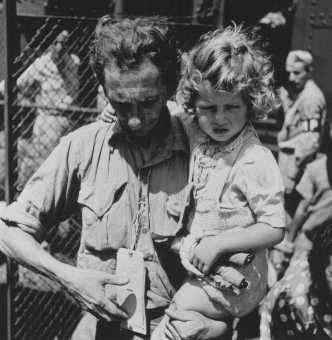
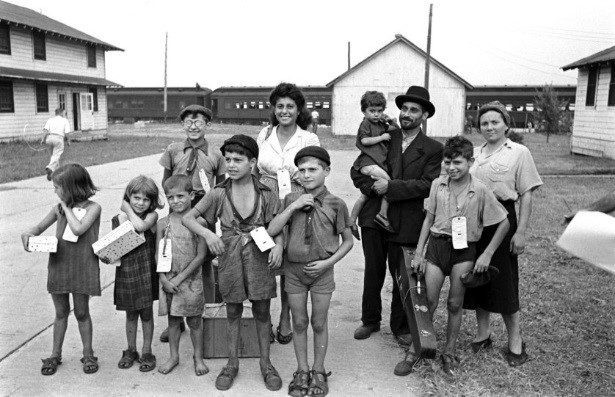
European refugees arrive at the Fort Ontario Emergency Refugee Shelter in Oswego on Aug. 5, 1944. As part of their passage to the U.S., they were assigned military tags normally used to identify “casual baggage.” (Photo from the collection of the U.S. Holocaust Memorial Museum in Washington, D.C.)
Refugees receiving shoes, soap, and towels upon arrival at the camp. (Photo from ‘Token Shipment’ by Edward B. Marks)
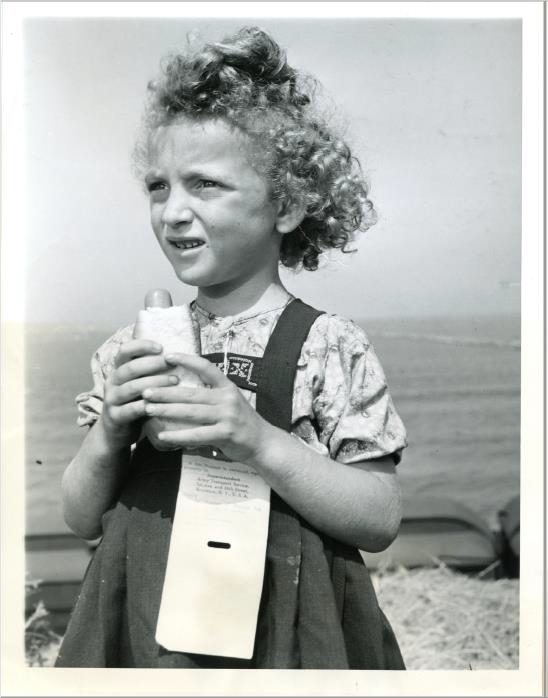
The day of her arrival, Doris Schecter (Dorrit Blumenkranz at the time) has her first taste of an American hot dog. She told reporters at the time that it was “swell.” She is still wearing the military “casual baggage” tag used to track her passage to America from Europe. (Photo courtesy of International News, Aug. 6, 1944)

Kaiser was one of 982 European refugees who arrived at the fort Aug. 5, 1944, about a month after the first accounts of a liberated Nazi death camp horrified the world.

Coming from 18 different countries, the new arrivals were predominately Jewish, but their ranks also included some Catholics, Orthodox and Protestants. Having escaped annihilation in their homelands through a combination of luck and pluck, the refugees came to the U.S. under a program created by President Franklin D. Roosevelt., whose selection of Fort Ontario stemmed from his earlier time as U.S. Secretary of the Navy and later as Governor of New York state.

Gov. Franklin Roosevelt visits Fort Ontario in 1931.

Providing security, shelter and food _ but not the ability to leave _ the camp was to be home to the weary refugees for the the next 17 months. After the war’s end, their fate ended up drawing national attention over whether they should be forced to return to their devastated countries.

In late 1945 Roosevelt’s successor, President Harry Truman, gave the refugees the choice of remaining in the U.S. or going back to Europe. Like Kaiser, most chose to stay, building lives and families in their new homes.

Refugees outside their barracks. The trains that brought them to the camp can be seen in the background.
Now 90 years old, former refugee Bruno Kaiser at the 75th reunion of the Fort Ontario Emergency Refugee Shelter in Oswego. A California resident, he has three adult daughters and two grandchildren.

Today, no more than 35 former camp residents remain alive, said Paul Lear, manager of the historic site and co-organizer of the reunion and commemoration. He said it will likely be the last such gathering for a group whose members are now in their mid-70s to early 90s.

More than 600 people attended the reunion, said Lear, including Ambassador Dani Dayan, Consul General of Israel in New York; Rebecca Erbelding, a historian with the U.S. Holocaust Memorial Museum in Washington, D.C.; Michael Balanoff, President and CEO of the Jewish Federation of Central New York; Geoff Smart, son of Refugee Shelter Director Joseph Smart; and Oswego Mayor William Barlow Jr.

Surviving former refugees at Fort Ontario pose during a dinner held Aug. 5 to commemorate the 75th anniversary of their arrival at the camp, which was America’s only wartime sanctuary for escapees of Hitler’s genocide.
A ceremony at a local cemetery where some refugees who died while at Fort Ontario are now buried.
The grave of six-month old Rachel Montiljo, a refugee who died on the way to Fort Ontario. Weakened by poor nutrition, the child died of a fever on Aug. 2, 1944, the day before the ship from Europe docked in New York City. She is buried in Riverside Cemetery in Oswego.

Kaiser’s story is both unique and similar to that of his fellow escapees, spending months or years on the run, trying to stay ahead of arrest and shipment to concentration camps. Along with his father, mother, and two grandparents, Kaiser had fled Yugoslavia in the spring of 1941 after his father had been arrested – and miraculously released after only a few days – in the wake of the Nazi invasion and takeover when Jews were being rounded up.

“My father decided we should leave _ quickly,” said Kaiser, so the family caught a train bound for the safety of the Italian-occupied Adriactic coast. During the trip, the train stopped in a switching yard.

“Across from us was another train, this one with prisoners being taken away by the Nazis. I could see their faces. That is how close we came,” said Kaiser. “The rest of my (extended) family, who did not leave, ended up being wiped out.”

His family remained in relative safety under Italian control until September 1943, when the Italian government surrendered to the Allies, which led the Nazis to attack and occupy all Italian-held territory. The Kaiser family then gained passage on a small ship that took them to an island occupied by the Allies.

From there, the family was shipped to the Allied-controlled portion of the Italian mainland, and taken with several hundred other refugees to the port of Toranto for shipment to North Africa. But the family decided on its own to stay in Italy, and was helped by a local stranger to find an apartment. And it was there, while the teenage Bruno was attending a local high school, that the family learned of Roosevelt’s program for America to accept a very small number of European and Jewish refugees.

“We applied, and because we had family in Cleveland and Chicago, were accepted. The Oswego camp was a peaceful place. I went to the public high school, with about 40 other kids from the camp,” said Kaiser, who recalled he had to “learn English from scratch” to go along with his other languages:  Croatian, Italian and German. “The people of Oswego were nice to us. There was never any anti-Jewish anything.”


Oswegians conversing with World War II refugees housed at Fort Ontario. Local people passed the refugees gifts of money, food, clothing, shoes, toys, dolls and more. (Photo from ‘Token Shipment’ by Edward B. Marks)

After being released from the refugee camp in January 1946, the Kaiser family joined relatives in Cleveland, their son finishing his senior year of high school there. He later earned an electrical engineering degree from Ohio State University. Now retired after working for various companies, he is father to three daughters and two grandchildren.

Asked what the lesson of Fort Ontario is for people today, Kaiser paused. “It is that anti-Semitism rears its ugly head every once in a while. And it is happening now.”

Tellingly, a 1981 stone monument to Fort Ontario camp was vandalized shortly after being installed, with the word “Jewish” partially chipped away and its corners knocked off. Site officials decided to leave the monument as it is as a reminder of the dangers of anti-Semitism.
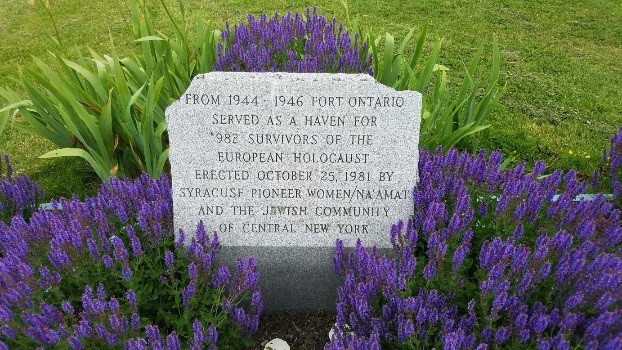
The vandalized monument at Fort Ontario.

To create the camp, Roosevelt avoided rigid immigration quotas by identifying the refugees as his “guests,” a status that gave them no legal standing and required them to sign documents agreeing to return to Europe at the end of the war. In September 1944, First Lady Eleanor Roosevelt visited the camp to draw attention, writing about it her weekly newspaper column.  After the war, camp director Joseph Smart stepped down from that post to form a national campaign that pushed for the refugees to be given the choice to stay in America, a step that was taken by President Truman.

Later, the state historic site at Fort Ontario was established and opened to the public in 1953.
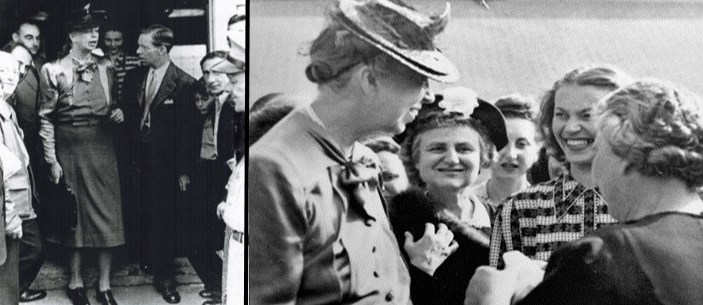

Eleanor Roosevelt visiting Fort Ontario in September 1944. (Photo from ‘Token Shipment’ by Edward B. Marks)

Linda Cohen came to the Oswego reunion from her home in Michigan, to remember her parents, Leon and Sarinka Kabiljo, who lived at the camp.

“My parents were married on April 6, 1941, the day the Nazis invaded Yugoslavia. They were on the run for three years, hiding in the forests with the partisans. My mother worked with them as a nurse,” she said. Once Italy surrendered, the Kabiljos went to that country, and while there also learned of the U.S. refugee program.

“My older sister was born nine months to the day after my parents arrived in Oswego,” said Cohen. “My mother told me that refugees cried when they got to the Oswego camp. They had beds with sheets, and most had not slept on sheets in years. She told me the camp director said to them: “When there is a knock on your door now, it will be a friendly one.”

Her parents eventually settled in Baltimore, where Linda was born in 1951 and where Leon lived to age 94 and Sarinka to age 92. Cohen wrote a book about their story entitled Sarinka: A Sephardic Holocaust Journey: From Yugoslavia to an Internment Camp in America.

At the start the reunion ceremony, a recording was played of Neil Diamond’s 1981 song America. “I have heard that song a thousand times,” said Cohen. “But sitting here that day, near where the refugee barracks and my parents used to be, it was like they were that song.”


Linda Cohen, whose parents, Leon and Sarinka Kabiljo, were among the refugees at Fort Ontario. She has written a book about their experiences.

Currently, the National Park Service is studying whether Fort Ontario should receive national park status, as part of the Fort Ontario Study Act passed by Congress and signed by President Donald Trump in 2018. The site is open to the public and various activities and exhibits run throughout the year.

During his tour of the fort, Israeli Ambassador Dani Dayan praised the people of Oswego for their warm embrace of the camp, with residents often coming to the fence to visit the refugees, passing food and other gifts. “The people who welcomed Holocaust refugees into Oswego were a shining example by saying with their actions that they were not indifferent, that they cared about them and wanted them to be there while the rest of the world rejected refugees solely because they were Jewish,” he said.
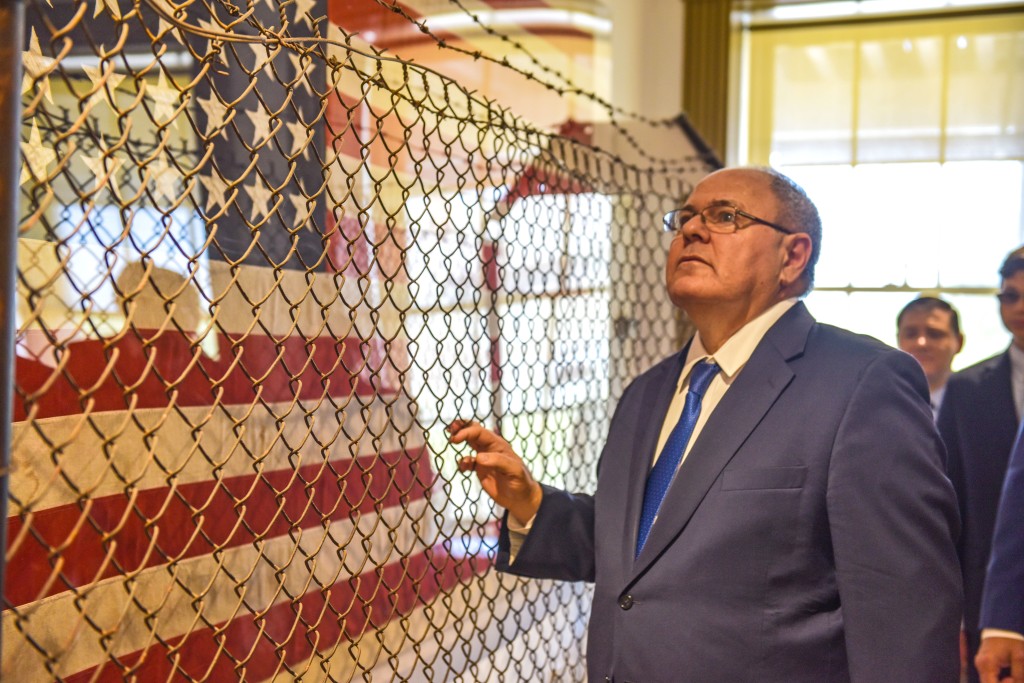
Ambassador Dani Dayan, Consul General of Israel in New York, examines a section of camp fencing and a U.S. flag that flew over the fort.

During a ceremony near the site of the former barracks, Lear recalled the words of refugee Dr. Adam Munz at the first reunion in 1981: “The Oswego Refugee Shelter was and has remained for me, and I suspect for some others as well, a paradox.  It symbolized freedom from tyranny, oppression and persecution on the one hand, and yet there was a fence, a gate that locked and guards were felt necessary to contain us at the very time we longed for the kind of freedom this country stood for and professed. Our country’s immigration laws continue to be paradoxical.”

Lear also recalled General Dwight D. Eisenhower’s prediction that someday people would deny that the Holocaust ever happened. To protect against that, he ordered U.S. troops in Europe to tour concentration camps to bear witness that it did. 

Now, in a time of rising anti-Semitism and attacks on Jews, Lear said Fort Ontario, while no longer an active military base, remains “a fortress against forgetting and denying the Holocaust.”


Resources:

Erbedling, who has also written a book on subject, entitled Rescue Board: The Untold Story of America’s Efforts to Save the Jews of Europe, said given the age of the surviving former refugees: “For everyone younger than 75, it is our job to remember their story.”

In 1987, the public broadcasting station in Rochester, WXXI, made a documentary about the camp. It can be found here.

Cover Photo: During a visit to the Fort Ontario museum, Yugoslavian refugee cousins Ella, David and Rikika Levi touch a section of the wire fence that used to surround the camp. Behind the fence is a 48-star flag that used to fly over the fort during World War II.

Post by Paul Lear, Site Manager of Fort Ontario Historic Site, and Brian Nearing, Deputy Public Information Officer.

Did You Know That Allegany State Park Played A Role In Wild Turkey Restoration?

The wild turkey is native to North America, but suffered severe declines due to wide-scale forest clearing and over hunting. By the mid-1800’s, this great bird was gone from New York state and much of the northeast. However, in the mid to late 1940’s, some wild turkeys were observed along the NY and PA border from Allegany State Park to the Genesee River Valley, a sign that the habitat might be recovering and able to support them again. So, in the early 1950’s, the New York State Conservation Department (forerunner to the NYS Dept. of Conservation) began a restoration effort in the early 1950s. They started with game farm turkeys, but after a few years, this effort failed because the game farm birds were not wild enough to avoid predation and lacked the capacity to survive.

fall.hens
Flock of hens in the forest in the 1950’s.

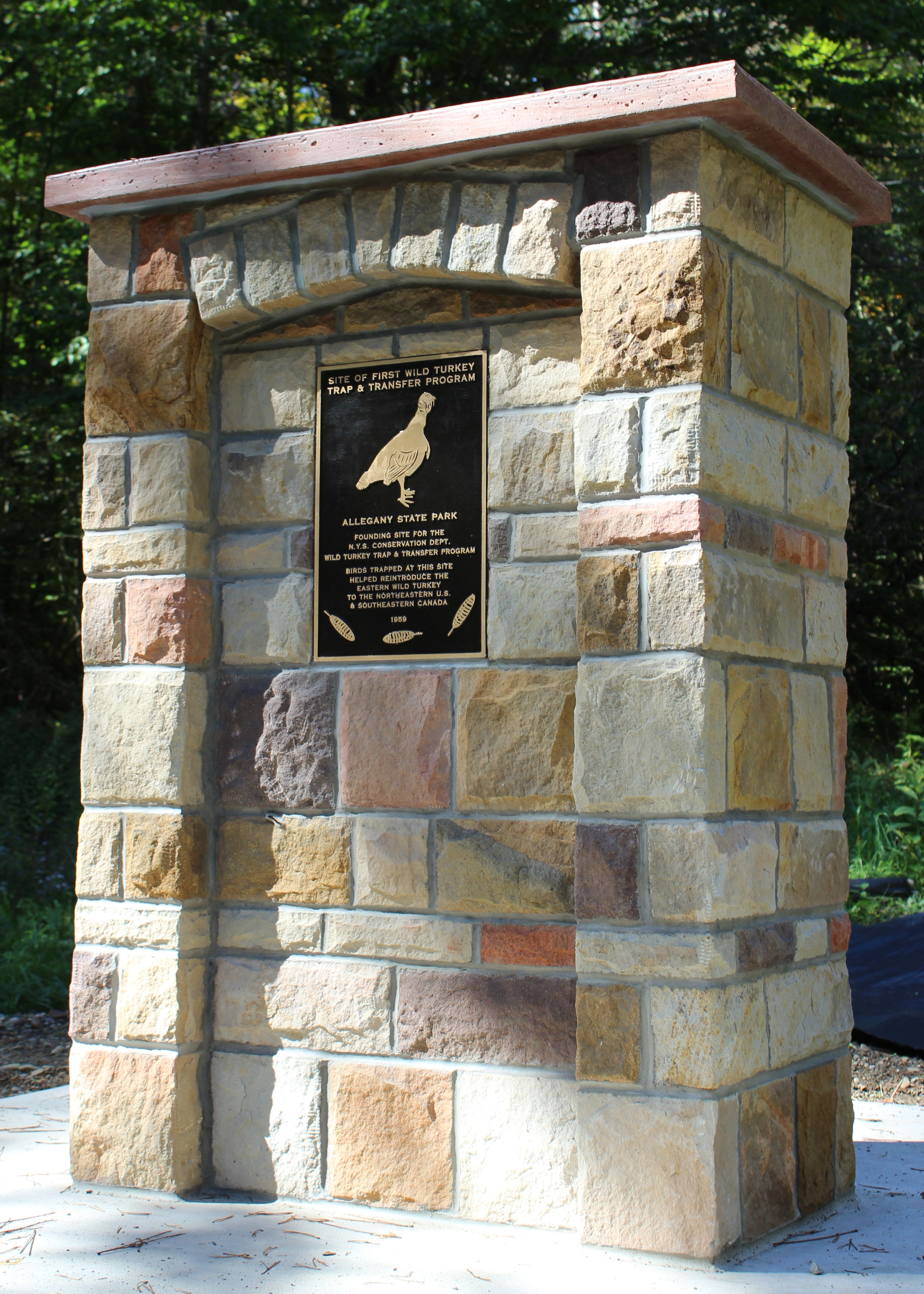
Meanwhile, a healthy breeding population of wild turkeys expanded from Pennsylvania into the Allegany State Park region of New York. Park managers then gave the Conservation Department permission to trap turkeys in the park, initiating the wild turkey trap and transfer program which began in 1958 and concluded successfully in 1974. This program allowed for more rapid expansion of the turkey population to suitable unoccupied habitats.

dec.file.2
Tom turkey displays his tail.

The turkeys trapped in Allegany State Park were moved to several areas in the Region and then throughout the state. In addition to the in-state trap and transfer, turkeys from the park were also sent to Connecticut, New Hampshire, New Jersey and Vermont. Other trapping efforts in the region and elsewhere in New York sent birds to Delaware, Minnesota, Rhode Island and the Canadian Province of Ontario. New York turkeys helped re-establish populations throughout the Northeast, Midwest and southeastern Canada.

New York State Conservation Department was one of the pioneers among state agencies to restore wild turkey populations in the United States. This program would not have been successful without the cooperation of Allegany State Park and to this day is recognized as one of the greatest wildlife management success stories of North America.

RickMiller OleanTimesHerald
2017 Monument commemorating the first wild turkey trap and transfer program, photo courtesy of Rick Miller, Olean Times Herald

Conservationist 10-2017 p 28
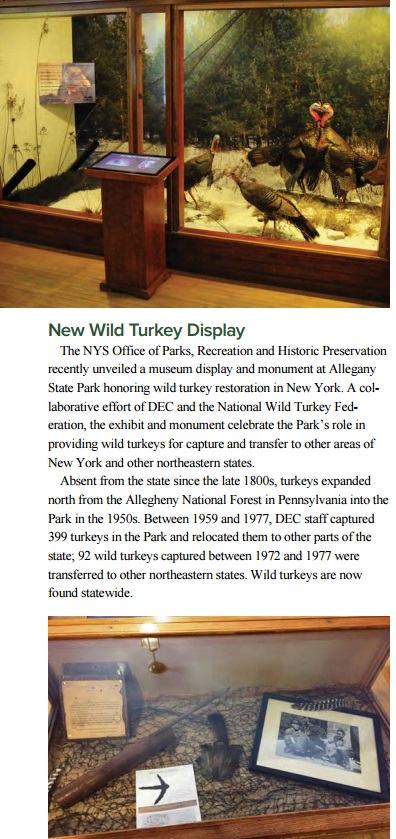
Wild Turkey Restoration exhibit in the Red House Natural History Museum, image from DEC Conservationist, October 2017, p 28.

The Ellenville Fault Ice Caves – A National Natural Landmark

The most popular features of the Sam’s Point Area of Minnewaska State Park Preserve are the Ellenville Fault Ice Caves. This remarkable system of crevice caves fills up with ice and snow each winter, and retains some of its ice well into the summer. Even when the ice is completely gone, the caves remain cool all year round. This unusual phenomenon has drawn people to the caves for generations.

Postcard
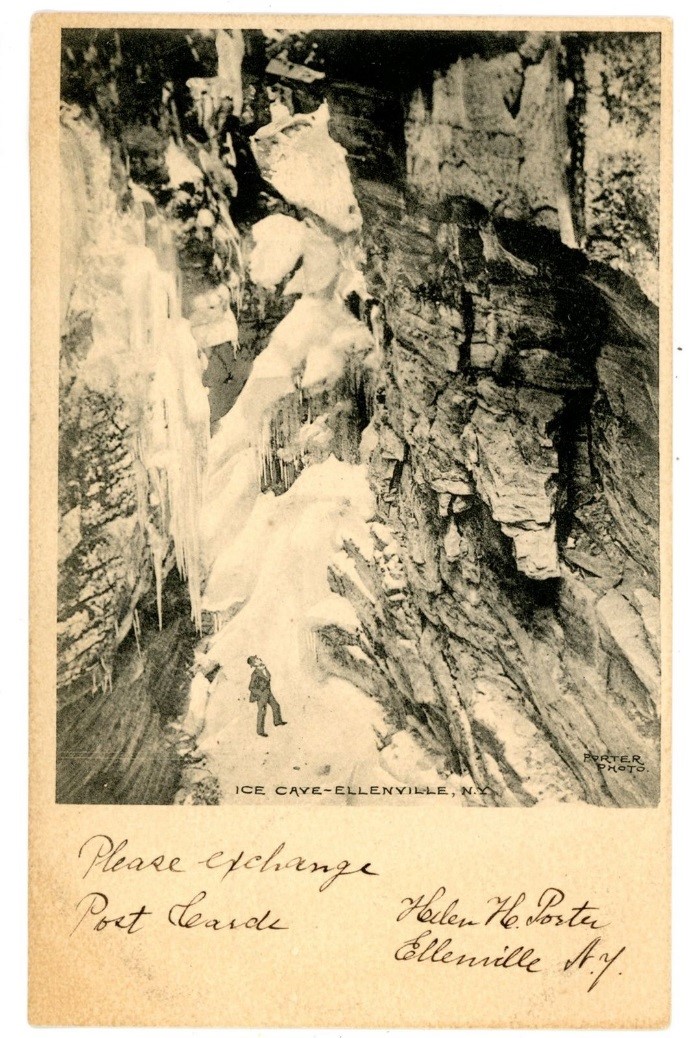
A postcard from c. 1909 showing the snowed-over entrance to one of the caves. The man in the image is an illustration, and slightly exaggerates the scale.

The significance of the caves has even been recognized by the National Park Service. In 1967, the NPS designated the Ellenville Fault Ice Caves as a National Natural Landmark. This designation is given to natural sites that exemplify the special or unique biological or geological features of a region.

Geologically, the Ice Caves are unlike other caves in the Northeast. Most cave systems are made of limestone, which is easily eroded and dissolved by water. This results in the large, open caverns that most people imagine when they think of caves. The Ellenville Ice Caves, on the other hand, are formed out of extremely hard and insoluble quartz conglomerate. When underlying rock layers were folded by tectonic movement, the hard conglomerate separated along existing joints in the rock.

jackfagan.png
Cutaway images demonstrating two forms of crevice cave formation. Source: Jack Fagan, Scenes and Walks in the Northern Shawangunks

The caves remain cold because of the natural refrigeration system that exists within them. When air moves across the top of the crevices, the colder, heavier air sinks down into them. The cold air then becomes trapped in the caves, keeping them at a comfortable temperature even during the hottest days of the summer.

While they received the National Natural Landmark designation because of their unique geologic importance, the Ice Caves have a great deal of ecological impact as well. The NY Natural Heritage Program recognizes the ice cave talus community as globally uncommon and rare in the state and a priority for protection. Because of their cold microclimate, the Ice Caves are home to several species that are infrequent in the region. These include goldthread (Coptis trifolium), mountain ash (Sorbus americana), and black spruce (Picea mariana), among others. Scientists have also taken interest in the presence of a species of cave-dwelling crustacean (Stygobromus allegheniensis) that is only found in four states: New York, Pennsylvania, Maryland, and West Virginia. This little arthropod lacks eyes, as it does not need them in complete darkness. It is also able to survive being frozen, a necessary attribute for surviving winter conditions in the caves.

Espinansa et al. (2015)
Strygobromus allegheniensis. Note the pale coloration and lack of eyes, typical features of cave-bound organisms. Image source: Espinansa et al. (2015)

The Ice Caves have local cultural significance as well. Many residents of the Shawangunks remember the days of “Ice Caves Mountain,” when the Sam’s Point area was managed very differently than it is today. From the late 1960s to the early 1990s, much of Sam’s Point was privately owned and operated as a tourist attraction. Visitors could drive their cars right up to Ice Caves, while a pre-recorded cassette tape described the various features encountered along the way. Doors were placed over the caves to keep the ice inside year-round, and the ice was lit up by multicolored flood lights. A rock wall was built on the cliffs of Sam’s Point to dissuade visitors from getting too close to the edge. While it may have been somewhat kitschy by today’s standards, it cannot be denied that “Ice Caves Mountain” was an important step in allowing the greater public to experience this previously obscure natural wonder.

Minne_Sam_sPoint11_IceCaveEntrance_GJE
Gully with snow at Sam’s Point, photo by Greg Edinger, image courtesy of the New York Natural Heritage Program

Many things have changed since the Ice Caves Mountain days. While Sam’s Point is still managed for recreation, there has also been a large shift in focus towards conservation. Visitors may no longer drive through the park, and the cave doors have been removed in favor of letting the natural ice cycle of the caves take place. Interpretive displays within the park focus on the natural history of the caves, rather than just their physical spectacle.

While National Natural Landmark status highlights the importance of a site, it is up to the owners of that landmark to manage and protect it. Fortunately, Sam’s Point is part of a Park Preserve, meaning that all of the plant and animal life within it is protected. As such, those who appreciate the cultural, geological, and ecological significance of the Ellenville Fault Ice Caves are able to experience them to the fullest extent.

Tim Howard, NYNHP
Ice and trees in leaf – a late spring exploration of the ice caves. Tim Howard, NYNHP

Want to explore the Ice Caves? State Parks staff offer guided hikes to both Shingle Gully and the Sam’s Point Ice Caves; click here for the Sam’s Point Area calendar of events.

References:

Fagan, Jack (2006).  Scenes and Walks in the Northern Shawangunks (3rd Ed.). Mahwah, NJ: The New York-New Jersey Trail Conference.

Espinasa, L., McCahill, A., Kavanagh, A., Espinasa J., Scott, A., Cahill, A. (2015).  A troglobitic amphipod in the Ice Caves of the Shawangunk Ridge: Behavior and resistance to freezing.

NatureServe Explorer Allegheny Cave Amphipod

Ice Caves Talus Community Conservation Guide

Featured image courtesy of Mike Adamovic, from Ice Caves of the Shawangunk Ridge

Post by David Hendler, SCA Education and Stewardship Intern


Civilian Conservation Corps in New York State Parks

FDR_Wikipedia
President Franklin Delano Roosevelt signing the New Deal legislation, photo from Wikipedia

When Franklin Delano Roosevelt (FDR) became president in 1933, the entire nation was in a state of turmoil never seen before or since. It was the height of the Great Depression: unemployment was at 25%, croplands were failing, and millions of families were going hungry. As governor of New York State, FDR had implemented the Temporary Emergency Relief Administration which put thousands of young men to work reforesting one million acres. Within his first one hundred days of his presidency FDR enacted the Civilian Conservation Corps, a national work program which gave men ages 17 to 28 unskilled labor jobs in infrastructure. The young men were paid $30 a month, $25 of which had to go home to their families. By the end of the program nine years later, over three million men from all fifty states had made significant improvements to the nation’s road system, planted three billion trees, and built thousands of facilities in state parks. The CCC had a major impact on New York’s state parks, with many of the structures remaining today.


Fairhaven Beach SP and CCC
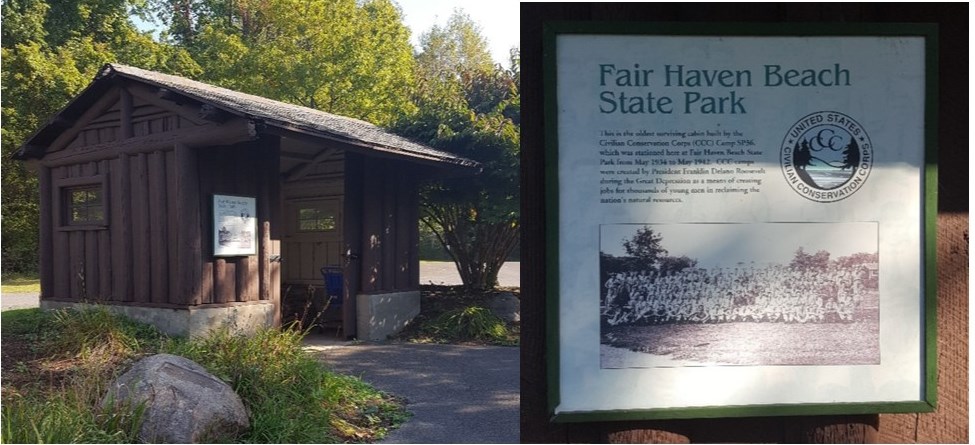
The oldest surviving cabin built by the CCC at Fair Haven Beach State Park (and placard).

The CCC was active at Fair Haven Beach State Park from 1934 to 1942. The young men employed by the Corps built roads, cabins, service buildings, and created barriers against waterfront erosion from Lake Ontario. Park manager Jerry Egenhofer says: “The establishment of the CCC – with their readiness to lend assistance with personnel, built in financial aid, and their readily accessible materials – aided greatly in expediting and promoting the park’s development and growth.”

This slideshow requires JavaScript.

CCC activities at Green Lakes State Park.

A CCC company of Spanish-American War veterans built cabins, service buildings, roads, trails, the boathouse, the golf course, and the golf clubhouse at Green Lakes State Park. The men transferred tons of sand from Oneida Lake to create the beach in the park.

Letchworth SP and CCC
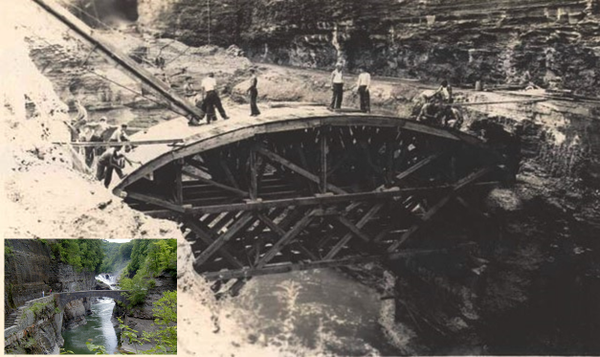
Civilian Conservation Corps members constructing the Lower Falls foot bridge in Letchworth State Park in 1935, with the current bridge shown in the inset picture.

Allegany State Park can also thank the CCC for many elements of the current park, including bridges, roads, camp sites, trails, and the ski area. The CCC also worked on wildlife conservation projects, including reforestation and stream bank retention.

Bear Mtn - Perkins Tower

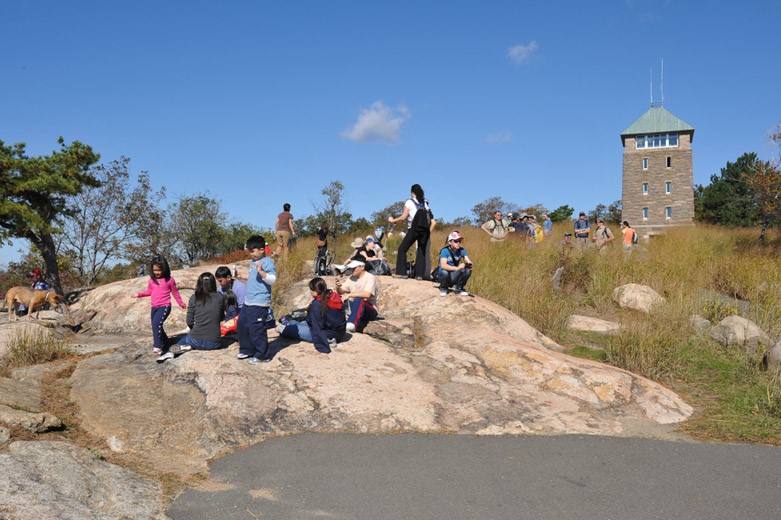
At Bear Mountain State Park, both the Perkins Memorial Drive and Perkins Memorial Tower – named after the first president of the Palisades Interstate Park Commission – were built by the CCC between 1932 and 1934. On a clear day, four states and the Manhattan skyline can be seen from the summit.

Bear Mtn - Camp Terra
Eleanor Roosevelt is introduced at a Camp TERA meeting, 1933, image from Wikipedia

Bear Mountain State Park also housed Camp TERA (Temporary Emergency Relief Assistance), the first of several camps for women established by then-First Lady Eleanor Roosevelt, nicknamed She-She-She camps. Jobless, single women under 40 from the New York City area spent the summer months in the woods learning new skills and recovering from health problems brought on my acute poverty and lack of food.

At Gilbert Lake State Park the CCC constructed cabins, trails, roads, dams, and erosion control structures between 1933 and 1941. The park is also home to the New York State Civilian Conservation Corps Museum, which displays photographs and artifacts from the days of the CCC.

Facing mounting controversy over racial integration, the CCC director Robert Fechner decided to segregate the camps in 1935. The “colored” CCC company at Newtown Battlefield hosted black educators and medical officers, and following complaints from the National Association for the Advancement of Colored People (NAACP) and other advocacy groups, the CCC appointed black officers to command the camp.  The men built cabins, restrooms, ball fields, and the picnic pavilion.

Green Lakes ithacafingerlakes.com-2014-04-17-civilian-conservation-corps-in-the-finger-lakes-part-1
A CCC worker posing at Robert H. Treman State Park, August 1935. Image from: Friends of Robert H. Treman State Park

CCC Emblem
Civilian Conservation Corps emblem, image fromhttp://whs-ushistory-1930s.wikispaces.com/CCC

The CCC contributed to many more projects at other state parks and historic sites not featured in this article. Without a doubt, the efforts of the CCC members created the foundation of New York’s incredible state park system, and their legacy deserves to be remembered and honored.

Post by: Alison Baxter, Excelsior Service Fellow

Sources

Civilian Conservation Corps in the Finger Lakes, Part 1. Walk in the Park, April 17, 2014. (Includes a video with a presentation by State Parks environmental educator Josh Teeter)

Civilian Conservation Corps Legacy

Kahramanidis, Jane. “The She-She-She Camps of the Great Depression.” History Magazine.  February/March 2008.

Prejudice & Pride: Civil Rights and the CCC: Company 1251-c at Newtown”. The Preservationist. Office of Parks, Recreation, and Historic Preservation, 2007.

Thompson, Craig. “Force for Nature: Civilian Conservation Corps”. New York State Conservationist. Department of Environmental Conservation, February 2008.

State Parks Master Plans

Wikipedia

Light Your Way to a State Parks Lighthouse

From Lake Erie to Montauk Point, State Parks are home to seven historic lighthouses. Plan a trip to visit one of these lighthouses.

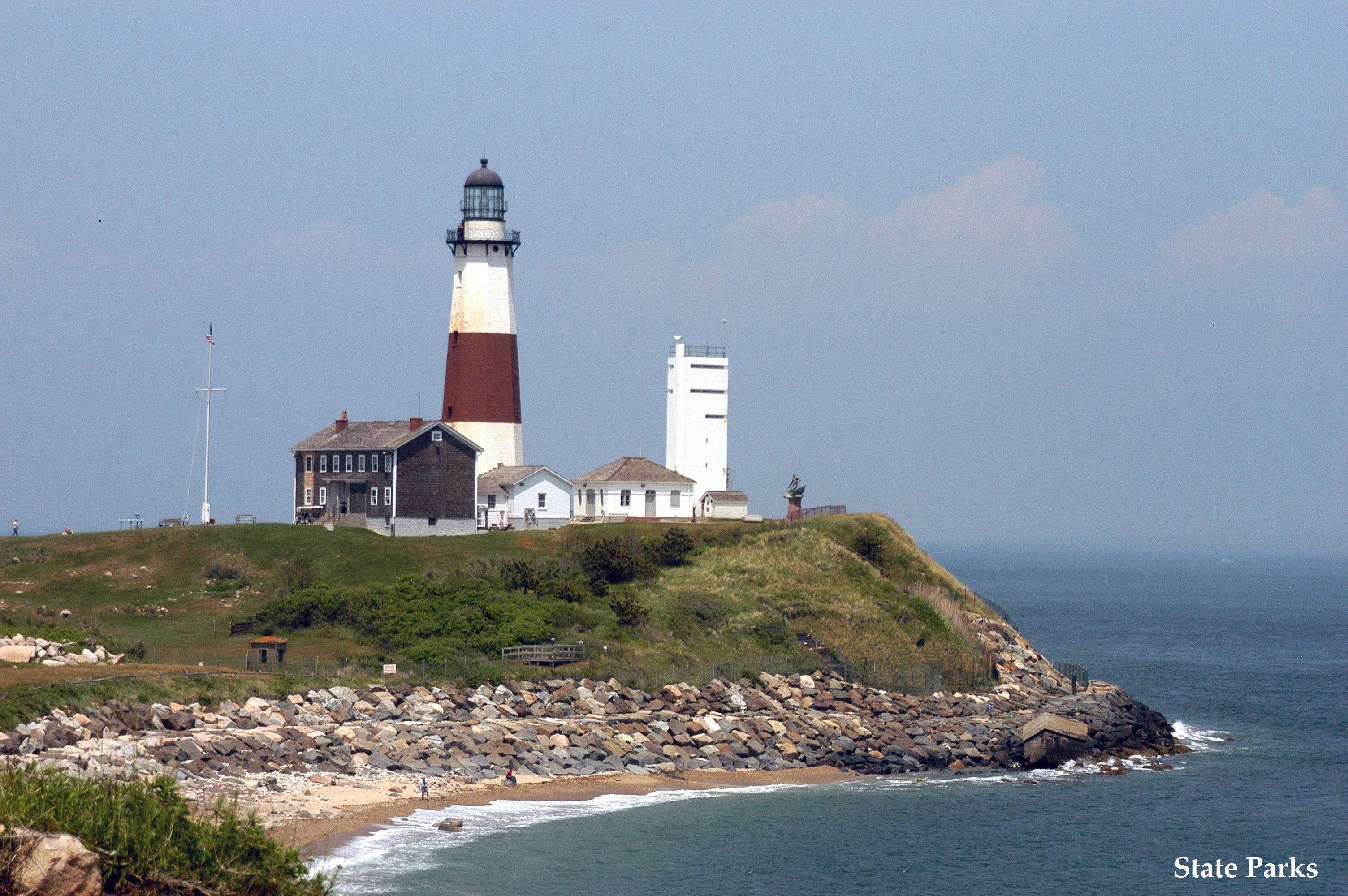
Lighthouse Montauk_0044a

President George Washington commissioned the building of the limestone Montauk Point Lighthouse in 1792 because of the dangerous shallow waters found off Long Island’s eastern South Shore; the lighthouse was completed in 1796.  Located in Montauk Point State Park, the Montauk Lighthouse continues to help provide safe navigation for ships sailing up and down the eastern seaboard and for ships arriving from across the Atlantic. It is the oldest lighthouse in New York and the fourth oldest lighthouse in the nation.

Stony Point -0075cp

The opening of the Erie Canal in 1825 saw a large increase in boat traffic on the Hudson River and the need for more aids to navigation along the Hudson River. Built in 1826, the lighthouse at Stony Point was the first lighthouse on the Hudson River. It was built by New York City resident Thomas Philips a point of land south of Bear Mountain in the Hudson Highlands.  For 100 years, the eight-sided, blue split stone lighthouse helped ships navigate the Hudson River before it was replaced by a steel tower in 1926.  Look for the lighthouse in Stony Point Battlefield State Historic Site.

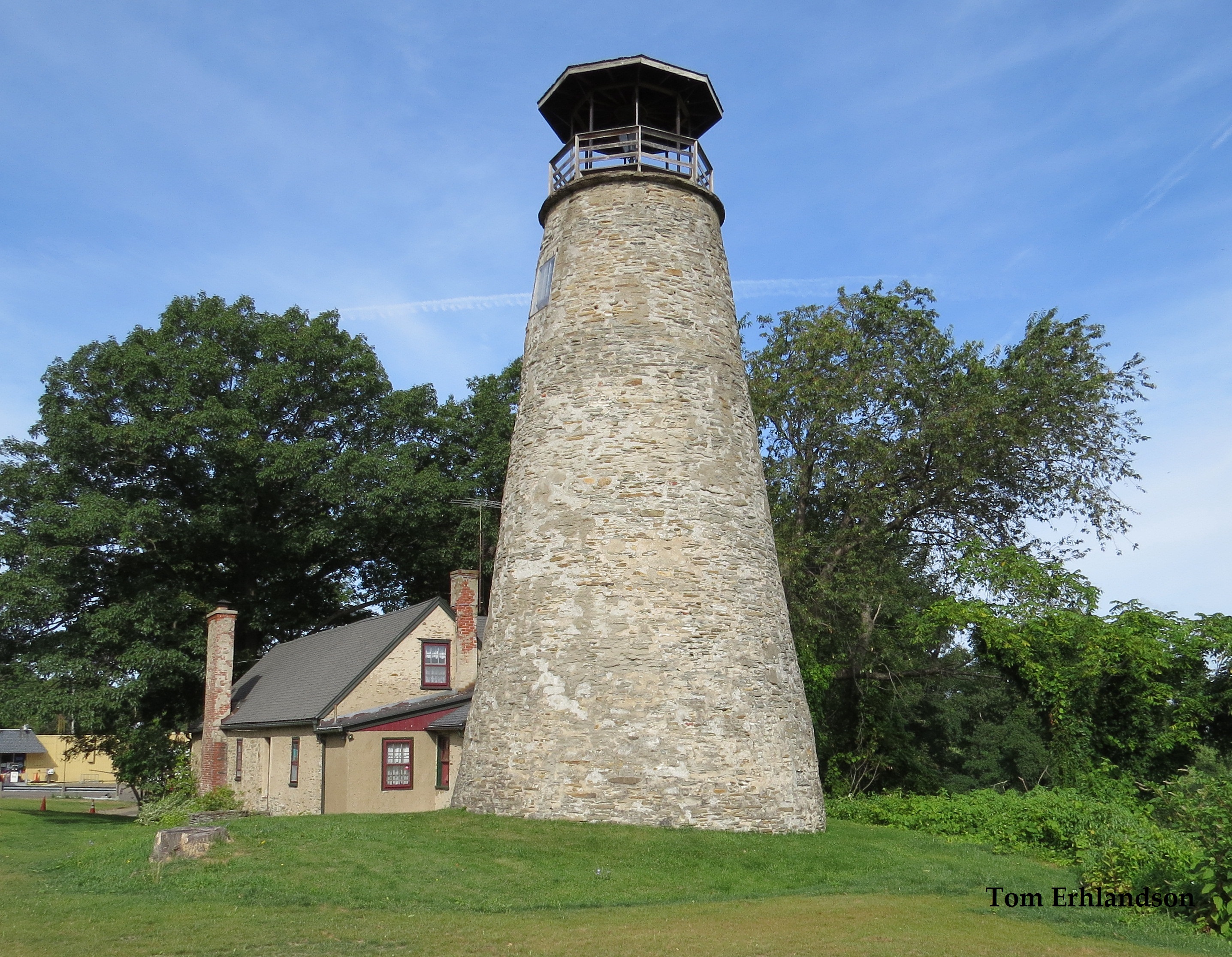
2015-Tom Erhlandson

In the mid-1820s, as commerce increased along the Erie Canal and through the Great Lakes, so did the need for lighthouses on the Great Lakes.  Winds along the eastern shore of Lake Erie can be quite strong and boats needed safe harbors to protect them from these winds.  One safe harbor between Erie, Pennsylvania and Buffalo, New York was Portland Harbor (now known as Barcelona) in the town of Westfield. In 1828 the US Congress commissioned the Portland (Barcelona) Lighthouse to serve as a guide to Portland Harbor. The lighthouse was made of native fieldstone.  Completed in 1829 it was the first natural gas lighthouse in the country, using natural gas that was piped in by “wooden conductors from the fountain head, a distance of about a half a mile.”1 The lighthouse ran for 40 years until it was decommissioned in 1859.

HorseIsland_LighthouseFriends

The first lighthouse on Horse Island, outside the busy navy port at Sackets Harbor, was built in 1831 using the common practice of erecting the lighthouse on top of the keeper’s house.

John McNitt, the hero of the second battle of Sacket’s Harbor, served as the lighthouse keeper until 1841.  His nephew Samuel McNitt, who was also at the second battle of Sacket’s Harbor, served as lighthouse keeper from 1844 to 1860.  In 1870, a new brick lighthouse and keepers home was built, replacing the rundown 1831 building.  In 1899, the height of the lighthouse was raised from 45-1/2 fee to 55-1/2 feet to enable ships to see the light at a greater distance   The lighthouse was automated in 1926 and a metal tower automated light replaced the lighthouse in 1957.

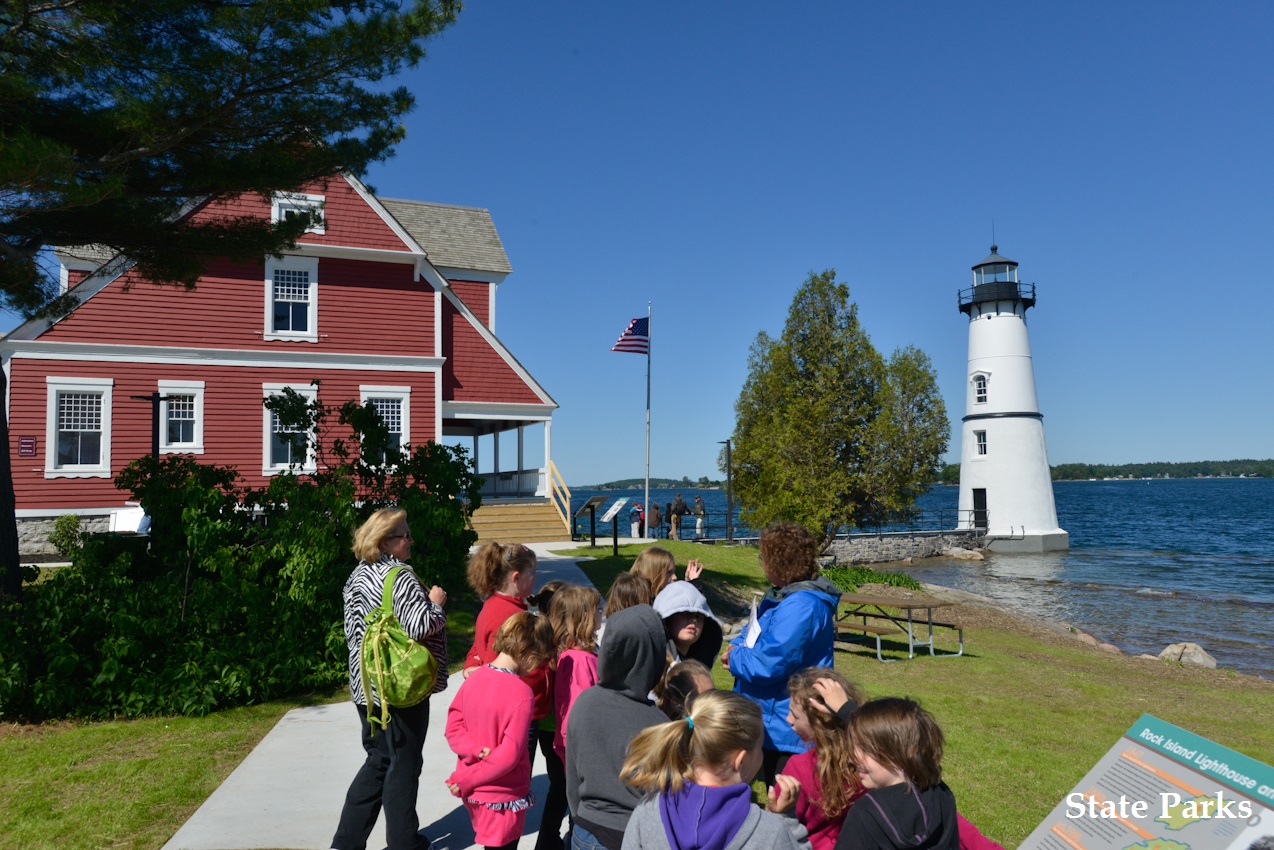
_PRK4175

In 1847, the US Congress allocated $6,000 to build lighthouses on three islands in the St. Lawrence River to help ships navigate through the Thousand Islands.  One of those islands was Rock Island.  The brick lighthouse was first lit in 1848.  In 1894, the US Lighthouse Board (Lighthouse Board) raised the lighthouse five feet to increase the visibility of the light, which was being blocked by the lighthouse keeper’s house and trees on the island.  However, raising the lighthouse did not increase visibility, so the Lighthouse Board built a brick platform on the north side of the island and moved the lighthouse to the platform in 1903.  The light was decommissioned in 1958 after over 110 years of service. You can tour Rock Island Lighthouse State Park from mid-May to early October and you will need to take a boat to get there.

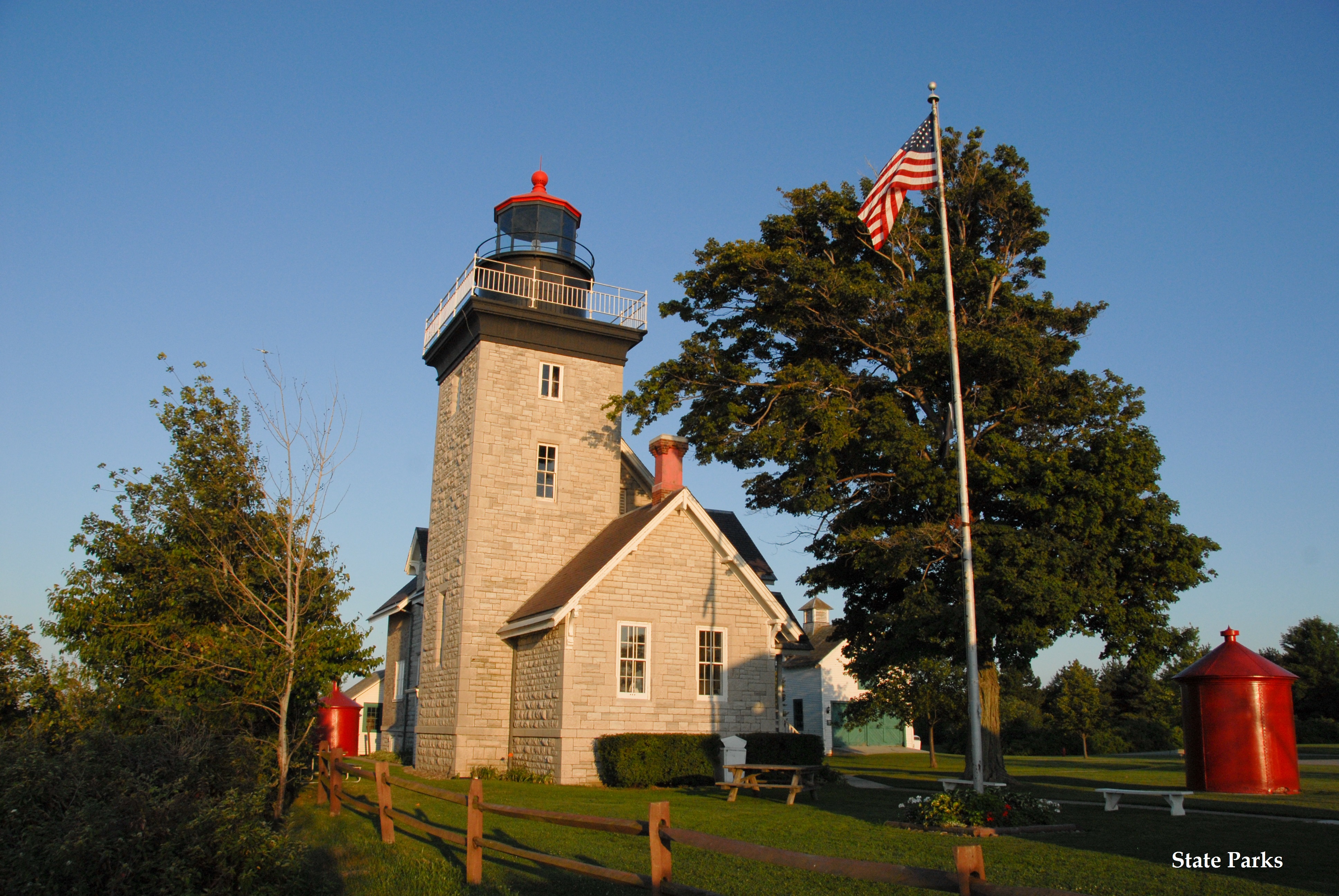
Golden Hil-637a4

Thirty Mile Point, or Golden Hill, is 30 miles east of the mouth of the Niagara River.  It is the northernmost point of land along New York’s of Lake Ontario shoreline.  Just offshore from 30 Mile Point, shifting sand bars make navigating these waters a challenge for ships passing by.  In 1872 the Lighthouse Board recommended that a lighthouse be built at 30 Mile Point and in 1873 US Congress authorized the purchasing of land and the construction of a lighthouse.  The limestone lighthouse was completed in 1876 and ran until 1958.  If you are looking for an out of the way place to stay, lighthouse keeper’s house is available to rent year-round.

OFNAD-a1

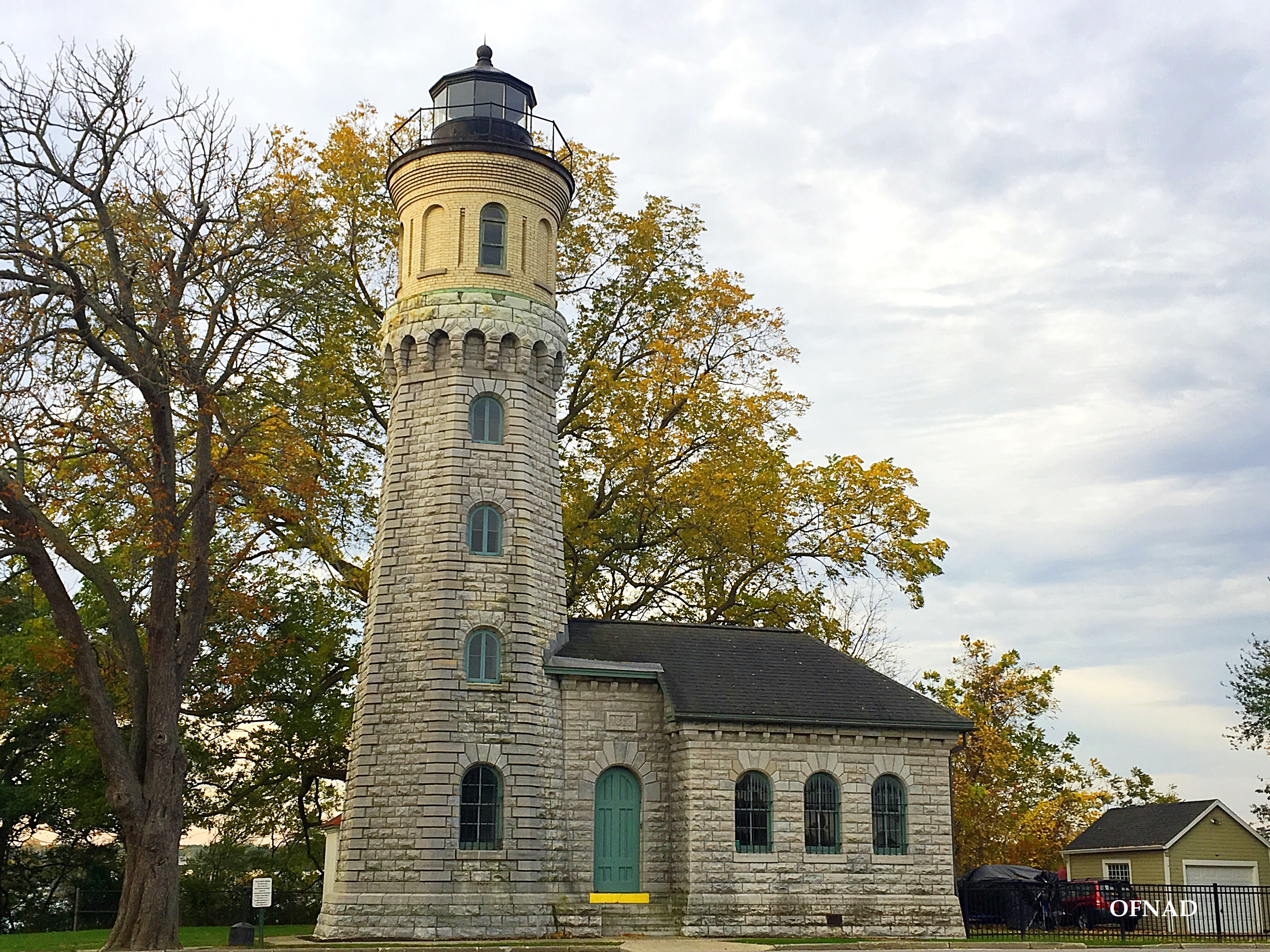
Fort Niagara, at the intersection of the Niagara River and Lake Ontario, was the site of the first lighthouse in the Great Lakes. The British Army built it in 1781 on top of the French Castle, the French trading post and fort built in 1727. The light was used to mark the mouth of the Niagara River, where cargo was offloaded and shipped overland to Lake Erie.  The lighthouse keeper did not live in the French Castle, his house was about a quarter mile away.

The opening of the Erie and Welland Canals in the 1820’s reduced ship traffic bound for the Niagara River.  In April 1855, a tornado damaged buildings at the fort. The damages were repaired later that year.  Despite the repairs, the French Castle fell into disrepair in the middle to late 1860’s.  In 1868, the Lighthouse Board reported that:

“the wooden tower stands in the old block-house now used for officers’ quarters, and is so old and out of repair as to let in the snow and rain in stormy weather. Last winter the roof of the building took fire from a spark from one of the four chimneys which surround the tower. The danger of having the valuable lens destroyed by an accident of this kind, and the inconvenience of using the stairway and passages of the officers’ quarters as a thoroughfare for the supply of the light, make it expedient to erect a new tower, (the old one not being worth repairing,) in a safer and more convenient position.  The floors and plastering of the keeper’s dwelling and the fences require repair. The barn is in a ruinous state, and should be removed or rebuilt.”

US Congress appropriated $16,000 in 1871 for a new lighthouse at Fort Niagara. Because the Lighthouse Board could not find a good location for the lighthouse in the fort, the limestone lighthouse was built next to the lighthouse keepers house along the eastern bank of the Niagara River.

The lighthouse was replaced by a light on a nearby radio tower in 1993 and the light was decommissioned the same year.

Occasionally, staff from Old Fort Niagara State Historic Site lead programs and events in the lighthouse.

1 New-York evening post., July 14, 1830, Page 2

Lighthouses

Sources and additional reading

Historic Lighthouses and Light Stations in New York

Important Dates in United States Lighthouse History

Lighthouse Friends

Marinas.com Lighthouses of New York, aerial views of Montauk Point, Rock Island, Stony Point, and Thirty-Mile Point Lighthouses

The Schenectady cabinet., February 15, 1826, Page 2

University of North Carolina, Lighthouses of the United States: Downstate New York

University of North Carolina, Lighthouses of the United States: Upstate New York

US Lighthouses, information on Barcelona, Fort Niagara, Montauk Point, Rock Island, and Thirty-Mile Point lighthouses.