Category Archives: Cool Science

Wasp Warriors Aid Parks Against Insect Invaders

If you haven’t noticed, New York’s ash trees have been struggling lately. Over the last few years, they have been rapidly dying due to a little iridescently green insect: the emerald ash borer (EAB).

An invasive beetle native to parts of Asia and Russia, EAB was first discovered in New York in Cattaraugus County in 2009. It has since spread to 55 of New York’s 62 counties, decimating once thriving ash populations.

Since its discovery in southeast Michigan in 2002, EAB has spread into 35 states and the District of Columbia, killing tens of millions of ash trees in their wake.
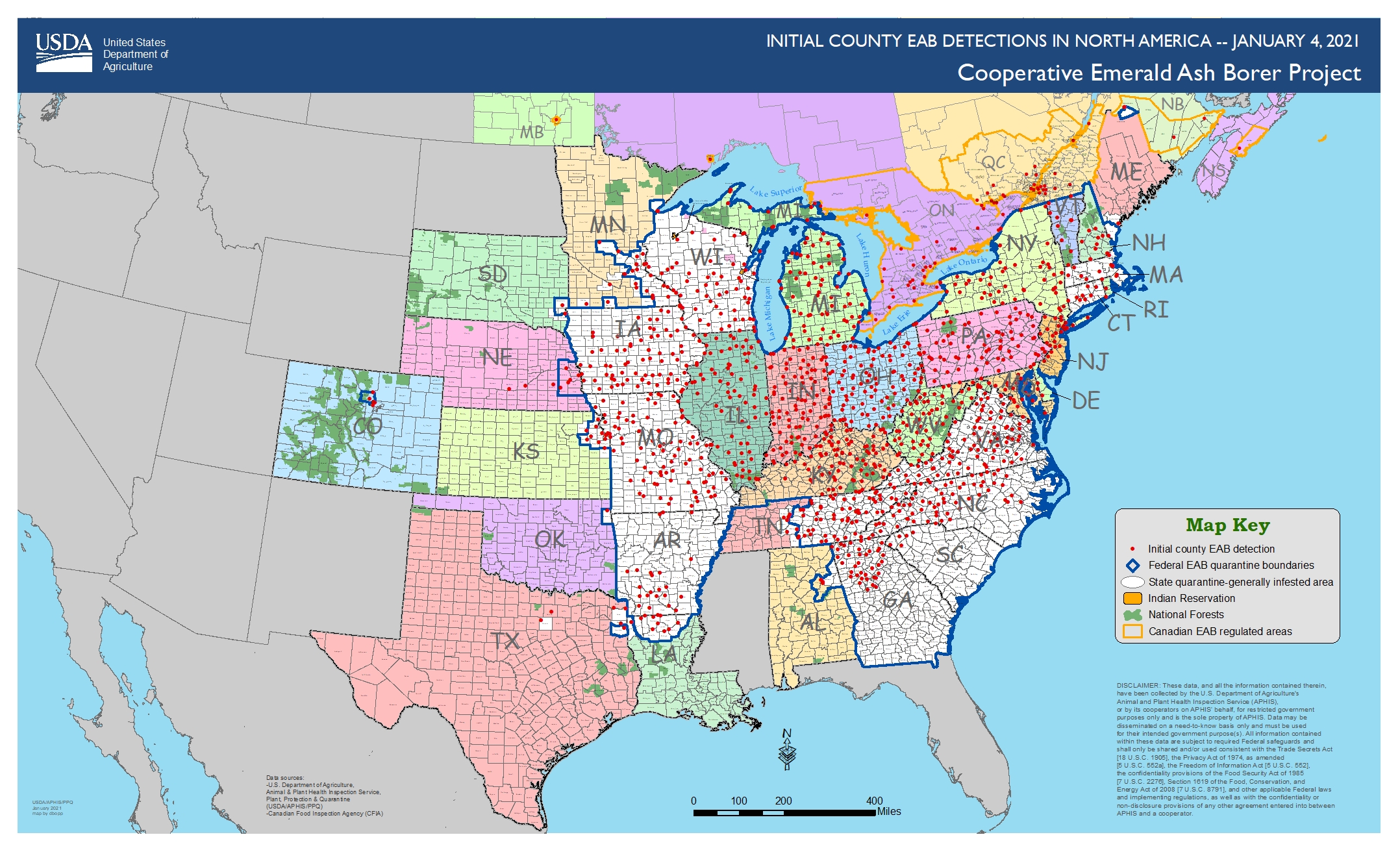
EAB is widespread in the eastern U.S. as show in this USDA map. Each red dot represents an infested county and the blue line is a federal quarantine zone.

Emerald ash borers lay eggs between bark layers and in bark crevices on ash trees. Upon hatching, the larvae burrow through the bark and begin to feed on the tree’s living parts: the phloem and sapwood. The larval feeding creates galleries, which cut off the movement of nutrients throughout the tree. Eventually, as the infestation grows, the tree’s system of nutrient transport ceases to function, and the tree slowly starves and dies.

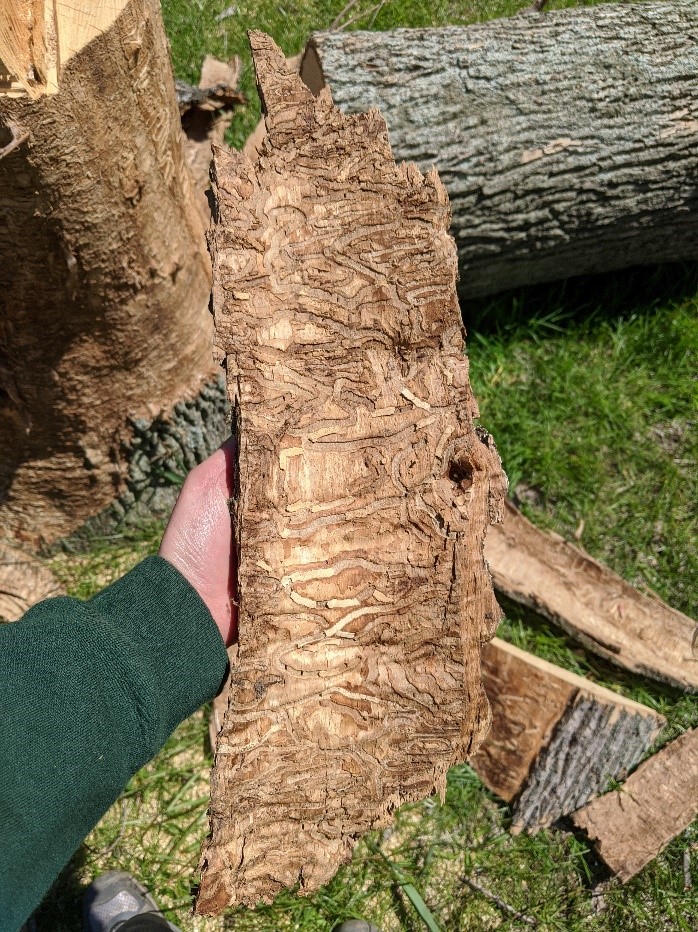
EAB larvae create S-shaped “galleries” where they feed just beneath the bark of an infested ash tree. Use the slider bar to explore the damage in this tree.

Ash trees are important for so many reasons. They provide cool shade in the summer heat, provide habitat for wildlife, and are a valuable source of timber and firewood. When large ash die, however, they can pose serious safety risks. Dead and dying trees often bring down powerlines along the road and cause blackouts.

In addition, many trails, campgrounds, parking lots and playgrounds are surrounded by ash that, once infested, become hazard trees that require removal. Parks’ staff must constantly monitor public use areas for the presence of dying trees that may pose a risk to patrons.

The fight to conserve ash has been an uphill battle. While pesticide treatments work, they only last a year or two before reapplication is necessary and also are too expensive to use everywhere. Statewide quarantines and public education have helped slow the spread, but these little beetles can fly over a mile and lay up to 200 eggs in a lifetime, making containment difficult.
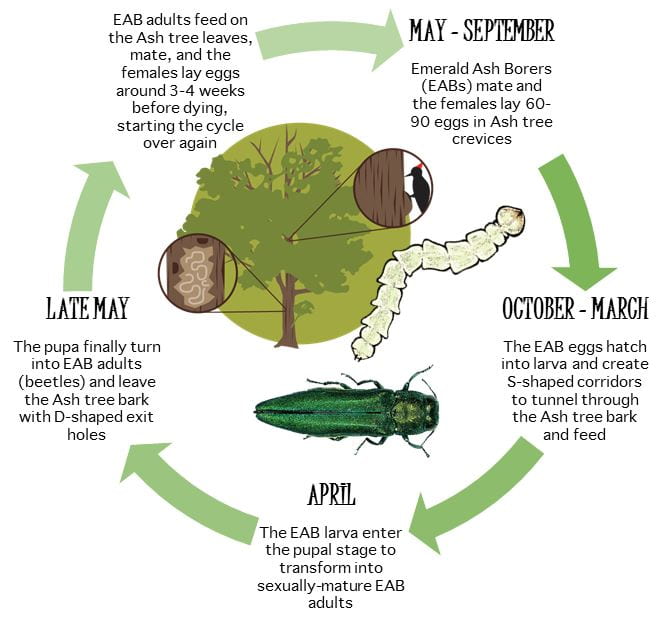
This chart shows the lifecycle of the EAB. (Photo credit – Cornell University)
State Parks staff at Jacques Cartier State Park peel back bark from an infested ash tree to reveal the EAB damage. (Photo credit- Aaron Hemminway, NYS Parks biologist)

You may be thinking “what can be done?!” Well with National Invasive Species Awareness Week coming May 17-23, an update from State Parks is timely.

Luckily, we may finally have a cost-effective, sustainable, and chemical-free solution to the problem. For the second year in a row, the state Office of Parks, Recreation and Historic Preservation and the U.S. Department of Agriculture (USDA) are partnering to release three species of predatory wasps – known ecologically as biological controls or parasitoids – to battle EAB in select state parks.

These tiny warriors are heavily studied little predators from the EAB’s home countries which prey only on these beetles and pose no risk to our native ecosystem. (And don’t worry. These wasps don’t sting and are no threat to people).

The females of these species attack ash borers in the early stages of their life cycle. These three wasps were chosen because they each have slightly different ways of tackling EAB, making them a more effective as a group.

Here, let’s meet our winged team.

Tetrastichus planipennisi

Tetrastichus planipennisi females lay eggs inside of EAB larvae, where the parasitoid larvae grow and eventually kill their host. They are used to protect smaller ash trees in particular, and they originate in China.
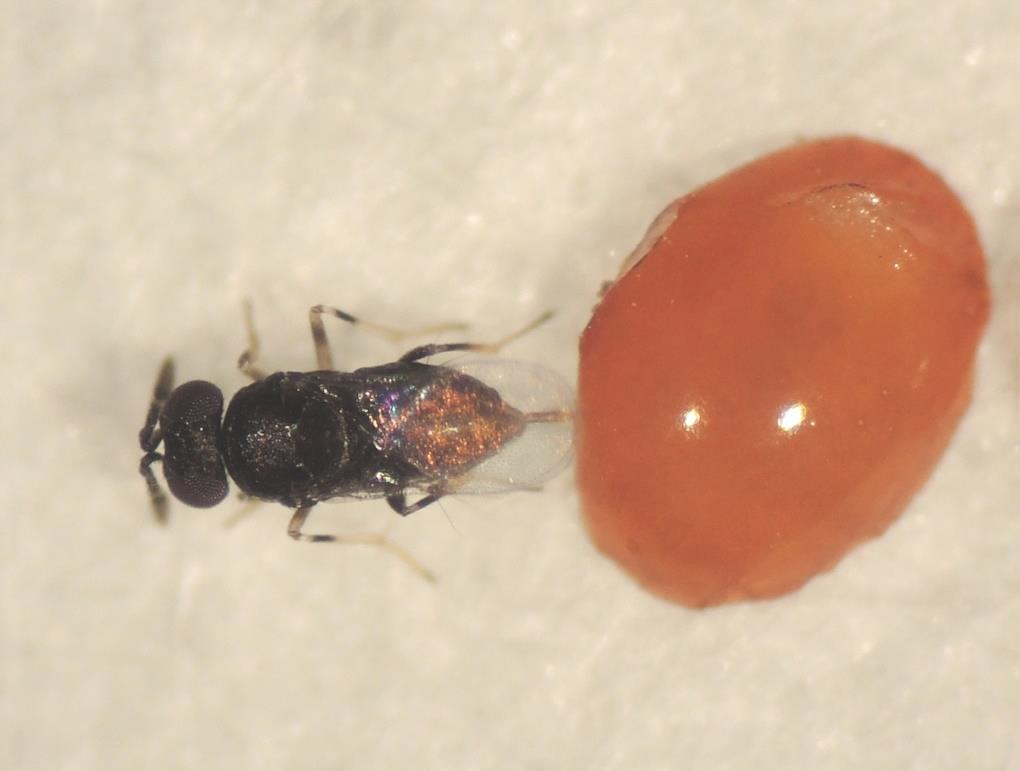

Oobius agrili

Oobius agrili lay eggs inside EAB eggs, where the parasitic wasp larvae hatch, grow, and kill the host EAB egg. These wasps are all female, so they reproduce asexually. They also originate in China.


Spathius galinae

Spathius galinae lay eggs outside of EAB larvae; when they hatch, Spathius feed on the EAB larvae, killing it. These wasps are best at helping larger ash trees, and are collected in the Russian Far East.


Last year, 11 State Parks received about 40,000 Tetrastichus wasps: Rockland Lake in Rockland County; Harriman and Bear Mountain in Rockland and Orange counties; Minekill in Schoharie County; Beaver Island and Buckhorn Island in Erie County; Clay Pit Ponds in Staten Island; Lakeside Beach in Orleans County; Golden Hill in Niagara County; Southwick Beach in Jefferson County; and Point Au Roche in Clinton County.

Starting this month, Jacques Cartier State Park in St. Lawrence County and Ganondagan State Historic Site in Ontario County will be added to that list. All three wasp species will be deployed, with an expected total of more than 50,000 wasps. All the wasps used are reared in a lab in Michigan, where they are shipped to New York and other states where USDA is coordinating its EAB biocontrol program.

For the wasps to be successful here, they need to find the beetle in its early life stages. In New York, the emerald ash borer generally begins to lay eggs in the summer; however, many larvae overwinter inside of ash trees, and are thus readily available as food for the parasitoids in the spring.

Parks staff introduces the wasps into infested ash trees through three methods:


  • Ash bolts are small sections of ash (think small ash logs slightly larger than cans of soup) that house mature parasitoid larvae. They are attached to infested ash trees using twine or zip ties. When the larvae mature, they leave the bolts and find EAB larvae to feed on within the ash stand.
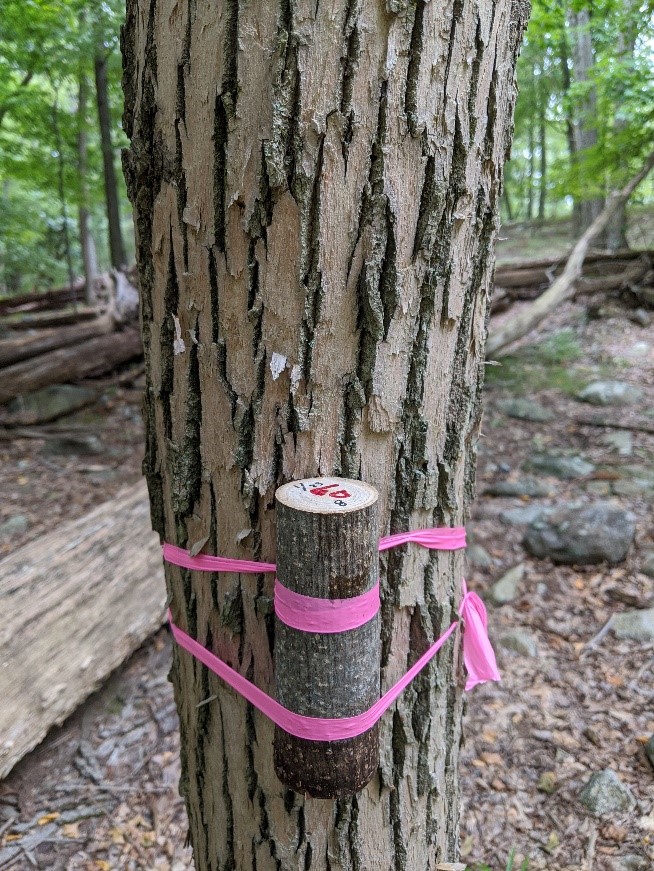
Ash bolts are attached to infested trees with zip ties or twine, and are marked with flagging so they can be easily found. Please don’t disturb or tamper with the bolts if you come across them!

  • Plastic cups containing adult parasitoids arrive on-site ready for distribution. The cups simply need to be opened, inverted and tapped gently against the trunks of infested trees.
Adult parasitoids arrive in plastic cups, ready for release.
  • Oobinators are used less frequently and only for the delivery of Oobius agrili. They are small, plastic pill bottles with a screen over the open end that can be attached to trees with zip ties or twine. They contain a sheet of paper with parasitized EAB eggs. Once mature, Oobius will hatch and escape through the screen.
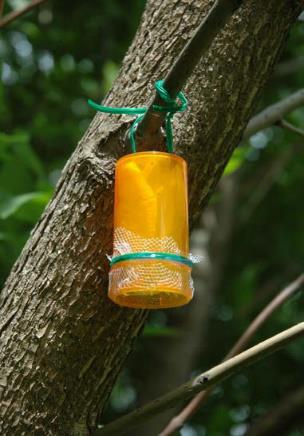
Oobinators are hung upside down, to allow mature parasitoids to escape. Photo credit: USDA

While out exploring NYS Parks, you may see these “ash bolts” or “Oobinators” attached to trees. They are often marked with flagging for easy identification. While it may be tempting to try to get a closer look at these woodland wasp homes, it is important to let the parasitoids grow and feed uninterrupted,  to give them the best possible chance of survival.

While parasitoid releases may be new to New York State Parks, USDA has been conducting releases throughout the country for several years. Subsequent studies indicate that that wasps are surviving and are feeding on the EAB.

Studies have also shown that the Tetrastichus wasps in particular can eliminate up to 85 percent of EAB larvae in ash saplings. (Duane et al., 2017)

These are promising results which suggest if parasitoid wasps can be reared in abundance, they may offer crucial protection to the next generation of ash trees. It is important to keep in mind, however, that success will not happen overnight. Wasps need to find enough EAB to build up their populations to sustainable levels and it takes time to see results, even if wasp populations are doing well. Parasitoids also will most likely not save most larger ash, but they can help manage EAB populations so smaller ash trees can have a chance grow and hopefully reproduce.

Parks is thrilled to partner with USDA in this important endeavor to protect our forests. You also can join in the effort by reporting emerald ash borer sightings or suspected damage to the iMapInvasives website or smartphone app. There is also a USDA online reporting form here.

Also, help stem the spread of EAB and other invasive forest pests by following state regulations that control the movement of untreated firewood, which can carry these invasive hitchhikers.

  • Untreated firewood may not be imported into NY from any other state or country.
  • Untreated firewood grown in NY may not be transported more than 50 miles (linear distance) from its source or origin unless it has been heat-treated to 71° C (160° F) for 75 minutes.
  • When transporting firewood, the following documentation is required:
    • If transporting untreated firewood cut for personal use (i.e. not for sale) you must fill out a Self-Issued Certificate of Origin (PDF).
    • If purchasing and transporting untreated firewood, it must have a receipt or label that identifies the firewood source. NOTE! Source is sometimes, but not always, the same as where it was purchased. Consumers need to use the source to determine how far the firewood may be transported.
    • If purchasing and transporting heat-treated firewood, it must have a receipt or label that says, “New York Approved Heat-Treated Firewood/Pest Free”. This is the producers’ declaration that the firewood meets New York’s heat-treatment requirements. Most “kiln-drying” processes meet the standard, but not all, so it is important to look for the appropriate label. Heat-treated firewood may be moved unrestricted.

Find out if your destination is within the 50-mile movement limit by using this interactive map from the state Department of Environmental Conservation.

Finally, if you encounter evidence of biocontrol release sites while out on State Parks trails, know that you are in the presence of these wasp warriors, engaged in a battle to save our beloved ash trees.
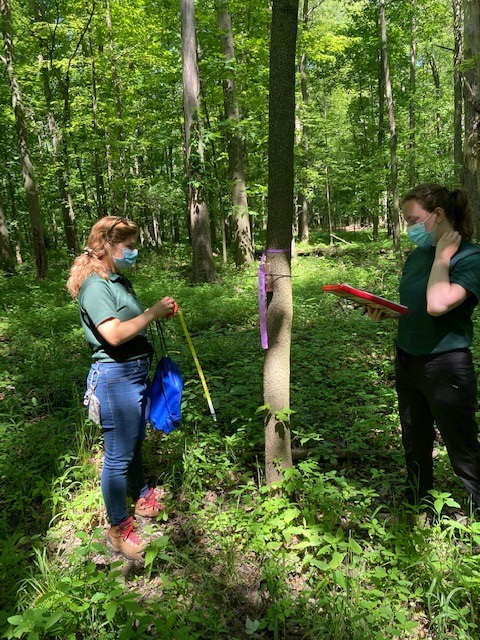
Above, Parks staff hang ash bolts and record release data used by USDA to measure the effectiveness of the project to combat the Emerald Ash Borer.


Cover shot – Emerald Ash Borer (Original Artwork – Juliet Linzmeier, Student Conservation Association member with NYS Parks) All other photo credited to NYS Parks unless otherwise noted.

Post by Sarah Travalio, Terrestrial Invasive Species and Biocontrol Coordinator, New York State Parks


Here are other easy tips that can make a big difference in helping stop the spread of all invasives:

  1. Clean, drain, and dry your watercraft and gear thoroughly to stop the spread of aquatic organisms.
  2. Plant only non-invasive plants in your garden, or even better, plant native plants. You can use the New York Flora Atlas to check which plants are native to New York.
  3. Clean your boots or your bike tires at the trailhead after hitting the trail – seeds of invasive plants can get stuck on your boots, clothes, or tires. You don’t want invasives in your yard or your other favorite hiking spots.
  4. Get involved – volunteer to help protect your local natural areas, join your local PRISM (Partnership for Regional Invasive Species Management) to stay informed, or become a citizen scientist by using iMapInvasives to report infestations of invasive species right from your smartphone.

Interested in taking a deep dive into research on the parasitoid battle against the EAB? Check out these scientific studies:

Jian J. Duan, Leah S. Bauer, Roy G. Van Driesche, Emerald ash borer biocontrol in ash saplings: The potential for early stage recovery of North American ash trees, Forest Ecology and Management, Volume 394, 2017, Pages 64-72, ISSN 0378-1127, https://doi.org/10.1016/j.foreco.2017.03.024.

Duan, Jian J., Leah S. Bauer, Kristopher J. Abell, Michael D. Ulyshen, and Roy G. Van Driesche. “Population dynamics of an invasive forest insect and associated natural enemies in the aftermath of invasion: implications for biological control.” Journal of Applied Ecology 52, no. 5 (2015): 1246-1254. https://doi.org/10.1111/1365-2664.12485

Jian J Duan, Roy G Van Driesche, Ryan S Crandall, Jonathan M Schmude, Claire E Rutledge, Benjamin H Slager, Juli R Gould, Joseph S Elkinton, Establishment and Early Impact of Spathius galinae (Hymenoptera: Braconidae) on Emerald Ash Borer (Coleoptera: Buprestidae) in the Northeastern United States, Journal of Economic Entomology, Volume 112, Issue 5, October 2019, Pages 2121–2130, https://doi.org/10.1093/jee/toz159


More Early Spring Bloomers – Flowers of April and May

With snow finally receding and spring on the way as the ground thaws, it is time to start seeing some of New York State’s earliest flowering trees, plants and shrubs.

So, during these early season hikes, be on the lookout for some of these early bloomers as they seek light, nutrition, and pollination by the insects that are also making a reappearance.

Service berry (Photo credit – Ed McGowan)

Many tree species like the maples and willows bloom in early spring. The white flowers of service berry (Amelanchier), either a tree or a shrub, are easy to spot in April and May. Amelanchier is also known as Juneberry, shadbush or shadblow.


At the onset of spring, the trees have not leafed out yet, allowing lots of sunlight to reach the forest floor. Take a closer look. This is the chance for many smaller plants to spread their leaves, fuel up and put out their flowers to attract pollinators.


Trillium

Trilliums are among the most familiar woodland plants, with their three leaves and three petals in red, white or pink. This is the great trillium, Trillium grandiflora.


Trout lily

It is easy to miss the flowering of trout lily (Erythronium americanum) shown here in bud. The deep yellow flowers often finish flowering before the leaves come up. The leaves are waxy and often have dark patches that make them recognizable even without the flowers.


Buttercup

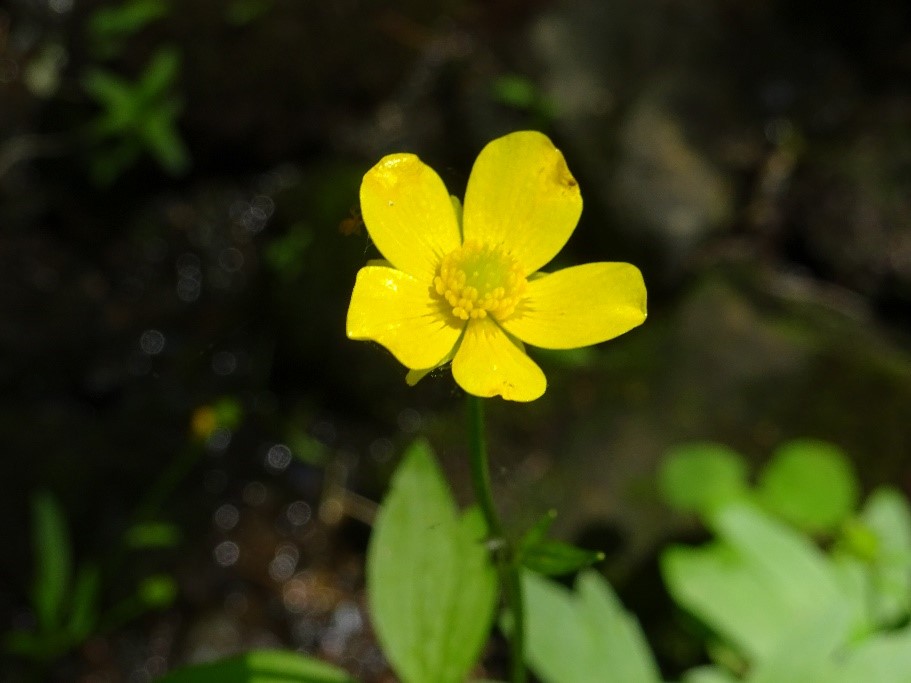
An easy flower to recognize is the buttercup (Ranunculus sp.). These grow in the woods, meadows, tall lawns, or in streams and wetlands. There are many species of buttercups but all have five shiny yellow petals.


Dutchmen’s breeches

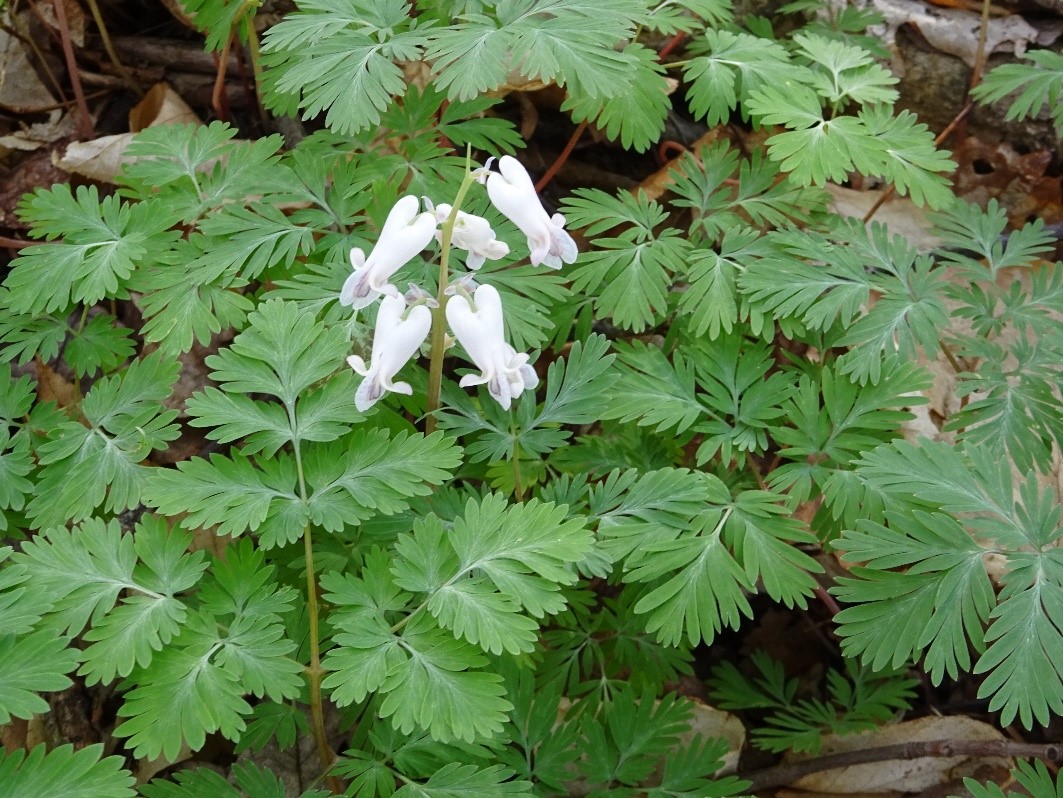
Dutchmen’s breeches (Dicentra cucullaria) look like upside-down bloomers. They occur in moist woodlands, often more calcareous sites and sometimes in large colonies.


Squirrel corn

A cousin to Dutchman’s breeches is squirrel corn (Dicentra canadensis) with its heart-shaped flowers. Notice how the leaves of both of these species look the same; they often grow together. Squirrel corn is related to the cultivated bleeding heart in pink or white that you see in gardens.


Wild geranium.

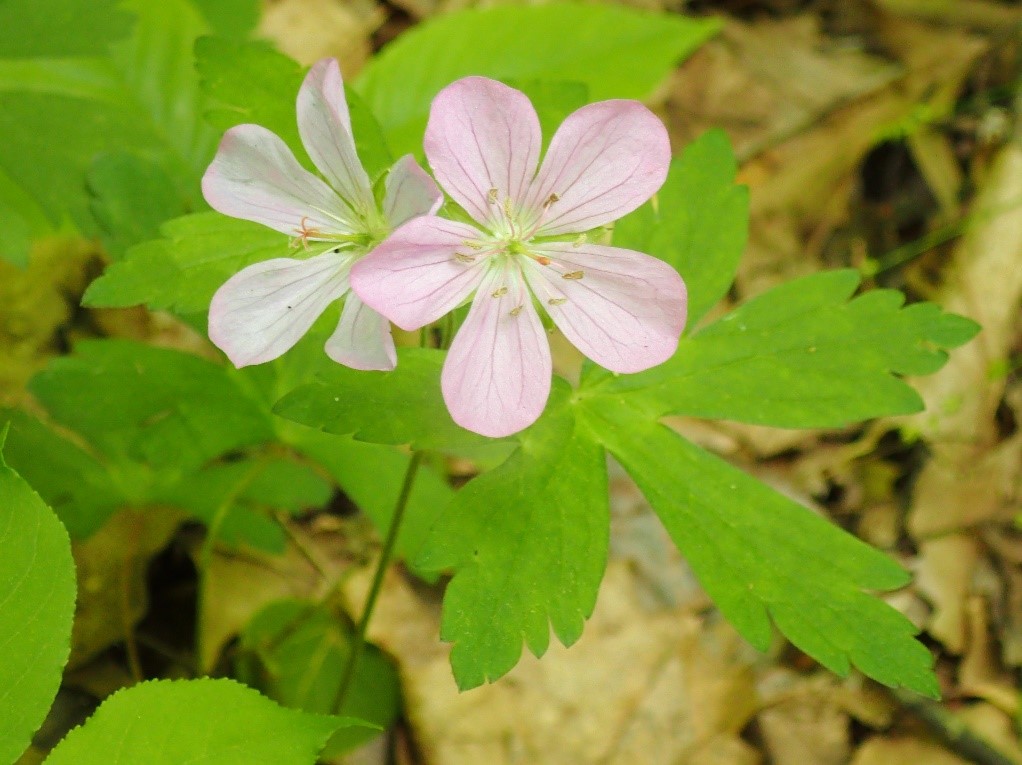
Wild geranium (Geranium maculatum) is a common native plant of the northeastern forest. The flowers look similar those of the red geranium that you see in window boxes and planters, also in the Geranium family but in a different Genus (Pelargonium) that is not native to the northeast.


Wild raspberry and blackberry

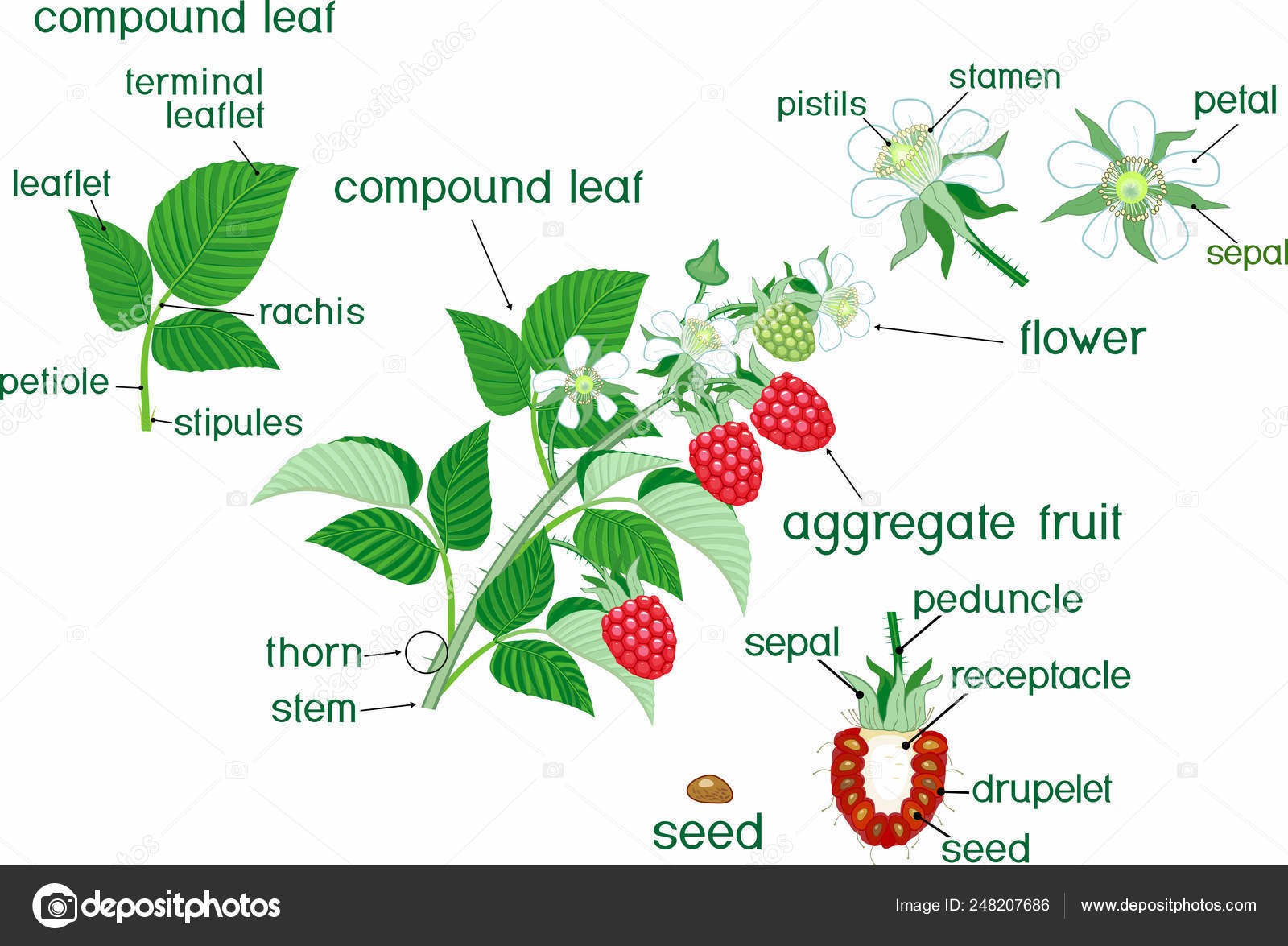
Don’t overlook the wild raspberries and blackberries (Rubus spp.) with their prickly stems and bright white five petaled flowers and an abundance of stamens. They can be shrubs or vines, some growing tall and others like the dewberry growing close to the ground. They bloom from May through August.

The graphic below illustrates the parts of a raspberry.


Ostrich ferns

Not quite in the same category, the ferns start emerging at this time as well. Here the curled fronds or “fiddleheads” of ostrich fern (Matteuccia struthiopteris) slowly emerge on a moist floodplain before the trees leaf out. Many other kinds of ferns will be coming out as well.


Mayapples

Like umbrellas in the woods, these mayapples (Podophyllum peltatum) are just unfurling their leaves. A creamy white flower will emerge a bit later beneath the leaves. Some will develop into a “fruit” or seedpod that looks like a small green apple – do not eat as mayapple is poisonous to both humans and dogs.


Spicebush

Spicebush (Lindera benzoin) is very common in moist woods and along streams. If you scratch the stem you can smell the spiciness, a bit like cinnamon. Note the clusters of tiny five-petaled flowers along the stems.

Leatherwood

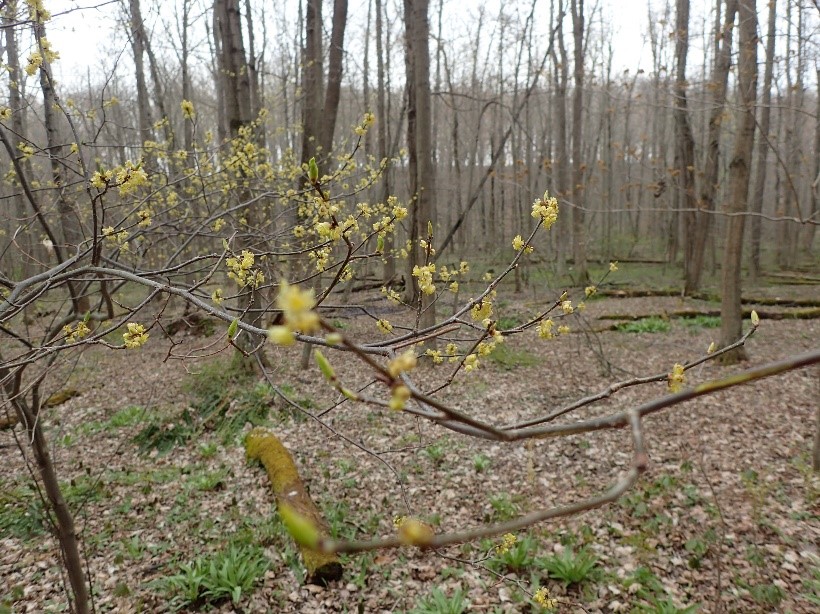
Much less common and usually found in calcareous soils, often in moist woodlands, is leatherwood (Dirca palustris). This gets its name from the very pliable branches – you can bend them in a U shape without breaking it. The flowers of leatherwood are like small tubes. They might be mistaken for honeysuckle (Lonicera spp.) which have larger and more open flowers and more brittle twigs.

And learn more about some of these early bloomers in these previous editions of the New York State Parks Blog.

In Search of the Early Bloomers

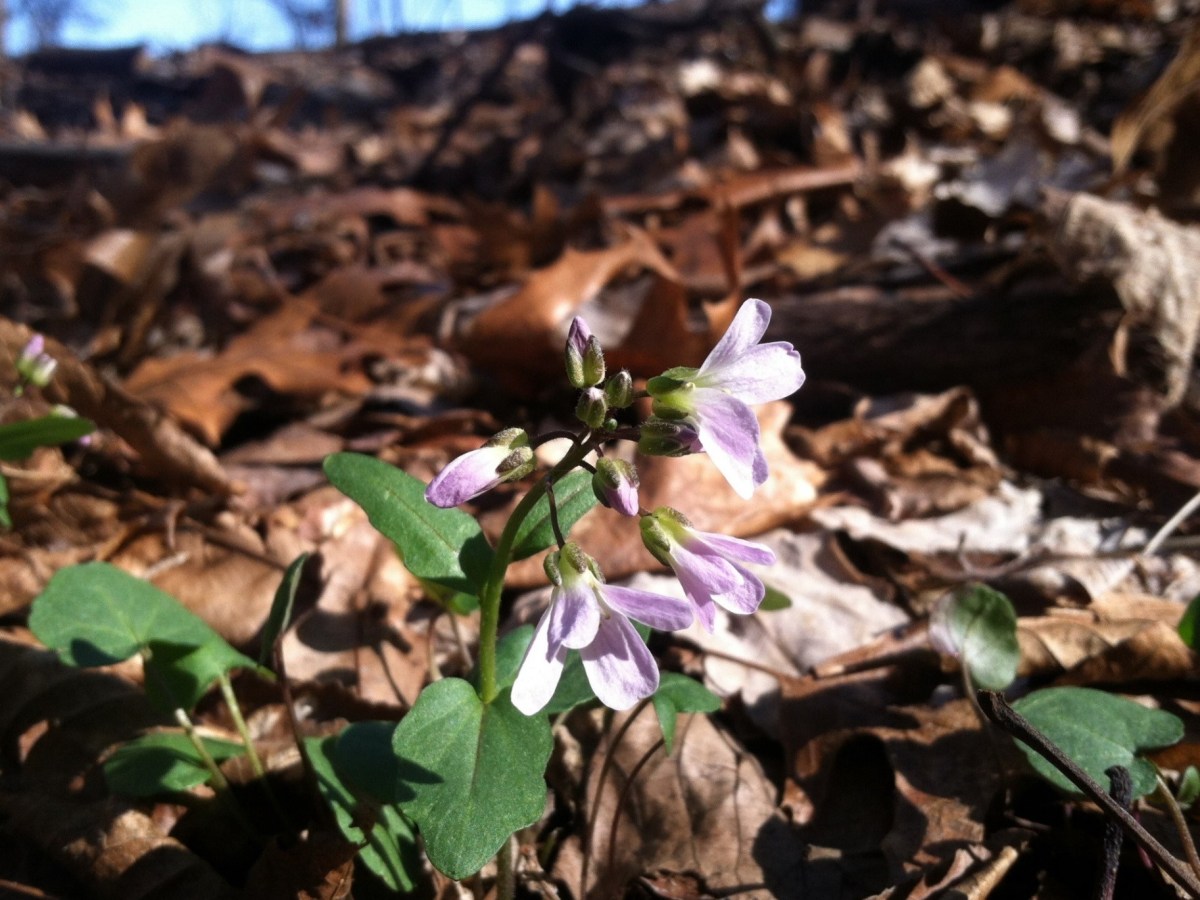
The ground is thawing out and the skunk cabbage is up – it’s time to start searching for the purple rock cress (Cardamine douglassii), a state-threatened plant. You may also find its more common cousins, all members of the mustard family – yes, like the mustard you eat, but with white to pink flowers rather…

Native Spring Wildflowers

Spring is in the air and with warmer temperatures come the spring flowers everyone hopes to glimpse.  Most of the flowers people have come to associate with spring are not native to North America though.  Crocus, daffodils, hyacinths, and tulips, for example, are all European flowers.  There are, however, many native plants that “spring” up…

And when late spring arrives, here are some of the other wildflowers that will appear described in the New York State Parks Blog.

Late Spring Flora

Finally the weather is warming and the flowers are popping out. Time to get outside and look for spring flora! You can find wildflowers in the woods, at the pond or along a stream, in the dunes, or maybe even in your back yard or neighborhood. Here are some native wildflowers in bloom to look…


Cover shot – Dutchmen’s breeches


Post by Julie Lundgren, State Parks Ecologist with NY Natural Heritage Program

NY Natural Heritage Program is affiliated with SUNY College of Environmental Science and Forestry (SUNY ESF) and works in close partnership with NYS Parks and NYS DEC. NYNHP has a partnership with State Parks to conduct field surveys to describe and map natural communities and to search for rare plant and animal species. These surveys inform park management, environmental stewardship and outreach. While doing these surveys, we also collect information and photos of many common species across the state like the ones shown above.

Learn more about New York State’s flora here, here and here.

Learn more about the NY Natural Heritage Program Partnership with State Parks here.

Wonders of the Winter Beach

Getting cabin fever? Well, bundle up and take a trip to a beach-front state park! Lake Ontario, Lake Erie, Lake Champlain, Long Island parks or the many parks on small lakes: Glimmerglass, Green Lakes, Long Point-Chatauqua Lake, Allegany, or many others.

This is the time to explore the many interesting patterns and colors of wintertime “icescapes.”


For now, enjoy some spectacular views from Southwick Beach State Park and its wild ice formations on the eastern shores of Lake Ontario. With no other visitors in sight on this day, there was no problem for this intrepid explorer to keep safe distances while enjoying the scenery.

During such visits, dress warmly and in layers, as shorelines can be chilly, as well as windy. But it is the wind that makes for fantastic ice sculptures along the shores. Sometimes the nearby trees or dune grasses will be laden with frost and salt spray. Or you may find some interesting driftwood and shells tossed up on the shore by the waves and wind.

Look way out to the water’s edge and you will realize that maybe that is not water but rather the frozen froth of waves forming an icy ridge on the beach.

Finding animal tracks in ice, snow or even frozen sand also is often easier than in other seasons. Look for footprints; can you figure out who has been there?

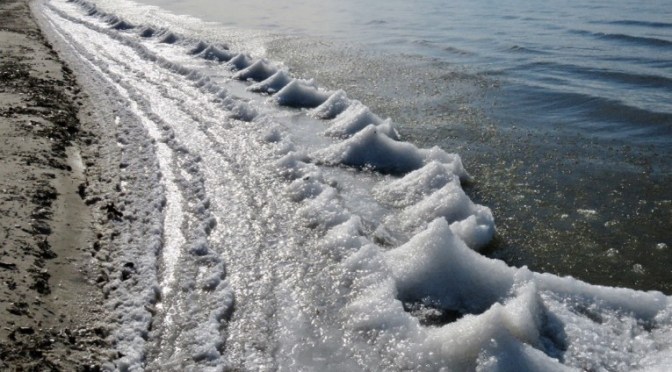
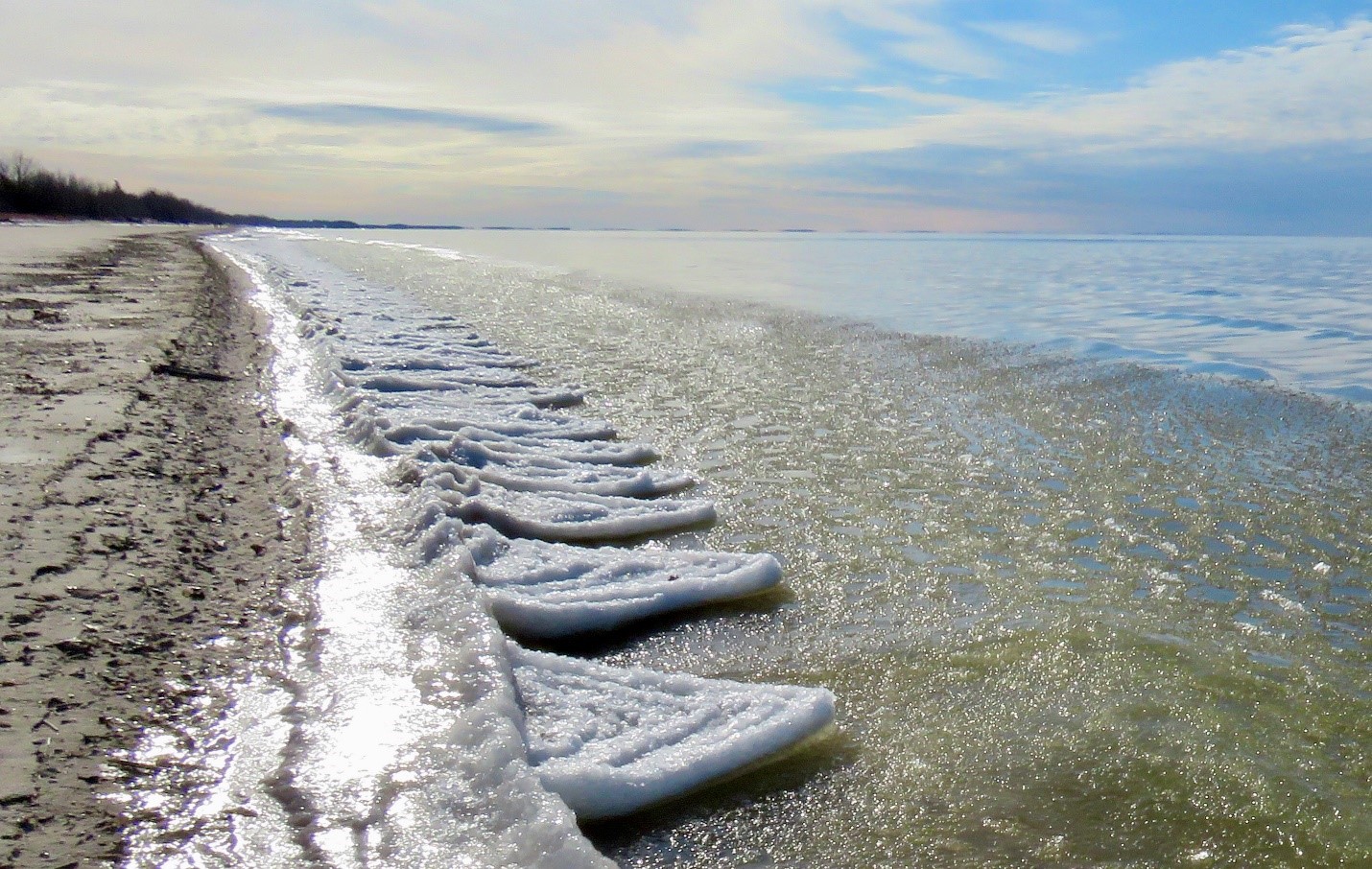
Ice can take interesting or fantastical shapes, as shown by the picture above at Southwick Beach.

How does the ice form shapes like this? A breeze pushes waves against the upper shore and the water at the top edge freezes as it hits the frozen sand. Then thin layers of water build up at the icy edge forming this wild pattern of ledges extending a mile down the beach.

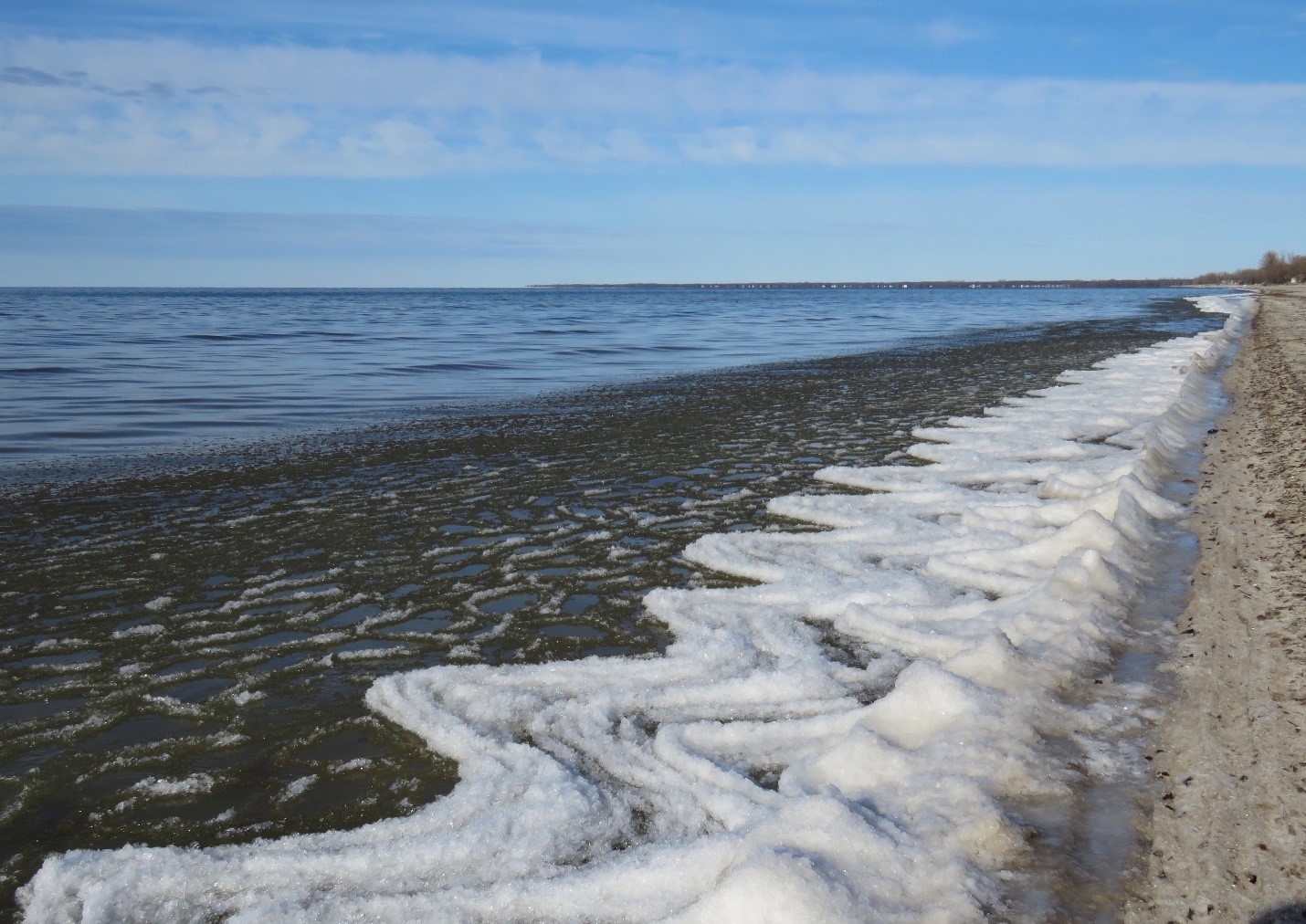
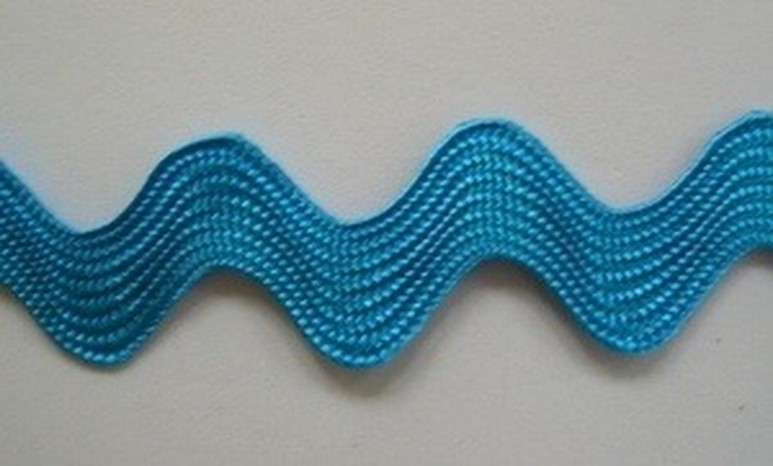
In a different section of beach, the ice forms a pattern much like rickrack, a form of braided trim in a zigzag pattern that was highly popular in the 1960s.


And wintertime can create its own interesting illusions, such as this picture above, in which it appears the forest is floating in the sky above the water. This phenomenon is known as a “superior mirage” which tends to happen in cooler weather, when the air is colder above your line of sight than below. In this case, the air temperature is colder than the lake water. On this day the air was about 20 degrees and the water 40 degrees.

Read more about the science of a superior mirage on Wikipedia.

There is so much to see along our shorelines even in winter. Get out in the fresh air, explore some winter beaches and take pictures to share.


All photos of Southwick Beach State courtesy of Kathy Faber-Langendoen

Post by Julie Lundgren, State Parks Ecologist, NY Natural Heritage Program


Prepare to Explore more of State Parks in the winter by reading these previous posts from the NYS Parks Blog.

Evangola State Park: Lake Erie’s Winter Playground!

Along the shores of Lake Erie, Evangola State Park becomes a winter sports mecca as the lake’s famous lake-effect snowstorms blanket the park! Lake-effect snow occurs when cold, Canadian air moves across Lake Erie evaporating its open waters and causing intense, local snow bands which can drop one to two inches of snow per hour.…

Enjoy Winter – Get the Kids Outside

It’s cold outside, it takes forever to get the kids bundled up and out the door. Is it worth all the trouble? You bet! You don’t need a lot of planning, just a few tips and tricks to encourage kids – and you – to enjoy the outdoors in winter. Bundle Up Look for hats…

Winter Tree Identification Part II: Evergreen Trees

Evergreen means these trees keep their “leaves” throughout the winter. Though we may call them pine needles, they are actually very skinny leaves that serve the same function as the leaves on a deciduous tree. Identifying evergreens during the winter months is almost the same as in spring and summer, with the added advantage of…

Targeting a Watery Invader at Lake Taghkanic

Thanks to a “hands-on” kayak mission against invasive water chestnut this summer at Lake Taghkanic State Park, this popular lake ought to be clearer of these aquatic invaders for next paddling season.

And timing is critical in dealing with water chestnuts, floating plants which can rapidly spread to create dense patches that can clog a lake, damage the native ecosystem and make it hard for canoeists and kayakers to paddle.

Water chestnut (Trapa natans) is one of the several Aquatic Invasive Species (AIS) that are monitored in hopes of reducing abundances in state waterbodies. Widespread in the state, water chestnut is now found in 43 counties.

The aquatic invasive water chestnut can be found in 43 countries across the state. Counties shaded green are known to be infested. (Photo Credit – NYS Department of Environmental Conservation)

Invasive species, like water chestnuts, are organisms that are non-native to an area, typically causing harm to human health, the economy, and the environment. If left unchecked, AIS can spread quickly from one body of water to another, threatening biodiversity and potentially impeding recreational opportunities.

The key to battling the an infestation discovered this season at Lake Taghkanic in Columbia County was to remove hundreds of plants before going to seed. Water chestnuts are annuals, and thus must reseed themselves each year to propagate.

Anyone who has been out along a shoreline and came across a strong, spiny, star-shaped brown nut-like “fruit” or seed pods has found a water chestnut nut. Bearing four sharp spines or points, each nut contains a single seed that can produce 10 to 15 stems.

Anchored to the water bottom, the plants have submerged, feathery brownish leaves on stems that can grow up to 15 feet long. On the water’s surface, these stems come to an end with a floating rosette, or circular arrangement of leaves. The leaves are triangular shaped with toothed edges.

These clusters can float on the surface due to buoyancy bladders connected to the leaf stems, forming dense floating mats that can be nearly impenetrable. Each rosette produces about 20 of the hard nut-like fruits in the late summer and early fall which, after dropping from the plant to the water bottom, lay in sediment over the winter to sprout in the spring

You can imagine the concern when water chestnut showed up in Lake Taghkanic State Park, a park focused on boating, swimming, water sports and beach activities. Controlling water chestnut at the park was vital to support these recreational opportunities as well as the native fauna of the lake, including one rare species known there.

Due to the fast-growing nature of water chestnut, it is important to control newly introduced infestations as soon as possible, also known as “early detection, rapid response” (EDRR). If left unchecked, patches of water chestnuts can spread prolifically.

A map of Lake Taghkanic, showing the area of water chestnut infestation highlighted in green. (Photo Credit – NYS Parks)


Water chestnut is an invasive species of high concern for many waterbodies in New York State, having potential ecological, economic and health impacts. The plant can form dense mats on the water’s surface, greatly impacting the organisms below. These layered mats can block sun and oxygen from submerged plants, resulting in a die back of native species and fish populations. Recreation is also inhibited by dense patches of water chestnuts, making it difficult to swim, boat, kayak, or fish. The spiny nuts often drift to shore, creating an additional hazard for pets and people to step on.

Effective control of water chestnut depends largely on preventing seed formation. By manually removing the plants in mid-summer before mature seeds can drop, managers can halt such potential reproduction.

At Lake Taghkanic, staff from the Office of Parks, Recreation and Historical Preservation, state Department of Environmental Protection, and Capital Region Partnership for Regional Invasive Species Management (PRISM) worked to rapidly respond to the infestation. This team of ten individuals were well-versed in the control of invasive species, and several team members had prior experience manually removing water chestnut.

Held July 16, the pull was led by Matt Brincka (NYS Parks Invasive Biologist), with other participants including Falon Neske (NYS Parks), Lindsey DeLuna (NYS Parks), Lauren Gallagher (NYS Parks), Rebecca Ferry (NYS Parks), Kristopher Williams (Capital Region PRISM), Lauren Mercier (PRISM), Lauren Henderson (PRISM), Steven Pearson (DEC), and Catherine McGlynn (DEC).

The team navigated to the water chestnut infestation in kayaks, maintaining social distancing and wearing face coverings when necessary. When manually pulling water chestnut plants, it’s important to reach as far down the stem as possible to pull the root system from the bottom sediment.

At Lake Taghkanic, water chestnut was mixed in among lily pads, presenting a challenge to pulling by hand from kayaks. (Photo credit – NYS DEC)

Once pulled, the water chestnuts were collected in garbage bags, drained, and weighed. Within a day, more than 100 pounds, or from 300 to 400 plants were removed! The information was recorded for upload to iMapInvasives so that the infestation of water chestnuts can be tracked.

iMapInvasives and You Can Too!

You may have heard the name iMapInvasives before, but if you have not been exposed to this magnificent mapping tool, I recommend you check it out! iMapInvasives, New York State’s online invasive species database, could be compared to a modern-day hero. A robust and helpful resource- thanks to its devoted observers. Citizen Scientists, Educators, Students…

Afterward, the team also surveyed the 3.7 mile lakeshore to ensure there were no other visible water chestnuts. Parks staff developed a control plan that will include monitoring and hand-pulling at Lake Taghkanic annually in order to deplete the seed bank (seeds can remain viable for several years at the bottom) and keep the problem at bay.

Over the years, NY State Parks has organized and participated in several invasive species pulls, additionally having a seasonally staffed AIS Strike Team and Boat Steward program. Reader more about these programs in the posts below.

Selkirk Shores State Park has been one focus area for State Parks staff in efforts to control a water chestnut infestation. In 2015, about 240 bags of water chestnut were removed there, visibly reducing the biomass by 40 percent. During the 2016 season, another 12.5 tons were pulled out. This removal resulted in a decrease in abundance of water chestnut during from 2017 through this year, further maintaining the value of this State Park.

Prompt invasive species responses, such as water chestnut pulls, work towards ensuring recreational enjoyment and preserving natural ecosystems in our parks. Early detections of invasive species are often reported by patrons.

The next paddling season may be months away, but remember: If you believe you have found a new population of an invasive species at a State Park, tell a park staff member or reporting it in iMapInvasives will ensure that swift eradication action is taken.

Protecting Our Waterways

You may have seen them in a park near you, these super heroes and heroines in disguise. Since 2008, New York State Parks have deployed Invasive Species Strike Teams. These Strike Teams conduct invasive species surveys and manually remove non-native invasive plants in areas of significance. The goal is to protect native plant and animal…

Protect Our Waters: Don’t Pick Up Hitchhikers!

Now that summer is here, when you head to the boat launch for a day on the water, you will often run into a friendly face in a blue vest. These are Boat Stewards! Boat Stewards are educators who share their knowledge of invasive species and how to prevent boats from spreading such species into…

Cover shot: Members of the removal team spread out in kayaks on Lake Taghkanic.

Post by Lauren Gallagher, State Parks Water Quality Unit

Help Brewing For Rare “Chitt” Snail at State Parks

Since Ice Age glaciers retreated from New York nearly 12,000 years ago, a snail slightly larger than a dime has lived in damp, shaded and rocky terrain at the base of a towering waterfall in Madison County.

A moist and mild micro-habitat, the “splash zone” around the namesake 167-foot cascade at Chittenango Falls State Park is the last wild place on earth where the Chittenango Ovate Amber snail is known to exist.  The species is named for its home; its ovate, egg-shaped shell; and its amber coloring.

A close-up of the Chittenango Ovate Amber Snail. There are currently about 100 of the tiny mollusks known to exist in Chittenango Falls State Park, the only wild place on earth with a known population. (Photo credit – SUNY-ESF)
The spray from the waterfall at Chittenango Falls State Park creates the moist and mild micro-habitat needed by the snail, which has occupied this place in Madison County since the last Ice Age. (Photo Credit – New York State Parks)

This delicate mollusk leads a precarious existence, as a population now estimated at less than a hundred faces threats from floods, droughts, rockslides, another species of snail, climate change, and even the feet of irresponsible hikers.

The snail was abundant when it was first discovered at the falls in 1905. By the early 1980s, the population was estimated at less than 500 individuals, and the population continued to plummet in the 1990s. The snail is listed as an endangered species by New York State and a threatened species by the federal government. Historically, the species was found in a handful of sites from Tennessee to Ontario, Canada, but now is known to only exist in New York.

To fend off potential extinction of what is affectionately known as the “chitt,” a captive breeding program started five years ago, supported by State Parks, SUNY College of Environmental Science and Forestry (SUNY-ESF), U.S. Fish and Wildlife Service, state Department of Environmental Conservation, and the Rosamond Gifford Zoo in Syracuse. Federal funding to support the program has come from the Great Lake Restoration Initiative.

Banding together on Facebook as the “Snailblazers,” these partners recently added another friend of the chitt – the Critz Farms brewery in Madison County, which has crafted an IPA dedicated to raise funds for the breeding program.


With each leisurely sip of the Endangered Species IPA, described as a “delightfully citrusy, medium-bodied beer,” funds go toward supporting a snail incubator program at SUNY-ESF in Syracuse and the hand collection of a mix of native plant leaves that form the diet of the finicky snail.

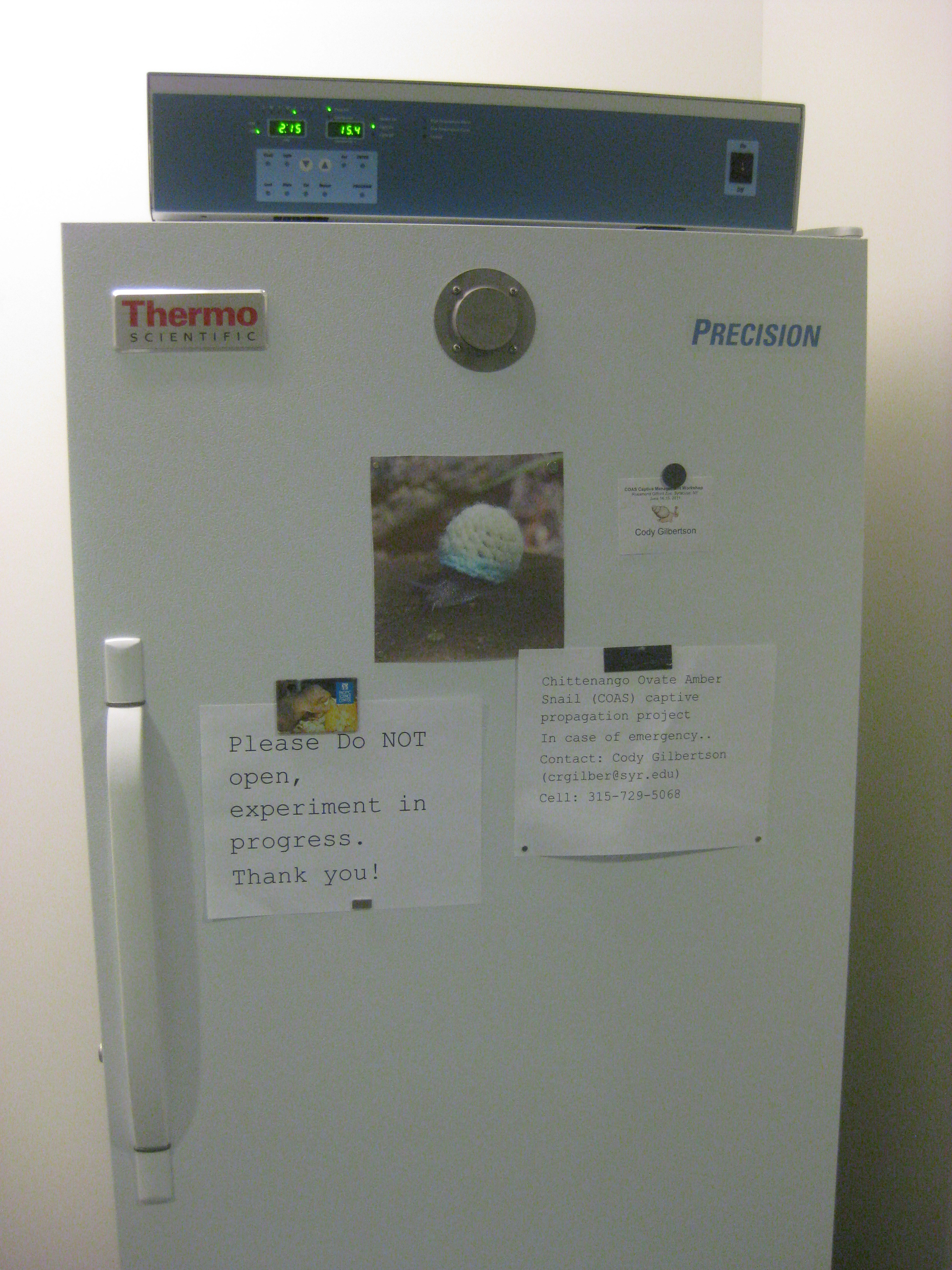
Since the program started, nearly 2,000 snails have been propagated in climate-controlled incubators at both SUNY-ESF and the Rosamond Gifford Zoo in Syracuse, said Cody Gilbertson, senior research support specialist at SUNY-ESF. Due to COVID restrictions this year, the zoo incubator program was consolidated into SUNY-ESF.

During field research at Chittenango Falls, SUNY-ESF researcher Cody Gilbertson holds an Ovate Amber snail (below). The captive-bred snails reside in a climate controlled unit back at SUNY-ESF in Syracuse. (Photo Credit – SUNY-ESF)

Of the captive-bred chitts, slightly more than 400 have been released into the park during this time, some as hatchlings and the rest as adults capable of reproduction. Even with these efforts, the snails are barely hanging onto their foothold.


About 500 snails reside in the incubators currently, protected as a “backup” population should some dire circumstances extinguish the Chittenango snails. Hundreds of snails have already lived their entire natural life spans – about two years – in the incubators.

When breeding started, there was an estimated population at the falls of about 350 snails, said Gilbertson. The most recent counts are now at about 100.

The habitat zone, a mix of boulders that have fallen from the limestone cliffs, is consistently moist from the mist of the falls. That nurtures water-loving plants, including a number of native wildflowers, including the snail’s favorite, Joe-Pye weed (Eutrochium purpureum), said Delaney Kalsman, project coordinator at State Parks.

Joe Pye weed, a favorite food of the snail. (Photo credit – State Department of Environmental Conservation)


Located along the park’s Gorge Trail, this area is fenced off and marked against trespassing. Anyone entering the area without authorization can be prosecuted under New York State Environmental Conservation Law and the federal Endangered Species Act.

Another count of the snail population is set for the summer of 2021, said Kalsman. The number of snails has been declining in recent years, with possible explanations including competition from a species of invasive snail and climate change.

“The environment is experiencing longer drought periods, reducing the flow and spray of the falls which the snail relies on,” she said. “When it does rain, large flooding events are happening at greater frequencies. In 2017, a major flood washed away large portions of Joe-Pye weed.”

Within such a small home, a potential extinction-level event can show up quickly. Such events like the 2017 flood, along with the other threats, put the chitt as “severe threat of extinction,” Gilbertson said. “This threat is further amplified because the entire wild population exists only at Chittenango Falls State Park.”

To propagate more snails, Gilbertson needed to understand what they ate from the flora and fauna around the falls. She learned the snails preferred the fallen leaves of black cherry trees collected in early spring, as well as leaves from pignut hickory, sugar maple and ash. And snails needed certain species of leaves at certain times, and at certain stages of decomposition. So, SUNY-ESF and Parks staff needed to collect leaves regularly and maintain a kind of “compost” menu for the snails. The leaves are stored dry and then rehydrated as needed.

“This diet for our snails is more natural than a synthetic paste or vegetables that is used in many other captive invertebrate programs. Survival was boosted by this natural diet,” she said.

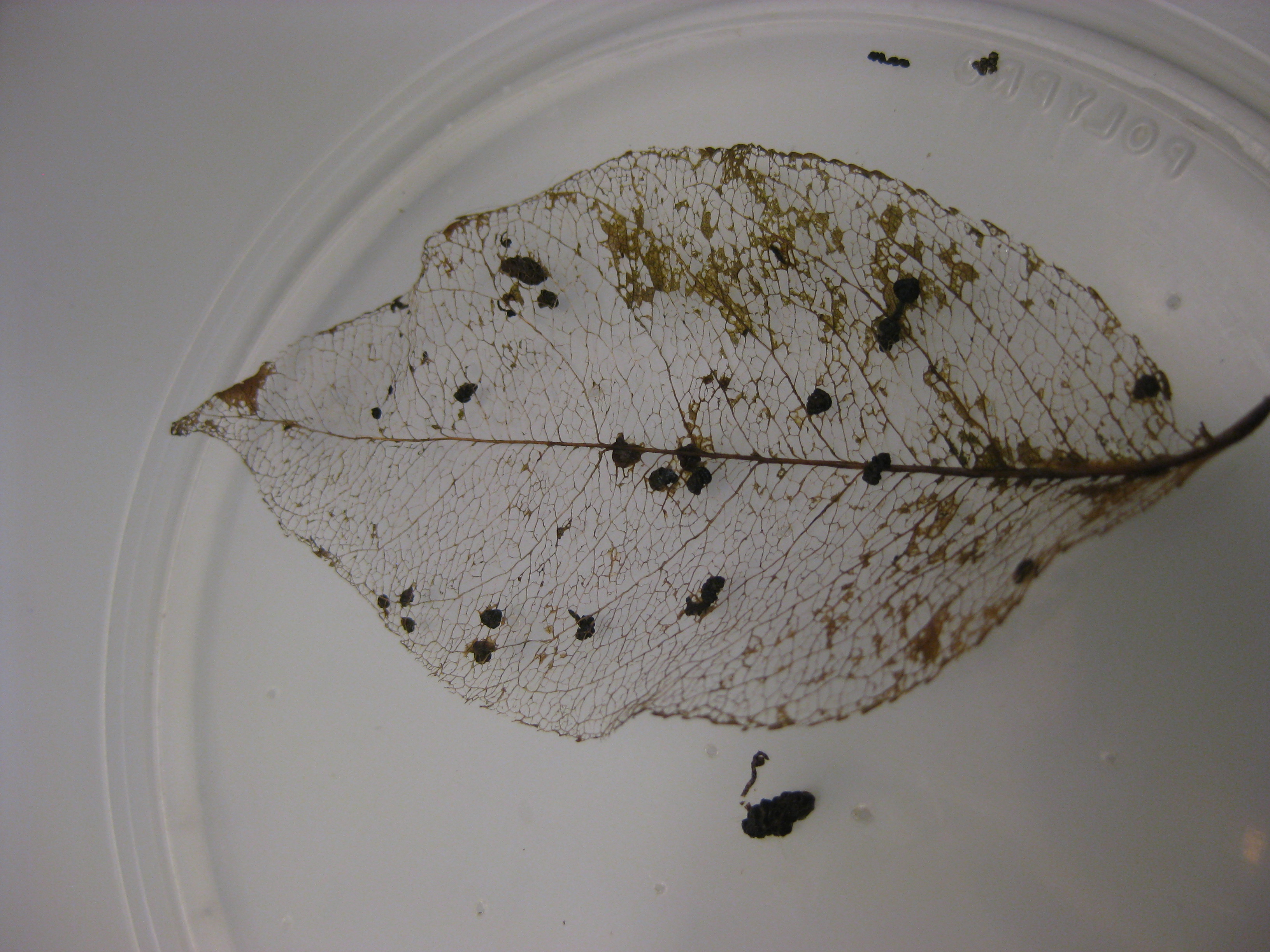
A black cherry leave after being consumed by numerous snails. (Photo credit – SUNY-ESF)


State Parks staff is now designing a “garden” of native trees and plants in the park to supply the optimal forage that can be brought to the snails, as part of the efforts spearheaded by Kalsman, park Operations Manager  Shawn Jenkins, and SUNY-ESF FORCES (Friends of Recreation, Conservation and Environmental Stewardship) stewards Jordan Stransky, Sarah Petty, and David Rojek.

(And for the curious: Snails have a form of teeth, called “radula,” which is Latin for “little scraper.” The radula is a tongue-like ribbon with raised rasps, which the snail uses to scrape and tear away at whatever plant they are eating.)

Another issue to consider is that of a potential lack of genetic diversity, which could make the snails vulnerable to disease. To avoid having the captive offspring breeding only with other captive offspring, researchers periodically gather snails from the falls to be brought into the captive program.

Called “pulsing,” this method “brings new founders from the wild to breed and introduce hypothetically new genetic lines into our captive population,” Gilbertson said.

Snails mate between May and July, resulting in the female laying about a dozen tiny eggs. Each summer, about 200 to 300 snails are reared from those eggs. The hatchlings are so tiny that the safest way for researchers to move them around is by using paintbrushes, she said. The tiny creatures use their “foot,” a muscle that contracts to allow the snail to move, to grasp the bristles on the brush.

Each year, researchers bring more captive-bred snails to the falls to live and breed with the snails there. And this tiny population continues for another day, aided by the work of dedicated people at State Parks, other partners and now brewers and patrons of a farm-brewed IPA.

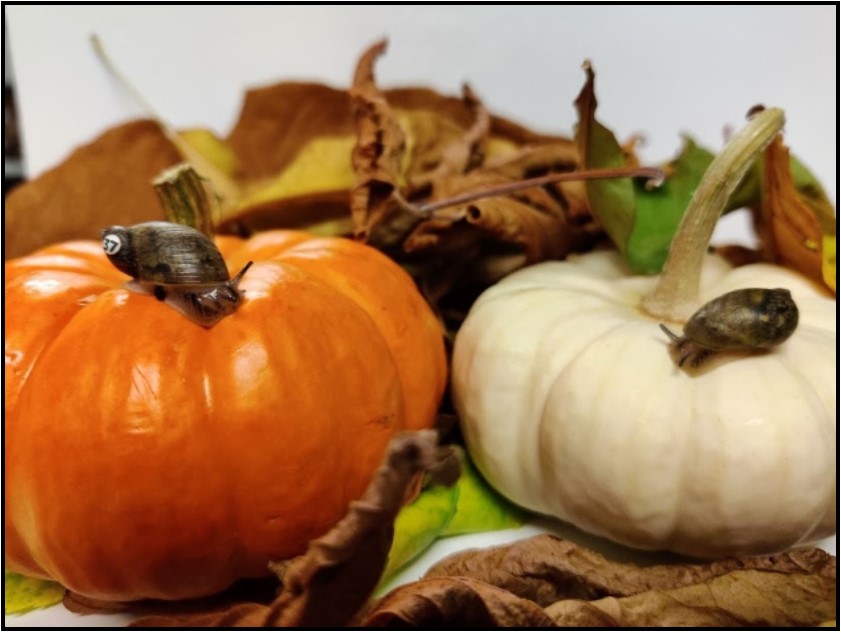
Happy Thanksgiving from the Chittenango Ovate Amber snail and New York State Parks! (Photo credit – NYS Parks)


(Cover Photo- Chittenango Ovate Amber Snail. Photo Credit- Cody Gilbertson, SUNY – ESF)

Post by Brian Nearing, Deputy Public Information Officer, NYS Parks


Resources

Read a five-year scientific review of the status of the Chittenango Ovate Amber snail by the U.S. Fish and Wildlife Service (USFW).

Discover more about the snail from USFW.

Learn more about the snail in a online book for children created by staffers at the Rosamond Gifford Zoo.

Donate to the zoo’s snail conservation program.