From placid lakes and intimate mountain streams to broad rivers and sea-foamed saltwater coast, the state park system offers limitless fishing possibilities and the enticing prospect of “tight lines.” Striped bass, bluefish, salmon, trout, panfish and freshwater bass are but a few of the many popular fish species that can be fished for at state parks, with angling set amidst the backdrop of some of the state’s most compelling and dramatic natural scenery.
For a reel-y good time: fishing is a whole different way to connect with the outdoors. Photo by Susan Lananger, Allegany State Park.
While some anglers may prefer the fall striped bass bonanza at Montauk Point, with its festive atmosphere and challenging rock-strewn shoreline, others may find flyfishing for brook and brown trout on the remote hemlock-lined streams of Allegany more to their liking. State parks additionally offer numerous options for recreational boat fishing. Launches for motorized boats are located strategically throughout the state on prime angling waters, along with smaller docks and launches providing lake and river access for canoes, kayaks and the like.
State parks offer anglers premier opportunities on two great lakes, the Hudson, St. Lawrence, Niagara and other smaller rivers, numerous streams and brooks, countless lakes of varying size and setting, and the saltwater shores of Long Island Sound and Atlantic Ocean. If there’s a fish to be angled for in New York State, be it fresh or saltwater, chances are good that it can be found in a state park.
Through I Fish NY, the New York State Department of Environmental Conservation helps New Yorkers understand the basics of fishing legally and offers opportunities to try the activity. Our parks often hold fishing programs as well. Read on for our guide to angling at state parks!
One of the many benefits of living in the northeast is the variety of winter recreational opportunities that are afforded to us. One of the most rewarding of these is ice fishing. It is accessible to young and old alike and the cost to get started can be less than other outdoor winter activities in New York.
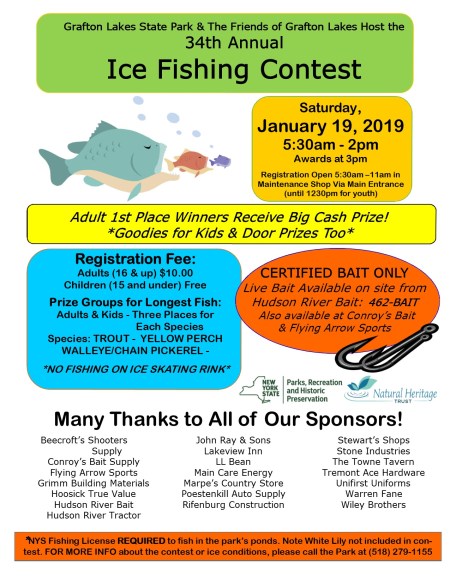
New York State Parks has a long tradition of promoting ice fishing events with tournaments at many of their facilities. Northeast of Albany, Grafton Lakes State Park Grafton Lakes State Park has been holding a tournament every winter for the past 33 years. This year’s tournament will be on January 19th and runs from 5 am to 2 pm. There will be prizes for the three longest fish of each species–trout, yellow perch and walleye/chain pickerel–for both the adult and child group. It’s a great day of family fun. Thompson’s Lake at Thacher State Park will be holding their tournament two weeks after Grafton’s on February 2nd. For more information about these tournaments contact the Parks.
2017 first place brown trout catch at Grafton Lakes State Park.
If learning to ice fish is more up your alley, you can try out Thompson’s Lake on January 19th when DEC’s I Fish NY staff will be on hand to offer a clinic and free day of ice fishing. Moreau Lake State Park’s “Ice Fishing for The Kids” program will be on January 26th from 10 am-2 pm. There will be snacks and refreshments offered by the Friends of Moreau in the warming hut. On February 20thGlimmerglass State Park will host the Otsego Lake Ice Fishing Clinic, also free to the public, from 9 am-3 pm. For more information about these events call the associated park.
There are many other opportunities throughout the season to learn how to ice fish. Governor Cuomo has designated February 16-17th a free fishing weekend as part of his NY Open for Fishing and Hunting Initiative. No fishing license will be required for those partaking over this weekend. Beginning ice anglers are encouraged to download the Ice Fishing Chapter (PDF, 3.7MB) of DEC’s new “I FISH NY Beginners’ Guide to Freshwater Fishing” for information on how to get started ice fishing. Additional information, including a list of waters open to ice fishing, can found on the DEC ice fishing web page and the Public Lakes and Ponds map.
Crappies are a common ice fishing catch.
When ice fishing, please keep in mind that anyone 17 years and older needs to have a fishing license in their possession (except on designated free fishing weekends). Fishing licenses are valid for 365 days from date of purchase. If using live bait, it must be certified, and excess live bait can never be discarded into a waterbody. This prevents the spread of diseases and invasive species.
Of utmost importance is safety. Do not go on ice that is less than 4 inches thick and be especially wary of ice on moving water like streams or rivers. Ask the experts and don’t go alone. Remember that tracks left by others is not an indication of safe ice; conditions can change quickly. Areas near docks and shorelines may be less safe.
If you follow these simple guidelines and dress appropriately, you and your family and friends will be able to enjoy a fun filled day of fishing and fresh air. Always keep in mind that ice fishing is a weather dependent sport and you need to be aware of the conditions. State Parks loves to see pictures of your adventures out on the ice — be sure to share them with staff at your favorite State Park. Happy Fishing!
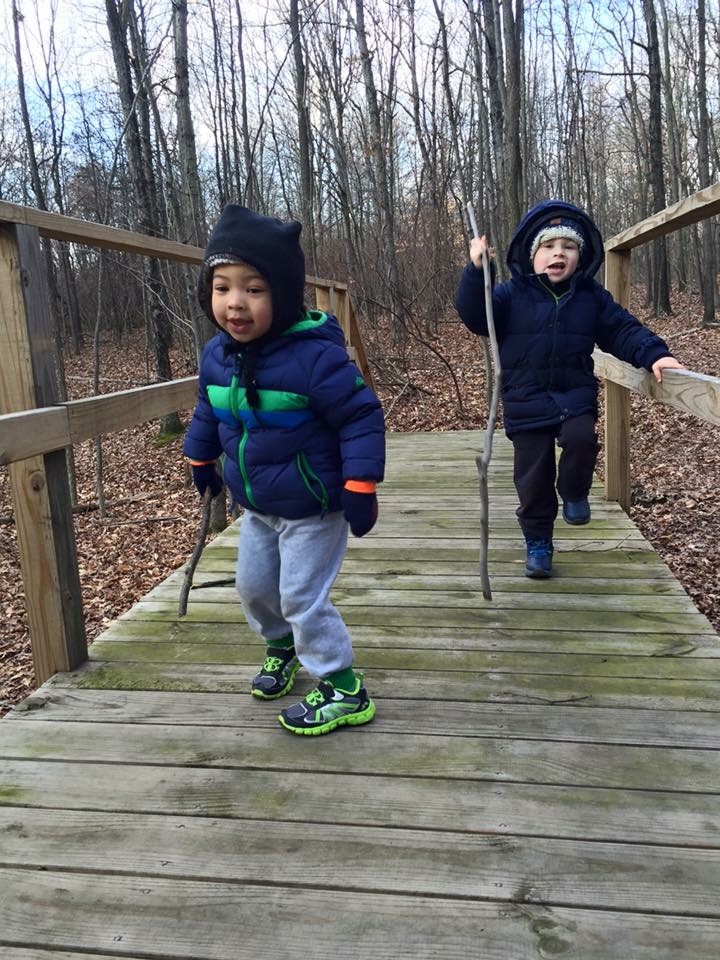
Remember to dress for the weather for your fishing adventure.
February vacation is a great time to get out and explore our state parks. Many parks are offering free programming to keep you and your family occupied this February break. Here is a sampler of just some of the many programs State Parks is offering this year. Our programs include active outdoor fun, wildlife ID, and parties!
Got a hankering to try ice fishing? Then head out to Glimmerglass State Park in central NY on February 21, Moreau Lake State Park, north of Saratoga Springs, on February 22, or John Boyd Thacher State Park, Thompson Lake just west of Albany, on February 24 for a free fishing clinic led by Department of Environmental Conservation staff. All the fishing gear will be provided during these workshops. Remember that proper clothing is critical for safe ice fishing outings. Dress warmly, paying extra attention to your head, feet and hands – dressing in layers is essential.
A success catch at Glimmerglass State Park, photos by State Parks
Setting the ‘tip-up’ line at Glimmerglass State Park, photo by State Parks.
Perhaps you are hoping to get to know our natives. Many parks are offering wildlife and plant identification walks, ranging from seal walks at Jones Beach State Park on Long Island to an owl prowl at Max V. Shaul State Park in the northern Catskills, as well as a winter tree identification workshop at Knox Farm State Park in western New York.
Geese gingerly step on frozen freshwater pond at Caumsett state Park.
You may be able to see harbor seals resting at low tide during a seal walk, photo by Maritime Aquarium of Norwalk.
If you are looking for a little adventure, check out the snowshoeing and cross-country skiing trails at Parks across the state or join in on a guided hike. The Lake Erie ice volcanos are particularly exciting, and you can visit them at Evangola State Park in western New York.
Snowshoe lesson, photo by State Parks.
Posing inside an ice volcano at Evangola State Park, photo by State Parks.
Many state parks across the state will be offering programs for preschoolers during February vacation.
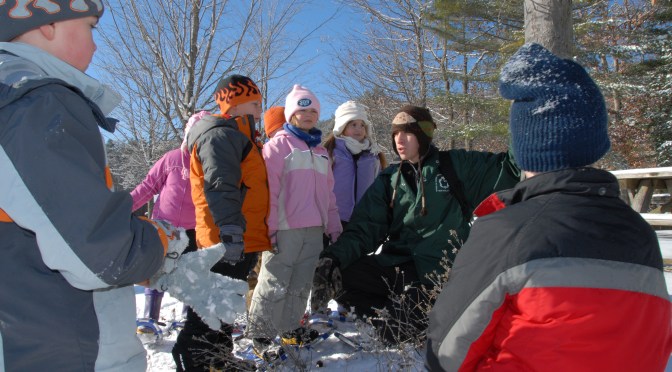
February is a great time to get the young explorers outdoors, photo by State Parks.
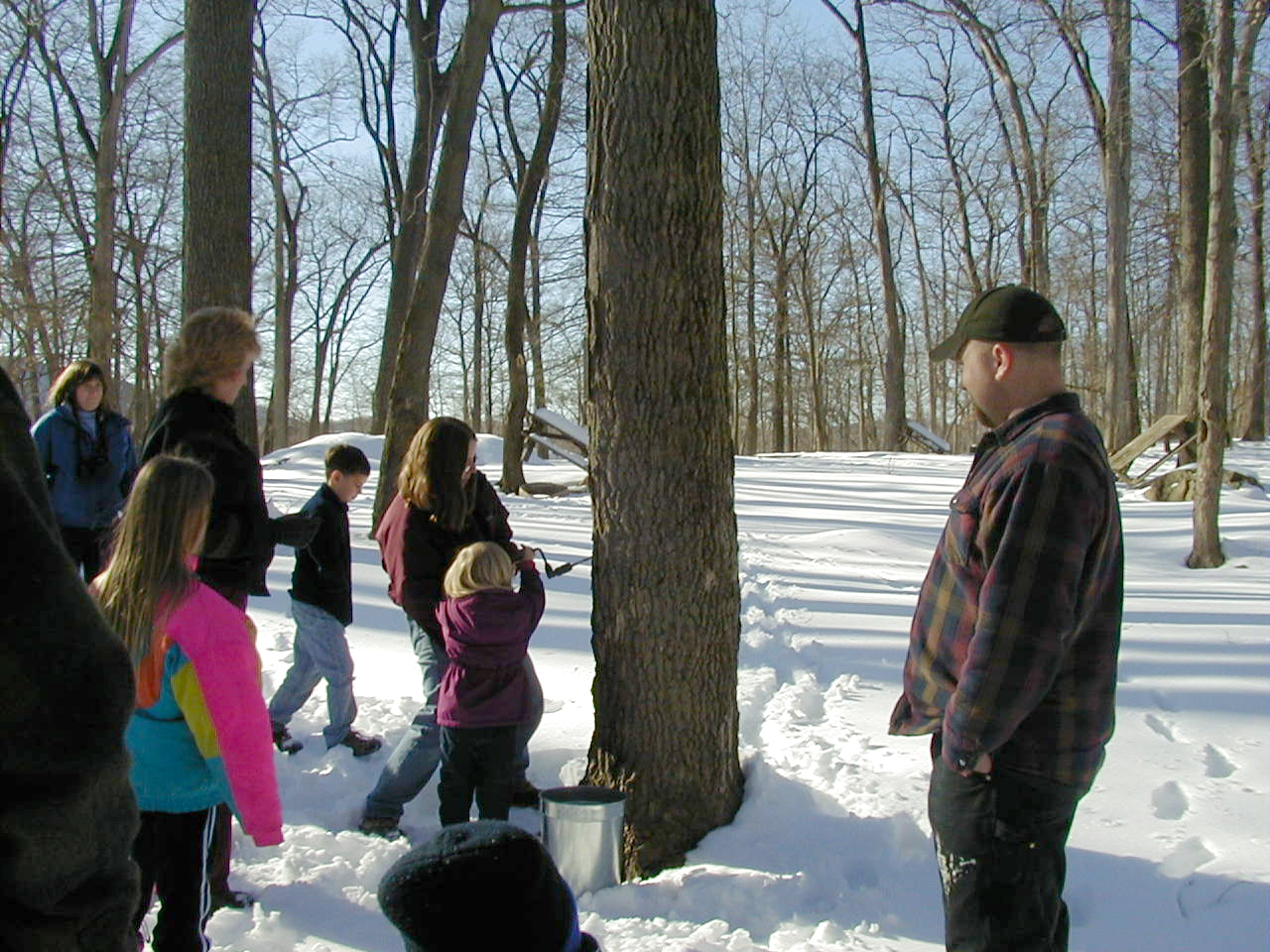
Maple sugaring starts in February! Clay Pit Ponds State Park Preserve on Staten Island Caumsett State Historic Park Preserve on Long Island, and Letchworth State Park south of Rochester will have maple programs this week. Visitors can learn how to identify and tap maple trees, and the sugaring process.
In this second year of Nature Times we have gotten to know snapping turtles, carnivorous plants, black squirrels, and Sammi, Trailside Museums’ 36 year old bald eagle. We’ve learned how trails are mapped, how a flock of sheep and goats have become one of State Parks’ 21st century mowing crews, and ways to explore State Parks on foot, in kayaks, on snowmobiles, and on frozen lakes. The stories have featured all kinds of work that State Parks staff and volunteers do throughout the year to help preserve and protect some of New York’s unique and exceptional places. These range from protecting sand dunes on Lake Ontario and old-growth forest at Allegany, to creating native grasslands at Ganondagan State Historic Site, and monitoring invasive species infestations and removing invasive species both on land and water.
This slideshow requires JavaScript.
We mark this second birthday with 61 new followers and over 24,000 page hits! And we thank the 32 staff, interns, and partner organizations who have shared their passion for State Parks through the blogs that they have written. We also want to recognize our partnership with the New York Natural Heritage Program who helped in initiating this feature and continues to provide support.
We look forward to continuing our celebration of State Parks in the months to come in Nature Times. Hope to see you soon at one of our Parks or Historic Sites!
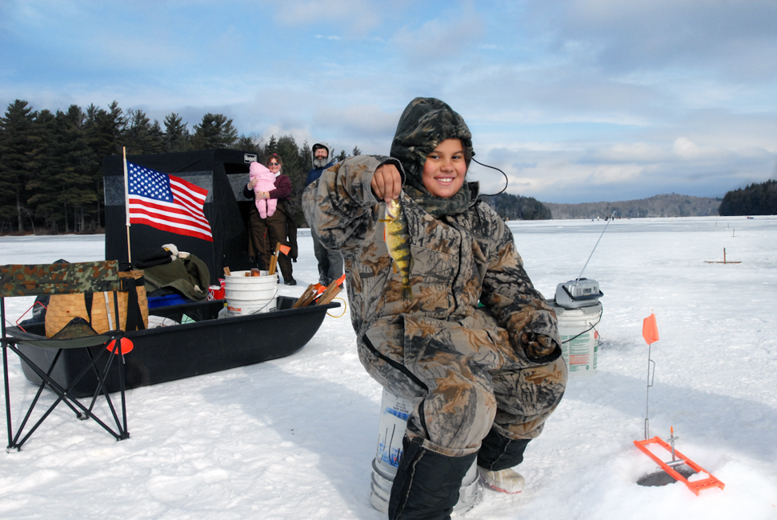
Young ice fisherman with a perch, photo by State Parks
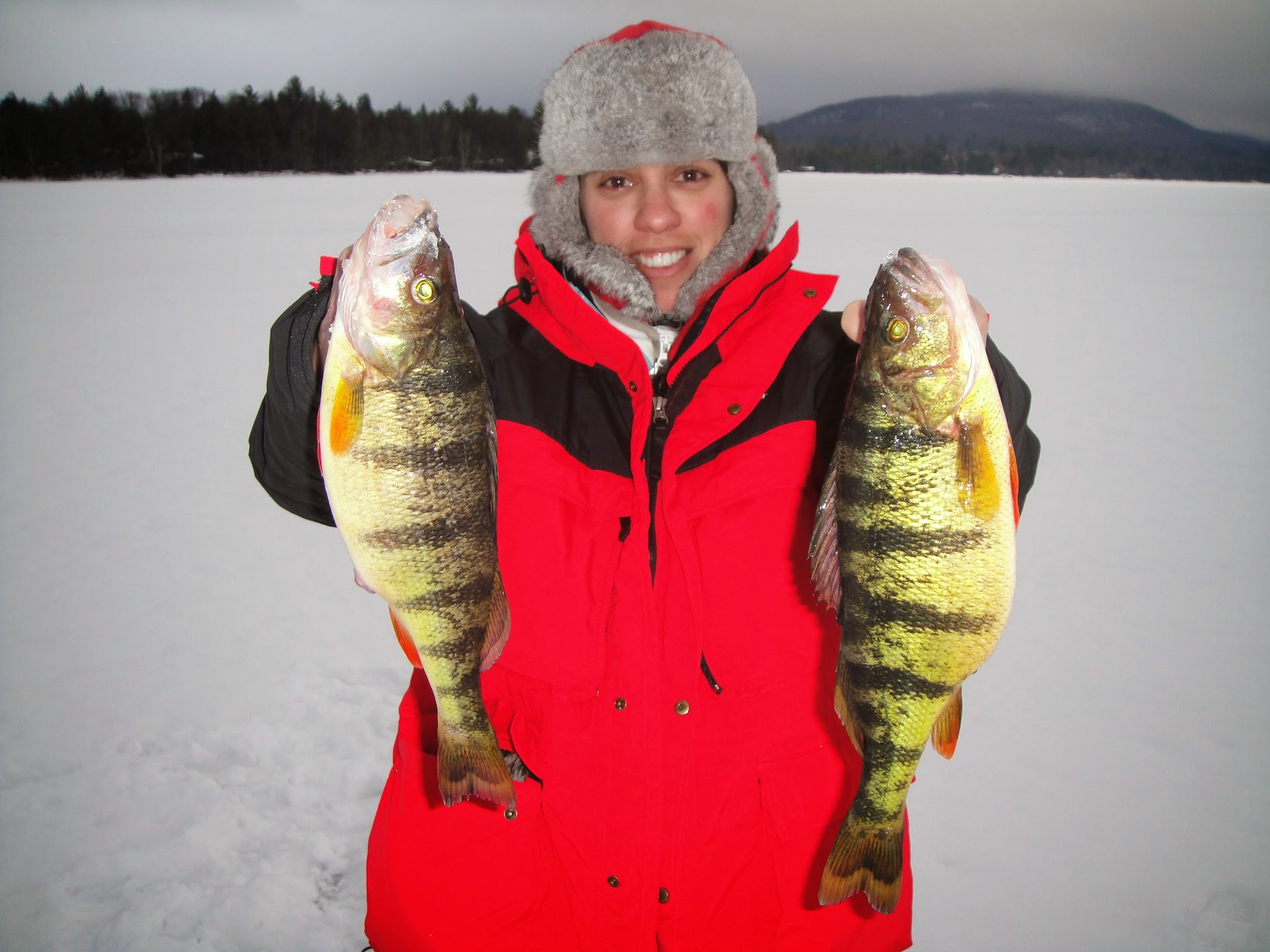
Ice fishing opportunities abound in New York State. Winter anglers can catch a variety of fish; primarily perch, sunfish, pickerel, northern pike and walleye. In addition, many waters throughout the State are open to fishing for trout, lake trout and landlocked salmon.
Ice fishing requires doing a little homework. Learning about the equipment needed, proper clothing, safety precautions, the water you want to fish, and fishing regulations are all part of a successful, enjoyable winter fishing experience. Accompanying a friend on an ice fishing outing or visiting a tackle shop in a popular ice fishing area can be great ways to learn about the skills and equipment needed. The New York State Department of Environmental Conservation’s (DEC) ice fishing webpage also has some very good information to help you get started and lists some of the waters where you can ice fish. Pay particular attention to the ice safety section. There are also a number of free fishing clinics held in New York each year, including ice fishing clinics.
DEC and State Parks will co-host a free ice fishing clinic from 9 a.m. to 4 p.m. on Wednesday, February 17, at Glimmerglass State Park in the town of Springfield, Otsego County. The event will be moved to the public boat launch at Canadarago Lake just south of Richfield Springs on NYS Route 28 if there is not sufficient ice on Otsego Lake. Find out if the clinic is going to run by contacting Glimmerglass State Park at 607-547-8662.
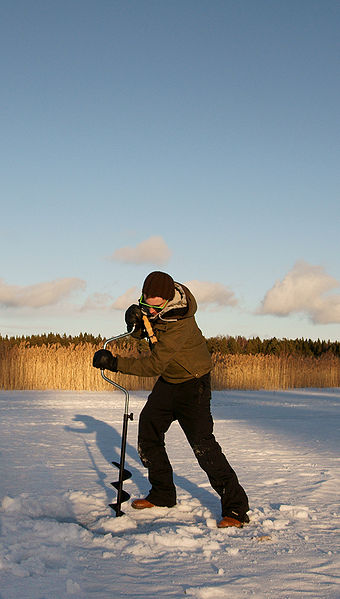
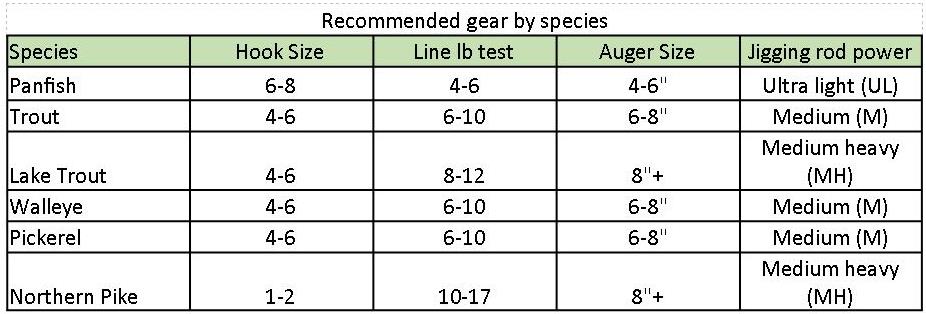
In order to ice fish, you must first cut a hole in the ice. An ice auger is a good way to accomplish this. Ice augers come in a variety of sizes, so try to use an auger that is appropriate to the species of fish you are after. You will also need an ice scoop to clean slush and ice chunks out of the hole after it is cut.
Ice fishing methods include “jigging” with short, light fishing rods and using tip-ups. There are many different kinds of jigging poles and tip-ups available. Jigging involves the use of a jigging rod and either an ice jig or a small jigging spoon which is often tipped with a piece of bait. Spikes and mousies (maggots) are a good bait to use for smaller panfish, while minnows are often used for larger species. By jigging your bait (raising the rod tip up and down a few inches), you help attract fish to your bait. Generally, you will jig the bait a few times, then pause for a few seconds. Fish usually take the bait during the pause.
A tip-up is basically a spool on a stick that holds a baited line suspended through a hole in the ice. When the bait – usually a minnow – is taken by a fish, the pull on the line releases a signal, such as a red flag.
Placing the tip-up, photo by DEC Fisheries
Tip-up ready to catch a fish, photo by DEC Fisheries
Fish in similar areas you would during other seasons: weed lines, humps, depth changes, points, or other structure. Contour maps can help you find some of these places. Early morning or late afternoon tend to be the most productive times of day to fish.
Proper clothing helps make an ice fishing trip enjoyable, photo by DEC Fisheries
Proper clothing is critical for safe ice fishing outings. Dress warmly, paying extra attention to your head, feet and hands – dressing in layers is essential.












 New York State Parks and Historic Sites Blog