It’s the most sparkly time of the year! It’s the holiday season and the grand finale of the year of wellness at New York State Parks and Historic Sites. All year long, we’ve come together to improve all aspects of our well-being, build community, and connect to nature and history. We celebrated the holiday season the same way, with handcrafted experiences designed to bring people together to make memories without breaking the bank. Our gift to you is a look at the holiday and winter festivities at state parks and historic sites all across New York. Thank you for making us part of your year-end traditions!
When it comes to planning a vacation or getaway, New York State Parks has overnight options for all kinds of adventures – and budgets!
While some enjoy sleeping in tents away from it all in remote, natural settings under the stars, others crave a few more amenities. Whether you prefer booking rustic cabins and bringing your RV, staying in fully equipped cottages, or resting your head at a historic inn or resort with the comforts of home, State Parks has something for everyone.
Our Parks system includes 8,148 campsites, 967 cabins and cottages, 18 yurts, three inns, and – yes – a lighthouse. There are countless adventures for every type of stay. Get a map handy and explore highlights from some of our most interesting properties to inspire your next stay.
La Isla Bonita
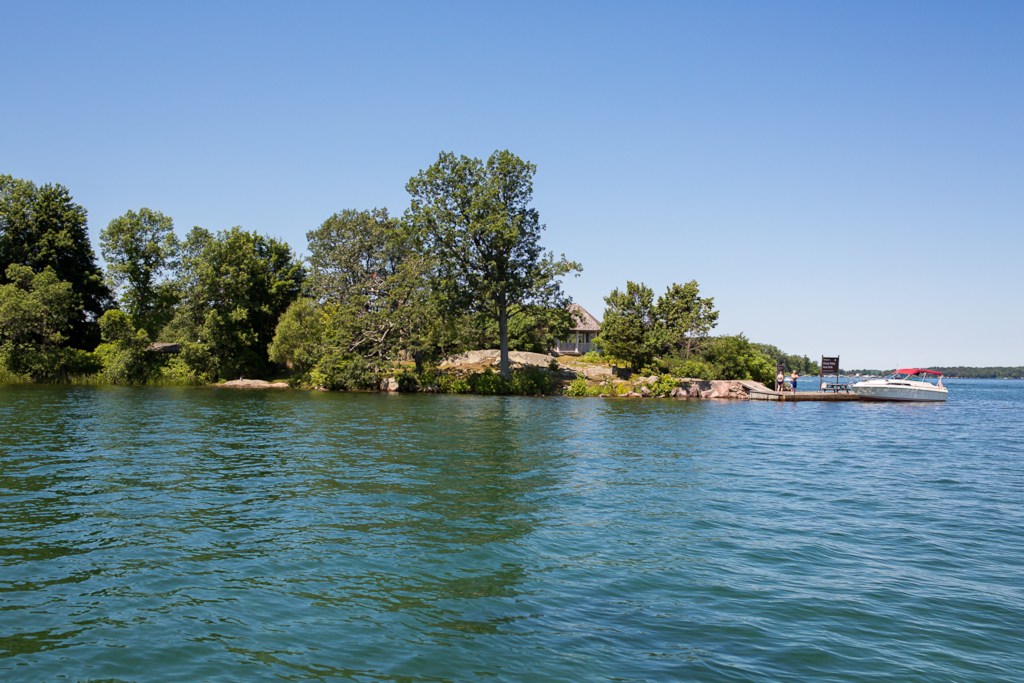
If you have a boat or have access to renting one, answer the siren song of the water and consider the benefits of staying on one of three island parks in the Thousand Islands that are only accessible by boat.
Why worry about clearing your campsite for the tent when you can enjoy a level platform? Platform camping provides a wooden deck floor for pitching your tent on a smoother and more even surface.
A camping deck inLake Taghkanic State Parkin Ancram.
The perfect place for a family reunion on the Great Lakes? Check. Lakefront luxe in the Finger Lakes for a bachelorette wine-tasting weekend? Check. Thousand Islands waterfront cabin for anglers telling fish tales about the day’s catch? Check. Memories to last a lifetime? Check, check, check.
Robert Wehle State Park’s cliffside compound, Thousand Islands region.
Robert Wehle State Park features a private setting that accommodates eight, and includes a compound with a main house, guest quarters, studio, and formal gardens set cliffside along the Lake Ontario shorefront.
A cabin porch at Betty and Wilbur Davis State Park in Schenevus near Cooperstown.
Fans of America’s pastime can stay at a cottage at Betty and Wilbur Davis State Park near Cooperstown and head to the National Baseball Hall of Fame, then go old school and listen to a game on the radio from the cottage’s front porch.
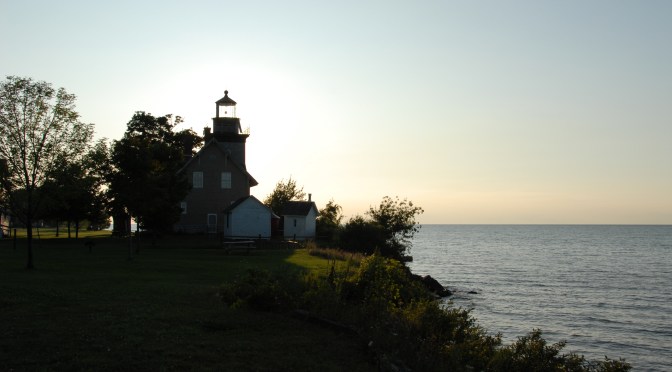
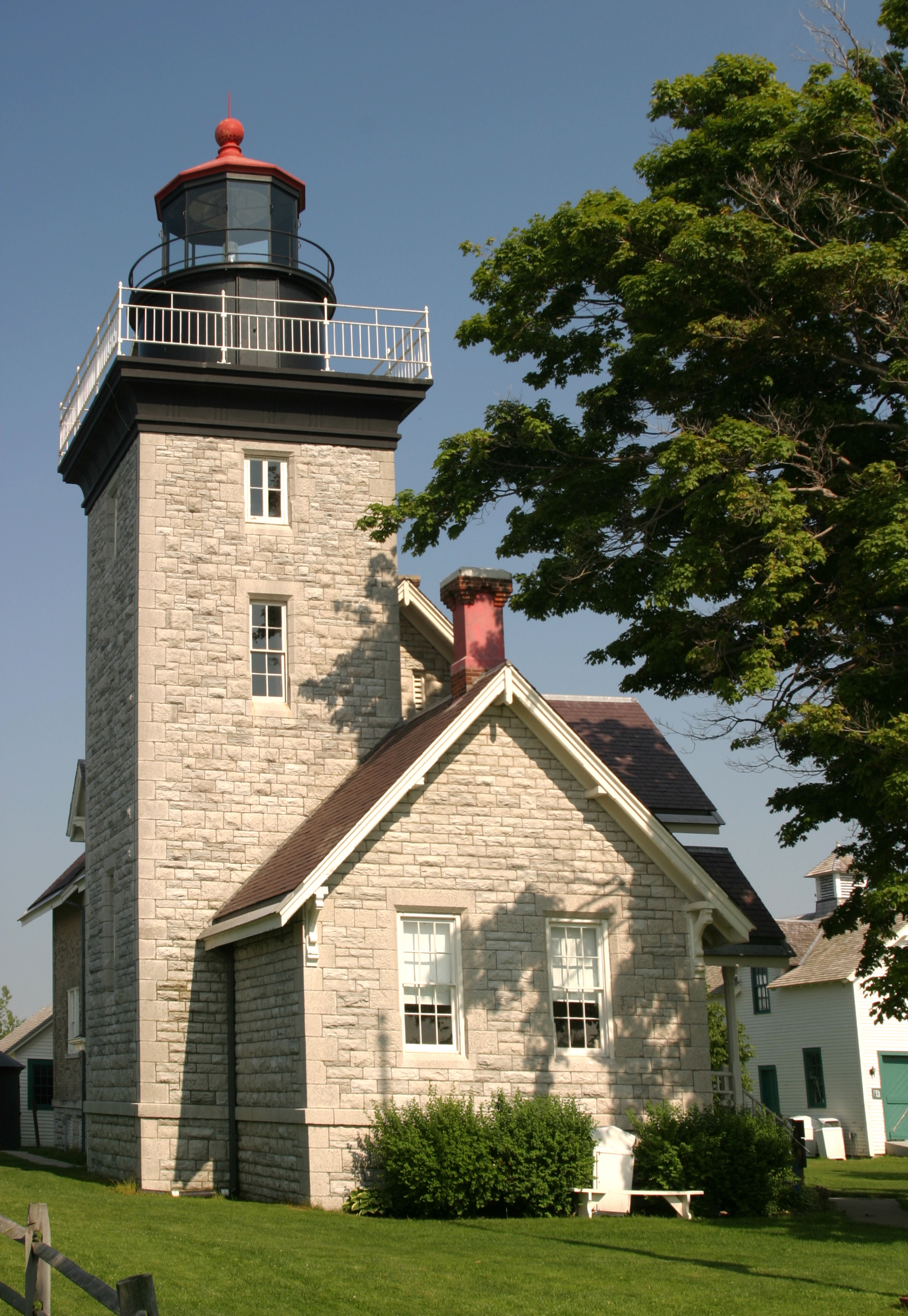
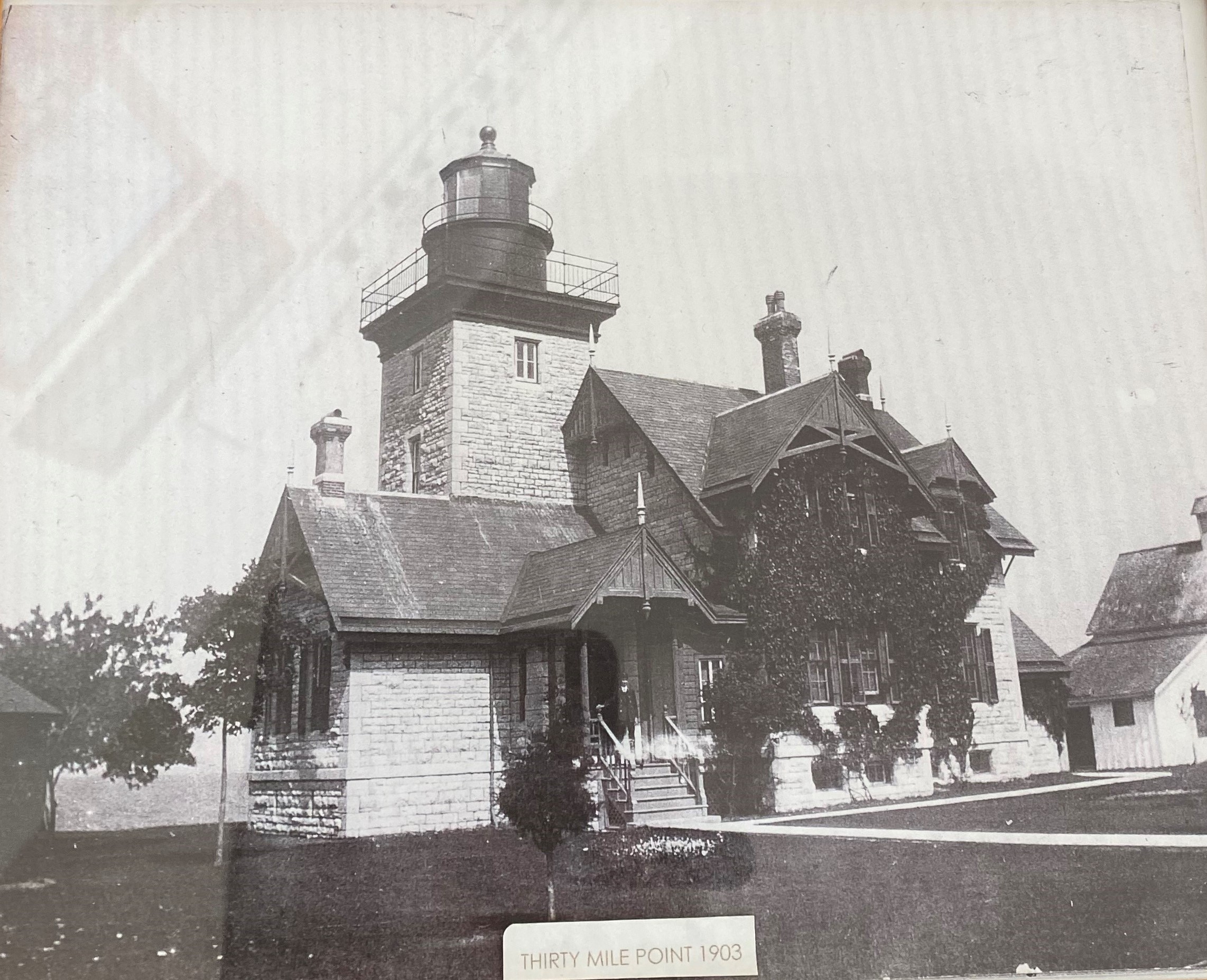
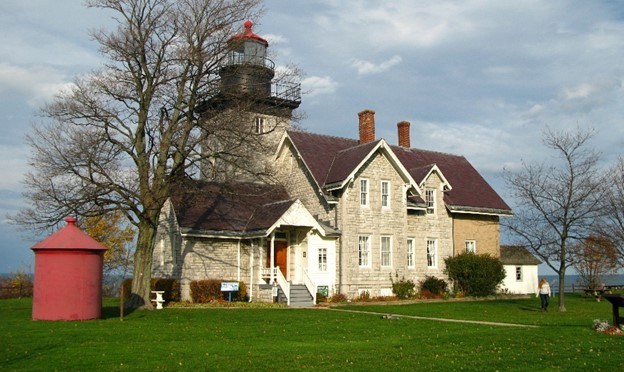
When Ann Rutland Schulze goes to the historic 30 Mile Point Lighthouse at Golden Hill State Park on Lake Ontario, she feels at home.
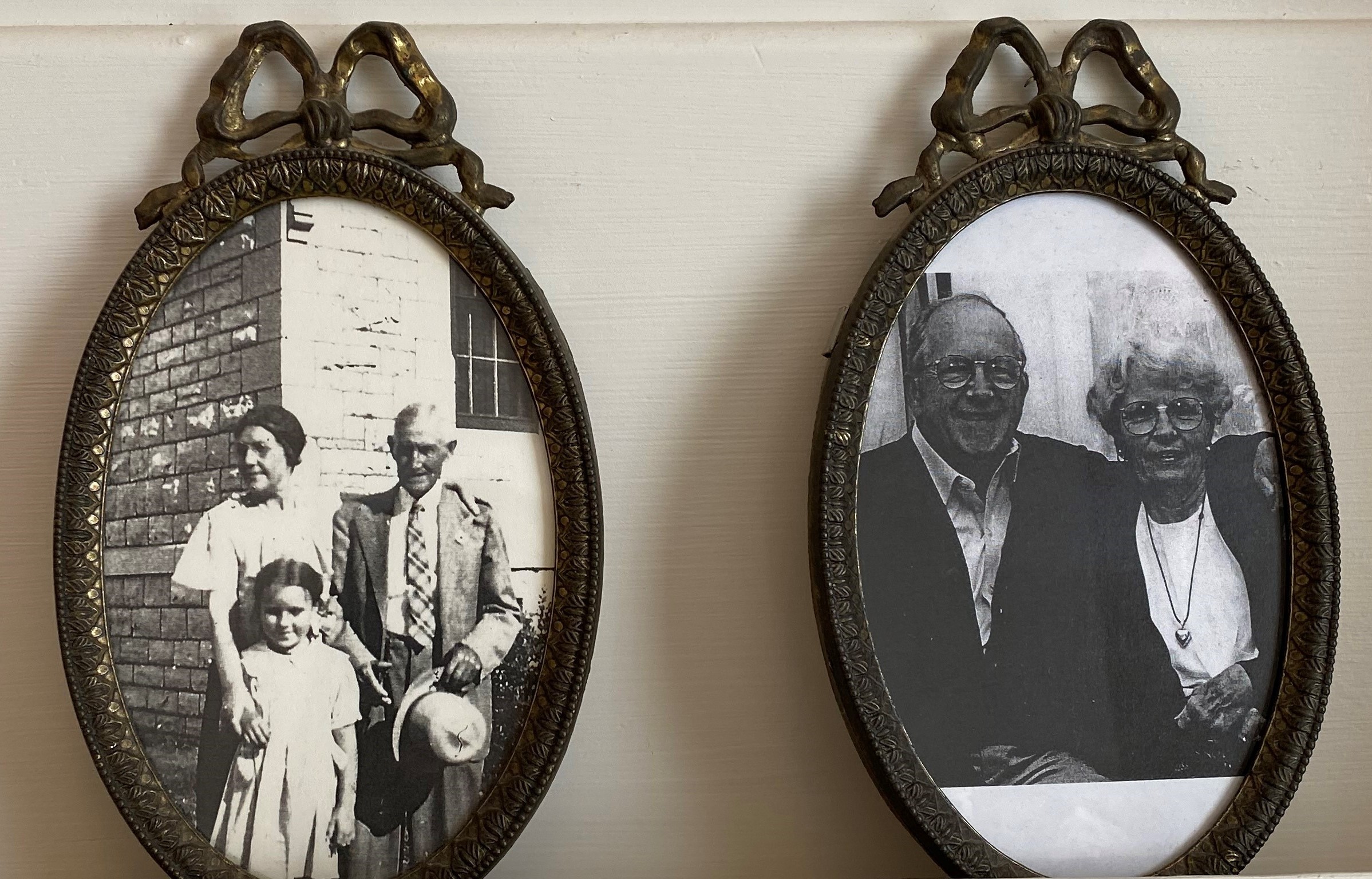
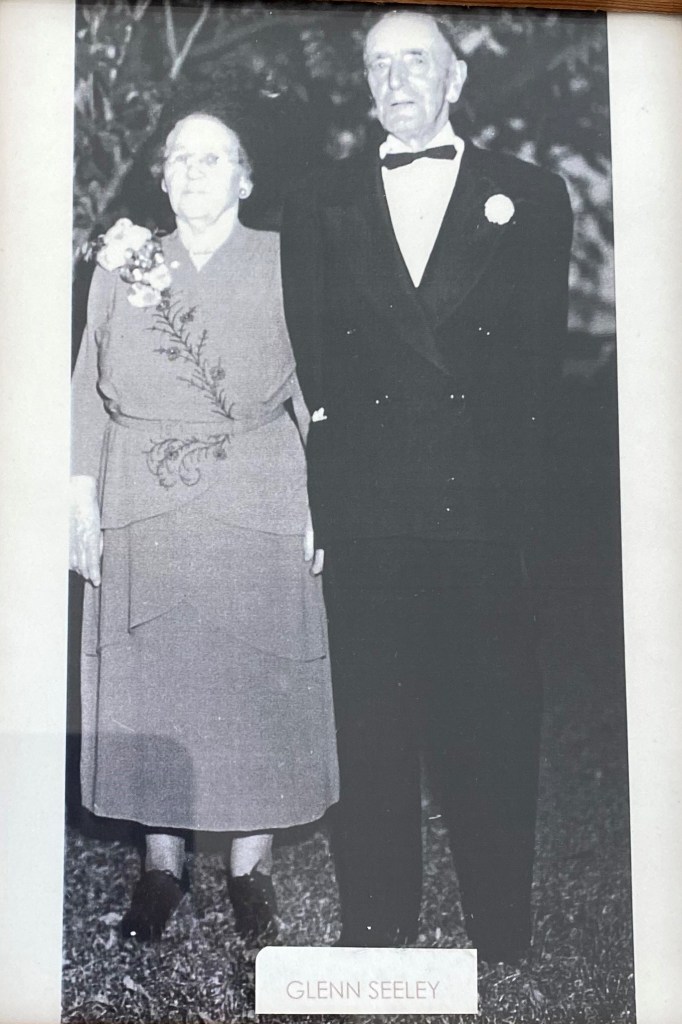
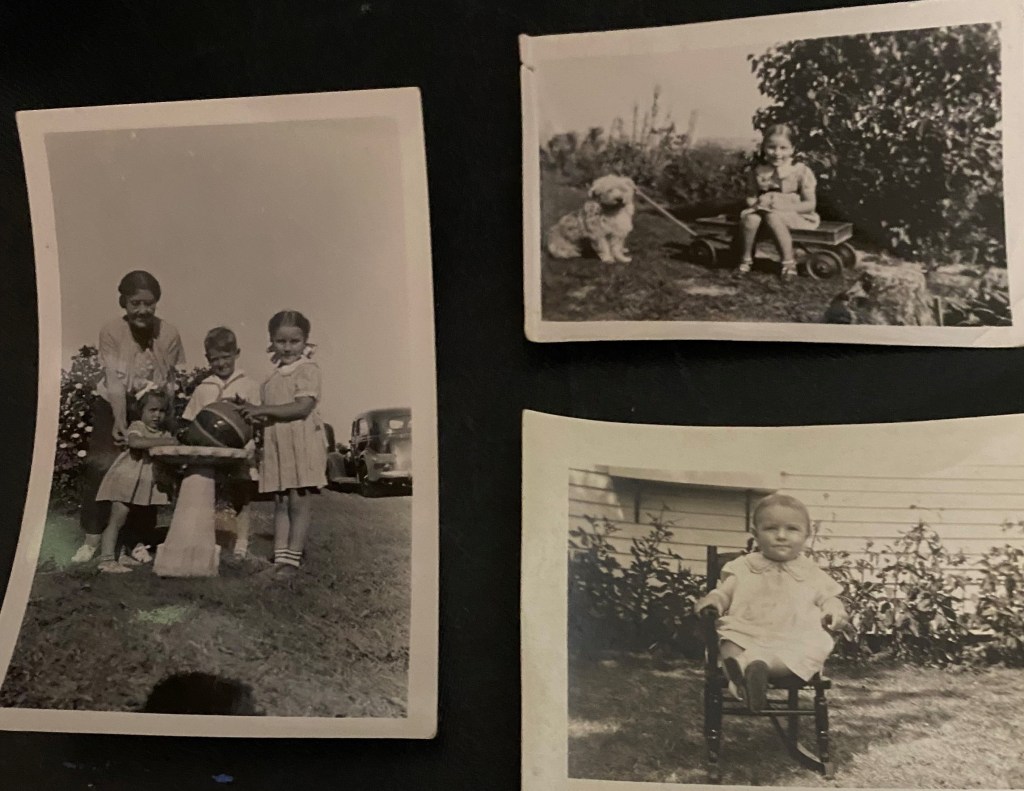
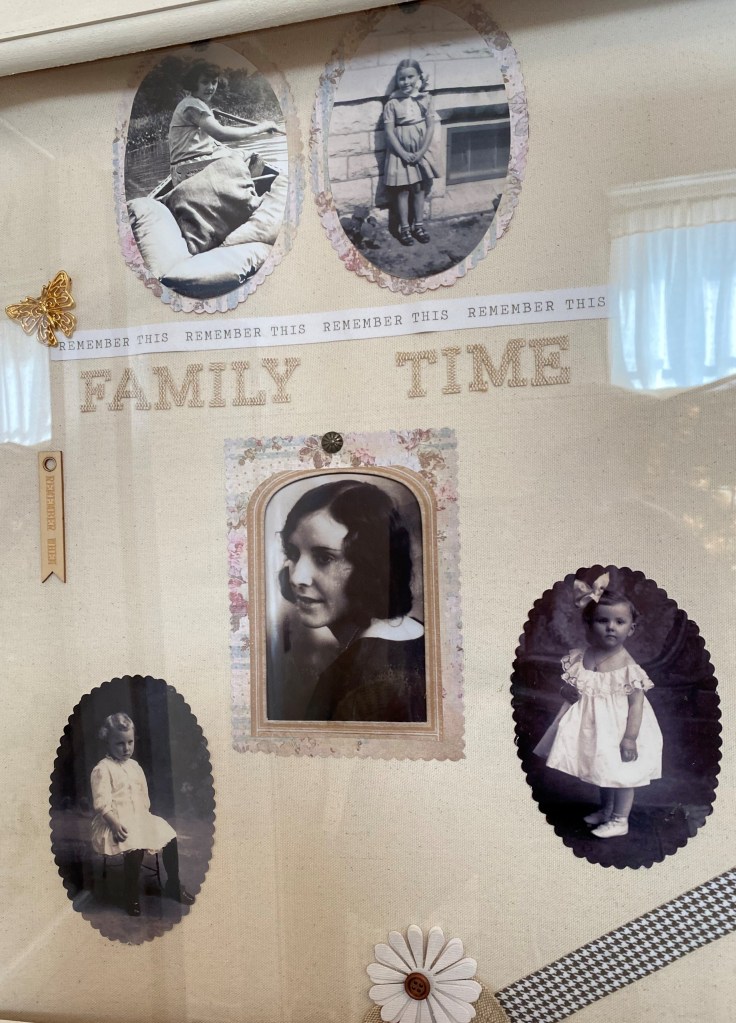
Inside one of the rooms are black-and-white pictures of a former lighthouse keeper and his family who once lived there. Some show their granddaughter, a little girl named Beverly who grew up to become Ann’s mother.
Not too far away, along the banks of a creek, a teenage boy who was fishing got teased by a friend about that girl who lived in the lighthouse with her grandparents. The boy’s name was Richard Rutland, and he later married Beverly. They had Ann and two other children, Julie and Richard.
The picture to the left shows young Beverly with her grandparents, Glenn and Cora Seeley. Shown right is Beverly with her husband, Richard.
Now, Schulze , her husband Martin, and their sons Tyler and Shaun, run a family-owned vineyard and winery about a half-hour away from the lighthouse in the Niagara County town of Burt, where visitors can hear stories of a time when a family of six lived in isolation and simplicity in the lighthouse on a bluff overlooking the lake.
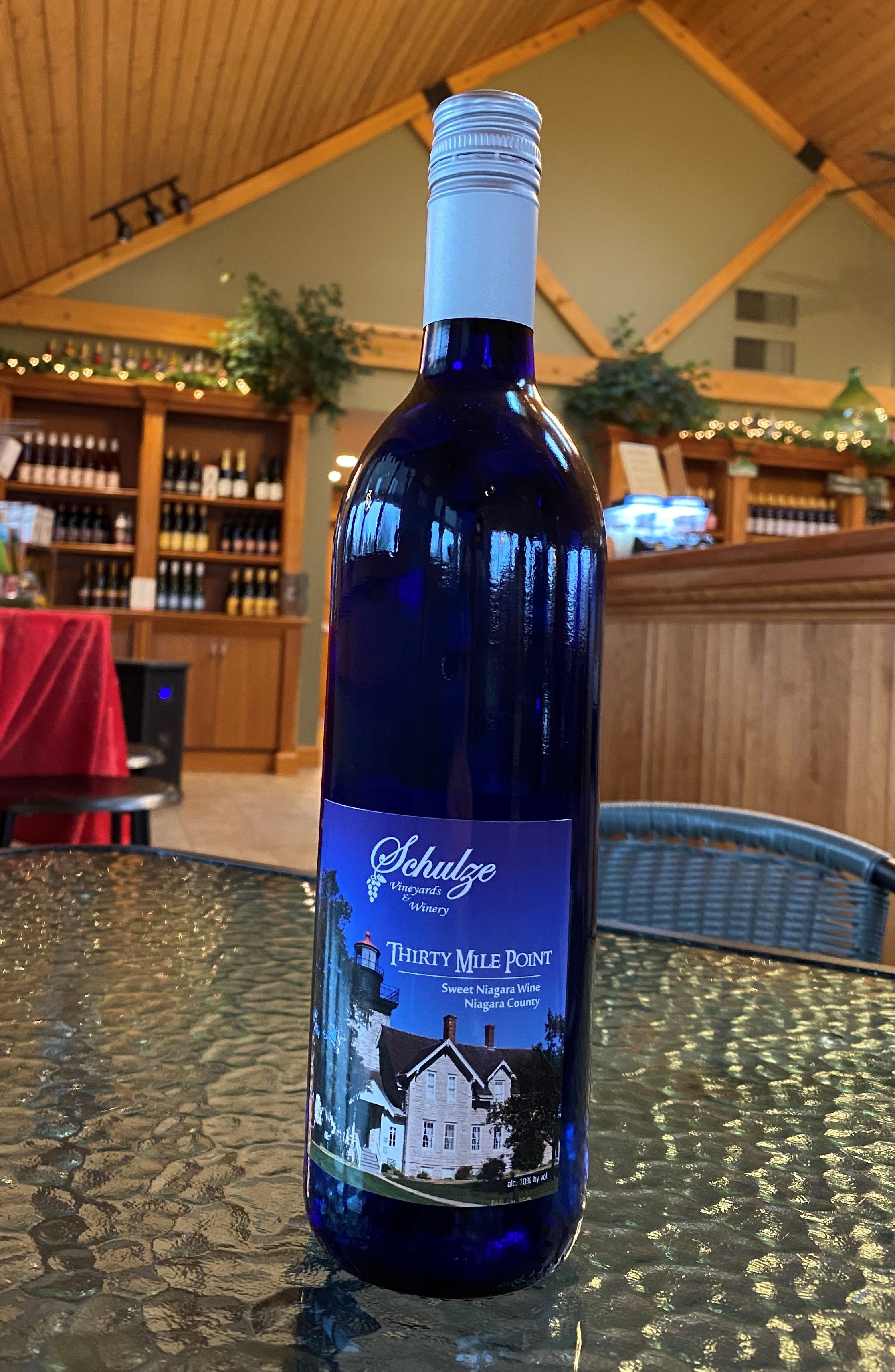
One of their wines even features a picture of the lighthouse.
Use the slider bar to see on the left, the Schulzes’ wine featuring the 30 Mile Point Lighthouse, and on the right, the lighthouse itself on a bluff at Golden Hill State Park.
“My mother certainly enjoyed growing up here, and she was so pleased that this place wasn’t just let go after it was closed,” said Schulze. “This lighthouse has been so beautifully preserved as an emblem of the history of this region. It is the official town seal of Somerset. The downstairs of the lighthouse is the way it was when they lived here. It has what the park has named the “Beverly Room,” which has a wicker crib, a rocking chair, and pictures of Beverly and my great-grandparents.”
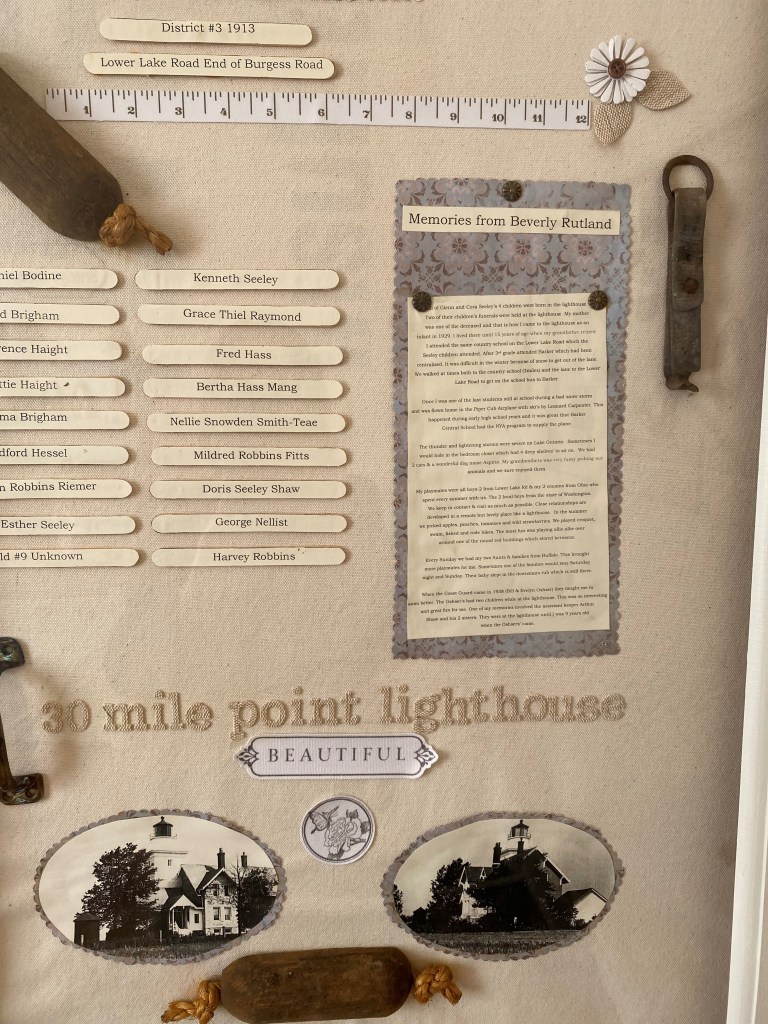
Glenn and Cora SeeleyBeverly as a young girl, with her dog, named Aspirin, in the top right photographBeverly’s recollections of growing up in the lighthouse are displayed in the “Beverly Room” there.
The 30 Mile Point Lighthouse, so named because it is 30 miles east of the Niagara River, was built in 1875 to help warn passing ships of dangerous shoals in the lake. It was decommissioned by the federal government in 1958 and its light removed, and in 1984 the U.S. Coast Guard transferred the lighthouse to Golden Hills State Park. The limestone structure is now on the Federal and State Registers of Historic Places.
During the decades that passed in between, the lighthouse was a residence for 13 different keepers and their assorted families whose job it was to keep the light lit. The longest tenured of those, Glenn R. Seeley served from 1903 to 1945 with support from his wife, Cora. The couple had four children and also raised Beverly, their granddaughter, after their daughter passed away in childbirth.
Glenn Seeley on the front porch of the lighthouse.
“My mother said it was wonderful place to grow up. She remembered her grandfather whitewashing the lighthouse once a year so it could be better spotted by passing ships and making her a concrete pond so she could have goldfish. Her grandfather would walk her to the nearby one-room schoolhouse. And she remembered that the lighthouse got the first telephone in the area,” said Schulze.
Beverly lived there until age 15, when her grandfather retired and moved the family to the nearby village of Olcott. She later went to college, became a public health nurse, and had a family of her own.
All through her life, Beverly remained connected to the lighthouse, coming there with her family for picnics or other events. “My three boys were in the Boy Scouts, and the troop came to the lighthouse when the U.S. Post Office issued a stamp for it in 1995. She was at the ceremony for that,” Schulze said.
The U.S. Postal Service issued a stamp featuring 30 Mile Point Lighthouse in 1995.
A year later, the not-for-profit Friends of the Thirty Mile Point Lighthouse group was formed, to support the preservation of the lighthouse. And in 1998, the light, which had been removed four decades earlier, was restored.
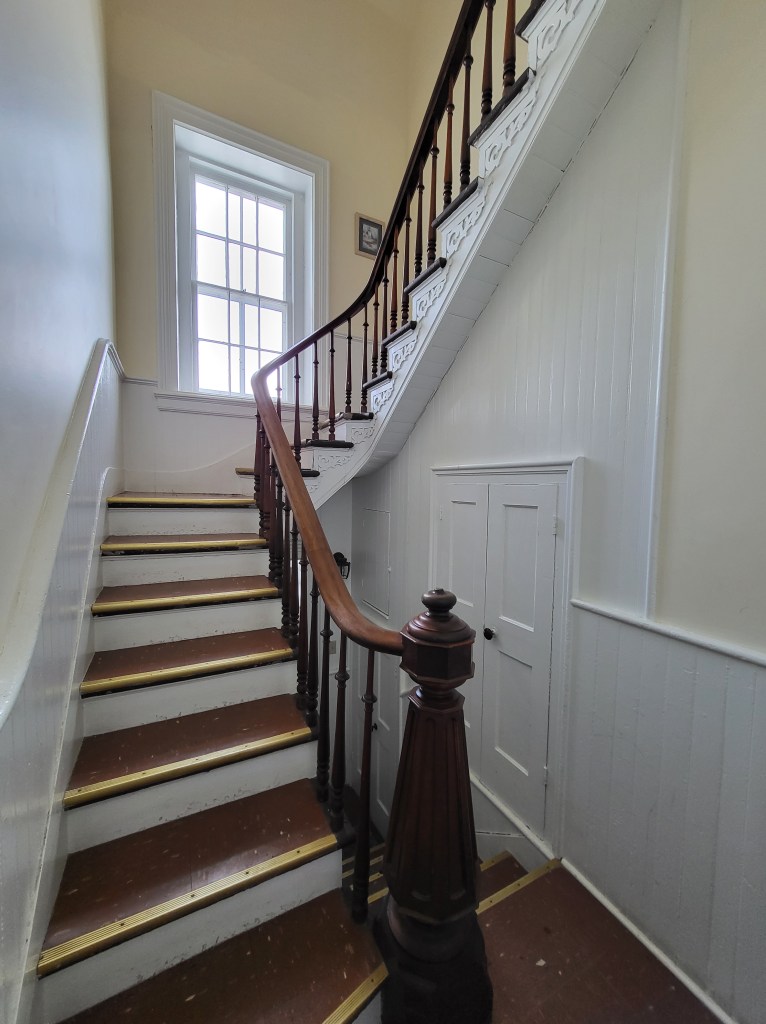
In her handwritten note cards, Beverly recalled the family doing its laundry in a washtub that was originally a copper boiler, and initially having no inside bathroom, only a privy that was cold in the winter. They later got the first inside toilet and telephone in town. She wrote how the children of the assistant keeper, who lived there in a separate residence with his family, taught her how to “swim and fish and play cards.” And that she was so afraid of the massive lightning storms that would cross the lake that she would hide in a closet under the stairs until the crashing passed.
Eventually, Beverly’s health began to fail, and such nostalgic trips to the lighthouse became impossible. Beverly passed away in 2010 at age 80.
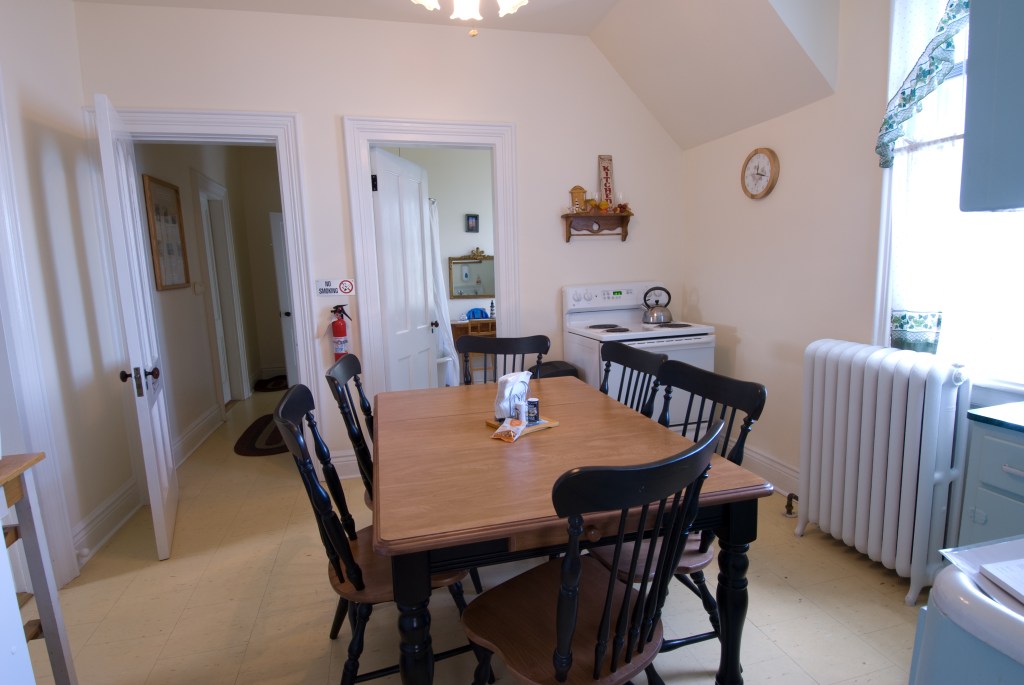
Visitors who want to get a taste of lighthouse life can rent the second floor “cottage” of the facility for overnight stays. The former assistant keeper’s quarters, the cottage has a living room with an electric fireplace, bath with an old-fashioned tub, three bedrooms, and an awesome view of Lake Ontario.
Guests will notice the craftsmanship of the building, especially the original wooden double doors, with ornate knobs and lock set. All rentals are made through the website https://newyorkstateparks.reserveamerica.com/ or by calling 1-800-456-2267.
Click through the slideshow below to get a look inside…
Renters are provided with a private picnic area with a barbecue grill and picnic table. This vacation rental offers a private entrance, kitchen with refrigerator, electric stove, microwave, coffee maker, cooking utensils, silverware and dishes, living room with electric fireplace, couch, two chairs and a writing desk, full bath with an old-fashioned bathtub, three bedrooms with queen size beds and pillows and a view of Lake Ontario that is stunning.
Visitors looking at the lighthouse’s “memory book” will see some entries written by Beverly herself. The lighthouse cottage is more than just a place to stay. It is place of beauty, reflecting lives filled with long nights, hard work, rough waters, violent storms, joy, heartbreak, and family bonds that don’t break.
Post by Brian Nearing, Deputy Public Information Officer, NYS Parks
About Golden Hill State Park
Located in Niagara County, this park along the Lake Ontario shoreline covers 510 acres. Created in 1962, the park has 59 campsites, six yurts, two pavilions, a new playground, a volleyball court, softball field, two picnic areas, hiking trails, a disc golf course, and a boat launch.
While State Parks offers more than 8,100 campsites, 825 cabins, and 136 full-service cabins across New York, in the western part of the state, there is another kind of camping option available – yurts.
A yurt is a round fabric shelter on a raised platform, with a roof, door, and windows that provides more shelter and room than a ground tent yet is a simpler accommodation than a traditional wood-framed cabin. The history of yurts traces back about 3,000 years to central Asia, where nomadic peoples used these portable homes as they moved around vast treeless grassland plains, known as steppes.
Yurt is a Turkish adaptation of the Mongolian word “ger” (meaning “home”) originally used to describe such residences, which were meant to be easy to assemble and disassemble as their owners moved with their horses and livestock throughout the seasons. Yurts are formed by a circular wooden lattice wall that supports wooden rafters attached to a elevated center ring, with the structure draped in fabric, originally felt, wool or hides. Being round, yurts were perfectly designed to resist high winds common in the region, since the shape has no corners or flat spots to catch wind gusts.
According to historians, the Mongol conqueror Genghis Khan led his vast armies from his command post in a large yurt that moved from battlefield to battlefield.
The historical importance of the yurt to the region is represented in the official flag of the republic of Kyrgyzstan in central Asia. The flag consists of a red field charged with a yellow sun that contains a depiction of a “tunduk,” the opening in the center of the roof of a yurt. This view is what someone might see looking up upon awakening in a yurt
The state flag of Kyrgyzstan, featuring a representation of the center opening in a yurt’s roof. (Photo Credit – Wikipedia)
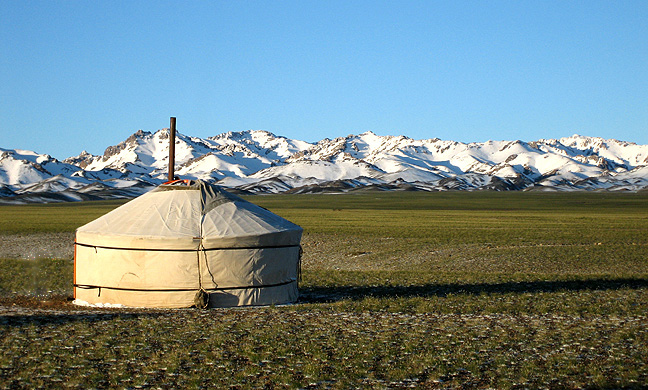
A Mongolian ger on the steppe at Gobi Gurvansaikhan National Park in southern Mongolia. (Photo Credit- Wikipedia Commons, Uploaded by Adagio at English Wikipedia)
Easy and quick to build, this ancient design arrived in America during the 1970s as part of the simplified “back to the land” movement, slowly developing a following as an inexpensive form of housing that could be assembled in a day. The structures have been gaining popularity in recent years as a camping accommodation that puts its residents close to nature, while offering more comfort and sturdier protection against the elements than a tent. Modern yurts are meant primarily to be kept in place as semi-permanent structures, although they still can be taken apart and moved if necessary.
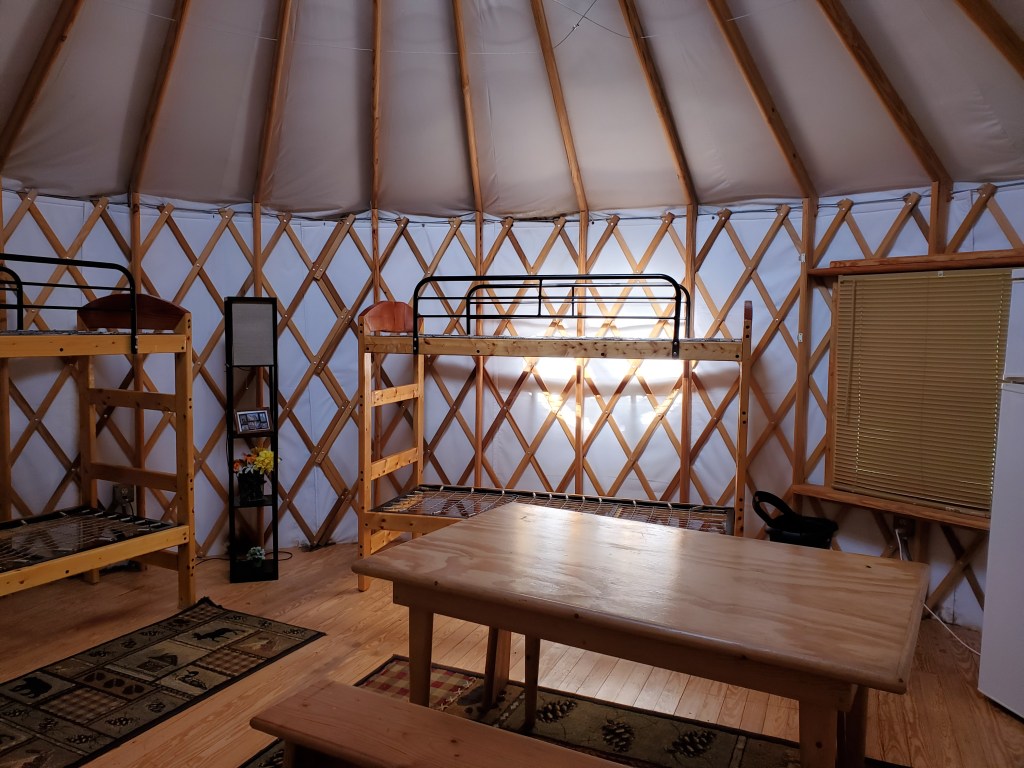
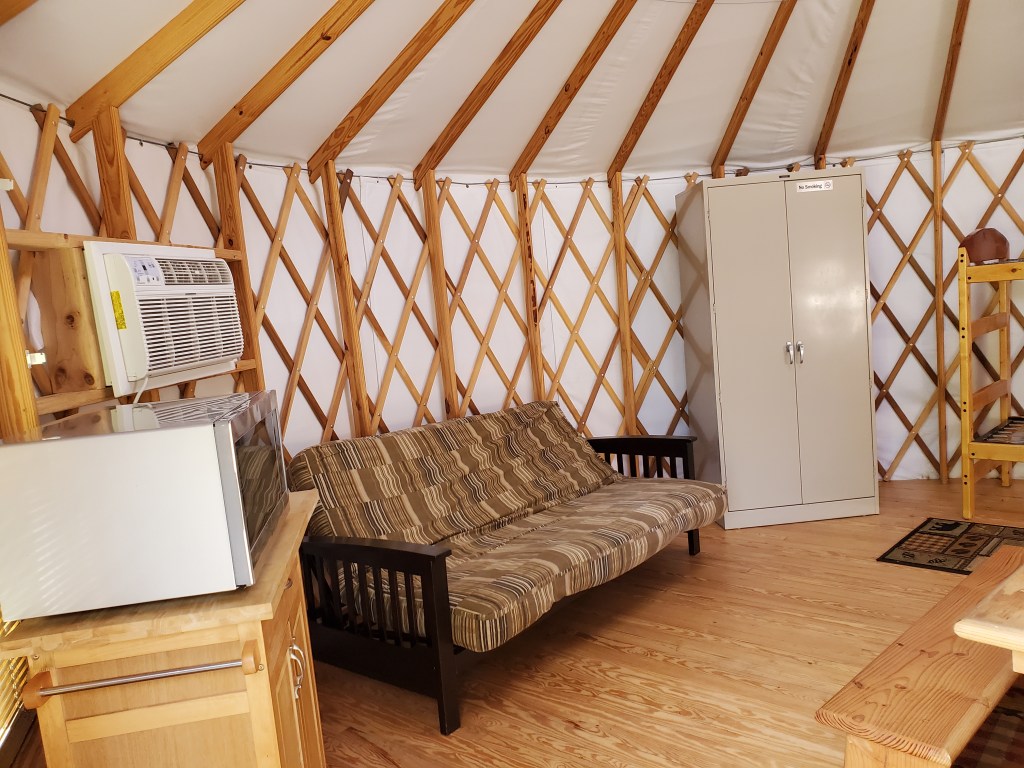
Three state parks in western New York now offer yurts as places to camp _ Four Mile Creek and Golden Hill state parks in Niagara County, and Evangola State Park in Erie County. Made from wooden lattice and rafters covered with heavy-duty fabric and insulation, these yurts feature a domed roof, windows, and bunk beds, as well as a refrigerator, microwave, and heating/AC units.
The yurts at both Four Mile Creek and Golden Hill at located closed to Lake Ontario and offer beautiful views. Golden Hill’s yurts are situated so that the decks provide a view of both sunrises and sunsets with Golden Hill’s Thirty Mile Lighthouse in sight. Take a slideshow tour of the Golden Hill yurts below…
At Evangola, the yurts are located next to a fishing pond, and just a short walk to the park’s Lake Erie shoreline.
Campers who have stayed in the yurts tell State Parks that they like it because it’s “in-between” camping in a tent and a cabin, being particularly useful for those who might not have all the gear needed for tent camping.
When the first yurts went up in 2013 at Four Mile Creek, New York State Parks joined a growing number of state parks across the country embracing this form of shelter as a camping alternative.
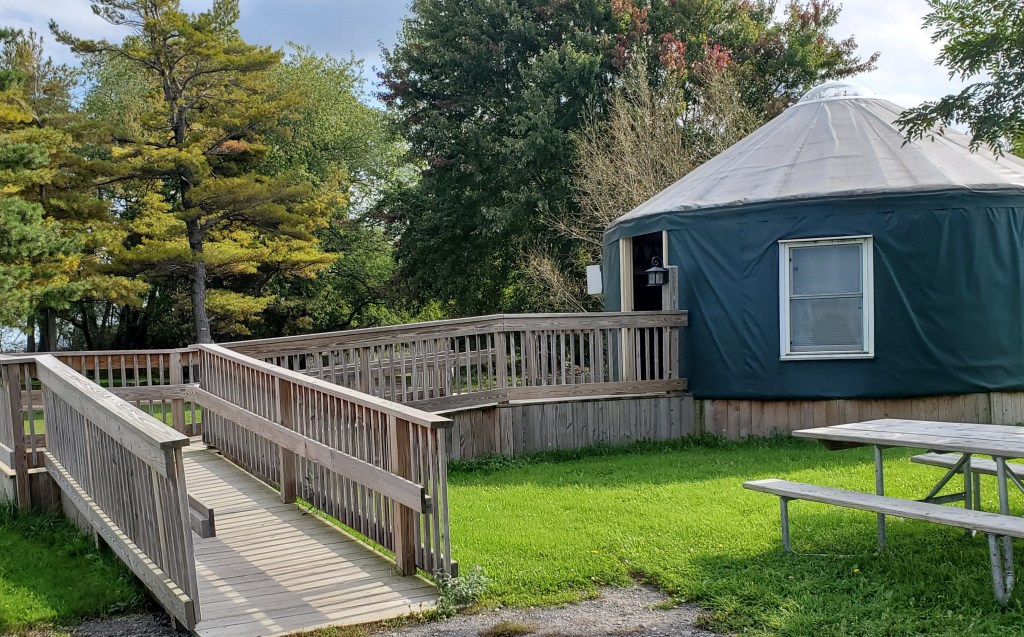
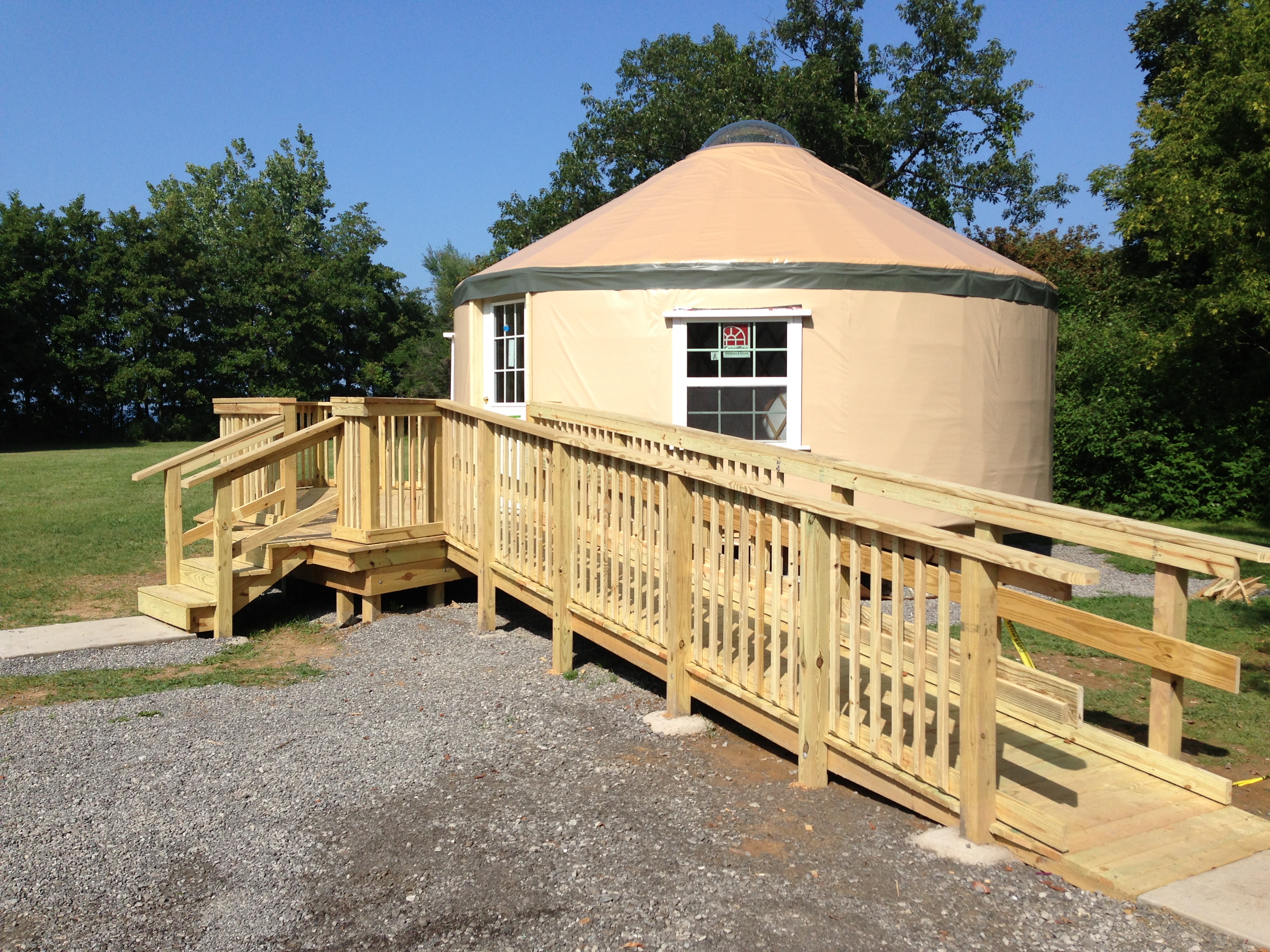
A yurt at Four Mile Creek State Park with an ADA accessible ramp.
According to industry accounts, the first two yurts in a state park in the U.S. went up in Oregon in 1993. Now, some two dozen state park systems across the country have added yurts.
The yurts in New York’s state parks are 20 feet in diameter, which results in about 330 square feet of interior living space and plenty of head room. While that might seem spacious for those used to maneuvering around a tent, that is a far cry from the largest yurt in the world. The so-called “White Building” (Ak Öýi) in the Turkmenistan capital of Ashgabat, dedicated in 2015, is in the form of a yurt more than 200 feet in diameter that stands about 100 feet high, with three separate stories holding a café, offices, apartments and an auditorium with 3,000 seats!
So, when considering camping at State Parks in western New York, think about trying out a yurt. Three thousand years of history can’t be wrong!
Home of the awe-inspiring and world famous Niagara Falls, this region stretches from the shores of Lake Ontario to the shores of Lake Erie, encompassing sand dunes and waterfalls, old growth forests and reclaimed agricultural lands, grasslands and gorges, urban and rural greenspaces, rivers and wetlands.
Covering Niagara and Erie counties, this diverse region includes 18 parks, two historic sites, and many miles of hiking trails, as well as several Bird Conservation Areas, an Internationally Significant Important Bird Area, and a Ramsar designation for the Niagara River as a wetland of global significance.
To start, any successful hike starts with a good map. Maps for hiking trails and a variety of other useful information on State Parks, including those in the Niagara region and other regions, are now available on the NYS Parks Explorer app. The free app, which is available for use on Android and iOS devices, is easy to download, user friendly and allows patrons to have park information readily available every State Parks facility across the state.
Trail maps are also available on each individual park website page at parks.ny.gov and at the main office of each park. Links to maps are also included in the trail descriptions in this post. Be sure to download maps ahead of time to your phone or tablet, and maybe even carry a paper copy as a back up to aid your hike.
As with all hikes, there are a few things to remember beyond carrying a mobile phone. Check the weather forecast before you go, and dress appropriately. Wear sturdy, yet comfortable shoes or boots, bring enough water and snacks, and perhaps carry a camera to capture what you see. Be mindful of wildlife and give it appropriate space, particularly in areas marked as protected, such as for shorebird nesting.
Always be aware of your surroundings and mindful of hikes on steep terrain or those that go near cliff tops. Having a small first-aid kit available in case of an emergency is never a bad idea.
Hiking poles are also useful on longer hikes and can transfer some of the stress of hiking from your knees and legs to your arms and back.
Hikers should plan their route in advance, know how long a trail is and how long it ought to take to finish. If weather conditions change for the worse, be prepared to turn back. Don’t let a desire to reach a specific destination make you press on. Since daylight is not an unlimited resource, even in summer when days are longer, tossing a flashlight or headlamp into your backpack is a good form of insurance, should you unexpectedly find yourself on the trail as dusk approaches.
State Park facilities are carry-in, carry-out, so don’t leave trash behind. Follow Leave No Trace principles to keep trails clean for everyone.
Additionally, as incidents of tick-borne diseases surge in the state, it is always important to check yourself for ticks after being outside, even if it is only time spent in your own backyard.
Lastly, as the COVID-19 pandemic continues, remember to practice safe social distancing, particularly in parking lots and at trailheads, and use face coverings when a distance of six feet cannot be maintained, even if you have been vaccinated. To learn more about important COVID safety guidelines, click HERE.
Erie County
Buffalo Harbor State Park, 1111 Fuhrmann Blvd., Buffalo, (716) 822-1207 – The only state park in the city of Buffalo, this park is located within Buffalo’s Outer Harbor area and covers about 190 acres on the shoreline of Lake Erie. It has a nautical themed playground for the kids and slips for up to 1,000 boats.
The Shoreline Trail along the waterfront is a multi-use trail for walkers, runners, cyclists, and people of all ages and abilities. Visitors can enjoy the brisk breeze coming off the lake on a hot summer day while watching kites and gulls soar high above, see the sailboats, kayaks, and motorboats gliding across the waves, and witness stunning sunsets.
This trail is particularly important for its connection to a larger trail system. The Shoreline Trail connects all the way through Niagara Falls to Fort Niagara State Park, and also links to the Empire State Trail, the 750-mile trail from Buffalo east to Albany and New York City, and north to the Champlain Valley and Adirondacks.
The Gateway to the trails at Buffalo Harbor allows access to a larger trail network, including the new Empire State Trail. The park’s trails are paved to provide universal access to those of differing abilities. (Photo courtesy of Niagara Region Interpretive Office)
Evangola State Park, 10191 Old Lake Shore Road, Irving, (716) 549-1802 – Located 24 miles west of Buffalo, this Lake Erie shoreline park has more than five miles of trails within its 733 acres of forest, marsh, meadows and vernal pools.
Starting behind the Evangola Nature Center, the half-mile Rim Trail traverses high bluffs with picturesque views of Lake Erie. During summer, trail hikers experience a leafy canopy overhead and a moss green carpet trailside, while enjoying cooling lake breezes and the the sound of waves crashing far below. Belted-Kingfishers, Bald Eagles and a variety of gulls can often be spotted soaring above the water here.
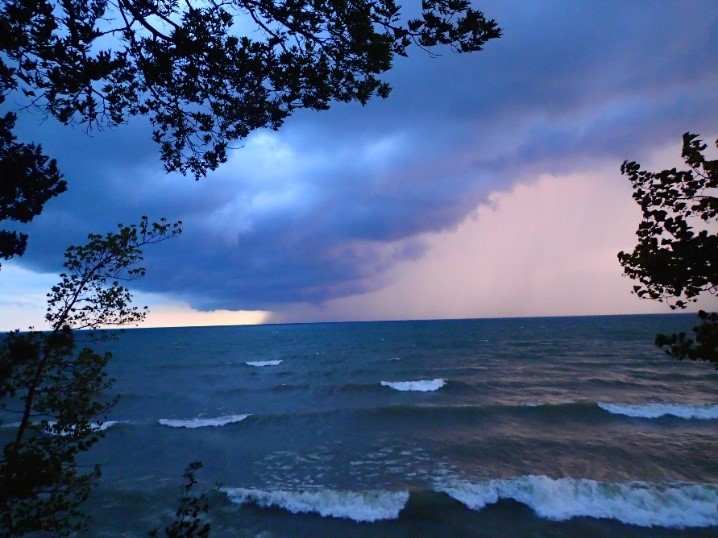
During the winter, the park’s plentiful lake-effect snow provides cross-country skiers and snowshoers with a chance to glimpse unique ice formations and spot artic ducks found here seasonally. The trail is a place to watch a sunset, catch a cool breeze or see the power of a storm rolling in across the lake.
A storm blows in from across the lake as seen from the Rim Trail, while below, in winter shoreline vegetation and ice for intricate formations. (Photos courtesy of Niagara Regional Interpretive Office)
Knox Farm State Park, 437 Buffalo Road, East Aurora, (716) 652-0786 – Covering 633 acres, this park is the former country estate of Seymour H. Knox, a Buffalo businessman who co-founded the F. W. Woolworth stores. He purchased the property in 1890s to train standardbreds and carriage horses. Primarily grasslands that are home to a variety of grassland bird species, the site includes some woodlots and wetlands.
The park contains about seven miles of trails, including the Library Trail, which is reached directly from the parking lot. It leads into a field active in summer ith bobolinks, a grassland bird related to blackbirds and orioles. From there, the trails leads to a small woodlot with towering sugar maple trees and a small library in the woods.
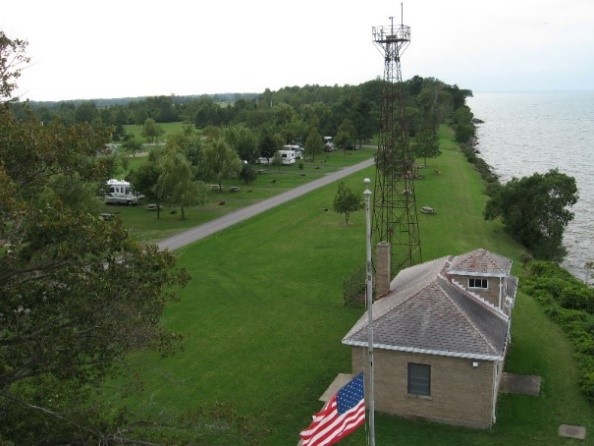
Golden Hill State Park, 9691 Lower Lake Road, Barker, (716) 795-3885 – This park contains Thirty Mile Point Lighthouse, built in 1875 to warn ships of a rocky shoal and shifting sandbar in Lake Ontario. There were several shipwrecks in the vicinity; the most famous being the HMS Ontario, a British warship that sank Halloween night in 1780. An active light until 1958, today the upstairs cottage is rented year-round and the foghorn building is now a visitors’ center with displays on the lighthouse and local maritime history.
There are three trails at Golden Hill, with the likely favorite being the scenic Red Trail which travels along the lakeshore and leads to Golden Hill Creek. Along the creek is an oak grove with trees up to 300 years old. Bald eagles are known to frequent this area, as well as great blue herons and wintering waterfowl. After crossing the creek on the footbridge, the trail branches off – east to the marina or west along the creek with stands of apple, beech and hop hornbeam trees.
The Red Trail travels along the lakeshore for continuing inland along Golden Hill Creek. (Photo Courtesy of Niagara Region Interpretive Office)
Wilson Tuscarora State Park, 9691 Lower Lake Road, Barker, (716) 795-3885 – Established in 1965, the park on Lake Ontario encompasses 476 acres bordered by the east and west branches of Twelve Mile Creek. It has approximately seven miles of trails.
Nestled along the east branch of Twelve Mile Creek is the one-mile Interpretive Trail, which moves through several habitats, including wetlands, successional fields (a field transitioning to a forest), shrub lands, and ending in a mature beech-hemlock forest. This trail is best known for its spring wildflowers – notably white trillium, New York’s largest flowered trillium – that appear on the forest floor in May.
White trillium are found on the forest floor starting in May. (Photo courtesy of Niagara Region Interpretive Office)
The Interpretive Trail along Twelve Mile Creek, where pileated woodpeckers can be spotted. (Photo courtesy of Niagara Region Interpretive Office)
Earl W. Brydges Artpark State Park, 450 South 4th Street, Lewiston, (716) 754-7766 – Founded to promote the visual and performing arts, this park is on the lower Niagara River below the world famous falls. It contains two trails that are a part of the Niagara Gorge Trail System.
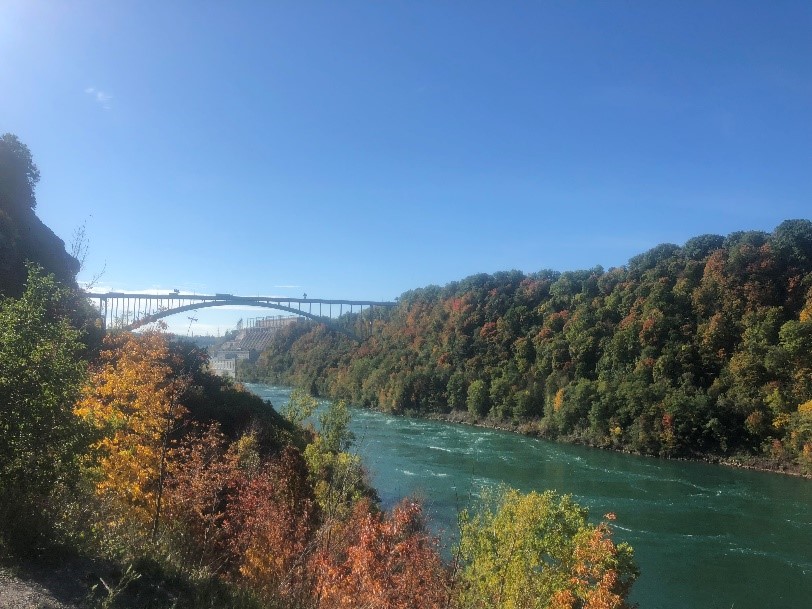
Trail 7, also called the Artpark Gorge Trail, takes a path through the Niagara Gorge, providing views of the Lewiston-Queenston Bridge, the New York Power Authority, and the vibrant blue green waters swirling in the lower Niagara River. Along this trail are seen fossils from the era of the Silurian Sea, before the time of the dinosaurs. After a climb around boulders and a waterfall view, a set of stairs leads down to the river’s edge to Trail 8, which is popular with fishermen who seek the river’s salmon or lake trout.
A view of the Lewiston-Queenstown Bridge from Trail 7 in Artpark. Below, a New York Power Authority hydropower plant is visible from the trail. (Photos courtesy of Niagara Regional Interpretive Office)
If the stairs are not taken, the trail traverses a shale slide and woods before emerging in a flourishing grassland ecosystem that connects to Trail 2 heading toward Devils Hole State Park.


















 New York State Parks and Historic Sites Blog